It’s early spring and still outnumbered are the days of thawing, when the sun shines through the nearly impermeable grey just long enough to make the corral thick and pliable for the heavily-coated ponies to imprint the half-frozen peaks of ice and manure.
With little inclination to be out of doors, Mia, Mark, Jim and I, along with cousins Mary, Gina and Bill, are all hanging out in the kid’s room upstairs, twitching and giggling and getting riled by Jim, the regular instigator of such behavior.
But this time, instead of hanging around to help control the chaos, Jim leaves, leaving his younger siblings and cousins to deal with the consequences – the most important of which is that Mark is wound-up and dangerously near the one thing in the room Jim should have taken with him: his Benjamin Air Rifle.
Jim got the rifle for Christmas and had been target practicing with it that morning. Dad doesn’t like the idea of the eight-pump, .177 caliber pellet gun, but Mom’s Missouri farm roots makes her believe that it’s every boy’s initiation into manhood.
In Jim’s defense, he never shoots at living things – mostly targets, trees and tin cans.
However, he does get an enormous amount of satisfaction turning its site on siblings for the sheer satisfaction of watching faces contort; which is likely where Mark got the idea.
Picking up the air rifle, he aims it across the room at Gina, sitting on the sofa.
Each of us demands he put the weapon down, but Mark already has that look in his eyes which tells us he’s stopped listening, and before anyone can say another word, Mark presses the trigger and discharges what he thinks is air through an empty chamber.
Gina, already curled into a defensive ball, is hit.
The lead pellet rips through her jeans and grazes the skin on the back of her left thigh, already bruising when we gather around to inspect the wound.
Everyone – including Mark – is stunned and silent.
Gina’s eyes grow wide and wild.
“You little fucker! You shot me!”
We all look to Mark for an explanation, but he’s off – like his shot – out of the room, down the back stairs, and out the door.
Having returned to the scene at the sound of Gina’s scream, it takes mere moments for Jim to form an angry mob to go in search of the lone shooter, now taking refuge somewhere in the damp, barren woods surrounding our house.
We follow the leader around the backyard and back woods, looking for a spark of tell-tale color among the sullen, gray tree trunks.
Then something turns… Jim’s allegiance.
In an instant, we’re all in his sights and half-heartedly running for our lives.
Finding a safe spot from his line of vision, I’m watching from the barn stalls when Jim spots Mark weaving through the trees and across the frozen patches of slippery leaves in the back circle by the cottage.
He’s trying to make a break for the large stretch of trees just across the driveway. From there, it’s certain he can outmaneuver Jim through the woods to safety.
The problem is the twenty foot stretch of open pavement.
But spring is in the air and Mark is feeling a little wild.
We all are.
Jim gives the rifle an extra pump and takes aim at the small figure now bounding across the asphalt.
In one very lucky shot… he hits his target, and like a plastic carnival duck floating atop a painted carnival pond, Mark is knocked flat.
Jim insists it was meant to be a “warning” shot.
As all games are officially over at the first sign of blood, Mark limps toward the house where he pulls down his sock to reveal the day’s second wound on the back of his ankle.
Mom’s soon on the scene, ordering Mark into the kitchen (with everyone following close behind).
She cleans and examines the wound and declares the pellet must have skimmed the surface of his skin (just like Gina’s had, but we felt best not to mention).
Satisfied with Mom’s answer, the hunter and all those hunted walk – and limp – away.
—————-
Forty years later, having just had x-rays taken for an orthopedic shoe insert, Mark’s doctor enters the room and hangs the film on the light box, and with a strange look on his face, points to a light spot behind Mark’s left ankle.
“This is a metal object,” he says, “… and it looks like a bullet.”
Both Mark and the doctor stare at the very clear, small, rounded object appearing on the screen.
“No, that can’t be right,” Mark insists. “There must be a glitch on your x-ray machine.”
But the doctor assures Mark that the object is no glitch.
“Do you happen to know how it got there?” the doctor asks, now looking a little sideways at his patient.
Mark stares at the small metal object imbedded in his achilles tendon and suddenly it all comes flooding back to him.
Before leaving the parking lot of the doctor’s office, he sent this image out to remind us all of a childhood within close range.
I’m still lying back in the dentist’s chair when I open my eyes.
It’s hard to lift my heavy lids, even harder trying to wake from a syrupy haze.
The first clear thing I see are my wisdom teeth – all four – on a pad of cotton laying on my miserably undeveloped chest.
A smiling nurse takes hold of my forearm and gently guides me off the reclining chair and onto my feet.
Legs buckling, a second nurse appears, and with each as a crutch, we wind our way through doorways, down hallways and into the waiting room.
To Mom.
The sight of her makes me smile, which makes it hurt, and makes me cry out; making patients sitting patiently jump in their waiting room seats and glare at me.
Stare at me.
Aghast.
Seeing exactly what they don’t want to see.
I couldn’t care less. I just want to sit.
But Mom and the nurse keep me moving forward toward the exit door.
__________
Nothing looks sweeter than the car where, for the first time in years, Mom has to buckle me in. Her steely, blue eyes filled with fuss and concern, and a little horror.
But the haze hasn’t lifted and I’m happily floating in it… and out the car window, toward the warm, autumn sun.
And Mom’s taking me home.
With a heavy hand, I lower the window and turn to face the breezes. I smell hot pavement and mid-day traffic and hear the sounds of a motorbike approaching from behind.
As the biker passes, his helmeted head looks my way, so I smile in response, leaning heavily against the car door.
He swerves – suddenly – and passes, quickly.
Seeing such a severe reaction makes me fumble for the visor’s mirror, where I find a reflection like B-Science-Fiction: swollen cheeks, a misshapen face, and by the looks of the dry and wet tracks trailing down both sides of my chin, I’ve been drooling.
A lot.
My lips are also cracked and bloody – as if stranded for weeks in the desert – and it appears as if they’ve been pulled apart by some horrible dental device which has left indentations, still visible on my face.
I’m the goddamn monster’s bride.
But the care is lost in thoughts of home and Mom and Dad’s blue, velvet sofa, with dogs at my feet, a box of tissue at my side, and a channel changer near at hand – which is where Mom leaves me with a kiss on the forehead and errands on her mind – one of which includes filling a prescription for pain medicine for when the strong stuff wears off.
Propped up with pillows, covered with a quilt and a Labrador, the cloud is beginning to clear from my brain, and although my jaws are sore, I’m relishing a day away from school.
The clock in the living room chimes the eleventh hour and I have nothing but a whole day of sleeping and watching television ahead.
Piece of cake.
____________
It’s been two hours since Mom left. The meds have warn off, the haze has lifted, and everything is very, very clear.
The pain – which began as a dull ache in my jaws has turned into something hot and angry.
And my mood, gruesome.
Dark thoughts come to mind on the crest of each unmedicated, tear-filled minute.
“Where is she?” I moan as our Labrador, Heather, lets me squeeze tighter.
But the throbbing grows stronger and the darkness grows darker, and my groans are too much even for Heather, who squirms from my grasp and slinks away, tail between her legs.
—————
The chimes of the clock remind me that Mom’s been gone for three hours and it feels as if my head will explode.
I now consider my mother, my captor and my tormentor.
And the blue velvet sofa, my prison of pain, where I dig my way deeper into its darkness and despair.
—————
In the fourth hour since Mom abandoned me, Jim and Mark approach my body beneath the blanket. Jim attempts a taunt, but when I slither from the covers and hiss, “Where’ssssss Mom?”, my gloom and sullen glare frightens even him.
He gently, but firmly, grabs Mark’s shoulder and they retreat from the brooding scene…
Misery will be my only acceptable companion this afternoon.
And we’re inseparable.
Wretched and contemptible.
—————
The damned clock mocks me again, making it the fifth hour since our return and still no sign of Mom.
Shrouded in the pain and the darkness, still hidden beneath the blankets, my breath, my mood, and the TV, are disagreeable and inconsolable, and my thoughts, matricidal.
“How could she have forgotten about me?” I hiss into the drool-drenched pillow, unable to think of anything beyond the pain and this painful disappointment.
————
As the seventh hour tolls and the sky grows dim, the sound of Mom’s approaching footsteps – which should signal the end of my suffering – instead fills me with rage.
Seething in my blanketed underworld, hurtful words I’ve practiced for hours stand ready at the tip of my tongue.
I can hear the crinkle of the white, paper bag from the pharmacy and Mom whispering, “Annie”.
Both sounds try to pull me from the darkness, but I remain hidden.
Everyone is anxious to be outside when spring comes to the Midwest.
And even though patches of mud-colored snow and ice still mar the school grounds, all I can see is sun and green because I’m sporting a new pair of white, Calvin Klein jeans, and red leather, Dr. Scholl’s sandals.
Making half-hearted attempts to throw a Frisbee to each other during lunch break, Jean, Megan and I are just happy to be breathing fresh air daily denied us in the newly constructed prison we call high school.
This semester, we’re in health class together being taught the basics of CPR. To help us, we have “Annie”, a training manikin in a spiffy red track suit, who inspires far more sexual asides than careers in the health care industry.
The first thing we’re taught when approaching the polyester-clad casualty is to ask:
“Annie, Annie, are you all right?”, while gentle shaking her shoulders; and if this fails to get the proper response – which it inevitably did – then it was time for cardiopulmonary resuscitation.
I think.
I haven’t really been paying attention.
None of us have.
So things don’t bode well when chasing the disk in my new, wooden, single-strap, Dr. School’s sandals, they hydroplane on the slippery, spring surface, sending me skimming across the old ice and new grass, into a cold, muddy puddle.
Slamming me hard against the half-frozen earth.
Searching for the wind knocked out of me, I bolt upright to see Jean and Megan racing my way. First to arrive is Megan who kneels by my side, and vigorously shaking me asks:
“Annie, Annie, are you all right?!”
Then falls into a fit of laughter.
Jean isn’t laughing.
Grabbing me from behind with the strength of an Amazon, she lifts me off the ground and thrusts with all her might at my abdomen.
I don’t know whether to laugh, vomit, or pass out, but manage to signal, “That’s NOT it!”, begging for Jean to release her hold.
Exhausted and humiliated, I slip to the ground – grateful to be alive but wishing I was dead.
Arm in arm, in the full day’s sun, my friends and I walk across the sparse spring lawn, revealing my grassy, mud-stained ass and “big girl” undies – now exposed – thanks to that lethal combination of white pants and puddles.
When Mrs. Waldeck, the School nurse, looks up from her desk,
it’s hard to tell whether her expression is anger, aggravation, or pity.
It certainly isn’t surprise.
Mumbling something about pinochle as a proper past time and a big bonfire for burning all clogs and sandals, she leads me to the back room where I can wash up; then offers the unsatisfactory suggestion that I slip on my gym shorts for the remainder of the day.
My face says it all, so she hands me the phone and suggests I call home.
Mom, as is the norm, is nowhere to be found.
Apparently, the day’s humiliation is far from over.
I struggle when Mom tries to put on my water wings, promising that if she lets me go in without them, I’ll be super careful – stay shallow.
Eventually, she gives in and along the pool’s edge I shimmy until my toes no longer touch the smooth, white bottom and Mom is no longer hovering.
Holding tight to the edge with one hand, I dip below the surface and open my eyes in the clear, blue where I can see the bigger kids dunking and diving in every direction.
Wingless.
Fearless.
Floating and free.
The center of it all is now the place I most want to be, so feeling the rough, concrete surface of the pool deck pressing into the fingertips of one hand, I stretch the other toward the forbidden zone.
The fun.
My future.
And I let go, stretching my nostrils skyward and doggy-paddling furiously toward the deepest waters.
I set my sights on Chris, who’s in the center of the pool talking to Dad, standing at the edge of the shallow end, but half way to her suntanned back, my arms and legs suddenly betray me and before I know it, down I go, pool water filling my nose and mouth.
I scramble for the sun and the air.
For a voice.
For Chris.
But each time I break the surface, my pleas are instantly drowned and I’m still out of reach of that suntanned back.
In the instant before I go under again, I can hear Dad’s voice, but I can’t see him and he can’t see me because Chris is directly in line between us.
And with all the commotion…
Someone please see me.
But no one does and, once more, I sink.
This time, the thought of not reaching air again – or even worse, reaching it and losing it again – terrifies me.
I claw for the murky surface, now light years away, but desperate thoughts weigh heavily on my tired legs.
And I want to stop trying.
Arms abruptly pull me to the surface, then to the side of the pool, where another strong and sure pair guides me to the warmth of the concrete deck, where I vomit up pool water and begin to cry.
Albert has scared the shit out of dozens of people over the years.
But he’s also been an integral part of our family since Mom first brought him home from California in the mid-seventies.
Ever since then, Albert just hung around.
Year after year, after year, after year.
He’s originally from London, but he’s classic Scottish from the top of his thick, tousled hair to his argyle socks.
Always in Glen Plaid and corduroy.
He’s of average height; a gray-haired gentleman, with a full beard. (Both of which hint of their ginger youth.)
In the pocket of his kinsmen’s plaid jacket, for as long as we’ve known him, Albert’s always carried his pipe.
He used to always have a battered, old, Prince Albert (his namesake) tobacco tin right beside this, but years ago, some sibling borrowed the rusty, bright red tin – likely to store their weed – and never returned it to the old man.
Albert never said a word.
But that didn’t surprise anyone.
Even though he’s always surprising someone.
So still and silent.
You might find him sitting in the sun porch staring out at the lake, or lying beneath the covers of someone’s bed.
He might be in the front seat of a car one morning, or on one of the patio chaises lounging under the stars, one night.
I often pass his familiar, frightening figure lingering in the shadows as I sneak through the house past curfew.
But Albert never tattles.
It simply isn’t in him.
He’s very predictable that way.
But he’s never who many think he is – an uncle, a grandfather, an unsocial neighbor.
Just an ever-present sentinel.
His light blue eyes fixed on the room.
Out the window.
On you.
Never blinking.
A bit unnerving.
But dependably docile… and remarkably flexible.
Even after years of being forced into the most unflattering positions for the sole entertainment of ourselves and others.
Creepy, I know.
But what can we do?
Albert has been a source of amusement for decades.
Certainly well worth the $200 Mom paid for him before the store manager lifted him out of the window display, packed him in a box, and sent him our way.
Each time I light the candle gifted me, a rich, earthy fragrance brings forward hazy memories.
Vague images which come briefly into view and then vanish amid so many forgotten days.
I light the candle again, and back they come.
Out of focus, but strong.
With the faint but familiar fragrance still in the air, still teasing my will-menopause-ever-end addled mind, I reach turn over the candle, hoping the label will reveal something – anything – that might re-animate these mislaid memories.
And there is my answer.
Pipe Tobacco.
Mr. Gould’s den suddenly comes into focus.
Tucked in the corner of the Gould’s grey-green, two chimney, Colonial, which sits a short block from the edge of Lake Michigan.
You can find it by heading straight east down Scranton Avenue, the main street of Lake Bluff’s hardly-a-downtown-business-district.
The old house sits in a quiet spot amid tree-filled lots and winding ravines and looks as if it had been there almost as long as the trees which tower over it.
Stepping into the Gould’s house is like stepping from Mr. Peabody’s Way Back Machine.
Everything – from its old plaster and uneven, wood floors, to its cozy nooks and small, sunlit rooms filled with old things – incites my imagination.
And oh, the kitchen – old bricks and beams – always smelling of fresh-baked bread.
At least in my head.
Betsy cuts thick slices off a golden brown loaf cooling on the tall counter and we sink our teeth into the still warm, chewy insides that hint of honey and butter and leave our fingers powdered with flour.
And my stomach hungry for more.
With the final crusts stuffed into our mouths, we climb the steep, narrow, crooked flight of stairs to Betsy’s room, straight ahead.
Two rooms, really. One being her bedroom, the other, a small, summer sleeping porch with northwest walls of old, paned windows; where generations of restless sleepers sought lake breezes during the dependably hot and humid Midwest summer nights.
Cots and cotton nightgowns.
Late summer sun and the strident thrum of crickets.
Another time still haunts the corners of this room.
Ghosts hidden beneath the piles of fabric, patterns, and sewing stuff cluttering the small, bright space at the corner of the Gould’s old, grey-green, two-chimney Colonial near the lake.
We spread out across Betsy’s high bed and talk dreamily about our four favorite men: John, Paul, George and Ringo. Spinning their albums until daylight leaves and my ride home appears at the front door.
The rest of the upstairs is a mystery to me, being two-thirds occupied by teen brothers, whose rare appearances and even rarer visits to Betsy’s room usually last briefly and annoy her thoroughly.
They simply scare the shit out of me.
On occasion, when Betsy seeks out her dad during my visits, we wander back down the creaky, old stairs, through the dark front entry hall (which no one ever seems to enter through) to the one and only place I ever recall seeing Betsy’s Dad.
His den.
With a timid rap on the solid, old door, we hear his gentle voice give permission to enter this space.
His special place.
His sanctuary.
And it is here, as the door opens and I enter behind my best friend, that the smell of sweet and spicy, earthy and smoky, becomes a part of me.
As does the sight of Mr. Gould behind his desk.
Smoking his pipe.
Sweatered like the perfect professor.
Ever engaging his hands and his mind.
Creating.
Drawing.
Building dreams.
And ships in bottles.
Magnificent, masted vessels of extraordinary detail. Masterfully and meticulously constructed and painted within ridiculously constrained confines.
When finished, each ship joins the miniature armada that floats on a sea of books on wooden shelves, near paneled walls, and paned windows with mustard drapes; above a glass-topped coffee table filled with shells and sticky sand from spilled milks.
Each night (Betsy tells me), without fail, her dad closes those long, mustard-colored curtains overlooking Scranton Avenue and sits at his desk to busy his hands and block out the world.
Yet each and every time a car drives past, she finds it most mysterious that he draws the drapes back – just enough to watch the car pass – and then closes them again, and returns to his task.
And his deliciously fragrant pipe.
And his secret snacks – Pepsi and Fritos – hidden beneath his desk.
And there he stays, hour after hour, day after day, year after year, making beautiful things for make-believe worlds.
I would have liked to sit in there for hours exploring the books, the shelves, the bottles, and the mind of a quiet, creative man.
All of which are out of reach.
Yet now reach out.
Calling me back to the old, grey-green, two-chimney, Colonial on Scranton Avenue.
Built on a slope, at the end of a cul du sac, down a short, steep drive, everything about the holiday rental house feels dark, narrow, sunken, and really, really hairy.
The owners of the house on the outskirts of Snowmass, Colorado own several Huskies – or rather, several Huskies own this house as can be gathered by the Husky-related photos, ribbons, paintings and pillows.
Even the neighbors next door also have one of these intrepid snow dogs who sits on the frozen earth at the end of a chain by their front door, all day and all night.
Quietly watching us come and go.
The house is well-loved and lived-in – if not a little too; an ingenious plan (or a happy accident) to be staying where messes and mishaps can be easily forgiven.
Easily hidden.
With little worry of expensive damage or extensive injury.
So, determined to enjoy at least some of the family vacation (without the whole damn family), Mom and Dad make plans for dinner out, leaving the five of us with several pizza delivery menus, cash, and a warning to be on our best behavior.
By the time dinner is being noisily digested and discharged in a particularly fierce burping and farting duel between Jim and Mark, we’re already restless, as the explorable world around us shrinks to the cluttered rooms and narrow corridors of someone else’s life.
And someone who doesn’t like T.V.
That’s how Jim discovers the stereo.
Leaving him happily crouched over stacks of albums, Chris, Mia and I decide to get ready for bed before playing cards. Looking for a corner of the shared bedroom (where spying eyes can’t see me in my undies), I find a spot between the window and bed where I shiver and squiggle into my nightgown.
A mournful howl just outside the window gives my goose-pimples, goose-pimples.
Peeking around the curtain and rubbing away enough frost on the glass, I see the Husky next door, baying in the shadows of the bright moon, receiving no reply to his woeful song.
I linger at the window, hoping to hear an answer to his haunting moonlight serenade, but instead hear strange noises from within.
Jim is up to something…
We all sense it.
But before Chris, Mia and I even have a chance to express our shared concerns, the entire house goes completely dark.
Crap.
The Husky howls again, filling the pitch black room with his sorrowful song.
“Don’t be an idiot, Jim,” Chris shouts through the closed – and now locked bedroom door, into the dark and unknown.
“Turn the lights back on!”
No reply.
There’s a tap on the door, but we say nothing.
There’s another tap.
Mark whispers meekly from the other side, “Come on you guys… let me in…”
Now Mark has been Jim’s loyal minion many times in the past, so opening that door might very well mean an ambush.
But Mark is also a lousy liar – and an even lousier actor -and his frightened pleas are a little too real.
We feel our way, en masse, to the door, open it only slightly, and grabbing Mark’s skinny arm in the dark, Chris yanks the youngest through.
Rubbing his manhandled limb, he pleads innocence as we pepper him with questions, soon convincing us that he has no idea where Jim is, or what he’s up to.
Before long, we have our answer.
From out of the pitch black, the familiar rise and fall of notes on a piano can be heard coming from the living room.
The haunting song is “Tubular Bells”, better known as the theme music for, “The Exorcist”; a simple series of horrifically hypnotic notes currently sending shivers up millions of theater-going spines.
Even for those not old enough to see Linda Blair’s head spin, the tales of the movie’s shocking scenes (and cursed actors) have been playground fodder for months and it’s clear that Jim is committed to scaring the shit out of us spending nearly an hour trying to figure out the house’s electrical panel so he could turn all the lights off, but leave the stereo playing.
Truly committed…
… or perhaps, should be.
As the terror-inspiring piano solo repeats for the umpteenth time, we feel trapped, defenseless, directionless. The longer we stay holed up behind a locked bedroom door, the longer Jim has to think of more ways to scare us.
It’s decided.
We have to head into the dark.
Face the music.
Find Jim, or he’ll find us.
Chris quietly unlocks the bedroom door and opens it a crack to see what she can see – which is nothing.
She opens it a little wider.
Still more black.
Tubular Bells is now flooding the bedroom.
Jim’s out there, somewhere.
Without ceremony, we shove Mark out the door first.
As my eyes adjust to the dark, I watch his small, shirtless frame stall in the center of the hallway, not knowing which way to turn.
“Do you see anything?” Chris whispers.
If Mark replies, none of us hear it over the musical crescendo. He swivels right – as if he’s heard or seen something – and begins to head down the hallway toward the other bedrooms – away from all known exits.
We feel obliged to follow, but as soon as the three of us step into the hall and turn toward Mark, a dark, moonlit figure growls and lunges toward our tiny, hapless human sacrifice from a hallway storage closet half-way down.
All I see before pushing through Chris and Mia in a frenzied retreat is Mark’s body suddenly stiffen and spring a foot off the ground before collapsing into a heap on the hairy carpeting in the center of the dark, narrow hall.
Leaving Mark in the dark to fend for himself, Chris, Mia and I slam and lock the bedroom door.
Moments later, all goes quiet.
Too damn quiet.
We crack open the door to see what’s become of Mark, but he’s nowhere to be seen. His defection to the other side is neither unexpected, nor unwarranted.
And very unsettling.
In the still, dark bedroom of the still, dark house, all I can hear is Chris and Mia breathing, and the Husky howling, long and sorrowfully.
The everyday sights of tree-lined neighborhoods, sleepy main streets, and stretches of flat fields beside crisp, white barns silhouetted against waning sunlight.
After a successful fight for window rights, I’ve rolled mine all the way down, ignoring the moans of siblings wishing to remain buried in the stuffy confines of the car.
Sticking my head as far out as I can, searching the darkening skies for the first star of the night, I inhale summer – long and hard – accepting the occasional collision with a bug on its own nocturnal journey.
Sheridan Road (which extends north all the way from Chicago) is the final stretch from Lake Bluff to home, straight and scarcely inhabited – except for the occasional sighting of the reflective, red eyes of wildlife at its edge hoping to survive fields and forests, cars and trains, on their way to wherever.
Alongside Sheridan Road, for much of the way, runs the Northwestern Railroad. Its green and yellow cars, faded and familiar, appear beside us long after its piercing horn signaled its approach.
I race the train, stepping on an imaginary gas pedal on the candy wrapper-riddled floor. Pressing harder and harder, as if my desire will make Dad drive faster and finally beat the northbound beast.
But the train rolls past our station wagon and all I can do with the same, old loss is gaze into the windows of the passenger cars; into the yellow-tinged lights where, returning from leave, the white-capped sailors of Great Lakes Naval Base lean heavily against the worn, green leather seats and dingy glass.
Their lonely figures the last thing I see before Dad signals right and I close my eyes for the final mile to our front door.
There is comfort in this blind ritual; in the knowledge that I know this mile of road so well that the sight of it is secondary to the feel of its curves, the sounds of its inhabitants, the smells of fresh cut fairways, and a giant of a freshwater lake.
Unlike the miles behind us, we travel more leisurely along Shoreacres Road. Breathing easier and rejoicing in nature.
In the great, silent custodians – the Maples, Oaks and Elms – which stand over nearly every inch of it; shading us from the summer sun like a vast, green awning and warming us with their blazing, dazzling, daring reds, yellows and oranges in the autumn.
Come winter, tree-lined comfort turns to forest mischief when laden branches drop dense clumps of snow on our hoods and on our heads, surprising us and swamping us as we pass below.
The first curve is less than a quarter of a mile along, and drifts sharply to the left, as it begins to follow a tiny, twisting creek, where moonlit nights make the water dance and daylight hours invite Mallards to its mossy banks.
Each fall, just before the curve and the creek, an old Black Walnut tree drops heaps of its brown-green nuts onto the road, which explode beneath the wheels of the wagon as a call to local wildlife who delight in the meat of the thick-shelled nuts and a seasonal signal of that first turn.
Up ahead, I can see in my mind where the road abandons the tiny creek and veers ninety degrees to the right, toward much greater waters.
We call this part of the road, “The Straight-Away” because it’s the longest, straightest stretch in the mile journey, inspiring teenagers to ignore speed bumps.
Sticking my head even further out the car window as we head down this long strip of cracked and well-worn pavement, I envision the great expanse of manicured green to my left, the tangled woods to my right, and just ahead, at the end of The Straight-Away, the exact spot where lake Michigan demonstrates its greatness by influencing the weather around its shores in a sudden shift from the warm, near-stifling humidity of a Midwest summer night, to a sudden, clammy chill – as if leaving the comfort of a campfire.
Even sleepy siblings will reach a hand out the nearest window to feel it.
Because feeling it, is feeling home.
At the end of the Straight-Away, Dad will turn left and we’ll soon pass the old, white clubhouse standing at the edge of the bluff on the right. I imagine it ’s covered in fog and dimly lit by the street lamps lining its long, unapproachable entrance.
Just past the clubhouse, the wagon gently turns left, bringing us past a faded, old, foamy green water-tower that stands at the entrance of our neighborhood.
A sad sentry – rusted and outdated, and destined for demolition – its large, steel legs, are our gateway to high jinks in the forests and on the footbridges of the golf course just beyond.
An expansive, white, Georgian house is next on the left; with three, enormous, old pines nearly hiding its existence. Planted long ago in a very neat row, they dominate even the grand, columned entrance.
Each pine is a story higher than the two-story house: shadowy and green and fabulously fragrant after a spring shower; while giant villains in the fog, and enormous yuletide beacons, strung from top to bottom with tiny, bright, white lights that always make me cheat – and peek – at Christmas time.
Across the road from where the pines stand tall, there’s a big, brutish fence, behind which stands a tragic folly created by a strange woman. On the nights when its colossal, indoor tennis court sets the sky and woods on fire with its jarring, unnatural lights, I hear my father grumble and briefly open my eyes for chance to see if, in between the pickets, I can catch a glimpse of this sad, slightly mad, lonely woman, living her sad, slightly mad, lonely life.
Happy to be past it and moments from home.
Minutes from bed.
A slight right at the fork and our driveway’s just ahead, on the right. I know exactly when we’ve turned onto it by the sound of gravel crackling like popcorn beneath the wheels of the wagon, as it winds its way through the woods and the summer smells of wild onions and Queen Anne’s lace, pungent and sweet.
And familiar.
Bringing me ever nearer to sleep.
Only when I hear the garage door begin its sluggish retreat and the dogs begin to bark, do I open my eyes and end the game, content for having found my way home again.
Closing my eyes again for one more game, I pretend to be fast asleep, so Dad will carry me the final steps to my bed.
I save every penny I can to buy things for my very first household: a two-story, six room, pale yellow Colonial with black shutters, rose-filled window boxes, and a square footage of about three.
Placing my tiny, new items in their tiny, proper places, house proud and satisfied, I head downstairs to the laundry room for dusting rags.
I’m only gone a few minutes.
But as I come around the front facade of my beautiful home – thinking of fake-watering my fake flowers – I’m shocked and horrified.
The tiny patriarch of my miniature clan is not where I left him, sitting on the living room sofa, with a wee book in his lap.
Daughter is still at the piano where I left her, but slumped over.
Arms splayed across the keys.
I find Father directly above, in the four poster bed, pant-less and laying rather indelicately on top of Mother; while in the bathroom, next door, Baby has been stuffed – diapers up – in the porcelain toilet with the long chain pull.
Fearful, my eyes move to Grandmother’s room next door, slightly disappointed to find nothing – no one.
Maybe Grandmother is safe.
But the thought is fleeting when in the kitchen below, I find her.
Sweet, old, grey-haired Grandmother (with the tiny bun I carefully brush with the tip of my finger), has been shoved in the oven of the cast iron stove – wood burning, mind you, but with the same gruesome effect.
The soles of her sensible shoes searing into my memory.
But where’s Son?
He’s not in the fridge, under the sofa, or in the clawfoot tub.
There’s only one place left…
Slowly raising the balsa-shingled roof (which Jim was forced to cut and glue as punishment for his last dollhouse infraction) of my pale yellow, Colonial house with black shutters and rose-filled windows boxes, I can’t see him anywhere.
I think I spend more time in the second floor girls’ bathroom at Lake Forest High School than I do in any one of my senior classes.
We’re there – my best friends and I – every lunch, and chance we can, to steal away and smoke our Marlboro Lights; one after another, until the bell rings for class and we emerge from the swinging bathroom door, in a huge, smelly puff of smoke.
Our tobacco-less friends – and true friends they are – tolerate sitting on a cold, dirty bathroom floor, in between old, green stalls with toilets that sound like tornados when flushed through the old pipes of the old school; and emerge from the toxic fog looking pale and sickly.
They put up with this dark, plumbed clubhouse day in and day out because we also spend a lot of time in the second floor girls’ bathroom laughing.
And Gossiping.
And singing, and crying and dancing.
And growing.
Forming friendships through smoke rings and stall doors.
The teachers who classrooms are nearest the second floor girls’ bathroom
surely know of our lung-blackening infractions, but choose to turn a blind eye – or in this case, nose to it.
Only once does a teacher enter, surprising the group of us who had been chattering and laughing so loudly, we were disrupting her classroom next door – which is exactly why we hear nothing as she cuts her way through the Marlboro haze and surprises us.
Teen girls scatter in every direction, dousing butts in the nearest basin, uselessly waving arms and spritzing “Charlie”, so that the teacher now standing in the middle of the still-smoldering mayhem will certainly be none the wiser of the goings-on in the second floor girls’ bathroom.
She stands in the center of the two rows of stalls, as a fog of cigarette smoke still hangs heavy on the high ceiling, and loudly and very firmly bellows, “OUTSIDE!”, which booms against the porcelain-filled room.
Our departure is quick and very quiet.
And our return to the 2nd floor girls’ bathroom the very next day, guaranteed.
Mom and Dad’s bedroom is on the first floor of the house (at the southern end of everything) allowing them to frequently escape to its sunlit, coziness and away from the five, wild seeds they chose to sow.
This leaves the entire second floor almost entirely adult-free, except for the occasional laundry delivery from Mom and the much less occasional visit from Dad – more ceremonial than social – and usually the result of winter restlessness or weekend thunderstorms keeping him from the golf course.
We only know of his plans when we hear, “INSPECTION in ten minutes!” sound from below, at which point all present scatter from the upstair’s common room to our respective bedrooms, where we begin frenzied attempts to hide all clothing, toys, towels, glasses, plates, books and general shit we’ve left strewn everywhere.
Depending on his level of bother, Dad might only scan the surface of the bedrooms and bathrooms.
It’s something each of us quietly prays for as he passes dressers, drawers, desks and closets, cluttered and crammed with quickly concealed crap.
If his heart really isn’t in it, he might demand some dusting and vacuuming, to be inspected later – which will likely not occur – and then disappear below. Knowing this, we’ll half-heartedly obey before returning to reruns, teasing on each other, and littering.
However, if Dad’s disposition is grim, he delves further, looking under beds and behind shower curtains, and, if he’s in a particularly foul mood, sliding open a closet door…
The cement-floored, window-welled basement of the house is the biggest indoor space we have to spread out, but it comes at a price.
My bare feet are regular magnets for misplaced thumb tacks; while an escaped gerbil, who disappeared beneath appliances, leaves the already dank underground smelling like fabric softener and tiny, rotting corpse.
It’s also the first place we head every spring when tornado season arrives and the local siren sounds, sending neighborhood kids scattering to their homes, and Mom shuffling everyone down below, where we wait for incoming reports.
With the TV and radio competing and other siblings playing, I stare out the small, ground-level window, half-hoping to see the funnel at the end of the our street, moving down its center, like a spinning top, whirling and powerless.
Even though I know a tornado isn’t powerless.
It’s dangerous and threatening my world.
Comforting is the sight of Mom ironing; while through the grimy glass I wait for the mean, dark sky to lighten, the all-clear to sound, and life in the neighborhood to return to its routine.
The phone at the end of the hall, right next to my room, comes to life in the middle of the night; its merciless metal bells clanging, resounding off the tall walls of the winding front steps, and down the long, carpet-less hallway.
Startled from my dreams and tormented by its unanswered ring, I crawl over whichever dog or cat is hogging most of the bed and quickly shuffle toward the noise, hoping to get to the phone before another blast of the bell pierces my brain.
Fumbling for the receiver – and words – I already know that the only kind of news that comes in the middle of the night is usually bad.
Or at least not very good.
And if I’m answering the phone, it means Mom and Dad didn’t, and I’m about to be made the reluctant messenger.
Sleepless in the hours that follow. Anxious to hear the garage door rumble.
Hoping the yelling and the lecture happened during the ride home.
And that all the gory details will come over a bowl of cereal in the morning.
Just northwest of Chicago, in Deerfield, Illinois, King’s Cove is 1960s, middle-class suburbia, where Good Humor trucks and men in white hats sell Chocolate Eclair bars with the solid chocolate centers, as they jingle past weedless, well-mown lawns and small, tree-filled lots.
Where neighbors are friends, your best friends are neighbors, and school is the next block over.
Our house in King’s Cove is an unmistakable yellow, like hard-boiled egg yolk, as is the wood grain panelling on the side of the Grand Safari station wagon after Mark, a paint can, and a brush are left unattended.
And even though it’s small for seven, it never feels crowded, except in the one, tiny bathroom we kids share.
All tangles and toothpaste.
Our yolky Colonial has all that we need, all that we know: a small front yard with a tiny patch of grass and a newly planted tree, a split rail fence, and a lawn in back.
Dad built a treehouse here, where my best friends, Cherie Dusare and Lynn Bubear and I, hoist the ladder, shut the trap door, and nurture our first true friendships, formed by first experiences.
And I begin to discover the courage to find my own voice among the din of four siblings.
No longer contented by blanket and thumb and going quietly unnoticed in our tiny world of well-worn paths through quiet backyards, which lead to school and monkey bars, and friends the next street over; where each winter, the Jayne’s sloping lawn next door turns to a sledding hill and every summer, the Beak’s back patio and mossy garden pond come alive with wildlife in the shade of the trees.
I like to sit on the small, stone, vine-covered wall and watch big-eyed frogs, bold chipmunks and bright orange koi go about their business of being beside the small, trickling waterfall, in the dark, green garden of this house on the corner.
Across the street live Amy and Abbey, the dark-haired twins – and my friends – who dress the same and make me wonder what it would be like to see another… be another me?
But my best friends live at the other end of the block where the three of us sneak into the Dusare’s paneled living room, enticed by taboo and a best friend’s promise of seeing a picture of naked men.
Tip-toeing and giggling as we cross the shag carpeting, socks and static electricity spark already heightened senses. Cherie knows exactly where the album is in the long, low, hi-fi cabinet with the accordion door.
She grabs it and holds it to her chest, scanning the scene for signs of adults.
My heart beats through my crocheted vest.
This is my apple.
I take my first bite.
Thanks to dim, red lighting and well-placed fog machines, Three Dog Night offer me little more than a nibble.
But my curiosity is peaked.
And it’s my very first secret to keep with my first best friends from the neighborhood.
Walking hand in hand through the woods to Sherwood Elementary – just Mom and me – I stay in the playground, hanging by my knees against the cool, metal monkey bars; looking upside down at the grey, September sky, wondering what I’ve done to make Mrs. Paschua, my first grade teacher, want a meeting.
On our way home, Mom explains that they talked about the way I speak and why I might have troubles with certain sounds. Mrs. P. thought Mom might be the reason – perhaps a foreigner (with that foreign-sounding name).
I giggle when Mom tells me how surprised my teacher was to discover that Mom – that we – are as exotic as apple pie.
But I love the thought of someone thinking I’m different. It makes me feel special.
Sherwood Elementary thinks I’m special too. Enough to take me out of class each week to send me to speech therapy, where they work the entire year to make me sound just like everyone else.
Whether going out or eating in, food either consumes Nonnie’s thoughts or busies her hands for hours each day, managing laborious feats and four-course, Italian feasts – piping hot dishes of handmade manicotti or tender, breaded cutlets, garlicky vegetables, hot rolls, vinegary salads and sweet desserts.
Second helpings are always encouraged at Nonnie’s dinner table and praise for the cook, expected – as well as a little too vehemently rejected.
The three greatest mis-steps at this Italian table?
One: cutting spaghetti.
Either twist it or prepare for a gentle cuff on the back of the head from Papa.
Two: if all diners are not seated at the table while the food is still visibly steaming… Nonnie will burst several blood vessels.
And three: never…EVER… say you’re not hungry.
Utter blasphemy.
We like to rattle her with unexpected visits and ravenous appetites, watching her forage through the refrigerator and freezer, brimming with outwardly unidentifiable, but doubtlessly delicious leftovers, sealed inside ancient Tupperware and old Cool Whip containers.
Happy to see us, but perceptibly agitated that she can only offer what she sees as barely acceptable fare, each serving is dished up with a generous dollop of misgiving.
I’ve never known anyone as good at cooking as Nonnie, who complained about it more.
So it’s little wonder that while visiting in Florida, the moment Papa announces we’re having dinner out, a palpable – near frenetic – excitement electrifies the apartment.
Following the proclamation, Nonnie spends most of the day in her housecoat, in a walk-run, making sure everyone’s dress clothes are pressed precisely, her hair is maintaining its proper “do” beneath a sea-green hair net, snack intake is severely monitored, and her sisters, Camille and Rose, are consulted and updated (via long distance) on EVERYTHING.
For Nonnie, dining out is the equivalent to an audience with the Pope.
For me, such an event proves far more predictable than papal.
More “Holy Cow” than Holy Spirit.
And it most definitely means Italian – old school – with its enticing smells and curtained nooks, smartly dressed waiters with thick accents, and an animated maitre d’ who greets everyone like family.
It means trompe l’oeil walls of rural Tuscan scenes, rich, red fabrics draping doorways, and rolling dessert carts filled with cannoli and tiramisu.
From well below the mouthwatering chaos, I watch the loaded serving trays — piled high with pastas and soups, roasted chickens and fresh seafood — pass deftly overhead, with a “Scuza, Signorina!”, until a hand on my shoulder gently guides me out of the busy traffic and into a chair in front of a round table covered in linens and complex table settings.
A fast-moving figure from behind casts a well-aimed cascade of ice water into one of the two stemmed glasses set at eye-level before me.
Tempted and tormented by big baskets of breadsticks and freshly baked rolls, my hand’s gently spanked away from a second helping.
“You’ll spoil your dinner,” Nonnie scolds. (What she secretly has in mind is a bakery heist for tomorrow’s breakfast.)
Excitement rises with the arrival of the menu which ignites imaginations and appetites.
Wherein the problem lies… with inexplicable regularity, when presented with an abundance of choices, Nonnie almost inevitably orders veal.
The choice seems harmless, but it’s enough to make family members cringe and Papa’s blood boil – not because baby cow meat is one of Nonnie’s favorite things to eat, but because every time she orders veal (whether Marsala or Picante, upscale joint or neighborhood favorite), she usually ends up taking only a couple of bites.
One for eternal optimism.
The other, raging cynicism.
Then raising her head from her plate and, wearing utter disappointment as a mourning veil, complains meekly but unmistakably.
“This isn’t veal… This is chicken.”
And like clockwork, another battle in Nonnie’s tireless crusade to unmask poultry dressed in calf’s clothing begins, prompting children to slip lower in their seats and adults to start commenting about the day’s weather; while Papa bows his head and sighs with exasperated disbelief.
He and his wife then begin a short-lived, but emotionally escalating and frustrating exchange that will end with Papa vowing to never take Nonnie out to a restaurant again, and Nonnie looking self-righteous, misunderstood and miserable, as she rummages through her dinner-roll-filled-handbag looking for a tissue.
The drive home is what I imagine floating in space is like.
Silent.
Solitary.
Dark.
Except for the lights emanating from the dashboard (most particularly, the green turn signal arrow which Papa habitually leaves blinking) which let me know other life forms still exist.
A few days pass, then Papa announces we were going out to dinner.
Again.
(Sigh.)
Nonnie’s excitement rises anew…
Until the waiter approaches her with his pen and pad in hand, and with all eyes anxiously upon her… she orders the veal.
And Papa ends up swearing that it’s the very last time he’ll ever take her out to dinner.
A vow he’ll repeat until the day he dies.
Nonnie, however, will work tirelessly in her quest for veal for decades more.
From the time the youngest of us is moving independently of a parent, Gina, Mary, Mia and I are seen as a small, drifting quartet of cousins at family gatherings.
Two distinct gene pools, one common goal: to discover new spaces and unknown places, where no eyes and “No!”s could block our intentions.
Not to sit and behave, but explore the dark closets and dusted cabinets of quiet rooms far from grown-ups, though never far from mischievous brothers.
Gina usually rouses us to expand our adult-free borders; opening doors and waving us through – and when things don’t kill us – boldly stepping past us. Reassuming command.
And we follow.
Just as we do when she leads us out the door of Nonnie and Papa’s apartment and down a long, humdrum hallway of dubious hues, and thick, padded carpet that silences our patent leather footsteps and makes us whisper.
Without any wear on my new, leather soles, I slip and I slip as we pick up the pace of our great escape, past dark, numbered doors behind which come the murmurs of TVs and mumbled voices, and other people’s lives.
Our little flock focuses on the big, brown, metal door at the end of the hall which will lead us to uncharted worlds and unsupervised floors; to a quiet, pristine lobby where unsat-on furniture needs to be sat on, and plants are dusted; and the floor is so highly polished, it glitters and gleams like a magical, marble lake that I want to skate on in my stockinged feet.
Mary presses the button with the arrow pointing down. The elevator hums and clicks and begins to move, and the newly learned numbers over the door blink in slow succession, until the lift stops and the door slides open.
In our reluctance to fully accept our independence, we hesitate and the door glides shut. But there’s an unspoken allegiance, so Mary re-presses the button, and back open it slides.
Pushing us into the small, room with dark wood panelling, Gina reaches for the lowest button, and off we go to the little known land of the lobby. I can see its floor before the door is fully open. It shimmers and shines and lures me from the safety of my flock and the moving box.
Gina follows.
Mary follows.
Mia doesn’t.
We watch her tiny body disappear behind the sliding, metal door.
Mary and Gina’s big, brown, Italian eyes go wide and I feel something – panic – suddenly rise. The elevator starts moving, the numbers start lighting, and Mia’s now off on her own adventure – without Captain or crew, or even a clue, as to where she’s going.
At a loss for what to do, we just stare at the door of the moving contraption which slowly ascends to the top floor and stops. Will she get off and try to find her way back to Nonnie and Papa’s?
Does she even know what floor they live on?…
Wait…
Do we?
With this grim realization, the once strong lure of shiny floors and silky chairs is now replaced with powerful thoughts of Mia and Mom and home; of familiar faces, full plates of pasta, filled candy dishes.
And facing consequences.
Worried and wordless, we hear the elevator again click into motion and anxiously watch the numbers descend, kind of hoping when the door slides open, we see a familiar grown-up, or…
Mia!
Standing in the exact same spot in center of the elevator where she’d been deserted, looking slightly startled, but happy to see us.
Before losing her again, we jump in and watch the elusive lobby disappear behind the sliding door.
Now all we need to figure out is what button will lead us home.
Gina presses all of them.
When the elevator next stops, we hope to recognize something or someone, but nothing and no one is there. The next floor offers a replica of the last and I feel tears bubbling just below the surface.
As the door opens to the third floor, it reveals a sight I thought I’d never be happy to see, Jim and John, sent out to search for their sisters and cousins.
“WE FOUND ‘EM!”, Jim hollers, as the boys race back down the brown and beige hall, to the front door of the apartment where Nonnie stands shushing… and waiting… with oven mitt and apron, and a look of consternation.
A scolding is at hand.
Gina smiles at each of us, then turns toward Nonnie.
When the station wagon rolls away from the curbside, dark and swarming with youth, I begin hunting for familiar faces or voices amid the chatter and the laughter.
Desperate not to be standing alone among the dimly lit clusters huddling on the church lawn, cowering, I weave toward the bright light of an open door where a line of my peers is slowly filing into the basement for the Friday night dance.
Plenty of familiar faces dot the scene, but not a friendly one in sight. Until there, at the bottom of the crowded stairs, flash the comfortable smiles of good friends, as happy as I am at the sighting.
Into the dim and din of the dance, we move in a small, giggling mass to areas of equal un-interest: the drinks table, the snack counter – then, to the sidelines surrounding the dance floor, where tiny gangs of nervous pre-teens and new teens twitch, taunt and tell tales.
A group of boys laugh and push and swat at each other as they glance across the floor at a particular ring of girls. Finally, the boy with red hair and distractingly long limbs plucks enough courage to cross the floor toward the girl he’d been dared to ask to dance.
But just as he’s making his way across the vast, sparsely populated stretch of beige and green-checkered linoleum, a popular song comes on which springs the crowd – and his targeted partner – into action.
The dance floor erupts with awkward motion.
The moment – and momentum – are lost.
But the darkness emboldens, and as the first slow song starts spinning conquests are won, as the line drawn between the opposite sexes begins to blur.
Now the dare proves not only daring, but profoundly stirring.
Alluring.
One song leads to another, and another, and another.
New couples on the dance floor encourage others across the hot and cramped basement.
And the boundaries blur further.
Are any eyes on us?
On me?
Retreating to the easy obscurity of a dark corner, I watch the clock on the wall – and my friends – whose eyes now focus across the room.
There’s never any warning… except that it can happen at any time.
All it takes is a gathering – a restless mob brought together by the arrival of bags from the grocers, the disappearance of anything mildly amusing on television, and as the most logical response to the endlessly gray, listless, Midwestern days.
All it requires are two essentials: a box of saltine crackers pulled from the aforementioned grocery bags, and the disappearance of the herd boss to the back forty.
The challenge comes forth – hushed but fierce – with the flash of a sneer, a glint in the eye, a furtive glance to the cupboard, the challenger, then the cupboard once more.
The seasoned contestants: Jim (spurred into battle by a thirst for victory and an appetite for salt) and myself (the middle, misunderstood child), roused to competition by the absence of anything even slightly better to do.
With the doors leading out of the kitchen quietly closed, siblings crowd around the kitchen island, anxious for some mastication action.
The challengers sit facing each other across the well-worn, linoleum countertop the color of vanilla ice cream. With the large, rectangular box of Premium Saltines placed between us, brows knit with steely determination, as eyes focus on the cracker skyscraper growing higher and higher before them.
“Water!” Jim calls to his ever-faithful minion, Mark.
“Wimp!” I prod my already over-stimulated sibling.
“Ready when you are,” he whispers through a half-chewed plastic straw dangling from the corner of his smirk.
“Ready as I’ll ever be,” I swallow, feeling the moisture completely evaporate from the tip of my tongue to my tonsils.
The objective: to finish the pile of crackers and be the first to whistle.
The rules: no water during the match and the whistle (as judged by spectators) must be crisp and clear.
At the call of “Go!”, the briny bout begins.
Hands greedily grab cracker after cracker, shoving them into already crammed mouths.
Crumb fragments fly across countertops and cupboards, striking innocent bystanders who instantly retreat to all corners of the red brick, kitchen floor.
Teeth are gnashing.
Siblings laughing.
Opponents are trying not to choke, or chuckle.
The cardinal rule of the cracker eating contest: He who laughs least has the last laugh.
Sadly, this is my Achille’s heel. Watching my brother spew saltines always brings me to trouble-breathing-can’t-swallow-verge-of-choking-hysterics, rendering me hopeless.
Expelling a final barrage of crumbs, Jim spits forth the first whistle, followed closely by a victory lap around the kitchen, passing the defeated and the disgusted.
Arms raised victoriously, he waves to the imaginary crowds and makes cheering noises.
A pain in the ass in victory, and a danger in defeat.
There have been times when I spewed forth the earliest whistle, winning the coveted prize of immunity from all post-competition clean-up, but, for me, the fun has always been in the unfettered indulgence of doing something utterly pointless.
Having had enough of Florida’s winter fun and sun for the day, I’m sitting in front of the television in Nonnie and Papa’s 18th story living room, when the doorbell rings. Papa’s back at his store in Chicago and Nonnie’s in the kitchen making lunch, so I shuffle across the plush wall to wall, to the large double-doors.
And there, on the other side, stands a tall, slender figure with short, blonde hair and frosted highlights; impeccably dressed in a pastel pink shirt, a flowered, silk kerchief, and crisp, white linen pants.
The stranger asks if Lenore is in.
I turn toward the kitchen and holler, “Nonnie, there’s some lady here to see you!”, before scrambling back to the television.
It’s the first time I’ve met Stanley, Nonnie’s friend (and hairdresser), who also happens to live in the same building with his boyfriend, Roger.
I would have felt embarrassed after learning of my gender mistake, but according to Nonnie, he was never more complimented.
Not only is Stanley Nonnie’s most colorful and lively Florida companion – by far – but he can make her giggle more than anyone (besides my great aunts) I’ve ever seen.
Even more intriguing is that Nonnie astonishingly and unreservedly gives Stanley center stage. (It’s hard not to.)
In return for stepping back from the preferred spotlight, Stanley showers Nonnie with adulation for her fashion sense, culinary skills, and interior design flare.
It’s a match made in heaven. (Even though Nonnie has to whisper a lot when it comes to talking about her new friend.)
At Stanley’s invitation, we visit their little slice of beach-side paradise two floors up.
It has the same exact layout as Nonnie and Papa’s, but in reverse.
But that isn’t what disorients me.
It’s the feeling that I’ve just entered another dimension where Nonnie’s alter ego is given free rein. Where, with unimpaired power, her better dressed Doppelgänger has adorned every nook and cranny, every floor and piece of furniture, with textile and tactile expanses of purple.
With chintz and animal prints.
Golden cupids and satin pillows.
Velvet love-seats and silk bed sheets.
And endless yards of draped chiffon.
Where opulent silk flower arrangements sit on every gilded credenza and a colorful porcelain dog, cat, or bird resides around every corner.
As Stanley sweeps from room to room with measured grace and exaggerated ease, Roger – a dark, quiet man (who left a wife and kids, and a lie behind) – stands in the background, smiling contentedly. Proud of his plush and private paradise, where he and Stanley are completely free.
Even though, to me, Stanley seems as free as he can be; floating ahead of us into the newly wall-papered kitchen.
Stepping in behind Nonnie, I first think the effect of the sun streaking through the large bay window overlooking the Atlantic is playing tricks on my eyes, until I realize the walls are choked with make-believe flowers of reds and yellows, oranges, pinks and whites, splattered against a dark purple backdrop – as if the Spring, or perhaps the Easter Bunny, had exploded.
At the end of the front hall is a door leading to steps – sixteen in all – winding one-eighty degrees to the upstairs hall; a four-paneled portal to the children’s domain, keeping first floor parents separate.
And sane.
It’s also vital for a game we play, set into motion by two things: a large box arriving, and Mom and Dad leaving.
As soon as headlights disappear down the driveway, we begin grabbing every cushion and pillow from every sofa, chair and bedroom; and meeting at the top of the winding staircase, toss one after another over the railing until we’ve created a tottering stack of softness, penned in by the aforementioned door.
Flanked by wild smiles at the top of the stairs, Mark, in a Magic Marker race car (we secretly souped up earlier), is pushed down the steep, carpet-less track. But the dreaded hairpin turn half-way down, quickly ends the Cardboard Box Jockey’s run, just inches from where the ocean of cushions begins.
When the race car gets totaled and tossed aside, there’s still the pile of pillows.
We all agree,
Mark’ll jump first.
To make sure it’s safe.
And when he climbs from the pile unscathed, we each take turns taking the plunge.
Failing to recognize Jim’s bored, half-crazed eyes, things take a turn and Mark suddenly finds himself dangling over the railing, as a Swanson’s T.V. Dinner threatens to reappear through fearless, but foolish, upside-down taunts.
Inverted arms defiantly crossed.
Jim slightly loosens his grip around the youngest’s ankles, and smiles like the devil.
But we know he’ll never let go… not intentionally.
Not specifically intentionally.
Part Two:
Changing Malibu Barbie’s outfit for her big date with Ken, I hear Jim making his way along the hallway, moving toward the curving, front staircase next to my bedroom.
As he passes the door and starts down the stairs, I’m suddenly, impulsively, spurred to action.
(My future line of defense: Lack of Premeditation.)
Quietly reaching around the corner to the light switch at the top of the staircase, I –
Click.
Thump-bump-bump-HUMPF-thump-bam-thud.
Down Jim goes like an angry sack of potatoes.
“GOD DAMN IT! Who turned off the lights?!”
Tittering nervously, I creep away in the dark, feeling both revenged after years of big brother torment, and remorseful for my utter lack of foresight.
My ad-libbed evil-doing results in a broken, big toe.
And Jim’s thirst for my blood.
Damn my telltale tittering.
History soon has the gall to repeat itself when a few days later, there in my room – with no thoughts of wrongdoing, whatsoever – I hear familiar footsteps (now favoring one foot) heading down those cursed stairs.
Then something wicked this way come.
I tip-toe to the door.
Again.
And quietly reach for the switch.
Click.
Thump…thump-thump-thump-bump-BAM-thud!
“ANNE! I’m going to kill you!”
With no parents home for refuge, I run for my life.
Ducking and covering.
Trying to avoid any siblings who might give me away – which means ALL of them.
Finally hiding in the dark of the sauna, desperate for the familiar footsteps of a returning adult, I can hear Jim hobble and rage, screaming my name and vowing retaliation.
“I’ll plead temporary insanity.”
But un-consoling are the cedar walls surrounding me.
Guessing the worst is over (or a parent has returned) when the house goes quiet, I open the door to the outside world.
“Even if he’s still mad,” I reason aloud and unconvincingly, “he’ll never catch me with a broken toe.”
“Two broken toes!” growls a voice from behind the door.
Part Three:
With my bedroom right next door,
I know the comings and goings of all stairwell travelers.
I hear when Chris is breaking curfew
and Jim is looking for trouble;
when Mia is sleepwalking,
and Mark is shuffling downstairs for comfort.
From the bottom step, Mom’s “Sweet dreams”
gently rise into our bedrooms and into our dreams;
while Dad’s call for Inspection
bursts up the stairwell and down the hall,
like an air raid siren,
sending bodies scattering in all directions.
I listen for Mom and Dad’s footsteps below.
For Dad to toss his keys into the pewter bowl.
I listen for the sound of the staircase door opening.
Pleased to hear Mom’s high-heeled footsteps
slowly ascending the winding staircase,
to give good night kisses all the way down the hall.
My appointment card for our dentist, Dr. Van Hoozen showed up, which means getting to visit a really sweet man – who not only cares for people’s teeth, but the entire village of Hebron, Illinois, acting (at some point or another) as their president, fire chief and police chief.
However, it’s what takes place after the appointment that I’m most excited about: spending the day – alone – with Mom, wandering in and out of the small, rural towns at the northernmost tip of Illinois.
Mom always sees doctors’ appointments as day-long affairs away from household chores, homework givers, and other family members.
And I go along gleefully.
Quietly.
Watching her.
As she takes any turn she wants, without a care as to where it will lead.
And there, between fields of crops, we discover chocolate shops, donuts stands, and greasy spoons, where lingering over plastic-coated menus, we truants smile at each other; then wander the narrow streets of farming towns, past century-old storefronts. Pausing, here and there, at the buildings needing care.
Checking to see that I’m trailing, Mom swiftly strides from one shop to the next, until disappearing through a large door of wood and glass.
And I give chase.
Soon blissfully lost amid rooms piled high with dusty shelves and dilapidated boxes, stacks of tables and towers of chairs – and books, filled with history and mystery and beauty.
Overwhelming my curiosity.
Here, she buys me an antique, tear-shaped compact of brass and rusty brown leather. Still inside, is its powder and flattened pink puff; under which I discover a tiny, brass hatch and remnants of bright, pink rouge.
Every now and then, as we meander home, I open my tear-shaped treasure to look at my reflection through its stained and smudged, tear-shaped mirror and wonder how many more reflections it has seen…
She’s a creature of it – active and creative – and stays awake well into it (later than most in the house), yet also seems determined to shun it with the use of every light available.
And when Night finally acquiesces to Sleep, it does so half-heartedly with Mia, often leaving her restless and wandering between this world and slumber’s.
Rare is the night she goes to bed before me, so lying quietly in our shared bedroom, I’ve listened and become well acquainted with her almost nightly routine.
With the rest of the house long dark and quiet, it begins.
CLICK.
On go the back staircase lights, and then, footsteps – Mia’s – coming up the old, wooden staircase. Her movement, quick and skittish.
Around the corner she scurries, to the main hall and –
CLICK.
Her target, two doors down, is illuminated.
Muffled by a thick, carpet runner, I know Mia reaches our door only when she flicks the switch, re-illuminating our brightly patterned wallpaper of orange, green and yellow flowers.
After making as much noise as possible (slamming drawers and sliding closet doors, testing her alarm clock, etc.) does she slip beneath her covers, leaving every light on her path from family room to bedroom, burning bright.
Just as dependable as this, is the dialogue which follows.
“Mia, turn off the lights.”
“You turn them off.”
“You were the last one in bed! AND YOU were the one who turned them on in the first place!”
“So?”
“So? So, it’s only fair that you turn them off.”
“No.”
“Dang it, Mia, you know I can’t sleep with the lights on!”
Well-stashed below her covers, “Too bad,” comes her muffled reply. “I can sleep just fine with them on.”
I always claim I’ll do the same, but in less than a minute, with the lights searing wholes through my eyelids, I climb from bed and shuffle just outside our door.
CLICK. CLICK.
Off the hall and staircase lights go.
CLICK.
Off our bedroom lights go.
“Brat,” I call through the dark, as I feel my way back to my bed at the other end of the room.
It’s gone on like this for years.
But now Chris is off to college and Mia’s been given her own room, and I can’t wait. Not only because I’m anxious to have my independence, but even more, I’m anxious to see how Mia will handle hers.
However, she keeps delaying the move, bringing her things into her new bedroom next door one article at a time – over days, which is now turning into weeks. I offer to help. She gets offended and disappears.
Mom finally has to intervene.
Begrudgingly, Mia throws the last of her belongings into the heap already in the center of her new bedroom and, tonight, faces sleeping on her own for the first time in her life.
I lay in my darkened room and wait for the familiar sounds of Mia making her way upstairs, speculating over and over again how she’ll handle the lights with no one in the next bed to do it for her. Will she leave them on all night?
Doubtful.
Dad has a sixth sense about these things and will be demanding “Lights out!” before long.
Will she have the gall to call through the walls for me to do it?
She wouldn’t dare….or would she?…
CLICK.
On go the back staircase lights.
Creak, go the steps.
CLICK.
On go the hallway lights.
CLICK.
On go Mia’s bedroom lights.
I listen carefully. Tracking her footsteps. Picturing her every move. Anticipating her thoughts.
CLICK. CLICK.
Off goes the stair and hall lights from below, as Mom calls “Sweet dreams.” and Dad warns “Don’t let the bedbugs bite.”
Minutes later, there’s only one light left on in the entire house.
“Come on, Mia,” I whisper into my pillow. “What’s it gonna be?”
I once woke to find Mia tucked snugly beside me in my twin bed, with most of the covers and most of the space. When I tapped her on the shoulder to point this out, she rolled over (our noses nearly touching), blinked, and groaned, “Anne, what are you doing here?”
“You’re in MY room.”
Looking around briefly, she rolled over again (taking the remainder of the covers with her) and, giving me a swift backward kick, sent me to the floor; where I lay, bewildered, but slightly in awe of her sleep-walking pluck.
We never really know when or what to expect from Mia’s nocturnal wanderings.
And so, returning home late one night, noticing that the light still on in the den…
“Crap,” I mumble into the open fridge, that must mean Dad’s waiting up.
I begin to formulate one-word responses to his inevitable interrogation. With munchies in hand and alibis at the tip of my tongue, I open the door to the den, only to find Mia on the pumpkin orange sofa, sitting up and staring at the paneled wall ahead.
“Hey.”
No reply.
“Meem, it’s late. Coming up to bed?”
Nothing. Not even a blink. So, I shrug and turn for the stairs.
“Where’s my friend?” I hear from behind.
Turning back around, I ask, ”What friend?”
“My FRIEND!” she replies sharply.
“What friend, Mia? I don’t who you’re talking about.”
“My FRIEND!” she repeats for the third time.
“Look, maybe if I knew what friend you’re talking ab-“
“Shut up, Anne.”
“All-righty, then,” I say as I head toward the stairs and bed.
Passing the boy’s room, I notice that the television is blaring and Mark is still lying on the sofa, face down, with a cat on his shirtless back and a dog at his feet. I turn the T.V. off and gently tap him on the shoulder.
“Kid, you should head to bed,” I whisper, and then start for my own.
Mark raises his head suddenly and calls out, “Anne-Anne-Anne… Would-you, would-you, would-you…open-the-open-the-open-the-open-the-“
Then nothing. He simply collapses back onto his belly and into his dreams.
“Open the WHAT?” I scream from the inside, fearing that if I turn around I’ll likely see Rod Serling, cigarette in hand, furrowing his thick, dark eyebrows as he begins to explain the strange tale of the my sudden plunge into madness.
“I’m way too stoned,” I mumble as I head to the comfort of my room.
Before I get there, however, I notice the lights on in Mia’s bedroom and feel compelled to investigate.
Damn you, Rod Serling.
I find Mia sitting on her bed, doused in light, with a drawing pad in her lap and a peculiar look on her face.
But what I find even more disconcerting is how quickly and stealthily she made her way from the den to her bedroom – up the creaky stairs and down the equally creaky hallway, just feet from where I was in the boys’ room – without my noticing.
I glance up to the mirror above Mia’s desk, where I find instant comfort in seeing both our reflections, and enough cool to ask Mia about her missing friend.
She looks up, but says nothing.
“Your friend,” I’m tortured to press. “The one you were looking for earlier?”
She scrunches her face and tilts her head, slightly.
“Where’s my pink purse?” are the next words out of Mia’s mouth.
I don’t know how to respond. We just glare at one another.
“What?!”
“My pink purse!” she repeats unhappily.
“Okay… now you’re looking for a friend whose name you don’t know AND a purse that’s pink… Am I getting this right?”
“Shut up, Anne.” is all she has to say.
And all I can take for one night.
The following morning, both Mia and Mark deny any knowledge of the previous night’s events.
Seeing Dad unreel the hose and stretch it out across the yard from my bedroom window, I throw on my still damp swimsuit crumpled up in the corner and race down the upstairs hall, broadcasting the new development as I pass each bedroom door.
All five of us are soon suited up and scattered along the edges of the backyard lawn, freshly mown and striped like a big, green flag.
Bound by woodlands, lake and home, the Backyard Ogre’s grassy realm is small, but lush, and coveted.
And crossing it, irresistible.
Standing in the center of his sodded sovereignty, wielding his long, green, garden weapon, the ogre goes about the business of tending his land; well aware of the surrounding interlopers hiding behind large oaks, lawn furniture, and each other.
Taunting him to take aim, we leap and dance and cartwheel across the well-loved lawn, attacking en masse from the front and sneaking up, one by one, from behind.
But the Backyard Ogre’s lengthy weapon, cunning, and speed, make him fearless and formidable.
All are quickly drenched, but delighted by the cool of the spray in the hot summer sun, and by Dad’s massive grin and momentary focus.
Wearing shoes of fresh cut grass, we follow the Ogre, when he deems the backyard fun is over, and heads to the cool of the pool.
Diving in, always slightly aslant, Dad finds his first target, who, giggling and excited, braces themselves for the certain lift that will come from below and hoist them high with his powerful arms, for a glorious, airborne instant before the splash.
Each of us impatiently waiting our turn, of which there are never enough, before the ogre’s off… usually to golf… while we stay behind, water-logged and pruny, but confident the Ogre will soon be back to tend to his kingdom again.
My siblings and I burst onto the season like the first, rowdy chorus of Spring Peepers rising from the woodlands and wetlands, from the new growth and leafy debris.
Noisily ascending.
Anxious and energized after many dormant days, we find instant succor in the newness, in the re-gathering community; bolstered by the constant influx of free-wheeling teens.
Arriving at the house with a brand new,1978 Chevy pick-up truck filled with boys bent on seeing “what this baby can do”, Jim quickly talks his best friend, Phil, into letting him behind the wheel.
Caught up in the excitement, Chris and I follow, piling into the truck bed with the others and heading to the one place where its off-road ability can be properly tested, the golf course.
Of course.
Entering on the service road, Jim’s exaggerated twists and turns along the winding, gravel road quickly bore him, so veering from the narrow lane, we’re soon bouncing along the edge of the fairways, heading toward the woods and the short, very steep, ravine hills.
Failing to do the science of what might happen when rear tires meet level ground from a near forty-five degree incline is Jim’s biggest mistake that day.
As soon as he starts down one of the small, steep hills, we helpless, hapless, truck bed accomplices sense things aren’t going to end well.
They don’t.
As the rear tires hit the ground from practically perpendicular, the truck bounces – hard – sending all bodies in back aloft.
Arms and legs flail.
Looks of surprise, morph into alarm.
Trying to break the fall, my right hand contacts the metal truck bed first, followed painfully by all other parts.
When the pick-up finally comes to a standstill, everyone begins righting themselves, rubbing their bruises, and screaming at Jim.
Everyone except me.
I’m looking down at my arm…
and my hand…
which is no longer at the end of my wrist where I normally find it.
While the others continue to berate the driver, I cradle my arm and speak.
“You guys. I think my wrist is broken.”
No response.
So, I say it a little louder and with a lot more conviction.
“You guys, my wrist is broken.”
Still unnoticed amid the verbal thrashing Jim’s receiving, I finally scream as loud as I can, ”YOU GUYS, MY WRIST IS BROKEN!”
All goes quiet and everyone turns my way.
“Anne’s wrist is broken,” Chris suddenly screams, “and she’s bleeding all over the place!”
I’m not.
Jim and Phil leap from the front cab to find those in the back surrounding me, shuddering and exhaling, “Whoa!” and “Holy crap!”
It seems that on impact, the bones attaching my arm to my hand snapped cleanly in two, and my hand – now detached beneath unbroken skin – has been forced from its usual place and lay awkwardly on top of my wrist, like a slab of raw meat in a rubber, flesh-toned glove.
Finding any movement enough to inspire hysteria, no one’s able to convince me to relocate to the cushioned front seat of the pick-up, so a couple of the boys closely flank me as I sit cross-legged, still cradling my unrecognizable arm.
As Jim very slowly and very gently steers a course for home, I try to concentrate on something – anything else: the leaves still unfolding overhead, the gentle, spring sun.
Closing my eyes, I take a deep breath.
Then another.
Immersing, ever briefly, in the wonderful smell of new grass.
And teen boys.
Pulling up to the garage just as Mom happens to be walking by, Chris jumps from the truck and with the subtlety of a crow in a cornfield blurts out, “Anne broke her wrist!”
(So much for Jim easing her into the bad news, as agreed upon moments prior.)
“Oo-oo-oo!” Mom says, jumping in place, and then into action, as only a mother of five can.
Gingerly lifted from the back of the pick-up and placed into the car, I turn to see my off-roading co-horts all sheepishly waving and smiling, except Jim, who’s having a hard time looking at me and looks miserable.
Which makes me feel slightly better.
At the emergency entrance, Mom tries to get me out of the car and to my feet, but I won’t – I can’t – for fear the slightest movement will make the pain unbearable, or even worse, that I’ll lose hold of my arm and have to witness my detached hand dangle.
Approaching the car, a handsome stranger, with a sweet voice and a smile to match, asks Mom if he can help, and before I have a chance to refuse, he lifts me from the car with an effortless swoop and carries me inside, where he gently sets me in a wheelchair, smiles, and disappears.
“That’s Walter Payton of the Chicago Bears,” the nurse smiles, but I know exactly who it is.
Welcomed back yet again to the emergency room (puberty has not been kind), I’m x-rayed by a sadist, drugged, yanked, drugged again, and eventually yanked back into place by the two attending doctors – the process of which finally becomes too much for Mom, who’s led from the room in a faint.
“I feel jush-fiiiiiiine,” I giggle, all tucked in my bed back at home, as I casually wave the heavy, plaster, arm-length cast (the first of two I’ll be toting for the entire, interminably itchy, sidelined summer), not bothering to notice Mom and Jim’s faces alluding to the pain and discomfort that’s sure to follow once the double dose of painkiller wears off.
“Itsh-okay, Jim,” I slobber with a smile, oblivious to the drool trickling from the side of my mouth, “I’m not mad at you anymore.”
How could I be? Wracked with guilt about badly disfiguring me, he straightened my room, folded down my bed, and picked flowers for my bedside.
Unfortunately, like the pain meds, Jim’s sympathies and “too-injured-to-tease” policy won’t last through the night.
I’m in the middle of the pine-paneled restaurant at Boyne Mountain Resort (somewhere at the top of Michigan’s mitt), sitting in a large, carved pine chair – twice as large as it needs to be.
Looking around the big, round table, there are siblings to the left and siblings to the right, with Mom and Dad straight ahead; and everyone capable of reading the menu, is.
Scanning mine for a third time, my eyes keep returning to the word “stew”, which conjures a mouthwatering picture in my head – big chunks of tender meat in a rich, dark gravy.
“How different could mutton be from beef?” a voice in my head insists – repeatedly – drowning out all inner arguments and already placed orders.
It’s my turn.
“I’ll have the Mutton Stew, please.”
The waitress looks up from her pad, hesitates, and then looks to Mom and Dad.
“Oh, Annie, you won’t like that,” Mom gently suggests. “It has a very strong flavor.”
But I protest.
“Anne Elizabeth.”
“Please, Dad,” I plead, revving the perpetually high-powered motor that drives most eight-year-olds.
Mom urges, once more, to reconsider, but I remain unflappable. The lady is waiting and “The Troops” are hungry and restless. Dad raises his eyebrows, then nods to the waitress.
“All right then, Mutton Stew for the young lady.”
Triumphant, I can already taste the dark, rich gravy.
Minutes seem like hours. The baskets of crackers and breadsticks and the pats of butter on small mountains of ice in the center of the big, round, constantly spinning, Lazy Susan are rapidly disappearing.
Beyond the large, glass windows overlooking the resort’s ski hills, the slopes are ablaze with white and dotted with skiers still eager to slip and slide down the gentle, rolling, Midwestern hills.
It’s a wonderful sight, but the hungry voice in my head has recently enlisted my stomach, now rumbling, low and loud. Until the waitress returns with her overburdened tray, all I can think about is stew.
Burgers and fries pass by my eyes. Mom has soup and Dad’s given pasta. It takes two hands to carry the large, shallow bowl heading my way.
I’m so excited, I can hardly keep still in my seat.
My eyes eagerly follow the large, round bowl to the place setting in front of me and I look down to see…
… a sea of grayish-brownish goo; its foul smell already invading my nostrils.
Pungent.
Powerful.
Horrible.
My hunger instantly retreats, but all eyes at the table are on me. Even the waitress is loitering nearby, which means I can’t possibly back down before the first bite and so, with reluctance, I grab the smallest spoon and in it goes.
Releasing more stink from the bowl of brown-gray gloom.
I scoop up a small, dark morsel; highly doubtful about this dubious-scented mouthful.
It’s instant repulsion.
Unbridled revulsion.
A funky chunk of grisly meat that my tongue and teeth want to reject and my throat wants to eject into the clean, white napkin in my lap. But it’s swallow it, or my pride.
The mutton punishes me all the way down.
Without a word, Mom and Dad turn their attention to their own plates. All follow.
In the early 1970s, Mom and Dad take us on an ill-fated Christmas ski holiday to Park City, Utah.
Airplanes
Shiny new snow suits.
Seven eager faces.
Plane bound for Utah.
Minor complications.
Airplane sickness.
Brothers’ twitchiness.
Three hour restlessness.
Homicidal stewardess.
Snow Bound
Five anxious, young passengers
press noses against windows
as we climb the mountain in the rental sedan.
Looking for that wonderful white fluff.
But all we see is brown and green stuff.
Dad keeps saying, “Just give it time.
The more snow you’ll see, the higher we climb.”
We have little reason to doubt him.
Bloody Mess
Quietly miserable, swabbing her bruised, stitched and swollen gums,
and wanting no part of the fight over first-night bedroom rights,
Chris waits for things to settle, then drags a blanket, grabs a pillow,
and collapses in tears on the sofa til morning.
Raising myself from the living room floor and a battle lost,
I’m at the ready with my couch-envy unpleasantries as soon as I open my eyes.
But my intentions are met by Chris’s pale face pressed against her blood-soaked pillow and all that comes out is “MOOOOOOOOOOOOM!”
Arriving at the grisly scene, Mom keeps repeating the same strange thing:
“She’s hemorrhaging!”, hopping in place, “She’s hemorrhaging!”
But Chris insists she’s doing okay – with blood-encrusted lips, a heartbreaking smile, trembling words, ”It’s better everyday.”
Insensitive commentary and contorting faces are nudged toward the kitchen,
before Chris has a chance to think differently upon seeing her reflection.
10-point Dismount
“Ka-tonk, ka-tonk” echo the steps of our rigid boots off the neighboring condominiums and mountainside. Though the surrounding snow looks old and icy, the skies are cloudy and promising, and our spirits are high.
Even Chris (who barely has enough blood to raise color in her cheeks) manages to perk up.
She and I board the first ski lift together, admiring the birds’ eye view of our alpine surroundings, paying little mind to the conditions below, until we reach the top of the run, where we see attendants shoveling meager remnants of old snow onto the chairlift landing.
Clearly groggy from blood loss, Chris readies herself by putting her hand firmly on my left leg, then pushing off my thigh, shakily sliding forward at the designated mark, leaving me involuntarily planted in the seat and quickly heading toward the 180 degree turn that will take me back down the mountain.
With lightning reaction, one of the attendants yanks my arm and whisks me off the chair and onto the ramp they’ve been trying to repack with snow.
“Scraaaaaaaaaap-p-pe,” go my brand-new skis over the exposed gravel, and down I go, into a pile of hard, dirty, grey ice.
Lifted from the ground by the fellow who launched me there, humiliated and bruised, I grimace and sidestep over to Chris, who smiles weakly, revealing her black and blue gums and blood-stained teeth.
“Sorry.”
I want to kill her, but her oral surgeon seems to be doing the job for me.
Albeit very… very… slowly.
Oh Christmas Tree
Snow-barren slopes concede to an afternoon of hot crepes, holiday displays, a Scotch Pine, and rekindled spirits.
But the yuletide log is soon doused by the grunts and frustrated grumblings
of my father and his eldest son unsuccessfully attempting to level and stand a 10 foot pine without the aid of a saw – or a tree stand.
Trying bowls and buckets, waste baskets and garbage bins, tempers are fraying.
Shying away from the ill-fated scene, Mark heads to the television.
Click – OUR PRICES ARE INSANE!!-
Click – and the lord said unto Moses-
Click – BLAH – click – RAH –
CLICK – CLICK – CLICK!
“LEAVE IT!”, Dad roars.
This startles Jim, who lets go of the tree, which crashes to the ground, mere inches from Dad… who decides to take a long, walk.
Giving Mom time to devise a tree-standing plan, leaning but triumphant.
Out of Order
We all stare wildly at the television,
Which has just gone blank.
Jim and Dad fiddle futilely at its back.
Mom turns on the radio, hoping to lighten the mood.
But the only thing she can find is static.
No music.
No television.
No snow.
No skiing.
No reason to go on, really.
If Walls Could Talk
“Eeeek!!,” comes a scream from the downstairs bathroom.
With absolutely nothing else to occupy the hours, everyone runs to where Mia is standing, wrapped in a towel, dripping with soap.
“Who’s using the hot water?” she cries out, shampoo stinging her eyes.
But all who can be blamed stand before her.
“Mom, are you running the dishwasher?”
“I would be IF it was working!” she snaps, finally showing signs of strain.
With the news of no hot water for days, the cursed family lets out a collective sigh – as if the condo sprung a leak.
Which, at this point, seems entirely possible.
From Here On Out
After three hours in the car, searching unsuccessfully for snowier resorts, the mood has dipped so low it’s nearly impossible to think of what else could go wrong.
It isn’t long before we have the answer.
Pulling up to the condo, the rental car begins to sputter and choke, and then… it dies.
We remain still and silent in the back seat, exchanging frightened side glances, waiting for the explosion.
Dad and Mom sit staring straight ahead through the frosty front windshield.
Neither moving.
Or speaking.
Then, as if a sweet, tropical breeze blew in through the now dormant air vents, they turn to one another… and start laughing.
Loud.
And hard.
Causing a chain reaction.
Drop Kick to Victory
At the suggestion of Charades, family members begin frantically looking for ways out – fiddling with the dead TV and staticky radio, pretending to read, or to die.
And even though total indifference finally sits itself down, it isn’t long before everyone – including Dad (who rarely participates in such things) is wise-cracking and eagerly taking their turn.
Teammates are syncing like well-oiled, mind-reading machines.
Pantomimes are performed with dexterity and artistry.
Guesses are made with certainty.
I’m up.
My clue: “Cat on a Hot Tin Roof.”
I begin by acting out the hand-cranked camera.
“Movie!”, my partner, Mia, calls out.
I tip one finger to my nose, then swiftly thrust forward a number of fingers.
“Six words!” she fires in succession.
I tap my nose and squeal with delight. My brain is reeling.
Catching a glimpse of Dad out of the corner of my eye, his infamous intolerance and abhorrence for the family cats suddenly flashes before me.
Meeting Mia’s eyes, I drop kick an invisible object, then point to Dad.
“Cat on a Hot Tin Roof!” she screams, leaping from her seat to join me in a victory jig around the living room.
Stunned by the veiled clue and breakneck victory, everyone is laughing.
She strides down the halls of Lake Bluff Junior High, with her shoulder length, ginger hair parting seventh and eight graders like the Red Sea.
Always looking as if she’s ready to mount a spirited steed, wearing brown and beige tweed, and a steely, determined expression.
She tries to fill young minds with old tales of the rise and fall of nations and heroes, cultures and convictions; and her classroom walls, laden with maps and relics, attest to all she has invested in the cause.
Rarely standing still, the fiery, young teacher has a fiery will to make her students listen; marching up and down the crowded aisles, often wielding a rather persuasive attention-getting device, which comes down with a “CRACK!” on desktops of students attempting to nap.
NOT in Ms. O’Hara’s Social Studies class.
As she canters through the halls with her tousled, red hair, Ms. O’Hara seems fearless and confident and cool, loath to play any part the fool. No one dares question how tough she can be.
But I can see.
I can see in those eyes often wild with frustration, an impish will and inclination, lurking in the quiet shadows of a stern reputation. And once in a while, a small, smirking smile, which she’s been hiding all the while, will arise; first in those eyes, then form upon her lips – hands on hips – and eventually she’ll soften, dissolving my inhibition to hang nearby and feed on her powerful presence.
Made even more formidable in her red, Camero convertible.
She likes to rev its engine and make the boys grin, revealing the mischievous side within. Then hitting the gas when all signs of the school are past, she vanishes amid the village trees, in her brown and beige tweeds.
Into the reds and yellows and browns of autumn, and into my earliest images of a strong, modern woman.
But I like Mr. Hastings, my 8th grade science teacher.
A tall, unlikely comrade with his horn-rimmed glasses, bow tie, and barely there, gray hair; with his starched, white, short-sleeved shirt – which never varies – but for the cardigan he wears when a chill is in the air.
Schooling restless, new teens hovering absent-mindedly over Bunsen burners and long braids, sharp scalpels, squeamish lab partners, and former frogs, must have its days.
Especially with the likes of me, barely squeaking out an apathetic C.
Yet Mr. Hastings rarely raises his voice. Rocking the cinder block walls with his frustration only once.
Maybe twice.
Still I keep myself invisible behind students and books and beakers. Slipping in and out of class. Answering questions only when asked. Until I see some things on the science teacher’s desk.
Sitting on an old newspaper, near little, brown bottles, some brushes, and neatly folded rags, sit several pieces of small-scale dollhouse furniture, which somehow this giant-of-a-man created with his two giant hands, and a crippled right arm due to Polio.
Even though my female peers are now more interested in boys than theirs, there is little else that I adore more than my dollhouse.
Earned, gifted, and more than occasionally lifted from my Dad’s loose change box, I amass what cash I can to fill my two bedroom, one bath, pale yellow Colonial, with its newly shingled roof of hand-cut, balsa wood. (Jim’s community service for repeated dollhouse abuses.)
I inch my way closer to the old newspaper, longing to get a closer look at the tiny treasures which I normally have to view behind a locked, glass, display cabinet in a local store, guarded by a grumpy, old man, mistrustful of all youth.
Mr. Hastings notices.
And there we begin – girl to man – sharing a common devotion.
Lifting a teeny-tiny chessboard into the palm of his illogically enormous hand, this towering 8th grade science-teacher-of-a-man describes with great care how he cut and varnished each itsy-bitsy square.
And I listen.
Ignited by his dedication.
Astonished by each delicate piece of miniature perfection.
I still don’t like science.
But I’ll always like Mr. Hastings, with his perfect bow tie, his pressed short-sleeved shirt and barely there, gray hair, and his remarkably gifted hands.
And the sight of green grass once again spreading across the corner of Artesian Park across from school each spring.
The southeast corner, to be exact, where I suffer through the tortures of Physical Education with activities such as catching a first softball… with my nose… and the annually humiliating 400 yard dash, a quarter mile of side cramps and red-faced misery.
Nauseous and breathless.
Always one of the last to stumble over the finish line.
Destined, in Mr. Dieden’s eyes, to be stuck at the bottom of life’s climbing rope forever.
“Walk it off!” he likes to holler unsympathetically to us stragglers, scattered and collapsing at the side of the coned-in track, circling the corner patch of park grass.
Mr. Dieden, with his crisp, white, short-sleeved shirt and shiny, bald head.
Mr. Dieden, with an ever-present whistle around his neck and clipboard in hand.
Who makes me write: “I will never say ‘Shut Up’ in Mr. Dieden’s 6th period gym class again.”
1,973 times. (One sentence for each year.)
Didn’t even get the “up” out before his voice echoes off the old gymnasium walls, “Miss Celano. I’ll see you after class.”
Like he’s been waiting for it.
Hoping for it.
Never a word to Jeff, on the other side of the net, about his “gold bricks and rich brats” remark.
In Megan’s bedroom, half a flight up the 1959 Split-level Ranch with pink brick and putty colored paint, I fidget with a funky, multi-colored fiber optic lamp, while she plays records and introduces me to jazz, and we wait for her parents to leave and best friends to descend upon the many leveled house.
We use the un-parented hours to nurture this hand-picked clan, filled with constantly morphing personalities birthed from overactive glands and imaginations, and recently recognized skills as poets, actors and musicians; as Pig Out Queens and Homecoming Queens, Make Out Queens and Dancing Queens.
Never enough crowns for all those queens. Never enough time to be all the things, but always enough room on the dance floor. Though all signs point to clumsy and shy, my pelvic-thrusting friends are determined to try to make me Hustle and shake my groove thing in the ground-level living room of metallic gold and green.
Sweating and spinning and dipping. Air Band greats ever in the making. Drinking and joking and choking with laughter. Using voices and faces to find inner traces of people and places. Writing truly foul lyrics to sweet Christmas carols – using every nasty word we can muster to repulse and to fluster.
Years of piano lessons color the scene, mixing Joplin, Pachelbel and Winston into the frenetic hours of being girls, and being teens. Ceasing only long enough to ransack the family’s world of snacks in the very lowest level of Megan’s Split-level Ranch. Like chubby, pubescent picnic-bound ants.
A fairytale kingdom of infinite munchies. Tupperware and tins and tightly sealed snacks of caramels and pretzels and cookies – wafers and Fudge Stripes, shortbreads and sugar. Enough to make teens, with all their snacking needs, merry – and me, ecstatic for all the food my Mom’s cupboards have never seen.
Megan’s kitchen is where I first try it, but Mom refuses to buy it, so I look for this Chef Boyardee diet on other kitchen shelves. I like my SpaghettiOs straight from the can, finding the same comfort in it as in my friendships and the many hours spent at the 1959 Split-level Ranch – all being terribly saucy, truly effortless, full of crap, and distinctly gratifying.
The toboggan’s scarred and battered prow, with its narrow strips of varnished wood, scratched, warped and dinged, attests to its long history of snowy campaigns.
Trees and rocks being its eternal foes.
Its red, vinyl pad is cracked and beaten.
Its plastic rope ties ever-untying.
Yet it takes little prodding to initiate sledding on the golf course near our home.
After a few phone calls, friends from town gather at our back door with a variety of apparatus, ranging from plastic school lunch trays to super-duper downhill racers.
Like a procession of well laden ants, we head down Shoreacres Road and into the heart of winter with spirits high. During the mile or so journey to the ravines, the boys can’t wait for the final destination before throwing themselves and their sleds at slopes of snow – even the dingy, frozen piles left by the plows.
Cheeks crimson, noses dripping, devilish smiles rising, and big boots trudging heavily, they jettison themselves, scraping briefly atop the icy, roadside heap.
Undeterred, the flatter, frozen road ahead spawns another attempt, and the unsuspecting walking ahead find themselves not indirectly in the path of another misguided trajectory.
Leaving victims strewn in the wake, shouting obscenities, in between fits of laughter.
Crossing thigh-high snowdrifts, pushing against the penetrating Lake Michigan winds, we know there’s reward in the shelter of the woods. In the rise and fall of the ravines just ahead.
By the time the last of the stragglers arrive, bodies are already hurtling down the small, steep hills – feet first and head first – as untouched, uncharted snow is quickly trampled smooth and slick.
The boys and their sleds go fast and faster toward the woods below, laughing like hyena, until the next sound is cracking plastic. Followed by moans, grunts, more laughter… and a few more well chosen profanities.
More than slightly apprehensive to sled in tandem with these boy rocketeers, I also know I’ll never gain the speed I crave when sledding solo. So I climb aboard, wrap my arms around their thick, damp, denim layers and look below, to a hand-packed jump designed to make you fly.
Pleading for caution, I know full well that caution is about to be damned.
Down we go, straight toward the jump and into the air. But the moment is fleeting before losing my hold, my pilot, a boot, and a glove. Yet gaining a face full of snow and a smile from ear to ear.
From a resting spot at the top of the hill, I watch the boys with their boundless bravado, attempt daredevil moves of surfing and spinning and bumper sleds. Determined to create one more spectacular crash before the snowy adventure can be considered a success.
By the time the sun begins its early descent, the dampness has sunk deep into our layers and it’s time to stumble home, iced-over and exhausted. The older boys taking turns pulling along the little ones with nothing left to give.
Each step energized by the thought of the warmth that will embrace us when we open the back door. Fueled by the knowledge that a crackling fire and hot chocolates wait at the other end.
As buildings begin to replace trees along the Edens Expressway, I watch for familiar signs that we’re getting nearer Papa’s store.
Up ahead, on the right, stands Nickey (with a backward k), a giant, winking, smokestack of a man urging motorists to take the next exit for their very own, souped-up Chevrolet.
The first downtown-bound sentry means twenty minutes more.
Further along the constantly changing horizon, the magnificent, cherry red, neon lips of Magikist – 80 ft. high and puckering up for passersby for years – appears on the left, dazzling and hypnotic, garishly separating the suburbs from the city; the quiet and conventional, from the wonder and the chaos.
Fifteen more minutes.
At the very edge of the highway, around the next bend, looms the monster of a Morton Salt building and a great expanse of roof (almost level with the highway) painted with it’s iconic logo. I like to count how many seconds its takes to pass this massive, salt-filled warehouse.
And the girl in the yellow dress, with her big umbrella and box of Morton’s.
… until it disappears from the smudged rear window.
Ten minutes more.
Taking the next exit, we’re no longer speeding past the inner-city scenery, no longer isolated from the purposeful sprawl, but entering the industrial grime of Ohio Street’s massive warehouse district, desolate and dingy; where faded ads cling to crumbling brick walls and vast stretches of soot-stained windows lay dark and broken along shadowed streets, gray, cracked and worn from the Windy City’s daily grind.
I sink in my seat and cautiously scan the familiar but frightening streets for signs of trouble. My uneasiness arising from the barely discernible (except for the simultaneous “click”), but habitual practice Mom has of locking the doors before the first red light.
Only after old brownstones and young professionals replace storehouses and seedy-looking characters, do I straighten up and welcome the city outside the window.
The constant beep of car horns trying to hurry along traffic below the tall buildings and shadowed streets. The constant movement of people of all types – not just well-off and white.
The dingy beads of water from the elevated tracks and platforms that plop, trickle and disappear down the window of the station wagon and tell me we’re very near.
Dressed in our Sunday best, fermenting with the pent up energy forty-five minutes in close quarters guarantees, our restless tribe is led in a disorderly row, through the perennially cold, dark, parking structure and onto the city streets.
One block down and around the corner, to Michigan Avenue, I know to look for the red and gold awning (between the fancy shoe store and even fancier department store).
As soon as I spot it, I pick up my pace until reaching the revolving door of Papa’s store, Celano Custom Tailors.
Squeezing my way into the pie-shaped divisions and forced to spin a circle and a half – by a sibling pushing the rotating door too fast – I stumble onto a sea of cardinal red carpet.
Impeccably clean.
Incredibly lush.
At the end of the long, narrow showroom, past smartly dressed salesmen and bolts of rich fabric, stands Papa.
Smiling quietly.
Waiting to give his warm, well-pressed, fragrant hugs to each of his progeny.
After which, he gently, but hastily, scoots all five of us to the back of the store. Away from the immaculate glass cabinet displays of silk ties, colorful ascots and men’s colognes.
Away from the meticulously stacked cashmere sweaters, and roll after roll of expensive Italian wools, French cottons and Irish linens. Keeping us well clear of the handsome, silk robes neatly hung on racks with red, wood hangers, custom-stamped in gold.
Most of all, we are whisked away from his well-to-do clientele in their very expensive, custom suits, custom shirts and spit shine shoes.
But my interest lies down a narrow set of stairs, in the windowless world below; where little men, with measuring tapes hung around their necks and giant scissors in their hands, bend over large, long work tables, spread with dark wools and shimmering silks.
They always stop and smile, exclaiming how much we’ve all grown, but my attention is on what’s behind the glass partition where Papa’s bookkeeper works, and in the bottom drawer, at the side of her desk, piled high with ledgers.
As soon as I reach her side, she bends toward the drawer with her piled-high hair.
Casting a shadow over her bookkeeping.
And from it she takes out a full box of Turtles – chocolate and caramel and pecans in a gooey, luscious mound.
Papa’s favorite.
And mine.
In our silent ritual, I smile and thank the bee-hived bookkeeper and choose a turtle from the box, before being pushed by an impatient sibling next in line.
Permitted back upstairs only after all hands have been inspected, we’re led to Papa’s office where Jim plays boss with the many-buttoned telephone on the large, leather- topped desk. Until he dials the storefront and annoys the staff and Papa appears with playing cards and store stationary, and a gentle warning.
Stop fidgeting.
With Mom and Dad still shopping, we begin to take turns spying on the front of the store, watching the elegant dance of silent footsteps, hushed tones and controlled smiles in full-length mirrors. Making me feel as if I’m witnessing something sacred in the tending of well-to-do gentleman.
As if an ascension.
Until Jim discovers the stereo and starts pushing buttons.
Shattering the sober storefront with an unexpected symphony.
Instantly paroled from our conference room confinement, we race along the heavily padded, red carpeting, past the quiet clerks and perfect displays, and bolts and bolts, of dark, rich fabric.
Past Papa, who flinches when our many-footed exit shakes the cabinets.
And ruffles his clients.
Michigan Avenue is an eruption of motion and commotion, which we’re swept up in, until we find ourselves among the tourists and the toilers at the base of the very new John Hancock Center.
Pressing my hands and body against its cool, black steel, I look skyward, trying to see the skyscraper’s top. Struggling to keeping my balance.
It makes me dizzy and suddenly anxious to see the red and gold awning.
And the thick, red carpeting.
And Papa’s outstretched arms, for one last hug, before returning north.
Past the giant girl in the yellow dress.
Past the giant, neon lips, now lighting the early evening skies with its rosy red glow.
It’s a new found freedom, riding a bike through my cousins’ neighborhood, unattended by an adult, or an older sibling.
The streets are busier and much bigger than what our secluded, little subdivision has to offer and Gina, Mary and I are headed, unattended, to Nonnie and Papa’s apartment a few miles away.
The furthest I’ve ever ridden my bike is two blocks over.
Hopped up on sweets (following multiple raids of Nonnie’s unrivaled candy stash) and the even sweeter taste of pedal-powered independence, it’s little wonder why, when Nonnie tells me she has something to give me for my birthday and shows me a beautiful, porcelain doll, I want to take possession of it.
Immediately.
Nonnie refuses, at first, insisting that she bring it to Aunt Ar and Uncle John’s when she and Papa come later.
But as an obvious and well-chosen favorite, my sugar-induced swagger wins her over and she wraps the doll in an old towel, puts it in a thick, white plastic bag.
Hesitating before handing it over.
With a frown.
She follows me out the apartment door. Her tiny, slippered feet shuffling at my heels all the way to the elevator.
As the automatic door glides shut, I hug the plastic bag and lower my eyes, avoiding Nonnie’s last pleading look.
Seeing her watching from her living room window three stories up, I carefully place the reluctantly released gift into the metal basket of the bike I borrowed from John, grab the handlebar and, with an air of overplayed nonchalance, attempt to kick my leg OVER the center bar that boy’s have on their bikes for no apparent reason.
I fall short.
Brutally kicking the bike to its side.
Launching the fragile contents out of the basket and onto the cement sidewalk.
Mary and Gina, both straddling their bar-less bikes, each with a foot on a pedal and a look of fleeing in their eyes, are slack-jawed.
Stunned silent.
As if they’ve seen a terrible accident at the side of the road.
Neither can look away from the body in the bag.
Even though the sight of it is truly dreadful.
Yet nothing compared to what my eyes are about to seee: Nonnie, three floors up, bearing witness to it all.
Witness to my fall.
My failure.
Her eyes never once leaving me, refusing to budge from the window of her velvety world of gild and glass, of lacy figurines, candy-filled cabinets, and porcelain dolls.
Less one.
Of obvious favorites and grave disappointments.
Of which I’m now the latter.
With my sugar-buzz busted and my confidence shattered like the small, doll’s head, the procession home is silent and somber.
Nonnie never utters a word about it to me that evening.
(Helped by the fact that I avoid her like a tiny, Italian Plague.)
Everyone we know is growing up across the street, around the corner, or the next block over from each other. Daily building a collective experience which connects friends, parents of friends, neighbors and neighborhoods.
Where we live, nothing and no one we know is a couple blocks over, or right around the corner.
Edged with acres of Oak and Maple, Birchwood and Beechwood rooted at the edge of the bluff, our quiet road hides a scattering of courtly houses where forests make good fences and privately schooled children are seldom seen.
And never heard.
A lovely, but lonely, dead end road that winds a mile past manicured grass and unflappably white club buildings; where quiet, unflappably, white club members, and their very quiet staff, raise their heads at our regular din.
We’ve shaken up Shoreacres in seven different ways. A constant breach in its buttoned-up ways.
Directly to our east, rolling onto the beach at the bottom of the bluff eighty feet below, is Lake Michigan.
Dark and deep. Dependably cold and unfriendly.
Built at the turn of the century beside this vast and often brutal body of water, the harbor of Naval Station Great Lakes, a recruit training camp, can be seen from our backyard.
Right next door to this is North Chicago – whose ambitious name reflects more ambitious days, before the lifeblood of the city fed on the flesh of young sailors far from home.
Sailors, sex, booze and Abbott Labs.
That’s North Chicago, just to our north.
To the south, in between us and everyone we know, is Arden Shore, a longstanding fixture in helping troubled kids amid troubled homes.
Here and there, we’ll meet a stray wandering away from its classrooms and confines. Drifting along the edge of the waves, on the ever-shifting sand, or beneath the trees, wandering through the dark and the green and the silence.
We’ll smile and wave and he’ll smile back – kind of – then disappear behind sunken shoulders.
Back into the woods.
And his troubled thoughts.
And us to our troublemaking.
Past Arden Shore, stand two large, lakeside estates of meatpacking magnates and old money, and privileged lives – one defunct, the other very much alive.
Just south of here is where the village streets begin; where lives criss-cross and meet at corners.
And nearness compels strangers to become neighbors.
But north of here is where we live.
Along a lonely, lovely, dead-end road. Among the quiet privileged. Where forests make good fences.
with black spots on the rump of his dirty, white coat
and the devil in his eyes.
Of little training and no past consequences.
A 9th birthday present from Dad – whose childhood pets were porcelain cats and poodles – and mostly Mom, a Missouri farm girl with her grandfather’s gruff, Scottish sensibilities, and steely confidence the challenges will make me a good rider.
I’m confident they’ll kill me.
From the other side of the pasture fence, Mom urges me to remount. Make him know who’s boss.
I struggle to my feet and limp toward the answer, now grazing on prairie grass and wildflowers from which he loathes to be distracted.
In between greedy mouthfuls, Chief raises his wild, blue eyes, beneath poorly cut bangs – which I like to cut.
Straight across.
Stooge’s Style.
No wonder he’s ornery.
He’s quietly watching my crippled approach and just as I’m within a few feet, with a flick of his tail, he’s off, across the long, wide pasture. Adding even more insult to my physical and emotional injuries with each unruly buck and bolt.
Mom’s words are unrecognizable from the far end of the field, but the tone is clear. So I move toward my spotted nemesis, expecting him to bolt again as soon as I get too close.
His long nose buried in the succulent grass, Chief stands his ground, this time, and lets me mount. A voice inside my possibly fractured skull warns me, but Mom’s is louder.
Barely settled in the saddle, I see something I hoped I wouldn’t. Chief lifts his head and pins his fuzzy, white ears flat against his thick skull. I know what’s coming and grab the reins and the saddle horn just before we take off in an uncontrolled and uncontrollable canter.
Somehow I remain in my mount, which annoys my little, four-hoofed devil, who swerves off his trajectory of terror, straight for a cluster of pines.
Two in particular.
Which stand a pony’s width apart.
I close my eyes, hold on tight and hope for the best,,, as Chief. – like yarn through an embroidery needle – threads us between the two pines at top speed.
Scraped from their stirrups, my legs are now bouncing off of Chief’s round rear-end as we pass through the pines into the open pasture toward Mom, who’s still lobbing impractical words over the fence.
I feel my grasp on the saddle-horn weaken.
And a resolve that I’ll soon be tasting earth, grow.
And I let go.
________________
Mom thinks a pal might keep Chief calmer. So early one spring, when the corral is beginning to reveal a winter’s worth of muck, comes Billy Gold: a blue ribbon, well-trained Palomino, which we trailered back behind the station wagon from St. Joseph, Missouri.
Chief dislikes the new arrival immediately.
I think he’s dreamy, with his white/blonde mane and ginger coat, still thick and warm.
I find great joy in feeling his hot breath and fuzzy lips tickling the palm of my cold, red hand as I feed him a carrot.
Mark and Mia are sitting on top of the pine log fence, watching – still unsure of whether we just brought home Chief’s evil ally – when I hear them both scream.
In my thickly lined hood, tied tight against the cold, lake winds, I don’t recognize any words – only warnings – and far too late.
Chief’s powerful teeth clamp down hard.
The pain in my right butt cheek is searing.
I’m howling.
Billy Gold bolts to the other end of the half-frozen corral, but Chief just stands there – a nose length’s away… staring… as I hop up and down, rubbing the wound he’d just inflicted.
Mark and Mia’s shocked silence explodes into laughter, followed by a closely contested race to the house to see who’ll be the first to tell the uproarious tale. Meanwhile, a purple-red welt the size of a small apple, banded by red marks defining each of Chief’s big, front teeth, grows and throbs with each step toward the kitchen door.
Where Mom, greets me with an ice pack and empathy.
_____________
When Chief isn’t trying to shed or eat one of us,
he’s astounding us with his ability to escape.
Devilishly clever.
Very regular.
The phone rings. Mom cringes, apologizes, then sounds the alarm,
steering the station wagon straight toward town.
We found him in a graveyard once, a foggy morning, one fall.
Striking terror in the old caretaker who thought he’d seen it all.
Until galloping across the graves, he saw a ghostly, pony-sized spright –
bad bangs bouncing in the soupy light.
Followed closely by a tall, beautiful, blonde
in flowing, full length, lime-green chiffon.
His hands still trembling when we waved from the road
as we slowly crept toward home with pony in tow.
But much of the time, Chief’s antics are close
and off I dash with grain and a rope;
tracking the wild-eyed Appaloosa’s sod-ripping route
through the blue-blood, buttoned-up neighborhood,
across disapproving neighbors’ pristine lawns
– while from behind windows, I see shaking heads frown.
One rainy, spring day, while watching my pony buck and bolt,
(as if in his very own, god damn, Wild West Show),
leaving hoof-sized divots pocking each meticulous yard,
Chief stops and pin his ears, which puts me on my guard.
Forward the pony charges and I’m sure we’re about to collide
When a voice – loud and fed up – calls from deep inside:
Make him know who’s boss!
I drop the bucket of grain.
I drop my pony’s halter.
I gather all my courage.
The universe is about to alter.
I set my feet and stand my ground and watch him close the gap
and just as he’s within arm’s length, I reach out and I SLAP!
I swat him at the tip of his long, white snout.
Suddenly, all Chief’s piss and vinegar’s done – run – OUT!
With a half-hearted snort, he lowers his poorly banged head,
turning his devilish focus on the grain bucket, instead.
And with noses aligned, we linger toward home,
understanding more about each other than we’d ever known.
I find solace in the familiar sounds of summer at Shoreacres.
The Northwestern train keeping to its schedule.
Bank Swallows calling to their colony as they swoop to and from nests pockmarking the sandy bluff wall.
The harbor’s baritone foghorn warning boats buried in Lake Michigan’s mist.
Even the sailors at the Great Lakes Naval Training Center to the north chime in, drilling up and down the parade grounds.
Marching.
Grunting.
Singing and rhyming.
Voices hovering in the air like ancient tribal chants.
Laying on the lawn overlooking the lake, I close my eyes and ease into the familiar sound of the sailors’ strong, low voices.
And the marching band practicing its spirited battle hymns.
Miles away, but strong and clear.
Carried to my ears by the lake winds cutting through the thick, moist air that smells of fresh cut lawn and freshwater fish.
Sun-filled days of climbing up and down the bluff where the path used to be before the lake rose and stole chunks of land, leaving little but swallow holes and sand – and killer cool ledges for daring leaps by reckless kids who take to the skies, then aim for the beach, landing in the soft, thick sand below – hot on the surface, but damp and cool just inches beneath.
Wriggling my toes further into the moist earth, I try to recapture the wind knocked out of me in the landing, until voices from above goad me into action and I’m forced forward again, down the soft, crumbling bluff, to a rugged line of boulders Dad had dropped on the beach in his failed fight against this infamously wicked lake.
Then one by one, into the water and waves we wade, trying to dislodge sand from our swimsuits and butt cracks. Feeling the lake’s strong, cold undertow at our feet and the strong, hot sun on our heads.
Watching our Lab, Heather, joyously and tirelessly swim after a stick bobbing on the waves.
Silly dog.
Then up to the top we head to bound down again.
And again.
And again.
Long summer days invade the nights, inspiring late nights of Ghost in the Graveyard and Sardines and a world of hiding places scattered around our acres and outbuildings, where we squat amid the fireflies’ ambitious flickering and whisper above the crickets and cicadas charging the atmosphere with their measured, mesmerizing songs.
Reminding me that I am never really alone.
Standing at the edge of the bluff on the Fourth of July, with the comforts of home just steps away, we watch the fireworks displays from Chicago to Waukegan, “Ooohing” and “Ahhing”, mimicking the faraway crowds and slapping at mosquitoes determined to disturb our private celebration.
Mom unfreezes boxes of brats and burgers to feed a small army, which eventually arrives with empty stomachs and pockets full of bottle rockets, sparklers and Roman candles ample enough to light the skies and the lake, and disturb our quiet neighbors long after the distant festivities have ended.
But the best displays I witness from the brink are the summer thunderstorms rolling over the Great Lake, and the lightening exploding in sky-wide, silver-white bolts and bursts.
I feel fortunate.
And irrelevant.
On gentler nights when the moon is full and bright and we can see our way down the bluff to the beach, my siblings and I wade into the vast, still water.
First, up to our knees. Then our bellies. Then our chests.
Eventually emboldened by the bright moonlight and calm, glassy water, I swim further from the shore and my companions.
Through strange patches of warm in the perpetually cold, inland water.
Scanning the dark stretch of water in front of me and turning to see the sparsely lit shoreline now well behind me, the calm in my mind begins to churn and I begin to worry about what lurks just below my feet – and in those warm patches – and start paddling madly toward the beach and the nearest sibling.
Not stopping until I’m close enough to feel the sand below my feet, or see a smile in the moonlight.
Finding enormous comfort and calm in the motion of another’s treading water.
In their laughter.
In their teasing.
These are the endless days spent layered in sand and sun tan oil.
Brown and blissful.
These are the days of sleeping well into the afternoon, or until the smell of breakfast cooking below wafts into my room…
or my class schedule arrives in the mail all too soon.
Long centuries ago, when the world was a shadowy mist, the islands of Japan were born of the sea. Among the many gods inhabiting the misty abode were Izanagi and Izanami.
One day, while they were standing on the Floating Bridge of Heaven, talking with each other, Izanagi said: ‘I wonder what is down below us?’ This aroused Izanami’s curiosity, and they began to think how they might find out.
Taking the Jewel Spear of Heaven, Izanagi lowered it into the air and swung it around in an effort to strike something, for he could not see through the dense mist. Suddenly, the spear touched the ocean. When Izanagi raised it, salty water dripping from it was dried by the wind, becoming hard, and forming an island in the middle of the sea.
‘Let us go down and live on the island,’ said Izanagi. And so they descended from the Floating Bridge of Heaven to live on the island.
~as told by Morton Wesley Huber in his book, Vanishing Japan, published in 1965
Student/Teacher storyboard artwork
Dedicated to my girlfriends: Audrey, Caralyn, Catherine, Jean, Maria, Megan and Betsy, to whom I wrote these shared journals. Without their kudos (the best coming in the form of laughter) and encouragement (especially in rereading their letters twenty years later) I never would have been inspired to document the good, bad, brazen and bizarre experiences during my two years in Japan.
To my Shintomi Family, who never failed to share their love and their lives with me and, who never – ever – questioned the many hours I spent at the Board of Education Office writing these journals when I really should have been working.
And then, of course, to Sam, who helped me live it and then joyously re-visit it 20 years later.
Photo by acfrohna
August 11 to December 13, 1990; Getting the Hell Out of Dodge
This is the first officially unofficial correspondence to all my dear friends back home since arriving in Japan just seven days ago. I’ve been here in Tokyo for an orientation with 1,500 JET, AETs (Japanese Exchange in Teaching, Assistant English Teachers) from across the English-speaking globe. Sadly, 100% of all the attractive, English-speaking men I’ve met here are going to be everywhere BUT the village where I’ll be employed. Even sadder is that this piece of news made top priority in the lineup of what is and what is not going on in my life. But I have to be honest in saying to all of you, I’m hoping the next year proves to be far more… abundant, shall we say, than the past male-starved millenium has been for me in Chicago.
Climbing our way back to higher ground, or at least to sea level… my time in Tokyo has been very interesting. I’ve only been able to catch a glimpse of this populous metropolis, this eensy-weensy economic powerhouse, but my first impression is that it is very glittery, very crowded, very, VERY expensive, expansive and a feat in organized chaos. Personally, I can see a weekend sourjourn here during the year to explore its darker “Blade Runner” feel, but after the past five years struggling to make ends meet in the big city back home, I’m looking forward to a little country livin’.
My rural haven will be south of Tokyo.
On the island of Kyushu.
In the prefecture of Miyazaki.
Shintomi Cho, the town where I’ll live and work, is a tiny farming village of about 19,000 people (“tiny” for Japanese standards) and is best known for the vegetables grown there.
It’s said that the region where I’ll be residing is where the Gods initially descended from the heavens and reigned over the country and I’m anxious to explore everything from the volcanic crater of Mt. Aso to the wild horses and monkeys roaming Nichinan Kaigan.
While in Tokyo, I’ve had a chance to see Graham.
If you’ll think back to the onset of all this, Graham (who was a participant in the JET Program during its first two years and is now living here in Tokyo) is the reason I’m writing to you from half-way across the world. As you well know, ever since the latter part of his tumultuous relationship with my sister, Mia, I had become his sounding board and, in turn, he was obligated to listen to me gripe about my miserable existence.
Graham knew I was struggling – working three dead-end jobs (the total income of which put me snuggly just below poverty level), trying to finish my Masters in English at DePaul University.
Dealing with past due bills.
And a fucked-up-friend-turned-temporary-roommate.
Wanting desperately to get the hell out of Dodge.
“Have you ever thought about going to Japan?” was how he began the conversation.
I hadn’t.
But leaving behind my insolvent, sexless, sorry-ass subsistence in the Windy City had me instantly thinking about it.
After all, I’d travelled.
Explored.
Why not Japan?
The next thing I knew, I was filling out my application to the Japanese Ministry of Education for a year’s employment in the JET (Japanese Exchange in Teaching) Program and crossing my fingers.
Admittedly, this exciting, new prospect made it very difficult for me to concentrate on all the books and notebooks piled high in my pint-sized apartment in Chicago. Be that as it may, in a few, short weeks, I was expected to take the comprehensive exams which would determine whether I would earn my M.A. in English, or find myself in exorbitant debt for naught – as us literary types like to say.
Despite the daunting task of cramming a Dickensian proportion of literature into my brain – while at the same time trying to keep my lettered ass above water on the reality homefront – I mustered up enough resolve to buckle down and concentrate.
I got through my exams and continued in my daily struggles (trying not to put too much hope on my getting into the JET program) until the day I received a call from a sugary-voiced lady from the Japanese Consulate in Chicago who informed me I had made the final cut and was scheduled for an interview.
This was it, my ticket outta here!
Don’t be nervous, I told myself repeatedly, don’t panic and whatever you do, Anne, for God’s sake…. don’t screw this up.
When the day of the interview came, I was led into a large banquet hall where, along the back wall, a long table with a starched, white tablecloth stretched from one side to the other. Behind the table with pens and clipboards, pitchers of water and stacks of files, sat a panel of (if I recall correctly) somewhere between 8 and 80 people, all reviewing my incredibly unremarkable dossier.
The next thing I knew, I was in the thick of it.
“Yes, I’ve travelled abroad.”
“No, I don’t think being far from home will be an issue.”
“I’d much prefer being located rurally. This way, I feel I could get to know the people, the culture and even the lanuage better.”
“No, I don’t speak a word of Japanese, but I’m anxious to learn.”
“I think international understanding is vital to the fabric of our global community.”
I was on fire!
And not just my stomach, which was smoldering with coffee, cigarettes and a steady diet of cottage cheese and baked potatoes (both filling and cost effective!).
I felt it.
They saw it.
I even made them laugh (or at least smile). I showed them a confiident, poised individual dedicated to a common cause.
I was a “Let’s Do This Thing!”, never-say-die, woman-of-the-nineties – which my research and pep talks with Graham assured me would go over well with the my Japanese interviewers.
It did.
I was accepted into the program soon after and started making plans to wrap things up in Chicago as tidily as posiible. My about-to-be-former, far-too-well-to-do-to-be-freeloading friend was told she needed to find other living arrangements.
I gave my notice to all my places of employment, started selling my furniture, packing up my life, and reassuring remaining friends, family – and myself – that all would be well.
At least better than what my life had become in Chicago.
Which left me so destitute that if it hadn’t been for the love and generosity of my Aunt and Uncle (my father, having his lion’s share of financials woes) I wouldn’t have had a penny until my first paycheck in Japan.
And so, here I am in Tokyo, staying in one of the top hotels in the city, where we are being treated – dare I say it – like media-hounded celebrities. (This program has received a lot of press in Japan – both positive and negative.)
It’s just too bad we’re having to endure a tortuous amount of terminally uninspiring seminars attempting to prepare us not only for our new jobs, but our new lives in this ancient, unfamiliar culture.
The good news is that I’ve found another workshop-challenged cohort in my new British friend, Sam, who’ll be living in the city of Hyuga, about 45 minutes north of me.
STOP right where you are my friends. Sam is short for Samantha and although she isn’t a he, she and I have instantly bonded and are happy to begin our adventure together as a “we.”
So what exactly is it that “we” have gotten ourselves into?
Sponsored by the Japanese Ministry of Education, the JET program was not only designed to promote international understanding (a lofty task, indeed), but even more important, was created to advance the efforts of teaching and learning English as a second language.
Most Japanese kids begin taking English classes very early on and are required to study through high school. The problem is that for as long as anyone could remember (at least since the American occupation in post-WWII Japan), Japanese students have been taught the language by rote – memorization and repetition. In addition to what most now consider an outdated and incredibly unsuccessful teaching method, the English being used in the textbooks is so awkward and archaic that it has little to bear on the real world or real language.
So, the JET program gathers English-speaking persons from around the world and scatters them among the classrooms of Japan where they work alongside Japanese English teachers in order to bring a new energy and inspiration to uninteresting, outdated textbooks and ineffective teaching techniques.
Some people love the idea, while others both openly and inaudibly (the Japanese don’t like to cause public scenes), yet indubitably express their disapproval – the quietest outcry coming from the teachers who only know the language as it reads in the textbook; and we were assured that each of us will likely encounter at least one of these “teachers by rote” in our roster of classroom partners.
The most valuable thing I came away with from the seminars we attended this week was that there is clearly a lot of work to be done and high expectations on all parts. On the whole, however, I think we can make a difference and I’m excited to get started.
So, onward ho.
To Shintomi-cho, on the eastern shores of Miyazaki Prefecture, on the largest of the southernmost islands, Kyushu.
With the orientation behind us, twenty-three of us boarded a plane bound for Miyazaki City, the capital of the prefecture where we would be employed. After landing, claiming our baggage, and moving as a nervous pack of science rats through a giant maze, fellow participants in the experiment began to scatter as each found their respective town representatives, or (if you insist on continuing with this analogy) “pieces of cheese.”
After exchanging strained and anxious smiles with Sam from across the room, I found myself chin to forehead with Yamamoto-sensei (sensei, meaning teacher), who will be working with me at one of the three middle schools I’ll be teaching at: Tonda, Nyuta and Kaminyuta Chugakko.
Me with Oki-Hosa (l) and Yamamoto-sensei (r)
He was joined by two other gentlemen (Oki-Hosa and Kuranaga-kacho) from the Board of Education where I’ll be stationed before the school year begins and where I’ll have a desk when I’m not scheduled for a school visit.
If anything can be said about this unexpected detour from a hot shower and a deep sleep, it’s that I now have the bowing and proper greetings down flat.
I found quick comfort in the fact that these men seemed as nervous as I.
Although the town had been assigned an American AET the year prior, she was of Japanese-American descent and far less, “exotic-looking” than what had just walked through the airport gates. And what did they really know about this conspicuously-sized American gaijin (gaijin, meaning “outsider,” though if you ask most tactful Japanese, they’ll attempt to make it sound far less insulting).
We made it through introductions (Yamamoto-sensei acting as translator) and before there was time for an uncomfortable pause, the entire JET entourage was led into a large room at the airport for a press conference.
Despite the unexpected arrival of “Aunt Flo” (who had just barged onto the scene with a bloody vengeance), the completely overblown media attention, AND the overwhelming desire I had to slither from the scene, the televised event passed without international incident.
Afterward, the two cars they sent for me (in case I overpacked…which I did) were packed up and I settled into the back seat of the lead car.
Breathing a long sigh of relief.
Knowing I was soon headed to my new apartment.
Where I planned to unpack, unwind and sleep for an exorbitant amount of time.
As we headed north to Shintomi, the surreal nature of everything that had happened over the past week suddenly began to fade and the reality of the situation became as clear as the spotless windshield I was gazing out of as the Japanese farmland whizzed past.
Holy crap, Batman. I’m here… and for a year!
During the half hour ride, Yamamoto-sensei restlessly thumbed through my file – which I have since learned was copied and given to nearly every member of the Town Hall and nearly every teacher/faculty member where I’ll be team-teaching.
Who subsequently shared it with just about every member of the village who is old enough to read.
Yamamoto-sensei attempted to break the ice by asking a lot of questions about my life – marriage being near the very top of the list. In other words, at 27 years old, why am I not?
As attempts were made to keep the driver and passengers from experiencing a moment’s silence, I smiled, answered their questions, and occasionally gazed out of the car window as we whizzed past the scenery of Japan’s Pacific coast.
Thick and green to its very rocky edge in one place.
Long stretches of desolate beaches a few miles further along.
As we left the highway for smaller, narrower streets, I saw the coastal scenery quickly replaced by flat meadows, thick with yellow, creeping to the edge of a river.
On the other side of which – more yellow, stretching to meet a range of misty mountains.
Down the road a bit, as my tired gaze grew more gauzy and my hosts more comfortable in the silence, we passed one rice paddy after the next, neat and tidy.
Perfect rows.
Perfect stillness.
Each patch perfectly reflecting the surrounding trees and tropics, sun and sky. Making my mind wander toward visions of patchwork quilts, windswept prairies, rows of young corn, “knee-high by the Fourth of July.”
Thoughts of home.
We passed fields upon fields of ripening vegetables – daikon and cabbage, sweet potatoes and carrots, each pungent and promising; and one watery channel after another where, Yamamoto-sensei explained, eels (a staple in Japanese cuisine and Shintomi’s economy) are raised.
As we passed a moist, green pasture scattered with grazing cattle, I noticed buildings appearing in greater frequency. First, it was merely a weatherbeaten, old farmhouse or outbuilding at the side of the road, but soon the streets began to fill with tiny shops and modest houses.
Faded but orderly.
Well-groomed and practical – if not beautiful – schools and offices playgrounds.
Yet amid the unassuming architecture, I noticed everywhere shadowy shrines and inviting gardens – the elegant undertones of customs and colors – which made me want to wander aimlessly and as soon as possible.
As we wound our way through town, all of the gentlemen in the car pointed at places of interest and of use, but I wasn’t really listening.
My mind was reeling with how utterly unfamiliar this was going to be from the last five years I spent floundering in Chicago.
I’m up for a World of different.
However, at this point in my adventure, the only thing I wanted to encounter was my apartment.
And a pillow.
My hosts had their own agenda.
First, I was paraded through the corridors of Shintomi’s Town Hall.
Shintomi Town Hall, photo by acfrohna
If anything could be said about this unexpected detour from a hot shower and a deep sleep, it’s that I now have the bowing and proper greetings down flat.
And this is no easy task, my friends, for there are many complexities which make up the Japanese Office Culture.
This industry of industry.
This world of uniformed workers, where business cards are handed out like handshakes and three-tiered greetings, as well as ceremonious departures are as much a part of life as crew cuts, white shirts, green tea, exercise, ties clips, white gloves, parasols and sensible shoes.
Walking through the town hall for the very first time, surrounded by my pint-sized, Board of Education posse, I was led into a machine gun round of official, formal introductions with every Head Hancho from every department.
The final, official, formal greetings of the day was at the Board of Education office where I’ll be working. There, I met the Superintendent, a soft-spoken man who quietly arrived, presented the rest of his staff, showed me my desk and then quietly disappeared into the crowd of curious bystanders.
So there I stood in my new office.
This peculiar environment of pushed together desks with thick, yellowing, plastic desk-protectors, folders, forms and neatly stacked file cabinets.
My new bosses and co-workers hovering silently nearby as I swayed with exhaustion.
I was soon whisked away by an expanded posse of SIX.
Both little, white cars now filled to capacity.
Added to the evening’s entourage are Board of Education staff members: a young woman, Akiko-san, a middle-aged woman, Yoshino-san, as well as Hiejima-kakaricho, the office’s chief clerk.
Within moments of leaving the Town Hall, our tiny parade pulled up to Shin Machi Shin Danchi and my apartment complex, which looks about as welcoming as a cell block.
With no traces whatsoever of the simple, elegance of Japanese architecture I’d envisioned for months prior to my arrival, I have to admit I was a little disappointed.
This disappointment was immediately vanquished when I saw I had little to complain about. My apartment is very spacious.
More room than I need, really, especially considering multiple generations of Japanese families regularly share one the very same size.
I have three rooms, a kitchen and a bathroom which boasts (there is a God) a good, ol’ sit down, Western toilet. I’ve quickly discovered that this is more of a luxury than I had ever, in my wildest dreams, imagined. I don’t know if this applies only to the more rural parts of Japan, but nearly everywhere I go and have to “go” I am forced to practice the fine art of squatting over a porcelain hole in the ground.
Because of this ungainly position, it’s probably fortuitous that someone, somewhere in Japan invented a little recording device for public bathroom stalls. Devices which has been designed to play music to veil the potentially embarrassing sounds associated with relieving oneself.
I’ve even heard the recording of a toilet flushing used for the same purpose.
Go figure.
As unaccustomed to squatting as I am (especially where no tent is pitched), bathroom visits have also become a muscle-burning workout, during which time the grunts and groans one hears emanating from my stall might be seriously misconstrued.
The Western toilet, however, is about the only thing familiar about the apartment.
Two of the rooms, divided by a screen, have tatami floors where I spend most of my time. Not only because this is where I unroll my bed each night, but because this is where my heating/ac unit is installed and being a sub-tropic region with cold winters and hot, humid summers this will surely be my favorite fixture in the apartment.
It certainly won’t be the florescent lighting installed in the ceiling of every room – the turning on of which casts a morbid pall over my complexion.
And my mood.
… nor will it be the Japanese-style bathtub.
What could be so different about a bathtub, you ask?
Ah ha, my friends, this isn’t the long, low receptacle we’ve all come to know and love; where one soaks in hot water and Mr. Bubbles after a grueling day.
The official story is that you’re not supposed to wash off in a Japanese-style tub at all, but suds yourself up outside the bath (which resembles more of a box), rinse, and then step into the tub for a soak.
Before any of this can happen, the water must be heated.
That’s right. After I fill the large, plastic box with H20, I’ve been instructed to ignite the pilot light (situated on the side of the tub), turn the dial to the desired temperature… and wait.
About 30 minutes.
The water in the kitchen also requires heating.
And there is no oven.
Only a two burner stove top.
A rice cooker.
And an itsy-bitsy washing machine that might be able to squeeze in one pair of jeans.
The grand tour of my new digs felt like a scene out of Woody Allen’s “Take the Money and Run.”
Convicts chained together.
The entire Shintomi Board of Education shuffling from room to room.
I began to feel the weight of the past days on my eyelids and was trying to figure out how I could gently persuade my gang to ‘git.
What was I thinking?
The seven of us piled back into the cars and headed off to a local restaurant for a welcome dinner. It was here I met Junko-san, a quiet, apologetic type, who’ll be assisting me in teaching a series of adult English classes at the Community Center.
l to r: Kuranaga-kacho, Yamamoto-sensei, Oki-Hosa, Yoshino-san, Akiko-san and Junko-san
She relieved Yamamoto-sensei of some of the translating duties as we dove into a feast of fresh fish and cold beer. This is definitely something I WILL NOT have to get used to. Every morsel and every sip of it was heaven sent.
Throughout the evening, I felt anxious glances greeting my every motion. Their unspoken curiousness and unasked questions were palpable. How would I handle hashi (chopsticks)? How long will it be before we can communicate with each other? How can she put away that much beer? How does someone of that size not collapse under the sheer weight of herself?
Actually, their genuine concern for my comfort was of great comfort.
The only instance that brought a moment’s worth of awkwardness was when I first sat down at the restaurant. As is customary whenever I sit on the floor, I crossed my legs.
Keep in mind, I was wearing shorts and tights.
I had failed to notice that all three women were sitting primly and properly on their knees, with their hands folded gently on their laps, and would have continued to be utterly ignorant of this unseemly, unfeminine posture had it not been for Yoshino-san, who approached me quietly from one side.
And slipped a handkerchief over my… how do I put this delicately?
Crotch.
Not a word was spoken about it (not that I would have understood it anyway) and I made an effort for the remainder of the evening to at least attempt sitting with my legs folded to the side.
I did try sitting on my feet in the same manner my female companions, but soon discovered that the leg flailing brought on by cramps caused by maintaining this position for more than 10 seconds would have proven far more embarrassing than an innocent, little groin shot.
When the dinner was over, I was relieved to learn that the women (Junko, Yoshino and Akiko) would be taking me back to my apartment, while the men continued celebrating my arrival at a local Karaoke bar.
The Karaoke bar, if you are not familiar with it, hails from these parts and can be found on nearly every corner of every community – large or Lilliputian.
They are usually small, dark establishments which serve (at least in Shintomi-cho) an array of alcohol – as long as it’s whiskey, shochyu (a local fermented beverage made from sweet potatoes) or beer.
A fixture in nearly every karaoke bar is the Mama-san. Usually in her 50s, dressed in a dazzling kimono or a baffling brocade suit (better suited for a sofa), caked in make-up without looking like it, this tiny, but near-terrifying presence lords over the bar with polite yet stern solemnity, making sure that patrons are well-served and, if over-served, rowdiness is kept to a minimum.
And then, of course, every Karaoke bar is equipped with music videos and microphones.
Now, the kind of music played here is not something a buck will buy you from an old juke box, but a series of sappy sounding, sing-along melodies played on a video screen, ranging from traditional Japanese ballads to obscure renditions of American Jazz standards.
At some point in the evening, each person (and EVERYONE is expected to participate) is handed a microphone and asked to sing their chosen song to a captive and politely captivated audience.
Sometimes you might find yourself standing on a small, spotlit stage and other times, you’re able to hide in a dark booth in the corner. Either way, you are socially obligated to belt out a tune.
For those of us not familiar with the traditional Japanese songs, most local establishments have a handful of Western melodies, such as “Yesterday” (Which, by the way, offers a five minute video of naked Japanese girls writhing on the screen); “My Way,” “Love Me Tender,” “I Left My Heart in San Francisco,” “Moon River,” and the ever-popular, “Rudolph the Red-nosed Reindeer.”
I wish I could say that I am able to perform this ritual in the unassuming shadows.
But that would be silly.
It’s become painfully obvious that I don’t go unnoticed doing anything – anywhere in Shintomi.
However, I’ve learned that the drunker my audience, the more appreciative they are.
And the drunker I am, the better I think I sound.
So I’ve learned to hold off on my song until the end of the evening.
With that said, my first evening in Shintomi finally came to a close.
As the men from my new office continued on with the celebration, Akiko, Yoshino and Junko brought me back to my apartment and after making sure I was settled in, left me on my own for the very first time since I set foot in Shintomi.
As soon as the door closed, my exhaustion morphed into nervous excitement.
I circled the apartment.
A few times.
I unpacked my things.
I called Sam, who was also feeling anxious and nervous.
Which made me feel much better.
So did a soak in the tub.
That’s right.
I soaked IN the sudsy tub for an hour.
Protocol be damned!
Then I tossed and turned on my futon until I heard a neighborhood rooster crow early the next morning.
At about 7 a.m., as I laid in my futon surveying my new surroundings, I heard some kind of nearby machine come to life in a series of clicks.
Followed by several bongs (and not the good kind).
And then a sickeningly sweet, yet strangely soothing voice of a woman who was wishing me (and from the sound of it, the remainder of the town), “Ohaiyo Gozaimasu” (Good Morning).
Still groggy from a restless night’s sleep, I couldn’t tell exactly where the voice was coming from, so I crawled from my bed and, assuming it to be emanating from somewhere outside, I opened the sliding door which leads out onto a small balcony overlooking the town.
I waited for the voice to speak again.
When it did, I realized that the voice wasn’t coming from the streets.
It was coming from my apartment.
So, I followed it until I found what I like to call the Clicky Machine mounted in the corner of the room just off the kitchen. The device, so I was later by Yamamoto-sensei, is used to warn the citizens of Shintomi of impending foul weather and such.
Foul weather or fair, it will act as a communal alarm clock each and every morning during my stay here.
So much for hitting the snooze button.
After slowly dressing and making some tea, I headed downstairs where, at precisely 9 a.m., Yamamoto-sensei arrived to take me to meet the mayor of Shintomi and more high ranking, local officials.
When we arrived back at Shintomi Town Hall, I was led into a reception room and there, with my introduction speech now soggy and crumpled in my hands, I waited with eight men and a local photographer.
Each silently watching my every move.
Shy smiles and nods of acknowledgement giving way to the only motion left in the room.
The clock’s second hand… ticking… away… the minutes.
Eventually, we were led into the mayor’s office where I would be welcomed with a short speech.
Followed by my feeble, yet remarkably long-winded “thanks for having me here” speech in both Japanese and English.
Followed by several campaign-style photo-ops.
When the preliminary formalities were concluded, I was motioned to have a seat on the mayor’s leather couch and in doing so made some unfortunate sounds as my perspiring thighs rubbed against unsympathetic upholstery.
Rattled and red-faced, I smiled weakly.
Then I noticed that each man in the room had a copy of my bio.
Nothing in there is going to get us through this any faster, my friends.
Thank goodness, the day ended with Akiko-san inviting me to a jazz festival in the neighboring town of Saito.
It was the fist time since arriving that I remembered to breathe.
Initial Observations:
I’ve never been so excited; while at the same time so petrified.
So far, I’ve met the Japanese Ambassador to the United States, the governor of Miyazaki prefecture and the mayor of the Shintomi.
They’re all at least five inches shorter than me.
Japanese is not an easy language to learn. Think of everything you know about our native tongue and… forget it. It doesn’t apply. However, I’m studying hard (ok, I’m studying) and I should be able to face the general Japanese public by sometime early next year.
The people of Shintomi are lovely and thoughtful.
But they only drive little, white cars.
I visited my first store in Shintomi on my own the other day to look for a reading lamp to replace the overhead florescent lighting installed throughout my apartment. I found a lamp, approached the counter and nervously attempted Japanese, but ended up playing a highly animated game of universal charades instead. I somehow managed to purchase the lamp, brought it home and – feeling a strong sense of accomplishment – plugged it in.
It’s frickin’ florescent.
I might have a chance at “romance” here having already been propositioned by two men.
Sadly, both were thirty years older… and about five inches shorter than me.
It’s Saturday night and I’m writing to you instead of being out there looking for aforementioned romance, or at least a little fun.
It seems Japanese women aren’t allowed too much fun.
I’ll be playing in a community volleyball tournament next week. This might be the only time my height will be advantageous.
The Japanese seem to have a million different rituals, gestures, sayings, etc.
Customs precede your every move.
Kindness and respect are not considered special efforts but are a given and vital part of daily existence.
At first these “givens” seem a trifle overwhelming – the greetings and the multiple “thank yous”, the blessings, the bowing and kneeling – even eating and drinking appear far too complicated. But as I begin to find my footing in these new surroundings, I’m learning to appreciate the grace in each motion and every saying.
I went to Miyazaki for yet another unremarkable JET orientation and then went shopping with Sam. Miyazaki has some fantastic clothing stores.
None of the clothes fit.
The town bought me a satellite hook-up so I can keep in touch with the happenings in the world on the English-speaking station.
I’m starting to talk to the television.
Everyone I meet wants to know how old I am, why I don’t wear make-up, why I’m not married, why I came to Japan, why I wanted to teach rurally, what I like to eat, what color are my eyes, what size are my shoes, how long are my legs?… Christ… didn’t they read my file?
I miss you all terribly and vow that if you don’t write soon I’ll throw myself into a boiling batch of miso soup.
I probably won’t drown because my head will be 5 inches above broth.
First thing this morning, I’m driven to the Community Center where, before the onset of their annual Tsunahiki (Tug of War), I’m to greet all 1,000 middle school students whom I’ll be teaching this year.I knew I’d be expected to say something to the young crowd, but I’d been so preoccupied with coming up with a speech for my meeting with the mayor and an upcoming conference in Miyazaki, that I arrive at the center completely unprepared.
Being August in this sub-tropic region it is sweltering and because of my very strong desire to cover up my psoriasis, I’m completely overdressed. So, by the time I step foot into the packed gymnasium, I’m dripping with sweat.
I don’t mean perspiring.
I mean DRIPPING with sweat.
There are beads of perspiration pouring down my face. stinging my eyes, soaking my top and drenching my hair.
Leaving me longing for a handkerchief.
Or better yet, a very large bath towel.
This is how my day felt… I’m the one with the horns. (Student/Teacher artwork
As I stand to the side, trying desperately to pay attention to the speeches being given on my behalf, literally quivering with anxiety over what I’m going say, I look down to the shiny, polished wooden floor at my feet and am aghast to see an actual puddle of nerves.
I fidget with my damp shorts. I fuss with my wristwatch.
I feel the unrelenting urge to weep and long for a cool, dark place to hide.
Dizzy with heat, I hear my name. It sounds like it’s being spoken underwater.
Akiko-san (who’s been standing at my side, attempting to sooth my conspicuous distress with her sympathetic smile) gently nudges me forward.
Legs still wobbling, I step toward the microphone.
First step.
You can do it, Anne.
Second step.
There’s nothing to be nervous about.
Third st-
The next thing I know, the customary slipper I’ve been required to slip into before stepping onto the pristine gymnasium floor, is catapulting ahead of me into the first row of the surprised student crowd.
Some duck.
Others giggle.
I cringe as I retrieve my footwear from the first row and turn back to the microphone. It feels like I’m walking in the shallow end of a pool.
I search desperately for the very first words I’d speak to my students.
“Ohaiyo gozaimasu,” I stutter into the microphone as the sound of my shaky voice reverberates off the gymnasium walls, mocking me.
“Atsui, desu ne? [Hot, isn’t it?].” I stammer, attempting to laugh.
Nothing but silence.And a lot of staring.
I introduce myself in Japanese, apologize for my poor grasp of the language and stand there before the hushed crowd, trembling.
Grasping for words.
Even my native tongue evades me.That is, until I hear myself say, “I expect to see you all in class with smiles on your faces.”
At which point I bring my index fingers to the corners of my mouth and actually pull up a smile.
A freaky, sad clown smile.
What an idiot.
What deafening silence.
I quickly thank everyone and as I’m returning to my place… I slip on my very own puddle of flop sweat, just barely averting an ass plant, yet propelling the very same slipper into the hushed and bewildered crowd of teachers and administrators standing behind me.
So much for first impressions.
As the students disperse and regather into their tug-of-war groups, I make my way back to Akiko’s friendly, forgiving smile and signal her to lead me to the nearest bathroom.
There, I stick my head beneath the sink and unsuccessfully attempt to drown myself.
Day in and day out, for the last six weeks, upon returning home after a hard day of teaching English to the young minds of rural Japan, there’s an unmistakable twinge in my stomach each time I approach the mailbox, a desperate, glimmer of hope that when I open it-
“Creeeeaaaaak!”
– there will be at least one letter from at least one person who dares call me friend.
Much to my chagrin, I swing the door open and bend down, sweat falls into my already tear-stung eyes and the only thing I find inside is the faint echo of my last visit.
“Damn – damn – damn…”
“No letters – letters – letters…”
And I walk to the stairs of my apartment, sighing and crying.
Crying and sighing.
Look, when we said good-bye in July, I didn’t think it meant, “Talk to you when you get back.”
This is how I feel each time I approach my mailbox. Student/Teacher storyboard artwork.
The only other thing that has frustrated me as of late is the language barrier. My understanding and ability to speak Japanese has improved, but only slightly. I just have to stop being so inhibited and so worried about saying something truly embarrassing, such as “Show us your package,” as opposed to “A pleasure to meet you, Prime Minister Kaifu.”
I do find, however, that after a few beers I can convince myself that I’m practically fluent and the words (as well as the often intense intonations of the language) come flowing out. My office got quite a kick out of the fact that I responded to a recent comment with: “Eeeehhhhh?” (To say this correctly, the voice should gradually rise several octaves. It’s kind of like the equivalent of our “Huh?” but, quite honestly, far more effective.)
At the Board of Education office with Akiko-san.
At first I thought that working in an office where no one spoke English was going to be rather difficult, but I’ve discovered it’s to my advantage. Being forced to learn the language is both challenging and a great way to build relationships.Akiko-san, the young lady who sits across from me at the Board of Education, is trying hard to use English – everyone is – while I struggle with my Japanese.
She’s advancing at a much faster pace than me.
Everyone is.
Nevertheless, I try not to get too discouraged and have to be content to learn a few new phrases each day. As it happens, going through my own struggles has made me better understand how I might be able to help my students learn English.
I’ve also been feeling rather lusty lately.
(Wow, where did that come from?)
As in most countries, the male populous of Japan has its share of toothless, pot-bellied, pock-ridden slobs who feel that if they’re going to take a chance on a woman it might as well be me, but man… some of the men here are so dang handsome.
Case in point, I met this incredibly good-looking elementary school teacher at a community volleyball game on Saturday who set my heart – as well as my lower regions – afire.
His name is Tanaka. He’s single, about my height (there is a God), and has a face that would surely launch a thousand sighs from you American women.
We met at a post-volleyball party as Yamamoto-sensei introduced me to each and every individual there. I was shaking hands, bowing, kissing babies and was nearly elected into office, before we got to this delectable, young teacher. The group he was with invited me to sit on the tatami next to him and although I preferred the idea of sitting on top of him, protocol forbid it.
Akiko-san snapped pictures while the hunky teacher and I chatted – or at least tried. He doesn’t speak much English. (Ask me if I cared.) Maybe I’ll send you all a copy of the aforementioned photo after I’ve had the negative blown up life-size. Come to think of it, maybe I’ll have it blown up a little larger than life so that he can be taller than me.
Many at the post-volleyball party departed soon after, including the man I now wished to father my children, so I spent the remainder of the evening eating and drinking and drinking and drinking with my employers, co-teachers and co-workers. Sam and another AET, Ted, arrived in Shintomi at about 6 p.m. only to find they were far behind. It wasn’t long, however, before their plates were piled high and glasses filled.
And kept filled.
Yamamoto-sensei (raising his glass) at the Community Center volleyball tournament. photo by ac frohna
It’s a Japanese custom never to let a companion’s glass get less than half full and they take this responsibility very seriously.Following the post-volleyball party was, of course, a visit to a local Karaoke Bar. There is NEVER only one event to attend when you go out in Shintomi and, I assume, Japan. In fact, you’re often expected to go to at least two more places before calling it a night. Even then, the men are often on their way to a fourth and fifth place.
While at the karaoke bar, my bosses and co-workers had their first chance to hear Sam sing.
God love her.
The sweet, utterly tone deaf diva.
At one point, a newcomer to the party (oblivious to Sam’s previous, ear-splitting performances that evening) moved to hand Sam the microphone. To my great astonishment, I watched several of my companions – who, as Japanese, seem culturally and morally obligated to urge EVERYONE to sing – jump from their seats to grab the microphone before the lovely, but terribly tortured songbird had the chance, offering excuses on her behalf.
Don’t feel too bad.
Sam continues to perform, unabashedly and unapologetically, every chance she gets.
After a while, Sam, Ted and I splintered off to a different Shintomi establishment where we encountered a wedding party celebrating, and where, by the end of the evening, I attempted to teach a young man in the party a truly conservative version of the Lambada.
Considering these are the folk I spend most of my time with, I thought it might prove helpful to offer a quick run down of My Town of Shintomi Board of Education Office Family: Kuranaga-kacho (above left) is the office’s section chief, a tiny, little, married man with coke bottle glasses. He is the “Papa-san” of the office. He has a devilish sense of humor and a HUGE heart. He is quick to smile, to test me and to tease me. When he and I spend time together, I’ve noticed his facial expressions vacillate somewhere between unabashed bewilderment and downright delight.
photo by ac frohna
Oki-Hosa (above right) is the Assistant Section Chief. He is the family’s nerdy, forty-something uncle with a buzz cut, a big, persistent, genuine smile and an almost noiseless laugh – nearly imperceptible without seeing his facial expressions and body movements. Married with children in some of my classes, Oki-Hosa has a penchant for doing everything by the book and has made it clear that as Assistant Section Chief, I am officially HIS responsibility.
In his mid-thirties and married, Hiejima-kakricho (above center) is the Board of Education’s Chief Clerk. He is reserved in his words, his smile and his sense of humor. All of which are alive and well, yet wielded at the most unlikely moments.
Yoshino-san (above right) is the office Mama-san, with a small but sturdy build, a boyish hairstyle, but a natural, feminine grace. She is single, thoughtful, quick to laugh and quick to scold. She is stern but nurturing and as loyal – and protective – as an old bulldog.
Akiko-san (above right of me) is the youngest in the office. She is single, has a slight frame and what seems to be common among Japanese girls and women, a page boy-style cut. She is sweet and soft-spoken, but has a sly, sisterly wit. She’s been my local tour guide, a kindly tutor in all things Japanese and an excellent friend. I surprise her often, frighten her a little and make her laugh. A lot.
Tomioka-san (above with me) is Head of the Town Hall’s Computer Department. Even though he is not part of the Board of Education, Tomioka-san is a regular face in our office due to the fact that his office is just down the hall. He is the “cooler”, more laid back uncle, the family’s “black sheep” who shuffles rather than steps and always has a cigarette dangling from his left hand. He thrives on distracting people from their work with a joke, or a story. He always looks like he needs a haircut and would clearly prefer to be somewhere – anywhere – but at work in his office. He never fails to make me laugh.
I was given a load of praise from my bosses this week. They seem quite pleased with my performance thus far, despite the sleeveless top I wore to a recent school function. I’m quite sure my popularity has a little to do with the fact that Shelly, my predecessor, was apparently a very private individual. It seems she didn’t go out very often and, much to everyone’s chagrin, she also didn’t drink.
I do both.
Happily.
Not that that should matter. But if the truth be told, a little alcohol goes a long way to relax people, take down inhibitions and let go of experience-stealing insecurities; and honestly, even though this job is important to me, even more important is that I grab all the experiences I can while I’m here. What better way than to immerse myself in the lives of the people who surround me? So, when they ask me to join them, I do.
Otherwise… what’s the point of leaving your own backyard?
It’s a lovely feeling knowing that I have an entire community looking out for me (not just my office) and although the attention isn’t always easy, it’s never unappreciated. At least not yet.
Even though they feed me and feed me and feed me.
And then worry I might gain weight.
They praise me, encourage me and gently correct me when they feel I’ve gone astray.
They also guide me, direct me and lead me, for fear I might lose my way. If I have to go to the post office, someone accompanies me. If I have to meet an electrician at my apartment, two people tag along. When I had to go to Miyazaki for yet another orientation, Yoshino-san took the train with me, using the excuse she had errands to do in the city.
They do, however, let me go to the bathroom on my own. Ironically, this is where I would most like a female companion due to the fact that men and women share the same bathroom on my floor at the town hall. The women do have stalls, but in order to get to them, one has to pass by the urinals.
Go figure.
Thankfully, a new building – with separate bathrooms – is under construction as we speak.
But I’m truly grateful for the caring guardianship. It’s a far cry from what several of my JET colleagues have been going through. Poor Jeremy (a super lovely fellow from New Zealand), for example, has been having a really bad time with his host town. He and another AET, Janelle, have not only been systematically ignored by their office (hardly having a word spoken to them thus far), but are being given few school visits and are left with little to do each and every day. Add this to the fact that on the very first night of their arrival, the officials in charge dropped the two off at empty apartments, with no futon, no bedding, no furniture and, most certainly, no welcome dinner party.
Jeremy said his heart left for home that very night.
How could you possibly blame him? Very sad. I feel very welcome and wanted here. They make me feel as if we’re all in this together. Which makes me feel as if maybe I’m not that far from home, after all.
All in all, the initial fears I felt since all of this began have slowly melted away. We’re discovering that despite the vast differences in our lives, we come from the same world where people laugh when something’s funny and cry when something’s sad. Where the sun rises in the morning and sets at night.
The only difference for me is that around each corner, at the start of each new day, with the learning of each new word, I’m greeted by a new adventure and filling the void I’ve been feeling in my life for so long.
Not-So-Side Notes:
I began classes last week and found my students very noisy, but anxious to listen. Let’s see what happens after the novelty of my first few visits and the excitement of hearing about where I’m from wears off. I’m quickly learning how very important the teacher is to the fabric of the Japanese family. Parents look for guidance and advice from their children’s teachers and welcome regular home visits. Together, they talk about everything from behavioral and familial issues to future goals and expectations. Teachers are highly respected in Japan – revered even – and rewarded with high salaries and excellent benefits.
There is an undeniably military feel about the Japanese School system. Not only in how tighty things are run, but even in how things look. Especially with regard to the students.The typical boys’ elementary school uniform is black pants, a white shirt, white tennis shoes and a black Nehru jacket. Even their serviceman-style buzz cut reeks of the armed forces. Girls’ uniforms may vary in color, but the theme is always nautical in nature, complete with sailor tops, pleated skirts, as well as the quintessential Page Boy cuts.
Fascinating to me is the fact that all of my students are responsible for cleaning their schools. Each day, the entire student body grabs their assigned mops, buckets, rags, etc., and clean the classrooms, bathrooms, the offices and hallways. They wash blackboards, scrub floors, scour toilets, empty trash. I think it not only offers a sense of pride – ownership – of their school, but it also teaches one to respect the process and all it takes to make things work.
There is a strong sense of community, and an even stronger sense of conformity woven into the fabric of Japanese culture.Yet I can see inklings of revolt in the younger generations. Slight and more than slightly tinged with likeness. But change is coming and the desire for individuality, perfectly understandable.
I saw a rugby match last weekend. Pant, pant, pant. Grunt, sweat, grunt. (And that was just me watching from the sidelines.) I went to the event with Akiko and, afterward, we chatted with her Rugby friends who invited us to a party. It was at that very moment that Akiko helped me to understand something I read about the Japanese culture before arriving, but was not sure I understood.Their reluctance to say, “No.” I jumped at the party invitation and turning to Akiko, asked if she wanted to go. With a look of absolute terror on her face, she said the word “hai” (or yes), but was shaking her head “NO!” I was confused. I was stymied. Eventually, I took the international symbol of frantically jerking one’s head left to right, then right to left, and so on, as the stronger of the conflicting responses. Afterward, as we climbed into Akiko’s car, she let out a nervous giggle. Followed by a reeeeeeeally looooong sigh of relief. I knew then I had made the right decision.
I went to a Benneltons in Miyazaki and saw lots of cute clothes. Unless I can amputate 30 pounds and several inches from my body, I won’t be buying anything of them.
I received word from DePaul University. I passed my comprehensive exams and officially have my Master of Arts in English. And there was much rejoicing.
Sam and I decided on either Bangkok, Singapore, or Burma, for our two weeks off during the Christmas break. Wherever we go, we hope to find long, deserted beaches, stores that carry clothes our size and men who know how to follow through on flirtations.
I attended a Kendo (Japanese fencing) lesson because I thought I might be interested in learning this ancient art. I quickly learned I would be consistently hit on the head with a bamboo pole. Maybe I’ll try Kyudõ (archery).
If anyone cares to send a care package I would love to have a decent sized towel. The ones I find here barely wrap around my head, let alone any other part of my body. Also sparse in these parts: decent toothpaste, effective deodorant, ingredients for pasta sauce, good music, Woody Allen’s “What’s Up Tiger Lily?” AND, of course, LETTERS!
I’m desperately trying to get used to having to constantly remove my street shoes (be it school, office, or someone’s home) for a pair of incredibly unattractive rubber slippers which I regularly launch ahead of me into the path of innocent bystanders.
I met a Major based at Nyuta Baru Air Force Base here in Shintomi and he’s invited me to visit. Let’s see… me and hundreds of American Fly-boys. What to do, what to do…
Although I don’t have to make a decision until December, I’m thinking I might sign up for another year.
I went to the beaches of Kojima with Sam and Ted where we saw wild monkeys. When the tide was out, the three of us walked out to the island where the monkeys live. Beautiful, but slightly stressful knowing our adventure had to be timed with the tides, otherwise we’d be spending the night with our primate pals.The beaches were stunning and almost completely deserted except for a very kind and generous family who shared their picnic and their jet ski.
I was recently invited to a chicken farm where I was gifted a dozen freshly laid eggs. The gesture brought a tear to my eyes. Or was it the tons of pungent chicken shit wafting through my nose?
Meeting some of my students at Nyutabaru Air Force Base Air Show. Photo by acfrohna.
With school in full swing, my teachers and I seem to have gotten our routines down. That’s not to say I have the same regimen for each teacher.
Far from it.
In fact, my teachers’ classroom styles are as different as their personalities.
At Tonda Chugakko, the largest and most centrally located of the elementary schools, there is Yamamoto-sensei. If you remember, I met him during the very first moments on Kyushu soil. Yamamoto-sensei seems to be the senior English teacher in the Shintomi School District and he certainly has the most commanding presence, despite his diminutive dimensions.
Probably in his late 50s, Yamamoto-sensei is always well-groomed, always dressed in a white shirt (well worn, but well pressed), tie and slacks. His mastery of the English language is excellent and although his teaching style tends to be a little too formal for my liking (and I’m quite sure his students would agree), he’s well respected and liked – at least by me. Before each class, he goes over what the students are expected to learn that day and how I’ll be participating, which usually entails clarifying pronunciations and taking part in dialogues.
Unfortunately, most of the dialogues do little to detour from the terrible textbooks the students are forced to learn from. However, he’s NEVER ONCE made me feel unwelcome or unwanted.
And he’s quick to smile.
Especially when he sees how the students light up when I enter the classroom.
Hatekeyama-sensei is the other English teacher at Tonda. Probably in her early forties, she has a lovely round face that reflects a rather happy individual.
Full of giggles.
Full of life.
And from what I’ve seen, full of love for and from her students.
When necessary, she can also scare the crap out of misbehaving students (and me for that matter) when her gentle voice and pleasing demeanor turn in a flash to booming and formidable. Thankfully, she’s never had a harsh word for me. In fact, before each class we have together, we sit in the teachers’ room and chat.
And laugh.
A lot.
Not only does Hatekeyama-sensei carefully go over what we’ll be doing in class that day, she also gives me freedom to create my own dialogues, stray from the formal class routine and follows my often unscripted plan with a grace and gaiety that I find delightful and inspiring.
Hashimoto-sensei is the English teacher at Kaminyuta Chugakko, the smallest and most rurally located of my schools. I would have to guess that she is in her sixties – even though her dyed jet black hair tries to hide it – maybe 4’9″ (on tippy-toes) and very near retirement.
Every day I’m scheduled to participate in her classes, she picks me up at my apartment in her tidy, little, white car. Barely able to see over the steering wheel (and that’s with the use of a pillow), Hashimoto-sensei very slowly and very, very cautiously drives past rice fields and forests to the modest but well-kept elementary school far from town.
I love our little journeys together.
She’s not only very kind and very thoughtful, she is also very accepting of my presence.
Even though she has the worst grasp of English of any of my teachers.
Yet this has never intimidated her – even during our first couple of classes together when nerves and language barriers could have set us on the wrong path.
When she saw that I wasn’t there to judge, expose or condemn her, she gained confidence.
Now, Hashimoto-sensei wears her broken English like a badge of honor.
And with the patience befitting a saint, she helps me with Japanese.
I adore her.
Finally, at Nyuta Chugakko, another very small, humble and rural school I visit, there is Kubota-sensei.
With a face like a rabbit and a head like an egg (and a personality to match) Kubota-sensei is certainly a very, very nice man and has been very kind to me. (He also picks me up on days I’ll be visiting his classes.) It’s just that he seems far more interested in learning about all the eccentricities of the English language rather than in teaching it.
His students are clearly bored out of their minds.
The problem is that even though his English is excellent, he doesn’t know how to convey his love of the language in his lessons; which, like Yamamoto-sensei, never veer from the textbook.
Kubota-sensei does tries to connect with his students through music.
But turning on the CD player so the kids can read the lyrics and sing along to out of date pop tunes, while I sit idly by, doesn’t seem to be a good use of anyone’s time. And when I do take an active role in his classes, it seems to be more as a human tape recorder rather than a classroom assistant.
However unsuccessful or ineffective I might feel in the classroom at times, I’m still confident that my influence on the students of the Shintomi School District will most strongly be felt outside class visits.
Maybe during lunch time. (Each school visit, I’m assigned to eat with the students of a particular class.) Or during recess, when I’m able to wander the hallways, playgrounds and school gardens and join students in a game of ball or hopscotch.
Or during my walk to Tonda Chugakko, the grocery store, the river, or the Town Hall, when I’m often met by a slow-moving, giggling gaggle of smile-hiding girls who stop everything to walk beside me and talk to me.
My arrival on the scene compels them to use English; while at the same time, they have the opportunity to see me attempt Japanese.
We talk about music.
Mostly Back Street Boys.
And we talk about our lives.
Mostly mine.
Even the intentionally slower pack of bravado-laden boys (who usually follow close behind,) bent on showing off their physical prowess more than their grasp of English, are eager to spend time with me.
Before I begin reporting what’s been going on here lately, I have to send a super thanks to Catherine, Caralyn and Audrey for their much appreciated contributions to the “When in Rome – beg for care packages” Fund.
Not only did the contents bring a smile to my face, a sigh to my stomach and a twinge to my heart, but now I can hold my head up high each time I go to work knowing I’ve got my Dick Tracey “Glamora Girl Kit” to make me feel confident about being a real woman.
The first week of my third month in Japan has been so busy that my only plan for the upcoming weekend is to lock myself in my apartment and sleep. If I do have to go out into public, where there is little doubt that I’ll be the object of far too much attention, I plan on donning a very clever disguise so as to go unnoticed by my many fans here in Shintomi.
I plan on disguising myself as an old Jewish jeweler named Saul.
Wish me luck, or should I say, “B’Hatzlacha.”
My birthday celebration at Kacho’s home during the Harvest Moon Festival.
Last Tuesday night, everyone at the Board of Education office was invited to Kuranaga-Kacho’s to celebrate Shukakutsuki, the Harvest Moon. Japanese legend is that if you look closely enough at the moon during this time of the year, you can see a rabbit mixing a bowl of rice for rice cakes.
His doing so is supposed to ensure a good season of crops.
It was a truly magnificent evening as a cool breeze made its way across the fields of rice and vegetables surrounding the house. There wasn’t a cloud to be seen and high, high, high in the sky sat the blue-white moon.
A bright, solitary eye set there to watch over the evening’s festivities.
We arrived at Kacho’s at dusk and found laid out on the lawn of his lovely home, a feast fit for the Emperor himself: fruits and fish, vegetables and meats, spirits and sake (much of which I’d never seen the likes of before) crowded the long, low table.
As we spent the next few hours indulging in the lavish dinner before us, which was the traditional and exceptionally delicious dish of Sukiyaki, I could sense secretive glances here and there and couldn’t help but wonder what my companions were up to. As their secret smiles became more and more obvious, especially after Kacho disappeared into his house, I guessed that they had planned a little something for my birthday.
They had.
Not only had Kuranaga-kacho’s wife baked me a cake, but she and her nieces (some of my students at Tonda) presented me with two lovely potted plants, which I hope to keep alive for the very first time in my less than stellar experiences with house plants. The folks at the office also chipped in and bought a cassette/cd player for my apartment.
Their continued kindness and generosity really got to me and in the middle of thanking them, I began to cry.
Embarrassed by this sudden outburst of emotions, I looked away from the long table of friends to Yoshino-san, sitting to my left. She, too, was crying.
When our teary eyes met, we both began to laugh and the happy evening was back on track.
And the birthday celebrations didn’t end there.
In fact, they continued on for quite a few days, during which time I was given:
lipstick from Yoshino-san and Akiko-san
earrings and a scarf from Oki-Hosa’s wife and daughter
rice bowls and hashi (chopsticks) from a girl that works in the computer room down the hall (whose name I’m sorry to say I don’t even know)
a birthday cake from the kitchen staff at Tonda Junior High
pajamas and towels from Sam
an ugly doll from one of the Masta’s (owners) at a Karaoke bar we frequent
a bottle of wine from Tomioka-san’s wife,
a bottle of champagne and roses from Tomioka-san
fruits and nuts from Junko-san
27 pinks roses from Toshi and the other fellows who work in the computer room down the hall from my office, whom I’ve gotten to know during cigarette breaks
and all the students at Tonda sang me Happy Birthday
What on earth am I going to do when I return to being a nobody back in the States?
Who cares.
And the celebrations didn’t end there. (Even though, in hindsight, they probably should have.)
Samantha came down from Hyuga over the weekend to help continue the celebrations and after a few beers in my apartment, we headed out to a local karaoke bar. Now you might be asking yourself why we seem to be addicted to making asses out of ourselves with microphones, but the sad fact is, that we have no other choice in Shintomi.
It’s either karaoke or nothing.
There are no quiet, corner pubs or dusty ol’ saloons, no cozy wine bars, or lively juke joints – just these dark, windowless, characterless, little sing-a-long spots.
The first one we walked into was nice and peaceful.
Sam and I were enjoying the lack of attention.
Please understand that it’s not overblown egos at work here. The simple fact is that as one of very few female gaijin living in the area, we tend to get noticed.
It also doesn’t hurt that Sam is a tall, beautiful blonde and I’m… well….I’m tall.
However, we soon found the quiet atmosphere and only the two of us to look at, rather unappealing and decided to call it an evening. We were resolutely steering a course for home when we heard strange cat-calls from the third floor of a building just behind us.
At first, Sam and I continued toward my apartment.
Indignant and disapproving.
But, almost simultaneously, we looked to one another, shrugged, and with a “What the hell?” headed up the staircase.
At the top, we found a group of men who had apparently been imbibing for quite some time. It was clearly a celebration of some sort and the focus was a young man who wore a painted-on beard, with a scarf and belt wrapped around his head – sheik style.
We never did find out what that was all about, but we did find ourselves in another Shintomi karaoke bar previously unbeknownst to us. This one, however, was packed to the brim with men.
Hallelujah!
From the moment of entry (maybe I should rephrase that), our glasses were kept filled and we were treated like starlets aboard a Navy destroyer that was on leave for the first time in 12 years.
I also met an older gentleman, a local businessman, who said he’d been wanting to speak with me since my arrival. It seems he’s interested in finding an English teacher for his employees and although I explained I was under contract and kept quite busy with my present job, he urged me to consider something for next year and handed me his card.
Eventually, this large group of men left the establishment, en masse.
Sam and I, however, stayed.
And drank.
A lot.
Which I am now dearly paying for with a headache the size of Godzilla.
And a smoldering stomach which Yoshino-san keeps force-feeding green tea.
Each time the evening’s libations threaten to reappear in a fiery flame of vomit, I lay my head down on my plastic-coated desktop and curse the day my mother gave me life.
My office wants to me to go out with them again tonight. All I want to do is crawl into the fetal position from which I sprang.
Sam and I had five days off from school and decided that after doing some chores at our perspective homes, we would meet for a few days of sightseeing around Hyuga.
Despite the fact that typhoon number 22 was making its way across the island.
The first night I arrived in Hyuga, we headed out to find some food and drinks and ended up at an establishment we’ve been to before called Hard-Boiled. (I have no idea why and my guess is those who named it don’t have a clue either.)
The establishment was empty, except for the bartender, Kyoto, who is a teacher at one of Sam’s schools, moonlighting at the bar at night. Kyoto and I had met previously and I have to say he left a good impression on me for having an excellent sense of humor. Sam likes to tease Kyoto about speaking English (which he can manage, but only slightly), but I’m more interested in practicing Japanese and Kyoto proves very patient and supportive.
Comfortably bellied-up to the bar, Sam, Kyoto, and I spent the remainder of the night teaching each other English and Japanese phrases.
Oh yeh… and drinking.
By the time we leave the bar, Sam and I had downed just about every type of concoction Kyoto and the other bartender on duty could conjure and were literally holding each other up as we made our way through the rain and up the hill to Sam’s house.
It’s about 4 a.m.
I don’t know how we managed, but we stayed up talking – at least until the room stopped spinning – and then turned off the lights.
The next day, we dragged ourselves out of bed only to discover that the bad weather had gotten worse and there was little use in making any sightseeing plans. So, we easily fell asleep again until about noon, when we finally decided to dress and head out for some food to sop up the alcohol still churning in our stomachs.
Neither of us could find our wallets.
Being in the sorry state we were in the previous night, we figured we’d either lost them on the way home, or left them at the bar.
Strange though.
I’m sure I took my wallet (which contained 7,000 yen, about $53) out of my pants and set it on the kitchen table at Sam’s after we got home.
Then again, things were a little foggy.
Not overly concerned, we headed to the bank and took out more money.
(By the way, here in Japan, cash is King. We’re even paid in cash.)
And after buying groceries, we headed straight to Hard-Boiled.
NO. Not to drink, but to see if anyone was there.
Not a soul was in sight.
So, we decided to return that night to inquire about our missing wallets.
And stumbled home at 3:30 a.m.
No lectures, please. We’ve heard them all.
When we got home, I went to put the remaining cash I had into a brand new wallet which I chose not to carry that night, thinking there’s NO WAY I’m going to lose another wallet.
I couldn’t have been more wrong.
In a matter of moments, Sam and I discovered that missing is not only my new wallet, but my camera, her camera and her wallet.
It’s then a faint lightbulb appeared over our alcohol-addled brains.
“We are idiots!” I moaned. “We didn’t lose anything, we’ve been robbed – and not once, but twice!”
This time they got my cash card, my American Express card, and another 15,000 yen ($115.00).
Not knowing where to turn at such an ungodly hour, we returned to Hardboiled and told the owner what happened. Hoping he might have seen some suspicious character follow us out of the bar.
I don’t know.
Maybe somebody wearing a striped shirt and a mask.
He didn’t.
So, the bar owner called the police and reported the crime and we spent the next hour at the police station trying to explain the circumstances. Afterward, we returned home and to bed, only to be woken three hours later by the alarm we set in order to greet the Hyuga police who’d soon be arriving to investigate the scene of the crime.
Once we dragged our sorry asses out of bed, Sam went in search of someone with a good grasp of English; while I waited at Sam’s house, tidying up and trying to get the smell of alcohol and stale cigarettes out of the air.
At about 9 a.m., the police arrived.
And much to our complete and utter dismay, not one, not two, not three, but SEVEN representatives of the Hyuga Police Department invade Sam’s home.
They have cameras.
Notepads.
Fingerprinting kits.
Walkie-talkies.
The works.
And for the next three hours, they proceeded to question us (through our interpreter) about our activities of the last two nights. Needless to say, they’re shocked by our late-night carousing and (although they would be hard-pressed to admit it), more than slightly amused by the haggard, smelly, foreign women before them.
Undoubtedly fostered by the fact that Sam and I are laughing through most of the investigation.
Not that the situation is the least bit amusing.
It’s just that we were running on very little sleep.
Even less food.
And boatloads of booze is still coursing through our systems.
The longer the investigation took, the giddier we became.
Until we were so slap-happy that any question we were asked was followed by fits of uncontrollable laughter – made even worse when Sam and I were required to stand at the various crime scenes, pointing to the spot where the perpetrator had taken the items, while an officer snapped photos.
They told us this is routine.
We laughed again.
They laughed along.
Sam made coffee for everyone and shared some British goodies and souvenirs sent to her in a care package from home and after all that’s required of us had been completed, we sat back and watched the policemen perform their various duties.
A few wandered outside to look for strange footprints.
Another officer attempted to lift fingerprints off the desk where some of our stolen items had been.
Unfortunately, I had to admit to washing the desk earlier that morning in my efforts to tidy up the place before the police came.
This brought the house down.
As the merry investigation progressesd, Sam discovered that also stolen were some earrings and a bracelet. In order for the police to get a better idea of what the items looked like, Sam pulled out a photo album and showed the officers recent pictures, which happened to be of the two of us in our travels.
I watched as half of the Hyuga Police force handed the album from man to man – each of whom spent far more time than necessary skimming through the pictures.
Maybe they liked Sam’s photographic skills.
Maybe we were kind of like a freak show.
Bizarre.
A little grotesque.
Hard to look away.
Maybe they were trying to get a better grasp of just how ingrained our stupidity is.
Whatever the reason, all seven officers finally wrapped things up and depart.
Each with a tiny Union Jack fluttering in their hands.
And Sam and I spent the remainder of the day eating heavily, watching movies and trying to forget the past 48 hours.
Later that afternoon, the phone rang.
It’s one of the policemen from earlier that day who claims he has one last question to ask. This ruse is quickly uncovered when, before the phone call ends, he asked Sam out on a date.
Can you believe it?
She gets a date out of the whole thing, while I’m out 22,000 yen ($170) and left with the frightening knowledge that there are several horrendous photos of me on file – or better yet, posted on the walls of the Hyuga Police Station – none of which will land me a date with anyone but the flasher who just happens to see my picture at the station while being booked for the 29th time.
Now one would think that the story is over, wouldn’t one?
Well then… one would be wrong.
We HAD to and I mean HAD to meet some people out that night.
The entire evening had been planned around us.
So, once again, we return to Hardboiled where I learned that Kyoto has the hots for me. He did not choose to share this bit of news by seductively whispering some sweet nothings in my ear, but announced his amorous intentions to the entire bar with the same subtly a male tiger uses when spraying his intended. (Audrey!)
I guess I’m flattered, but I’d have preferred a little wooing.
Besides that, the remainder of the evening was rather subdued and, believe it or not, Sam and I were home before one a.m.
And relatively sober.
I put my last 3,000 yen in my purse and after talking for a short while, we called it an evening.
Before I passed out – from exhaustion, mind you – I’m sure I heard a noise outside Sam’s house. However, I convinced myself that it was merely an overactive imagination spurred on by the past days’ events.
Wrong.
We woke the next morning to find that we’d been robbed.
Yet again.
Bringing the grand cash total to 25,000 yen.
I’m so very, very glad Sam and I chose to stay in Hyuga in order to save money for our Christmas vacation.
This, of course, led to another police investigation, but one not nearly as mirthful as the last.
The officers investigating this time are humorless and condescending.And clearly think Sam and I are a pair of brainless bimbos who don’t know their right boobs from their left.
Not that I can blame them.
To top it all off, we were called in to Sam’s office where her supervisor sternly lectured us on the fact that we have an image to uphold and that our behavior – although on our own free time – was unacceptable. (Even though that behavior was in the company of many of his other employees behaving the same way, but who are not being lectured. The difference? They’re all men.)
I was never more glad to see my little town and my futon.
But sleep was restless.
I was certain that first thing Monday morning, after hearing all the gory details from Sam’s supervisor, I was going to receive the same lecture from my superiors at the Board of Education.
Yet no lecture followed.
Kacho told me he got the anticipated phone call.
Hosa shook his head disapprovingly, but said nothing.
And then, as they turned back to their work, I can see they’re doing everything they can to hold back their smiles.
Did I tell you that I love my town?
That’s all for now, my friends.
May the sun shine brightly on your days. But not in your eyes, causing you to swerve recklessly into another lane, where you take out a few cement pylons and a brand new BMW, owned by a big man named Luigi, who doesn’t want to call the police.He’d just prefer to break your legs.
It’s rather hard to believe that by the time this letter reaches you, my dear friends, that I will have been here for four months. It’s getting so that I can barely keep track of the time as the days and weeks whiz past with little proof that they even existed.
Except, that is, for the constant memories that amass in my heart and in my mind.
Thank goodness for the occasional photograph which captures one brief moment, one genuine smile, one friendly face, that I hope in the years to come will help to keep my memories of Japan alive.
Recently, I have been giving a considerable amount of time (during most of which I should have been sleeping) to the most important decision I currently face.
To stay or not to stay – that is the question.
In fact, I think I’ve contemplated my future even more than the dark Prince of Denmark.
And, after weighing the pros and cons…
Pros:
So far, it’s been a wonderful experience.
In two years, my Japanese is bound to improve.
I have a lot of time to read and write.
I have a world of adventure right at my fingertips.
Everyone here wants me to stay.
It gives everyone back home a good excuse to save their money and finally plan that trip to Asia.
Cons:
I’ll never have sex again.
Most people here will still be having conversations with my breasts (eye-level, folks).
I’ll never find any clothes my size.
This isn’t the most intellectually stimulating job.
I miss my friends and family.
I’ll never get my family and friends to visit.
… I’ve decided to stay. I know this probably won’t come as a shock to many of you. After all, I was looking for something more long term even before I set foot on Japanese soil. I will, however, be home for a visit at the end of August for my brother, Jim’s wedding.
So, that’s that. If all goes well with my review, I’m here for a while longer, which means there will be plenty more opportunities for all of you to get that inaugural letter out.
Come on kids!
I’m beggin’ ya!
A note.
A postcard.
I’ll take a stamped envelope for God’s sake!
Now… on to what’s been happening here.
On the potential romance front please refer to item one in the “cons” section above. I have not seen Kyoto (Remember the bar-tending teacher in Hyuga?) since his public announcement of his intentions, but I plan on heading up to Hyuga in a couple of weeks.
We’ll see if he’s a man of his publicly-spoken words.
Here in Shintomi, I’ve learned of another dating potential. If you’ll recall the 27 pink roses I received from the Town Hall Computer Boys for my birthday, I recently learned they were actually from one fellow in particular, Toshi, who also bought me the champagne. When Akiko unveiled his not-so-secret-now crush, I told her all that was left were diamonds and I’d be his love slave.
Either the translation missed the mark, or the joke did.
I’m guessing it was the latter of the two.
I decided to share the birthday bubbly with Akiko and a few of the folks from the computer department who we’ve been out with several times in Miyazaki, the capital of the prefecture.(Our first night out, we went to an Italian restaurant – they chose – and I was very amused when I noticed that as the courses began to arrive, all of our Japanese companions watched Sam and I very closely before attempting to use the over-complicated Western cutlery.)
Anyway, we planned an evening at Tomioka-san’s home where we popped the DP and had loads of wonderful food. At the end of the evening, after Akiko took Toshi and Sunada (another computer boy) to the train station, Akiko returned to inform me that, according to Toshi, I was his “Stand by Me.”
I haven’t the faintest idea what that means.
Neither did Akiko.
Whatever the intent, I’m thinking it was meant to be romantic and, so far, it’s the closest thing to an outright flirtation that I’ve gotten from him – or anyone for that matter. I know it seems I have little to complain about with two men in two towns seemingly interested in me, but the fact is if I can’t even get to a date out of either of them.
At this rate, I might as well buckle down for a long, lonely winter.
I shouldn’t complain though.
I did have a date with TWO handsome, young men recently.
There’s only one hitch.
photo by ac frohna
They are two of my 14 year-old students from Kaminyuta Junior High, Mikiyo and Naotomo, who got up the nerve to ask me if I’d go to the movies with them in Miyazaki last Saturday. When I said yes to their invitation, they were so excited, they ran screaming down the school halls causing a huge commotion.
So nice to finally have that kind of reaction to going out with me mean something positive.
My young gentlemen treated me to burgers and a movie (“Total Recall” with Arnold Schwarzenegger) and tried very hard to use English the entire day (as I did the same with my Japanese). Everywhere we went, they proudly strutted on either side of me down the streets of Miyazaki as if I was Queen of the Universe. The more I drew attention to our trio, the prouder they stuck out their chests and cockadoodle-dooed.
Especially, when they ran across girls from their school.
When they walked me from the train station to the front door of my apartment at the end of the date(s), before saying good-bye, I kissed each of them on the cheek and thanked them for the lovely day out.
Then I left them on the other side of the door.
Slack-jawed and stunned.
Listening from within, I knew they’d recovered from the shock when I heard giggling, followed by feverish footsteps and excited conversation as they leapt down the stairwell (several steps at a time) and headed down the street.
Laughter echoing off the sides of the buildings until they were out of earshot.
If only the Queen of Everything hadn’t woken the following morning with a cold so monumental, a beheading would have been preferable. My office is freaking out and ready to send me to the hospital, but I’ve been quite insistent that this is not necessary. So, instead, they’re shoving gallons of green tea and every Japanese cold remedy they can think of down my throat.
They have a soda over here aptly called Pocari Sweat.
The weather is starting to cool, so last week my office bought me something to help me through the chilly nights.
It’s called a “kotatsu.” Translated, this means “foot warmer” and it’s an ingenious invention to help those deprived of an even more ingenious invention – central heating.
The kotatsu looks just like a standard, low to the ground, Japanese table, but lo and behold, if you look underneath, you’ll find a small space heater. The idea is to place a thin futon onto the tatami mat beneath the table, remove the top, place another comforter over the table frame and then return the top so that you can set food, drinks, books, etc, on it.
You then plug the table in, place your legs snuggly beneath the covers, and “Voila!” You (and your guests) are snug as bugs in a rug (and not the tatami kind which have recently been reported infesting the apartments of other JETs in the region).
As odd as this little device sounds, I would have killed for one of these in my drafty, little coach house in Chicago.
Speaking of oddities here in Japan, let me take this opportunity to talk to you about Pachinko, a tremendously popular pastime here. In fact, there seems to be a Pachinko Parlor in just about every other building in the commercial area of Miyazaki. Even little Shintomi boasts several.
I’ve never been more than a couple of feet inside one of these establishments simply because the deafening noise of bells and balls, combined with the glaring florescent and neon lights is enough to make me run screaming into the night like Dracula at the sight of daylight. However, from what I’ve been told, they’re a type of gambling establishment where rows and rows of people sit like zombies in front of these flashing boards, sticking yen after yen into them and fiddling with some buttons in the hopes that they’ll take home some winnings.
Or at least break even.
Each parlor has some ridiculous Vegas-like name and grotesquely outlandish exterior lighting to match. What would pull someone into these establishments night after night after night is beyond my comprehension, but whatever it is, is highly addictive and, from my sources, has been a scourge on Japanese society.
Since we’re talking about peculiar things about Japan (to be fair, maybe I should say “rural” Japan), let’s talk a little about automobiles. Japanese automobiles (the majority of which are white and about the size of the cardboard boxes you and I used to play in as kids) look quite normal… that is, on the exterior.
Step inside and it’s a different world altogether.
Except for the ever-present air-freshener on the dashboard of EVERYONE’s car, men and women’s autos differ drastically. For some strange reason, the men seem quite adverse to removing the plastic wrap which covers the upholstery of all new cars.
Even if their auto is years off the showroom floor.
One enters the vehicle feeling as if one is entering Aunt Marge’s forbidden living room.
You know the one.
Where everything is covered in plastic: carpeting, lampshades, sofas, chairs – the cat.
Yet you’re still not allowed in there.
I find this almost as amusing as inhaling the mind-altering fumes from the aging factory plastic. Not so amusing… the challenge of climbing in and out of the saran-wrapped upholstery without making unforgivable noises.
The women car owners are a completely different kettle of sushi. They do take the plastic off the upholstery… but only to replace it with fluffy pillows, stuffed animals, curtains (Yes, I said curtains.) and anything else you could possibly imagine – or not – hanging from the windows and mirrors. To top it off, this gargantuan-headed, animated cat, Hello Kitty, seems the number one design theme among females of all ages here. It’s freakish cartoon image is on everything from pillows to purses, window shades to floor mats; making entering one of these automobiles akin to experiencing a Disney movie.
Directed by John Waters.
Which brings me to the homes I’ve had the pleasure of visiting. Almost inevitably, the exterior gardens of the homes I visit are simple, elegant and serene, as are the traditional Japanese-style rooms. However, walk into what are considered the more Western-styled rooms and it’s like entering the set of the new teen horror flick, “Barbie Goes Mad,” or “Grandma from Hell,” where simplicity and elegance are swallowed up by the ever-present Hello Kitty-themed curtains.
And lace and ruffles for as far as your tear-filled eyes can see.
Another feature which I’ve found particularly odd is the fact that many new homes have separate bathroom facilities for men and women. I guess this does hearken back to the by-gone days of men’s and ladies’ parlors, but to include in the design the correlating stick figures on each door makes one feel as if they’ve entered Denny’s on Hwy. 41 rather than someone’s home.
Which brings me to another culture clash. (I’m on a roll. Don’t stop me now.)
As I told you in a previous letter, and as many of you already know, Japanese tradition requires the removal of shoes upon entering a person’s home. This inarguably makes a good deal of sense when the tatami rooms are often multipurpose – places to eat, sleep and entertain. The kicker is that traveling from room to room with bare or socked feet is a no-no. Instead you’re expected to put on provided slippers – and I’m sorry to say not precious, silky slip-ons (maybe with a little brocade, or perhaps some boa feathers and a slight heel) but slippers which look more like mental ward knock-offs, yet far uglier.
Upon entering someone’s home, you’re required to slip into these crimes-against-foot-fashion and make your way to the tatami mat where, as I said, you are expected to remove them. However, when nature calls (and it inevitably will, due to all the tea or beer you’re being served) and you must leave the tatami room in search of relief, you step back into these unsightly slip-ons and head in an incredibly inelegant, uncoordinated manner (due to the fact that these slippers are “one size fits all”) to the bathroom. Here, you’re expected to trade these lovely slabs of rubber (or plastic) for yet another pair of plug-ugly slippers, placed there specifically for use in the bathroom.
All in all, it seems an overly-complicated process just to prevent a few crumbs and some rogue dust bunnies from invading a room.
If only I had some money to invest in the Japanese slipper industry. I’d be set for life!
I certainly haven’t experienced a culture yet that doesn’t have it’s share of quirkiness, accentuated by tackiness. God Bless America.
Except maybe the Italians. (But that might be my heritage talking.)
These are simply my observations – things that strike me as unusual. Besides, it all evens out in the end. When the tables are turned, my habits and manners are frequently met with looks of complete confusion and curiosity. The other day, for instance, I was buying candles at my local grocers in order to create lighting in my apartment that doesn’t signal planes in for landings.
The lady behind the cash register was clearly puzzled.
She asked me (at least from what I was able to make out between recognizable words and hand gestures) if I was planning on praying a great deal. As I finally gathered from our broken conversation, candles here are used almost exclusively for placing on the small family shrines most people have in their homes. So when I answered no – not even attempting to translate “mood lighting” – I left the cashier behind shaking her head in wonder.
And now for a few other observations about my life here in Japan, which I like to call:
All I Can Say Is…
Because Sam and I have become regulars at Hard-Boiled (We haven’t changed our bad habits, just the locks on Sam’s doors.), we’ve decided to establish a drinking club. Mom and Dad would be so proud. We call it the Hard-Boiled Bar Fly Club. Our motto is: “How do we like our eggs? Preferably unfertilized.” (Another proud moment.) Currently, Sam and I are the only members. All I can say is… I’m beginning to think Groucho Marx had it right when he said he’d never want to belong to a club that would have him as a member.
There was a visitors’ day at Tonda Chugakko last week. I was team-teaching with Yamamoto-sensei while 30-some visitors looked on. One of those observers happened to be Tanaka-sensei, the cutey I met at the volleyball tournament . I know, I know, it’s hard to keep track. All I can say is… if I ‘d known he was coming I would have worn flats.
Last weekend was a three-day holiday due to the Emperor’s Enthronement, so it was decided that me, Sam, Kyoto (the teacher/bartender that supposedly has the hots for me), and several of his friends would head to a festival in the mountains in the northern part of the prefecture.
I spent a very quiet Saturday night in Hyuga with Sam (it’s been known to happen) and early Sunday morning, Kyoto arrived at her doorstep in his Jeep, sans roof and doors.
Things were off to a good start.
About 45 minutes into the trip, we met up with the remainder of our party (which consisted of 4 cars and 8 people) and off we headed to Shiba for the Hietsuki-bushi Festival. The festival is a re-enactment of the love story between a young samurai of the Genji Clan and a Samurai’s beautiful daughter of the Heike Clan – the sworn enemies of the Genji. The epic feud (much like our Romeo and Juliet) between these two families to control Japan during the 12th century is one of the most famous of all the Japanese legends.
After enjoying the brisk but beautiful ride up, we came upon the tiny mountain town. Squeezing into a parking space and then squeezing through the crowded, narrow streets of the old village, we slowly serpentined our way through the masses to the parade route where – for once – my height had me at an advantage for being able to see over most of the crowd.
I began to hear a slow, low drum beat in the distance and anxiously waited for the procession to begin, watching the on-lookers around me as they, in turn, gave Sam and I a good looking-over. Slowly, the pageantry made its way in front of us and I was soon transported back in time, as all signs of the present faded away and my eyes focused solely on the ancient ceremony which strode past.
The soldiers, both young and old, marched by in somber procession clad in armor that clicked like winter branches against an icy wind. From behind them, I heard the steady, slow and mighty steps of mountainous horses as they made their way up the small street lined with hundreds of eager faces. A horse whinnied, which drew my attention toward the handsome and statuesque Samurai astride a massive, DaVinci-like steed.
photos by ac frohna
Adorned in a rich tapestry of armor, he stood so tall and grand on his mount that he seemed to reach the ashen clouds above. He looked straight ahead, somber, dignified and determined in his role of lover and soldier. His almost perfect, almond-shaped eyes, shaded by thick, feathery lashes drew me into one, long gaze and spurned a desire for him to turn my way. Yet he never shifted his purposeful gaze. I watched he and his companion until they rode out of sight, at which point I turned my attention to the next procession that would prove even more enchanting than the last.
What I assumed to be Ladies in Waiting were next to pass before us. The kimono they wore were of such colors that a rainbow would have wept at the sight of them. Perched upon their heads were large, round headdresses draped in a white fabric that thinly shrouded the upper parts of their bodies, with the exception that through the front of the veiling you could just make out their silken, white complexions and dark, painted lips. I thought nothing could be more beautiful, more divine, until, close behind, I saw four soldiers carrying upon their shoulders the platform which held the Samurai’s love.
To try to find the words to describe her beauty is almost like trying to capture an autumn day in the palm of your hands. But when she passed my way, and our eyes met for a brief moment, I felt as if I had stared into an ethereal light.
Resplendent.
Perfection.
The slow beating of drums and the low rumbling of horns approaching from behind the beautiful, young lover intensified the already intensely hypnotic scene.
“Now this,” I whispered into the din of the crowd, “is the Japan I’ve been looking for.”
As I looked over the heads to Sam, who stood a few feet away, we both smiled, silently acknowledging how fortunate we were feeling. Even the intrusive attention Sam and I were receiving during the breathtaking procession did little to quell the joy I felt. I figured the sighting of two gaijin was probably a less common occurrence in this tiny, mountain village, than was this splendid festival. So, I simply kept my frustrations at bay, offering a friendly smile and hearty “Hello” to all who wanted to greet us with the one of the two English words they knew.
When the cavalcade disappeared behind the walls of the rickety, old village, Kyoto and I hopped back into the jeep (Sam now rode in one of the other cars, no doubt in order to give Kyoto and I some “alone” time – the manipulative wench.) and led the way further up the mountain, along the narrow, curving roads, passing one pastoral scene after the other. Somewhere along the way, as we edged along the road overlooking the valley far below, I noticed something rather peculiar in front of an old, tumbledown shack teetering on the mountain’s edge. It was a large, medieval-looking cage of rusted metal bars and within it, two immense, hairy beasts. I thought my eyes were playing tricks on me and what I actually saw were, perhaps, two very large family dogs But a little further along, I saw a similar scene and turned to Kyoto with such a look of bewilderment that both he and I began to laugh.
Still laughing, Kyoto asked me if I knew what “inoshishi” was.
Responding with an even greater look of confusion, he pulled over at the next cage and gave me a good look at the objects trapped within. I now know the word for huge, smelly, hairy, black, wild boar. Obviously, these are not house pets, but what appears to be common fare for the mountain folks here.
“Aw, Mom, not wild boar AGAIN!”
Although I cringed at the thought of the creatures’ inevitable demise, , I had to remind myself that the only difference between this and passing a pig farm back home…
Sheer volume.
We drove on for quite some time, getting further and further from civilization.
And caged wild boars.
The further we drove, the more I was enjoying the day, despite the cooling temperatures and lack of protection from the elements. I simply wrapped myself in Kyoto’s jacket and found warmth from his smile.
He really is a very sweet fellow.
But before you “awwwwww” in unison, I’m just not feeling the sparks.
Yes, he’s kind.
Yes, he’s fun – and funny.
Yes he’s single.
And he’s showing me a Japan I would never see on my own.
But I’m just not feeling “it”.
Good thing you’re all thousands of miles away because I’m quite sure that last comment would have summoned hearty slaps from each of you.
But I can’t help it.
If there’s no chemistry, there’s no chemistry.
Before you verbally assault me, however, I’m not giving up altogether. We continue to do more and more things together and I enjoy his company, so let’s just see where that takes us.
Honestly, I was lying in bed last night thinking about all of this and it hit me.
I actually enjoy being single.
I like the freedom.
I like the flirtations.
I like the fact that I’ve made certain choices in my life without having to consider how it will affect another individual.
It’s only the lack of sex that really sucks.
And until someone comes along to change my mind about all of this, there’s not much I – or for that matter, you – can do about it.
So, offering forth my very best raspberry, I salute you!
And with that, on with the story at hand.
The further we headed up the mountain, the narrower and less travelled the roads became until they were barely more than dirt ruts towered over by tall pines and snow-capped peaks. About an hour passed when Kyoto finally pulled over beside a river and with his huge, crooked grin, informed me we had arrived. Crossing through the river (there was no bridge), with the caravan close behind, we began to set up camp on an embankment close to where the river tumbled over a waterfall and continued on its southern course through the mountains.
Firewood was collected, tents were pitched and sleeping gear was stowed. For Sam and I, this consisted of several pastel-colored comforters from Sam’s house.
What can I say, camping gear did not make the short list of “Things to bring to Japan.”
We stuffed the blankets into our tent and tried our best to ignore the obvious… Most likely, we were going to freeze our asses off that night.
Kyoto was suddenly looking more attractive.
Though our camping gear was sparse, our fellow campers accoutrements made up for it. At first, I thought they’d overdone it by bringing practically an entire kitchen and three-quarters of their living room, but I had to admit that all of these luxuries added to our enjoyment of the evening. After settling in, the women (of course) began food preparation and although Sam and I offered repeatedly, they politely refused our assistance. I didn’t know whether to be indebted or indignant, but after sitting next to the fire with a blanket wrapped around me and a beer in my hand, I quickly chose the former and spent the remainder of the evening eating, drinking, laughing and stargazing.
I did, in fact, freeze my ass off, but managed to wake the next morning with a surprisingly sunny disposition. Especially considering there were several points during the evening when I couldn’t decide whether to cry – as I shivered uncontrollably through the various stages of Hypothermia – or simply skip all the stages of freezing to death and slip into a sleepy coma.
After a leisurely breakfast (which Sam and I, once again, had absolutely nothing to do with) we packed up our gear, cleaned up our mess and headed further north through the mountains.
The scenery was extraordinary.
The autumn colors were at their peak and being in the jeep made me feel as if I had plummeted into a pile of leaves. It’s hard to compare the fall colors here to those I grew up with on the shores north of Chicago, except to say that the autumn of my upbringing bellows and blazes and brags of its fleeting beauty; while here, on the island of Kyushu, autumn floats in with a whisper.
Subdued.
Serene.
All along the gravel road which took us further and further into the forest, waterfalls cascaded down the mountainside. As we passed nearby in our open vehicle, I could feel the icy mist against my wind-blown cheeks. I felt so alive and so happy to be alive that I was sure an irrepressible squeal of delight would force its way through my throat at any moment. But startling Kyoto while he maneuvered along the edge of these precarious roads was probably not the best idea, so I suppressed my urge into a smile so unyielding that it made my face hurt.
We stopped and drank from one of the waterfalls. It was sweet and cold and clear. And flooded my mind with wonderful memories of the summers I spent at camp in Colorado.
The higher and higher we climbed, the sharper the air became and the more the autumn colors began to melt away, leaving in their wake forests of naked trees with branches as waxen and sullen as icicles set against a grey, winter sky.The further down the road we travelled, the more I began to understand the significance of the mountainscape, or fukei, which is reflected everywhere (besides those “western-styled” rooms) in Japanese culture.
In traditional clothing.
Earthenware. Art. Music.
Even the quintessential Japanese garden is designed to mirror what is seen in a natural mountain setting.
Once reaching the peak, we pulled to the side of the road and climbed out to have a look at where we had just been and there we stood, smiling and giggling and rubbing the cold out of our hands, until the caravan became anxious to move on.
We continued west through the spectacular countryside of Kumamoto-ken until we reached Naidai Jinkyo, an enormous red bridge that spans over a valley and river. The bright red of the bridge set against the deep greens of the fields and forests below was both dissonant and dynamic, making me feel as if there ever was a man-made object created to worship and respect the scenery it intrudes, this was it.
We bought some roasted corn from a vendor set up nearby and strolled to the center of the bridge where we gazed down below at the tiny village and geometrically aligned rice fields. From where we stood high above the rolling terrain, the sleepy countryside looked like the coolest model train set ever. Not wishing to miss a single perspective, I leaned over the edge of the bridge until my head began to spin and a brisk gust of wind set me right again.
As we wove our way back home, Kyoto asked me if I wanted to join him for a dance festival in Nishimura the following week and without a moment’s hesitation, I said yes. The festival is known as “Yokagura” or God’s Banquet. Beginning in November, the festival gives thanks for a good harvest and offers prayers for next year’s harvest. It’s a celebration during which people gather weekly at different homes (or public stages) called Kagura Yado. There, participants drink sake, sing and watch dancers perform the “Kagura”, ancient theatrical dances which, Kyoto tells me, tell tales of Gods and Goddesses and the creation of Japan.
The dances – and the celebration – last all night long.
I can hardly wait.
All I Can Say Is…<
The other day, as I was returning home after school, a little girl was walking just ahead of me after having purchased candy from the local grocer. Eager to bite into her sweet treat, she tore off the wrapper and threw it on the ground. I didn’t mean to startle her, but I’ve never been tolerant of littering. So, I picked up the wrapper, tapped her on the shoulder and explained in my broken Japanese that what she did was not good and would she please throw the paper in the garbage. I then continued on my way, looking back only once to see her still standing there – wrapper in hand – as chocolate dribbled from the side of her mouth, desperately looking left and right for somewhere to deposit her trash. All I can say is… although she probably only understood half of what I was saying, I think I made an impact on her. I’m just not sure how much the environment will benefit from my scaring the crap out of a little girl.
Something happened at the office the other day which gave me hope that I was making some progress with my Japanese. Tomioka-san came into the office and noticed that I was wearing my Greek sailor’s cap in my usual manner – in reverse. He commented that my hat was on backward. Without hesitation, I corrected him – in Japanese – saying, “Actually, my head is on backwards.” The look of surprise on his face (and those who overheard our conversation) was absolutely priceless. Suddenly the entire office was laughing. All I can say is… for the first time since I arrived, I feel as if there’s a chance of hurdling myself over the language barrier.
Sam has been dating this guy in Hyuga and after they’d been out one night, he walked her home. When they got to the door, she thought she’d help him in his assumedly romantic endeavors by suggesting he give her a goodnight kiss on HER CHEEK. His response was simple and direct. He croaked, “SHY BOY!” and ran screaming into the security and dark of the night. Sam sat on her stoop for moments afterward trying to make some sense of it all. She then calmly picked herself up, walked into her house, stuck her head in a pillow and screamed. Combine this with the fact that I spent an entire weekend with Kyoto and he never even tried to hold my hand. All I can say is… there may be a lot of roosters around our proverbial hen houses here, but all they do is “Cock-a-doodle-don’t!”
As for things back in Shintomi… the other day, I got on my bicycle and went to Tonda Beach for the first time since my arrival. The beach is very close to my apartment and quite lovely, except for all the litter. It inspired me to talk to the Board of Education about arranging a clean-up day with my students and trying to get some trash cans, trash bags and t-shirts donated from local businesses for the event. All I can say is… if that little girl with the chocolate bar has spread the story of her scary encounter with me, I should at least be able to intimidate of few children to participate in the event.
I had my first visit to an elementary school this week. I visited Kaminyuta Shogakko and the entire school was led into the gymnasium to greet me. Two students welcomed me with speeches in English and I introduced myself in Japanese. I was then serenaded by all the students and was invited to play Dodge Ball during lunch break. During the course of the game, I was barely allowed to move my hands – or body – into action, as at least four children on either side of me held onto my arms, dragging me from one end of the playing field to the next, screaming, “Anne-san, Anne-san, Abunai! Abunai!” (Watch out!) I felt like a human wishbone. I loved every second. All I can say is… the stir my visit caused was no less exciting than a child’s first encounter with Santa Claus (and considering my recent weight gain, the physical similarities were eerie, to say the least).
During the game, one little girl did not move from my side. Her teacher explained that even though my little companion did not like the game in the least, she was willing to risk being hit by the ball for a chance to be near me. And if this wasn’t enough, after lunch, I was presented with an armful of gifts the children had made in honor of my visit. There were beautiful origami figures, a paper necklace, paper dolls, an array of pictures illustrating famous Japanese cartoon characters, and even portraits of me. I was also bombarded with questions – one of the most popular being what kind of music I like. Sadly, the answers, Pink Floyd, Frank Sinatra, and The Beatles left my tiny interviewers with lost expressions. As far as their knowledge of Western music goes, it’s either Michael – or Janet – Jackson, Madonna, New Kids on the Block – or nothing. All I can say is… music will NOT be our common ground for promoting international understanding.
As we drove away from school that day, many of the children ran beside the car, calling out my name and yelling good-bye, and for days, the thought of my visit has brought a huge smile to my face and a pang in my heart. All I can say is…. talk about your ego trip.
With a book that held no interest sitting open in her lap, she sat on the train bound for Shintomi-cho, quietly taking in the faces of the passengers surrounding her.
The conflicting smells of bento [box lunches] and local chicken farms filled the air, creating vastly different sensations that ranged from cravings to queasiness.
The idle train, which had been stopped for quite some time at Kawaminami Station waiting for a freighter to pass, sporadically shuddered and rattled. The taunting motion made her more and more anxious to be moving.
It had been a long and exhausting weekend and the only exercise her mind would allow was staring out the window at the Japanese countryside with the same glazed intensity of a mannequin in a store window.
Acutely focused.
Seeing nothing.
Until, from the murky depths of her gaze, she saw something strange in the woods just fifty feet from the train’s window. At first, all reason told her that what she saw was simply a pile of garbage. After all, just a short while ago, as the train rattled down the tracks toward home, she had mistaken ugly, metal silos for primitive grass shacks, attributing the error to her tired eyes and all but drained mental faculty.
Still… she stared at the object beneath the tree for quite some time.
She wiped her glasses.
Then looked again.
There, lying against an old, gnarly tree was an old man, dressed in the traditional, ancient attire of a Japanese farmer, sleeping.
His face was blackened and worn from the years of working all day in the fields. His rough, bony hands held tightly to a walking stick, as knobbly as the tree itself.
Squinting in an attempt to refocus, she waited for the scene to change.
Or, for the old man’s eyes to blink, his nose to twitch, his body to jerk – even slightly – in order to give life to this strange vision.
Or was it an illusion?
But there he slept.
Motionless.
Turning her attention back to the truth of the train car, where she hoped her mind would find a tangible distraction, she found nothing and no one which held the same interest than what she was sure she was imagining on the other side of the window.
She turned back to the object beneath the tree, expecting to see her ancient farmer replaced by a tarp or some fallen branches.
She shuddered as she focused again on the old man as he slept.
“This can’t be,” she laughed quietly and whispered to no one, becoming more and more uneasy at the sight of it.
Sliding to the edge of her seat, she looked around the train car for a friendly face who would lay this apparition to waste, but hesitated.
“Exactly what would I say?” she thought to herself. “Excuse me, but do you see that ghost beneath the tree?”
So, she remained silent and turned, once again, toward the window, intent on dispelling the strange manifestation once and forever.
Just as she turned, the train began to pull away.
Her heart began to beat faster, as she pressed her nose against the pane. She watched her one last chance to dispel the vivid vision fade into the distance.
The old farmer licked his lips and rubbed his tired eyes.
He stretched, long and slow, then rose from the shade of the tree.
As he righted his ragged straw hat and steadied himself with his walking stick, he cocked his head to hear a strange sound.
A steadily accelerating drumbeat.
The old man looked all around for the source of the sound, but it soon faded into the day.
Last weekend, I headed northwest to the Heike Mountains, or more specifically, Nishimura, with Sam, Kyoto and several of his friends, for the Yokagura.
Relating to the festival we saw last weekend in Shiba, this all-night event celebrates the tale of the Genji and Heike clans. Although the story remains somewhat vague, from what I’ve been able to piece together, the two clans, the Genji and the Heike, were bitter rivals fighting for power over the lands. The Genji proved to be the more powerful of the two; thus the Heike, when realizing their ultimate defeat, retreated to the mountains of Kyushu.
The Yokagura, or Banquet of the Gods, is the Heike celebration of their lives in the mountains, their good crops, their continued growth, as well as their continued protection from the Genji.
The festival we were about to see has taken place for many generations, though, sadly, I discovered that this particular event is slowly becoming a thing of the past as the youth raised on the mountain are “looking for greener pastures” in the urban centers. Presently, I’m told, there are only 38 families remaining on the mountain and every year that number grows smaller. As a result, the Kagura dancers performing the 33 storytelling dances from dusk until dawn, are primarily men in their 50s and 60s.
It was just before sunset when we arrived at the festival and a strong winter chill was already setting in as we lay our tatami to the left of the stage and surveyed our surroundings. There was a small but lively crowd of about a hundred people, ranging in age from newborn to near death, drifting from one group to another, or huddled by the various fires strewn around the entire circumference of the stage.
Before I even had time to take it all in, an elderly gentleman approached me with a thick, bamboo pole as long as himself, carved out to serve as a pouring vessel. He motioned for me to find a cup and upon my doing so, he tipped the pole as steaming shyochu (a local distilled beverage made from sweet potatoes) spilled into my glass, warming my already numbing fingers.
I thanked him, we toasted, “Kampai” and off he went in search of another soul in need of warm spirits.
The Kagurayado (stage) was set beside an old school that had been abandoned some ten years prior, as residents on the mountain began to dwindle. In search of a bathroom, I entered the dimly lit building, peeking into rooms here and there, letting my imagination hear the faint echo of school children’s laughter, followed by the sweet, but stern voice of a young school teacher calling her class to order.
The old building smelled of a place forgotten.
Musty and forlorn.
Yet at the same time, there was a palpable sensation of life around every corner, as the mountain flora and fauna began to reclaim the building.
A single, bare bulb cast a ghostly light down a long, dusty hallway. Still on a mission, I saw this as a sign that I was headed in the right direction, so down the hall I went. Each step I took along the warped and weatherbeaten floorboards creaked and groaned and resonated all around me, as if to announce to the shadows that a stranger had arrived. About halfway down the corridor, I saw a flash of colors through some dirty panes of glass, so I walked into a tiny classroom where, still hanging on the wall, I found a yellowed and cracked map of the world.
Without hesitation, I reached out a finger and placed it on the tiny island of Kyushu.
Beside the map were old pictures of what I assumed were famous faces and legendary events.
Faded.
Decaying.
Neglected.
It was as if the stories themselves were passing into oblivion, as was the mountain culture just beyond the old school’s walls.
Right next to these dim relics was a beautifully abstract wood carving which, unlike everything that surrounded it, was mysteriously free of spiderwebs, layers of dust and, for that matter, decay. Closing my eyes, I reached out and rubbed my fingers across the delicate engravings. Eager to reveal some message in its form.
The wood was warm and smooth to the touch, undoubtedly from the many fingers both past and present, which like myself, were inexplicably drawn to the carving. Deep in thought and touch, I was startled when I suddenly heard a loud, steady drum beat begin outside.
The sun was setting.
The dances were beginning.
And I was reminded of my reason for being there.
With one last, lingering glance around the abandoned classroom, I turned and wandered very slowly back through the old schoolhouse trying to remember every quiet, dim detail.
By the time I had “completed my business” and located Sam and the others, the stage (which represents a shrine to the Gods) had on it four dancers. My companions had begun to prepare some hot soup over a small burner, so I snuggled beneath a blanket, deeply breathed in the smell of the broth simmering and turned to the stage to watch the first of the many dances to come that night.
As I was told, each dance tells of a different legend relating to the history of Japan – from the creation of the Gods to the birth of mankind. The dancers’ costumes were simple, white kimono which were altered ever-so-slightly (adding a mask, a coat, a scarf, a sword) when a new character arrived or a new tale was being told. Apart from an occasional prop, such as a basket or chair (and the golden shrine – which remained stationary at the back) the staging was also very simple and all parts – both male and female – were performed by men.
Photo by acfrohna
For the first dance, the performers held in their right hands white fans – on each, a symbol of the sun. With graceful, sweeping motions, they made the sun rise and set at their bidding. In their left hands were tree-shaped instruments made of brass bells that clamored louder and louder the more lively the dance became.
For the most part, the Kagura is slow and methodic, like a spider spinning its web, but depending upon the main character who takes the stage, the dance can range from reverential to comic.
The Good Wife took the stage and told her tale.
The Fox entered and departed as a Princess.
The Gods followed.
The further the evening progressed, the more men from the audience began to reel alongside the stage, mirroring the motions of the dancers.
Photo by acfrohna
Desperate to stay warm as the mountains enveloped us in a dark, raw chill, we huddled together and, at the sight of hot shyochu approaching (despite the inevitability of one nasty hangover in the morning), we raised our glasses toward the bottle – or the pole – and partook in one drink after another. Strangely enough, as the evening wore on, I was surprised at how remarkably sober I remained and could only attribute it to the cold mountain air and brisk, wintry winds.
Every now and then, I turned my attention to the audience to watch the faces react to the scenes on the stage and the events transpiring around them. With several layers wrapped around me and still chilled to the bone, I observed a pretty, but silly young woman dressed in shorts, shivering by the fire.
Too vain (or too stupid) to wrap herself in the nearest blanket – or friend. Just who, way up here in the mountains, was she dressed to impress?
Maybe the Gods understood.
Besides this, however, I found the people I encountered all through the night to be genuinely warm and welcoming. Like old friends, there was a sense of ease and comfort I’ve seldom felt elsewhere in my life. Each newcomer to the event was treated as if they were long expected and sorely missed. And all night long – no matter how the dynamics of a group changed – the conversations never wavered, but flowed as effortlessly as small creeks spill into a large river without interrupting the river’s journey.
We shared our food, our drinks, our blankets, our fires and the experience as one big, happy family.
Photo by acfrohna
The first time I bothered to look at my watch since the festival began, it read 5:15 a.m. I made a brief attempt at sleep, but decided I would be far more comfortable writing and warming myself by the fire. After all, it was only a short time until the morning sun would appear and begin to warm things. And I liked being surrounded by all the unfamiliar, friendly faces.
All my companions had fallen asleep, or wandered to another part of the festival, so I sat quietly, smiling at the sleepy but happy faces that passed my way.
The legend of the eight-headed snake was next. A god danced across the stage, plunging his sword into a giant serpent (made of straw) until revealed to the audience in the belly of the beast was a magnificent sword which would make this God Emperor of Japan.
At least that’s what I think the very sweet gentleman sitting nearby told me.
By the end of the dance, the cold had become too much for my tired and shivering body, so I wandered toward the car and there found Kyoto, who had just woken from a nap. He made up a cozy little bed for me in the back of the Jeep, turned on an auxiliary heater, tucked me in and headed back to the stage area.
What a sweetheart, I thought as I blearily looked to my watch.
It was 6 a.m.
About three hours later, I woke to the sounds of voices near the jeep. The sun and the heater working together made the inside of the jeep so toasty that the thought of emerging from my cocoon and peeling off the many layers wrapped around me brought an actual tear to my eye. Nevertheless, I climbed from the jeep and saw Kyoto just a few feet away, smiling and in good spirits – despite the fact that I had stolen his sleeping arrangements.
Imagining how dreadful I must have looked, following a cursory greeting, I made a quick retreat to the toilets where I splashed my face with icy water from an outdoor tap, rinsed my mouth and for the first time in 12 hours and looked at my reflection in a nearby window.
Only to find that I looked far worse than I felt.
My eyes were sunken, red and swollen.
My unruly “bed-head” was unrelentingly untamable (making me look eerily similar to the Heat Miser).
My lips were pale, dry and cracked.
My teeth covered with slick layers of scum.
And frankly, my breath could have slain that eight-headed snake.
So, I stealthily crept to my bag where I threw on my sunglasses and a cap and eventually made my way toward the stage where the remaining crowd was gathering for the final dance of the festival.
I felt instantly better when I saw that EVERYONE looked as unreservedly crappy as I did.
The next thing I knew, despite my urgent pleas to remain a mere spectator, I was being dragged to the dancers’ dressing room and wrapped in the traditional costume, complete with hat, bells and sword. Feeling how I felt and looking the way I did, I was absolutely mortified by the thought of going out on a stage – let alone having to dance – and found only slight comfort when I turned around to see Samantha being involuntarily volunteered to undergo the same humiliation.
I should explain that we weren’t only picked out of the crowd for our incredible morning beauty, or as is most often the case, for our incredible foreignness. The final dance traditionally gathers participants from the audience. Kyoto and several others from the crowd were joining in, as well.
Our music cue began.
One of the main dancers insisted on my being the first one out the door after him. I wanted this honor about as much as I wanted to pickle my toes and eat them for breakfast, But I had little choice in the matter, as Kyoto urged (more like pushed) me from behind.
We arrived on stage and I immediately felt my face burning red with embarrassment, but in the spirit of the occasion, I did my best to follow the leader around and around the floor. Every once in a while, Sam and I would look to each other and burst out laughing.
For one very strange moment, I had the peculiar sensation – call it deja vu – that I had been in this very place, doing this very same thing before. It was so eerie that I had to stop in the middle of the stage and shake the feeling off.
Standing there, trying to make sense of this very queer sensation, I suddenly found myself being approached by an old man with a large branch in his hand. Laughing, he began to point directly at me and yell, “okii! okii!” (meaning big or large, which I can only hope was referring to my height). He then handed me the tree limb and gestured that I should begin swatting the other dancers with the branch.
I’m still not sure why, but when in Rome…
I headed straight to Kyoto and with a substantial “WHACK” thanked him for that shove into show business I received moments prior.
As if this public display wasn’t enough, another dancer approached me and placed in my hand a large phallic-shaped piece of wood as the crowd surrounding the stage began to guffaw. It didn’t take a genius to realize what this represented, but a mind muddled by lack of sleep and alcohol couldn’t help but ask.
Really sorry I did.
The dancer who had handed me the object, said, “That is the size of your pee-pee!”
I figured I was all in at this point, so I examined the wooden penis carefully (much to the delight of the audience) and then handed it over to Kyoto, whom I felt deserved the recognition more.
Why I became the object of such teasing, especially with Sam so nearby, is beyond me, but I decided that maintaining a stiff upper lip and my sense of humor was the best course of action and, believe it or not, I ended up having a hell of a lot of fun and received a rousing round of applause.
It’ll certainly be a memory I take with me for the rest of my life.
And isn’t making indelible memories what life is all about?
The night I returned from the Yokagura, I was exhausted from the all-nighter and fell into a deep, deep sleep. That is, until I was woken in the middle of the night by an eery, low rumbling, loud and steady.
At first, I thought it might be the sound of a slow moving freight train passing, but laying there with my eyes open and senses keenly alert, I was astounded by the din and the duration and suddenly felt as if I’d been transported back in time, imagining myself in WWII England during The Blitz.
I shuddered beneath my covers and remained with my eyes wide open – almost expecting the next sound to be that of bombs dropping.
What I finally realized I was hearing were the legions of planes on their way to Nyuta Baru American Air Force Base for the annual air show that began the following day.
Why they chose the middle of the night to do this, I still wonder about.
Whatever the reason, Akiko and I went to the show the next day where we saw many of my students who were not only excited to see me, but even more fired up when I spoke to several of the airmen and arranged for photo ops they never – ever – would have asked for themselves.
Well my friends, that should do it for now.
I don’t know when I’ll be able to write next. I have a super busy month ahead and then – hopefully – am off to Bangkok for winter break. I have to say, making travel arrangements here is proving about as easy as removing a recently discovered, gargantuan bugger from your nose, while your dentist is in the middle of examining your teeth… Catherine… but I’ll try.
I plan to be gone from December 23rd until January 3rd – just in case any of you want to call me- ha, ha, ha, ha-ha-ha-ha-ha-ha-ha-ha-cough, gasp, wheeze-ha!
My love to all and if you don’t hear from me, my best wishes for a very Merry Christmas and a very Happy and SAFE New Year. My thoughts and my heart will be with you, while the rest of me will hopefully be lying languidly on a beach somewhere in southeast Asia.
Even though our dreams of laying on a beach somewhere quickly began to fade as we found most resorts booked and travel prices far out of our range, Sam and I finally managed to make arrangements to travel to Hong Kong over the Christmas/New Year holiday.
Trying to avoid any more frustrations over the ridiculous nature of Christmas in Japan (A time of giving musical toilet paper holders and diamond-studded toothpicks, as well as a complete disregard for the true nature of the holiday, said the non-Catholic Catholic whose entrance into church starts the walls trembling and bleeding.), Sam and I headed across Kyushu to Kagoshima on Christmas Eve, where the following day we would catch our flight to Hong Kong via Dragon Airlines.
After dining on Okanomiyaki (a savory Japanese-style pancake would be the best way to describe this delectable fare) in a small establishment where we were, as usual, the focus of far too much attention, going to a karaoke bar (where our waiter was dressed in a plastic Frosty the Snowman costume and we were surrounded by gaggles of giggling, pouty-faced women), Sam and I went in search of any quiet, dark place where we could drink in peace and obscurity.
Sadly, all we found were streets filled with drunks bent on throwing obscene comments our way and an increasing desire to return to our hotel room where we could patiently wait for our plane to take us far, far away from the land of the Rising Sun, which has recently begun to test my patience and sunny disposition, God Damn It!
If some of you are thinking the “Honeymoon Period” in Japan has ended, you would be absolutely correct. However, don’t misunderstand. I’m still happy here and plan on staying for another year, but this isn’t heaven and I’m certainly no angel. Things here have been getting on my nerves lately, especially regarding what a foreigner living in rural Japan often has to deal with on a daily basis. The stereotypical assumptions of what many Japanese think it means to be a “gaijin” can be very, very frustrating. For this very reason, a vacation has become far more than a luxury.
It’s become an absolute necessity.
And we’re hoping a cosmopolitan environ such as Hong Kong will be just the ticket to restore our peace of mind and love of Japan.
Christmas Day we hopped aboard our plane and three hours later, we found ourselves descending over the bustling city of Hong Kong. After the initial shock of landing at the airport – which is akin to threading a needle, as the pilot must maneuver between a massive sea of skyscrapers in order to find the airstrip – we headed to the Bangkok Royal Hotel in the center of the shopping district of Kowloon.
Hong Kong is, more or less, divided into three major territories: Kowloon and the New Territory (which can be found on the mainland) and Hong Kong Island, just across the bay. From our first glimpse of the city through the window of the bus, Hong Kong looked frighteningly similar to my first impressions of Tokyo.
But this was soon proven entirely incorrect.
After settling into our very small and very dark (there being no window and obviously no fire regulations), but clean and cheap room, we headed into the light to check out our new surroundings, absolutely giddy to be somewhere other than Japan. It took only a few minutes of wandering down the street to see why Hong Kong is considered a shopper’s paradise. In a one block radius, we saw just about every kind of store imaginable.
And the streets were swarming with life.
Photo by acfrohna
I can’t recall ever being in a city before where the ethnicities of its people were so diverse – a true melting pot. There are British, Chinese, African, American, Australian, Indian, Japanese, Korean, German, and on and on. As I walked and listened to all the different languages being spoken and looked at the magnificently diverse complexions and comportments, I couldn’t help but feel I’d just walked into this human spice shop where every sight and every smell sent my senses reeling with exciting possibilities. Even the common language of English being spoken here was brimming with a global variety of accents and inflections. And the atmosphere – combining the ancient and modern, Asian and Western, opulent and oppressed – created by this multicultural gathering was absolutely enthralling.
As the sun dipped behind the skyline and our stomachs ached for sustenance, Sam and I began to scan the neighborhood for an inviting place to eat. Not knowing what we wanted and having every cuisine imaginable to choose from, we hoped we would be given a sign – a direction.
What we got, however, was even more confused.
The still teeming streets were now beginning to flicker and glow as neon lights and electric signs switched on, creating a collage of color, shape and motion; while the activity in motion below also fused together in a steady, colorful stream of people and automobiles.
Trucks were honking.
Shop owners were hawking.
Fish markets were squiggling.
The homeless and crippled were begging.
Street vendors barking.
And I was struggling to take it all in.
It was good to be out and about – and unnoticed – here. To have the film of “gaijin” washed away. Or, at least, replaced by “just another bloody foreigner.”
We were finally drawn in by the smells of a Thai restaurant (cleverly called the Thai Cuisine Restaurant) and there, for the next several hours, we proceeded to order – and eat – enough food and beer for eight.
And that was our Christmas.
It was awesome.
The following day, Sam and I decided to venture over to Hong Kong Island, so we hopped on a crowded ferry and chugged across the bay. Like most of the public transportation in Hong Kong (which offers everything from trollies and trains to ferries and double-decker buses), it was fast and cheap, and very efficient. I realize this information might be as interesting to all of you as a rerun of “Gnat: the Tiny Wonder of the Insect World, an Historic Overview,” but considering the size and locality of things here, I thought it was worth mentioning.
So sue me.
After sitting down and perusing our newly purchased “Where to go and what to do in Hong Kong” books, we came to the conclusion that… we still didn’t have the foggiest idea of what to do or how to get there. In the end, we put our books back into our bags, licked our fingers, pointed them towards the sky…
and followed the wind.
This brilliant tactic eventually led us to a main thoroughfare and on to a tram headed “eastish”… Or maybe it was northward.
Whatever the case, neither Sam or I were going to let a little thing like a “plan” get in the way of having fun. What we soon discovered about Hong Kong was that around every corner there was something fascinating to discover. So, with no direction in mind, we found ourselves wandering up narrow, twisting roads, down long, steep, crooked stairs and through crowded markets where smells ranged from the putrid to the divine and the sights went from the truly grand to the utterly grotesque.
Photo by acfrohna
At a fish market, I wandered from basket to basket taking it all in, lingering only once when I suddenly found myself transfixed by a fish monger who took a large eel from a writhing bucket of eels and “chop!” Grabbing both ends of the creature – still squiggling violently – he then tossed them into an old woman’s basket who couldn’t have looked more blasé about her half-dead dinner, bloody and squirming at the bottom of her basket.
Here, the taste for the unusual can bring you face to face with animals most would shudder at finding on their dinner plate. This reality came smashing down on me after wandering into a store filled with animals in cages: cats, owls, rats, armadillos.
I assumed the establishment was an exotic pet store.
Until the shop owner made the internationally recognized sign for shoveling “cat” in one’s mouth, followed by rubbing the stomach with a “that was yummy” look on his face. I guess I shouldn’t have been surprised considering you can go into a local apothecary here and find items such as tiger balls, sea dog penis, antlers, ears and a variety of dried body parts that, frankly, aren’t meant to be anywhere but attached to their rightful owner.
All of a sudden, the thought of seeing the shop owner wrap up one of these helpless creatures knowing it was someone’s dinner forced me to shiver and make a hasty exit.
As we continued to wander around the city, I noticed that Hong Kong certainly has its share of excessively ugly modern architecture, but I was also overjoyed when we found, hidden signs of what was once not only a rich, ancient culture, but a powerful British Colony and a link to the Western World.
Intermixed with the tin shanties and grimy, characterless high-rises, there are cobbled streets that lead to charming manors, reflecting the grace and elegance of Victorian England. While smaller lanes house shadows of ancient dynasties.
Even though we failed to see any of the things we set our sights on, it was a really good day.
To sum up our activities: picture two women who’ve been living in a country where, for the past five months, they’ve been earning more money than they’ve ever made before and can’t spend any of it on really cool Japanese designers (such as Yoji Yamamoto), because their size, in Japan, is looked upon as something abnormal. Now picture the same two women in Hong Kong, a city where fashion is function, where clothes are available in every color and size AND at a fraction of the cost. It was a veritable shopping frenzy and we’re proud to report that not a single fashion-related fatality occurred as a result of our ungoverned enthusiasm. I also managed to check off my double-digit gift list for family, friends, and my Shintomi-cho family, and their friends and… associates. Gift giving is HUGE in Japan. Especially Omiyage, which are little souvenirs you’re expected to bring back from vacation for friends and co-workers.
Slightly depressed about having to be selfless and think of others, Sam and I quit shopping late in the afternoon and went to have a bite to eat.
Yes… and a few beers.
What are you, my parents?
We found ourselves at a restaurant we had read about called Ned Kelly’s Last Stand, where we were told there was great music and, even more important, rowdy Australian men with whom we could reaffirm our ability to attract and flirt with the opposite sex. So fun was this little excursion, we set our sights on returning later that evening.
When we did, we found the bar crowded and reverberating with Dixieland Jazz, laughter and clinking glasses. Sam and I found two seats right in front of the band and sat down next to a handsome man and his equally handsome friend. While awaiting our pitcher of beer, our attempts to display our subtle, feminine charms and our fancy new duds (still creased from the store folds) to our good-looking neighbors had an immediate effect.
The handsome pair departed.
Sadly, and somewhat ironically, they were replaced by two Japanese businessmen. Look, I have nothing against the Japanese businessman, per se, it’s just that I’m on vacation. A getaway from Japan. AND in a setting where English is the language of love and I was desperate to speak it!
Suddenly, as if good fortune was going to be my friend that day, a very, very, very handsome man (I’m talking John Lone in “The Last Emperor of China” handsome) situated himself just beside our table. I couldn’t take my eyes off of him and felt a courage – or a couple of beers – rouse my gumption. Seeing the perfect opportunity, I tapped him on the shoulder and offered to fill his empty beer glass. He accepted… smiled, and… turned back around to face the band.
Drat.
But shrugging it off in my definitive “men are pigs” manner, I turned to Sam with a shrug and returned to the music. A few moments later, I felt a gentle tap on my shoulder and turned to find the very, very, very handsome man handing me a drink and saying in this low, sultry, come hither, posh British accent, “It is Chinese tradition to always return a favor.”
And with that, he introduced himself.
His name is Raymond. He’s 29, a police officer with the rank of sergeant, and he speaks English beautifully. He is taller than me, sexier than anyone I HAVE EVER MET IN MY LIFE and has an infectious smile.
We talked and talked and talked.
We danced and drank and danced.
So excited about this possible tryst, I excused myself to the ladies’ room at one point during the evening. As soon as the door behind me closed, I uncorked a squeal of joy at my good fortune, startling the woman coming out of the stall, who slowly backed from the bathroom with her cautious eyes never once leaving me.
It was 2:30 a.m. when the bartenders finally drove out the crowds and us with it. Sam, who had spent the evening at a nearby table with an Austrian named Guntrab moved on with him, Raymond’s friend, Mike, called it an evening.
And then… there were two.
Raymond took me to a dark, smoky jazz bar where we danced and held each other tighter and tighter and… in order to preserve some level of self-respect… Flash forward to the next day when I returned to the Bangkok Royal Hotel with a smile on my face, a spring in my step and wanton, wickedly good memories of my first time in a Love Hotel (a common accommodation in Japan as well), where couples of all shapes, types and marital status, go to get it on.
Think pink neon.
Ceiling mirrors.
A round bed.
Red satin sheets.
And “What’s a nice girl like you doing in a place like this?”
I’d blush, but I don’t wanna.
Being with Raymond is not only exciting, but really easy.
If he just lived closer.Say… my apartment in Shintomi.
It seems that my chance for a great romance isn’t just a joke, it’s an interminable itch. Anyway, the day after the night at the Love Hotel, Sam (who was a good girl, but horribly hungover) and I decided that if we were going to feel this bad, then we had to at least look good. So, we dragged our sad bodies from bed, went to the nearest restaurant, ordered heaps of food (only half of which we were able eat due to the fact that our red, puffy eyes were bigger than our beer-soaked stomachs), and then walked into a salon right across the street.
An hour and two short, sassy haircuts later (photos would reveal our haircuts were certainly short, but not in the least bit sassy), Sam and I revealed ourselves to the outside world. However, we stayed in close range of our hotel for fear that any sudden urge to lapse into an alcohol-induced coma could be easily appeased. Even though the remainder of the day was about as un-cultural and uneventful as one could imagine, I did check a few more people off my gift list and then fell into a sound sleep early that night.
I might as well confess this right here and right now. The only days during our vacation that Sam and I were up before noon were when we either hadn’t gone to sleep the night before or had to wake up early to catch our plane home. Our motto: “We’re on vacation and can do what we damn well please.”
And if that wasn’t rationalization enough, how about the fact that even though Hong Kong is an exciting, diverse, fascinating city, it does lack cultural attractions.
Really!
It’s true, I tell you.
Sam and I did attempt a visit to the Hong Kong Museum of Art (one of the few museums in the city) and were disappointed to find it under renovation. We also visited the Space Museum and watched the Omnimax film “To the Limit.,” which I had already seen a year ago in Chicago.
But that was about it for cultural enlightenment. At least on our end.
The staff at the Royal Bangkok Hotel, on the other hand, were clearly finding Sam and I a most fascinating anthropologic study of two nocturnally driven, Western females with bad haircuts. In fact, the only time they ever saw us come out of our windowless, cavelike dwelling was after dark. Only to return just before dawn. It wouldn’t have surprise me in the least if I had found the chambermaid stashing a stake beneath a stack of sheets when she cleaned our room.
But what we missed in experiencing the daylight hours of Hong Kong, I am proud to say, I made up for in the time I spent with Raymond taking in Hong Kong’s nightlife. Holding hands and stealing kisses, we roamed from one glittering alleyway to the next, taking in all the inner-city smells and sights, stopping in at one spot or another to listen to jazz, or dance at a disco, and then back out into the busy streets again to visit the late night food stalls and people watch.
The only unfortunate part was during our first official evening out together with Sam and Raymond’s friend – and boss – Mike (did I fail to mention that they were out with Raymond and I). The chemistry was that of water and fire. Much of this can be attributed to the fact that Mike was proving to be a great big, balding, unwelcome, unrelenting, flaming ball of noxious gas. The more Sam turned down his increasingly adamant flirtations, the stronger his advances and the more uncomfortable everyone was becoming.
In order to help Sam get away from this raving putz, we were forced to call it a relatively early evening. Being that Raymond lived over an hour away and had an early shift in the morning, he asked if he could stay with Sam and I.
What did I think about spending the night watching the incredibly sweet and breathtakingly handsome Raymond sleep just inches from me?
The problem was that we had to do this without Mike the Menace knowing. Even though Sam couldn’t have been more clear in her revulsion of him, Mike had reached psycho status by the end of the night when he actually had the nerve to ask Sam to spend the night with him.
I’ve never known anyone to be so utterly clueless.
Or was it delusional?
So the plan was that Raymond would “leave” with his psychotic superior (Mike, by the way, is a Chief Inspector for the Hong Kong Police), pretend to be dropped off at the train station, and then meet us back at the hotel where Sam and I were anxiously waiting for him in our recently purchased matching polkadot pajamas. I lent Raymond a pair of shorts for sleeping in, then the three of us (Sam in her bed and Raymond and I snuggled up in mine) shared a few more laughs – many at Maniac Mike’s expense – and quickly fell into a deep sleep.
That is, until I felt a tap on my shoulder and opened my eyes to find Sam, with what was coming into focus as a panic-stricken face.
“I need your help,” she whispered loudly.
“For God’s sake, Sam,” I grumbled, “Can’t it wait until morning?”
“No, I don’t think so. This is SERIOUS, Anne.”
“What, Sam? What is sooooo serious?”
“Well…well…well… I, I, I pulled the sink from the wall and now the bathroom is flooding with steaming, hot water.”
I sat up and shook my head to make sure I heard her right.
“What did you say?”
“Our room is about to look like a suite on the Titanic. What should I do?”
“What do I look like Rosie the Plumber?:
This just confused my British chum.
Did you try turning the water off?
“No.”
“Well,” I croaked, as the hotel fire alarm drowned out my reply, “that might have been a good idea.”
“It might be time to call for help,” I yelled above the alarm and turned to see Raymond momentarily rouse and then roll over back to sleep.
Talk about your heavy sleeper. (I could have totally made out with him and he wouldn’t have suspected a thing.)
Anyhoo, Sam ran for help.
After assuring the steward that she was not smoking in bed, he sped into the room (pausing briefly when he saw a man in one of the beds) got to the water pipes, stopped the flooding, and began cleaning up the broken glass and water. Seeing I could be of little help, I rolled over to join Raymond still in a deep sleep. My last thoughts were how the hotel staff was going to interpret this new anthropological behavior: two girls with matching polka dot pajamas, one handsome stranger in woman’s shorts who was either sleeping heavily, dead drunk, in a coma, or dead, one sink pulled from the wall.
Hmmmmmmmm.
The next morning, Raymond, who, believe it or not, was absolutely oblivious to the aforementioned mishap, headed off to work at about 9 a.m., looking a little disheveled. Which, by golly, made him even more handsome.
Did I tell you he had an infectious smile?
Sam and I curled back up in our beds as she tried to explain exactly what had happened. Apparently, she got up to do what most… well… do in there, when she started having the spins. Naturally, in order to steady herself, she grabbed the nearest thing – the sink – and the rest is history.
A short time later, the front desk called to say that our room was now considered dangerous (Funny actually, considering the fact that the flooded floors in our windowless room would be the only thing which might keep us safe in case of fire.) and would we mind switching rooms. So, we spent the next 12 hours packing, moving, eating, sleeping, waking, eating, sleeping, sleeping and then, add to that, a little more sleeping.
The following day we dragged our sorry butts out of the hotel (However, not before noon.) and got on a boat bound for the island of Lantau. There we rode an hour on a tour bus to the top of a mountain where lies a Buddhist Monastery.
Photo by acfrohna
Both the ride up and the monastery were magnificent, but I would have preferred about 5,000 less tourists, more time to explore, a chance to use the riding stables nearby, and an hour or so to relax in the lovely tea garden we passed. But the incredibly irritating tour guide time schedule has little patience for pause, so back we hurried to the mainland.
It was New Year’s Eve and I had plans to meet Raymond at 11 o’clock at Ned Kelly’s, so Sam and I gussied ourselves up and got to the bar around 9 p.m. to find it packed to the rafters. Unable to find two seats, we stood by the bar and ordered a few beers. Before too long, a group of four men and one woman invited us to join their already crowded table.
The holiday spirit was everywhere, so we accepted and squeezed ourselves in.
We soon learned our companions were Federal Express pilots and crew and although the population should thank its lucky stars these guys aren’t flying lots of folks around, they were a hell of a lot of fun. Especially a fellow named Bob, who could swing dance like the east coast fellows I knew and adored back in college. We were on fire on the dance floor that night and despite the serious lack of space available for tripping the light fantastic, we caused little damage and had a blast.
It also took my mind off the fact that it was well past 11 o’clock and Raymond was no where to be found.
Trying to “see the glass half-fucking full” and focusing on our fine new company of friends, I managed to glance at the bar clock out of the corners of my eyes a mere six or seven times during the eleventh hour, but was completely beside myself with disappointment when the band began its countdown to ring in the new year.
Ten.
No Raymond.
Nine.
No Raymond.
Eight.
Still no Raymond.
I couldn’t take it and headed for the bathroom before everyone began to exchange kisses.
It’s funny, I thought as I quickly serpentined to the very back of the crammed saloon, this is the one night each year which affords a person the opportunity to let down their guard and do something they’d NEVER think of doing any other night of the year. Kiss a perfect stranger. And I was running away from it.
I turned and stood, looking out across the bar for a moment, thinking about how lovely the whole scene was. Glancing once more toward the entrance of the bar – no sign of Raymond – I turned to continue my temporary escape from the celebration. As I walked down the deserted back hallway, I began to pass by a very good-looking fellow. The next thing I knew, he grabbed me and planted a long, lovely kiss on my shocked face.
He then smiled, wished me a Happy New Year with a mysterious accent and vanished into the crowd.
Leaving me standing there.
Stunned.
Knees trembling.
As if I had just received my very first kiss.
Well, I thought to myself, if I was going to be stood up… that wasn’t a bad way to get over it. So, I headed back to our table with a glint in my eye.
And there stood Raymond.
Did I tell you he had an infectious smile?
He apologized for being late, explaining he was involved in an arrest. I told him that the safety of Hong Kong’s citizens was no excuse for standing up a person you’ve known for nearly a week. He laughed, apologized again, and vowed it would never happen again.
After receiving my long-awaited New Year’s kiss from Raymond, he introduced me to his friend, whom he had brought along to make amends for Mike the Molester from the other night (Whom, by the way, we had somehow been finagled into sightseeing with tomorrow.), but Sam already had her sights set on Bob the Fed Ex Pilot. So, Raymond’s friend soon excused himself, leaving the two of us to search for more romantic atmospheres.
It was, indeed, the happiest of New Years.
The next morning, Mike the Mental Case called at 10 a.m. about our excursion. Rolling over to see Sam was no where in sight – and not really expecting to – I asked Mike if I could call him back later, hung up the phone and instantly fell back asleep. Some time later, Sam returned with the same kind of grin I donned earlier that week and threw herself on the bed. From our prone positions, where we needed to use only our lip muscles, we spent the next hour exchanging stories – until the phone rang out like a siren, warning us of our doomed afternoon with Inspector Insanity. The only bright light to the event was that Raymond planned to meet us for dinner at what is supposed to be one of the best Szechuan restaurants in Hong Kong.
To try to sum up the afternoon: it went from bad to beastly, only to end up abominably.
And even though we were taken to some very interesting and legendary Hong Kong establishments, such as the Royal Jockey Club (being an inspector in Hong Kong must pay very well), the awesome atmosphere couldn’t overshadow the fact that this man was an incredibly pompous ass who didn’t care one iota for anything either Sam or I had to say.
About anything.
The fifteen years of experience Chief Inspector Asshole amassed in Hong Kong might have actually been amusing, but the more I tried to engage in this apparently one-man-show by asking questions and adding my two cents to the conversation, the more he turned his attention to hitting on Sam, which – quite frankly – was being received with about the same warmth as another bitter, gray day at the end of a Midwest winter. To top it all off, Raymond, who was supposed to be joining us later, called to say he wouldn’t be able to meet up for dinner that night. We were stuck – alone – with this horrible man for the remainder of what was proving to be the longest day in recorded history, unable to think of a way out of this increasingly uncomfortable trio.
To explain just how sad and delusional this guy was; while walking to the restaurant where we were supposed to be meeting Raymond, Mike the Masher kept making attempt after attempt to grab – and hold – Sam’s hand. Her response (and this is after telling him several times that she wasn’t interested) was a simple and brutally direct, “No!”
Oddly enough, he kept at it.
It was the weirdest thing to witness this travesty from a few paces behind. So persistent were his attempts to hold Sam’s hand that even slapping it away had little effect. In the end, she was forced to hold her arm behind her back. Even then, he reached back and attempted to grab her hand once more.
This was getting way too creepy.
Why we made no attempts to bail out at this point is strong testament to the damage alcohol has on the brain cells. Instead, we hurried through one of the most intensely tense (but intensely delicious) meals of my life. Preparing to breathe a collective sigh of relief when we pulled up to our hotel entrance, “Dr. Strangelove” offered one more perversity.
He attempted to kiss BOTH Sam and I goodnight.
Wow… if the safety of Hong Kong’s citizens depends upon this man… parents, lock up your children.
The next day, Sam and I happily escaped Hong Kong for Macau, a Portuguese settlement located an hour’s hovercraft journey from the mainland. The tourist books had Sam and I all excited for a day of roaming through an ancient, charming, seaside town with a piece of history around each quaint corner. What we found the moment we disembarked the hovercraft was a city overrun with high-rises, tacky casinos, seedy-looking characters and pawn shops.
Nevertheless, we were relieved to discover that tucked away, here and there, were at least some of the beautiful remains of the city’s past; statues and buildings which spoke of the town’s multicultural history, and, most important, a really good meal. This, however, was not enough reason to parlay the day into anything more than hanging out until the next hovercraft’s departure.
The brightest spot of the day was seeing Raymond that night who took us dancing with two of his friends. By the evening’s end, Sam went off to pull an all-nighter with the Iowa State Hockey team we met and I was left alone with Raymond to savor the last few moments of looking into his disarmingly handsome face before returning to Japan the day after tomorrow.
I did tell you he had an infectious smile, didn’t I?
We spent our final day in Hong Kong doing what you can do best in Hong Kong.
Shopping.
It was our last chance to get the final omiyage needed in order to avoid a major cultural faux pas back in Japan. I was supposed to see Raymond again tonight, but I didn’t hear from him and decided not to call, feeling as if our late nights together had probably caused him enough undue hardship at his incredibly taxing and dangerous job. But I did mail him a little note, thanking him for such wonderful memories of Hong Kong.
And sighed all the way to the airport.
That night, Sam and I got back to my apartment; unpacked, bathed and spent the remainder of the night quiet and introspective, sobered by the full realization of how different our lives are here; how really isolated from the rest of the world we sometimes feel on our little island of Kyushu.
I began to wonder whether vacations were really worth it. After all, I said to Sam, you’re always left to face the inevitable return to everyday life – which can feel even more disappointing than before you escaped.
Then the telephone rang.
It was Raymond.
He called to say how sorry he was we didn’t get to see each other my last night in Hong Kong. He asked when I planned to return. He also teased me with the suggestion that he might make it to Japan.
I did tell you he had an infectious smile, right?
Sorry… What was I saying?
Oh yeh, vacations. Are they really worth it?
Damn right they are.
Love to you all.
It’s my sincere hope that the new year ahead is filled with handsome men, starry nights, round beds, a stomach of steel and a sense of humor.
I bet all of you have been sitting by your mail boxes for the past few weeks in eager anticipation of my next letter.
You’ve cancelled meetings, delayed chores, missed exciting social events.
All with the hope that the postman will bring a ray of sunshine in the form of a small white envelope from the Land of the Rising Sun.
And what follows?
Nothing. No letters.No postcards.No pictures.
Nothing but bills and big yellow envelopes announcing “You could have just won $3,000,000,000,000.00 from Ed McMahon.”
The Howie Fuggs Family were disbelievers too, but they sent in their forms and now they have more money than the Japanese have rice. Let’s talk to the Fuggs Family and let them tell you more:
Howie: God Damn, I’ve been scraping gum off the bottom of bus stop benches fer forty years. I never thought I’d have so much money!
Ed: And what are you going to do with all that cash, Howie?
Howie: What any man in my place would do, Ed. I’m going to finally buy myself that industrial-sized scraper!
Ed: That’s it? You’re going to buy a large scraper with 3 trillion dollars?
Howie: Hell no. I got my eye on a kick-ass leisure suit from Sears, plan to get my wife some electrolysis and move my family into a home they can be proud of – a top a the line Winnabeggie. And if I got somethin’ left after that, I plan to help make this world a better place!
Ed: And how’s that Howie? Donating to a wildlife fund, a peace organization, an environmental cause?
Howie: Hell no! I’m going to help put Jim and Tammy back where they belong – on God’s Playing Field.
Mrs. Fuggs: Amen.
Ed: …Someone hand me a hanky.
Mrs. Fuggs: Amen.
But I digress.
To be perfectly honest, I don’t feel too bad about not writing (only in the sense of not writing for writing’s sake) simply because I’ve had nothing to respond to. The least any of you could do is drop a brief, “Fuck off, whiner” note in the post. I mean, how sad is it that the last two letters I received were from – strangely enough – Ed McMahon (How did he find me here?) and Visa (How the HELL did they find me here?).
Whoever said, “No news is good news.” was full of crap.
As for things here… work has been extraordinarily busy. So, at the end of most days, I retreat to the seclusion of my apartment where I routinely procrastinate, avoiding all the things that might benefit me emotionally, spiritually, physically and/or intellectually. On the job front, I wasn’t sure (due to the usual bureaucratic red tape) whether I’d be able to renew my contract for next year, but was told yesterday that it was 99% sure that I could stay another year.
On the travel front, other than some weekends heading up to Hyuga or down to Miyazaki, I hadn’t gone anywhere until last weekend when Sam, Eleanor (another JET) and I went to Fukuoka (in the northern part of Kyushu) to see the Ramsey Lewis Trio at a bar there called The Blue Note. The concert was fantastic. Our table was just a few feet from the small stage and being the only westerners (besides the band) we were personally greeted by the trio as they took the stage.
And boy did they take the stage.
The Japanese crowd, although more lively than usual, was still quite subdued for our standards, so our snapping, clapping, swaying and tapping was looked upon with some curiosity. Later, however, the band revealed to us that they were quite happy to see some life in the audience. The concert ended to a standing ovation and the crowd began to pour out as if “Last Call” meant, “Get the hell out of here, before we sever a limb.”, until we found ourselves (with less than a handful of others) sipping our drinks and trying to figure out a way to talk to the band. As it turned out, we didn’t need a plan after all. The band came to us – or at least, Henry Johnson (rhythm guitar) and Chuck Williams (bass guitar).
Knowing they hailed from Chicago, I thought it would be a nice ice-breaker if I explained that that was where I was from, at which Chuck immediately said, “North Shore, right?” When I replied in the positive, the jazz guitarist with an apparent chip on his shoulder the size of the Sears Tower for my being born on the wrong side of town, soon departed. Henry didn’t seem bothered and ended up talking with us until we were kicked out of the Blue Note and then accompanied us to some other watering holes in the neighborhood until he had to call it an evening in order to catch an early flight the next morning.
Really nice man.
Failing to secure bus reservations for our return trip to Miyazaki, Sam called upon her latest beau, Hirada, who drove FIVE hours to come and get us.
Sam better put out for that fellow, or I will.
The trip home was through some of the island’s most beautiful scenery. We saw Mt. Aso, the largest active volcano in Japan and one of the largest in the world, the fjords and waterfalls of Kumamoto Ken and stopped at Kumamoto-jo, one of the premier castles in Japan – a spectacular sight with its 49 turrets. And the gardens were incredible. How can one properly describe the traditional Japanese garden?
And to add to the experience, we were there just as the ume (plum) trees were blossoming. In fact, there was a line of photographers perched atop one of the castle walls which overlooked the largest group of trees, many of whom possessed camera equipment that must have cost the same as what a day in that damn Gulf War is costing. After strolling around the gardens, we soon found ourselves among the photographers and although we should have expected it, one of the photographers surprised us by turning his attention away from the magnificent scenery and asking us to go down among the trees for a few posed shots. Being very tired, slightly hungover and envisioning even more horrid images of us on public display, we politely declined, quietly skeedaddled and headed toward home.
On the romance front, I haven’t heard from Raymond and although I never really expected anything to come from a long distance relationship, there was, until very recently, a modicum of hope that he couldn’t live without me. I have tried to fill the gap by taking things a few steps further with Kyoto – when schedules permit – but I don’t think this will last too much longer. He made a fatal error – or should I say two – recently. One was mumbling something in his sleep about children – in English! As soon as I heard this, I picked my jaw up from the floor and quickly woke him from his dream with a few well placed slaps, a bucket of cold water and electric shock treatment. I didn’t tell him about what I heard and was hoping I misunderstood.
I didn’t.
Last weekend, after having a few cocktails and thumbing through his dictionary, Kyoto used the “L” word. The conversation went something like this:
Me: Oyasuminasai. Raishu ni hanashimasho. (Good night. Let’s talk next week.)
Kyoto: Anne. Chotto matte, ne? (Anne, wait a minute, okay?)
Me: Hai. Nan desu ka?(Yes. What is it?)
Kyoto: I…..I…..I lub yu.(I…..I….I love you.)
Me: Nani?(What the fuck did you just say?)
Kyoto: I….luuuuub….yuuuuuu.(He repeats very slowly as he lifts me off of the road.)
Me: Nani?!
Kyoto: %#^@%&&#%%*@&@^#!!!!!!!! I lub you!!!!(%#^@%&&#%%*@&@^#!!!!!!! I love you!!!)
Me: No, you don’t.
Kyoto: Hai.
Me: Kyoto… No… YOU DON’T.
Kyoto: Hai. I do!
Me: Kyoto, you don’t love me. You can’t love me. You barely know me. Hell, Kyoto, we can’t even hold a normal conversation!
Kyoto: Nani? Wakarimasen.(Meaning: I don’t understand a word you just said, but I still think I love you.)
… And the level of communication only went downhill from there.
He really is so very sweet. He’s also pretty dang good in bed AND we have had a lot of fun together. But the fact is, I don’t feel remotely in love with him and think it’s best I step away while he’s still busy thumbing through his dictionary trying to translate our last conversation. I really don’t want to hurt him anymore than I’m already going to by breaking things off now.
Damn my bewitching charm.
Seriously though, this sucks. I hate to lose his friendship… I guess I should have thought of that before I slept with him.
All I Can Say Is…
I’ve watched and listened with both horror and amusement to some of the popular bands in the Japanese pop music culture. I’ve concluded that most are utterly talentless, clueless and tasteless, insipidly superficial and chockablock with brainless bimbos. These nitwitted ninnies (the majority of which are girl bands) take the stage and sing with voices which bring to mind the strange mating calls of the Australian wombat I once saw during the nature documentary, “Orgy in the Outback”. Add this lack of musical talent to dance routines which regularly resemble Howdy Doody (with a couple of broken strings), and I find myself feeling more than slightly nauseated, as well as, thoroughly offended. All I can say is… if the music world depended on “talent” such as this, the Bay City Rollers would now be buried in Graceland.
I’ve been feeling a little put off by the pressure some people have been giving me about my current level of Japanese. It’s ironic really. Most people here study English for a minimum of seven years and can’t speak more than a handful of words. Yet I’ve been here only seven months and although I’m no linguist, I’m able to get by. This, however, is not enough for many people and I’ve found they expect one of two things: either you’re fluent, or brain dead. All I can say is… this attitude has really motivated me to expand my Japanese %$*&#%@#! vocabulary.
The other day there was a knock on my door. I answered it to find two gentleman, representatives of the Japanese Postal Service, looking incredibly apologetic as they handed me the remains of what once appeared to be an envelope from the States. Even though the plastic bag containing the shredded remnants clearly and officially indicated that the damage had been done back in the U.S., the postal workers before me were prepared to take full responsibility. Both men offered a rapid and heart-wrenching series of “Gomen nasai” (apologies) for this unpardonable postal catastrophe, as well as a number of gifts, including a handkerchief and a kitchen towel. I had the distinct impression that they’d be willing to do anything I asked of them to make up for it. All I can say is… where were they when I totaled my Mom’s Audi.
A few days have passed since I last picked up this letter and life has taken on new meaning! I’ll try to be brief.
Shut up. I said I’ll try.
Friday night, I almost made the grave mistake with a co-worker. Thank God, I came to my senses and recognized that I was simply caught up in the excitement of having my first, full-fledged intellectual conversation in Japanese that very same evening. The rationale for almost making such an irrational move: an overactive linguistic libido. As a result, I hid under the covers most of Saturday, cringing about what almost happened the previous night and how I was going to handle things on Monday.
However, the day wasn’t completely uneventful. I did manage to start a small fire in my kitchen.
It happened while melting facial wax on the burner.
At one point, I thought the entire apartment was about to be engulfed, especially after I decided to douse the waxy fire with water – sending the blaze twice as high.There were several minutes of sheer panic, most particularly when I found myself feeling my way through the smoke-filled apartment in order to find my dictionary and the Japanese word for “FIRE!!!!!” Even then, I hadn’t a clue how to dial for help.
I know now.
The incident so shook me up that I’ve decided to grow out my mustache. Give it a chance to really fill in – maybe do a handlebar style.
So, as you can imagine, the day which began on a bit of a shaky note was heading to all out tremors. And to top it all off, that night, I was expected to have dinner with Mr. and Mrs. Otiai (the Mrs. being in my Adult English Conversation class at the community center). This class is one of the favorite parts of my job because I have control over the lessons and, let’s be honest, the adults are far more eager to learn. For that very reason, I didn’t want to disappoint Mrs. Otiai, a super sweet lady. So I crawled out from beneath my smoky-smelling covers, brushed my mustache and headed out.
Even though I began the evening in a bit of a grumpy mood, this lovely couple soon turned things around for me. Mr. Otiai speaks English beautifully, but chose to speak to me in Japanese most of the evening, purposely speaking slowly and clearly for my benefit. His kindness gave me an immediate boost of confidence and I was able to prove, yet again, that I could hold my own. The three of us were having a delightful conversation and a delectable dinner in a small restaurant in Miyazaki – that is, until I found myself the object of much ogling by a young man sitting in the corner. (Believe me, I know how vain this sounds, but as I’ve told you, in these parts, if you’re a foreign female, you get stared at AND you’re usually a dead ringer for someone famous. I’ve been told I look exactly like Jodie Foster… and John Lennon. Go figure.)
As it happens, the Otiais knew the young man and invited him to join us, at which point he sat himself close enough to see my new growth facial hair. He introduced himself as Yukio, age 24, a parts salesman for Daihatsu, the proud possessor of four girlfriends and very little money.
Marry me.
Yukio didn’t know a word of English (Okay, he knew three.), yet I felt the urge to let him try. So, the beginning of our conversation went something like this:
Yukio: Oh my god (a peculiarly popular phrase in Japan), Good Morning.
Me: Good Evening, how are you?
Y: Oh yeeeeeehhhhh.
Me: Oh yeeeeehhhhhh?
Y: I like suffering.
Me: Excuse me?
Y: I like suffering.
Me: Well… everyone should have a hobby.
Mr. O: Anne?
Me: Yes, Mr. Otiai?
Mr. O: I think he means surfing.
Me: Oh, I see. You like SuRfing. Well, that’s very interesting. (A terribly unenlightened conversation follows.)
Y: You have a big head.
Me: Excuse me? Did you say I have a big head?
Y: Hai. (He says, grinning, as if he’d just paid me a huge compliment. I remain confused and more than slightly insulted he hadn’t mentioned my mustache.)
Mr. O: Anne.
Me: Yes, Mr. Otiai?
Mr. O: I believe he means to say that you are very smart.
Me: Oh, I see… Well, Yukio, you have a big head, too. (I, on the other hand, meant exactly what I said.)
Well, the one thing I can give Yukio credit for is perseverance. Undiscouraged, he continued to attempt wooing me – almost desperate in its tone. Sensing he would not be easily dissuaded, Mr. Otiai began telling the young Romeo about my “husband” – a huge, handsome, powerful, intelligent, gentle, jealous, ex-football-player-turned-Air-Force-pilot, who could squeeze an apple with his bare hand and make cider, named John.
I think I’m in love.
John, according to Mr. Otiai, was to be meeting us momentarily. Yet Yukio couldn’t be budged from his mission to win me over. He said he wished to meet my husband and challenge him to an arm-wrestling match – the winner taking me as the prize. Feigning deep concern, I tried to explain to my young admirer that “my husband” would likely rip his arm from its socket. Yukio decided that such a match would probably not be wise, but still insisted on meeting my imaginary mate. It was then the Otiais decided it was time to call it a night. As we left the restaurant, Yukio called out across the crowded restaurant that we would meet again. The last thing I heard was a smattering of laughter and applause from the other diners.
I was home early that night and climbed in bed with thoughts of whether I would ever find the “John” I was looking for.
At 3 a.m., the phone exploded in my ear.
I crawled toward the ringing and grabbed the phone, grumbling something into the receiver, waiting to hear who on earth would be calling me at this hour. That’s when I heard this familiar, low, sultry voice and my heart stopped.
“Hello, Anne. I’m sorry to be calling so late.”
“You’re just full of surprises, aren’t you Raymond? What time is it?” I asked as I tried to remember how to breathe.
“It’s 2 a.m. here. I just got off work and was thinking about you. I wanted to call and apologize for not contacting you sooner. I’ve been working 15 hours everyday and haven’t had any time… I miss you. When are you coming back to Hong Kong?…”
I tried to remain calm during our conversation, but I’m sure I sounded like a love-sick schoolgirl bubbling over and giddy. Raymond didn’t seem to notice. I suggested he come with me to Chicago for my brother’s wedding in May, but I doubt that will happen. So instead, I’m planning to spend a weekend back in Hong Kong as soon as both our schedules permit.
God only knows when that will be.
We had a tentative weekend marked out, until I was reminded that there was already a trip planned to Nagasaki with my office.
Damn! Damn! And double-damn! As you can tell, Raymond really got under my skin and it’s even possible he feels something similar. But until we see each other again, we won’t really know where this thing is going. Receiving his call also made me realize more than ever that my attraction to Kyoto has been for the wrong reasons and it must end.
No! I haven’t “officially” ended it with Kyoto.
For God’s Sake, what do you want from me?
I did, however, recently have Yoshino-san suggest – and translate – a “you must go your way and I must go mine” speech that she thought might be a more gentle rejection than my planned “It isn’t you.. well, actually, it is you” speech. I hate these awkward moments, especially when it comes to rejecting someone who, in all honesty, is a really nice guy!
Now don’t jump to conclusions. I’m not dumping Kyoto because of one phone call from a man a thousand miles away. I’m doing it because of what I felt with Raymond when we were together and how I feel when I think about him or hear his voice. It’s just not there with Kyoto. I know there’s a very good chance that Raymond and I will fail – or for that matter, never even have a chance to get off the starting block. However, that’s not the point. The point is, I’ve found someone who makes me want to hear the “L” word. Whatever the outcome, I foresee many sleepless nights of wonder until we see each other again.
See you all in May. Keep your fingers crossed and your parkas on. Hell might be freezing over seeing that I could actually have a date for this wedding!
May your days be filled with sweet things, but not the ones that have been lying in someone’s jeans pocket for god knows how long, collecting enough lint and pocket-debris to take on an eerie likeness of Sy Sperlman’s “before” picture for Hairline Creations…. or my new facial hair.
P.S. – Thanks to all those who finally got off their lazy asses and wrote. The pictures were great, Audrey. You’re ALL as ugly as ever.
Well, it’s my third week in the office due to the fact that it’s spring break and there’s no school. So, I’ve been trying to keep myself busy with various work-related activities, studying my Japanese and working on new stories.
Here in Shintomi, the temperature (and humidity) is on the rise. The cherry (sakura) blossoms are beginning to fall from the trees. Sad as it is to see the beautiful blossoms disappear, wildflowers are waking throughout the town.
Brightly colored petals are cropping up along the streets and the river banks.
In the parks and in the fields.
In neighborhood gardens and flower pots.
Brightening the gray, rainy days and my spirits.
I headed to the beach each day after work where I often find myself alone and loving every solitary moment. I’ve begun to jog again (okay, you can stop laughing now) and am finding it a great tension reliever – as is the long strip of deserted beach where, because of strong tides, no swimming is allowed. I must confess, I occasionally sing into the prevailing winds at the top of my lungs, dance a wild, unabashed, unbridled jig and have, more than once, built a sandcastle and then crushed it unmercifully like Godzilla – all without curious eyes watching me. During my recent jog-walks to the beach (about 2 miles) I have also discovered some charming parts of Shintomi that I hadn’t known existed.
Where old, wooden barns, stained with times gone by, stand at the edge of rice fields in their early stages of growth.
The young crop sprouts methodically and meticulously from its watery beds. In the reflection of each patch, the scattered clouds and light blue skies, the wooden shacks and passing strangers seem even more real, more earthy, more harmonious and serene than the world they reflect.
The winds often carry the scent of wildflowers mixed with the pungent, but pleasant aroma of the local dairy farms and the unmistakably salty smell of the ocean. It’s a strange but comforting combination that I wish I could bottle and save for years from now when memories of my time here have faded.
Passing the farms along my route, bowing to and greeting those I meet, I look to their furrowed faces and small, strong frames and am reminded of the toil in working the earth. The old men and women shuffle along, their backs twisted and bent from years of stooping over rice fields and under cows. Like rings on a tree, their faces are impressed with browned, rough wrinkles that mark their years.
Their smiles often toothless, but never missing warmth.Their eyes, drooped and tired, still exuding an extraordinary spirit, causing me to wonder, “What would I see if I looked from those eyes?”
Occasionally, I run across some of my students playing ball at the steps of a small shrine, or hide and seek in an overgrown field that looks like fur on the back of a giant green dog. Nearly always, they stop in mid-motion and run to my side where they smile shyly and look to one another for the courage to speak.
I’m still amazed by the fact that even though I have become a familiar face, my presence can still cause such commotion – both quiet and un. I always try to melt away any apprehension with a warm smile, a little Japanese and, for my littlest students, a big hug.
Admittedly, it isn’t always easy because I’m simply not always in the most cordial of moods. Yet no matter how much I first strain my facial muscles into something kind and welcoming, by the end of nearly every encounter, I wear my smile as easily and comfortably as a pair of faded old jeans.
I’ve also had fun discovering the many small shrines tucked away down tiny streets and hidden alleys in my little town. Shrines are well-worn and well-loved here in Japan and even though I am a devout heathen (or at least heartily convinced that organized religions have been the source of much of the world’s prejudices and conflicts), I find the simplicity of Shintoism and Buddhism enticing. In truth, I enjoy spending time among the mossy green shrines, beneath the newly blossoming cherry trees, with my new community, giving thanks.
Akiko stood me before at an alter during the recent festival celebrating children and in her broken English, told me to clap three times and then bow, which I did. She then told me to hold the bow for as long as possible.
“The longer you hold,” she explained as she turned her own head toward me and gently smiled, “the more the spirits will see your devotion and the higher your blessings.”
I wanted to tell her how very blessed my life already was.
But I simply held my bow and smiled.Silent.Grateful.Contented.
Glover House and Garden, Nagasaki, photo by acfrohna
A couple of weeks ago, Sam and I went with my office to Nagasaki. We left Shintomi at 3 a.m. and arrived at the western coast of the island at about 8 a.m. At which point, we began a whirlwind tour of every tourist sight you could possibly see in one day. (Quite a change from the usual sloth-like behavior Sam and I have become accustomed to on our excursions.) If I had a choice – some kind of happy medium would be preferable.
Glover House and Garden, Nagasaki, photo by acfrohna
We visited the Dutch Village (an odd theme park re-creating the Netherlands) and the Glover House and Garden, built by a Scottish trader who played a key role when Japan opened it’s doors to the outside world in the mid-19th century.
We were having a wonderful time, mind you, but I often felt that even though our Japanese companions were looking at everything, they weren’t really “seeing” anything. Except, that is, for our visit to the Atomic Museum and Nagasaki Heiwa Kōen (Peace Park).
As you’ll remember from your history lessons, Nagasaki was the unfortunate, second recipient of the atomic bomb. Early on the morning of August 9, 1945, the “Fat Man” was dropped on this coastal city, instantly killing some 73,000 people and injuring (let’s be honest, slowly killing) about 74,000 others. That’s nearly 150,000 out of a population of 240,000.
Nagasaki wasn’t the original target, either. But due to bad weather, the choice was made to drop it here.
Shiroyama Elementary School was ground zero.
At one end of Heiwa Kōen, sits a giant buddha-like statue. His left hand extends out to the world, palm facing down in a gesture calling for peace among all people. His right arm points to the heavens, to the clouds from where the bomb was dropped. His eyes are closed – not to the death and destruction, but in a prayer to end all wars and to offer all victims a prayer for eternal peace.
At the opposite end of the park lies the Fountain of Peace honoring all those who died when the bomb was dropped and to the many who died afterward from the contaminated waters they drank to quench their thirst and cleanse their wounds. The fountain sprays its water upwards, in the shape of a dove’s wings and all are welcome to drink from it.
The place is lovely, yet somber, and overlooks Nagasaki, now an incredibly charming city on the East China Sea.
It’s hard to imagine what this very spot looked like 46 years ago.
After the “Fat Man” paid a visit.
The museum, however, drew a graphic, horrid, painful picture.
The subject of nuclear war is certainly not new to me. Afterall, I have a B.A. in “How We’ve Screwed Things Up on Earth” (aka Sociology). I was even an organizer and the Master of Ceremonies at an anti-nuclear protest in college. But god almighty. I was standing in the very same spot where just a few decades ago, thousands lay burned and mutilated.
Weeping and screaming.
I was also standing beside two colleagues who had been children when their country’s challenge to the world was met with atrocious consequences.The museum had black and white pictures enlarged to life size showing scenes of charred bodies which looked like nothing more than sand figures eroded by the wind.
Of a city flattened in seconds.
Of chaos and confusion.
One picture in particular will stay etched in my memory for many years to come – a mother, badly burned, holding her infant child to her breast. The baby, also burned, trying desperately to find nourishment from his mother’s battered body.
Over 20 million lives were lost in WWII, but it was the babies and children I saw that day and the haunting similarities of my students’ faces in theirs that made me ache.
There was no doubt about it…
at exactly 11:02 a.m., on August 9, 1945, hell fell from the skies of Nagasaki.
With spirits deflated, we made this the last stop of the day and headed to our hotel where we could wash off the film of sadness and gather together in peace and friendship.
That night, we lifted our moods with an elaborate dinner, good company and lighthearted conversation.
As for the rest of happenings here, Monbusho (the National Education Office) finally gave the go ahead for renewing my contract and so we’ve been busy planning next year’s schedule. It looks like everyone here is pleased with the decision and another year’s employment takes a load off my mind as well.
Sam and I will be heading to Korea in a few weeks, after which I’ll be heading back to Chicago for my brother’s wedding. I haven’t heard from Raymond lately, so there go my plans for having a handsome date for the event – or, for that matter, a steamy romance with a Hong Kong police officer. I knew it was going to be difficult to make this baby fly, but I hoped it would’ve at least gotten off the ground. I must admit, however (she says as she blushes), the male situation has picked up a bit here.
Maybe it’s due to my ever-increasing grasp of the language, my always effervescent personality, or maybe a few of the men here have simply become tired of waiting to get their hands on my big, American breasts. Whatever it is, I’m enjoying the attention.
No… I haven’t exactly ended it with Kyoto.
No lectures, please!
We hardly ever see one another and the blow-off speech I translated is really geared to that kind of relationship. Anyway, he has tickets to Keith Jarret (no, not Leif Garret!) in Miyazaki this weekend.
In my own defense (inspired by reading a recent article about the dating scene in Japan), there is a serious lack of dateable females in Japan. According to this article (and I certainly believe EVERYTHING I read) women here are often finding themselves with several different boyfriends – each suited for different purposes: expensive dinners, running errands, buying presents, etc. The article goes on to say that dateable men are expected to have the following: the basic, nice car, good fashion sense, money, a good job and… (wait for it)… a smooth complexion a razor simply can’t offer. That’s right ladies, young, single Japanese males are now expected to have facial electrolysis in order to please their women.
Who says Japanese women have no power?
It does, however, makes me wonder how Japanese men feel about female facial hair (being still unwaxed and fire-free)? In light of this new information, I figure it’s okay to continue going on the occasional weekend excursion with Kyoto.
All I Can Say Is….
A few weekends ago, I spent great sums of money and an entire day in Miyazaki City searching for the proper ingredients with which to make Chicken Cacciatore for some friends I’ve invited over from the office. I managed to find everything down to the mushrooms, borrowed a carload of pots, pans, dishes and silverware, set a beautiful western-styled table and cooked all day Sunday. All I can is… if that dinner was a reflection of my outer beauty, I’d be Grace Kelly and Marilyn Monroe all rolled into one!
Speaking of food. I’m always amazed by the amount of food the average Japanese can put away. They claim that it’s ALL good for you and won’t make you heavy. All I can say is… why then, after a year of eating the exact same food, do I trigger the local earthquake siren when I jog?
Locally and nationally, elections are currently taking place in Japan and the campaigning is fierce. Strapping concert-sized speakers to the roofs of little, white cars and vans, candidates scour (or should I say scurge) the cities of Japan. My town’s mini, mobile daises (which menacingly roam the streets at all hours) have, on several occasions already, jerked me from nightmares of a strangely similar ilk. From the bowels of their gas propelled soapbox, the candidate and his wife call out unending campaign promises, followed by an absolute overindulgence of “Arigato Gozaimasu,” delivered by a voice that causes one to question when it was that Minnie Mouse became a helium addict. All I can say is… if the Japanese had used similar tortures on Allied prisoners in WWII (“Make it stop!! For god’s sake, MAKE IT STOP!!”), the Japanese would now own ALL of our major corporations, instead of just 95% of them.
I hope this letter finds friends and family in excellent health and good spirits, with love in your heart and peace in your mind… and maybe a tranquilizer gun at your shoulder, aimed at all extraordinarily loud and irritating politicians.
Upon returning from a weekend trip away recently, Sam was spending the night and preparing a bath when I heard a blood-curdling scream. Seconds later, she came running into the bedroom, pale and moaning.
“Anne, there’s an enormous spider in the bathroom! Please, you have to go in there and kill it!”
Now, mind you, you know how I feel about killing anything. So, I simply turned to my dear, arachnophobic friend and said, “Just leave it be, Sam. It’s not going to hurt you.”
“I don’t think you understand,” she squealed. “This is not your ordinary spider! It’s… it’s HUGE. I’ve never seen anything like it!”
“Please,” she begged with an unmistakable sense of urgency and fear, “just go into there and look.”
Rolling my eyes and sighing at her silliness, I slowly made my way to the bathroom to allay her fears and remove the poor, maligned creature. However, by the time I got there the offending arachnid had disappeared.
I looked high and low.
Behind the tub.
Under the towels.
The innocent, little thing had obviously skittered away.
I informed Sam the spider had departed and that she could return to preparing her bath, but she refused to re-enter the bathroom and spent the rest of the evening looking fearful and suspicious, relentless in her attempts to convince me that what she’d seen was certainly the result of nuclear fallout. I, however, merely attributed her anxiety to an irrational fear of nature’s web-spinning wonders and didn’t give the incident much thought.
Until a few days later.
I will never doubt my dear friend again.
Returning from grocery shopping with arms full, I stepped into the kitchen and there, in the center of my kitchen floor, was, indeed, the most colossal, the hairiest, the ugliest spider that I’d ever had the displeasure of seeing without a glass enclosure between us.
Now I want all of you to put your right hand in front of your face and spread your fingers out as far as they can go. That, my friends, was the size of my eight-legged intruder.
I dropped the bags of groceries where I stood and did the only thing I could think of doing.
I ran in circles around my apartment.
“Oh god, oh god, oh god,” I sniveled and wailed as I ran from room to room, avoiding the kitchen at all costs, soon realizing this was accomplishing absolutely nothing and that the longer I panicked, the greater the opportunity the spider would have to return to wherever it was lurking inside my apartment.
I knew I had to act.
“Crap,” I whimpered aloud. “I have to kill it!”
I couldn’t fathom killing anything that size. Nor could I imagine tucking myself into my floor level futon that night knowing that the spider (who easily had the weight advantage) was still crawling about. So, I resolved to grab the nearest – and heaviest – book I could find and headed to the kitchen, summoning what little grit and determination I could muster.
The bristly beast was still there.
Taunting me with its stillness.
I crept as close to the spider as I deemed safe, raised the book over my head, shuddered, took aim, closed my eyes and…
“SLAM!”
I expected spider guts galore.
Was prepared to see appendages – still squiggling – crawling my way. Or, at the very least, hear something of substance being crushed by the biblio-blow I just delivered.
But the enormous arachnid just went “Poof!”
And disintegrated like a dust bunny.
Although I was surprised by the lack of corporeal remains, I was confident the creature was no more.
The following day, I bragged of my bravery to the folks at the office. When they finished laughing, Kacho explained that the spider had likely molted (shed its hairy frickin’ exoskeleton for god’s sake!) and was probably still in my apartment. When Yoshino-san saw the panic-stricken look on my face, she tried to assure me that the humongous trespasser was not poisonous. There was absolutely no reason to worry.
I haven’t slept well for days.
I keep waking with night sweats.
And images of a child-sized spider sitting on my chest.
There were absolutely oodles of places Sam and I wanted to visit throughout Southeast Asia, but as our vacation neared, we found it more and more difficult to make plans due to the fact the American Embassy continued to warn Westerners of certain hotspots of anti-American sentiment as the Gulf War continues. So, of all places, we ended up heading to Pusan, South Korea.
As usual, Sam and I began our trip (like most any excursion which requires our waking before the noon whistle blows) in extraordinarily bitchy moods.
“I hate the morning.”
“I hate life.”
“I hate everyone.”
We arrived at Hyuga Train Station with plenty of time to spare because I, Patty Paranoia, deemed it that way. I have to admit, my obsession with early arrivals all began back in my college days when, after misreading my departure time for a trip back to school, my mother and I had to make it to O’Hare Airport (45 minutes away) for a plane expected to take off in an hour. Not only did my mother’s insane serpentining through Eden’s Expressway traffic scar me for life, but the fact that after making it on board just moments before the airplane door closed, a man – all settled and snug in my appointed seat – was forced to leave the plane.
Trembling, sweaty and apologetic, I was forced to face not only his look of absolute disgust, but was certain the entire plane was wholeheartedly on his side.
I swear there was even some hissing.
Anyway, arriving at the station way ahead of time gave us ample opportunity to pick apart nearly every traveller who had the untimely luck to pass in front of us. Once on board the train and finally settled into two seats together (Our travel agent from hell had an incredible amount of difficulty coming to terms with the fact that traveling together might have actually meant a desire to be sitting on the same train as one another… I told you I’m not a morning person.), Sam and I sat back for the next four hours, watching northern Kyushu float by us covered in morning mist.
As the fog lifted, so did our grim moods.
Being Golden Week, a period which consists of nine different holidays, including the Emperor’s birthday, Constitutional Memorial Day and Greenery Day, we watched a parade of people get on and off the train on their way to and from various vacation spots, short excursions to visit family and friends, etc., and soon found ourselves being herded along with the massive crowds onto the ferry that would take us to Korea. Before long, we discovered that our reserved bunks were about as inviting as a sleepover in the center of Union Station. But they were, at least, a place to lay our heads and we figured we’d only return to them after all the fun was to be had on the boat.
Little did we know, there was absolutely no fun to be had on the boat.
Within the first few minutes on board, we also began to get a bad feeling about things. As we were setting our belongings into our bunks (which although curtained, offered little sanctuary from the chaotic passageway), an odd, little man approached us and asked if we would carry some extra bottles of whiskey into Korea for a little, old lady.
All right now… we may have been robbed multiple times in a row recently, but who was he kidding!
I wanted to tell him to “pull the other one,” but felt the translation might present even more of a problem. So, I told him we already had too much to carry. Scanning our meager amount of luggage, I thought he’d try to press his request, but after hemming and hawing and making Sam and I squirm for a few moments, he mumbled something in Korean (and I’m certain it was nothing but pleasantries) and walked away.
Sam and I looked to one another, then to our sad, tiny bunks and meager belongings, and decided the best course of action would be to check out the remainder of the boat, leaving nothing of value behind. Although we certainly hadn’t expected the QEII, neither did we expect the lack of anything that might take our mind off the next eight hours of travel to Korea.The ship’s gloomy dining room was rushing people in and out at such an alarming rate (I saw an old lady with a walker burning rubber), the idea of sitting there for any more time than was necessary to clear our plates was out of the question. Our next destination was, of course, the bar where time tends to pass very quickly for us.
Until we saw the bar. A small, unsavory room, dingy and dilapidated.
Filled with the saddest array of lecherous-looking men hunched over large cans of beer.
I looked to Sam and admitted that I felt our entering this establishment might be akin to walking into solitary confinement at a male prison wearing nothing but g-strings. However, my dear and slightly damaged friend insisted it was our only choice. She further rationalized that it wasn’t as if we hadn’t become experts in warding off unwanted advances in bars. Being two young, unaccompanied, female foreigners with abnormal capacities for alcohol has made us experts on the subject. So, we walked into the sorry-looking establishment, ordered a couple of warm beers and found an empty table in the corner, where our overinflated egos quickly ruptured as a result of not being the object of anyone’s attention.
After a walk on the deck, we returned below to our bunks, where we found a cross-eyed stranger standing there, staring at us as we approached. Even as we attempted to settle into our tiny spaces, the odd, little man continued to stand there and stare at us. Sam asked if we could help him with anything.
No response.
He just stared.
Finally having enough of this Asian Svengali, we firmly asked him to leave, offering the international “SHOO!” symbol.
He responded by holding up his passport.
As if this was the key to everything.
But still, he refused to budge.
We found the only way to rid ourselves of his creepy, death-stare was to climb into our respective bunks, close our respective curtains and fake our sudden deaths.
It was about 7:30 p.m.
Good thing the evening ended so early. The following morning we were woken at 6 a.m. by noises that would have jarred a coma patient to consciousness. Our ship’s captain (Let’s just call him Ahab, shall we?) apparently got some sadistic pleasure out of rousing everyone on board (hours before it was truly necessary) by playing – at full blast – a repertoire of music which would have made a Barry Manilow Radio Marathon seem heaven sent. The effect of the ear-piercing wake-up call was a mad rush by all passengers (excluding Sam and myself) to be first in line for the disembarkation which was to take place in TWO HOURS.
With our bunks regrettably situated only a few short feet from one of the exits to the upper deck, we found that not a minute passed without the exit door slamming shut, or a group of passengers scurrying by, bellowing to one another as if they were at opposite ends of the boat, as opposed to just a few inches away. I finally decided that it was best to rise and dress rather than put myself through any additional torture. Sam soon followed.
Now considering that even if I were to be woken by a beautiful man whispering sweet nothings into my ear, as he lay a breakfast tray with Eggs Benedict, strong coffee and a bouquet of lilacs on my lap, I would still be inclined to be a little grumpy…you can imagine my mood on this fine morning. Still, we gathered our things, washed the sleep from our faces and headed on deck where – at a safe distance – we watched passengers vie for space in line.
I tried to comfort my increasing agitation, but found my thoughts racing back to the question of why it is that we humans – we “thought-processing, highly developed” creatures – still move in reactive herds? Turning away from the scene, which seemed only to stoke our sour morning moods, Sam and I looked for solace in the harbor scenery. Perhaps a sighting of some colorful, local marine life would raise our spirits.
All we saw were people, everywhere, guiltlessly tossing refuse into the utterly polluted waters of Pusan. I pity any aquatic life who has to call these waters home.
If things didn’t start looking up soon, I conveyed to Sam with a disheartened glance, I was going to regret my ever leaving the sanctity of my cozy, clean apartment in Shintomi. Customs and Immigration crawled along at its usual pace, while Sam and I found ourselves trying to ignore our agitations and foul moods with thoughts of hot showers and a good meal.
But not without one more irritant.As luck would have it, this came from the same little man who had approached us the day prior about carrying his “grandma’s extra whiskey.” We had noticed him standing directly behind us in line some time before and, after casually scanning our bags for possible smuggled goods stashed in our luggage while our heads were turned, decided that his proximity was mere coincidence. That is, until the man tapped Sam on the shoulder and began to ask her questions about our trip to Korea.
Even though Sam had told him that we were there for a short holiday, the odd, little man asked if we were looking for jobs. If so, he said with a licentious wink, he could introduce us to “some people.” Not liking where the conversation was headed and feeling as if we now both REALLY needed a bath, we managed to push our way further up the line, ignoring the angry stares of those we cut in front of.
So far, Korea was not proving a paradise.
Finally through customs, we made our way to the tourist desk where a stone-faced, young woman’s only assistance came in the form of tossing us a few, dusty pamphlets and a list of tourist hotels. So, we wandered into the port city of Pusan on the tip of the Korean Peninsula, with no direction and more than a little apprehension.
We exchanged some yen for won (talk about a mathematical nightmare) and decided to find the nearest diner where we could take a good look at a map of the city. It didn’t take long before a larger than life “COFFEE SHOP” sign beckoned us with the promise of the comforts of home. Inside the shop, however, home was still far, far away.
The interior looked as if Laura Ashley and Sugar Sizzle, the Star Stripper of Sioux City, had been design partners, employing a wanton use of lace and chintz, frills and absurdly feminine fandangles, intermingled with the unmistakable aura of corruption and sleaze. Yet poor ambience was not the leading factor in our deduction that this was not like any coffee shop to which either of us has ever been. Instead, it was when we were directed to a booth – nearest the exit – and noticed that Sam and I were the only females not clad in skin-tight shirts, crotch-high mini-skirts, five inch heels and enough make-up to make Elizabeth the First seem like a natural beauty. Combine this with the vicious glares we were getting from the “girls working” in this establishment, Sam and I felt it best to gulp down our scalding coffee (mouth burns be damned) and skeedaddle out of there before our seats even had a chance to get warm.
Stepping back into the daylight, I shuddered, feeling as if I had briefly been transported into the dark recesses of a man’s brain where exists a world where the woman follow a few simple rules: keep the attire slutty, the mouth closed, the brains empty, the drinks full and your legs open.
With little direction and a growing sense of doom, we headed into several nearby hotels where we were quickly rejected by surly desk clerks who claimed each hotel was full up. Even though everything about their body language and demeanor said they simply wanted to be rid of us.
We finally managed to find a room (for one night) at The Royal Pusan – oddly enough, affiliated with The Royal Bangkok where Sam and I stayed in Hong Kong. (Obviously word of our misadventures there had not traveled through the hotel chain’s grape vine, or we would have been sleeping on the docks that night.)
After dropping our bags and showering – twice – we headed out to see if the underbelly of Pusan would roll over. We spent the remainder of the day wandering through a shopping district where we hoped to find clothes – shoes especially, not available in our sizes in either Japan or Hong Kong. By day’s end, all we owned was the knowledge that even more Asian shoe salesmen were left in our wake, shocked and slack-jawed, scratching theirs heads, as they re-examined their foot-sizers.
Speaking of sales clerks… I’m not sure whether I had something in my teeth, or Sam looked particularly untrustworthy, but I noticed that from the moment we set foot in nearly every single store that day, a salesperson was right on our heels. And when I say right on our heels, I mean to say that if I had decided to try any clothes on, I would have had to have found clothes big enough to accommodate two human beings.
I’m talking close.
So, after several hours of unrelenting discouragement, we turned our energies to eating. On our way back to the hotel, we began hearing strange chants.
Growing louder and louder.
Drawing closer and closer.
The louder the chanting became, the more ominous everything came to feel.
The buildings seemed to loom closer overhead.
The clouds in the sky felt thicker.
Grayer.
The sounds of the city – except for the muffled incantations rising above everything – went silent.
We had just made it to the entrance of our hotel, when from around the corner, in the middle of one of the main streets of the district, came a hoard of university students demonstrating against what we later learned to be the death of a student in Seoul, as a result of police brutality. We watched their peaceful demonstration for a few minutes and then went to our room to change and relax before heading out again to see a movie. An hour later, as we exited the hotel, the scene had changed.
We saw two large groups of students, many sitting in the middle of the busy thoroughfare and, now, an equal number of riot police facing them. More than the solemn, powerful chants rising from the students, I found myself moved to anxious unease by the appearance of these armed warriors. For “warriors” seems the best way to describe them.The legion of young men standing before me were not only armed with a slew of intimidating weaponry, but clad from head to toe in protective gear, which uncannily resembled the ancient armor of the Samurai Warrior.
In one hand, each held a large shield.In the other, a club.
Pitch black helmets reached to their shoulders and a clear, plastic mask covered their very, very young faces.
Some stood expressionless; while other revealed an undeniable expression of superiority, a disturbing perception of power these young men wielded – both in their arms and in their minds. I couldn’t help but picture what those expressions would turn to if, or when, it came time to raise their shields and employ their clubs. Would their protective masks shield the truth?
MIGHT DOES NOT MAKE RIGHT.
Man hasn’t changed.
Only his weapons.
As we watched the various factors draw nearer to one another, our better judgement told us this was not our fight and so we quietly left the troubled scene. Hoping in our hearts that calm and reason be the victors of the day. As we moved just a few blocks from the protest, Sam and I were surprised to see how unaffected the rest of the city was. The streets were filled with people casually wandering in and out of stores, from one open market to the next, from restaurant to restaurant, bar to bar, person to person, until the unending scenes of nightlife couldn’t help but force the tense confrontation to the back of our minds.
Before heading into the theater, we roamed through a nearby market to see what interesting items the vendors might be offering.
Photos by acfrohna
There was an abundance of delicacies from the sea, as well as from the earth. Some of which enticed my senses; while others nearly triggering a gag reflex. Roasted silk worms were certainly one of the fares which I’ll not soon forget. With the help of a lot of pantomime and a little Japanese, I was told by the very sweet and very, very, very wrinkly old lady selling the strange silky morsels, eating these Anthropoda Insecta Lepidoptera would help one become beautiful.
“Like me!” she explained pointing to her puckered, pruny face and toothless smile.
Throughout the market there was a remarkable variety of dried seafood and I’m not talking smoked salmon here folks, but squid, for example, which has been gutted, flattened, salt preserved and stacked by the hundreds, ready for anyone with the hankering. I never found out exactly how these things were eaten (I assume they’re rehydrated for cooking), yet I couldn’t help but picture someone holding one of these squids by the stiffened tentacles and sucking on it like a Slo-Poke.
After watching the movie, “Dances with Wolves,” Sam and I headed back in the direction we thought our hotel was, but soon ended up in a seedy (let me correct that, YET ANOTHER seedy) part of Pusan. Directionless, we unwisely wandered down streets where the lights were sparse and leering men ample, desperately searching for any familiar landmark.We remained relatively calm. Even after finding ourselves making a full circle back to the theater after an hour.
We never lost hope.
And we never once let go of each other’s arms.
After another hour of wandering, we finally made it back to our hotel where we ordered a couple of beers and fell asleep before the first bottle had even been emptied.The following day, we woke to face the unpleasant task of having to find other accommodations for the remainder of our stay. We tried to talk our hotel clerk into another night, but to no avail. I made several calls that morning, but soon found every place booked and was beginning to panic that we’d be left on the streets of Pusan.
Feeling hopeless, we returned to the front desk of our hotel and pleaded our case one last time. If they couldn’t help us, we begged, could they recommend somewhere – someone – that might. Eventually, we softened up the hotel manager. (Tears really come in handy in such cases.) He made a call, gave us an address and told us to talk to Mr. Choi when we got there.
Considering everything about our trip so far, it all sounded a little odd and the possibility that we were about to be sold into slavery did cross our minds, but it was that or the streets. So, we hopped into a cab and went in search of Mr. Choi.
It soon became clear that we were moving out of the city center. The higher the cab fare rose, the more nervous energy we spent trying to convince ourselves that everything was going to be just fine. Twenty minutes later, the cab pulled into a neighborhood that looked about as uninviting as a hungry dog at a cat rally. Sam and I squeezed each other’s hands, were about to say our farewells, “It was good while it lasted.”, when… the cab pulled up to a very pleasant looking building that seemed to appear out of nowhere. Much to our great relief, the inn turned out to be quite charming and Mr. Choi, equally so.
And even though there was one futon and two of us, the room was clean, it had a shower, a bathtub (which was bigger than the futon) and it was ours for the rest of our visit. As we sat back in our new room, we both began to breath again and had a good laugh.
Thank god for friends you can always, ALWAYS manage to laugh with.
After settling in, we went for a walk around our new surroundings and were pleased to come upon the national park, T’aejongdae, almost immediately. It was undoubtedly one of the prettiest places in all of Pusan and after studying a map of the park, we learned that the road which lay before us wound its way through several hundred acres of reserved land and, every so often, offered a special stopping place where one could view the ocean, rest, have a bite to eat, or something to drink. It felt as if we had just stumbled upon Shangri-La.
Feeling altogether giddy about finding a place in Pusan that didn’t send shivers up our spines, we purchased some plastic tiaras from a local vendor and off we went in search one particular spot on the park map that we simply couldn’t pass up: “Husband Waiting Rock.”
There was a story there somewhere… and it goes something like this:
There was a sad princess named Sam,
Who longed for one thing – for a man.
But not any ol’man would suffice,
For most men that she knew were mere mice.
He had to be strong and sincere.
He had to give gifts – mostly beer.
Fine traits she deemed run the gamut,
For Sam was a Princess, God Damn It!
For years, Sam had made this her goal,
But then time began taking its toll.
Then one day, a strange wizard – with the breath of a lizard
Said, “Your Highness, to Korea you must go!”
So packing her bags and her crown,
The Princess made tracks from her town.
As the waves beat her boat and she prayed just to float,
Came a clue as to where she was bound.
On the map was a park, T’aejongdae,
where she knew, without doubt, was her guy.
For what better place, for a woman in her case,
Then where “Husband Waiting Rock” lies!
Her first stop was the rocks by the sea,
For she was sure it was where he would be.
With a beer, there she waited – her breath slightly bated.
“If he doesn’t come soon I shall wee!”
Losing hope, she searched in the wood,
But her manhunt still proved no darn good.
So back down she strode, where the men were old toads
And her stomach turned as sour as her mood.
At the beach, there were men who laid claim
That the rocks they all held were the same,
But they were rocks – and no more, not the one she searched for.
Hey, the princess was no stupid dame!
Soon the sun threatened to set
And poor Sam was filled with regret,
When the wizard appeared, grinning smugly ear to ear,
“I’m here, my dear Princess, don’t fret.”
The wizard began to explain,
“Princess Sam, your search was in vain.
For I led you here, because I want you, Dear!”
Sam gasped, screaming, “Are you insane?”
“Are you telling me there is no rock?
And that finding a man was a crock?”
The wizard just glared, the Princess got scared
And a knee to his balls went unblocked!
Princess Sam left the wizard all bent
And off to the station she went.
With a sigh and a moan, in her cabin, all alone.
“Oh well, there are studs I can rent!”
And she lived happily ever after.
Stay tuned for Journey to Pusan – Part Two: Student Saviors.
After amusing ourselves endlessly with our fractured fairytale, we found a spot by the ocean where we could sit and relax for a while. A few moments passed, when from behind we heard an American, “Excuse me, do you speak English?” Considering our options, we chose to be nice and turned to find an American man and three young Korean men, who were university students there in Pusan and eager to practice English with foreigners.
They hardly needed to bother.
Mr. Lee #1, Mr. Lee #2 and Mr. Huh all spoke English better than both Sam and myself – or at least myself, as British Sam would quickly point out. Even though their proficiency in English was an indisputable fact, the American (we’ll just refer to him as the Irritating One from this point on) wouldn’t let any of them get a word in edgewise.
We’d ask them questions about Korea.
He would answer.
We’d them about what they were studying.
He would answer.
Now one might conclude that this man was slightly insecure and tried to make up for it by directing the conversation – nonstop. However, this conclusion might lead to a feeling of compassion for the man and I can’t, in good conscience, allow this to happen. He was a complete and utter bore, a butt-insky and a real bummer.
Enough said. (Except… I would have liked to have throttled the pest with my bare hands.)
Nevertheless, when we weren’t being forced to focus all attention on the Irritating One, we found ourselves engaged in lively conversations with our new friends as we strolled back around the park, chatting and laughing and learning about Pusan’s coastal history, as well as a little something about Korean culture, as well as our companions – all of whom were studying International Economics at Pusan University.
At one point, we stopped at a cliff’s edge (Don’t think I didn’t momentarily contemplate “accidentally bumping” the overbearing American.) where stood a statue of a Mother and her child. Mr. Lee #1 explained that this particular spot had became a popular “jumping off point” for suicides. So much so, that the Korean Government erected this statue as a symbol of Motherly Love, with the hope that this image of strength and forgiveness would prevent another person from making such a tragic decision.
Had the presence of the statue made a difference?
Maybe a few, they all shrugged.
Eventually, we left the park together and decided to eat at a local establishment the students frequented. It was our first true taste of traditional Korean cooking and it was delicious. Far spicier than anything that appears on a Japanese Table.
What a great experience. Such really good guys, fun and informative – and an awesome meal day.
We were satiated and ready to head back to our room so the students could continue on with their day – now night – out. Before leaving, however, they decided they would be our tour guides, so we planned to meet in front of Pusan Station at 9 a.m. the following morning. It was so refreshing to have seen the lighter side of Pusan. We were beginning to think this city had little to offer someone who wasn’t either a smuggler, a sex offender, or a hooker.
Just to remind us of Pusan’s more dubious dealings, fate did manage to slip one more salacious encounter between us and the haven of our hotel, when steps from the front door, we heard a call from behind and turned around to see a large man running towards us waving his hands as if he was flagging an air force jet in for landing. Reaching us, he plowed to a halt and with his hands planted on his hips, chin thrust forward and chest out, he proudly exclaimed, “I am RUSSIAN!”
“I am… Anne?”
“I am SAM!”
An awkward pause followed.
“Vhat is your room number?!”
Sam and I were a little confused and assumed what he really meant was how much did our room cost. So, we told him.
“No,” laughed the LOUD RUSSIAN, “Your ROOM what ROOM are you in?”
Before we had a chance to reply, a young man from the inn opened the door and frantically waved us in and away from the RUSSIAN’s misdirected hooker radar. Man, you don’t even have to dress the part here. It seems that if you’re a female in this town, you must be a working girl. Oh well, at least we had T’aejongdae today and who-knows-what adventures (preferably g-rated) tomorrow.
———————
Photos by acfrohna
Our final day in Pusan was a truly lovely one, spent with our new friends.
The Irritating One was history, but the lovely Miss Jang, a fellow student, joined us.
Our new friends took us all over the city – from the mountains, where we wandered through Pomosa Temple and sat playing games by a creek running through nearby woods – to the ocean, where miles and miles of beaches and thousands and thousands of people lined its shores.
We travelled by foot and by cab, by train and by bus. We ate ice cream and kimchi, drank soda and beer. We talked politics and religion, about loving and living, cultures and climates.
And we laughed.
A lot.
As the day drew to a close, Sam and I had to return to the station to collect our bags and find our boat. Our companions insisted on being with us up to the very last moment. Neither Sam or I minded in the least. Even though we had known these people just a little over 24 hours, I felt as if we had been friends for a very, very long time and saying good-bye felt far worse than I had anticipated. I think part of the reason why we had such a great time with our university pals was because they offered much needed light against the dark side of Pusan and we were exceedingly grateful for their kindness. We exchanged addresses and each new friend vowed they would come to Japan after graduating next year.
But we all knew how such promises are seldom kept and said our poignantly sad good-byes, knowing we would never meet again.
Onto our boat Sam and I climbed, where we learned there were no bunks available.There wasn’t even space enough to stretch out on the tatami in the large public room. So, after agreeing to pay an extra 3,000 yen for “first class” accommodations, we were led to our room.
The most unimaginably depressing space ever designed by a human being.
There were no beds or bunks, but instead two ancient futon. Musty and soiled. And two scratchy, moth-eaten blankets that looked as appealing as the tortuously puke green, poo brown, puss yellow, polka-dotted wallpaper plastered against our four stained and windowless walls. Yet this travesty of aesthetics didn’t discourage us as much as the fact that there wasn’t a single vent through which fresh air (or any air for that matter) might be circulated. Even the paper screen, behind which we hoped to find some kind of vent, was created to hide a nonexistent portal to the outside world.
The individual who designed this space surely must have taken their own life.
And most likely in this miserable space.
Which might also explain some of the stains.
Feeling little desire to spend the next 14 hours trapped in our first-class crypt, we wandered the boat, hoping that some new entertainment feature had been added since Thursday.
It hadn’t.
We passed some time playing with our food in the dining room and watching the sun set over Korea, but then returned to our room with 13.5 hours to reflect on our peculiar, puzzling, uplifting, downtrodden and dead-surprising sojourn to Korea. Five minutes later, we were fully engaged in making the following list.
Various Suggestions for What to Do on a Long Boat Journey, in a Dark, Windowless Room, in the Middle of the Sea:
1. Time-wasting activity: Count the puke green, poo brown and puss yellow dots on the wallpaper.
Time Spent: 7 minutes.
Result: Estimating the room’s dimensions, we all too quickly concluded that our cabin had approximately 1,575,000 puke green, poo brown and puss yellow dots on the wall.
2. Time-wasting activity: Come up with 101 different ways to use a plastic tiara. (The tiara must, of course, be purchased prior to attempting this time-wasting activity.) Two tiaras offer the participant even more leeway for thinking up truly stupid, time-wasting activities.
Time Spent: Believe it or not, 15 minutes.
Result: Given a “nothing is too ridiculous or tasteless” guideline, this game can offer a good several minutes of time-wasting activity – and even rear its ugly head when the game has long since stopped being amusing.
3. Time-wasting activity: Suggest one person read aloud to the other.
Time spent: Immediately rejected with a wisecrack and a quick stab at one more way to use a plastic tiara.
4. Time-wasting activity: Simulate the study of Japanese by picking up books and asking each other easy questions.
Time Spent: Less than it took to count the puke green, poo brown, puss yellow dots on the walls.
Result: Finding new ways to avoid studying by coming up with as many lame excuses as possible, such as: “I’m feeling terribly faint from the lack of air.”, “We can’t waste precious oxygen!”, “The puke green, poo brown, puss yellow dots on the walls are making me nauseous.” and the ever-popular, “I can’t concentrate with you wearing that ridiculous plastic tiara.”
5. Time-wasting activity: Suggest it’s getting late and it might be time to go to bed.
Time Spent: 10.25 hours.
Result: Being woken the next morning at 6 a.m. by both an old lady bellowing and “music by which to commit suicide” blaring from the other side of our windowless window, as well as one more faintly amusing stab at what to do with a plastic tiara.
And there endeth the story of our journey to Pusan, Korea. It took longer to write than it did to experience.
May this letter find your life filled with plastic tiaras, pleasant encounters, peaceful demonstrations, plenty of fresh air and not a poo brown polka dot in sight.
Two weeks after my return to Japan, I agreed to participate in an International Exchange Salon, held in Miyazaki. My friend, Vance, a CIR (Counselor of International Relations, yet another government program designed to enlighten Japanese to the Western world and vice versa) organizes these little get togethers and asked several of us to help save what had become international events of anti-social significance.
Known for our delightfully droll demeanors, we were to be undercover agents, of sorts, assigned to add some special, secret agent “social” to the scene. In accepting this mission, our main task was to participate in the televised learning of the Koto, a thirteen string instrument. This will now be my third appearance on Japanese television and I must say…
I don’t like it.
Not one bit.
Especially when the film footage consists mainly of scenes of me making a complete ass out of myself. This event was no exception. I believe I took being musically ungifted to an entirely new level. Even my sweet, demur, pint-sized-sensei wanted to take a slug at me for drawing such pain from the ancient, stringed instrument. Despite – or maybe because of my inhumane ineptitude – I was eventually able to draw several participants out of their shells and into conversations and the afternoon went far better than was anticipated. Especially after I spotted the arrival of… Omar.
Now who might… Omar… be?
Just this dark, handsome German who works at a local Italian restaurant, whom one can’t help but fantasize about. Not just because he has the looks of a handsome prince from a fairytale, but because he’s oh so much more than a drop-dead gorgeous hunk of man. Just to name two of the fascinating things about him: he speaks five different languages (rapidly approaching his 6th with Japanese) and is interested in studying the cultivation of shitake mushrooms.
Okay, I didn’t find the latter all that interesting, either.
At least I didn’t until I learned that one of the best towns for shitake cultivation is my sweet, little, town of Shintomi.
Seizing the opportunity and trying to remain as calm as possible (while still mentally undressing him in a forest of fungi), I ripped a piece of paper from the nearest source, wrote down my name and number, turn-ons and turn-offs, and handed it to him with an offer to take him out for dinner or drinks.
“See you in Shintomi, then,” Omar smiled as he floated from the room like a Roman God on a cloud chariot.
My female companions, all having watched my brazen behavior, stood silent and green with envy; while the men nearby whispered something about him probably being gay.
“Say what you will, oh jealous ones,” I sighed and smiled. “For I simply seized the day. Let’s just hope he finds me as interesting as mushrooms.”
“Tall order,” someone mumbled.
“I heard that!”
I have to admit that it must be awfully difficult to keep up with the men I keep mentioning, but honestly, they all seem to go nowhere – and quickly. For example, I unwittingly (I thought a group of us where meeting at a gallery opening) agreed to go out with Sunada, one of the boys from the computer room down the hall recently. The first stop on our night out was his mother’s art gallery in Miyazaki where there was no opening; just me, Sunada and his mother. It was a place I had passed by and admired on numerous visits to the city, so it was a pleasure to be invited in.
The gallery was filled with lovely pottery and ceramics from around Japan and in the back was where Sunada’s mother had her studio. Although I wasn’t terribly impressed with her paintings, there were several I liked and commented on. Sunada asked which was my favorite and I pointed out one which I was told was titled, “Last Supper.” The next thing I knew, both mother and son had decided I should receive the painting as a gift. Although I felt the painting was far too generous, here in Japan, it’s very hard to say “no” to such an grand gesture for fear such a refusal would be considered extremely insulting. So, I thanked Sunada’s mom profusely and then off the two of us went for dinner at a local tempura restaurant where he and I were having a lovely time eating and laughing.
That is, until someone in the restaurant recognized me. Oddly enough, I didn’t know the man, which makes what I’m about to relay to you even more bizarre.
The man who recognized me was the husband of one of my adult students at the community center – a lovely lady whom I’ve come to adore. Now mind you, I had little problem with the man introducing himself. The part that rubbed me the wrong way was that the next person he introduced me to was his mistress. Now what on earth would have made this cheating sack of dog shit decide that instead of continuing his two-timing tryst incognito (with me none the wiser), he would boldly introduce himself and his bimbo? And then, after ordering us a bottle of bogus wine, lecherously whisper in my ear that this chance meeting was “our little secret?”
I was pretty fucking mad. In fact, I was so pissed off by this unnecessary encounter that I dragged Sunada out of the restaurant, leaving the bottle of bribery unopened on the table and proceeded to have a bit of a meltdown. I know that extramarital affairs are a common occurrence here (so are the number of housewives who are closet alcoholics), but I don’t have to like it. And I certainly don’t want to be drawn in as a knowing party.
Eventually, I did manage to put this awkward event to the back of my mind, after which Sunada and I continued our night out. At the end of the evening, Sunada escorted me to my front door (after unsuccessfully urging me to spend the night at his apartment in Miyazaki) and was given a friendly kiss on the cheek. As I entered the quiet sanctity of my apartment, I grabbed the stack of mail from the entrance table, threw off my shoes, made myself a green tea, and settled onto my futon where I went through my mail. On the very bottom of the pile was a letter from Raymond.
He missed me, it said. He thought about me every day and hoped I hadn’t forgotten him.
He asked when I was coming to Hong Kong again.
I wrote back that night and ended the letter promising that if he got some time off, I would come. Thinking about Raymond while I drifted off to sleep… all the other men I’ve met here – even Omar – pale by comparison.
Last weekend, most of the Miyazaki AETs met for one final bash before those not renewing their contracts left for their respective countries. Louis, a CIR in Nango-cho reserved a cabin for us on a small island off the southeastern coast of Kyushu, called Oshima. Sam, Doug and I drove down together and met everyone else at the ferry that would take us to the island.
The island has only a handful of year-round residents and after taking in the scenery during our hike up to the cabin, I felt they must be the wisest people in all of Japan. The scenery, despite the overcast and pouring rain (this being the onset of the rainy season), was magnificent.
Lush.
Green.
Peaceful.
As did most of my colleagues, I assumed that the “cabin” Louis rented for us was going to be nothing more than four walls and the basic necessities. So, you can imagine our surprise when we came upon a brand new chalet-style residence that overlooked a tiny bay. The place was huge. It had a large kitchen, three main rooms, two large onsen (Japanese-style hot tubs), as well as several bathrooms and showers.
And that was just the first floor.
Upstairs, there were two enormous tatami rooms, separated by an even larger room with a balcony and a loft, where hammocks were installed so that one could enjoy the view while gently swaying. Most everyone seemed to get along well during the weekend, which – considering how different some of us are – was quite remarkable.
There were, however, a few campers who couldn’t seem to extract the icebergs from their asses long enough to crack a smile. I honestly wouldn’t have minded much, except that they didn’t hesitate to show their disapproval at the general merry-making being had by the majority. I was truly perplexed as to how some of these individuals managed to do something as venturesome as taking a job in Japan. Especially considering the serious nature of the operation they must have undergone to have their personalities removed.
Well, it takes all kinds, doesn’t it?
Ignoring the utterly ignorable, a good time was had by nearly all.
Thank goodness, Jeremy’s personality remained in tact. Photo by acrfrohna
I agreed (and for the very last time, mind you) to make a speech at a local English teachers meeting recently. When I asked Yamamoto-sensei what I should talk about, he said anything – and then added, “Please include: life as a foreigner in Japan, my thoughts on the Japanese culture, team-teaching and the Japanese educational system… oh yeh, and please use some Japanese. You’ll be speaking for 40 minutes.”
Piece of cake.
That is, if the cake is flavorless and stale and sticks in your throat, causing you to perform the Heimlich Maneuver on yourself.
I knew it would be awkward to translate only parts of my speech into Japanese, so instead I decided to write a short story that relates to my life here in Japan. I wrote the story in about two hours. It took me two weeks to translate. I worked on the speech for hours every day – getting help from Yoshino-san and Akiko-san (as well as every other member of the Board of Education – all of whom wanted to see me succeed), whether it was getting the grammar right or struggling with the pronunciation. The part of the speech I’d be doing in Japanese was only ten minutes long, but practicing it seemed as if it ran about ten hours.
On the day of the speech, I almost chickened out altogether. However, I eventually convinced my reflection not to be so damn spineless. And then I did it. I was shaking so badly at the beginning that it felt as if I was experiencing another tremor. (The very first of which I experienced recently while standing in front of one of my classes at Kaminyuta. The earth stopped shaking in a matter of seconds, but my knees were wobbly for hours.)
I’m proud to say I made it through with only a few minor stumbles. Afterward, many of the teachers were kind enough to tell me I’d done very well.
But I knew better.
I was awful.
I knew it.
They certainly knew it.
In the end though, I’m just proud I tried.
Dinner and drinks followed, so I was able to console myself in beer and oysters for several hours. The following week, I learned from Ted (a Miyazaki AET) that several of his teachers present at the event had formed the Anne Celano Fan Club.
Hey, maybe I wasn’t that bad after all.
Oh, who am I kidding?
I sucked.
But at least they respected the effort and for that, I’m eternally grateful.
Last Saturday, I was up bright and early and on a 7:30 a.m. train to Miyazaki. Not for shopping, sightseeing, or even a lovely breakfast, mind you, but to pick up trash along the Oyodo River. It all started a few weeks back when my friend, Vance, asked some of us if we wanted to do some rafting.
“Sure,” I said eagerly. I hadn’t been rafting since my summers in Colorado and I was itching to do it again. I signed my name on the dotted line, paid my fee, and only then did Vance offer more details. It seems that for the past 15 years, a rafting race called the Ikada Kudari has been run on the Oyodo River from Takaoka to Miyazaki. But it’s not just any ol’ race. Contestants are also required to build their rafts from scratch.
Not exactly the whitewater excursion I had in mind.
Good thing I adore Vance. He’s such a great guy – with his big Beagle eyes and huge grin – funny as hell, animated as all get out, and speaks Japanese with such proficiency that I love to just stand back and watch him blow most Japanese away.
Vance and I were our team’s only representatives on the day of the river clean-up (a warning sign, in hindsight), but we happily joined a crowd of about 500 people strolling along the grassy banks picking up an odd piece of refuse here and there. While talking with people along the way, I learned that there would be a total of 90 rafts and about 1,000 people involved in the race and that our team would be the first gaijin – sorry, “foreign” team ever to participate.
After the clean up, Vance and I headed out of Miyazaki to where the raft and most of our other team members were. There would be a total of nine people, including two Japanese girls, Miho (who arrived at the site with her boyfriend in tow wearing a lime green track suit, criticized the raft and, two minutes later, departed) and Miki, whom we would not meet until the day of the event.
When I initially caught sight of our raft through my sweat-soaked eyes (it was about 100 degrees F and 5,000,000% humidity) I knew we had a long, long, long day ahead of us.
Earlier that week, we had come up with a team name of “The Sirens” named for the mythical mermaids who lured sailors to their deaths with their songs. Looking at our sad, half-built, wholly unsound vessel, however, I was now confident that the only thing we would be tempting was our own fate.
The contraption being built was supposed to stay afloat for the 6 hour journey down river, but all I saw was a lopsided platform that couldn’t possibly stay afloat for 6 minutes – let alone hold a team of nine. But as the Japanese say, “Ganbatte!” (Do your best!) and we did just that. By the end of the day, and after many revisions, the original design (which was about as balanced as a drunk on a roller-coaster) was modified and we were almost completely confident the platform could, quite possibly, stay somewhat afloat.
We also came up with an additional environmentally-themed slogan which matched both our ecological concerns and our sentiments at day’s end: “We Wish We Were Well.” We even created a large banner to bring aboard which was the image of the Earth – cracked and bandaged.
The next weekend, we made our final revisions, delivered it to the riverside, hoisted our team flag and joined in the opening night festivities. Once again, without the assistance of our Japanese teammates. The only reason we can now figure why they wanted to be a part of this event was to have the novelty of saying they were on the gaijin, sorry, “foreign” team.
At the opening event that night, I ran into several of the fellows from my town hall’s computer department, including Sunada. Apparently, they’ve been in the race for the past 3 years and boasted that they would certainly beat us the next day.
Race? I’m just looking to stay afloat!
That evening, we ate and drank to our hearts – and stomachs’ – content. We danced and sang, agreed to do a couple of television interviews and, at the end of the night, there was a raffle. Believe it or not, for the very first time in my life, I won a prize, a really nice CD/Radio/Cassette player!
As for the next day’s race… when we first dropped it into the water, I found myself almost as embarrassed as the time in 8th grade when Blake Heron (on behalf of Tom Peterson, 8’11”) broke up with me (at the time about 3’7″) at the beach in front of all my friends. Blake said that Tom said that it was because I told him to “shut up,” but I knew it was because everyone thought we were a joke.
Our Japanese team members finally showed up minutes before we were to disembark and I have to admit that Miki (the gal I had not previously met) turned out to be quite lively and fun. Miho (once again wearing that damn lime green sweat suit), however, was about as bearable as the black plague.
Despite how mortified I felt hopping onto our sad, little receptacle, I have to admit I was soon having a great time – thanks to Audra and especially, Vance, who (clad in his khakis, white button-up, white gloves, sunglasses and green fedora) looked a sight lounging and laughing as if our raft was a yacht in the Hamptons. And so we began our journey, slowly floating down the river on this warm, overcast day, passing and being passed by rafts of all shapes and sizes.
Some of the rafts were truly spectacular. Decorated from bow to stern. Complete with gadgets and devices. Ranging in design from the sublime to the ridiculous. One team built a raft which resembled the Red Baron’s bi-plane, complete with spinning propeller. Another was built from the frame of an actual automobile. There was a giant Buddah, a monstrous devil, an Egyptian barge, an enormous Japanese folk dancer whose arms and legs moved. And my favorite, a massive black beetle whose legs, wings and antenna all moved, propelled by a bicycle in the belly of the insect.All in all, the rafts were awesome and we were soon comforted by the fact that at least four other rafts that we saw were as ugly as ours. This gave us strength to hold our heads high.
At least high enough to down a few beers.
Our raft got off to a good start and soon showed every sign that it might actually stay above water for the entire journey. As we made our way down river, we exchanged drinks, jokes and food with other rafts. (Side note: I unwittingly ate tongue for the third time since being in Japan. If it happens again, I plan to cut out my own.) Except for a few sand bank hazards and a couple of very timid areas of whitewater, the Oyodo is a mild river, which meant much of the time we took turns paddling just to keep moving.
At least most of us did.
Miho, that paragon of lime green polyester, never lifted a finger.
And Cherri only pretended to paddle.
Despite a few mutinous moments, we did manage to act as a team. We were also surprised that we were not only passing many of the entrants, but witnessed raft after raft break apart or run ashore while ours not only stayed together, but stayed the course. Many of those who ran ashore simply couldn’t be bothered to turn their attention from their grills to find the right current to move down river. It was clear that everyone was simply there to have fun and enjoy the day. And not a single raft followed any of the event rules – no alcohol, no swimming, no feet dangling.
In the end, The Sirens actually made great time, finishing 6th out of one hundred teams. We blew Sunada and the other computer boys out of the water. One of their two rafts sank, while the other arrived an hour after us. Our team didn’t stay for the closing ceremonies because we had to get our raft moved to an abandoned lot and completely disassembled before heading home and to work the following day.
Miho conveniently got seasick and disappeared before the disassembly of the raft began.
I hope she threw up all over her lime green sweat suit.
Final Tidbits
Last week, I had my last Eikaiwa (Adult English Conversation Class) for the year at the Community Center and they threw a party afterward. I’m really going to miss this group. They were always so much fun to be around. I can only hope my next group will be as pleasant.
I learned last month that Yamamoto-sensei was diagnosed with cancer. He went into the hospital last week and had most of his left lung removed. I went with Kubota-sensei to visit him and was surprised to see how well he seemed to be doing… considering. Man, I’ve got to quit smoking.
Two of my Kyoiku Inkai (Board of Education) Family, Akiko-san and Hiejiima-kakaricho, have been moved to different positions in the Town Hall and I’m very saddened by their departure from my office. My remaining office family has informed me that they never want me to leave Shintomi. I told them it was a lovely thought, but that I honestly couldn’t see myself being an AET for more than another year. They’ve decided to make it their goal to make me fluent by the end of my contract so that I can apply for a CIR (International Relations) position. If I accomplish this, they’ve promised to buy and renovate an old, abandoned schoolhouse I’ve fallen in love with near the beach. Much of this was discussed under the cozy blanket of food and drink. However, it’s nice to dream. And even nicer to be wanted and loved.
Last weekend was the first free weekend I’ve had in months and I enjoyed it all by myself. I went to the beach on Saturday and was the only one for miles. With no swimming at the beach due to heavy currents, I simply basked in the sun, read and wrote. Relishing the peace and solitude. That is, until two Jeeps filled with obnoxious teenagers came screaming onto the beach, revving their engines just a few feet from me and attempting something vaguely similar to wolf whistles. I desperately wanted to give them the finger and tell them to “Fuck off!”, but there were two inherent flaws in this. One: They likely wouldn’t understand what “Fuck Off!” meant (or at least what I meant by it). Two: Japanese youth seem to think that giving someone the finger is equivalent to a friendly wave, or a peace sign. The only other downer that day was getting a flat tire on my bicycle.
I was put into an awkward cultural corner the other night when I was given the honor of being served whale. I detest the idea that these gentle giants are still being slaughtered and really abhorred the idea of eating it, but I had no choice. Refusing the honor would have been a grave insult to my host. Damn, that sucked. And to the curious, remember back to the National Geographic photos of Inuit chewing on blubber and imagining what that must taste like? That’s exactly what it tastes like. Cold, greasy, flavorless blubber.
My love to all and here’s hoping that your summer days are mild and breezy, instead of so hot and sticky that one day, as you innocently walk down the street, you fall prey to someone’s discarded chewing gum and in the same fashion as the prehistoric tar pits, you begin to trap small animals, children, city refuse and other nasty, little life forms on the bottom of your shoe until you, yourself, are merely one more victim who has fallen prey to the Juicy Fruit nightmare that haunts us all.
I was going to start by once again scolding all of those who have done diddly to keep in contact with me, but I have to be honest… if you haven’t made the effort by now, it’ll take nothing less than a miracle to get you to change your ways. So, you’ve been saved from at least another half page of bitching.
You lucky dogs.
I believe I told you in my last correspondence that I had plans of going to a Jazz Festival in Saito at the beginning of August. Well, I did go and the music was great. I went with a couple of my friends from the Town Hall who I always manage to have fun with. During the concert, we met up with some of their friends and for the very first time since being here, I encountered a group of people who were either too afraid to talk to me (despite my efforts), or simply weren’t interested in trying and I felt very left out of the whole scene.
I made up the excuse that I was going to say “Hi” to some people I knew at the concert (which was initially true) and then sat myself under a tree and enjoyed much of the evening solo. The highlight had to be the big band orchestra from Kagoshima which played a rousing set of Glenn Miller, Kay Kyser, Jimmy Dorsey and Count Basie. The band actually had the normally timid Japanese audience tapping their feet with more gusto than usual. Some even danced! What was even more remarkable was that every single band member was under the age of 13! That’s right, this was an ELEMENTARY School band.Talk about your mind blowers!
I also ran across another AET at the concert, Alan, who lives in Saito, and we talked for a little while. Now normally, I’ve found that spending any amount of time with Alan is about as attractive a prospect as spending two years on a deserted island with a guy named Vinnie, who resembles the missing link, except that Vinnie wears a leopard Speedo and enough gold chains around his neck and rings on his fingers to make Fort Knox take stock. But on this particular night, Alan was NOT coming onto me like a RUSSIAN in Pusan and even introduced me to two of his very nice friends.
At the end of the evening, I made my way back to those I came with and didn’t seemed to have been missed for a moment. Oddly enough, this didn’t bother me in the slightest. I was tired and musically satiated and just wanted to go home and go to bed.
—————————
I heard from Raymond several times at the beginning of the month. He wrote once and called twice requesting I return to Hong Kong for his 30th birthday. He was very excited about the plans and told me he would ask for the time off and call me back during the next week.
It’s been three weeks.
Raymond’s birthday was yesterday and I haven’t heard a word from him.
WHAT IN GOD’S NAME IS GOING ON?
I want to try to focus on the positive here. Between sending money home to pay for the M.A. I received but am slowly losing all grasp of and saving money for Christmas in Malaysia, I probably shouldn’t be planning any trips to Hong Kong, but Holy Crap! I’d sell the family dog (Sorry, Bree) to see Raymond again.
I just wish I understood why he makes these plans and then disappears. I’m sure he has some valid excuse, right?
Such as: his arranged marriage was set for last week; all the phone lines in Hong Kong have been engaged; he’s been busy rounding up all the bad guys in the city and bringing them to justice.
Christ, I hope it’s one of these and not that he’s been injured on the job… or worse.
I’m not sure I can take these highs and lows and this long distance, non-relationship romance anymore.
——————————-
I also heard from Sakimura last week.
I don’t know if I told you about him.
We dated for a little while a while ago. (Yes, I finally ended things with Kyoto and No, I haven’t been just sitting by the phone pining for Raymond.) Then I was unceremoniously dumped.
Sakimura is always a lot of fun to talk to. He’s also very tall, speaks English very well and is super handsome to boot.
No wonder he dumped me.
I should have guessed something was up when he called again out of the blue. We were having a very nice chat on the phone and then he began to hem and haw about something.
It went down something like this:
The scene.
It’s about 11 p.m. and I’m staring at some strange T.V. game show where the object is to make the contestants go through a number of incredibly ridiculous stunts so that they can win a “Hello Kitty” pillow and a free trip to the hospital for broken ribs. Sakimura has been trying to spit something out, but doesn’t know where – or how – to begin.
Me: What’s on your mind?
Him: Well… there’s been something I’ve been meaning to tell you.
Me: Yes?
Him: Remember when I told you I had many girlfriends and you said you didn’t believe me because I didn’t seem the type?
Me: Yes. I believe you were rather insulted.
Him: Well… the truth is… you were right. You’ve been the only one.
Me: Really?
Him: Well… this is very hard to say…
Me: Just say it.
Him: You’ve been the only one… except… except… except for my fiancé. I’m getting married in October.
Me: Excuse me?
Him: My fiancee is coming to Miyazaki at the end of the month.
Me: Well, congratulations. I’m very happy for you. (And the funny thing is, I was. After all, we only dated for a short time and I was well past the hurt of being dumped – yet again.)
Him: I’m sorry. Are you very upset? (Apparently, Sakimura, seemed to think my reaction would have been more akin to threatening suicide if he didn’t ditch his fiancé and run back to me.)
Me: No, Sakimura. I’m not upset.
Him: You’re not!?
Me: No, I told you. I’m very happy for you. I do wish you had told me this from the start, but I still think it’s wonderful news.
Him: But… I… well…
Me: Well what?
Him: I still want to be friends.
Me: Of course we can still be friends. (Now silly me. I was thinking he actually meant FRIENDS. You know, buddies, pals, etc.,)
Him: Even after I’m married.
Me: Of course, I’m sure we’ll be friends for a long time to come.
Him: (Once again feeling confident.) I would like to see you right now, but I’ve been drinking and don’t dare drive. I really want to spend the night with you.
(The lightbulb FINALLY flickers on.)
Me: Are you saying you want to continue sleeping with me? [I said we dated for a short time, I didn’t say we never had sex. (You try and watch “Basic Instinct” on a date with an attractive and charming man and see where it gets you!) You want me to be your mistress? (I laughed.) I don’t think so, Sakimura. Good luck to you… and even more so… Good luck to your wife.
Him: But…I-
But our conversation was over – as was our “friendship.”
Although I was a bit surprised, I wasn’t altogether shocked. After all, infidelity seems to be a time-honored male custom here in Japan. I must admit, he was so charming and handsome that I did – for a split second – contemplate the affair, at least until the fiancé arrived at the end of the month. But then I heard Sam in my head.
“What’s he like?” she would have said if she’d been privy to the conversation. “Forget it, Anne. He isn’t worth it.”
And the Sam in my head was absolutely right.
No man is.
Final Tidbits:
We’ve added a couple of Canadians to our list of favorite people to hang out with, Greg and Jeff.
Both Saskatchewanians. One from a place called Swift Current.The other from a place called Moose Jaw. Both derive great pleasure in slamming Americans (join the wildly popular club), but mostly do so with a wicked and witty sense of humor. I, in turn, do my best to retaliate and the exchange has become an entertaining challenge.
He’s a cop from Moose Jaw…
He’s a cop from Swift Current…
Together… they spell trouble.
(‘Cause they can’t spell it alone.)
Their job… to hunt down anti-Canadian sentiment.
Their mission… to ask people to PLEASE stop.
Coming to a theater near you!
“CANADIAN COPS: They can get you a beer… or they can get you dead!”
With the heat of summer come a number of different festivals that are celebrated throughout the country. From July 13-15, there is the Bonmatsuri, or Bonodori (the festival of lanterns), a time for consoling the spirits of the dead with dance and music. During this celebration, hundreds upon hundreds of simple white, or beautifully hand-painted lanterns are lit throughout the towns.
Photo by acfrohna
Along the streets.
Down to the river.
Into the cemeteries and shrines.
Effusing with light this lively celebration of both gaiety and solemnity, the lanterns are lit so that ancestors may find their way back from the dead in order to bless the living.
Ancestors are highly honored here in Japan. They’re remembered not only during this celebration, but throughout the year through prayer and offerings of food, flowers, incense and tea.
Each night of the Bonmatsuri, tea is poured every hour for the visiting spirits. On the third night of the festival, hundreds of lanterns are floated down the local river. Each lantern sent in memory of an ancestor. Those which tip and extinguish, it’s said, represents a prayer that will go unheard.
In Shintomi, family and friends gathered in homes throughout the town to eat and drink and honor their deceased relatives. The first night was a perfect summer evening, as a cool breeze blew down the tiny streets of my town.
Through the farms and across our faces.
Carrying the sweet scent of life which, united with the laughter and the music, created an atmosphere that was comfortable and inviting.
Like a loved one’s long embrace.
Moving from house to house that night, performing a lively, uplifting dance for the dead, was a group of young men and women, many of whom were my students, dressed in the traditional summer yukata.
Photo by acfrohna
Splendid in their colors.
In their youth.
In their joy.
This would be the first of many nights of dancing and singing, fireworks and food, games and parades. All of which are a sheer delight to the eyes.
And succor to the senses.
There were countless occasions during the celebrations when I sat back with a friend or student by my side, or a fat baby on my lap, when I felt the urge to cry.
So happy to be a part of it all.
Photo by acfrohna
Last week, I spent four days in the mountains of Takaharu as a camp counsellor for some thirty senior high school students from around Miyazaki. It was all part of an International Relations project that gave these chosen students the opportunity to spend a few days, “Studying Abroad” in Miyazaki.
Takaharu, or more specifically, Ojibaru, is a beautiful camp site in the mountains, scattered with lovely, little cabins and a main event hall. Waterfalls and small rivers traverse the hilly scenery and at the center of it all stands a shrine built to honor the first Emperor of Japan, said to have been born in this very spot.
There were about a dozen other AETs and CIRs who took part in the event and we planned a number of games and activities, meals, talent shows, etc., to give the students a taste of our various cultures. Sam and I were put in charge of the opening day activities and decided to organize a scavenger hunt. Instead of simply having various items planted throughout the grounds, we decided to have the camp leaders dress up in various costumes. Upon finding them, the students would have to do as they ask. For instance, we had a sleeping princess in need of a kiss (Having her plastic tiara at the ready, Sam eagerly volunteered.); there were sailors you had to dance the hornpipe dance with; a pirate you had to have a sword fight with, a clown you had to juggle for, and so on. Everyone really got into the act and a good time was had by all.
Each cabin leader had six students Much to their glee, I nicknamed mine as soon as I got a feel for their personalities. There was Me-oh-my, Bashful, Cat, Plato, Confucius and Romeo.
Each leader also had a partner for the four day camp. My partner was James. Nice enough.
When not gripped by a catatonic stupor.
I managed to handle things well enough (including cooking three meals a day for eight people), while James – the poor thing (“Are things moving too fast for ya, son?”) stood by.
Taciturn, listless and useless.
There were many activities planned throughout the weekend, such as a tie-dye party, a dance, a casino, the English Language Olympics and a talent show during which all the cabins had to present an act. My cabin, which we called Shangri-la-de-dah, did one of the worst renditions of “All You Need is Love” imaginable, but had a great time despite our lack of talent.
By the end of the camp, I was exhausted, but happy that none of my campers (even the quiet one I called “Cat”, who hardly spoke a word the entire four days) wanted to go home. They even suggested that the camp next year should be an entire month.
Despite former oaths that I would never – EVER – appear on television again, I found a microphone being shoved under my nose and a T.V. camera closing in on my face on the last day of camp. The television crew caught me completely off guard while trying to cook the umpteenth meal for my crew in a small and steamy kitchen, during a 107 degree day.
As poor, pointless James stood by.
Glassy-eyed.
Motionless.
Saliva dribbling from the corner of his open mouth.(Okay, I made up the saliva part.)
I was very hot, very, very sweaty and frankly unnerved by the ambush. I tried to be patient and congenial as the reporter attempted speaking English. Apparently a student of the rote method. Watching the conversation reach new lows linguistically, I soon found myself begging him to speak Japanese just so we could wrap things before I became severely dehydrated from the profuse sweat pouring from my being.
It was a truly awful experience.One made even more ghastly when I was unfortunate enough to be given a tape of the televised event.This tape will never see the light of day and, if I can help it, be the very last of its kind. This time I mean it!
To celebrate the success of the camp, a few of us went to a disco in Miyazaki on Saturday.
That night, I was told I was a dead ringer for both Audrey Hepburn and Julia Roberts. Add these to recent comparisons to Jodie Foster and John Lennon and it all adds up.
All us Westerners DO look alike.
Greg, the AET from Saskatchewan I told you about previously, was part of the camp and joined us. In fact, he’s become a regular part of our happy, little entourage and has become a good friend to both Sam and I. He’s not only a lot of fun to hang out with and very, very humorous, but one whom I’m confident I could rely on in times of need.
For my part, it’s a rather confusing relationship. Perhaps this is because I have a bit of a crush on Greg.
And why not?
A man who can make me laugh as much as he does has always been a turn on. Add this to a great smile, sweet disposition, and abundant creative talents (he is a fantastically funny cartoonist)… how can I help it? But the signs are confusing. I don’t know whether he sees me more as the “sister” type and admittedly, I often feel the same sort of “brotherly” love.
There are times, however, when I feel there might be a spark of attraction coming from him, but neither he (nor I, for that matter) has ever “stepped into the breach,” so to speak. Which is fine, really, because I’d rather just hang out and enjoy his company and friendship rather than mess with things. I’m guessing he feels the same way.
Anyway, our happy, little band of brothers and sisters ended up dancing in Miyazaki until 4 in the morning and then, after downing some burgers, arrived back in Shintomi at the crack of dawn where the entire group crashed in my apartment.
As for any other activities worth reporting, well… I can’t say this is newsworthy, but certainly noteworthy.
Now all of you well know of my uncanny ability to attract lewd behavior across the globe.
There was my first encounter: the penis rubbed against my leg in a crowd in Italy. The masturbating man with the raincoat in front of the Plaza Hotel in New York. The flaccid drunk on the Tube in London. The under-the-table-masturbator at the Brat Stop in Wisconsin. The early morning, open door, front seat jack-off in Chicago.
Well, I’m sorry to report that it’s happened again. I can now add Japan – and of all places, Shintomi – to my list of lewd encounters. At least this time, no actual sighting of a penis was involved.
I went to the beach last Saturday and, as usual, it was completely deserted. It was a beautiful, sunny day and so I stretched out my beach towel, turned on some music and began to soak in the sun. I was singing along with Bonnie Raitt when the tape ended and I sat up to turn the cassette over.
It was then I discovered a strange, old man pacing back and forth just a few feet in front of me. Doing my best to ignore him, with the hope he would simply go away, I turned to lay on my stomach, closed my eyes and tried to concentrate on the music. But even with my eyes closed, the music blaring in my headphones and the waves crashing on the shore, I sensed his presence.
Still present.
I opened my eyes to find that the old letch was now laying behind me, about four feet to my right.
Ogling me.
“Konichiwa,” he grinned, revealing what few teeth remained.
I made no reply, but offered only a dirty look in response to his invasion of my personal space and turned away. A few minutes passed and opening my eyes to peak beneath my folded arm, I looked to the spot I had last seen the old perv and sighed with relief that I no longer saw him there.
Yet something still didn’t feel right.
I immediately rose from my stomach and turned over to find this dirty, decrepit, little, old man laying directly behind me.
I’m talking inches.
Staring up my ass.
I leapt up and started screaming.
I really don’t know any dirty language in Japanese, but I screamed that he was very rude, that this was a big beach and that he should go elsewhere, or I would scream for the police.
It was then I also realized that the doddering deviant was now wearing only his underwear.
Well, that’s when every fowl word I knew in my native tongue erupted from my mouth and I grabbed the nearest piece of driftwood with which to beat the lecherous smirk off his face.
This finally sent him on his way. No doubt to jerk off behind a dune somewhere.
Oddly enough, I didn’t feel the least bit frightened. I’m confident that with the adrenaline rush I was experiencing I could’ve snapped the decaying degenerate in half without much effort. However, I don’t think I’ve ever felt so damn pissed off that this had happened to me YET AGAIN!
For God’s Sake! Why me?
And what’s even worse is that my sanctuary – my miles of desolate beach where I could be away from the ever-curious people of my village – no longer felt like a safe haven.
Total Bummer.
All I Can Say Is…
Typhoon season is once again upon us. All I can say is… the humidity and heat here make me feel like a moldy, unrecognizable leftover wrapped in Saran wrap that someone tossed from a speeding car, two months prior.
Now that my Japanese has improved most people around me are speaking at their normal speed. All I can say is… What the hell are they talking about?
Sam is getting back from a three week trip to England tonight and she’s planning on coming down to hang out at the beach here. Maybe that’s not such a good idea anymore. Anyway, not having her here for the past several weeks, I’m now certain that she’s been an absolutely vital part of my experience here. Without having Sam as a constant sounding board, shoulder to cry on, confidant, etc., I’m quite sure I wouldn’t have renewed for a second year, or for that matter, enjoyed my first year as much as I did. She’s been there to talk to me about everything. And nothing. On innumerable occasions, she’s helped me get things off my chest so that I can face the next day with a brighter outlook. All I can say is… Thank the Gods for good friends.
My love to all. I miss you and think of you often – except when in the presence of a man so good-looking that I find every cell of my body trying desperately to find a way to make him believe that I’m the woman of his dreams and that he is my love slave. That is, until I find him all too passé and dump him for the guy with all the money who’ll jet me around the world, taking me to places like Rio and Monte Carlo, where I’ll ditch him for a Duke who believes I am the Venus de Milo personified and whisks me away to his castle where I meet and decide to run away with his poor, but charming valet, Francesco, who ends up dumping me for some big-breasted bimbo named, Wanda, because of a little trick she can do with a maraschino cherry and a g-string.
I’m ashamed to admit that it’s all a bit blurry. It happened during a recent night of carousing in Shintomi with some friends. I met a young man (legal age – at least I think so), Kenji, who was in this local bar WITH HIS DAD.
It all began innocently enough.
There was a little flirting.
There was a little dancing.
There was, of course, a lot of drinking.
And the next thing I knew – despite the cautions from his dad not to fall prey to the wicked, wanton, Western woman – the young man left the bar with me. We went to another bar with my friends, but the two of us eventually ended up at my apartment where he confessed his purity.
Maybe I felt as if I had total control for the first time in my sexual life. Perhaps I was a little drunk – not only on alcohol, but with the carnal power I had over this young innocent.
I can’t defend it. Or even excuse it, for that matter.
I can just confess that I took full advantage of it with little concern for what would follow.
The next evening, Kenji returned to my apartment with an armful of stuffed animals he’d spent the entire day trying to win at a local arcade and the hopes that we would repeat last night’s performance. However, I was hungover and sick with shame over my overtly brazen behavior.
I did invite him in, but only to explain, as gently as I could, that there would be no repeat of last night’s activities. He was so very, very, VERY sweet and so very excited about his first foray into manhood that it was hard to refuse his gentle entreaties.
Probably because in the light of the new day, he suddenly seemed so very, very young.
He eventually left. Broken-hearted.
And I, having returned from my power trip, was all that remained.
Although I could hear how tired he sounded, there was something else to his tone that I couldn’t put my finger on.
It sounded as if he was talking into an empty glass.
Then it hit me.
“Where are you?” I asked.
“I’m sitting in the family room,” he answered gloomily. “Just me and a few boxes are all that’s left.”
An enormous lump formed in my throat.
Suddenly, I felt not just thousands of miles, but light-years from home.
It was certainly not new news that my parents were moving from the house I grew up in.
My father had, in fact, been struggling to hold onto it for quite some time and we all knew the end was near. But when I heard my brother’s voice reverberate against the barren walls of what was once the heart of our home, I felt as if my limbs had turned to lead and nearly dropped the phone.
For nearly twenty years our home in Shoreacres had been a wonderful, wooded haven – not only for my parents, my brothers, my sisters and myself, but for a myriad of friends and relatives who relished their time there.
Lounging on sofas.
Swimming in the pool.
Diving into the refrigerator.
Climbing down the bluff.
Watching storms pass over Lake Michigan.
And fireworks up and down the shore.
Many rights of passage were initiated there.
Bones and heartaches mended there.
A marriage celebrated.
Another continuously tested.
Runaway ponies wrangled.
Strays (of the canine, feline and human kind) fostered there.
Schemes hatched.
Boundaries broken.
Imaginations nurtured.
It was a truly spectacular – almost magical – place to grow up.
The two of us couldn’t speak for the next few minutes. When we finally found our voices again, there was little left to say.
We each managed to choke out a “Good Night.” Then, I quietly set the receiver down and stared into my darkened apartment on the other side of the globe.
There would be no going home again.
I wept, trembling, until I fell into a restless sleep.
Sam: Now I want you to keep an open mind. Think of it as a possibility for a truly interesting experience.
Me: Now I REALLY don’t like the sound of it.
Sam: You haven’t even let me tell you what it is!
Me: You haven’t given me any indication that I should.
Sam: Just hear me out.
Me: Why should I?
Sam: Because if you don’t, I’ll have all the disgusting pictures I have of you blown up to life-size and distributed throughout the ken. You won’t be able to go anywhere without every single man, woman and child running from you in horror. Eventually, you’ll find the only time you can slither from your home is at night, under hat and cloak, when all people (except those as heinous as yourself) lay in their beds – trying to sleep – but waking, time and time again, screaming your name and trembling with fear.
Me: I think you’ve made your point.
Sam: Little children will create games using your picture in mask form-
Me: All right, Sam, I get the picture. Just ask what you have to and leave me to my misery.
Sam: There’s a festival in Hyuga at the end of September and my office wants you and I to join in.
Me: That’s it? You want me to help out at a festival?
Sam: There’s a little more to it than that… They want us to dance.
Me: Dance? You mean the Twist, the Tango, the Hustle – something like that?
Sam: Not exactly.
Me: Well EXACTLY what kind of dance are we talking about here?
Sam: The kind that has us dressed in yukata, straw hats and geta [traditional footwear] and dancing down the streets of Hyuga for a few hours.
Me: Ha-ha.
Sam: So what do you think?
Me: Ha-ha-ha-ha-ha-
Sam: Really, it’ll be larks. I think we should do it.
Me: Not if my life and those of my family depended on it.
Sam: I don’t think you’re being very open-minded about this.
Me: Oh, my mind is wide open! I can just see it now – the two of us stuffed into undersized yukata, falling over our feet and making total asses of ourselves in front of the entire city of Hyuga [population 300,000], most of whom already think we’re freakishly amusing! No way. You better get those photo negatives to the store-ha, ha, ha, ha, ’cause there is no way in hell I’m doing it – hee hee hee hee – US, dancing down the streets of Hyuga – ha ha ha ha – don’t make me laugh!
Sam: Anne?
Me: Ha ha ha ha – yes, Sam? – hee hee hee hee-
Sam: I’ve already told them we’d do it.
Me: -ha-ha-ha-Huh?
Sam: They’ve already ordered the yukata, geta and tabi [split-toed socks] for us… Come on, Anne, we’ll only dance for an hour and then make our excuses.
Me: Sam, I don’t seem to be getting through to you. My answer is an unequivocal, undeniable, incontrovertible, “NO!”
(Scene flashes forward a few weeks later to the city of Hyuga.)
Me: This really isn’t happening.
Sam: Actually, it is.
(I have no witty comeback, but merely throw my dear friend my bitchiest look.)
Me: So, tell me again when this nightmare will unfold?
Sam: 11 o’clock.
Me: And what time do they want us there?
Sam: About 10 o’clock.
Me: And that’s when we practice the dance?
Sam: Practice?
Me: Yeh. That’s the thing you do when you’re expected to perform something you’ve never seen or heard before. Call me a perfectionist, but I always like to make sure I understand exactly how I’ll be making a complete ass out of myself.
Sam: We’ll practice after we get into costume. Don’t worry. It’s not that difficult.
Me: Said the tightrope walker to the one-legged man.
Sam: Don’t be so negative. This is going to be fun. Remember the Yokagura?
Me: Yes! It was utterly humiliating.
Sam: Well, yes, WHILE you were doing it. But now that you look back on it…
Me: May I remind you, Sam, that that was a 10 minute dance in front of 20 or 30 very tired, very drunk or very hungover people, at 6 o’clock in the morning, on top of a mountain. This is dancing down the streets of Hyuga, in broad daylight, in front of thousands of people – stone sober – for several hours.
Sam: There’s a slight difference, isn’t there?
Me: Only slight.
Sam: But they’ll never be able to recognize us with those big, straw hats on.
(I simply offer a “Who are you kidding?” look.)
Sam: Well, whatever the case… Come on, we have to pick Maria up at the train station.
Me: Maybe I can throw myself in front of one.
Sam: I heard that!
Now Maria is a new friend of ours who lives in Nobeoka, a town just to the west of Hyuga. She teaches privately at an all-Girls’ Catholic School there. Originally, she comes from Manchester, England. She’s a very colorful character and always bound to bring something lively to a situation.
We found her waiting at the station in a mood altogether different from our own.She was actually looking forward to the event. So cheery and upbeat was Maria that she almost lifted my sour mood.
This slight surge in my will to live, however, soon catapulted downward when we entered a large room brimming with chattering and excitement. That is, until a spine-tingling silence fell upon the crowd of women when they caught sight of the three of us as we walked through the door.
I swear I could hear a pin drop.
In Tokyo.
Once the initial shock of seeing us wore off, the chattering began anew and, one by one, we were taken through the process of getting into costume.
Picture, if you will, a large room in which 40-50 very shy Japanese women are desperately trying to undress and dress without showing more than their wrists. At the same time, three Western women are running around the room, half-naked, trying to convince their dressers that it isn’t necessary to locate full length slips for them to wear beneath what they already feel will be the hottest and most uncomfortable outfit they’ve worn since the invention of the polyester jumpsuit.
The physical differences between Sam, Maria and I and the 50 or so Japanese women who stood before us seems too obvious to mention. However, it must be pointed out that the main difference – or should I say six main differences which would undoubtedly give us away as foreigners – was quite clearly our breasts, which were being bound and stuffed into gowns originally designed without any consideration of the mammary glands whatsoever.
We couldn’t help but notice many of the women glancing our way, “down” their way, and our way again, followed by gasps and concealed giggles.
Me: How are you doing over there, Sam?
Sam: I’m fi-ay-ay-ow-ay-ne.
Me: Are you sure? Your color looks a bit off. Maybe your obi is too tight.
Sam: I’ll be alri-if-I-don-breafor-the-nex-few-hours.
Me: Where’s Maria?
Sam: Dono-
Maria: Here luv.
(I turned but all I could see was a sea of ark-shaped straw hats with giant, pink paper flowers.)
Me: Where?
Maria: Don’t ask me. I can’t see a bloody thing with this hat on.
Me: I believe that’ll be more of a blessing than a curse.
Maria: Anne?
“Bump.”
Me: I’m here!
Maria: Anne?
“Thump.”
Me: Left, Maria. Now a little to the right.
Maria: Anne?
“CRASH!”
Me: Hey! You look great!
Maria: So do you?
Me: How do you know, you can’t see me.
Maria: Exactly.
Me: I feel ridiculous.
(Sam enters, fully costumed.)
Sam: Come now. You’ll be able to tell your children about this.
Me: I’m not sure how childbirth will be physically possible after the way I’ve been bound up.
Sam: Don’t bitch, just breathe! Now let’s go learn that dance!
The dance we were being taught embodies a woman praying to the Harvest moon for her one true love. I was praying just to make it through the day without the need of therapy. Or an ambulance.Our practice session lasted about ten minutes until the three of us decided we were helpless and hopeless and that our only chance for coming out of this event with a shred of dignity was to employ the “duck and cover” strategy.
The parade began outside the Hyuga Town Hall where our dance group formed two lines and followed behind a little, white car with a big, white loudspeaker (they really love this device) that piped out the music we would be “dancing” to. After a few practice turns around the parking lot, we quickly discovered that we had no idea what we were doing.
Our fellow dancers kept assuring and reassuring us that no one would even notice us. Yet it was hard to find comfort in these promises each time one of Sam’s students passed our supposedly “inconspicuous” trio and screamed, “Samansa-sensei!”
To make matters worse, we were asked to stand at the very head of the line. Putting a total kibosh on our plans to mimic the dancers in front of us.
As if this wasn’t going to prove awkward enough, as the procession began, we were being touted as a “special attraction” to the day’s events, with the loudspeaker announcing our presence in the group every few minutes.
Necks strained all along the parade route to catch a glimpse of the “gaijin-san.”
The three of us tried to keep our conversations down to a minimum, so as not to make us too easy to pinpoint, but each time one of us looked at the other, we couldn’t helped but crack up.
Now don’t get me wrong, the dance was truly lovely and the women were both charming and graceful in their performance.
I couldn’t help but be very appreciative of my front row seat.
It’s just that I never really got the hang of it and was constantly being reminded of my ineptitude each time another familiar face burst through the crowd with a video camera in hand and a huge grin on their face.
“I AM NOT ready for my close-up, Mr. DeMille!”
Nevertheless, the next couple of hours managed to pass with relative ease and we soon found ourselves paused at a shrine with hundreds of other parade participants. We watched a holy man pray for our health and then stood back as a group of about thirty men, all clad in white, took hold of a portable shrine, or “mikoshi” and began the procession once more.
We followed behind. Watching the men carry the tiny shrine. Gently rocking it to and fro. Like a boat sailing atop the ocean waves.
I was spellbound.
Until the music from our little, white car with the big, white speaker called us to realign and begin the procession again. Eventually, we broke for lunch and returned to the town hall where we had an hour to rest up before dancing the remainder of the parade route.
It was then we learned that the event would go on until 6 o’clock that evening. Maria and I slowly turned toward Sam.
“What?” she laughed nervously. “It’s not that bad. We’re having fun, aren’t we? Believe me, you’ll thank-“
I had her in a headlock and Maria was giving her one hell of a “noogie” when the call of “Bieru” [beer] caused us to halt our assault and run toward the bearer of libations.
With time to kill before the procession began again, we took the opportunity to wander around the town hall to see all the other parade participants. We stopped where the local high school and junior high brass bands were warming up and that’s when Sam and I decided to do some dancing which we were far more familiar with. I led and the two of us swung and twirled, turned and jived around the parking lot (a true feat wrapped in yukata), but soon ran out of breath and stopped to a round of applause. At least now there was proof that we weren’t complete clumsy oafs.
Drawing a short straw plucked from my hat, Maria went in search of more beer, returning a short time later with a look of utter disappointment.
Sam: Where’s the beer?
Maria: …gone…
Me: Gone? That’s ridiculous. It can’t be gone. Are you sure you looked in the right place?
Maria: Oh, I’m sure. I found the beer, but the bottles were all empty.
Sam: I don’t understand. We were the only ones drinking it and I specifically remember seeing an entire case. Now STOP KIDDING AROUND AND GIVE ME MY BEER!
Me: Calm yourself, Sam. There has to be a reasonable explanation… Now then… Maria…
(I said as I grabbed her shoulders and attempted to shake the truth out of her.)
Maria: For God’s sake, I’m telling the truth. You know those very shy, very demure, “Oh I-never-touch-the-stuff” ladies we’ve been dancing with? Well, they’ve been having a bloody party upstairs and drank every last drop. They’re practically swinging on the rafters.
(Suddenly, a roar of laughter could be heard as a group of about twenty women came rolling down the stairs of the town hall, smiles as wide and askew as the brims of their hats.)
Me: Well, I’ll be darned!
It has to be said that this little “pick me up” boosted morale considerably, almost to the point of mutiny. Once we began our dance again, we could hear rumblings from below the sea of straw hats behind us and the rising chant of “Bieru! Bieru! Bieru!” coming from our once “shy” little group of dancers.
The chant would continue and continue to grow louder until the little, white car with the big, white loudspeaker would be forced to stop and open the trunk containing more beer. In the end, I think we had more fun than any other group at the festival. These soft-spoken, unassuming women ended up showing a good deal of spunk.
I have to admit that 6 p.m. rolled around faster than I had expected it to and even though we were all exhausted by the day’s end, we left with smiles on our faces and truly warm feelings in our hearts.
I have Sam to thank for “volunteering” me.
She was right.
It’s an experience I’ll never forget.
I so enjoyed myself that when I returned to the office the next Monday, I showed them the dance I did and told them what a great time I had.
This was a grave mistake.
They immediately signed me up to dance in a festival in Shintomi next weekend!
There’s a never-ending cycle of organized social festivals found throughout the year in Japan where I’ve been able to experience this culture in all its splendor, ceremony and sameness. The festivals usually involve synchronized dancing, a copious amount of drinking and eating, and the generally happy gathering of a remarkably large and similarly dressed extended family.
Somewhere – at some point – at nearly all of these festivals, there’s a parade.
photo by ac frohna
A stream of objects and people. Colorfully costumed.
Radiant.
Graphic.
Assembled in ensembles.
Moving en masse.
photo by ac frohna
From the streets, as an innocent onlooker, it’s a delight to watch the well-oiled cogs of the Japanese community at play.
Great rivers of color and movement.
Drifting and converging.
photo by ac frohna
On January 16th, there’s the national holiday, Seijinshiki (Seijin meaning adult or grown-up), which is a celebration for those reaching the age of twenty.
photo by ac frohna
Towns and villages throughout the country sponsor “Coming of Age” ceremonies. It’s hard not to get lost in the elegance and awkward grace of these young adults.
Especially the young women.
photo by ac frohna
So rich in color and texture that anything or anyone surrounding them dissolves into the background.
Their black, shiny hair curled and twisted with flowers and ribbons.
Their skin, milky white.
And lips, cherry red.
Hidden smiles behind colorful fans.
Or delicate, porcelain hands.
photo by ac frohna
Each kimono, bright and splendid.
Each obi, so masterfully and uniquely tied.
Reading like a family crest of silk, ribbon and embroidery.
photo by ac Frohna
Quintessential.
Exquisite.
Timeless.
On March 3rd, even though the festival originally marked the passage of 5 years for boys, Koimatsuri (Boys Day), now shares the pond with Kodomo-no-Hi (Children’s Day) and Hina-matsuri (Girls’ Festival). During this celebration, brightly colored Koi streamers flutter overhead everywhere.
Across streets.
From tree to tree, house to house.
Swimming against the currents of wind.
Symbolizing the hope that the children of Japan will be strong.
Healthy.
Perseverant.
Such as the carp fighting its way up stream.
Where, it is said, lie the great falls.
Where stands a gate.
Beyond which is a dragon’s life for the determined koi.
photo by ac frohna
In first part of April there is the fantastically fragrant Cherry Blossom season (Hanami) during which celebrations to welcome spring take place day and night beneath the blossoming trees.
The other day at work, Kuranaga-kacho told Akiko and I to go.
Honor the blossoms.
So, the two of us drove to Saitobaru Burial Mounds where we lazily strolled down the rows of cherry trees.
Beneath their brief, but intoxicating peak.
Relishing, amid the petals, our temporary release from the office.
After the graduation ceremonies in March, come the entrance ceremonies in April.
During this time, there are also parties to say good-bye to old office mates and hello to new co-workers when transfers, promotions and retirements happen in one broad sweep.
Just as in mid-December, there is a Bonnenkai, or Year End Office party, during which failures, frustrations and disappointments are forgotten and only successes are toasted.
Oddly enough, this notion strikes the same chord as the unspoken day-after-drinking protocol in Japan. Whatever happens the night before, remains in the already-forgotten past by morning.
Convenient.
If not slightly lily-livered.
Especially since this applies mostly to men who seem to imbibe – and misbehave – far more than the women here do.
Even with the festival-filled days of summer past, the Japanese fill the cooling days and typhoon season with athletics, as well as cultural and harvest celebrations, such as the Tsukumatsuri (Festival of the Moon) in September.
Being the Land of the Rising Sun, you’d think they’d worship that big red ball on their flag a bit more. But here in Japan, men and women (especially the women) shun the sun with scarves, hats and parasols.
Sometimes all at once.
Instead, they worship the moon and love spending time celebrating its greatness beneath its fair light.
And no fall – or spring – would be complete in Japan without Ensoku, an athletic festival. Exercise is elemental to the Japanese way of thinking. It’s not only a part of school life, but office and social life.
I remember attending my first Ensoku at Tonda Junior High. The school grounds and surrounding woods were an ocean of sea green, genderless, gym suits milling about or engaged in some planned activity or another.
I swam among them.
Joining a search.
Or a game.
Making them use English.
Struggling with my Japanese.
I always love the time I have outside class with my students. When the eyes of their sensei are no where in sight. And the distance to the front of the classroom has disappeared.
photo by ac frohna
All I Can Say Is…
Yet another birthday has passed and even though I kept things far more subdued than last year, I still managed to celebrate plenty. In addition to flowers, a boatload of handkerchiefs and more booze than is good for me, my office family gave me an unbelievably cool Canon 35mm camera. All I can say is… if they get any more endearing I might consider adopting each and every one of them.
I’m trying to keep up with world events, so I won’t get too out of touch with the outside world. All I can say is… What the hell is going on out there?
Sam and I took a long weekend off and hopped on a ferry to visit one of Japan’s most famous cities, Kyoto.
We boarded a ferry in Hyuga, where for the next 14 hours we would share a large tatami room with the other passengers. By the time we arrived on board, all of our fellow travelers had already claimed their space, grabbed their blankets and their Japanese-style pillows (designed, clearly, by a sadomasochist) and found ways to entertain themselves.
We squeezed out a space on the tatami, settled ourselves in and had a few pleasant conversations with those we’d be sleeping near before the mandatory 10:30 p.m. lights out.
We arrived on the main island of Honshu, in the busy port city of Kobe, Thursday morning and from here took a series of trains, the last being the famed Shinkansen, or Bullet Train, which shot us into Kyoto. Before leaving the station, we made reservations at the Kyoto Century Hotel which we chose not only for its very reasonable rate in a very expensive city, but because it was located near the station and plenty of public transportation for getting around this ancient metropolis.
At 12,000 yen per night, we prepared for a dump, but reasoned that we would be spending very little time there. We paid for our rooms right at the station’s hotel desk. The woman who took our reservations then handed us a map of how to get there and a brochure of our accommodations. Sam glanced at the brochure and with a look of complete surprise on her face, handed it to me.
This must be a mistake, we thought. She must have given us the wrong brochure. We reserved a room at a dump and this place looked like a five star hotel.
“Well,” I warned my friend, “you know what they can do with good lighting and the right camera angle. Besides, these pictures were probably taken years ago.”
A short time later, when we arrived at our destination, I realized that I’d been completely mistaken. We were immediately greeted at the front entrance of the hotel by a handsomely uniformed valet who led us through the very elegant lobby, straight to the shiny reception desk.
We couldn’t believe our luck.
This place was lovely, sophisticated and far beyond our expectations and our current state of dishevelment. We scurried to our pristine and fashionable room, showered off ferry-life and headed out for an afternoon’s adventure.
Within moments of our very first stroll, I was already sorry we had a mere 2.5 days to spend in Kyoto, what was the nation’s capital and the emperor’s residence from 794 until 1868. Our first stop was the To-ji, one of the most famous in all of Japan. Around 796 A.D., Emperor Kammu transferred the capital of Japan from Nara to Kyoto and to honor this move, he built two huge Buddhist temples, To-ji (East Temple) and Saiji (West Temple).
Both temples were destroyed by fire but rebuilt during the Edo Period (1615-1868). Today, To-ji still stands and (at 171 feet high) is one of the tallest wooden towers in Japan. The gardens and ponds surrounding the temple were altogether awesome. A feat in carefully composed asymmetry and meticulous modesty.
Next, we visited the Goju No To, a five story pagoda – the highest in the country. The original pagoda was built in 826 A.D., but due to several fires, the existing structure (an exact replica) was built in 1644. It’s certainly not uncommon to learn that fire has been the cause of so much loss. Even the more “modern” pagoda we stood admiring was made entirely of wood. And not a single nail was used in its construction.
What resonates most deeply for me, however, are not the sights as much as the smells I encountered that afternoon.
A pungent mixture of folklore and tradition.
Ritual and rule.
Which wrapped around me like an old blanket each time I entered one of the historic structures. The incense, forever burning within, curling around and around the delicately carved figures and forms.
Saturating the woods.
Fusing with musty, dusty particles creeping in through the cracks and crevices.
Thick and settled atop the worn surfaces.
The aroma is almost tangible.
Digestible.
One… long… inhale… seems to tell a thousand tales.
Each time I left a building, I’d carry the smells with me as a faint reminder. I’d bury my nose in my clothes repeatedly. Until the profound fragrance faded.
After leaving the grounds of the temple, we wandered around the city, constantly being reminded of how small (and quaint, mind you) Miyazaki is. Where I live in Japan, it’s easy to forget about the remainder of the world. I’ve become accustomed to strange stares by passersby. But Kyoto is truly cosmopolitan.
Our stomachs began to remind us that we hadn’t eaten, so Sam and I pulled out our trusty Fodor’s and decided that what we wanted more than anything was something that wasn’t Japanese. We found a place called “Knuckles” which, according to our guide book, was owned by some ex-patriot New Yorkers who offered honest-to-goodness deli sandwiches. Checking out our rather ambiguous map, we determined the restaurant was in walking distance and started on our way.
In a matter of moments, we were lost.
We stopped in a local establishment, refreshed ourselves with some ale, and asked for directions, which entailed boarding a bus and walking another ten minutes – all for this promising deli menu, which ended up being little more than a disappointing pair of puny, sorry-ass sandwiches that any true New York deli owner would have given the finger.
No matter.
After paying a bill which surpassed the national debt, we found our way back to the hotel where we climbed into bed and set our alarm for an early start the next morning.
Our first destination the next day was Kitano Tenmangu Shrine. Our goal was to not only see the shrine (built in the early part of the 1600s), but to attend an antique market that would be taking place outside the temple that very weekend.
When we finally arrived at our destination – after being pushed around by an overanxious group of old ladies who had apparently had a heapin’ helpin’ of Geritol that morning – we found the stalls we were looking for, but were disappointed to discover that most offered little more than food and tacky tourist souvenirs.
We bought some roasted corn and figured we’d wander around the market a little more with the hopes of finding something – anything – of interest. However, other than some cool, but useless plastic toys (certainly without the many applications the plastic tiara had bestowed) there was nothing of interest.
Somewhat despondent, we headed into the shrine, roamed from building to building snapping pictures, making funny faces at the little children we caught staring at us, and reading up on the history of the buildings. Quite a complexity of maturity levels, eh?
On our way out, we noticed a side street where a number of stalls were set up and although we had little hope of finding anything of interest, we made our way over and… lo and behold, THERE was the market we had been looking for.
Photos by acfrohna
The stalls were filled with marvelous items – both old and new. There was hearty earthenware and delicate china, intricately carved brass and wooden chests and elaborate, hand-painted screens.
Yet what excited Sam and I most were the stalls filled with kimono and obi.
At one of the very first stalls, I found a stunning, white, embroidered wedding kimono (actually, it’s the long coat worn over the kimono) and instantly fell in love with it. Painstakingly hand-stitched down the entire front and back and along each sleeve were flowers and cranes of gold, silver and orange.
I wanted it more than anything I’ve seen since my arrival in Japan.
So beautiful was this coat and in such fine condition that I feared asking its price knowing it was likely well out of my price range, but I would never have forgiven myself if I hadn’t at least inquired. When the old woman running the stall said 5,000 yen (the equivalent of about $45) I nearly fainted. Unable to contain my excitement, I nearly pounced on the garment.
At which point the old woman decided to jack the price up to 10,000 yen.
I quickly retorted. Surprising her with my Japanese. Reminding her of her first price.
The deal was struck and I was overjoyed with my extraordinarily beautiful garment. Sam, too, purchased a lovely, pure white kimono and we both found a few lovely obi as well. I couldn’t wait to get back to the hotel to examine our purchases more carefully, but we had more sightseeing to do and an entire day ahead of us. With our treasures in hand and big smiles on our faces, we next visited Kinkaku-ji, or the Golden Pavilion – one of the most famous sites in all of Japan – as breathtaking as it is renown.
Built in the 1220s as a private residence for Kintsune Saionji, the Golden Pavilion is a three-story structure set at the edge of a pond. The first floor was designed in the architectural Shinden-zukuri, or palace style. The second floor, the Buke-zukuri, was styled as a Samurai house; while the third floor was designed to reflect a Karayo, or Zen Temple. Both the second and third floors are covered with gold leaf and Japanese lacquer.
On a sunny, calm day (like the one we were experiencing) one can see a perfect reflection of the pavilion in the Kyoko-chi, or Mirror Pond. The Kinkau-ji was designed specifically along the lines of Buddhist thinking.
Life should reflect a perfect harmony with nature.
And what a truly splendid, harmonious spot it was. Made even more spectacular by the serenity of the gardens surrounding it. The only regret was the constant influx of unavoidable crowds which made it almost entirely impossible to sit back in peace and enjoy the surroundings as they were meant to be enjoyed. If only I had been born into Japan’s 13th century upperclass.
Dang.
Also on our list of sites seen that day were Ryoan-ji and Koryu-ji (ji, if you haven’t figured out yet, means castle). Both were certainly resplendent sites to behold, but what I found even more fascinating were the gardens; especially the famed Rock Garden at Ryoan-ji.
This garden simply consists of 15 rocks and white gravel, believed to have been first laid out by a painter/gardener at the end of the 15th century. This garden is considered the embodiment of Zen art. It’s said that each person who visits it sees something entirely different in the rock and gravel formations. It’s up to each individual to determine what that might mean.
What, you might ask, did I see?
Well… that each piece of gravel represented all the people hovering around the temple, making it impossible to keep any train of thought, let alone delve into a deep appreciation of the art of Zen.
As I found my frustration build with the arrival of each new tour group, I managed to discover a peaceful corner of the garden where a washbasin stood. Carved in the stone along the rim is the inscription (translated in a brochure), “I learn only to be contented.”
Choosing to take to heart one of the most important rules of Zen philosophy, I left the crowded temple with a stronger sense of inner peace.
Our final stop was a visit to Koryu-ji where they have a collection of some of the nation’s most priceless statues, including the Miroku Bosatsu, one of the most renown images of Buddah. The delicately carved face of the Miroku Bosatsu is said to perfectly embody inner peace and that gazing upon it can actually help one to heal. It’s exceptionally beautiful and after close examination of the statue, I couldn’t help but feel as if the carving was, indeed, created from a divine image.
Its smile and countenance is both intimidating and beguiling.
Tranquil and composed.
I couldn’t help but feel serene from the sheer study of it.
Our final day in Kyoto began with the Kyoto National Museum of Modern Art. All I can really say about our visit is… there isn’t much to say. Except that I felt it was, at best, a representation of modern mediocrity. With greater hope of seeing some inspiring exhibits at the National Museum of Art, we headed that way, but soon found a line blocks long due to a special Matisse exhibit – and we simply couldn’t see wasting our last day standing in a line.
We moved on to Nijo-jo, a 35 room castle built in 1603 by the powerful Shogun Ieyasu Tokugawa. He erected it after winning a battle against rival forces and unifying Japan.
Nijo Castle epitomizes the timeless refinement and uncomplicated appeal of Japanese design. Each shikiri (sliding partition, a mainstay in Japanese architecture) in every room of the castle was gold-leafed and hand-painted to reflect various scenes of nature. Whether the towering strength of the pine tree which dominates the mountains of Japan, or the gossamer intricacy of the butterfly.
The wood carvings found throughout the castle’s chamber are also some of the largest and most intricate ever made in Japan. So masterfully carved that I couldn’t be sure the craftsmen were not, themselves, divine.
One of my very favorite parts of the castle was the main entrance, known as “Yoru-uguisu”, or the Nightingale. The dark wood floors were especially designed by the ruling Shogun to warn residents of all who entered the castle late at night. More specifically, enemy intruders.
As soon as you step foot onto the boards which run the outer length of the first wing, a warbling sound, similar to that of a Nightingale, sounds, informing guards quartered nearby of trespassers.
It’s undoubtedly the most pleasant alarm system ever designed and does everything to support an atmosphere bent on showing the Tokugawa’s earthly cunning and power, yet at the same time, a deep desire not disturb the beauty and serenity of the nature which surrounds him.
The castle gardens were just beginning to hint of their autumn colors. It was easy to get lost in its well-orchestrated beauty and hard to believe that a buzzing metropolis was just on the other side of its massive walls. So flawless was the scenery that I momentarily found myself feeling painfully awkward and aware of my own imperfections.
Until I remembered.
I learn only to be contented.
Sitting on a bench overlooking the gardens, I closed my eyes and repeated the phrase over and over again in my mind.
I learn only to be contented.
In the silence surrounding me, I finally began to understand the peaceful environs as not simply beauty to be admired, but a perfect reflection of the delicate balance between man and nature.
It was a good day.
My love to all and may this letter find you content to be contented.
Our trip began on December 21st. Tauro, Sam’s latest boyfriend, kindly offered to drive us to the Miyazaki Airport, where we were to catch a flight to Fukuoka. There, we would then hop on another plane heading to Kuala Lampur, Malaysia, where we would spend the night and hop on another flight to the island of Langkawi in the morning.
Seemed simple enough.
Tauro, being an even greater “Patty Paranoia” than myself, insisted that we arrive at the airport two hours ahead of time. Neither Sam or I chose to argue because we figured we could check in, have a leisurely lunch at the airport, and then be off to our island paradise.
As a matter of fact, we had just been served that leisurely lunch I spoke of when an announcement came over the airport speakers. Sam and I couldn’t make all of it out.
But Tauro did.
Suddenly a look of, “If I tell them this bit of news, I’ll never live to see tomorrow!” came over his face. Apparently, our plane had broken down and there would be no flight to Fukuoka that day.
“That’s not funny, Tauro,” we repeated several times, refusing to believe they would cancel a flight just like that. And not just A flight, OUR flight.
Sam and Tauro went to the ticket counter to confirm the bad news and I stared down at the table of food, no longer in the least bit hungry. The cancellation was confirmed and our only choice now was to try to find a cab that would take us to Kagoshima, two hours away. From Kagoshima, the next flight we could take to Fukuoka – in order to make our connection to Kuala Lampur – was leaving at 3:05 p.m.
It was 1 p.m.
With the speed of Nike, we found a cab willing to make the long trek, threw our bags in back and began what would prove to be the most nerve-wracking two hour cab ride in my life.
Every so often, Sam and I would look to one another for support.
Only to find a face filled with anxiety. And a glimmer of the rage and despair which might ultimately unfold if we missed the flight.
I checked my watch every minute or so; while at the same time demanded the cab driver assure us we would make the flight.
Obediently, and with a strong sense of self-preservation, he answered how we wanted him to. Yet each time, his answer seemed a little less convincing.
The clock ticked away.
Our bodies continued to tense.
Our halfhearted smiles finally disappeared without a trace.
At 3 o’clock – on the dot – we arrived at Kagoshima Airport.
Racing through the corridors knocking innocent bystanders from our frenzied trajectory, we reached airport security. The clocks in our heads muffling everything and everyone around us, including the security guard who was asking for the second time to look inside Sam’s luggage.
The vision of the plane leaving the runway without us was now clear and unmistakable.
It seems the security guard who had chosen to prolong our nightmare either held a grudge against all Western tourists, tall blonds, citizens of the United Kingdom, or simply found life more difficult after that lobotomy, because he began to take every item out of her massive carry-on…one… by… one…
And then proceeded to p-u-t…e-v-e-r-y-t-h-i-n-g…b-a-c-k…i-n… t-h-e…s-a-m-e…m-a-n-n-e-r.
We couldn’t take it any longer. The two of us were simultaneously on the verge of a total mental collapse. Which certainly would have extended our visit with the security officers indefiitely. So, we grabbed the bag, all of Sam’s belongings, and stuffing them back in (leaving all fallen items up for grabs), ran toward our gate.
The furthest one away.
Sweating, panting, cramped and threatening to vomit up the lunch we didn’t eat, we finally, at long last, with nothing left to give, arrived at the gate.
Only to find the plane had been delayed for half an hour.
We threw our bags down where we stood and decided that this would not be a good day to quit smoking.
In Fukuoka, we met up with Maria (who was joining us), as well as Madeline and Robert (also with the JET program) who were traveling to Malaysia as well. I’m happy to report there were no more travel mishaps to speak of and by the following afternoon, we had made it to the lovely island of Langkawi where we happily began our two week sojourn into slothfulness.
At Robert’s suggestion, we went to the area known as Pantai Kok, a quiet, undeveloped spot on the beach and found a beachside cabin at the Kok Bay Hotel. Now when I use words such as “cabin” and “hotel,” let me assure you, you must erase any visions of Club Med you might have conjured in your head. Our cabin consisted of a double bed, a single bed (more like a slab of concrete on a frame), a fan, the ever-popular florescent lighting apparently adored in this part of the world, and a dimly lit toilet/shower (all in one, mind you) that looked like something out of a mid-century modern torture chamber.
But for the equivalent of about $10 a day, we quickly got over the initial shock.
Sam also decorated our temporary housing with some tacky Christmas decorations which warmed up the place considerably, and once we caught sight of the ocean, which lay a mere 50 yards away, and the mountains, which hovered behind us, we knew we had discovered our home away from home.
Photo by acfrohna
We were especially pleased with our lodgings after tasting the first meal prepared at our “hotel restaurant” – a shack at the end of our row of cabins where the woman who owned the establishment (always with a couple of babies hanging from her hip and hand) cooked the most outstanding, savory, spicy, delectable meals we could have imagined coming out of a single wok.
Photo by acfrohna
Maria stayed with us the first few nights, but much to our relief (more on that later), moved to her own cabin across from us for the remainder of the trip.
Much of our time was spent doing little of anything.
We got up. We went to the beach. We ate. We slept.We read. We listened to music.
We ate. We swam. We ate. We swam again. We went to bed.
However, we did manage to brush off the sand long enough to explore a little. On our first day, we got a ride into town from a local taxi driver, named Zaki, who was so very kind, equally honest, and who would become our main mode of transport for the remainder of our visit.
At first, we felt he was way too nice and that there had to be a catch, but after having many conversations with him during our 20 minute trips into town and hearing him say things such as, “In being nice to people, you have nothing to lose.” and really mean it, he soon gained our trust and admiration.
And never once let us down.
We were so immediately charmed by the Malaysian people we met and the places we saw that we formed a plan for the future. Sam was going to open up a coconut plantation, using the husks and shells to create tacky tourist souvenirs. While lounging at the beach, she closely studied the palm-tree climbing techniques of the natives and was ready to give it a go… had it not been for her apparent war wound from “The Big One.”
Maria was going to open “Maria’s Personally Relevant Religious and Feminist Symbols Gift Shop. And, as Sam planned it, I was to marry Zaki and spend the rest of my days having beautiful babies and cooking from a wok.
On our first full day, we went into town to do some shopping – disinfectant being the main priority considering our in-ground toilet and shower shared the exact same space – and soon discovered how incredibly inexpensive things were. This turned our errand run into a shopping frenzy.
Having become accustomed to the outrageous cost of living in Japan, we felt downright greedy and even a little guilty – as if we should be offering the local shops and stalls more money than they were asking. However, we soon learned that this gesture would have been quite a cultural no-no due to the fact that bartering is a custom here. Before understanding this, we couldn’t fathom why we seemed to be routinely shocking salespeople when we handed them full price.
They’d look at us… pause… and then lower the price of the item before we had a chance to argue.
On Christmas Eve, we sat on the porch of our cabin with a couple of beers and watched the sun set over the mountains. So did most of the people staying in the cabins all around us. It was like a strange community of nomads from all over the world who came to this small island to settle, if only temporarily, into a state of complete and utter calm.
At about 9 p.m., all of the electricity on our side of the island went out. A few moments later, hotel proprietors made their way from cabin to cabin with candles, which were placed on each porch, creating a warm glow that wove itself into the soft breezes and gently sweeping waves. We softly played Christmas songs on our cassette player and enjoyed the peace and harmony that the blackout had created among the cabin dwellers.
That is, until Maria decided that too much peace and harmony was a bad thing.
I must preface this by explaining that before we came on holiday, the three of us had decided that each would bring something to enhance the holiday season. Maria brought Christmas pudding and a bottle of whiskey. Sam brought decorations, party hats and poppers. I brought each of us underwater goggles, as well as star, heart and butterfly-shaped sunglasses for the beach. This, or so thought Sam and I, would be our presents to one another. Maria thought differently.
Photo by acfrohna
That night, she presented us with additional gifts. But certainly not in the spirit of “tis better to give than to receive.” Somehow the subject of New Year’s resolutions came up, and after spewing off some ridiculous promises Sam and I knew we’d never keep, Maria discharged her resolution with such malice it made both Sam and I speechless.
“Well,” she spat out, “I know what my resolution is. I’m going to stop giving presents to people who don’t deserve them!”
Suddenly, the celebration didn’t feel very joyous anymore. As if Christmas had just been sucked into a big, black hole.
Now normally, I pride myself in being able to recover rather quickly from such negativity, but this was the proverbial straw which broke the camel’s back. For some reason or another, Maria had been taking stabs at both Sam and I from the onset of the vacation. Actually, Sam received the brunt of Maria’s wrath and my only guess as to why this might have happened was because of our close friendship.
Which Maria seems to take offense to.
Sam and I made wholehearted efforts to salvage the remainder of the evening. To regain that sense of love and harmony.
Maria would have none of it.
Neither Sam or I wanted to make a scene and decided to call it an evening. Maria went to her cabin (which she had procured that day) and Sam and I slipped into ours, trying to make sense of what had transpired. We soon tired of the conversation, closed our eyes and attempted to sleep.
The area of cabins where we were staying had quieted down by 10 p.m. or so, with only an occasional utterance from vacationers returning to their rooms for the night. Our cabin was dark and still, except for a grumble and toss from Sam and an old ceiling fan that shakily squeaked, clanked and clattered around and around and around.
The sounds were just beginning to form a strange, methodic rhythm that was lulling me to sleep when we heard it…
“CROOOOOOOOOAK-clickety-click-clack-pop!”
“CROOOOOOOOOAK-clickety-click-clack-pop!”
From the way it resounded through the room, I was sure that whatever the creature was must surely have been the size of Mothra.
I stiffened and every single hair on my body raised to attention.
“CROOOOOOOOOAK-clickety-click-clack-pop!”
“What the devil is that?” Sam asked with a shiver.
“Who the hell do I look like, Marlin Perkins?” I whispered into the dark as I slid the covers over my head.
Sam was about to ask just who the heck Marlin Perkins was when-
“Go turn on the lights and see what it is,” Sam commanded.
I suddenly found myself flashing back to my childhood. When my sister, Mia, who always climbed in bed last, would insist on my climbing out of bed to turn the lights out.
“YOU turn on the lights, Sam,” I insisted. “After all, you’re the one closest to the door.”
“Yes,” Sam shot back, “but the light switch is in the middle of the room.”
“Yes,” I maintained, “but we’re both, more or less, the same distance from the switch.”
Sam scooted her position on the bed further left.
“Not anymore,” she replied.
I couldn’t see, but I could just tell she had a grin from ear to ear.
“You’re so damn immat-”
“CROOOOOOOAK-clickety-click-clack-pop!”
“And just what am I supposed to do once I’ve turned the light on?” I whined.
Now Sam, obviously the brains of this operation, thought long and hard about the question.
“Find that THING and get it out of the room.”
“The Nancy Drew mysteries were based on your life, weren’t they?”
“Who?”
“CROOOOOOOOAK-pop-pop-CROOOOOOOOOOAK!”
“Never mind. All I know is that I’m not going to be able to sleep until I find out what’s making that noise.” With that, I mustered up my courage and, putting one foot on the wet and sandy floor, stretched as far as I could to reach the light switch.
Feeling eerily like Elastic Man, I found the switch, “click,” and jumped back in bed.
Flicker-flicker-flick went that damned florescent light. Our eyes readjusted and scanned the room for any strange, slimy, icky, exotic, creepy-crawly things.
Nothing.
“CROOOOOOOOOAK-pop!”
Both our heads spun to the light above the bed.
Nothing.
“It’s hiding,” Sam whispered.
“Are you sure you’re not related to Sherlock Holmes?”
Sam was just about ready to rebut, when she spotted something out of the corner of her eye.
“It’s COMING OUT!” she screamed.
I spun around with terror in my heart and cowardice racing through my veins.
AND THERE IT WAS!
… a tiny, green chameleon about the size of my index finger.
“That’s what’s been making all the noise?” I laughed.
“Now’s your chance, Anne. GRAB IT!”
“I’ll do no such thing,” was my reply.
“What are you talking about?”
“Those things are like our own little mosquito trap. It won’t do us any harm. Let it be.”
“Are you telling me you’re just going to let that strange creature spend the night in this room?”
“You’ve had worse spend the ni-”
“No need to get nasty.”
“No really. It’ll be fine. Now, why don’t you turn off the light so we can get some sleep.”
“You turn off the light… You turned it on.”
“I don’t believe you,” I grumbled as I stepped out of bed, yet again, to switch the light off.
A few moments passed.
‘CROOOOOOOOAK-clickety-click-clack-pop,” sang our little lizard friend.
Now comforted by the acknowledged size of the beast, I began to fall into a peaceful—
“BUUUUUUUUUUUZZZZZZZZZZWHIIIIIIIIIRRRRRRR!” came a sound out of no where.
“BUUUUUUUUUUUZZZZZZZZZZWHIIIIIIIIIRRRRRRR!” came the sound again as it swopped down around our heads.
Sam screamed.
I gasped.
“Are we to be plagued by every night creature in Malaysia?” bellowed Sam. “This one cannot stay. There is no room at the inn!”
I climbed out of bed.
AGAIN.
And turned on the lights to see a beetle the size of the car named after it, circling the room, ready to dive bomb again.
“For God’s sake, kill it,” yelled Sam.
At that precise moment, a downpour began outside.
“I can’t kill something that size,” I winced recalling my recent run-in with the spider in my apartment as I threw the switch back to off and jumped back into bed and under the covers.
“Maybe it’ll go away… Maybe the lizard will eat it.”
“Or vice versa,” Sam whined.
“Shhhhhhhh,” I urged my yellow-bellied friend. “Do you hear that?”
“Hear what?”
“It’s not flying anymore. I’ll bet the lizard ate it.”
“Maybe you’re right,” my friend replied with little conviction.
“Of course I am. It’s the law of nat-”
‘WOOOOOOOOOOP-WOP-WOP-WOP-GRODLOOOOORG!”
‘BUUUUUUUUUUUZZZZZZZZZZWHIIIIIIIIIRRRRRRR!”
“CROOOOOOOAK-clickety-click-clack-pop!”
Sam wept and moaned from beneath her covers.
I had had enough.
Once more, I was out of bed, switching on the lights and scanning the room for the maker of the new sound.
Nothing.
I looked for the tiny chameleon.
It was no where to be seen.
But… the beetle was within range.
Grabbing one of the party hats Sam brought, I climbed on the bed.
Legs shaking.
Hands quivering.
I inched my way toward the winged automobile.
I paused.
“I can’t do it, Sam.”
“Of course you can, Anne,” urged my candy-ass friend. “Now be brave. You’re a woman of the nineties!”
With that, I cupped the creature within the hat, against the wall. As it thrashed against the sides, I shouted for Sam to hand me a nearby brochure so that I could cap off the hat.
The creature was mine.
Slowly, I moved toward the door. Just as I was within reach, Sam let out a blood-curdling scream, “LOOK!”
I looked to the window on our cabin door and saw before me an incredibly large iguana suction-cupped to the glass with its long, taloned feet.
“WOOOOOOOOOOP-WOP-WOP-WOP-GRODLOOOOORG!”
My imagination registered a lizard the size of Manhattan. In actuality, it was about two and a half feet long.
“What do I do? What do I do!” I squealed still holding the beetle in the party hat.
Sam merely mumbled unrecognizable sounds from beneath the sheets.
The rain was now thundering against the tin roof.
The beetle was beating itself against the walls of the hat.
The lizard was still hanging around the florescent light, like a green-skinned coward.
The Iguana remained where it was. Its scaly belly pressed menacingly against the glass.
I slowly approached the door, rattled the doorknob with my trembling free hand and prayed. The lizard peacefully slid away into the darkness.
Flinging open the door, I tossed the beetle – party hat and all – into the torrent of rain and slammed the door behind me. After turning off the light for what I hoped would be the very last time that evening, I jumped into bed – worn out.
‘WOOOOOOOOOOP-WOP-WOP-WOP-GRODLOOOOORG!”
“CROOOOOOOOAK-clickety-click-clack-pop!”
“Screw it,” I mumbled as I closed my eyes and fell asleep to the sounds of Langkawi nightlife.
And the whimperings of Samantha.
And I didn’t even touch upon our encounters with the water buffalo and wild boar!
____________
On Christmas day, Rob and Madeline came to Pantai Kok and we had a very laid-back celebration, followed by an incredibly delicious dinner in town that night. At the restaurant, we met up with two girls whom we’d met on our shopping excursion and it was decided to meet them (and their sailing acquaintances) the next evening for drinks.
The following day, we hiked up the mountains behind our cabin to see some waterfalls we were told about and there we spent half the day swimming and sliding down smooth rocks into cool, clear mountain pools.
It was heavenly to be surrounded by so much green and such good company.
When we returned to our beach that day we found that Maria had found what appeared to us to be a holiday romance with a German girl named Andrea. Much to our great joy, this meant that Maria was now able to enjoy her vacation, which left Sam and I unfettered and free from guilt at a friendship gone awry. When Rob and Madeline left a few days later, we found ourselves spending much of the rest of our time with our new friend, Ian, and his 16-year-old son, Adrian.
Ian, a full time, nomadic, Australian, sailing-type was taking his son on an adventure of a lifetime; traveling from sea to sea together on their boat “Silver Lining”.
Going where the wind blew them. Making money by offering tourists, like us, the chance to sail around the islands.
It was certainly a romantic notion – to go where the tides take you.
While on Langkawi, we met a lot of these wanderlust sailors hailing from across the globe – Germany, New Zealand, Finland, Australia, America. All doing their best to permanently avoid what all of us were there to only temporarily escape.
On New Year’s Eve, Sam, myself, and several of our new friends, decided to forgo the festivities being planned by various resorts around the island. Instead, we lit a bonfire on the beach, bought some champagne and beer, and had a little party of our own. It was here I met Tom and began a very brief, rather uneventful, holiday romance.
Brief side note: I’m sorry to say, I haven’t heard from Raymond for months and although I keep hoping to be pleasantly surprised by that long-awaited letter or phone call, I have to be realistic and have wretchedly resigned myself to the idea that this romance was never meant to be. Big… long… broken-hearted… siiiiiiiiiiiiiiiigh.
Now back to the story at hand.
Tom, from what I’ve been told, is a rather well known sailor. As the skipper of his boat, “Nine Tails” he was the first man ever to circumnavigate the world in a catamaran. Tom is a handsome man of 48 – although I have to say that his demeanor was sometimes that of an 84-year-old. Maybe our age difference was a bit intimidating for him, or maybe it came from spending so much time alone.
Who knows.
I have to say that the “seven seas” sailors we kept encountering on Langkawi were undeniably charming and interesting folk. But strangely sullen.
Sadly disenchanted.
And, most certainly, out of touch.
You’d ask them how long they’d been at sea and they’d reply, “What year is it?”
Tom was no exception.
At first, I found it all very romantic, but the more I listened, the more I heard them relay their hardships, disappointments, failures, misgivings. Just like all us landlubbers. Ironically, they set out to avoid what no one can truly escape.
Life.
And to top it all off, these hale and hardy seafarers had thousands of stories to tell, but often only passing acquaintances to share them with.
I found this particularly sad.
Nevertheless, there was something alluring about Tom and I just couldn’t help but be enticed.
At 16, Adrian was certainly getting his share of the sailor’s experience. He had dropped out of school to join his dad on this adventure, but one could tell, and he was quick to admit, that he was starved for companionship and the real world. For this very reason, Sam and I took him under our wing and gave him the little brother treatment for the remainder of our stay. He ate it up like a banana split.
Photo by acfrohna
So lovely was Adrian that when it came time to say good-bye, I couldn’t help but feel deeply saddened. I’ve always found it very difficult to part from someone – no matter how long you’ve known them – with whom you’ve shared wonderful experiences. And it NEVER gets any easier.
Our seaside New Year’s Eve celebration ended with wedding festivities. That’s right, Sam married a French man named (and this must be said with an “outrageous accent”) Lauran. The nuptials had first been discussed during one of our recent sailing excursions, which included Lauran, who became immediately smitten with Sam. So, after leaving the beach for a local bar, our merry entourage gathered together the necessary items for a proper wedding – a bouquet, a groom, a bride, and Captain Ian to perform the ceremonies.
Ian became far too drunk to complete his charge, so I took over.
Now Sam and I can say we’ve each been married in strange foreign lands to strange foreign men. I did tell you I got married a few months ago, didn’t I? It was after a community athletic festival. Kuranaga-Kacho performed the ceremony at a small after-party consisting of 20 men and myself. After my office papa-san consented to the marriage and was even willing to give me away (as well as perform the ceremony) I was wed to a young man, Miki.
I haven’t seen him since the reception.
Men.
Well, all in all, my vacation in Malaysia was one of the best of my life and leaving the beautiful island of Langkawi – and all the lovely people we met – was a bit gut-wrenching.
Photos by acfrohna
However, reality – or at least Japanese-reality – awaited and as tempting as the offers I had to become a crew member on several different sailing vessels were, I had to refuse.
Curses.
My love to all. I hope your holidays were happy ones and may your new year prove to be one filled with mystery and surprises, except for the insect and reptilian kind that make strange noises in the hidden recesses of a florescent-lit room, during a heavy thunderstorm, on a remote island in Malaysia, while your lily-livered friend hides under her covers, expecting you to eradicate them all.
I had just returned from spending the night in Hyuga with Sam.
I was tired, dreading work the next day, and longing for my vacation to begin, when the doorbell rang.
Assuming it was one of my neighbors, or one of their children, I slowly made my way to the door trying to come up with an excuse for why I couldn’t visit or play. When I opened the door, I found a young man there.
Without the normal Japanese formalities and ceremonial language associated with a visit, the young man simply and silently began to enter my front hallway. Assuming he was one of my students (who, in hindsight, would have been a student who had been held behind a few years), I gently put my hand to his chest and bluntly told him I was tired and would see him at school during the week. I then closed the door and returned to re-reading a story I was working on.
A few minutes passed and the doorbell rang again.
With a great sigh, I dragged myself to the door and opened it, once again, to find a young man standing there.
Now, I’m assuming it was the same young man.
The reason I wasn’t – nor will I ever be 100% sure is because, this time, the young man at my door was wearing sunglasses.
He was also wearing a hat.
And a mask.
He didn’t say a word, but was breathing heavily. And it wasn’t because of the three flights of stairs he had just climbed. To my great horror, I looked down to see the intruder had his penis in his hand and was masturbating.
He tried to force his way in.
I attempted to slam the door on his pathetic, little dick.
There was a struggle.
But my adrenaline overpowered the little maggot and I finally managed to push him from my apartment and lock the door. My hands and body were shaking violently as I slumped to the ground.
What the fuck just happened?
I didn’t know what to do.
I didn’t know who to call.
I first tried friends who lived in neighboring towns, but couldn’t reach a soul.
Then I called Junko, who helps me at the Community Center. It was a conversation I NEVER expected to be having with her.
While I waited for Junko (who had called the Shintomi Police, as well as Oki-San and Kuranaga-san) to arrive, I sat in the corner of my apartment.
Weeping.
Trembling.
Angry.
Revolted.
In total disbelief that it had happened.
Again.
Except this time, at a whole new, ugly level.
“What the hell is wrong with men?” I moaned as I rocked back and forth, semi-fetal.
It’s bad enough that I’ve had to be victim to it in the assorted public places I’ve had the misfortune of being in. But hell, I could usually chalk it up to bad timing – being in the wrong place at the wrong time. This, however, was altogether different.
It wasn’t a drunk in a bar.
Or a letch in a crowd.
I didn’t accidentally stumble upon it.
This was at the threshold of my home.
It was with intent.
It was with force.
I began to shudder anew as I thought about what might have happened had I not been able to shut the door between us.
What brings a person to such acts?How does a person learn such behavior?And how will this sickness manifest itself in the future if the young man doesn’t get caught and get help
Is there even help to be had?
“Oh God,” I thought with another severe shudder causing me to heave more sobs, “this friggin’ psycho might be living right next door, or just down the street from one of the little girls in the neighborhood.”
At that thought, I found myself at the toilet moments later.
Vomiting violently.
As I leaned against the back of the bathroom wall wiping the bile from my mouth, I felt an immense anger for not having done more. He might have been wider, but I had the size advantage. I could have easily pushed him down the flight of cement steps just a few feet from my front door. Or at least done some major damage with a powerful kick to his exposed groin.
But all I could do was shut the ugly scene behind the door as quickly as I could.
Now HE was out there.
Junko, the police, and the others arrived on the scene and we went through what happened several times, with Junko translating what was clearly making her very, VERY uncomfortable.
So much so that I was soon questioning just what she was telling the police. Especially after I was informed that the incident wasn’t of a “sexual nature.”
Are you fucking kidding me? A masked man attempts to force his way into my apartment with his dick in his hand and it isn’t being considered a sexual assault?
What fucking century is this?
I was stunned into silence and far too emotionally wrecked to try to argue. So, I sat back and watched as one of the five policemen inspected the area where the struggle took place.
He was looking for fingerprints.
A wave of nausea passed over me again as I watched in horror as the black dust revealed fingers clenched around my front door.
Finally, after a couple of hours, and at my insistence I would be fine, I sent everyone home and was soon soaking in a hot tub.
Trying to wash away the awful feeling that I had done something to deserve it.
________________
After not sleeping a wink, I found myself at Kaminyuta Junior High the next day hiding from everyone when I wasn’t expected to be in front of a class. Quite frankly, I was on the verge of tears at every moment and simply couldn’t hold a conversation.
I kept looking into the many innocent faces of the 11-15 year old boys I teach and couldn’t help but feel incredibly sad that some of them might turn into the mess that arrived at my door the night before.
I also continue to struggle with the idea that there’s a reason these things keep happening to me.
It can’t be a long and promiscuous sex life. For god’s sake, I was a senior in college before I lost my virginity. And in the years since, trysts have been few and far between.
I’ve never even been comfortable making eye contact with the opposite sex. Especially after the variety of degenerates who have foisted their sickness my way.
Yet this nagging feeling that I somehow deserve every perversion heaped upon me still lurks in the shadows.
Most acutely, this last one.
After all, I haven’t exactly been chaste here. I guess I figured while the going is good…
Nor have I tried to be very covert in my dalliances.
And this is a small town.
Maybe, I keep thinking over and over, I brought this on myself.
But then there’s another voice.
And it’s strong.
It says that that’s a bunch of self-loathing crap.
Deep down inside I know that I didn’t deserve that. No one deserves that.
Yet it keeps finding its way to me.And I’m forced to keep asking the same question.
Why?
I know that a couple of weeks on the beaches of Malaysia will help put this incident further to the back of my mind. And, in time, I’ll be able to laugh about it. Like I have all the others.
It has come to my attention that there has been a great deal of Japan-bashing going on back in the United States lately. For shame and hang on… I’m about to get preachy!
Look. I’m not a blind supporter of this country simply because I happen to be living here. I see its faults and I strongly disapprove of certain aspects. I also feel that Japan has a lot more to learn about international cooperation. But then again, I can say the exact same thing about my homeland.
I can only hope that what I’ve been writing to you (and hope you’ve at least been glancing at) for over a year and a half) has taught you a little something about this country and that you are not among those who are blaming Japan for the problems the U.S. is facing. If anyone is to be blamed, how about those who promised change when we elected them to office?
Yet the problem really isn’t only with politicians, but with everyday people, everywhere. Especially people who have never tried to understand something – or someone – with different ideas, values, cultures, expectations, apprehensions, aspirations. Heck, I’ve struggledhere often to help people understand a little more about my culture, my lifestyle, our society and our history.
Admittedly, it’s been a long, slow process.
But we’re learning.
Together.
And that’s all that really matters.
Hate breeds hate.
Misapprehension creates conflict.
Ignorance nurtures prejudice.
So no more blame, or name calling.
Enough said. Unless you want to get statistical. In the past few years, Japanese companies have created jobs throughout the States. Nissan, as one example, has provided over 130,000 jobs for American workers in the Midwest alone.
Chew on that, Japan-bashers.
* * *
I mentioned in my last letter that there was a possibility of staying here for a third year. I was offered what, at first, appeared to be a very enticing position. I was to be teaching and more or less running (with Sam) an English School in Hyuga.
The salary seemed too good to be true and I thought of it as a great opportunity to teach English on our terms, without the often strict and unswerving guidelines set down by the Ministry of Education. However, after a great deal of soul-searching and serious thought to my future, I decided that accepting the offer was not in my best interest for a number of reasons; one of the most important of which is that I would be taking on a great deal of responsibility (with very little business experience) for starting a school from scratch. I certainly have learned a great deal about teaching English, but not nearly enough to take on such an enormous challenge.
Another reason for my declining the offer is financial in nature. The salary we were offered seemed fantastic – to begin with – but then we began to figure in expenses that we haven’t had to incur under our contract with the Ministry of Education. Taxes, housing, insurance and a list of various other comforts which would no longer be paid by the Japanese government. A very harsh reality indeed.
The most important reason for my not accepting the job, however, has to be that my heart is not really in teaching English as a second language. If I’m going to set my sights on a career in teaching, I would prefer the subject be literature – not language.
Suddenly, the salary, responsibility and the high expectations began to look more like a burden rather than a boom. I explained all of this to Mr. Maeda (the academy’s financial backer) and although I thought he was going to be very put out, he was, instead, very understanding and even offered help in seeking financial assistance regarding the possibility of studying Japanese literature at a local university.
Sam also decided not to take the position.
What does all of this mean?
Well, I’m still looking elsewhere for other job opportunities. However, my friends, it likely means I’ll be returning to the States in August.
Jobless.
Homeless.
And very near penniless.
Although I’m relieved to have finally made some of the tough decisions, the biggest regret I have is leaving my little town of Shintomi. It physically pains me to think about having to say good-bye to my life, my friends and my family here; that I’ll no longer find comfort in their warmth and compassion; joy in their laughter and their teasing; strength in their instruction and protection that guided me from the moment I set my bags down until now.
It will almost be like losing a beat of my heart.
Over the next few months, I expect times will prove tearful and chaotic, but I plan to make the most of my last moments in Japan.
I think I’ll be heading to China before heading home, but nothing is definite as of yet.
So, I’ll see you all in August.
Until then…
* * *
Side Note: The Shintomi Police caught the depraved young man who tried to force his way into my apartment a couple months ago. I don’t know many details, but I had to sign a document declaring that I believe he must be punished within the full extent of the law.
Time and time again, I’ve been meaning to write in this strange, public journal of mine but have, as of late, found myself distracted and disheartened by the thought of leaving Japan; amplified by the fact that I’ve been packing up things I’m planning to ship home by surface mail.
As a result, my apartment is looking rather sad and barren and I’m feeling more than a little forlorn, especially with no job prospects to return to and the hope of going back to school for my Ph.D. dwindling with my bank balance.
I’m still unsure of where I’ll be living, but if I don’t spend the first couple of weeks with my family (most of whom have migrated north to Wisconsin, the Land of Cheese), I’m going to be disowned, disinherited and disemboweled. After this, I’ve decided that my best course of action (if I plan on finding employment that doesn’t require muck boots and a shovel) is to move down to Chicago, move in with my sister, Mia (She doesn’t know this yet… well… she does now.), and hit the pavement.
If anyone you know is looking for an overeducated underachiever, with little direction, less money and lots of debt, I’m your woman!
As for life here in the Land of the Rising Sun, a short time ago, the nation went through its annual shifting of positions. Teachers, salesclerks, office workers, principles, etc., are transferred to new locations, promoted, retired – what have you – and replaced by both new and familiar faces. It’s usually standard for a person to stay in one position for a certain number of years (teachers, for example, normally stay at a school for 5 years) and then are required to go elsewhere.
As a result of this annual shift, my adorable and completely lovable, Hashimoto-sensei retired and was replaced by Shingaki-sensei. I now also have two new teachers at Nyuta and Kaminyuta – both teaching my first grade English classes. One of these teachers can’t speak any English and does her best to avoid me whenever possible. Thank god this was not the case any time during my last two years here because I would have been miserable and terribly frustrated.
I feel so very fortunate that each of my teachers: Yamamoto-sensei, Kubota-sensei, Hashimoto-sensei and Hatakeyama-sensei, have been such wonderful and ever-enthusiastic teaching partners (even if the job itself has been less than perfect). I feel truly blessed to have known and worked beside each of them.
The biggest change during this season of change, however, was the fact that Oki-Hosa, Yoshino-san and Kuranaga-kacho (the three people still at the Board of Education office who had been with me from the very beginning) also moved on to new positions within the Town Hall. When I was informed this was happening, I was (to say the least) taken aback and broke into uncontrollable tears in the middle of my office.
But I could hardly help it.
Not only did this change bring even greater focus to the end of my job and my fast approaching departure, but intensified the emotion of having to say good-bye to three very special members of my strange and ever-amusing Shintomi family. Not having them there at the Board of Education Office everyday has not only proven to be very, very sad, but very awkward. The new people in my office are really very nice, but we don’t – couldn’t – have the same rapport.
Not with the time left and so much water under the bridge.
When hearing the news, I had an inconsolable emotional outburst which was not only witnessed by everyone in the Board of Education Office, but everyone in the adjacent Community Offices, as well as by all of my principals (who happened to be there for a meeting that day). Word of my tear-filled reaction quickly made its way through the Town Hall and, as I soon learned, spread like wildfire through each of my schools, to the Community Center and beyond.
I felt like an utter fool.
My Shintomi family, on the other hand, was overjoyed by the fact that I was so miserable.
As far as school goes, I have my good days and my bad days, like any job. The new first graders are, as always, adorable and give me reason to smile. The other day, after making my first visit to a classroom and introducing myself, I finished my little speech and said my good-bye, to which the entire class replied in loud voices with gigantic smiles, “See you later, Alligator.”
It was too precious.
After class, they all came running up to me to ask what “See you later, Alligator” meant.
I did my best to explain, but focused more on teaching them a little more nonsensical English. Now, if I say to them, “See you later, Alligator,” they reply with exuberance unmatched, “In a while, Crocodile!”
My job here is done.
———————————
At the end of April, Japan celebrated Golden Week, which (as I might have explained in an earlier correspondence) is named for the unusual amount of holidays that fall within a week of one another, such as: Greenery Day, Memorial Day and Children’s’ Day. So, Sam and I took the week off and, watching our yen, decided to stick around Miyazaki and make it a relaxing, healthy holiday.
Honestly!
I went up to Hyuga, rented a bicycle, and for the next week (which gave us perfect weather everyday), we cycled, sunned and swam. Not knowing where we were going or exactly what our plans would be, we simply hopped on our bicycles each morning and took off to remote parts of the region.
These were not very difficult to find.
All we had to do was turn off the one main highway that runs along the coast of Miyazaki Ken and we’d soon find ourselves in the middle of nowhere; where little mountain villages popped up amid the rice fields, beside the ocean, atop a mountain.
Here, the modern monstrosities all too common among the urbanized landscape of Japan were replaced by old wooden houses and barns as quaint and pleasant as the natural environment which surrounds them. Narrow, winding roads led us through forests and fields where the smell of pine and wildflowers reminded us that there are still places that reject the mediocrity of modernity.
Occasionally, we’d stop and sit by a river flowing peacefully through the mountains, or rest on a bridge that offered a commanding view over farms and valleys, cooled and reinvigorated by the ocean breezes.
We explored one of the oldest parts of Hyuga, Mimitsu, where legend has it the very first emperor of Japan, Emperor Jimmu, set out to conquer all of Japan. The streets – barely wide enough to fit a small car – were lined with low, wooden houses and stores that although sun-bleached and weatherbeaten, were impeccably kept. If it hadn’t been for small traces of the modern world – such as telephone lines and gas meters – it would have been hard not to believe that our bicycles were, in fact, time machines which had transported us back a century.
We were equally entranced by the various smells and sounds of this tiny port village where the briny ocean breezes blended with the local fish market, and the calls of the gulls chimed in chorus with the chatter of old women on the steps of a shrine.
Each night, exhausted and thoroughly contented, we’d shop for a simple dinner, sit back to watch a classic tear-jerker, and look forward to the next day with childlike anticipation.
All sadness, all negative thoughts, were barred and banished.
——————————
Once again, I have people from all parts of Shintomi deciding that it’s time for me to settle down and get married. All are gravely concerned that I’m rapidly approaching the age considered well past “wedding cake” (a term used to describe an unmarried woman in her mid to late twenties) and that if I don’t want to marry a Japanese man, then they’ll pray to the various Gods that I will find one immediately upon my return to the States.
Gods Help Me!
Speaking of men… (you knew I would have to get back on that subject sooner of later) I had a bit of a run-in with one particularly primordial male the other night when I was out with Greg, Sam and Vance in Miyazaki.
The evening was progressing along quite well, when in transit from one place to the next, Sam was accosted by a fat slob in one of the crowded arcades. He actually came up and pinched her on the butt and proceeded to say lewd things to her.
With steam shooting from her ears and indignation in her trembling voice, she told me what had happened. Well… having had similar and by all standards far worse experiences both here, there and just about every-fucking where, I decided that it was finally time to put my foot down – or as it would prove in a few short moments – elsewhere.
Having enough alcohol and justifiable indignation coursing through me, I turned heel and, ignoring the fact that the ogre looked as if he could very well be a yakuza (Japanese Mafia), I met the fat offender face to face.
I told him that he was very rude to my friend and said that he shouldn’t have done that.
He answered with a lecherous smirk.
I answered with a hand on each of his gargantuan shoulders and a knee to his groin.
He doubled over in pain.
His friends standing nearby dropped their jaws and began to laugh. Passersby stopped in their tracks.
My friends (slowly backing away from the scene) prepared for the worst.
But the big ape was so shocked (and probably even more embarrassed) that I was able to turn from the scene with a dramatic flourish and stomp away without harm. Not a word was spoken until we were safely ensconced in a new establishment.
“Well,” I finally said with nervous laughter, “part of my role here is to promote international understanding… I think at least one person understands Western women a little better, don’t you?”
I have absolutely no regrets for my actions. In fact… it felt kinda good. A little like sweet vindication for all the pervs from my past.
——————————
I’m officially finished with work on July 17th, but plan on hanging around Shintomi for a couple of days to say my good-byes – and spend a little more time with Hiro.
Who the hell is Hiro, you might ask?
He is tall, dark, very handsome, a med student, not married, not engaged, not a thousand miles away, NOT a virgin, not a perv, and really, very charming. I met him when his mother, whom I know from the Community Center, invited me to join in a local celebration a few weeks ago.
The event at which we met seems to revolve around honoring somen noodles. I’m not really sure of the meaning behind the event, but the result is both delectable and delightful. All around the neighborhood, strange contraptions were set up in the streets in front of homes.Large bamboo trunks (which had been sliced in half lengthwise and dried) are propped at about a 30 degree angle and then fresh water is run down them like a culinary luge. From the top of the pole, the, shall we say, noodle bearer, takes a handful of freshly made somen noodles from a large bowl and drops them down the watery channel toward people sitting and chatting around and beside the noodle delivering apparatus.
Armed with hashi and lightening fast reflexes, diners catch bite after bite of these cold, delicate, springy noodles as they shoot down the bamboo pole and then dips them into a bowl of yummy, light, salty, sweet sauce.
Ice cold beers always at the ready.
Smiles as plentiful as the noodles.
And yet another indelible experience that even the years ahead cannot possibly fade.
Simply awesome.
Since this wonderful culinary event, Hiro and I have spent quite a bit of time together and admittedly have big, huge crushes on each other. The loveliest thing about this romance, during these last days in Japan, is that there is a finality to it that has taken all the pressure off either of us to fulfill some pre-conceived notions and fantasies.
This will be my last piece of correspondence from Japan.
During these past two years – these last 766 days – marriages have been performed.
Children born. Careers have changed.
Loves have been lost. Wars have been fought.
Dreams have become clearer for some. And closer for others.
In the last few weeks, I’ve found my senses heightened by the knowledge of my approaching departure. The sights, sounds and tastes of Japan that have become as familiar to me as my own reflection, are now reborn.
Wrought by experience, intense and profound.
Even the daily walk from my front door to the Town Hall has been re-animated as I try to absorb any and all things I hope to remember about my little town.
The familiar faces of the shopkeepers.
The buckets of fresh lilies at the grocery store checkout that I purchased every week in big bundles. Making my return home at the end of each day sweet and welcoming.
The ever-present street cleaners with their straw hats, white scarves, gloves, boots and brooms, charged with whisking away mess.
Neighbors keeping the gossip vine tended.
Little giggles behind hidden smiles.
Photo by acfrohna
On this daily walk, I pass the old tailor’s shop where an elderly man sits behind a long, sliding glass door open to the street. Bent over an ancient sewing machine, barefoot and cross-legged, he always works with great care and concentration.
Yet nearly every day I’ve passed him in the past two years, he’s lifted his old, gray head and called through the cloudy glass door, “Konichiwa.”
Smiling and bowing over the handiwork still clutched in his wrinkled, old hands.
We’ve never formally met. But I’ve come to know his friendly, furrowed face well.
In the days he’s not been in his usual place, I’ve felt strangely disappointed – worried even – as if his absence would somehow irrevocably misalign the comfortable rhythm my life has found in Shintomi.
Just a few steps away from the tailor’s is a tatami weaver’s shop where, amid all the rice straw and mats of the workshop, resides an old, gray billy goat who bleats loudly each time I pass.
Such devotion to my comings and goings has never once failed to make me smile.
Off the main street, along a narrow path through thick, green woods, I’ve daily passed the twisted, well-worn steps leading to a small, wooden shrine which looks to be as old as time.
On the days when the ocean breeze blows through the woods, it coaxes the old, tarnished bell, hung above a carved, wooden offering box, to chime softly on its own.
Only once have I dared to cross its threshold.
For fear I might offend its devotees or worse, rouse its deities.
The brief moment I did linger made me wonder.
Should I have more faith?
Up a small hill, through a cluster of low, wooden houses, I see Kizukume River making its ways from the mountains of Miyazaki to the Pacific Ocean.
The days when the river is low, I can look down from the banks and watch a group of boys wading through the water, skipping stones and picking up various forms of life that failed to make it the final few miles.
Occasionally, if the boys catch sight of me, they’ll call me down.
Or run up the bank to show off their finds.
Explaining with great enthusiasm how they happened upon such a small wonder.
I’ll touch the object in their hands and make a face that evokes chuckles all around and after listening very closely to their latest adventure, I might just pick one of them up and spin them around; knowing that in doing so, it will only be a matter of moments before there’s a long line of neighborhood children who want me to make them fly, “Mo ichido!” (“Once more!”)
Down my street, for the past two years, I’ve been almost daily greeted by a dog on a chain (I don’t know his name) who will, without fail, race me from one end of his line to the other.
Leaping over yard obstacles.
And through a part of the bushes he’s trampled to extinction.
Panting and barking and wagging his tail at the end of the trodden trail, he ever-patiently awaits my customary scratch behind his ears.
I’ve never let him down.
Photo by acfrohna
Just outside my apartment building, there is a small playground where the children of my neighborhood gather. On the days that we meet, they explode with tales of their precious moments. And they ask the very same questions they’ve asked for two years about the strange place from which I come.
Sometimes I’ll make up stories.
And places.
Just to see the looks on their faces.
The boys like to show me how far they can jump, how fast they can run, how high they can swing and how strong they are.
Until I hand them my bulky school bags to carry.
My little playground friend, Miyata-kun, has made me a very special promise. Someday, he swears, we will marry.
At present, he tells me he is 7 years old.
He thinks it best that I return to Japan in 15 years, so he may fulfill his promise.
These familiar faces and places have been witness to my good days.
My bad days.
And my really bad days.
To my stumbles, my forays and follies.
They’ve been an essential part of a very fortunate choice I made two years back.
To try something different.
Never did I expect this place to feel so much like my home.
———————————
Word of my departure has spread throughout the town and people whom I’ve barely spoken to now seem to know my immediate and future plans better than I do. With this in mind, my weekly schedule has been insane due to the overwhelming number of farewell parties being thrown in my honor.
I’ve had a consistent hangover for days.
Now I’m sure many of you might think I have absolutely no self-control, but the fact is that the Japanese custom of keeping glasses full (in addition to my reputation for being able to handle astronomical amounts of alcohol), has resulted in my being plied with beer and Shochyu at every turn.
If I attempt to hold a hand over my glass to avoid another refill, I immediately read the disappointment on the faces of friends and my Shintomi family who want to make the most of my final days.
And I relent.
This is made even more difficult when, as the guest of honor, it would be considered rude if I didn’t accept a refill from every member of the party.
If only I could have been stealth enough to do what I once witnessed Yoshino-san do at a gathering. Having her glass filled, yet again, I watched out of the corner of my eye as she slyly dumped her drink (when all heads were turned) into a nearby potted plant – now deceased.
One particularly shining moment in all this farewell hullaballoo was a dinner I attended at a local establishment I frequented with Yoshino-san. I really wasn’t expecting much more than your typically lovely and delicious fare that evening, so when I was led to the private party room in back and opened the sliding door, I found myself (for the first time in a very long time) left utterly speechless by what I found.
The long table which lay before me was surely the most incredible display of culinary artistry I’d ever seen – and in two years of eating my way across Asia, that says a lot.
The Masta (owner) had turned the table before me into an extraordinary ocean scene. As if a fisherman had just pulled his net in from the water.
He had carved (I’m not even sure that’s the proper word to describe the cutting technique he used.) a large net out of daikon (a large, white, winter radish) and, as if twisting and flailing in one last desperate attempt to free themselves, there were a variety of heads and tails of fish rising through the net.
Middled by sashimi.
Which the Masta knew to be my absolute favorite food.
Carrots were carved into coral.
Marinated seaweed was flowing from shells.
I was overwhelmed by its exquisiteness and found my eyes filling with tears (I’ve been crying a hell of a lot lately), as I slowly made my way around the entire circumference of the table before sitting down, delighted and dumbfounded.
As if this farewell gift wasn’t enough, I was recently presented with a magnificent yukata (a summer kimono), complete with a beginner’s obi (pre-folded and formed into a lovely bow the color of goldenrod), geta and tabi. It is, without doubt, the loveliest and certainly the most special piece of clothing I have ever – or will ever – have. It was hand sewn by a lovely woman, Michiko Sei, the mother of one of my most passionate students of English.
Photo by acfrohna
The yukata is made of a light cotton fabric. It has the deepest of blues as its background and drips with swathes of aqua blue which looks like rain pouring over the large pink camellias with their pale yellow centers in full bloom.
On the inside collar, the date (July 10, 1992), my name, and the name of the lovely woman who made this treasure is carefully embroidered, so that even as the years pass, the future generations I hope and help to create, will know of this very extraordinary time in my life.
I honestly don’t know what I did to deserve such a very precious thing, but I will be forever grateful for the lovely people of Shintomi who have not only been extremely kind, but exceptionally generous.
Photo by acfrohna
The other day, I had my last class at Nyuta Junior High. After class, as I was heading to the teachers’ room, a group of boys approached me and we began our usual session of ribbing each other. The next thing I knew, I was surrounded hundreds of my students – all of whom were trying to have one last chance to talk with me.
Someone asked me to sign their notebook. This began an outpouring of requests.
For the next half hour, I was signing books, notebooks, pencil cases, mats, hands, and every variety of school paraphernalia one could imagine.
Several girls also wanted a token to remember me by. They asked if they could have one of my earrings, but being rather expensive, I had to say no. They surveyed me from head to toe, trying to think of something they could take. We finally settled on some tiny locks of hair.
Probably not the best idea.
When they showed the strands to their friends, I was bombarded with similar requests.
I promised, instead, I’d stop by school next week with some mementoes which didn’t involve my going bald.
Photo by acfrohna
Some of my students are having a rather hard time coming to terms with why I have chosen to “abandon” them. I’m continually being asked why I’m going back to the United States and why I don’t want to stay in Japan forever.
I’ve tried to make them understand, but I’m not sure I’ve been very successful.
Part of this has to be because I’m often menaced by the notion that I’ve made the wrong decision – even though, just below the surface, I know that staying is not an option. I know I need to step beyond my cozy, little job in Shintomi before the pleasant, but un-stimulating duties required of me become nothing but drudgery.
And me a whiny, nagging drudge.
That’s not how I want to remember my time here.
I also know the disquiet I feel is simply masked sadness knowing so many unavoidable, final good-byes lie ahead.
Photo by acfrohna
I’ve told my students about the new teacher who will replace me. A girl from New Zealand, but they don’t seem to care.
I’m sure things will change the first moment this new face steps into their classrooms. Although I have to admit that I like the idea of being considered irreplaceable and have recently found myself a little more than resentful at the thought of someone taking my place in the hearts of my students and friends.
In my town.
In my apartment.
Nevertheless, as they say here, “Shikata ga nai.”
It can’t be helped. Besides, the town is thrilled that they’re getting another AET, as they should be. To have been approved for a fourth year in a row is unusual, especially for such a small town. But because of the great reports they’ve received about my time here and Shelley’s (the AET here before me), they’ve been given another year in the program.
That makes me truly proud and very happy for them.
I was asked to prepare a good-bye speech (in Japanese) which I’m to present to the entire staff of the Shintomi Town Hall. Even though I should be used to this after two years filled with similar requests, I’m not sure I’ll be able to hold it together. Not only because of nerves, mind you, but raw, unconstrained emotions which have me blubbering round the clock lately.
The following is the speech I have planned:
When I was first told I’d be living in Shintomi-cho, I tried to locate the town in my atlas. According to the map, it didn’t exist. Yet I didn’t panic because I’ve always found that the smallest places in this world often present the biggest adventures.
When I arrived here two years ago, I certainly expected things to be different. But to be honest, EVERYTHING here was far more strange and curious than anywhere I’d ever been before. This was intensified by the fact that I couldn’t speak a word of Japanese and I knew very little about your culture, other than what I’d read in anticipation of my new job.
From the beginning, however, it’s been my desire to learn about Japan.
Not just as a witness to it, but a participant in it. For I believe that our eyes cannot teach us what our hearts never feel.
My heart was happy to discover the common bond we have to co-exist peacefully and our willingness to acknowledge – and accept – our differences, whether cultural or spiritual, economic or political.
There is a great deal we can learn from each other.
And so much at stake if we don’t.
And even though there have been days that I’ve been disappointed and frustrated by the people (both Japanese and foreign) who have refused to learn anything from one another, I have also experienced the great joy that comes from understanding that our differences can also be our greatest assets in becoming better people.
My Shintomi Family and the many friends I’ve made here have been kind enough to make my two years in Japan a shared adventure.
A shared learning experience. A time in my life that I will always be very, very proud of.
I want to thank all of you for this unforgettable, unpredictable, extraordinary adventure.
You will ever be a part of my heart.
——————————
With the few remaining days left, I plan to make the most of it by annoying various friends in the Town Hall while they attempt to work, playing games with my students at lunch, joining in treasure hunts on the beach and fighting the urge to offer a teary farewell – possibly even a hug – to ABSOLUTELY EVERYONE I see on my way through town.
My seven hundred and sixty-six days here have been an incredible experience and will always be one of the most important times in my life.
I have become a better person for it.
To a small degree, I have experienced the prejudices of being a racial minority and have found it both infuriating and discouraging, enlightening and character-building. At the same time, I’ve greedily indulged in the special attention and privileges I was given for this very same reason.
I have seen ancient ceremonies on chilly mountain tops and participated in local traditions down the hot streets of summer.
I have learned much from the young and old I have befriended and hope that I have left nothing but fond memories in my wake.
Leaving my little town of Shintomi will be the most heart-breaking thing I’ve ever had to do.
My love to you all… it’s off to Beijing, then home… see you in August.
Sam stayed for two more years teaching English after I, as she put it, “cruelly abandoned” her. During this time, she and Jeff (Remember our friendly neighborhood Canadians?) got married.
Sam soon got pregnant and the newlyweds decided to return to Jeff’s homeland for a while. In Canada, they had their first child, Hannah. Sam and her new family lived in Banff, in the Canadian Rockies, for two years, where she taught ESL (English as a Second Language) part-time at a community college and where Jeff worked as a tour guide for Japanese tourists.
In 1997, Sam and Jeff decided to return to Japan, this time to Hiroshima and then, to Okayama where they taught for 7 years at a private girls’ junior high/high school. In 1998, they had their second daughter, Emily. Both girls were educated in the Japanese public school system until they decided to return to Vancouver, British Columbia.
Sam has continued teaching: first ESL, then high school, and now Kindergarten, at the only public elementary school in BC to teach Japanese as a second language. Jeff and Sam now own and operate a foreign language academy.
After keeping in touch over the years and finally reuniting after 20, Sam and I remain great friends who still continue to make each other laugh.
A lot.
I also reunited recently with Greg, our other fine Canadian friend, who also lives in Vancouver. He came to visit my family and I in Prescott and I’m pleased to report that we had an awesome visit which I hope will be repeated before another two decades pass.
So wonderful to see such heart behind old friendships.
As for me, the years following my time in Japan proved less fruitful than Sam’s. I returned to Chicago where for the first year I, yet again, lived and struggled to make ends meet alongside my sister, Mia.
I managed to find yet another underpaid, dead-end job managing a photographer’s studio and the occasional gigs substitute teaching and freelance writing, until an ad in the newspaper prompted me to apply for a position in Italy, as a nanny.
Desperate to be abroad again, thinking it would be inspirational for fulfilling my (then) dream of writing children’s stories, I donned my best Mary Poppins garb (carpetbag and all) and talked my way into a job caring for a handful-of-a-seven-year-old boy and a sweet-tempered, round-faced two year old girl and (unbeknownst to me prior to my arrival) living the life of a cloistered nun in a once beautiful, ancient, multi-partitioned, family villa on the top of a mountain overlooking Lake Como in northern Italy.
Talk about your opposite ends of the spectrum.
This lasted just under a year until I resigned (both parties being quite happy about the decision) and returned to Chicago where, once again, I struggled to make a living and a life for myself, returning to old employers and old jobs which, however grateful I was for the opportunity, would lead me absolutely nowhere.
In 1994, having had enough of big city lights, butting heads with my sister, and living in the midst of some truly terrible neighborhoods, I headed north to join my parents and some siblings already living in Wisconsin. Here, I found an apartment, a job at a small newspaper and, eventually, my husband – and best friend, Kurt.
For a few years, I regularly corresponded with a couple of my friends and a few of my best students from Japan, but as the language began to fade from my memory from disuse and their letters became far more complicated, I regrettably stopped trying to respond.
For many years, I corresponded with Tom, the Australian sailor I had met in Malaysia. It was always wonderful to hear about where his sailing adventures had taken him of late, even though each letter seemed tinged with a profound sense of sadness and loneliness. Even more sad was when, after telling him of my impending marriage, Tom decided not to write any further. Saddest of all, however, was when fact-checking for this book, I learned that Tom had passed away a few years back.
During my twelve years in Wisconsin, while raising my two daughters, Eva and Sophia, I honed my craft as the master storyteller you see before you, working as a writer and editor for local and regional newspapers and magazines and writing four remarkably fascinating Wisconsin history books.
Moving to Prescott, Arizona in 2010 and finding myself unemployed and steaming headfirst into middle age, I knew it was time to tell my own tales.
Honestly, I had as much fun writing this as I did living it.
Well… almost.
And when my daughters read these pages, it’s my sincere hope they’ll still listen to my advice about life.
Most definitely NOT do exactly as I did.
Strive to do their own thing.
Have their own remarkable adventures.
And ALWAYS find good friends to both live and share them with.
As slowly and deliberately as the first, great yawn of the morning, life around Cunningham Farm wakes and stretches toward the new day.
An early spring storm blew across the land during the night, blowing things this way and that, bringing down new leaves and old branches.
The crisp, moist air smells sweet (almost good enough to eat) as a million rising suns reflect in a million clinging raindrops, making everything glisten and gleam.
Warm breaths rise from the barnyard and linger briefly in the cold, damp dawn as smoke begins to drift from the kitchen chimney and another day on the little farm begins for all – for both the big and the very, very small.



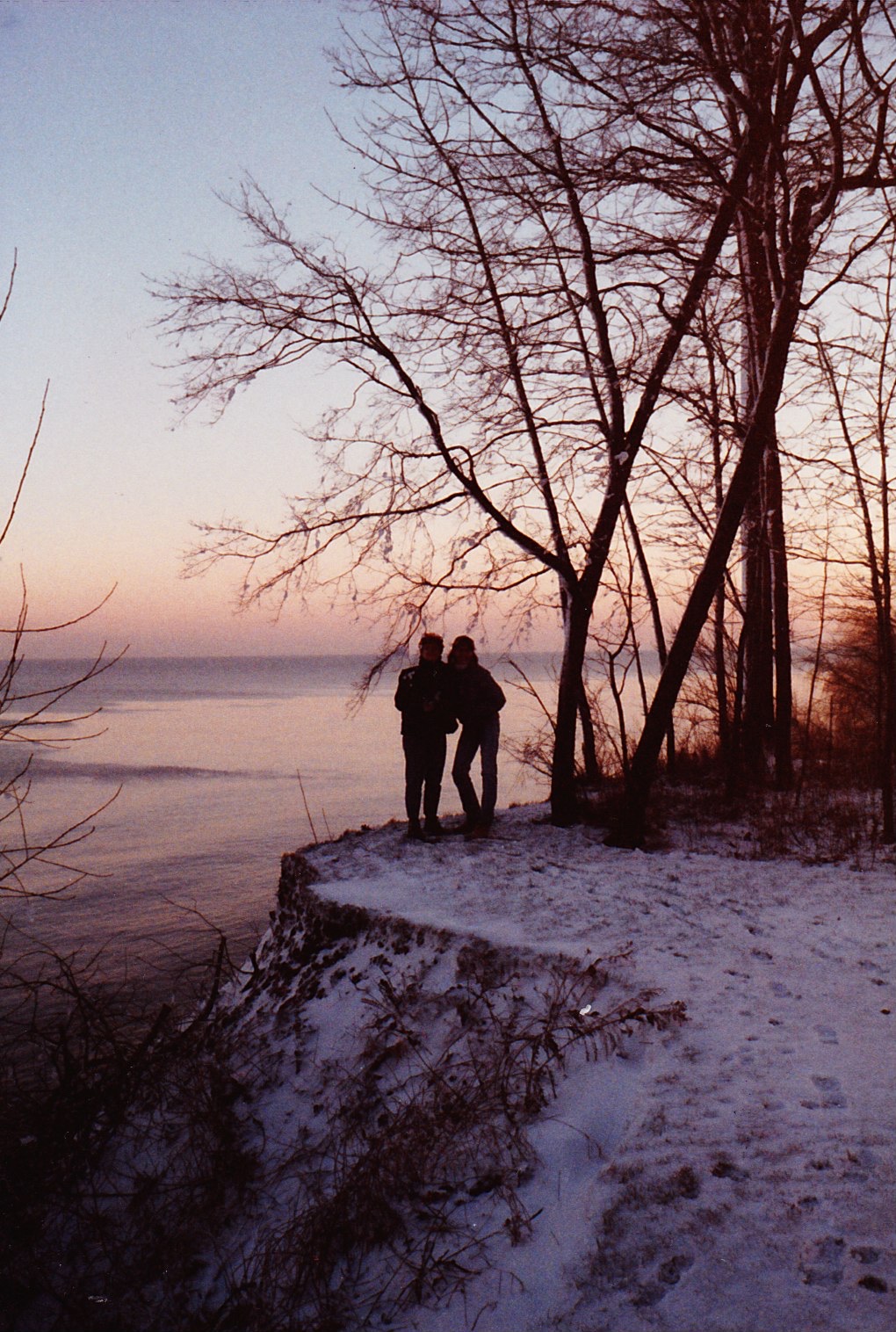


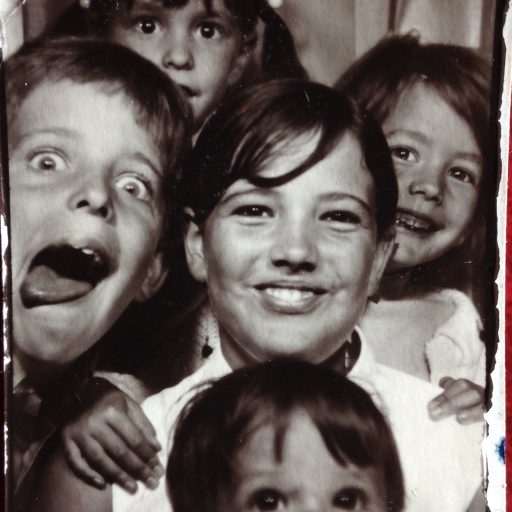
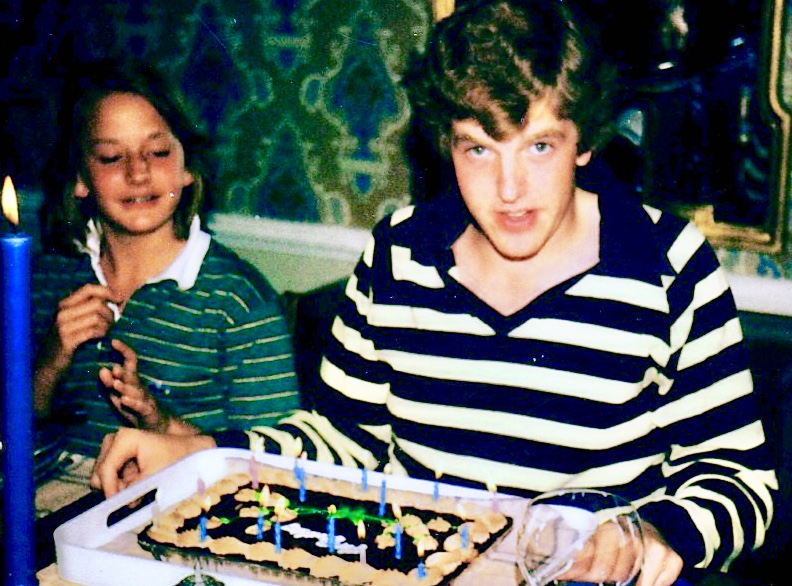




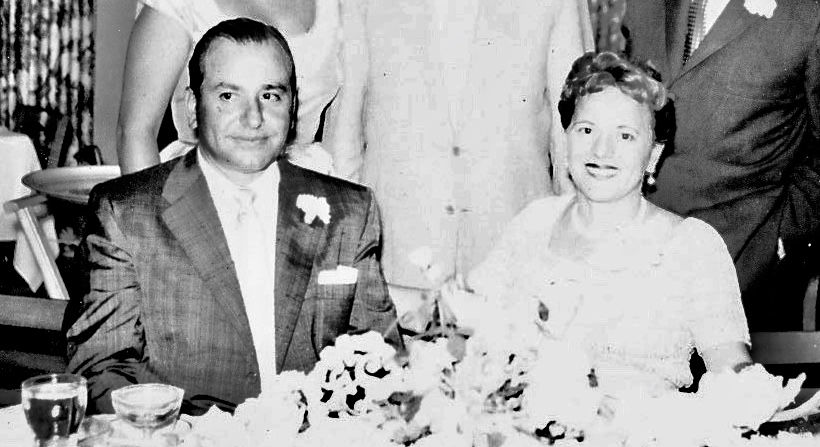
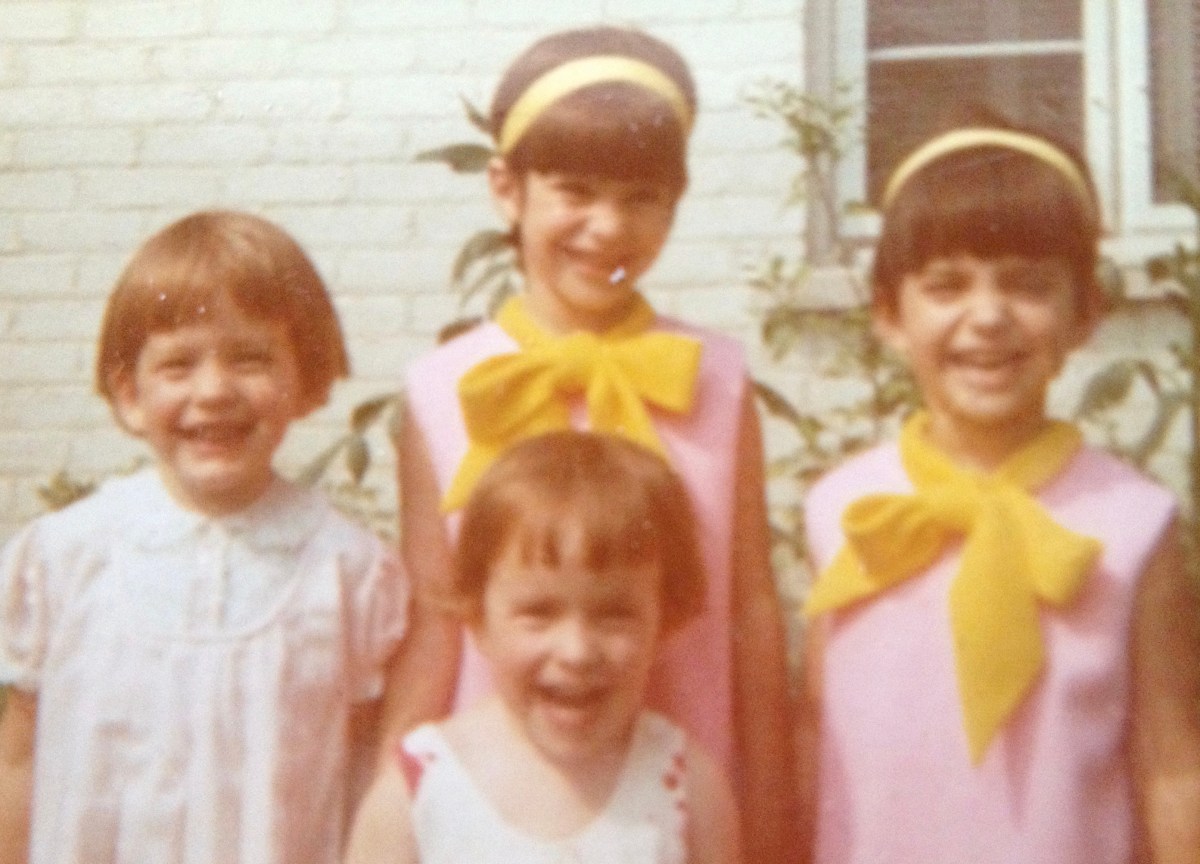






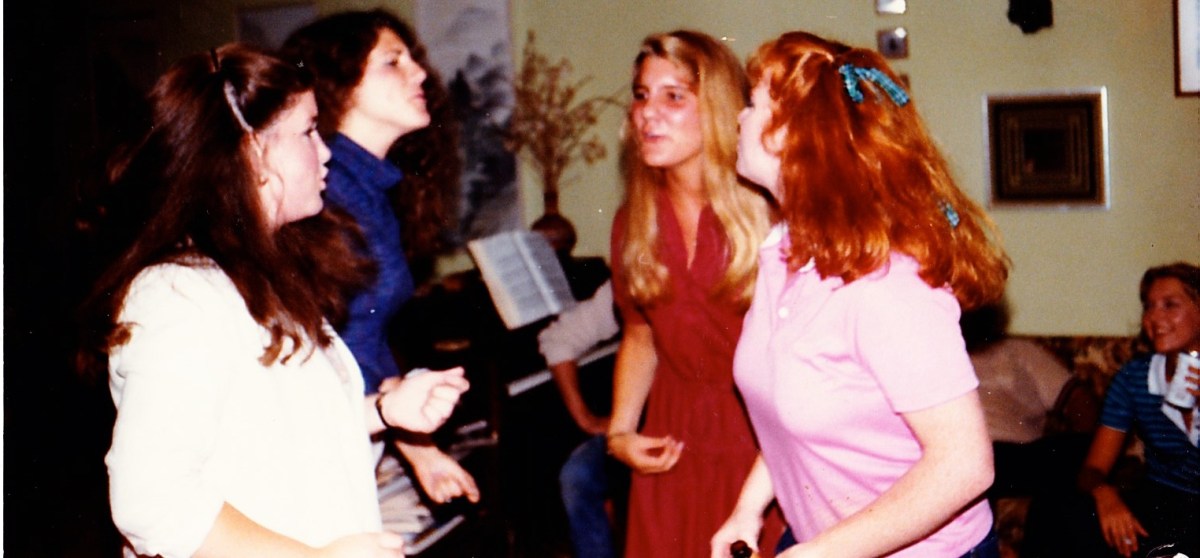
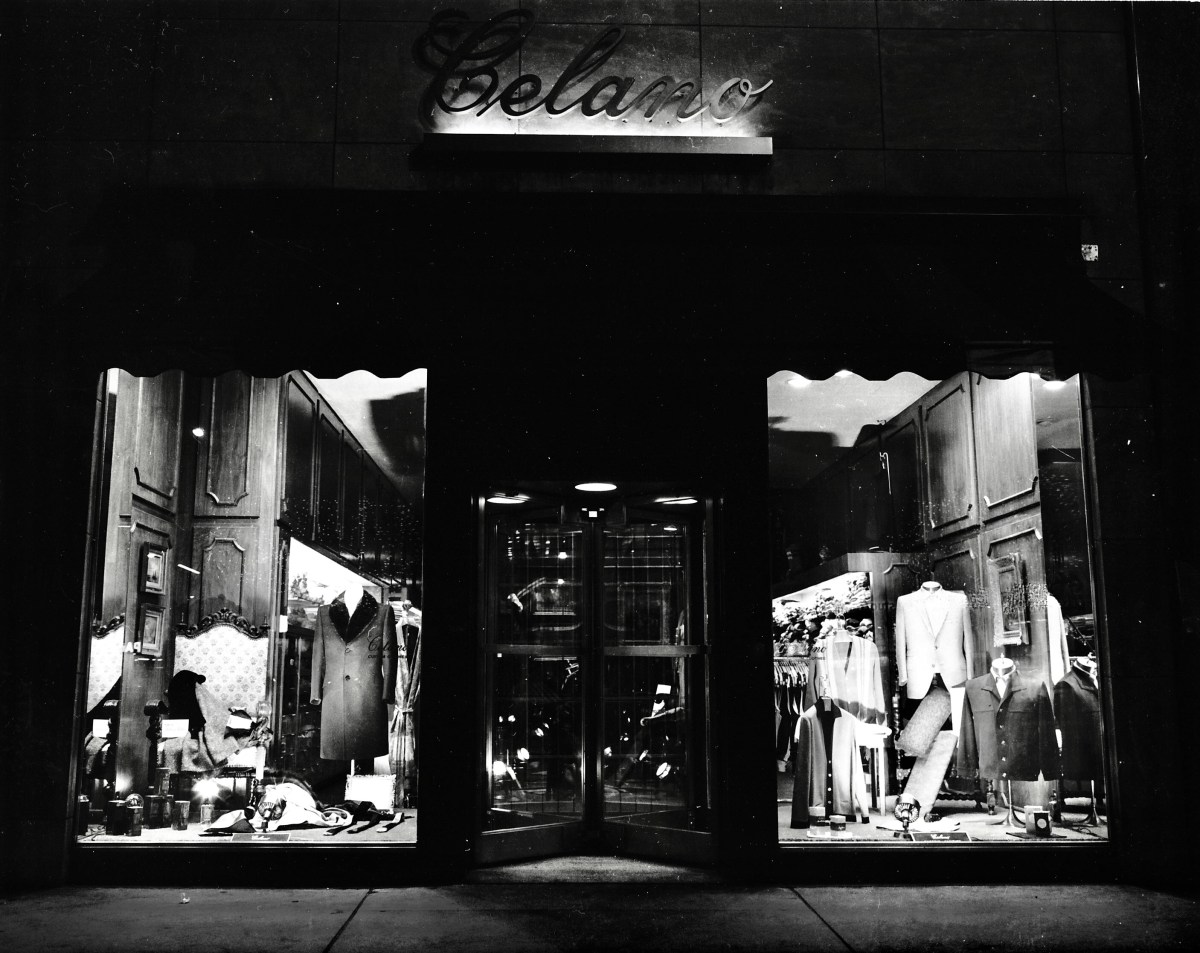
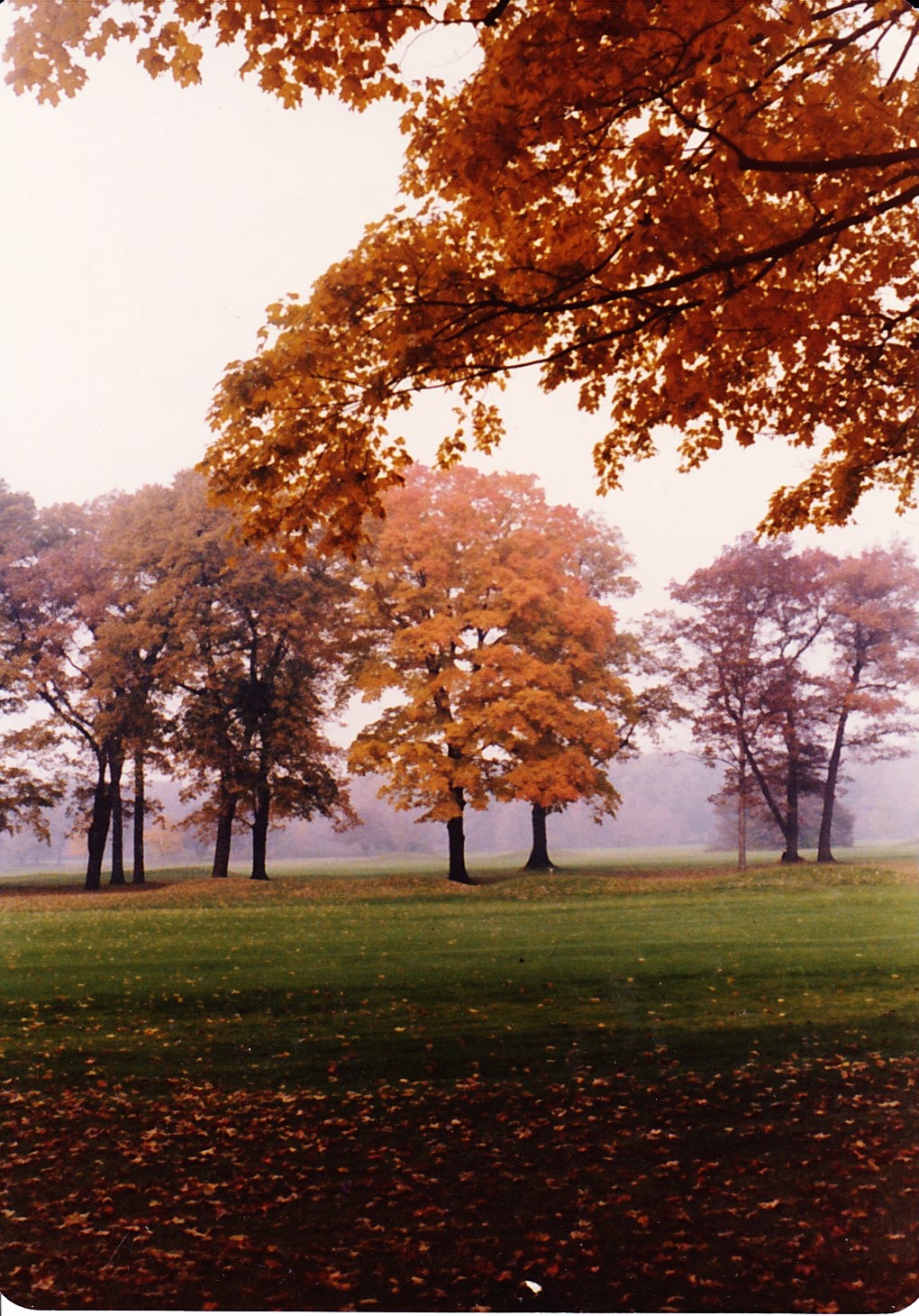








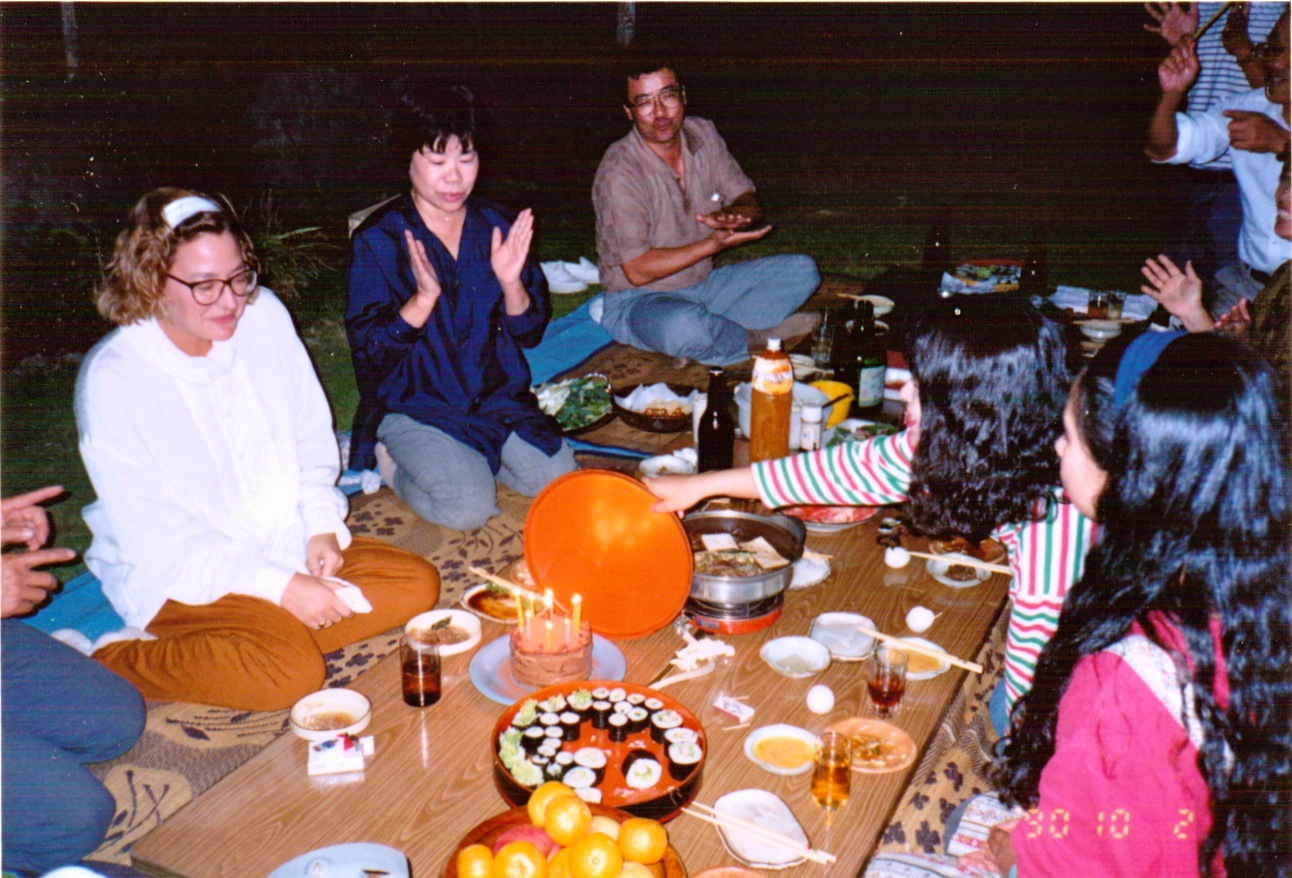
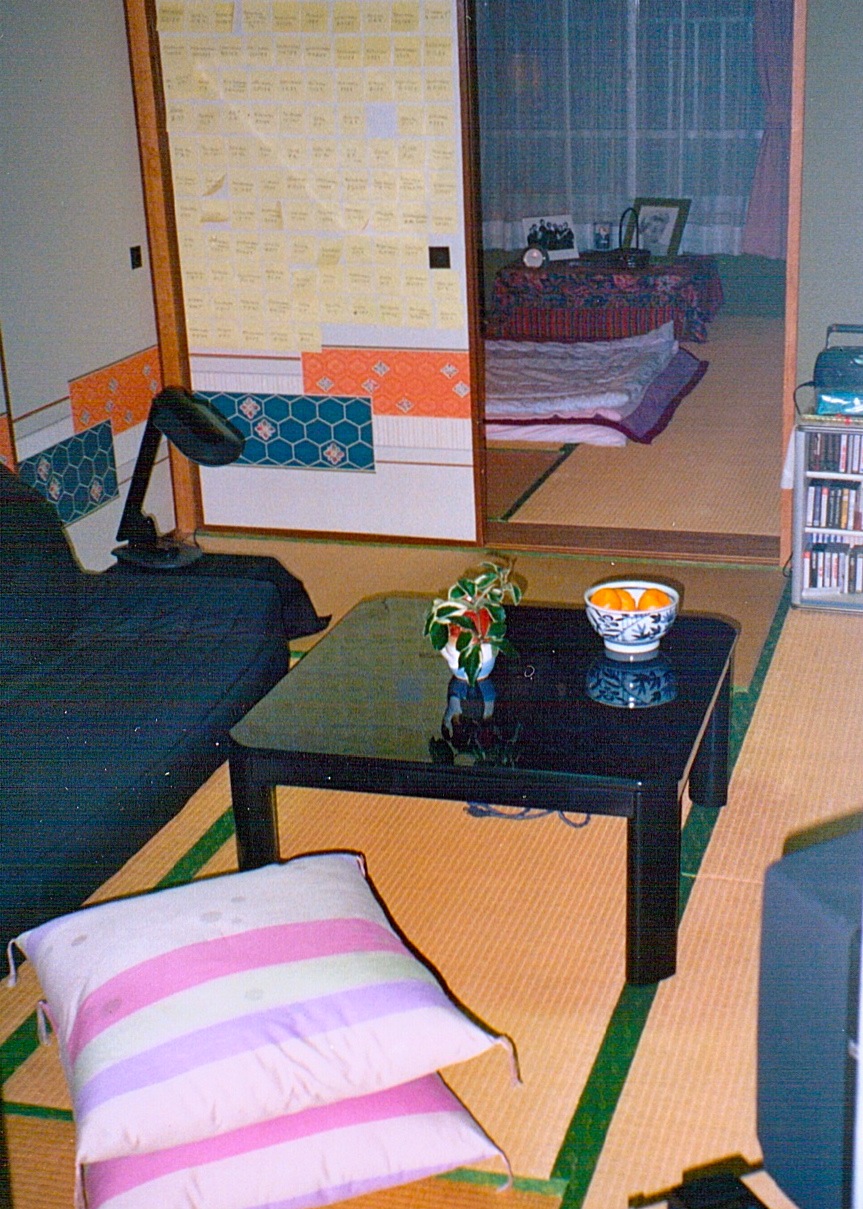

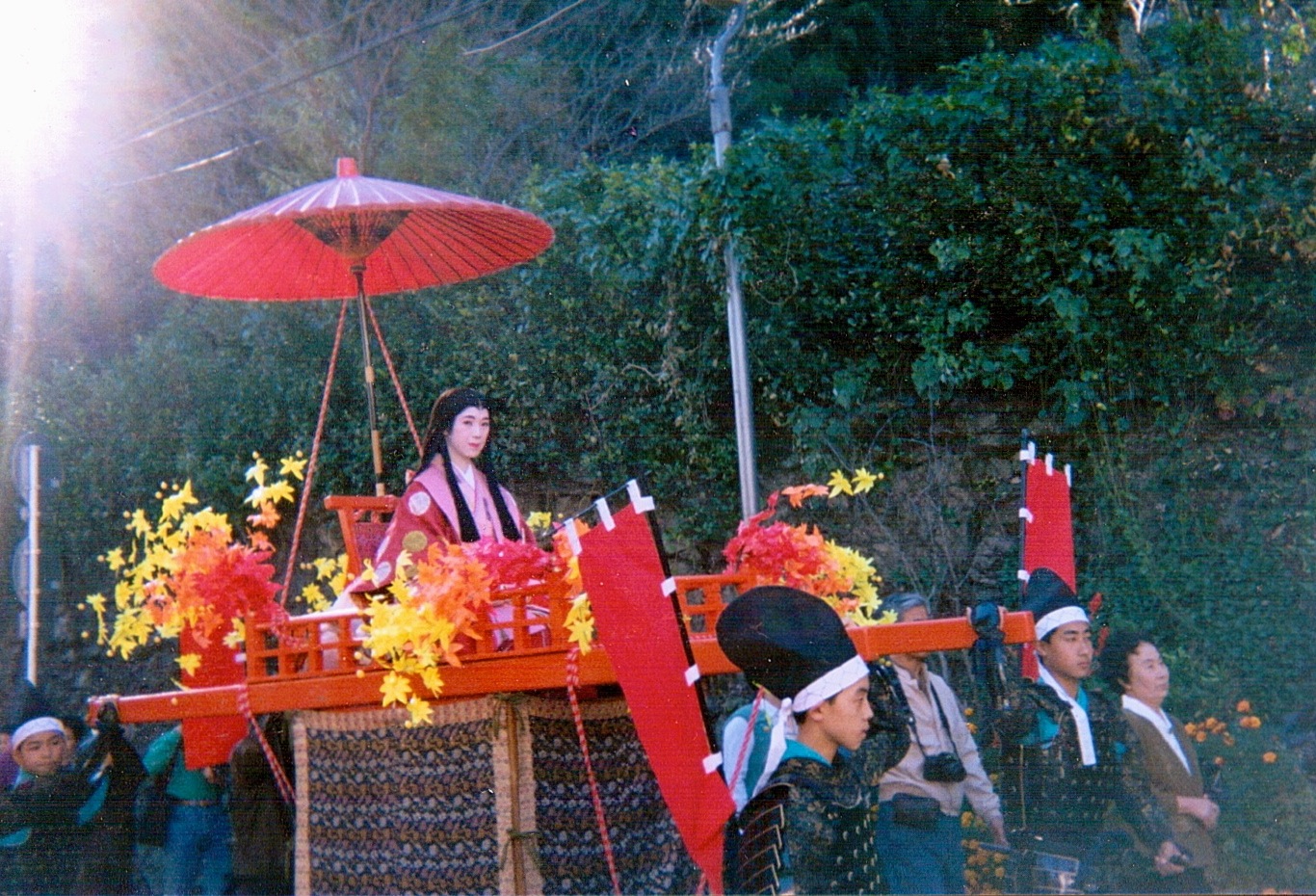




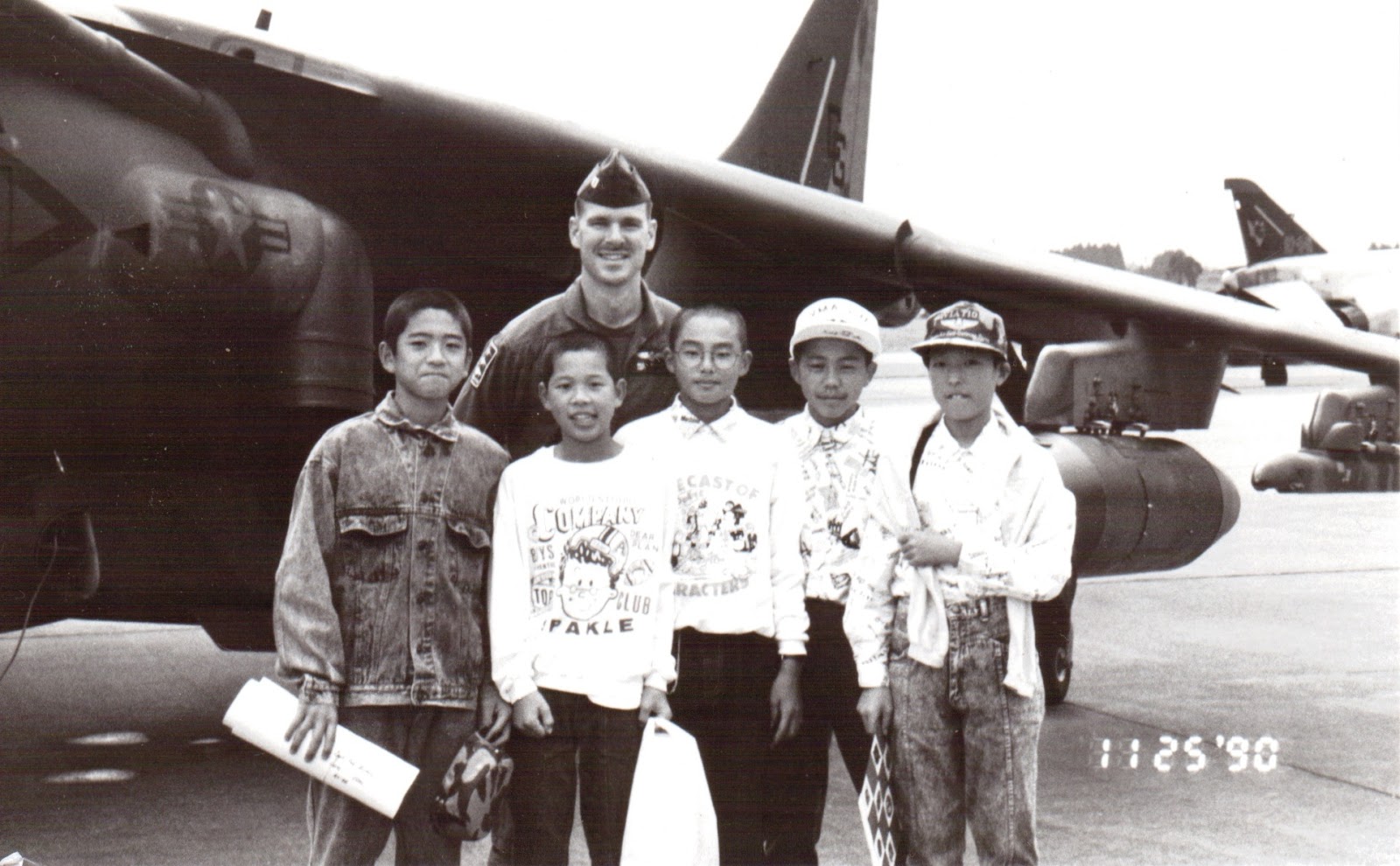
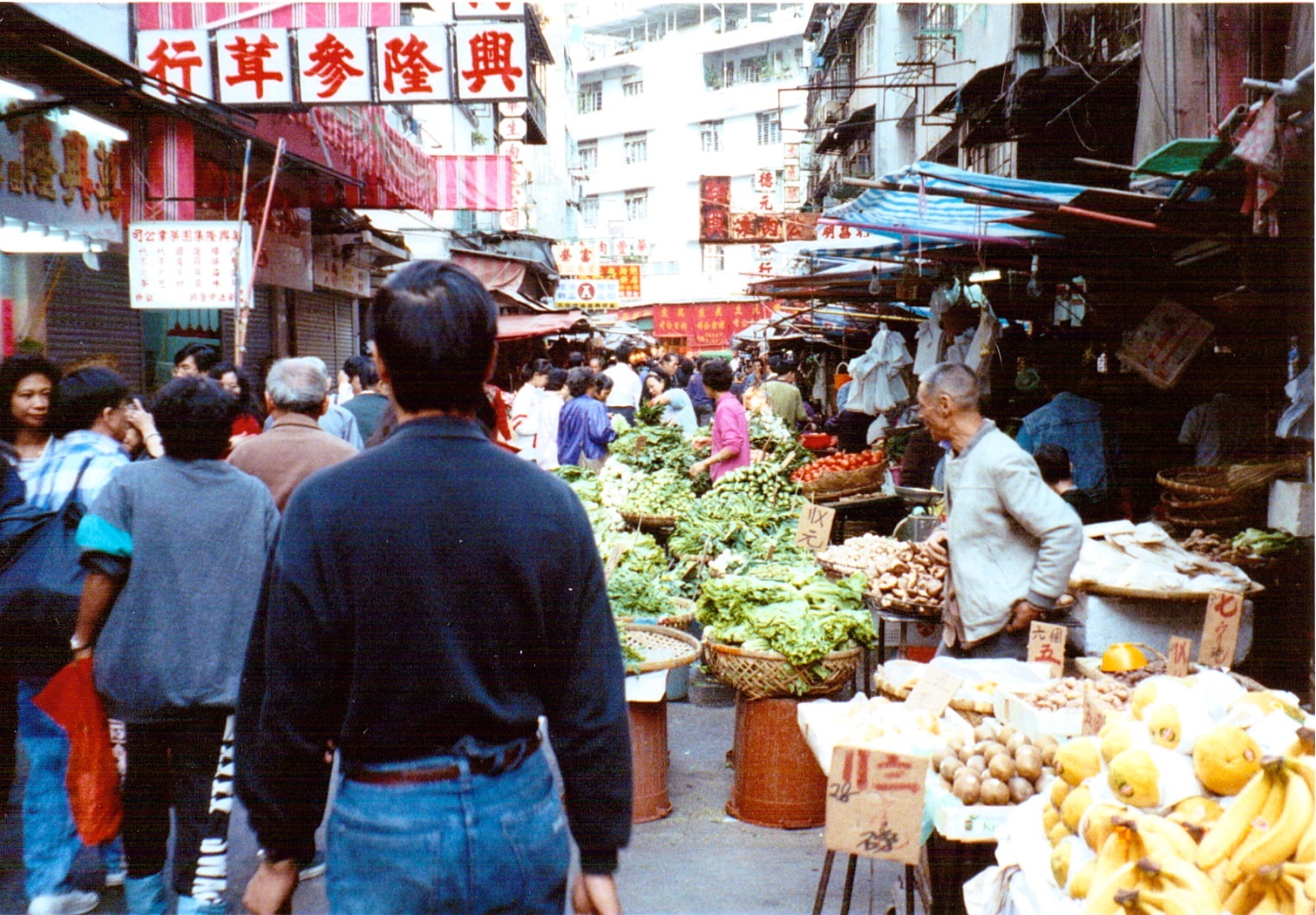


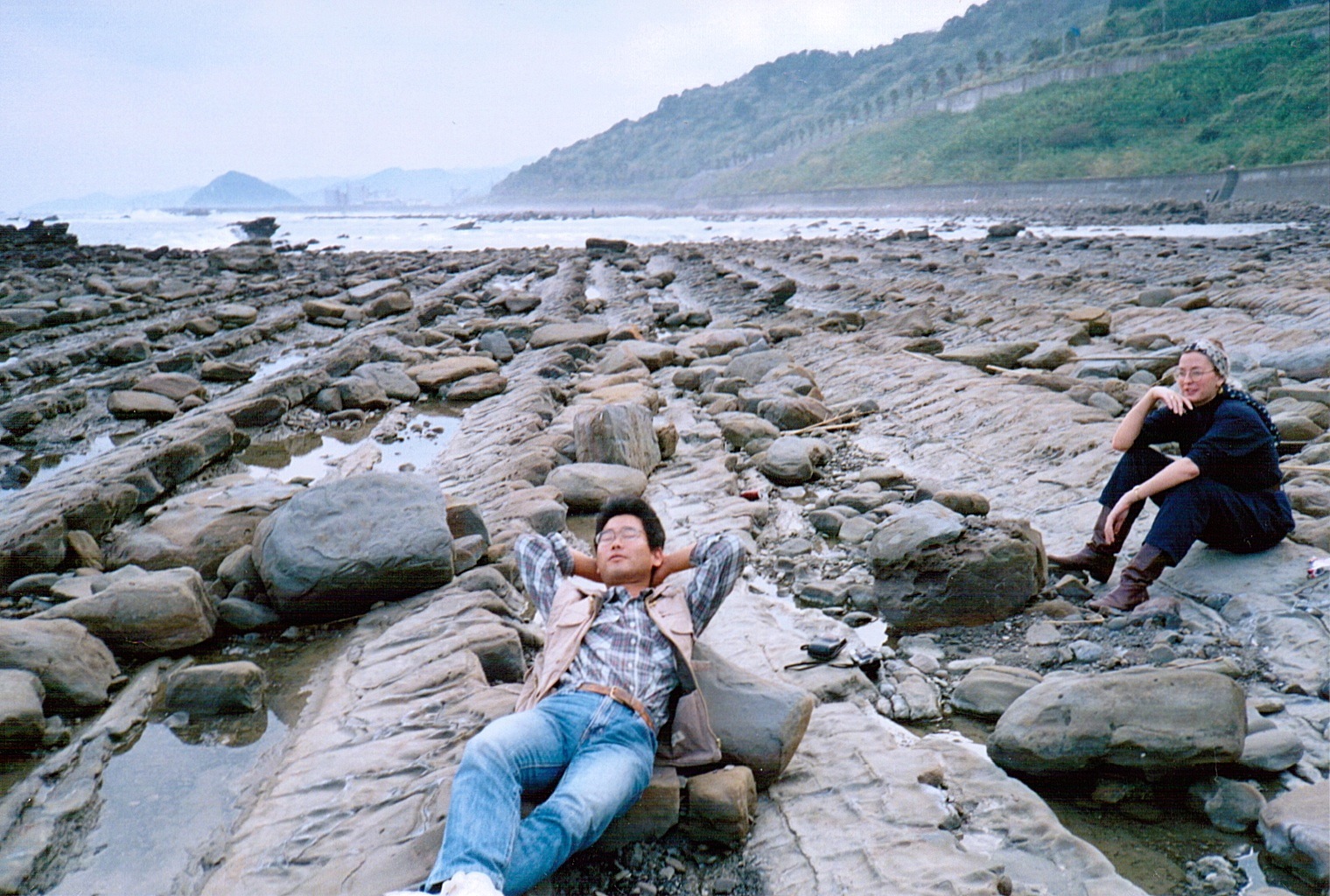
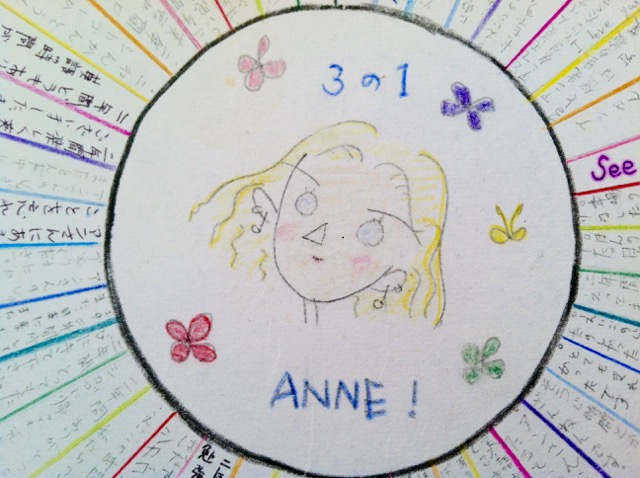
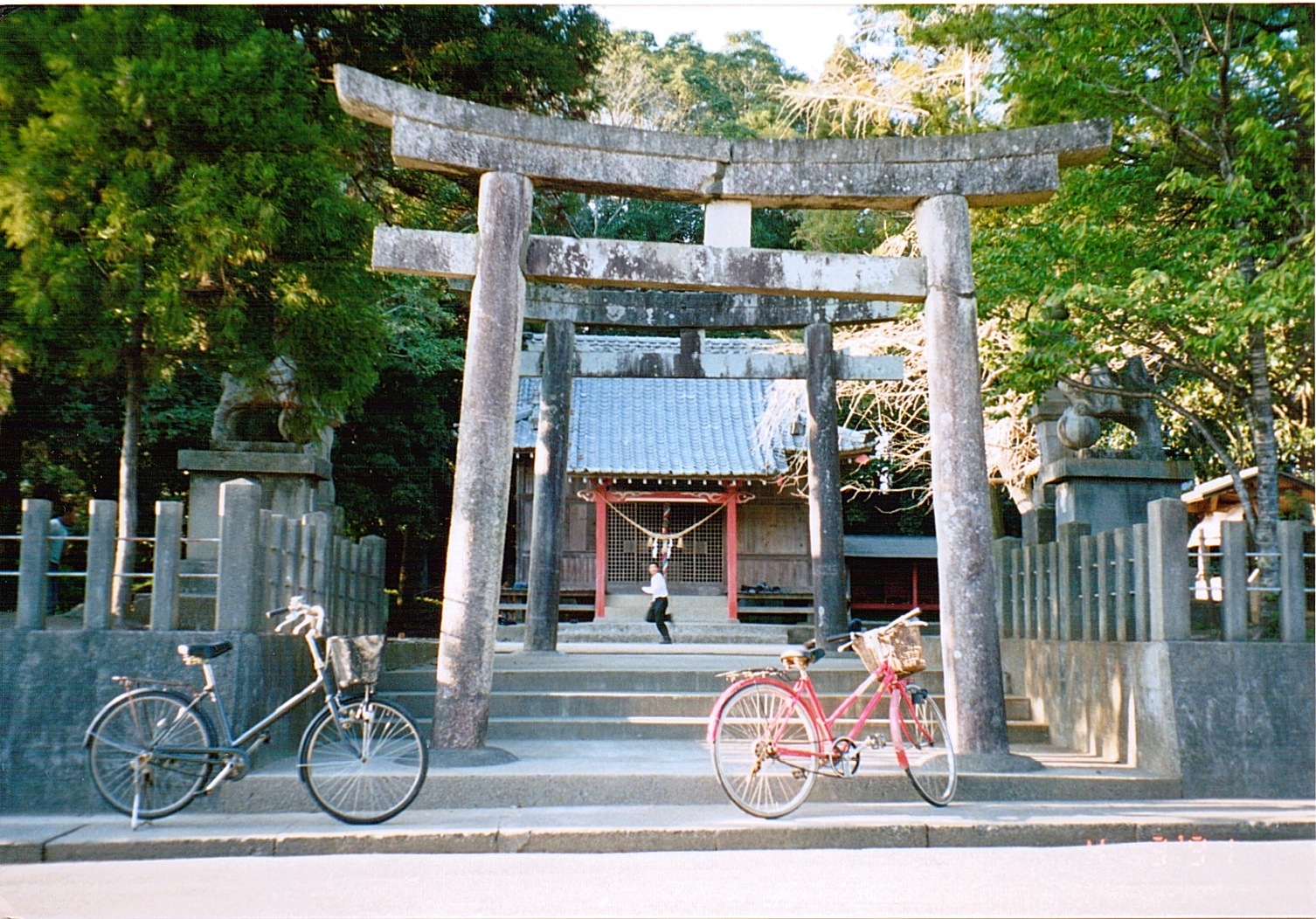



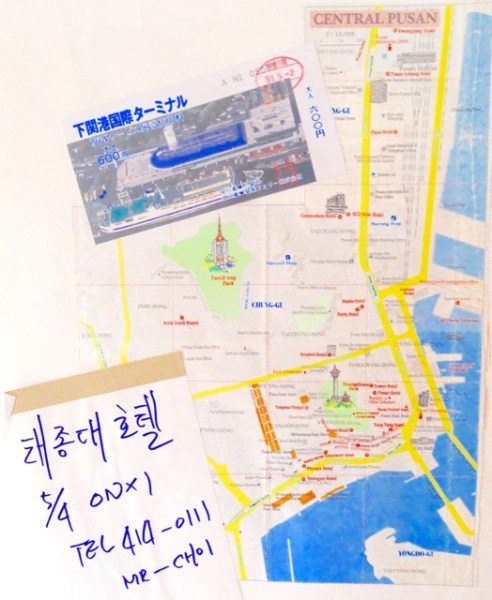

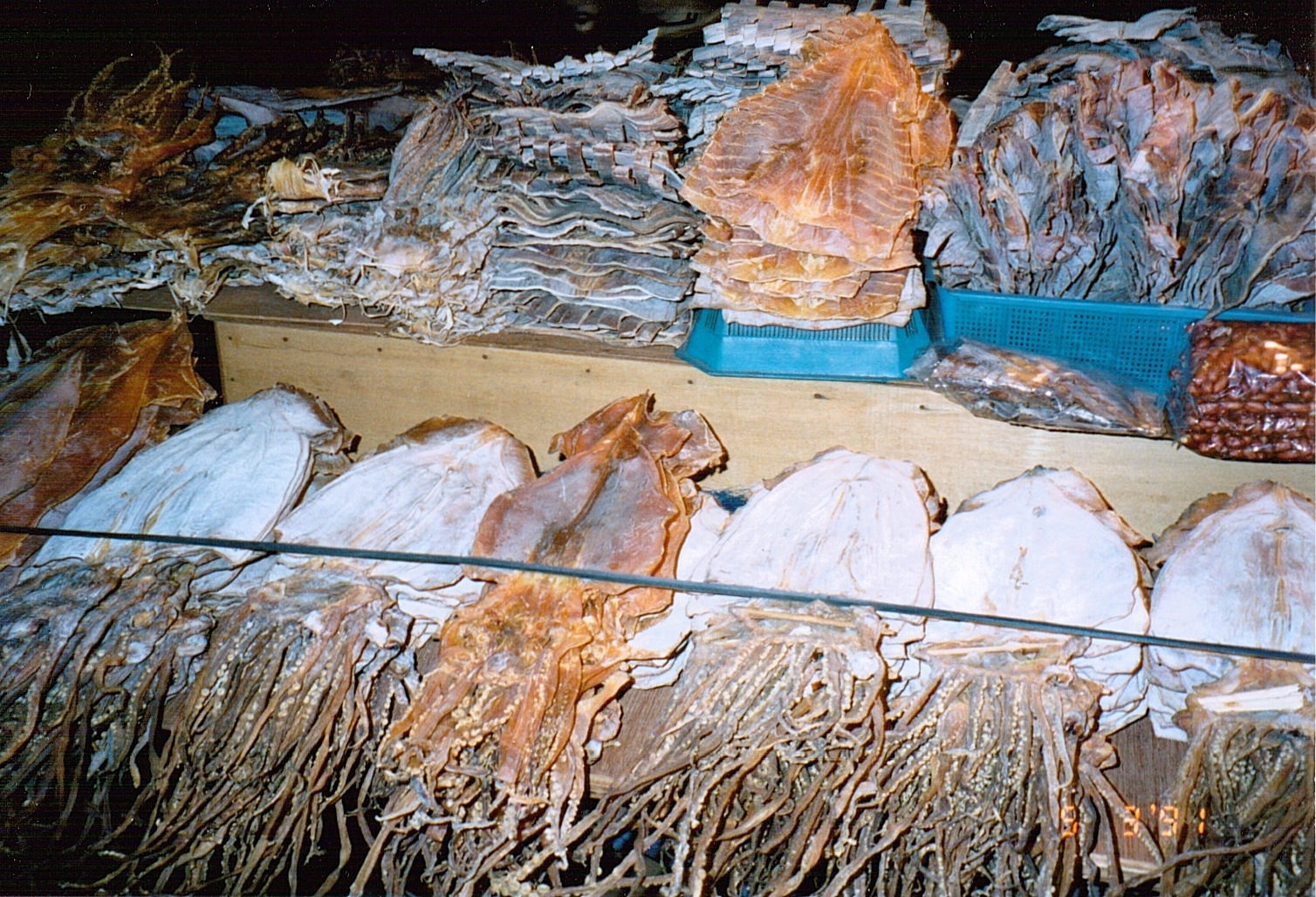

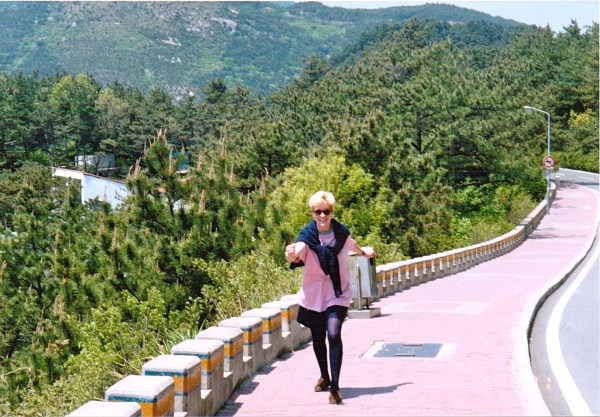



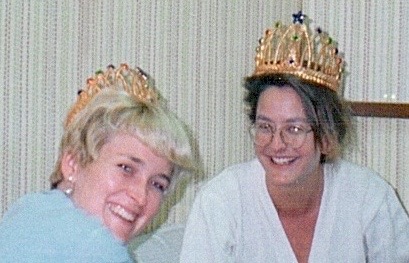















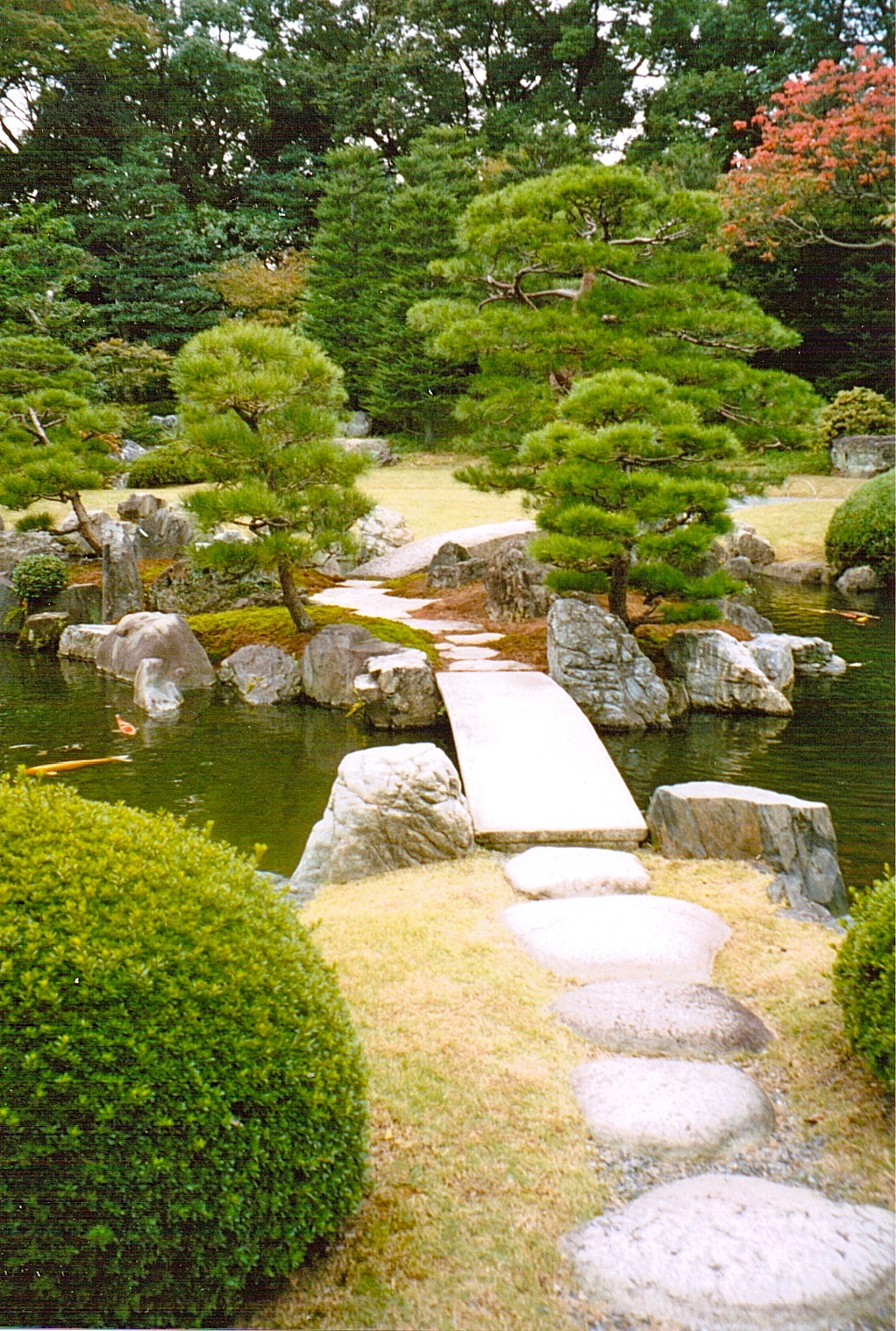
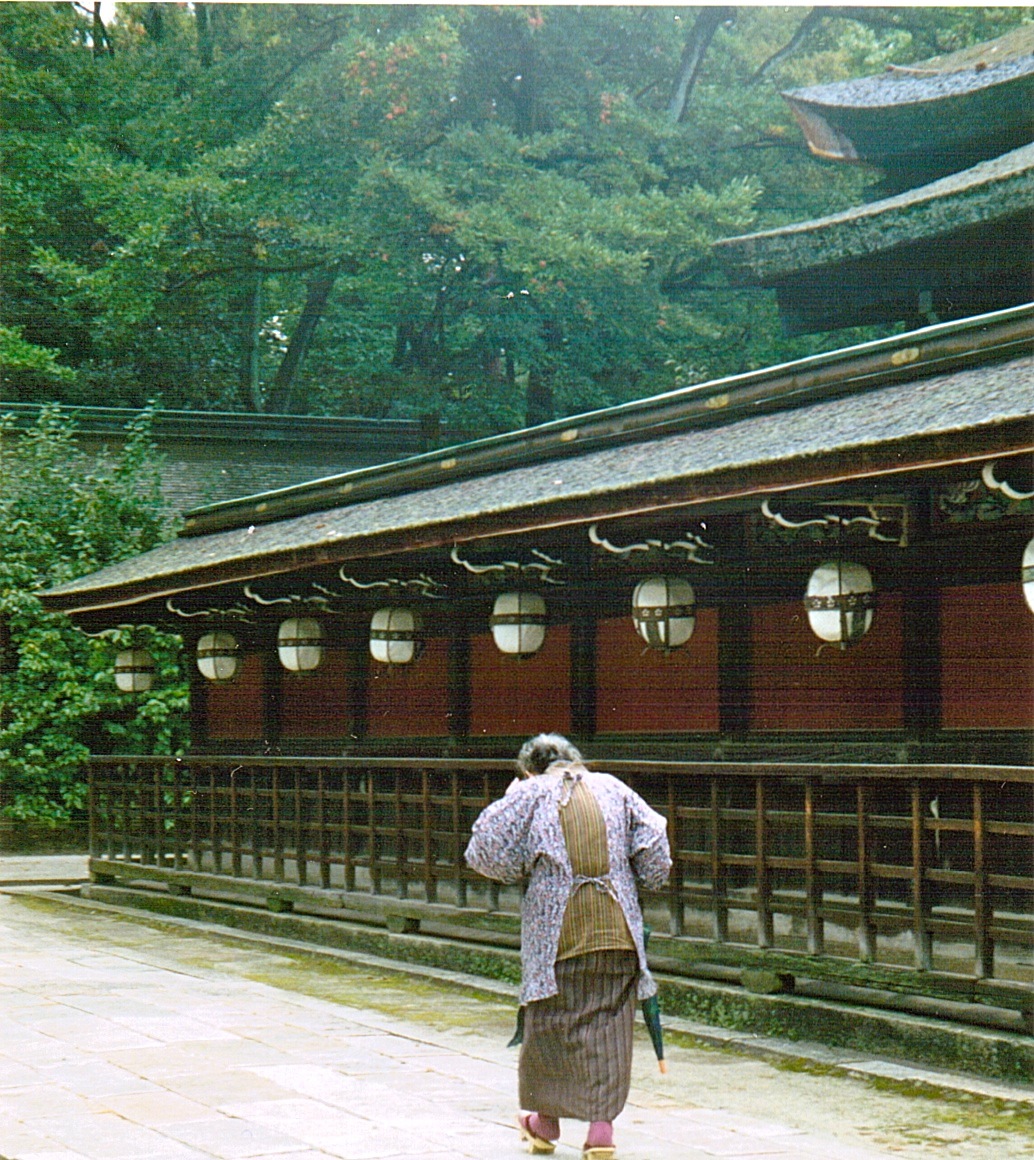
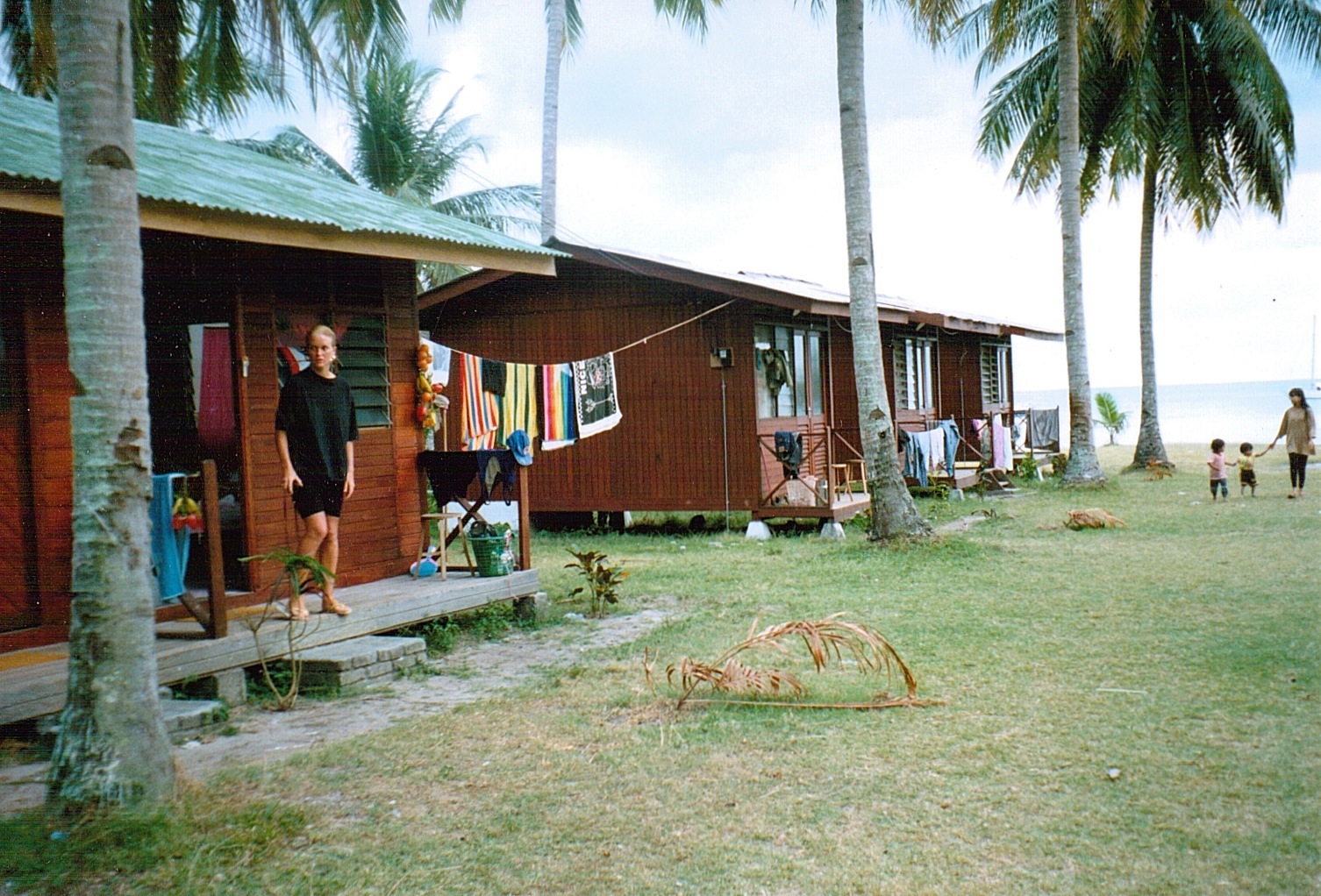


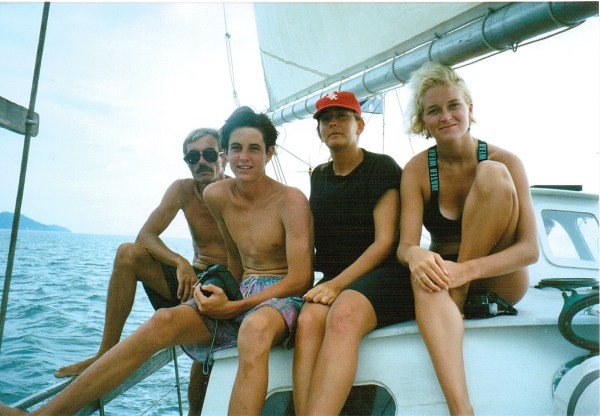
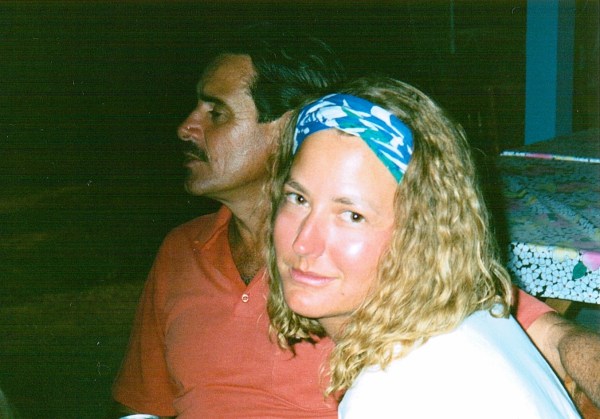


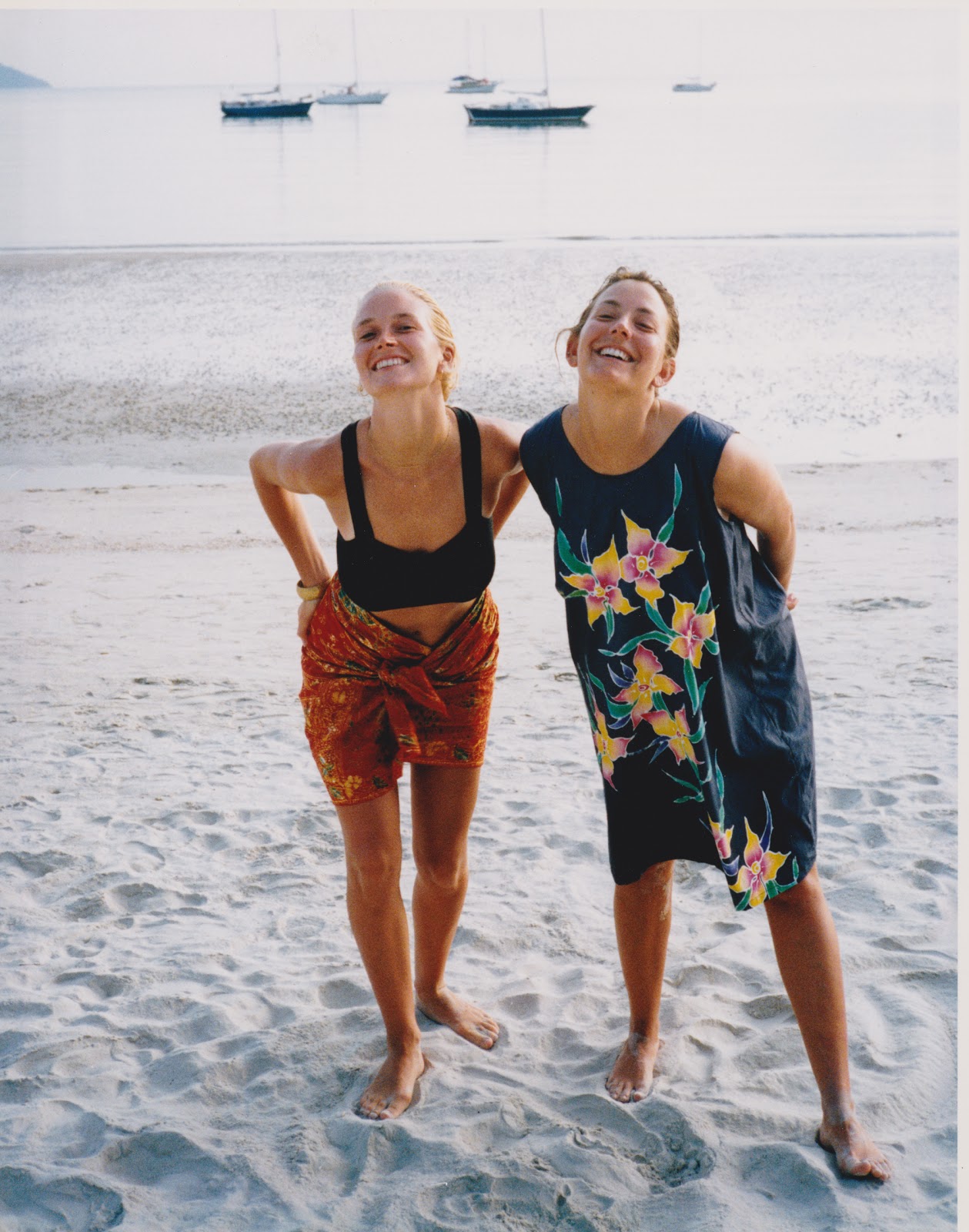
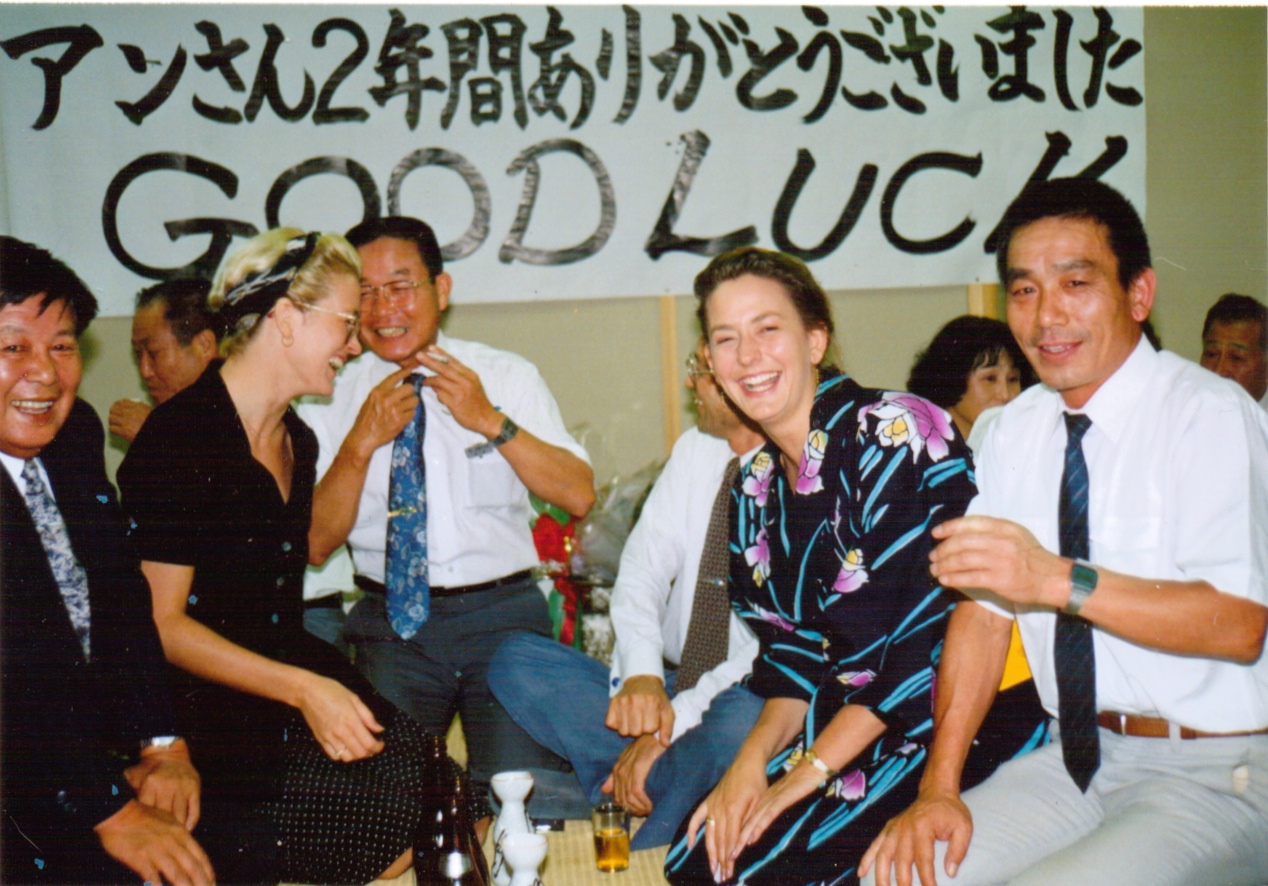
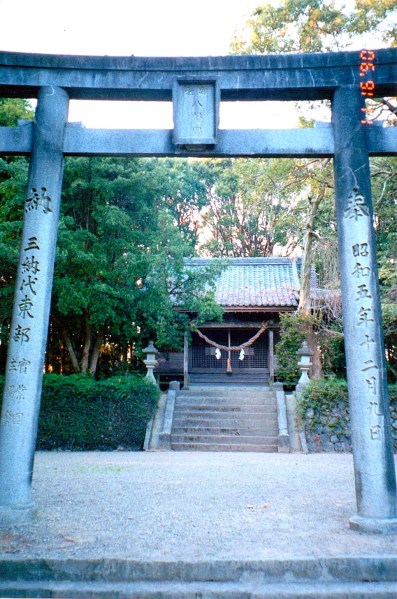


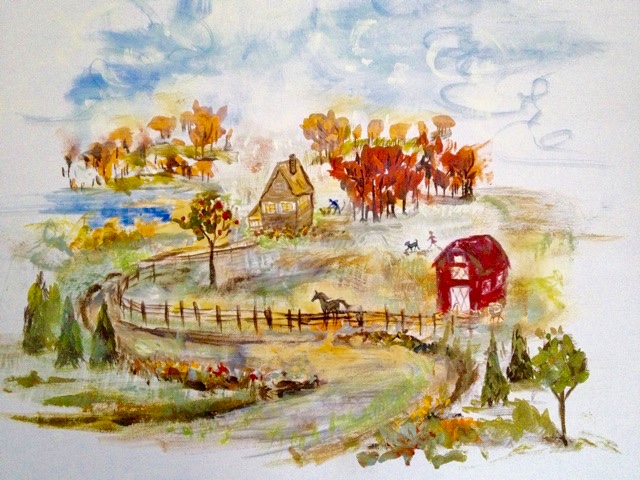
 Dog-eared Stories by anne celano frohna