the puddle

Today 

an impassable puddle 

veered us from our path

of happy, habitual loops

of frequent dog-walking tracks

taking us 

toward unused streets

of unseen sights 

and unknown treats

leading us down 

one age-old trail

a forgotten world 

awaiting

a history fading

where tilting quarry towers

whisper colossal tales

like sleeping, sculpted giants

who once built towns of stone

now long silenced 

and overgrown

such novel sights 

inspire us

to seek the zag

instead of zig

go right 

instead of left

shrug off 

the darkening clouds

and slow 

our wandering steps

combing piled and crumbling walls

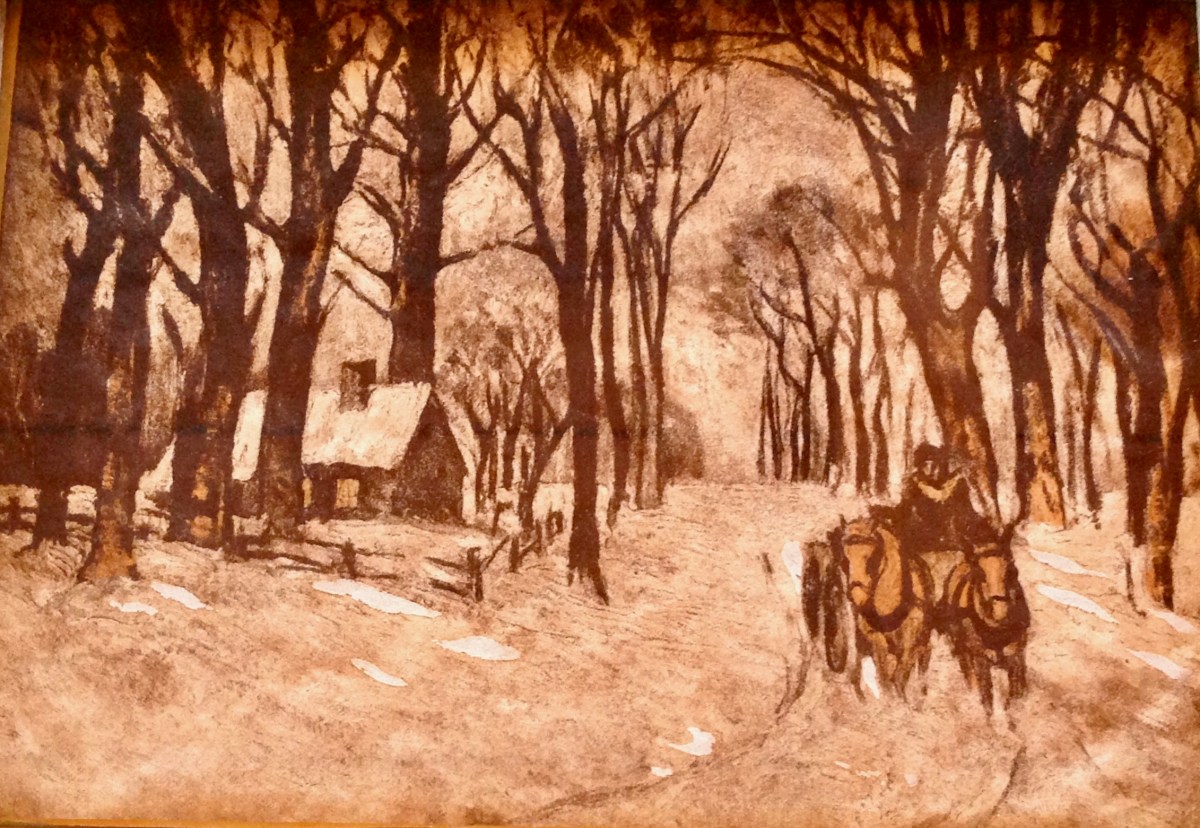
a horse and cart apart

round age-less, red-soiled fields

ever curious

ever hopeful

– for what treasures 

might they yield?

with every pocket loaded

with fragments of some past

we turn toward home

toward well-walked trails

inclined 

to let them pass

choosing once more 

less rambled streets

with spirits 

like our pockets 

filled

until we’re home at last

sevilla

in the soft rain

we leave the puddled,

quiet neighborhood

with quiet smiles

crossing the cobbled streets

where we tired our feet

lifted our spirits

searched for adventures

and something delightful to eat

finding unpretentious magic

and the rise and fall

of long echoed music

along the narrow streets

and shaded plazas

where hardworking waiters

dart back and forth

between a constant, quiet flow

of ever-changing faces

and quietly buzzing kitchens

one door down

or across the street

passing busy thoroughfares

where birds

still out-sing the traffic

and traffic

respects the process

of well placed paths

and being polite

everything moving

as a flamenco dancer

powerful

purposeful

graceful

otherworldly

yet never far from

shadowed sanctums

with colorful tiles

along grand palace walls

cool against my back

or in the generous parasol

of a giant tree

where there is rest

peace

untroubled by the noise of the world

and the noises in me

these now familiar sites

fading to vague silhouettes

fill my mind

with happy thoughts

as we quietly

disappear

troubled thoughts

apologies

to all of those

i’ve failed

within my life

the numbers

keep on growing

and the future’s

not so bright

i tell myself

i’m learning

and i’m changing

for the better

but the past

keeps catching up

and the now

feels

somehow

heavier

i know

that on the whole

i have a kind

and loving soul

but its bested

by my weaknesses

too yielding

to let go

ever waiting

for forgiveness

that i’ll never

truly

know

cause the mercy

isn’t coming

from the lives

that i’ve

let down

the mercy waits

within the walls

of my own

prison cell

the peace

i seek

stays buried deep

and

troubled thoughts

remain

as i relive

where i have failed

time

and time

again

sleepless

as darkness creeps

toward new light

i overthink it all

what’s done

and to be done

what lies ahead

and in my head

thoughts twist and tangle

tire me

and taunt me

as time tick ticks away

another day

and sleepless night

envious of my husband

fast asleep

in this crowded bed

dogs at our feet

but restless thoughts

won’t leave my head

so instead

i toss and turn

and fill my mind

with all but dreams

with hope

and regrets

with worries

and queries

and Italian drills

punctuated by clattering

down in the street

and still troubled lungs

that heave and squeak

so absurd

thoughts retreat!

for all i want to do

is sleep

my reflection

my reflection is a liar

it conspires

with my years

it tortures like an enemy

for what i see

brings tears

the sagging skin

the lips so thin

the lines around my eyes

the greying hair

the glow not there

does not reflect inside

for if it did you’d see me there

more beautiful than ever

more confident

much more content

and really rather clever

but the mirror likes to taunt me

likes to haunt me

with this figure

growing wider

cannot hide her

menopause the ugly trigger

yet I wouldn’t trade a single thing

and wish the clock reversed

i do not long for days of youth

for that would be perverse

each year has made me stronger

made me bolder

made me me

I would not give a wrinkle back

unsettling as it seems

my reflection is an honest friend

whose truth is often heavy

yet this weight i can bear

for the me right here

when not my own worst enemy

dark spring

a beautiful thing

this glory of spring

til dark descended

untold truths

foolhardy youth

false love defended

fragile pride

fear as its guide

lies unattended

seizing spring

song silencing

kind heart upended

feeds on the weak

manhandles meek

such bitter fruit tended

but truth is sought

hate does as taught

on this dependent

hope must in stead

look seasons ahead

to well-lit paths contended

the bells

ding… ding… ding…

bong… bong… bong…

another day the bells announce

that someone else has gone

ding… ding… ding…

bong… bong… bong…

three seconds pass between each chime

of this voiceless, gloomy song

ding… ding… ding…

bong… bong… bong…

reminding me so frequently

that life’s not very long

ding… ding… ding…

bong… bong… bong…

must make the most of what i’ve got

before the got has gone

ding… ding… ding…

bong… bong… bong…

persists inside my mind

ding… ding… ding…

bong… bong… bong…

when will the tolls be mine?

except no bells will ring for me

no priest will speak my name

no body will be carried forth

to rot in some marked grave

just as the notes that disappear

when all the bells have calmed

thoughts of me will likely be

forgotten before long

ding… ding… ding…

bong… bong… bong…

she prays

she prays a lot

feels all she’s got

to change her lot

sadly

and radio gospel

being screamed

it just sounds mean

frankly

praying for miracles

one-stop cures

for living the same life

daily

desperate to change me

insists i start praying

only jesus is going to

save me

intentions heartfelt

but her home is awash

with habitual mayhem

disharmony

‘cause nothing but prayer

desperate grasping at air

will get you nowhere

most assuredly 

and why must i pray

when i strive everyday

to live this brief life

mindfully 

while she prays a lot

certain it’s all she’s got

ignoring the truth of it

blindly

but i take it in stride

got nothing to hide

and nothing to prove

really

I’ll lend a kind ear

bear laughter through tears

be a friend being me

quite naturally

My Friend

My beautiful friend,

with the beautiful smile.


Weighted by fear.


Flattened with worry.


Seeking happiness,

without finding your own.


Keep it simple.


Keep it clear.


Take a long, deep breath.


Then another and another.


Take hold of that which gives you power.


That powers your passion.


That fills you with fire.


Be fearless.


You’ll soon find the you

that smiles more than once in a while,


and made you my beautiful friend,

with the beautiful smile.

the curmudgeon

he’s a difficult man

well known through the town

an unfriendly coot

with a permanent frown

daily seen in a terrible mood

short-tempered

offending

unflinchingly rude

living just feet

from the door to his life

witness to the grumbling

he makes of his life

i can also attest

to the flash of his smile

to his generous nature

(when not being vile)

It takes very little

to stir up a fuss

to feel the sharp sting

of this old sourpuss

yet being good neighbors

to his sort in the past

we found simple kindness

sweetens sour moods fast

it doesn’t take much

to shed light on the dark

to simply accept

that there’s bite and there’s bark

that below the rough surface

all calloused and dry

beats a sensitive heart

lives a pretty nice guy

so i try to turn cheek

to his commonplace gripes

to the misplaced resentment

he’s let run his life

a constant reminder

how to live and let live

to accept what we can

and to give what we give

The Baroness

I caught a glimpse

through the old green shutters 

of the big stone villa 

just off the piazza

heading to the dusky streets

to join the others

in search of reprieve

from the unyielding sun

from the infernal heat,

with dogs at our feet,

anxious to move.

Maria sat alone

on a comfortless chair

pushed against a tall wall

in one of two rooms 

of the many-roomed villa

where she now resides;

motionless

like loneliness 

perched on a chair

in a small stuffy room

of the once grand manor

all but abandoned

save for Maria.

aware of each other

through the old green shutters

of the big stone villa

just off the piazza

i turned from the scene

an unwitting intruder

as Maria stepped forward

and closed the slats

of the old green shutters

shutting out the street

her neighbors

my notice

the night

relief.

The Baroness

(i heard her called)

in quiet 

cloistered

retreat.

the dark

it swells 

and surges

shrouding all

in sudden gloom

potent

impatient

unforgiving

unyielding

stealing the air

the breath

self-love

the truth

intractable tears

intractable fears

too sad to fight

so far from light

grabs hold

holds tight

dark days

they come

black thoughts

they go

oft powerless

to move them so

await the light

that’s sure to come

accept the murk

be present

be calm

the dark 

is part

of who

I am

Consiglia

The sun was melting into the skyline when Consiglia decided she needed some air.

Though hot and stifling – almost as suffocating out of doors as in – she needed to move, or surely she’d go mad.

Each day had been growing hotter.

And hotter.

One could feel the trapped heat rising from the narrow streets.

Even the patches of shade, which usually offered instant relief, had succumb to the relentless sun.

It was as if the small town where she was born, the tiny, tired home where most of her family had lived and died, and the familiar streets she had rarely left, were smoldering.

Seething.

And each day the temperatures rose, his tolerance for her grew shorter.

And meaner.

Meaner even than she had gotten used to after thirty years at his side.

Under his foot.

In his control.

At least, she convinced herself yet again, he had never hit her.

The absurdity of this thing she repeatedly told herself to be grateful for, made her shake her head and grimace, as she slipped out the door and onto the ancient cobblestone street.

Not even nightfall was offering much relief from the heat and although this was the height of the tourist season, and a time of year when life was usually buzzing joyously around the main piazza, this night was unusually quiet, with only a scattering of people at the piazza’s two cafes.

For this, Consiglia truly was grateful.

She didn’t want to see anyone she knew – she had known her entire life.

Even the thought of a moment’s eye contact with a stranger made her panic (being certain it would cause her to burst into tears out of sheer jealousy that they were from anywhere but there), so she slid along the dark walls of attached homes and darted down the nearest street.

The same excuse pounded against her thoughts again and again: At least he has never hit me.

So mocking and repetitious were the words, she put her hands to her ears to try to block out her own thundering thoughts, finally screaming, “ENOUGH!”, then scanning the road for someone who might have heard. 

No one heard.

But oh, his brutality, she nearly laughed aloud, is generously dished out by other means.

Bitter, cruel words inflicting wounds much deeper than any cut to the flesh.

Each slicing to the soul.

To the self.

Leaving scars that never heal and a human being now halved, and half believing.

The all too familiar neighborhoods of the small town soon gave way to old stone walls and burgeoning farm fields where the meager winds, unfettered by buildings and asphalt, were liberated, and the air felt a little fresher.

Freer.

As she longed to feel.

She picked up her pace as dark thoughts and nasty words became the only inhabitants around her.

Consiglia had no direction in mind, but it didn’t matter in the least, as long as it was further away from him – from the yelling and the belittling and the normalcy it had all become; as chronic as cooking three meals a day, hanging out the laundry, sweeping the stairs… hiding the hurt.

She finally stopped below of wall of Jasmine in full bloom and took a long, deep breath. The overwhelming sweetness of its fragrance made her happily dizzy, so she sat beneath its thick, trailing vines, at the side of the dark, desolate road and wept, like she had never wept before.

Her body convulsed.

Her throat released a moaning so low, loud and guttural that it frightened her. But there would be no stopping it until, like the cries of a dying animal, all its life had been released.

This would take some time.

When, at last, the moans had subsided to quiet whimpers, she lay down with her head in the dirt and dead leaves, closed her swollen, stinging eyes and rested there until her breath returned to normal and her mind turned to tomorrow.

She knew she could stand no more like today… or yesterday, last month, or last year…

Consiglia had had enough.

Slowly, she picked herself up, brushed the petals and dirt from her hair and her clothing and in that moment, felt as if she was brushing away all that had been and all that she had allowed her life to become.

She began walking again, taking the first, slow steps in the direction of town and then stopped… and taking a long, slow breath, turned in the opposite direction.

Having no idea of what she would do, or where she was going, she smiled and picked up her pace knowing only that there would be no going back.

from up here

i like to listen

from a comfortable spot

one floor up

above the rituals

convivials

the sounds still strange

against the quiet of the woods

where we long lived

wildlife sounds

now daily drowned

by the buzz and the grind

and the being of humans being

the doing and noisemaking

the taking and giving

the incessant chapters

of our daily living

some days, I like to stay where I am

onlooker

simply listening in

while others, when the heart knows best

to be in some part

part of the rest

of life down there on aged streets

beaten and still beating

yet I prefer the quiet above

where I listen to the rhythm

which begins before dawn

sputtering its first beats

persistant

perpetual

life is so predictable

in this everday town

moving with the light

to find a spot that suits me right

for thinking

for creating

the days of just enduring

connecting times and lives

like single notes

of a singular song

which floats up and in

to the quiet within

to where I sit and wonder

how these daily strains

sound against the tune I sing

the notes I bring

if anything

from living

root

roots winding

between the potholes 

and the patches 

over many imperfections 

and alien frustrations

simple wants for most

then simply getting on

tradition haunts 

this tranquil place

of life out of doors

of milder days

of voices singing

like no one’s listening

like the whole world’s listening

familiar faces 

dot shadowed streets

branching outward

yet firmly planted

in stone layered places

with telltale traces

and sometimes open gates

where we long to peek

into still-life courtyards

and mostly quiet lives

shaped by sonorous voices 

upending the peace

with a whistle

a greeting

an impious burst

generous and guileless

connecting us

helping branches daily lengthen

roots strengthen

here bedded center

mid the measures 

and the layers

still life

in the mid-day hush

unmeasured steps sound sharp

against the old stone walls

down wall-to-wall streets

empty

quieted

with the afternoon’s retreat

such solace here

in the daily lull

in the whispering breeze

in the shutters closed

and the silence within

haunting the village

while most in repose

knocks and creaks

sole company sought

midst aromas entwined

with unquiet thoughts

smoky

savory

sweet

give comfort when the mind is weak

none but a pensive cat upon a wall

will fix its eyes upon the passing

until a corner turned

intruders in this still life

begin fading

Castaway

the view from the window begins to change

from tidy, green plots bound by old stone walls

to countless streets, crammed and confined

swarming

clattering

unsettling the mind

excited and antsy to explore different spots

to stroll past the shops, savor new delights

to feel the tempo of a city, tangled with possibilities

populated

sophisticated

drifting as a castaway through its gritty complexities

the fashionable women and chic boutiques

the trendy cafes and stark, urban scenes

past the homeless on corners and downturned eyes

commotion

congestion

the traffic fumes rise

nothing but a stranger here

nameless face in faceless crowds

intriguing to get lost in, but longing to get out

ill at ease

now fatigued

the lure no longer about

all my thoughts now turn to home

to sweet-smelling air and generous smiles

a small, happy cog in a small town’s life

well-embraced

treasured place

simple pleasures, quiet life

eager to finish the business at hand

we grab a quick bite we don’t normally have

and pick up our pace as we aim for the station

for home

to roam

our small town salvation

Autumn days

autumn

stirs 

comforts 

nurtures me

frees me to find serenity

in the waning daylight

and cool, quiet nights

where the autumns of my youth 

in my autumnal mind

live comfortably 

midst blazing yellows, oranges and reds

set against sullen, gray skies

midst morning fogs

and melancholy thoughts

soon rising 

to meet the falling leaves


autunno

si agita

comodità

mi nutre

mi libera per trovare serenità

nella luce del giorno calante

e notti fresche e tranquille

dove gli autunni della mia giovinezza

nella mia mente autunnale

vivere comodamente

mezzi ardenti gialli, arancioni e rossi

sullo sfondo di cieli cupi e grigi

in mezzo alle nebbie mattutine

e pensieri malinconici

presto in aumento

per incontrare le foglie che cadono

walks with you

what would I do

without walks with you

where would I be

without you next to me

each step we take

leaves in its wake

the darkness

daily haunting

each fragrant flower

each passing hour

in silence

no words wanting

the air smells sweet

but can’t compete

with walking by your side

the roads are long

stone walls so strong

but not like you and I

when my mood’s black

aches in my back

i take your hand in mine

and head out down

some well-worn path

to find myself again

where would i be

sans you and me

putting miles upon our feet

wondering

wandering

quietly thundering

with you at my side

i’m complete

Guilt

so powerful

so sorrowful

such nonsense

yet invincable

errors made

dues thought paid

likes to haunt

my nights and days

two daughters

lives still very new

for me to say

it’s all on you

brings guilt

each day

from miles away

i feel the pull

should we have stayed

though unfulfilled

with life that way

do they feel i ran away?

a mother now lies

in the grave

cause in my care

i finally caved

turned broken back

on promises made

life with sister

not a fit

six months passed

and that was it

eternal guilt

refusing to fade

choices chosen

choices made

friendships gone

that lasted years

cut the lines

shed the tears

some returned

some stayed lost

some great change

comes at great cost

have i lived a selfish life

could i be a better wife

better mother

better friend

better giver

all around

guilt weighs heavy

on my heart

i wish that it

and i

could part

but guilt’s

not going anywhere

it’s like a heavy cloak

i wear

wish that i

could cast it off

forget my failures

ignore the loss

free myself

from its great weight

seek more love

release self-hate

fuck off!, guilt

i’d like to scream

rip off that cloak

tear at its seams

i’ve done the best

i could have done

imperfect world

imperfect one

maybe the years

will lessen the load

free me from guilt

fuck off, as it’s told

but for now

i’ll carry it forth

try to do better

remember self-worth

and seek a life focused

away from such hurt

Salento Skies

the me I see

ever shifting

like a Salento sky

in winter

promising

bright

fair

light

then winds shift

and blue

turns gray

thoughts turn cloudy

rain dismay

the me I feel

ever altered

falters

like an ancient olive tree

sick with disease

yet green

still growing

from gnarled base

willful

to keep living

keep creating

ignore

the ills

outwit self-hating

know that winds

will soon reveal sun

bid fair

clear the air

better days

new ways

to nurture the soul

mend the me

if just for a spell

knowing well

clouds will gather again

time unrelenting

bad stretches ahead

blow winds

blow

bring more good days

instead

enough to yield fruit

from the mind’s

new shoots

arising

from the twisted roots

the glow of grim

the pallid grey glow

makes everyone look sickly

rickety

empty and unnatural

i feel peevish

when it shines on me

and turns my mood irascible

un-affable

as i walk down the streets

whether here

or whether there

i can see its ugly pallor

be a glow too many share

its glare from within

what a sin

to shine upon so many

to light

but then oppress

an artificial beacon

beaming down on all inside

i’d rather hide

within the darkness

most sincere

naught but real

than to feel the ugly glow

fluorescent light

upon my brain

upon my skin

sadness surely made this light

illuminating

grim

luminous

efficient

yet poison for the soul

for the whole

for one’s peace of mind

i long to see fluorescent lights

forever dim

and let the world

glow warm again

Death in a small town

Death’s ever present

in this tiny town
placards go up,

placards come down
Death greets a someone

just coming alive
Death always sidled

at the old man’s side

church bells toll,

the old man groans
Death refuses

to leave him alone
but the old man spurns

such grave company
holding tight to the life

that used to be

each day seems fraught

with little but woe
though Death tries to coax, he refuses to go
rejecting the notion of beginnings and ends
exhausting the family,

ne’er making amends

Death asks the old man, what’s there to fear
but the old man screams, away from here!
my body’s broken,

my mind’s disarranged
yet from this life

I seek no change

but Death is as patient

as the old man is stubborn
kept busy that day

holding hands with a newborn
Death’s ever present

in this tiny town
another procession

slowly marches along

Sitting beside the old man

in the shade
Death points bony fingers

to the slow, sad parade
everyone’s life

must come to an end
even yours,

my dear, old, obstinate friend

i’m no friend of yours,

cries the frightened, old man
swatting away

Death’s ice cold hand
with a pain-filled shriek

he lifts from his seat
i wish no more

that you and i meet

i’m afraid that can’t be, Death whispers with laughter
i have work across town, but i’ll return soon after
don’t rush, says the old man, for i’m in no hurry
and grabbing his canes, shuffles off in a scurry

I’ve always found those most reluctant to go
Death comments to no one, for no one can know,
are those who live life

for none but themselves
with thoughts now of heaven,

but destined for hell

Death’s measured footsteps move slowly away
the old man’s denial

won out for the day
but Death will be back

by the old man’s side
for the end is the end

and from Death he can’t hide

roadside pirates

the wheel of my bike

hits a hole in the old road

rattling my bag

like a sack of old bones.

the day’s ample booty

makes me feel giddy

we scavenged so much

the bikes now feel heavy

but the clouds keep the sun

from its onerous heat

and the wind gives enough

to move on down the street

to search old stone walls

and piles of debris

for the past and the pieces

of the people by the sea

fragments of lives

lay atop and within

the walls made of stone

made of sweat, made by kin

bits of old plates

shards from a bowl

a pitcher’s large handle

what tales might they tell

what struggles, what triumphs

lives lost and loves gained

when these bits were once whole

was there joy, was there pain

some fragments so dear

you can see the repairs

did it break someone’s heart

when it ended up here

were they glad to be rid

of the once stylish tile

making way for the new

adding more to the pile

the strange looks we get

from the people who pass

as we dig through the garbage,

the rocks, and the glass

all most of them see

are scraps and old stones

what Kurt and I see

is the art in its bones

each fragment a part

of a tale to unfold

each remnant, each color

some new and some old

new life will soon rise

from these pirated parts

new days to be loved

old love to make art

into the blue

i sink into the sea

into the clear

into the blue

into the me

feel the rocks

below my feet

float in salt

dive down

dig deep

watch the life

the world beneath

swim and scatter

close to me

patches of cold

a watery breeze

surrounding

rebounding

brings comfort

release

stroke by stroke

mind at peace

pains disappear

in the waves

in the sea

drift on my back

let the surf

be the guide

feel salt on my skin

on my lips

in my eyes

still as death

yet so alive

speck in the sea

a blip

in the tide

no matter

what i’ve done

no matter

what i aught

just floating

just swimming

just being

and naught

i sink into the sea

into the clear

into the blue

into the me

Nearness

At our last home, on the side of a hill

the banter of neighbors was sometimes heard

yet dialogues were ever obscured

in mostly muffled, faraway words

Life’s so incredibly different here

in our small Salento town

where mostly open, shuttered doors

carry inside noises out

i’m an accidental eavesdropper

an undercover side-taker

unwittingly impacted

by next-door behaviour

hearing radios and tvs

and whistling when they’re pleased

hearing sobbing, hearing coughing

fret when angry, smile when laughing

happy medleys and cadenced words

a thundering thought, a mournful dirge

conveyed down narrow, cobbled streets

where public and private publicly meet

unwittingly entangled

emotionally ensnared

caught in the middle by an empathetic ear

learning to decipher our new life here

all the strong Italian voices

like a never ending opus

is how each day now greets us

amuses and entreats us

i hear the cafes open up

and people gather round

cafe bottles being rattled

day’s end shutters coming down

i hear dishes being done

and laundry being hung

i hear babies weep for mother

doggies barking at each other

there’s Magda, the parrot, in the center of town

the outdoor mass droning on and on

high heels click-clacking along the street

the town’s eery silence in the mid-day heat

i listen to people returning at night

parents and teens in ubiquitous fights

church bells and car horns, vendors in trucks

scooters and Api and loud motor bikes

i listen to people outside on their phones

as signals are zero inside their old homes

local curmudgeons talk sweet to the strays

old men with walkers bemoan better days

frequent fireworks, far too loud

are also now familiar sounds

though i prefer the young rapper below

filling the air with hip-hop flow

At first, the sounds unsettled me

hearing others’ lives weighed heavily

being covetous of my privacy

the introvert tried to take hold of me

yet I adapt as the weeks depart

the town’s special rhythm now beats in my heart

I’m comforted by a familiar voice

cheered by streets full of music and noise

i like to hear the telephones ring

i love to hear my neighbors’ sing

even the Tom cats’ pre-dawn brawls

seem to offer solace now

the more I listen every day

the strangeness of nearness gets further away

the closer i am and feel i belong

to Castrignano’s close-knit song

Age

age is a number

fearing age, an illusion

youth-seekers, obtrusive

mirrors, delusions

thinking beauty is lost

each year that we live

fleeting youth so hard fought

when there’s much more to give

self-esteem early taught

in a physical realm

with my mother, a beauty,

ever taking the helm

of the ship that would form

my view of self worth

which valued itself

in my physical girth

at nearly aged 60

the shadow is long

i see in all photos

this weakness still strong

seeing wrinkles and sagging

a stranger’s odd face

which tells me my mind

doesn’t fit in this place

on-line life ever preaching

to be what we’re not

fruits far too low reaching

trashing all that we’ve got

but here’s the thing

here’s what i see

each scar, each furrow

is the fabulous me

each blemish i show

are unvalued gems

knowing all that i know

that i didn’t know then

the picture you see

may not be what you like

but the picture you see

is a portrait of life

something i’m proud of

something finely eclectic

because youth might be pretty

but with years i’ve perfected

void of all bullshit

that’s devoid of true light

my skin might be looser

but my mind is all might

i’m fiery and peaceful

mindful and bright

i can see through the fools

always keep love in sight

i know who i am

i’m who i should be

i’m formidable

and significant

and content to be me

Kind

some humans

really break my heart

when the openhand i give

is never enough

i offer them shelter

from woes that they face

then they take and they take

from this generous place

instead of love and kindness

they repay with strife

always feeling cheated

in their mishandled life

always blaming givers

when the giving stops

always feel the gifts they get

are simply not enough

you’d think i’d learn my lesson

from the thankless folks I’ve met

still thirsty when the well runs dry

is all that they regret

you’d think i’d be more bitter

from the heartache that they bring

instead i curl into a ball

and cry myself to sleep

and with each dawn

new hope is born

and something heals my heart

a passing smile

a helping hand

to lift me from the dark

someone to remind me

there’s no end to being kind

it’s who I am

and who I’ll be

until the end of time.

Too Hot

oh this heat

makes me feel

like a chunk

of molten rock

cause damn, it’s hot

too hot for dogs

roads scorching paws

it’s way too hot

plants on the roof

wilt leaf to root

cause it’s so hot

pigeons from church

splash in dogs’ water dish

poor things are hot

even a breeze

offers little relief

it’s just as hot

cats hide in the shade

even kids won’t play

cause fun it’s not

the piazza’s deserted

espresso rejected

it’s far too hot

forecasts are gloomy

like sweat sticking to me

hot days won’t stop

take a ride on my bike

not in this torrid life

that gal, I’m not

a short, little stroll

beads gather, sweat falls

it’s fucking hot

serpentining down streets

seeking shade from the heat

but there it’s not

gonna stay here inside

cause there’s nowhere to hide

like it or not

cussing the sun

even after it’s down

it’s still too hot

there’s no release

when all round keeps heat

cause hot is hot

forests burning, people dying

warning signs they keep denying

it’s too damn hot

the world is on fire

like an effigy pyre

it’s hellishly

horribly

hot.

Chicken Broth and Pastina

Turning into our alley,

we pass the tiny courtyard

with the old, green, metal gate

next to our front staircase

where Esperanza hangs the day’s wash

and keeps the door to her kitchen open

to let in what breezes blow,

to let out the heat from the stove,

and to release whatever aromas rise

from preparing the midday meal.

Today

it smells of my childhood,

and all at once, I’m at Nonna’s.

The doors of the paneled elevator have opened

and I’m racing a sibling

straight down the quiet, carpeted hallway,

past dark, stained doors

with small brass peepholes

and hanging welcome wreaths

(dreary and dull

and not very welcoming),

toward the last door on the left.

I can smell it

prior to reaching it

and already know what treat lies ahead

before I hear her delighted squeal

and slippered feet

skittering from the kitchen

to answer the doorbell’s strange, loud warble.

Today

Esperanza has summoned a favorite –

chicken broth and pastina,

with heaping spoonfuls of grated Parmesan

which soon will be melting at the bottom of the bowl

and sticking to my spoon,

and making me happy beyond measure.

Especially when offered seconds

from the old, green-enameled saucepan,

worn and stained,

and ever filled with savory Italian delights

from Nonna’s tiny, talented hands.

The familiar aroma –

the familial aroma

makes the scorched day feel light

feel right

and makes Italy feel more like home.

Midday Ave

Holy Mary, full of grace, the Lord is with Thee.
Blessed art thou among women,
and blessed is the fruit of thy womb, Jesus.
Holy Mary, Mother of God, pray for us sinners,
now and in the hour of our death.
Amen.
~ Ave Maria prayer

As dependable as the midday church bells chiming, the radio goes on in the kitchen across the way.

The program begins with a clarinet solo of Franz Schubert’s famous song (originally titled, “Ellens Gesang III, or Ellen’s Third Song”), but now most commonly known as “Ave Maria”.

The clarinet is slow, steady, and rather sad; and after a few refrains, is joined by a quiet chorus of female voices – also slow, steady and rather sad – who bring us to the beginning of the program.

I can only assume the soft-spoken moderator – or holy host – is a nun (or at least sounds like what I can only hope a nun sounds like).

Blessed art thou among women.

And even though my Italian is not at a level of complete comprehension, I am able to understand that the gist of the daily docket is an advise format, sort of like the Catholics’ “Dear Abby”.

Folks from all over Italy write in for counsel on their personal and familial problems and she guides them with sisterly advise (mostly rosaries and prayers) to finding peace and resolve.

Pray for us sinners.

Everything about the radio program is done in an almost hushed tone and even though I don’t understand much of it – nor subscribe to any of it – the sounds soothe me as I sit near the window, reading or writing.

Until, like clockwork, the family next door gathers around the radio and kitchen table for their midday meal. From what I can construct from the voices (and whom I have seen coming and going), the clan consists of a husband, wife, brother, and hard-of-hearing, aged mother.

As the meal begins, the programme, as well as the food, seems to garner their attentions and keeps conversations to a minimum; while the radio host doles out a series of rather benign pieces of advise to her listeners and correspondents, such as “Listen to your brother.”

Blessed art though among women?

Inevitably, however, as the meal ends and plates are cleared and clatter in the sink, dialogues begin.

At first, they are usually brief exchanges, punctuated by occasional laughter or exaggerated superlatives (as Italians are apt to offer), yet what starts as innocuous and inoffensive soon – and inescapably (or so it appears) – escalates into something altogether ungodly.

The Lord is with Thee?

Already strong voices are now raised to such pitches as to shake dust from old crevices, and reverberate off the closely constructed neighborhood walls, blasting through the serene, midday pausa, like firecrackers in a church.

Heated.

Mean.

Unloving exchanges.

Usually ending in several, “Va fancullo!”, and a slamming door.

Such hurtful words being discharged daily to supposed loved ones.

Full of grace.

At first, I found their noontime routine shocking – probably more because of the sheer volume and close proximity (not having neighbors so near at hand for decades) – than the occurrence, itself.

Soon after, I found its precise regularity rather comical, especially due to its simultaneousness with the programme of peaceful prayer they are so committed to tuning into everyday.

Now and in our hour of death.

Nowadays, I still find it darkly amusing, but also incredibly disturbing that their terrible treatment of one other has become such a hardwired part of their lives that they are numb to its effect on each other, as well as all those living near them who have involuntarily become part of it.

So habitual have these brief but bitter battles become that almost as regularly, the brother (usually the nastiest, as well as the door slammer) returns to the fold a short time later, whistling a happy tune.

Even I have more or less numbed to it.

Pray for us sinners?

Can calmly set my inner clock to it.

Even knowing such exchanges have to cut deep.

And never have time to heal when each day they are reopened.

Re-spoken.

Reheard.

Just as repeatedly as the prayers on the radio.

Listened to no longer.

Now and in our hour of death.

And so tomorrow, at noon, the church bells will chime once more.

The radio will be turned on.

And the family will gather round the table.

To repeat the ritual.

Amen.

Queen of Spuds

She looked in the mirror and noticed a large pustule on the right side of her nose.

It hadn’t been there when she climbed into bed the night before, nor had there been the usual signs of its arrival.

Redness.

Irritation.

Swelling.

Nothing to warn her something was going to pop up.

But there it was, larger than a marble – and just as shiny – begging her to mess with it.

Relieve her face of its unsightly appearance.

Leaning into the bathroom mirror, she placed both index fingers on either side of the mass and with determination… squeezed.

Hard.

What issued forth did so with unexpected ease, but more surprising was the enormous amount of pus – if one could call it that – which oozed forth.

A pastry bag filled with mashed potatoes was the image she couldn’t shake, as an hellacious amount of creamy, white, semisolid goo continued to issue forth until she felt faint by the sight and sheer volume of it, and had to stagger out of the bathroom to steady herself by sitting on the edge of her bed.

“What the fuck was that?!”, she cried aloud.

For the first time in her life, she felt near hysterics.

“Calm yourself, woman. There is a simple explanation for what you saw – or think you saw.”

Closing her eyes, she lay back on the bed, hoping the last of the pus had erupted and that she would return to the mirror after a few deep, cleansing breaths, to find a small, raw, unsightly crevass – and nothing more – where the strange pustule had been.

“Just your average, everyday zit,” she laughed unconvincingly.

Steadying her breath, she opened her eyes and watched the ceiling fan above her spinning.

Normal.

She turned her head right to see her nightstand, piled high with books, and the alarm clock, which read 7:17 a.m.

Normal.

Turning her head left, toward the bathroom door, which was wide open, she could see a portion of the mirror where she couldn’t be sure whether she had just experienced the creepiest moment of her life, or quite possibly stood half-asleep, having not completely stirred herself awake from an outrageous nightmare.

Everything there appeared normal, so slowly raising herself, she sat up and was just about to stand when she looked down.

What she was seeing just wasn’t possible.

Her body shook violently, as she grabbed for her glasses on the nightstand, which only brought the grotesque site clearer into focus.

Her feet resembled nothing of the sort, but instead were clumps of earth with winding roots, tubers and stems – what she could only describe as a potato plant where her feet should have been.

She reached out, but stopped.

Instead, she attempted to wiggle her toes hoping the action would – as when your foot falls asleep – create a tingling sensation and wake her from this strange scene.

She watched the soil shift a bit as she set her entire being to the task, but she felt no tingle and her toes and feet remained indiscernible.

Shocked to silence, she stumbled to the bathroom, and sitting at the edge of the tub, began clawing at the clumps of dirt and tubers and leaves, but to no avail.

In fact, each time she did seemed to stimulate further growth.

An inner voice shrieked, “For god’s sake, then don’t use water!”

Grabbing a pair of hair scissors from the bathroom drawer, she looked down.

She was desperate to start cutting at the roots and runners.

To stab through the clumps of dirt.

To find her feet.

But the fear of cutting off her toes stopped her cold.

With the scissors still clenched in her right hand, she looked to her face just visible above the sink in the lower part of the mirror and, raising her left hand, she SLAPPED her left cheek as hard as she could.

“WAKE THE FUCK UP, ANNE! THIS ISN’T REALLY HAPPENING!”

But the sting on her cheek, and the red welt now rising on the side of her face, were telling an entirely different reality.

Sheer panic dug the scissors into the roots and soil below, but the more she stabbed and cut, the more the plant grew and wound further up her legs.

She dropped the scissors and feverishly began pulling at the expanding, sinuous roots, stolons and stems with her hands, now feeling their movement under her skin, climbing up her torso like a hundred, small snakes.

She pulled and pulled and pulled at the never ending plant, like a magician pulling the infinite handkerchief from his pocket – the sudden image of which sent her into frenetic bursts of laughter and tears.

“Somebody… help me,” she whimpered, still pulling at the potato plant now winding its way in and out and up her body as if this was now made of nothing but soft, accommodating earth in which to propagate.

By the time she reached the front door, it had wound around her neck, choking her pleas for help as she stumbled outside and into the front yard.

The dirt and the potatoes, the tangled roots and leafy stems, had become too much weight to bear and with a final gasp of “Why?”, which filled her mouth with earth, forward she fell with a heavy, earthen thump onto a patch of ground she had recently readied for a small vegetable garden

She didn’t know how much time had passed after her collapse – for time meant nothing now – before she heard footsteps through the dark and silence that entombed her.

Though muffled and distant at first, the voices were familiar, being those of her two best friends who had come by to borrow a picnic table for the barbecue they had all planned for that evening.

She struggled to move.

To speak.

To scream.

But as she did, she felt the roots wrap tighter.

Not getting a response to their knocking, her friends turned to leave, but not before spotting the enormous, fecund plant growing out of the garden patch, bearing so many potatoes they were bursting from the ground.

They looked to each other and smiled.

“She won’t mind if we take a few for the barbecue,” she heard one say.

“Of course not,” answered the other. “After all, she’ll be there to enjoy them.”

“Besides…” one of best friends continued, as she yanked at the large tubers erupting from the soil, “look how many there are!”

“Did you hear that?” she asked, holding a triumphant clump of potatoes clinging to a tangle of roots and dirt.

“Hear what?” the other replied.

“I swore I heard a scream,” she said uneasily.

“I didn’t hear a thing,” said the other as she turned and walked away. “I bet Anne will be really pleased that her potatoes will be a main part of dinner tonight.”

“I hope so,” said the potato-laden friend, who rose from the garden patch, but not before hearing a low, smothered whimper rising from the soil.

“It must be the heat,” she laughed to herself, leaving a trail of dirt, and a flicker of doubt, behind her.

she sat

she sat

all dressed in black

from her shoulders

to her shoes

only colors were her flowers

and the cat

she sat

each summer night

all alone

but smile in sight

house was tidy

tidy’s right

and that is that

with her chair

placed just outside

and another by her side

she sat

and hoped a friend

would stop on by

though so few of them remained

she longed to chat

not be alone

so she sat there

greeting every passerby

with her wide

and toothless grin

treating everyone

like kin

she sat

and watched the world

move to and fro

with some crochet in her lap

moving hands

this way and that

she sat

for there was no place

left to go

with a husband

in the grave

and her children gone away

she sat

reflecting back

upon it all

married fifty years

holding back

the salty tears

she knew

that even then

she felt alone

she sat

and thought some more

then her neighbor

from next door

brought some flowers

from her garden

and red wine

so she sat

that summer night

with a good friend

by her side

and she sighed

a tired sigh

for life that’s gone

breathing in

the perfumed air

she was happy

in her chair

for this is where

she sat

when all was done

The Dance

Hand in hand

they twist and turn

spinning

grinning

circling round

rhythm is of no concern

simple joy

is simply earned

music

make the people twirl

music

disregard the world

music

bring both young and old

music

make the timid bold

hand to shoulder

hand to waist

practiced steps

at practiced pace

bring a smile

to every face

set toes to tap

and minds to peace

music

make the people twirl

music

disregard the world

music

make us feel as one

different notes

for everyone

in a line

they move in sync

in a line

they coexist

let this world

be like a dance

where stepping on toes

is taking a chance

music

make the people twirl

music

reconnect the world

music

make each heart a verse

music

better even worst

let the ryhthm of life

be set to a song

which everyone knows

and dances along

which everyone sings

hitting good notes and bad

and when the tune ends

looking back

being glad

dance

when you don’t know the song

dance

when you don’t get along

dance

when you are down right tired

dance

when stuck fast in the mire

dance

and hold the nearest hand

dance

til legs no longer stand

and dance

dance

dance.

Daughters

My daughters

are my light

they are my day

my daughters

of two lights

that light my way

so very different

in every way

yet much the same

as night turns day

so much my truth

so much that’s right

one pained

but full of light

one old of soul

who seeks what might

one feels

what all should feel

one finds

what finds unreal

so proud

for each diverse

so strong

so much it hurts

I wonder

every day

what life

will bring their way

so proud

of what we made

so proud

of what they say

so deep

is what they feel

such truth

so fucking real

I thank

the skies above

for daughters

made from love

for who

they will become

for lights

they’re destined from

for all

they are right now

for all

they will bestow

my daughters

are my light

who bring me

to full sight

who make my life

seem right

who summon dawn

from my dark nights

whom I love

with all my might

for being all

and all

that’s right.

Perfumed Skies

The only time I recall the desert air coming alive

with sweet, earthy fragrances

was in the aftermath of the overdue monsoons

Truly giving and glorious

and something to be relished

with each softened step

across the terminally brutal terrain

but much to my annual dismay

far too fleeting

leaving me needing

So it comes as a welcome surprise

that my pointy nose has reawakened

to a constant wealth of otherworldly aromas

here in the heel between two seas

here in our small, Italian town

where the houses touch

and voices travel

and vegetable gardens vastly outnumber shops

where hearth fires still burn well into spring

to warm the dark, old interiors

and cook the day’s big meal

scenting the air with homey fragrances

and happy thoughts

Strolling down narrow streets

and country lanes

flanked by fertile patchworks

green, yellow and red

purple, blue and white

past tidy ranks of olive trees

holding hidden bounties

past plentiful citrus trees

burdened by their unpicked generosity

bursting yellow

passing ancient grapevines wrapped around rickety trellises

hovering over well-tended courtyards

and fields where wildflowers grow uninterrupted

filling the breezes with sweet, syrupy perfumes

we find ourselves continuously smiling

and stopping

to suck in the air

Tired by my years

but grateful to be here

where farmers leave respectful wild patches

in otherwise tilled fields

and still farm things by hand

by heart

by instinct

It’s good to watch the tomato seedlings grow

in their straight as arrows rows

Close witness to nature’s abundance

in the careful care of each small farm

Growing taller, wider, stronger

day by day

just steps from field to market to table

to our sated bellies

and our simple, quiet lives

beneath these perfumed skies.

The Battle

i daily mourn

the friendships lost

in finding myself

by pulling away

when i lacked strength

to face each day

when i felt sick

with each new dawn

where love was lost

and lines were drawn

when i felt too much

in feeling neglected

when much had been taken

but never respected

i wielded a sword

and cut through the pain

with swift mighty strikes

again and again

and with each blow

i severed ties

which bound me to

a weighty life

of trying to do

what i thought was expected

of living in fear of being rejected

of balancing egos

including my own

of building a house

where all felt at home

but when i had finished

and my battle was won

where once stood an army

i now saw was none

grateful for those

who stayed strong in the fray

whose love was a shield

which i raised everyday

but now that i’ve triumphed

within and without

the death blows have filled me

with guilt

and with doubt

that some of my victims

might just have been saved

if i hadn’t been armed

with such sadness and rage

but here i must stand

in the wake of it all

in the place i have come

in the peace and the still

wondering

whether some dead might still rise

wondering

if i could – or should –

seek a reprise

worried

that if i hold out a new hand

backwards i’ll tumble

and backwards i’ll land

or if seeking new ties

after cutting the old

the old friends i seek

will prove bitter and cold

so here i will lay

in the dark before dawn

in the still of the night

in the dark of my thoughts

all weapons now stowed

for i have no more fight

i will lie in my bed

i will look for the light

trusting that time

might just show me the way

trusting myself to have faith everyday

that the battle hard fought

had its reason and marrow

that the pain and the death

helped me reach for tomorrow

Troubled Beauty

Born in a storm in early spring
a troubled sign
for the trouble life would bring
mother and father too young to understand
life there
and beyond
their native heartland
but it would reach them
teach them
with lessons far spreading
soon shedding the ties
and tearing their lives
in half

one to the corps to build bridges and roads
one, with two girls, to the far western coast.
unaided
mind troubled
before long, problems doubled
and life on the streets was soon home
a mom and two girls
all alone
while families turned their steely eyes
on this sad little trio
struggling to survive.

scenes etched in a young mind forever
and who could really blame her.

too much time had passed
a year in an orphanage was next
then her father’s family finally came
to take the girls back home again
leaving their mom to fend for herself
all taken
foresaken
to stumble alone
ever shaken.

as each day passed her beauty grew
though young and naive
this she knew
and would brandish it
like a weapon
even when it turned on her
stirring nasty men with their nasty intentions.

her beauty without
would inspire within
a will to escape the land of her kin
so she left.
at sixteen years she packed a bag
boarded a train
refashioned her name
and set sights on the Windy City
where she could pretend to be someone else
where the pain and the who of the young girl’s past
might get lost in the crowds of the city.
little did she know
it would haunt her to and fro
for the scars were deep and gritty.

yet she molded herself
into someone else
aloof,
high-minded,
and driven.
her beauty soon led to some success
with misgivings deliberately hidden
behind high fashion clothes
fancy new cars
and a smile that was ever beguiling
while the child within
fists always clenched
was always
always
fighting.

ever frightened to lose all she gained
for loss and fear were well ingrained
she never felt true satisfaction.
yet her beauty grew more mesmerizing
and her heart was ever trying
and her mind was ever reeling
ever learning
ever seeing
the world in such a special way
making people love her
though she kept them distant
day after day
after day
after day.

in a life that was filled with choices
there were so many dark, disturbed voices
which often spoke louder than others.
trust was a stranger
she questioned all angles
and often found solace in shallow rewards
in monied, depthless people
whom she deemed her equals
but those people were simply cowards
hiding in their golden towers
holding their lives above all
eager to see others fall
and she fell.

fell for a dreamer.
fell for a schemer.
fell for the trappings –
broken promises in shiny wrappings.
for a man she could never truly trust.
for a man who put her love below lust.
and the more that was taken
the stronger her obsession
with things that looked good on the surface
but offered no healing
no purpose.

five children she saw as her greatest success
she preened them and nurtured
the way she thought best
but the nest was so fragile
built of gossamer twigs
perched on flimsy branches
rocked by changing winds.
protecting illusions with stubborn pretention
and guarding the nest with utter resentment
she hid behind conceit
doing what she deemed was right
high walls built on fiction
with ever-present friction
and behind them we thrived
at least for a time
for troubled beauty was our teacher
often hard to truly reach her
the less I understood
the more I tried.
there, though not always present
our beautiful, troubled guide
ignoring the unquiet ghosts
shunning the unresolved pain
always running from her beginnings

and clenching her fists to the end.

Grief

It cut through the cool, quiet afternoon

with such intense clarity

that both the dogs and I stopped in our tracks

to look in the direction from where it came.

A woman’s voice

loud

low

anguished

cried out from a big house

down a small street

at the edge of town.

I knew almost instantly

it was not a cry for help

because I had rattled my own walls very recently

with similar sounds

when news of my mother’s death reached me

and I was forced to face it alone

thousands of miles from what once was home.

Instinctively I wanted to move toward her sorrow

offer comfort

offer company

but I knew such new pain

needed to be tempered with solitude

tears

time to process

and purge.

I looked up and down the streets

for someone

anyone

who might have heard her wails

and shared my heartache

as helpless witness

to such profound sadness.

But no one was about

just the dogs and me

and I suddenly felt intrusive

and newly stricken by my recent loss,

so on we moved

each step ushering its own fresh tears

coming stronger and stronger

as the sounds of her fierce despair

faded into the distance.

Her pain

is now entwined with mine

two unacquainted mourners

ever connected in our losses

in our sorrows.

Each time I pass her street

and recall her suffering

I feel her presence

(though a stranger to mine)

and am trusting time

has eased her pain

her tears

the grief.

Sleep

Sleep evades me

sleep can’t save me

toss and turns me

makes me taut

choices made

outcomes shade

any happiness I’ve saught

life has a way

on too many days

of kicking me to the ground

ever impatient

tired of waiting

for all i think I’ve earned

not seeing clearly

what to hold most dearly

is the life already found

but here’s the thing

what nightime brings

is darkness full of doubts

did my impatience

invite trepidation

which attends me all night long

sleep evades me

sleep won’t save me

from this recurring haunt

that my willful, skillful selfness

forces herculean lessons

yet leaves me lonely, feeling helpless

for this false and mean obsession

needing things a certain way

will beat me up day after day

and tear my tender heart in two

keeping me further from the truth

but i keep trying

no more lying

that I’m understanding all

one year older

no more closer

to making the unfettered call

second-guessing

always messing

with the good of status quo

ever searching

ever lurching

toward the things I do not know

sleep evades me

sleep won’t save me

from the choices that I make

so I’ll write it

best not to fight it

take the give

and give the take

Tick

tick

tick

tick

time stands still and I feel sick

tick

tick

tock

will this waiting ever stop

tears

tears

tears

months of realizing fears

so much

on my

own

never felt so all alone

minutes

hours

days

in an unaccustomed place

words

ways

when

can my life begin again

high

low

lone

toughest time I’ve ever known

green

yellow

blue

trying hard to learn things new

thought this all would be a breeze

but it’s brought me to my knees

there’s a lesson to be found

but for now it’s not around

just this feeling of confinement

set adrift with no alignment

it’s just me here when I wake

dogs don’t count ‘cause they can’t speak

I know the end

is in my sight

it’s days away

so hold on tight

take a walk

release self-pity

parla italiano

explore the city

know the clock

continues to click

just be patient

tick

tick

tick

Voices

Such strange, new sounds

that play upon my ears

replacing feral voices

I’d listened to for years

the barking of Coyotes

as they finally made their kill

Horned Owls hoot-hoot-hooting

from a tree just down the hill

Gambel’s Quails whose numbers

cheeped and chittered from the scrub

a conspiracy of Ravens

as they swooped from up above

now it’s mostly voices

of my fellow human beings

such an odd array of noises

and emotions that they bring

voices raised in anger

voices raised in song

cracking voices of the aged

lilting voices of the young

mothers calling children home

neighbors spreading tattle

cafe crowds who raise a cheer

when the local team does battle

men with big loudspeakers

on the roofs of their old cars

pitching their promotions

which I find a bit bizarre

church bells which routinely chime

but never seem to tell the time

motor bikes and beeping horns

barking dogs of every form

those that whistle, those who cry

new voices heard from far and nigh

I often sit and contemplate

this sound-filled world I hear

I find in it some comfort

yet I find it in my fears

of days ahead with noises

most of the peopled kind

when my solace in the past

was saught in nature’s hushed divine

where when I walked I often heard

just footsteps and the wind

now when I walk down ancient streets

I’m forced out from within

adding to the daily noise

that fills the town with sound

greeting my new neighbors

and adapting all around

praying for my writer’s voice

amidst the village chatter

hoping that the noise without

will spur the words that matter

The Stray

He wanders about

determined

to let the whole town know

he’s there

with his loud, mournful cry

both in the dark

and in the daylight

sounding like a wind-up siren

winding down –

low

and slow –

amplified by narrow lanes

and tall, stone walls.

A sorrowful aria

of life on the streets

in this southern village

where the streets

are a cat’s life.

The white of his orange and white fur

is grey

and his face shows scars

from fighting for his place

and food the townfolk leave

in front of markets and homes

on rooftops and walls.

Earning such keep

keeping rodents at bay

among the many ruins.

Among the decay.

Belonging to none

except the pitch black feline

he’s permitted to mount

and nap near

neath parked cars in the piazza.

When I hear his cry

I sigh

and want to take him in.

But his feral ways

would not find their place

indoors

or in my arms

from which he bolts

when we meet on the roof

and in the streets.

But now and then

when our eyes meet

he lingers

and calls out

to let me know

he sees me as well.

In the Shadows

In the shadows is where you’ll find me

bind me

remind me

of who I am

in the darkness is where you’ll hear me

fear me

wear me

like a heavy cloak of black

all connected

never protected

from the errors I have made

alone and quiet

tears won’t hide it

but I’ll cry them anyway

in a life of always trying

always judging my own ways

I see the shadows lengthen

while my strength they take away

but in between the darkness

I seek light and silhouettes

of what I’ve been

and where to go

outlined by past regrets

ever changing

ever raging

ever set within my mind

always seeking

always dreaming

always trying to be kind

the shadows cast a figure

I don’t like to recognize

when the figure

dim and brooding

casts its dark upon my eyes

I try to keep them moving

toward the light found up ahead

stretching forward

looking awkward

hoping truth lies there instead

and when the light begins to fade

and shadows disappear

I hide within the black of night

I languish in the fear

of one day looking out

to watch my shadow disappear

The Forgotten Man

rusty and neglected

among the thorns

and tall, wild grass

stands the marker of a man

long since passed

a sorrowful reminder

of all life that comes and goes

of the life some might remember

and soon no one will know

no one to tend the marker

none to remember the man

no one to even notice

the monument at hand

I pass it nearly everyday

and wonder who he was

to warrant such an epitaph

to earn such a tribute of love

and then to be forgotten

at a corner where no one stops

in front of an ugly chain link fence

midst trash and weeds and rocks

decomposing a little more each day

like a body in a grave

none to recall the forgotten man

was he good

was he loving

was he brave

what would he think

of his sad, unkempt shrine

and what would I say

if this pillar was mine

such things are for the living

such things not meant to stand

such tokens of such fleeting days

won’t remember the forgotten man

Alone

I always saw myself as an independent soul

always things to do

always somewhere to go

always geared to discover

new people and new places

always eager to see the world

and all its different faces

now once again I find myself

somewhere new and strange

but this time I’m without my love

without my very best friend

and it’s hard

a challenge to be on my own

a problematic time

to have to be alone with me

and the fragility of my mind

but difficult paths are meant to be

are meant to help us grow

so somewhere I must find my strength

and seek what I must know

and know that soon I’ll have my love

back here where he belongs

back in the arms that long for him

back in this home of ours

back to being one of two

but stronger for the time

when being alone meant being with me

and loving the me that is mine

Town Life

when all is dark

and the clouds open up

and the winds begin to blow

the streets of my little town empty of life

at least the life I’ve known

but then I sit and listen

to another force take form

rising from rooftops

rising from the storm

rising from the cobblestones

and unlatched, metal gates

the town which seems devoid of life

begins to animate

the metal caps on old smokestacks

sing their clattering songs

the shutters and blinds of vacant homes

prompt spirits of their own

a battered, old cat in search of food

wails a sorrowful tune

the ebb and flow of the rain and the wind

beget a mournful mood

the gutters gush down ancient walls

the puddles turn to pools

incited by the raindrops

and lamplights burning true

shadows of towering trees

dance like ghosts in the gusts

shaking their limbs in a ghoulish jig

fevered and frantic and rushed

yet as the clouds go on their way

and pools disappear down the drains

the soul of the town is hushed again

by the calamity

by the humanity

by the dawn of another day

Morning Walk

I grumble when I rise

in this new routine I find

of having to leash the dogs

and head outside.

No more opening doors

having always been free to explore

and do their business

without any help of mine.

So on the leashes go

before the coffee brews

and out into the narrow streets

now home.

Smoke from chimneys hovers low

the smell of it

lifts spirits below

while pleasant thoughts soon rise

with the early sun.

And on we wend

through the aged, shadowed alleys

past tiny cars and crumbling walls

by well-fed, feral cats and barking dogs

who hear our jingly approach

and let it be known to all.

Life behind the shutters

has begun to stir

and the sounds of life within

all heard

dissuade me from feeling too alone

while my husband wraps things up

where once was home.

Passing walls of gathered stone

and garden patches in verdant rows

the dogs seek out every, single smell

while continually adding their own.

Happy to be lost in the ancient grid

of unworked fields and olive trees

of derelict lots

and well-tended hearths

I have little worry

of my place on earth

and finding our way back

to anticipated treats

to coffee

and to home.

Click. Clack.

Click.

Clack.

Each step he takes

with a cane in both hands

to steady his gait.

He can hardly see.

Doesn’t hear too well.

Yet several times a day

he’s determined to go.

Clicking and clacking

on his measured pilgrimage.

No matter where

but curious

where the old man heads.

Can’t help but admire

that he just goes.

Click.

Clack.

Determined and slow.

Circling the piazza,

he rests at the cafe,

where he sits with his friends

for much of the day.

And then

Click.

Clack.

he shuffles to his door.

But a couple hours later

Click.

Clack.

He totters off once more.

The Whistler

Well before the sun appears

in the dark

in the dew

in the quiet of pre-dawn

I hear a man whistling

a happy tune

as it echoes off the ancient walls.

Who whistles,

I think as I lay in bed,

at such a time of day?

But the happy song

he whistles that morn

blows my question away.

I smile and listen as he makes his way

from bin to bin to bin,

marvelling at his utter joy

for the simple job he’s in.

If only all of us could feel

the happy this fellow seems

each morning that he puckers his lips

and starts his day with a tune.

The Shoe

he stood there

at the side of the road

tapping his toes

waiting

for something to happen

something to change

someone to come

frustrating

but you can’t just stand

at the edge of the street

tapping your feet

hesitating

at the side of the road

with no where to go

with nothing to do

fading

either cross and move on

or turn back home

cause it’s easier there in the shadows

but he couldn’t decide

so he stood there and sighed

waiting and waiting and waiting

until all that remained

at the side of the road

was a worn out, old shoe

decaying

standing alone

beaten down by a life

of nothing but procrastinating

shadows

will you see my shadow in the grass when i’m gone

will it move and stretch in the mid-day’s sun

will it disappear in the shrouds of the junipers’ limbs

will you see it in the changing light of all that’s been

will you hear my words in the strong, spring gusts

or catch remnants of my footsteps in the Arizona dust

will the love i tried to nurture here go unfed

will the times i felt i failed you ever leave my head

will the moments that i gave so freely of my heart

be a warm, welcome memory, or lost within the dark

of selfish wants of worthless things

which made us forget the bounty love brings

i will look for your shadow in the change that lies ahead

i will listen for your laughter and will think of you my friend

and if you see my shadow roaming through the neighborhood

i hope you smile and recollect that all that was, was good

This House

This house

now weighs heavy on my heart

where once was light

we nurtured from the dark;

where when we moved ourselves

within these walls,

neighbors turned to friends

and friends turned all.

Where varied folk

met on this dusty road

and found a kinship

worth a weight in gold.

But years have passed

and seeds have scattered

and once things did,

but now don’t matter.

Cause when the world

was forced to shift,

what was once,

no longer fit.

And as the view

began to change

and i unchained

the new within,

these walls –

this world –

became a cage

guarded by a new found rage

of my own making.

And it started me thinking.

Now new worlds lie in wait.

My love and I

can feel the weight

lifting

and roots

shifting.

And this,

our beautiful home,

our past,

lovingly

and finally,

releasing.

Dad

The doctor’s last count was seven.

Each stroke leaving in its wake

a little less Dad.

Less motivation.

Less vision.

Less presence.

Then he lost his license.

So Dad just sat.

Eventually losing sight

of all that made him tick.

Gave him purpose.

He was good at.

I watched the frustration

when things weren’t clicking

in his once playful eyes,

in his quick and clever mind,

and quietly mourned

the lengthening shadow

that would smother such strong light;

turning weaknesses upon himself,

and others.

The shadow strengthened,

as the once powerful figure

could no longer focus.

Spent the days crying.

The nights wandering.

His underpants,

soiling.

Conversations were now repetitions,

driven by a series of questions

he’d ask again and again

and again.

Always about family,

living and dead.

No steering away

from this endless thread.

But it’s all that remained

as he struggled for thoughts.

For words.

For himself.

The bygone body, swaggering and bold,

began to weaken,

and wither,

and fold

from all those years of sitting.

Doing hours and hours of nothing.

While cherished faces,

and times and places,

steadily stepped into the dark.

Rare became the instants

during my brief, long-distance visits,

when I saw that certain twinkle in his eyes.

When he was pleased,

about to be silly –

or incredibly Dad.

But then

alas

it would pass

and entered this man, instead.

The only thing constant

was his wheezy, cartoon laughter

which he easily summoned

to the great relief of everyone

hovering uncomfortably in his small, sad room

scattered with pictures of loved ones –

now mostly strangers.

Rarest was hearing the voice of his past,

which sang in my ear

when he used my pet name.

Summoned forth in fugitive instants.

Clear and compelling.

Making me unexpectedly ache,

and anxious

to hear Dad speak again.

But Dad never did.

Yet in that flash,

in his strong, familiar voice,

he was my beacon,

my banker

my mentor,

my tormentor,

My father.

And everything felt right.

Then it didn’t.

And I cursed myself

for not plucking from the ether

that all-too-brief moment

to stuff deep within my pockets.

and help me remember

his long and strong hugs

of immeasurable comfort.

His powerful presence.

His stubborn dreaming.

His cocky, foolish, bridge-burning scheming.

The maestro of his successes

and Master of his failures.

But grateful for the moments

we spoke about nothing

and I apologized for everything.

Though he wouldn’t remember anything.

But love is in the giving.

In the times he heard,

I love you.

So, I told him different stories

about faraway lives,

and in between the questions

and his uncontrolled emotions,

I‘d try to fill the ether

with soon forgotten memories.

With love and laughter.

And strong hugs

of immeasurable comfort.

The Train

Staring at the corner of his small, shaded, shared room which smells of disinfectant, death and old wool, all that’s left of Jake’s life stands on the shelf before him: dusty, unframed photos (faded images of lost faces, youth and health) on a teetering pile of once comforting books, earmarked and yellowed, barely held together by their cracked and broken bindings.

Lifting them from their place would reveal a thick outline of their long neglect.

The books are now just painful reminders of his last stroke and the words are un-consoling strangers among the unclear images that come, and mostly go, of what’s come and all but gone in Jake’s long, lonely life of merely living long.

Yet there’s something on that meager shelf the old man will treasure forever.

It came to him one summer from his only uncle, Joe, a large, quiet man with the strength of a bull, who worked his whole life in the northern logging camps bringing down trees and building other men’s wealth.

Their meeting was brief (but the moment still strong) in a desperate childhood filled with hunger and want.

He’d come down from the highland forests the summer Jake turned six.

The air was stifling – thick – as was Joe’s large frame filling the door of the derelict cabin where the boy and his mom scratched out their living mending shirts, washing laundry, running errands.

Whatever work to be found up and down the great, green mountain.

The unexpected visit surprised Jake’s mom, who hadn’t seen her brother since they were young; sent off as soon as they could earn a living on their own.

She embraced the waist of the burly, bearded man, who returned the hug with one, massive, tree-trunk-of-an-arm, then turning to his only nephew with a wide, toothy grin, Joe revealed his hidden arm where two objects lay in his giant, calloused palm.

With fingers big as branches, using bits of paper, bark and wire, the woodsman had turned simple scraps he’d found around the camp into a logging train, with a smokestack engine coupled to a car fully loaded with tiny, timbered logs tied up with string.

“Ain’t much.”

But it was absolutely everything.

Sitting at the large, well-worn work table together, Jake’s uncle and mother searched for words to close the gap of so many years; while the boy rested his chin against his sinewy, tanned arms crossed atop the hard-scrubbed pine.

Staring eye-level at the train.

Hesitant to touch it for fear it would, like a fidgety spirit, fade away.

Or worse – break in his young, but hardened hands.

Just studying it – knowing it was his – was more than enough for the boy.

The brief visit would be the first and last time he would see his Uncle Joe, whose large, lumberjack’s frame had barely left the shadow of the shack before the grind of what would be Jake’s life had begun again.

Having that train in his sight each day – the one made just for him a lifetime away – made even the strangest places left behind and those ahead, endurable.

And Jake feel fairly human.

The Wind and the Woods

The highland winds howl through the valley,
rattling the windows of our house on the hill,
shaking and bending the world at their will,
as the Midwestern in me braces for a storm.

Intense and unforgiving. Possibly spinning.
I feel my body – tense and taut –
preparing for the worst with each swollen gust.
But this is just spring in the southwest.

Pacing through the house, anxious to move,
or for everything to stop,
the dogs and I head out for our walk.
Prepared for a fight against the wind’s tough talk.

Outside I find more bark than bite
the winds are strong, but warmed by the high desert’s light
Layers are shed as we head to where the pronghorn graze
and the sweeping winds blow songs across the tall grass.

Downwind of us and warned,
the herd has up and gone,
prompting me to turn against the unrelenting gusts
and start the journey home again.

Past fuzzy Cholla and Prickly Pear lurking in the grass,
nipping at the paws of distracted dogs
drunk with newly moistened worlds in their noses.
Noses lifting and twirling with the breezes.

But oh the smells, rebirthed by frugal spring rains;
appearing and disappearing, for the cloudless air is always shifting,
enlivening everything, including my spirits,
with its transient sweetness.

Wandering up the hill toward home into the dark of the grey-green pines,
a Great Horned Owl lifts off a nearby branch.
One grand flap of her powerful wings, and then, a silent shadow
moving up the hill to a low limbed Juniper, heavy with slate blue berries.

I follow quietly, passing the fallen remains of a pine long dead,
which looks like an old skeleton without a head.
Hidden in the shadows of the boughs, the owl waits.
Only taking flight again when she is in my sight.

It’s then I start to wonder, who’s taking more delight
in this hide and seek game in the wind and the woods.

I can feel her watching us move up the hill.
And in the still, our eyes finally meet, albeit brief,
before she spreads her broad, stealth wings
and disappears above the trees and tailings of an old pit mine.

We hear a raucous raven at the top of the tree
where I hoped the Great Horned Owl would be.
But the owl is already on the go, into the blow, and out of sight.
Though I very much doubt we’re out of hers.

Unleashing the dogs as home comes in view
Nellie’s off in a flash on her reptile pursuit.
Zigging and zagging, but never succeeding.
(I think she’s just teasing.)

I shout her name, but it’s squandered in the gusts.
so I lose myself in the wind’s white-noise
and pressing my self against its hilltop strength,
find my peace and place in it again.

The Girl in the Red Velvet Hat

I saw a girl in a red velvet hat with feathers to one side.
Meeting her eyes, I smiled.
She grinned, but shyly turned her gaze.
So I studied her young silhouette
and thought of long past days.
Of ladies in fabulous hats and fitted suits,
with cigarettes and smart comebacks
for men in Fedoras, white shirts and ties
who secretly longed for the sassy, young ladies
in red, velvet hats with feathers to one side.

Coyote

We surprise a small, skinny coyote

as the dogs and I appear from the wash

not far from where she’s also rising from a small ravine.

She sees us first

and tries to make a slow, low retreat

into the scrub oak and pine,

when I see her

and stop.

Holding tight to the leashes

I quietly greet the startled creature

who, instead of fleeing, pauses as well.

The dogs, now aware, wrench my arms,

but I hold on,

smiling silently at the brazen thing almost within reach,

yet standing so still.

And there, we all stare.

Hoping to suggest it best we all part,

I turn from our convergence

and the coyote agrees,

moving away, but in a similar direction.

She pauses for a final look between a gap in the growth,

as if to remember our constrained and quiet trio,

before her shabby, honey-colored hide

slinks over the next ridge

and disappears.

And the dogs and I,

ignoring my instinct to go home,

turn left instead.

The Gift Inside

The tuk-tuk spins around the corner of the centuries-old church, just missing a mother standing in the middle of the busy road, trying to get her miserable-looking teenagers to stand within spitting distance of each other, their father, and the stain-glassed building they walked three tension-laced miles to see.

Maria doesn’t flinch.

Her long, brown hair sails behind her as the little, red tuk-tuk jerks momentarily left, then hugs the turn and hums up the narrow street to a shady spot below a gnarly, old tree growing through a courtyard wall.

Daily spirited by the desire to pay off the money she borrowed to buy the three-wheeler she’d been driving for someone else long enough, Maria is out looking for fares each morning as soon as the day’s first voices rise to her third floor window from the narrow streets, cramped with crumbling, pastel-colored buildings.

And in a couple of hours, eager tourists.

“Such a hard worker,” the old ladies on the streets call to her each morning from different stoops and stories, where they hang their gossip and their laundry, and look to the cloudy skies with defiance.

“Such a lovely girl,” they laugh and shout down the narrow streets, good and loud, so Maria (already around the block) can still hear, “but too much putt-puttering and not any kissing!”

Setting off a chain reaction of neighboring howls coming from behind damp sheets and dangling undergarments.

Even the young men from the neighborhood stop what they were doing to watch her pass, as she doggedly criss-crosses the city in her shiny, red tuk-tuk.

And if they catch her eye and she smiles their way…

But Maria just sees her city.

And curious faces – of all shapes and sizes – in her tuk-tuk’s rear view mirror, swaying and smiling at each twist and turn, as she putt-putters up and down the city’s rolling hills; laying bare the love of her birthplace, with its pocked and weathered walls and bustling river banks.

The city’s recent reawakening fills Maria with such joy that she wears her smile like her old, lace-up sneakers – daily and for the same reason – from the moment she uncovers her bright red partner, until the deep dark of a new day drags weary sightseers indoors to rest their blistered feet, and Maria up the stairs.

Each exhausted, but eager for the morning.

Quieting in the wake of the high season, the young guide with the easy smile, decides to linger longer than usual in the shade of the churchyard tree and the stillness of the dead end.

Taking a rag from below her seat, she circles her tuk-tuk.

Inspecting.

Polishing.

Proud of it – and herself.

But the tuk-tuk already sparkles in the filtered light of the autumn tree. So, she puts the rag beneath her seat and reaches into a striped, canvas bag next to it, lifting out an oval box with thick metal molding, pointed and curved, and crownlike.

Sitting with her feet on the dashboard and the box on her knees, Maria carefully examines it – the cold of its molding and warmth of its wood; its tiny lock, with its tiny key hanging from a string tied to the handle.

Which, as she’d promised on the day she received it, still hadn’t been used in the lock.

Nuno, the young man Maria knew from the bodega around the corner from where she parked the tuk-tuk, surprised her with it one day, coming out from behind the wide, low wooden counter.

She had never seen the dark-haired, dark-eyed, somber young man anywhere but behind the cash register, and he hadn’t spoken a word to her in two years, just a smile-less nod each day he handed her change.

His dark eyes looking straight into hers, but his face still and unrevealing, he walked straight at her with what looked like a small treasure chest in his hands.

The box she now held in her hands.

He thrust the it toward Maria with great urgency, causing her to stumble back and nearly topple a tower of tourist magnets. With barely a moment to right herself, Nuno was unapologetically upon her, with the box still clutched in his outstretched arms.

“I made this for you,” his words tumbled out.

Maria had just found her balance, when his words made her knees give way.

Bracing herself, she searched for something to say.

“That’s very sweet, Nuno, but I couldn’t take such a treasure from you.”

As she said it, the young clerk’s face dropped, as did his arms holding the handmade gift.

Maria lunged forward to save it from hitting the old, stone floor – catching the box by its thick, wire handle, finally leaning against the well-worn counter, finding her only comfort in its steadfast timbers.

“I’m so sorry, Nuno,” she smiled as she held the box up and began to admire its strength, warmth, uniqueness. “It is a lovely box, but why would you make me such a thing?”

“The gift is not the box,” he said, surprising Maria again. “The gift is inside.”

Maria turned the handsome, oval box.

If it held something inside, she said smiling and embarrassed as she gently shook it near her ear, it felt rather light.

“You’re teasing me,” she giggled, feeling her cheeks turned red.

“I promise,” Nuno insisted with such gravity that Maria’s heart jumped, “I am doing no such thing.”

Setting the gift on the counter, Maria reached for the key and slipped it into the tiny lock, but before she turned it, she found Nuno’s hand gently, but firmly, on top of hers.

“Please promise me you won’t open it… not yet.”

Maria removed her hands from his and looking into the eyes of the serious, young shopkeeper (even though the promise and its many unanswered questions made her uneasy), she accepted the gift.

Picking the box back up, she briefly hugged it to her chest with the promise, and thanked him.

“You’ll let me know when it’s time?” she smiled, as she turned toward the stain-glassed shop door, glowing red and blue in the waning sun.

“You’ll know,” replied Nuno, meeting her eyes for a moment, then disappearing to the back of the shop, behind the large wall of warped shelves, thick with as many layers of paint as the generations who piled them high with boxes of goods not paid for with promises.

Lost in thoughts of this very recent event, Maria didn’t notice the elderly American couple until they were at her side, holding hands and umbrellas, with tired feet and hopeful smiles below ever darkening skies.

Putting Nuno’s gift into its bag and grabbing her plastic-coated maps, the tuk-tuk is soon trailing behind the city tram, rattling along well-trodden tracks, passing wondrous, worn buildings covered in ceramics, still bold and bright and remarkable.

Uneasy thoughts of Nuno and his gift are replaced with the familiar smells and sights of her beloved city, its bustling centers filled with buses and tour guides and taxis, and tourists wanting to see it all in two and a half days.

Its ancient walls built upon ancient layers, held upright and together by scaffolding, hope and netting.

Like the graffiti cast over the city.

Powerful and profoundly beautiful.

Angry, ugly and rueful.

Telltale scars of its 20th century life.

Yet her city survives.

Battered, but proud.

Heart beating strong.

Maria senses it around every corner, in the stacks of salted cod on the shelves and fresh meats hanging from the windows; in the terraced, cobbled steps heavy with the scent of citrus trees; where residents sip dark amber wine and listen for the Fado singers to begin.

She hears it in the sounds of children laughing and screaming from the school’s rooftop garden and sees it in the dark, narrow shops piled high with dusty, unwanted goods; where crumpled, old shopkeepers (long past keeping shop), hover at the entrance, searching more for conversation than customers.

Parked in front of one of these old stores, Maria waits while the American couple explores the ruins of a Roman arena. Her thoughts again wander back to the box, to Nuno, and her promise – all of which had begun to weigh on her.

People in the neighborhood had even taken notice.

“She hasn’t smiled since she got that box from Nuno,” they’d whisper down the alleys as she slowly puttered past, wearing a distracted look like a pair of sunglasses.

“What has he done to our happy girl,” they’d moan like the start of a sad folk song. “He must let her see what’s in the box before it drives her mad.”

And that’s just how Maria was beginning to feel.

Each time she lifted it from its canvas bag to examine it and question it – which she did again and again and again – the box felt heavier.

And the heavier it got, the more compelled she was to carry it with her.

Before long, Maria could be seen toting the burden down the long, narrow stairs and alleys, straining and frowning, but keeping her promise of keeping it locked, until one day the box became almost too heavy for even her faithful, old, three-wheeled friend to carry up and down the hills of her treasured city.

She could take it no longer, and leaving the onerous box and the American couple in the tuk-tuk, she stomps toward Nuno’s shop, practicing aloud all of the questions that had been troubling her nights and her days.

Nuno sees her enter the shop out of the corner of his eye as he helps a young boy count his change to buy the very last pastry of the day. Only when the boy is out the door with a mouthful of custard and the tart half-eaten, does the young storeowner look toward Maria and nod.

“You must come and take your gift back,” she says loudly and abruptly.

The young man stands frozen and silent behind the counter.

“Please, Nuno,” she begs with tears already falling from her tired eyes, “It does not belong to me.”

The young man stares at her until she begins to question her decision.

Without a word, Nuno walks out of the store, passing so close to Maria she can smell his disappointment.

But not looking at her.

Maria follows him out onto the cobbled street, jogging to keep up with his long, determined strides.

Approaching the shiny, red tuk-tuk, riding even lower with the weight of its mysterious gift, Nuno searches for the familiar canvas bag and reaches inside, hesitating far too long before lifting the box out.

His head sunk low.

“Inside is my everything,” he groans and shakes, as he strains to lift his cumbersome gift.

Maria wants to reach out, but she can already feel the lightness the further away Nuno and the locked box get.

It’s days before she can drive past Nuno’s shop and is shocked to see the shudders on its windows and a sale sign hanging from the stained glass door.

Maria brings the tuk-tuk to a sudden stop in front of the shop and jumps out, looking both ways for nosy neighbors before peaking through a small pane of clear glass on the door.

Everything is gone.

The once, well-tended floors are now littered with newspaper and the shelves are barren and beaten. Maria’s eyes quickly find the only thing that remains – the box – sitting in the middle of the low, wooden counter at the back of the shop.

Maria’s insides twinge.

The box is closed, but the lock has been opened and is still latched, though its tiny key is no where to be seen.

She leans her head heavily against the door and sighs.

Reaching for the handle, but stops herself as soon as her fingers touch the cold brass.Stuffing her hands in the pockets of her jeans, Maria turns away from the shop with a sad smile, climbs into her shiny, red tuk-tuk, and put-putters away.

Winged Chatter

I try to find a new way to wander across the rolling hills of scrub and pine and stretches of grass each time the dogs and I go walking

So every day, I get to see familiar things in a different sort of way.

Sometimes this leads to new treasures like old, sun-bleached bones for my growing bone collection,

a newly dug den with earth so freshly excavated it’s still moist and brown;

an ancient juniper at the top of a ridge, rounded like a giant, perfect mushroom cap, where generations of cattle resting and rubbing in its shade, helped make its flat-bottomed, fairytale shape.

But mostly, it’s not knowing where the dogs and I are going,

except out

to explore this small patch of hilly land near home

where Mingus Mountain rises behind Chino Valley to the east, Table Top Mesa and Granite Mountain command the views to the south,

and scattered homes along long, dirt roads in the near distance remind us we’re never alone.

As does the jackrabbit springing from shrub to shrub, with its skyscraper ears that quickly disappear,

and a flock of quails lifting noisily from an impenetrable cluster of Apache Plume, in near perpetual bloom, at the side of the wash.

Which, like my path, is always changing.

Crumbling.

Reshaping.

Exposing tunnels dug below the surface

(that look like sunken eyes, sunk deep in deep, dark sockets);

and hardened roots of Pinyon pines clutching eroding walls,

refusing to fall,

to succumb to the changes.

Green clinging on so few branches.

Yet clinging.

And fruiting

and feeding the creatures who live in the washes and brushes and hollowed out trees;

in the boulders and burrows and fields, where me and the dogs keep wandering, because every day it keeps changing.

Each bloom.

Each moon.

Each orbital click.

While the dogs keep on sniffing and sniffing and sniffing, and finding their own unique way, which these days is through a grassy stretch of fleeting monsoon green that tickles my knees and their noses.

Past Prickly Pears with their thorny pads, crowned with green, pink and purple fruit, growing darker and bigger and bolder and sweeter.

Across the grass where the air is fair and the land is electric with tiny, winged voices that buzz here and there.

Humming strange, chatty words in my ear.

While modest patches of yellow, white, orange and purple wildflowers barely boast that they’re there.

But they are.

And so are we.

Blossoming.

Buzzing.

Changing.

One Square Mile

We’d been in Prescott several months

before I felt quite brave enough

to wander a mile of state trust land

neighboring our windy, new hillside home.

Raised in the Midwest, it was like another world

harsh and barren – and continuously warned

of giant spiders and big mountain cats,

poisonous snakes and thieving rats.

Instead, I learned of high dessert ways,

where life and death are on display.

In each cow for slaughter in the shade of a pine;

in the shy, white blossoms of the desert moon vine;

which shun the sun all summer long,

closing their beauty to everyone.

Then as the gentle night unfolds,

so does each petal, bright and bold.

And fleeting.

In every piece of a recent kill,

neatly picked clean from above and below,

until nothing remains but an armful of bones

to bleach and decay in the perennial sun.

Each time I’ve wandered this rolling terrain,

it has begged more questions and felt more sane;

and given me moments I’ll relive again

with a broad, happy smile for all that’s been.

Of days making circles within this wild square,

with the weight of the world or nary a care;

the moment the dogs and I walked up a hill,

where a herd of pronghorn stood scattered and still.

Two dozen, or so, at rest and at play.

Not bothered enough to run away.

Even as the dogs whined and pulled at their leashes,

they just raised their heads, and I stood speechless.

With earthy colors of white, black and wheat,

small groups spread out, but young close to teat.

Watching us.

Watching them.

Feeling the ache of the dogs in my arms,

and wanting to keep all present from harm,

I called for calm and aimed for home,

turning my pack from the wondrous tableau.

We hadn’t gone far when I felt the ground shake.

The once placid herd was now wide awake.

The dogs were frantic. Nearly pulled off my feet.

I turned to see the herd and me just about to meet.

Digging in heels and holding on tight,

I stared to the eyes of the leader in sight.

With the herd right behind, and us just ahead,

it was up to this doe as to how this would end.

At the very last moment, the doe darted right,

followed close by her clan, who were now in full flight.

The spray from her hooves shot into my gape,

as we watched the herd and our narrow escape.

Just the other side of a short, fat tree

the pronghorn passed just feet away.

Turning with the herd, thus turning their keeper,

the dogs spun me round, so I dug my heels deeper.

But instead of the group going forward and gone,

the leader turned back from where they had come!

A dust cloud of pronghorns surrounded all sides.

Dogs yanking and whining and losing their minds.

All I can think is, “Keep anchored! Hang tight!”

And that no one was going to concede this wild sight.

For how could I make someone truly believe

that I was in the middle of a pronghorn stampede?

When the final white butt disappeared in the dust,

leaving us trembling, I laughed – as you must.

“Holy shit!”, I screamed out, again and again,

as I looked for my breath and steadied my friends.

We climbed the last hills of this special square mile,

to our tame, little world, where we’d rest a while

and dream of dust clouds.

remember the good times

remember the good times

is all that you wrote

the words i read got stuck in my throat

remember the good times?

when were those?

for I’ve looked as far as my memory goes

i’ve tried and i’ve tried to find these grand days

but i’m coming up empty

‘cause you’re just one-act plays

of selfish, greedy, immoral plots

never getting what you want

and that’s a lot

remember the good times?

i wish i could

i wish there was something in you I find good

but you’ve lived your life of self-serving deeds

of stealing what you want

but never need

of talents gone wasted

cause you’re a damn fool

disappointed the world

hasn’t fawned and drooled

that they haven’t come knocking

to give you the key

that won’t ever come

and won’t set you free

disappointment feeds on asking so much

when you’ve done so little to earn life’s trust

here’s what i’ll remember

and i beg you to, as well

i love you and I truly hope

you give life better stories to tell.

not dead yet

each morning i cry til there’s nothing left

mourning a life that’s not yet dead

heaving up tears til my body shakes

empty of giving and desperate to take

time with my love and time with myself

time in the world and time on the shelf

time to write and time to sleep

with long, sweet dreams I wake to seek

with quiet days and peaceful nights

and ever some adventure in our sights

but death so often takes its time

so i must stop this silly crying

and keep my focus on what’s ahead

and live each day the best i can

for even on empty, my heart remains full

for I know as one fades, the other will fill.

The Wind and the Owl

When the central highland winds howl through the valley and rattle the windows of our house on the hill, shaking and bending the juniper and pinion trees I see beyond the shuddering panes, my body and mind still brace for the only thing that comes of such blustery warnings to the Midwestern me.

The menacing advance of a fearsome storm.

Intense and unforgiving.

I feel my body – tense and taut – bracing for the worst with each swollen

Pacing through the house.

Anxious for it to stop.

Or me to move.

So my dogs and I head out for our walk, prepared for a fight against tempests and cold and I’m ever surprised to find the winds far more kind than I imagined.

Mellowed by the sun’s abiding strength.

Layers are shed at the start of our walk and the warm, constant breezes now push me, Frank and Nellie to the chapparal below, where I know the sweeping winds will blow much gentler music across the tall grass. And at my back, urge me forward toward to the far fence line where the pronghorn often graze.

But downwind today, well warned of our arrival, they’re likely to have scattered; prompting me to turn against the wind and start a circuitous loop back home.

Toward the scrub oak and junipers.

Shelter and shade.

And the shadowy scent of Mountain Lilac blossoming profusely in the wake of generous winter rains.

The gentle fragrance of this rugged bush, appears and disappears with the shifting winds, lifting my spirits with each sweet return, as I wander up and down the hills with my two, most joyful companions.

The world in their noses turned into the breezes.

Close to home, I see a Great Horned Owl take to the air just a few feet ahead.

I hear one, grand flap of his wings. And then nothing.

A familiar shadow among the neighborhood trees, I track his flight and see him perch again in a pine, up the hill and up ahead, and I follow with glee.

Silently.

Deliberately.

From tree to tree.

Hidden among the dark, green boughs of an old, domed Juniper, heavy with pollen, the owl waits. But just as we near, off he goes, higher up the hill and closer to home, past the scattered remains of a long dead tree which lay like a skeleton, gray and sunbleached, exactly where it fell.

Pursuing him again to yet another tree, it’s as if the owl is hunting me. For, there, in a clearing of branches, the great hunter sits.

Quietly watching us move up the hill.

Allowing me the perfect view of this very perfect predator.

Staring still, my eyes meet his, until he decides we’ve come close enough.

And that is that.

He spreads his wings and disappears, without a sound, among the pinion near the old pit mine.

I try to reconnect at a fourth tree ahead, but instead, meet a noisy grackle balanced at the top of the tree where I hoped the Great Horned Owl would be. But he has already continued on his way, up the hill, over a fenceline, and out of my sight.

Certain we’re not out of his, I scan the trees on the hill in vain.

Unleashing the dogs, Nellie’s off in a dash in her fruitless pursuit of chasing small reptile.

Zigging and zagging, but never succeeding.

I think she’s just teasing.

My call for her cuts through the wind and the white-noised silence.

Unsettling me.

Until the music of the wild winds in the scrub oaks and the pines, in the final footsteps home, help me find my peace and place again.

Float

Let me float

in the warmth

and the dark

and the quiet.

Let my weariness subside.

Let me float

away the aches

away the worry

away the want.

Let weightless be my guide.

Let me sink

in the drink

of nothing to do but float.

Let me breathe

long and deep

gotta hold that strong, clear note.

Just keep still

feel the pain

release its grip

on aging limbs.

Fill my chest

with long, slow breaths

letting go and letting in.

Watch the sun

begin to rise

casting red upon the skies.

And as the red seeps into orange

find peace and calm

in the water’s warmth.

From orange to yellow

paler than butter

let myself BE in the pillowy color.

And as the yellow lightens to blue

and the plug is pulled

and the gravity, new.

Take the weight.

Feel the cold.

Face the day.

Be brave.

Be bold.

And keep afloat.

I’m fine.

I’m fine.

That’s what you want to hear.

I’m fine.

I’ll say it loud and clear.

I’m fine.

It’s easier this way.

I’m fine.

Pretending everyday.

I’m fine.

It’s normal to wake in tears.

I’m fine.

Haven’t had a break in years.

I’m fine.

Trying to find that level ground.

I’m fine.

Wondering who I hope will stick around.

I’m fine.

Cause that’s the me you want to see.

I’m fine.

But she’s the she I no longer care to be.

I’m fine.

Losing something which never was.

I’m fine.

Just keep going, cause that’s what one does.

I’m fine.

Trying each day to set things right.

I’m fine.

But waking most days too tired to fight.

I’m fine.

Wondering if death came before dawn.

I’m fine.

And if Mom is alive, how to stay kind.

I’m fine.

Cause every day it’s just the same.

I’m fine.

The same recording on endless play.

I’m fine.

While the rest of the world gets on with its day.

I’m fine.

As hair by hair, my years now show.

As lines overtake my burrowed brow.

As my strength builds, then suddenly goes.

As the walls of my home begin to close.

As each day’s remnants turns to dust.

As I do each day what I know I must.

I’m fine.

I’m fine.

I’m fine.

too bad

you wouldn’t lift my broken heart above your selfish wants

so sad

my anguished words swatted at like tiny, pesky gnats

so sad

the years i gave my all to thee

so glad

extending branches of our tree

so glad

but when my give had given up

so bad

broken and tired i sought your love

so sad

each member of my precious clan

too bad

took the next exit out of town

too sad

leaving this trio to figure it out

not mad

not sad

some times still bad

but glad of the love that’s stuck around

ode

raise that crucifix nice and high

plant it in your neighbor’s eye

hold that bible in both hands

smack with it your fellow man

twist each word to stoke your fears

of Muslims, Blacks, Liberals, Queers

live your life a real shit

a few short prayers and that is it.

forgiven for your evil thoughts

forgiven for your selfish wants

forgiven for the love you scorned

forgiven for the pain you’ve born

surround yourself with frightened sheep

you are who you are by the company you keep

say your prayers each day and night

your dark deeds still won’t find the light

by sitting in pews and mumbling prayers

searching for peace through all the thick layers

of wrongful acts and shallow words

of broken promises at each turn

sanctimonious and self-loathing

in your dark yet depthless world.

Flies

down in the lean-to,

swatting at flies.

annoying little fuckers,

always at my horses’ eyes.

but that’s flies.

in nothing but shit

they feed and they breed.

pesky and pitiless

and bulging with greed.

never enough

is just one pile of shit,

of biting at ankles

and doing their bit.

they eat at the skin

of the gentle and strong,

who stand there and stomp

and never do harm.

but that’s flies.

appearing in swarms.

one purpose in mind:

feed and breed

off the peaceful and kind.

make wounds fester.

make eyes ooze.

plant eggs in more shit

til the air is abuzz.

such nasty little insects

i relish in killing,

and sending them on

to find light – for those willing.

but my hope is not great

for the pests just keep coming

with their selfish, rotting deeds

and their ceaseless biting and buzzing.

but that’s flies.

so the horses will stomp.

the pests will keep biting.

and i’ll do my best to protect

and keep fighting,

those nasty

fucking

flies.

Death, the Kingbird, and I

Death rapped on our window at dawn

so I leapt from bed and out the door

to shoo it away.

But there, below the window,

in the morning shade of the Mulberry tree

a Western Kingbird lay.

Damn it, I cried aloud to death,

I’ve tried to keep you at bay.

How many window decals do I need

to keep them all away?

You silly thing, I said to the bird,

and scooped to pick her up.

Stunned and afraid

she fluttered her wings,

flipping helplessly in the dust.

With soothing words, i tried again.

cupping hands around my little friend.

Who showed little life.

Who looked near the end.

But I was not interested in welcoming death,

so finding a box and trying my best,

I set the bird down in a soft, cotton nest.

A gentle stroke upon her head

and down her narrow bill.

Her wide, black eyes, now closed.

Her gray and yellow feathers, still.

Death, I see, is stopping by.

So I leave the Kingbird,

– and this mourning scene –

to have a good, long cry.

For the bird,

For the world.

For me.

For death hovers over this house.

It simply can’t be helped

with a 90 year old mother about.

Although uninvited, it came for a visit.

Not much to be done

except to face it.

I returned to the box

with the poor, little bird.

And, once again, I cursed aloud.

Reaching down for one final stroke,

suddenly the Kingbird woke,

and flew in a flash

to a neighboring tree,

leaving me

and death

behind today.

The Eyes

You won’t see my eyes

across this divide

that widens

and deepens

each day.

My gaze is turned

downward

into the rift

where much that was

has slipped away.

Into the dark 

of misaimed deeds

selfish wants

always needs.

Not convenient

if I bleed.

So pardon me 

if our eyes don’t meet

the steps are precarious

below these feet.

I need my focus

on footing strong

on solid ground,

and grounded ones.

I know what lurks

behind those eyes

who make believe

with all those lies

that everything will be okay

and once again I’ll

look your way.

But keep your eyes

upon your path

of weblike turns

and sticky tracks.

And let me keep 

my tired eyes

focused ahead

where my truth lies.

The Water Jug

There once sat a giant water jug in the corner of the plaza

of a tiny, wind-beaten, anywhere town.

The brown and green mottled jar

well over two meters in height

had been there for as long as anyone could remember;

and no matter the day, time, year, or generation,

the jug was always filled with water,

ever fresh and cool within its thick, clay walls.

A clean, wooden sipping ladle, soft to hold and handle,

tied to a braided rope of gem-colored ribbons,

always hung about the shiny brass spigot

found one-third the way up the vessel, at a height for all to reach.

Below this, sat a large stone trough,

which caught each precious drop,

and where all the town’s creatures came to sit and sip.

No one ever dared lay claim to be the one who filled the giant jar,

for all knew that to keep it thus, meant miles of travel

and toting to and from the nearest well.

“Such a blessing, indeed,” they would remark to each other as they drew from the tap,

“to have such a friend – or friends – as these!”

Some curious folk tried, here and there, to lift the jug

to see if its source was, perhaps, not a person, but a spring, or pipe.

But the jug wouldn’t budge.

And, once more, attentions would turn elsewhere –

away from the shiny, earthen jar that watered their gardens and helped make their broth;

cleansed and nourished them.

Its mysterious origin would fever the imaginations of the town’s newcomers,

but soon they too, would, without much thought,

take from its bounty as one takes a breath.

The years passed.

The town got bigger.

And the jug continued to give… as best it could.

No one noticed when the braided silk ribbon holding the ladle frayed and finally fell,

splitting the old, weatherbeaten, wood scoop in two.

The faded, unravelling rope blew away with the winds,

and the ladle pieces were soon buried in the dirt kicked up by another,

and another, and another at the spigot.

So it should come as no surprise that no one noticed the first crack –

a hairline near the top, by the lid (now missing its knob).

Or the second, at its base in the back.

And how could anyone have known

without ever lifting the high, heavy lid – long devoid of its handle –

that the jug was now only able to half-way fill?

More years passed and more people came to settle near

and depend upon the water jug in the corner of the old plaza,

not paying much mind that the spigot was getting harder to turn

and the water came in troubled spurts.

Because came it did,.

So, on they went with their lives.

While the cracks in the vessel grew long, and dark, and moist.

One afternoon, an elder from the town

(a sweet and gentle fellow with a crooked grin and wicked humor),

sat upon the old stone trough, scratching a scraggly, stray dog behind its ears,

filling his modest kettle,

when he felt a drop on his head.

He looked hopefully to the sky, but saw not a cloud,

when down came another.

Wiping the tear-sized drip from his eye, he stood atop the trough for a closer look

and there he discovered the crack,

now beginning to seep.

His old heart raced, as he began a thorough examination of the giant earthen jug,

soon discovering,

much to his own surprise,

not only dangerous weaknesses everywhere;

but its sad state of neglect.

“What has happened to thee, Old Friend?” sighed the elder

as he grabbed his kettle and turned toward home,

laden with dark thoughts of how the town would fare without it.

Early the next morning, as the sky began to brag,

the old man was already at the water jug with his bucket, trowel, and cement.

After mixing a small batch, he began the patchwork at the bottom,

and worked his way up.

At first, no one in the town took much notice,

but the old man didn’t mind. He was enjoying the work.

He felt useful, helpful – important for the first time in years.

But his work came to a halt as he struggled for some time

to reach some of the biggest cracks at the top of the great jug.

“May I?” a tall lady with bright blue hair finally asked,

setting down her cats, and picking up the trowel.

Before long, other folk began to gather at the water jug in the corner of the old town plaza,

bringing brushes and brass polish, flower pots and benches

– even a new knob for its lid.

It was when the lid was lifted for repair by two of the town’s strongest,

that the water was discovered to be a scant distance from dropping below the spigot,

instantly turning the spontaneous, happy gathering into a very different moment.

Folks began pointing fingers at each other for taking more than their share.

Everyone finding blame everywhere but home.

All the while,

the elder, who sat carving on the giant, bent trunk of an enormous Cottonwood tree,

remained silent…

until he wasn’t anymore.

“It seems to me,” he said a little louder each time,

until by the forth, fed up, he filled his old lungs and croaked

“IT SEEMS TO ME!…”

Someone in the crowd finally noticed and a slow hush came over the townsfolk.

“It seems to me,” repeated the elder, as he very slowly and deliberately closed his knife,

took up the newly carved ladle, shoved it in his pocket, and shuffled toward the jar,

“that each and every one of us has benefitted from what this precious jug has given.”

Nary a sole could disagree, but what could they do?

What control had they over its mysterious bounty?

“Each of us has to give,” said the old man sternly, “for this vessel needs filling.

Give what you can, if only a drop.

Give what you must, for the cracking to stop.

Give what you will for the water to rise.

For the jug to replenish.

For the jar to provide.”

But the townsfolk felt they had done quite enough

with the mending and flowers, and paint, and stuff,

so off they went, back to their shops and their homes and their lives,

having convinced themselves that the jug would continue to supply their needs.

The next morning, the town’s Postmaster went to the jar

to soak her stamp sponge

and turned the handle of the spigot to find not a single…

droplet…

dropped.

She turned the handle harder.

Still nothing.

She got down on her hands and knees

and crouching under the old, brass faucet, stuck her long, thin finger up the pipe

with the hopes of dislodging the obvious offender.

The scene couldn’t help but attract attention from the folks going about their business in the plaza,

and in just a few minutes a small crowd was once again gathered at the giant water jug.

The Postmaster rose with what dignity she could,

and without bothering to wipe the dirt from her hands or knees,

said to the many familiar faces before her, “It has nothing left to give.”

The crowd refused to believe her

and grabbing the nearest ladder, the two same strongest, once again climbed to its top,

removed its lid,

and looked within.

There was water.

The crowd collectively exhaled.

“But only at the very bottom of the jug!” heralded the powerful duo from above.

Panic began simmering.

The greedy began plotting.

And the air became electrified with fear.

Now the elder,

who had been calmly watching the scene from the very same spot as the day before,

shuffled toward the center of the crowd, which quieted quickly.

“Give what you can, if only a drop,”

he repeated from the day before.

“Give what you must, for the cracking to stop.

Give what you will, for the water to rise.

For the jug to replenish.

For the jar to provide.”

“Go to your homes and go to your hearts,”

he said looking into each and every set of eyes that would meet his gaze.

“Fill your cups, your buckets, your glasses, your tubs.

For it’s time to give back to this watering jug.”

The crowd hesitated at first,

scratching their heads,

milling about,

kicking at the dirt and the dust,

causing a small group nearby to begin coughing.

Seeing his mother having more and more trouble breathing, a young man ran to the jug,

and with no thought but of that very moment,

cupped his hand and turned the spigot.

The crowd moved toward the jar with a great thirst.

But,

as the Postmaster had stated previously,

the water jug had nothing left to give.

Coughing gave way to sighs amid silence.

“Give what you can,”

whispered the elder as he wandered through the crowd,

placing his hands gently upon the shoulders of his friends, neighbors and kin,

“if only a drop.

Give what you must, for the cracking to stop.

Give what you will, for the water to rise.

For the jug to replenish.

For the jar to provide.”

And with that the crowd scattered about,

then slowly filtering back

– some with only thimblefuls –

others with great, overflowing basins and bowls.

While still others disappeared from the town completely.

One by one,

each offering was poured into the old, patched jug,

eventually filling it to its brim.

With the heavy lid placed back on top, the remaining townsfolk watched silently

as the elder pulled from his pocket the beautiful new ladle he had carved.

Stepping to the shiny, brass spigot, the old man’s crooked fingers turned the handle with ease.

and he filled the large, wooden scoop with water.

Turning to the crowd with a grand and crooked grin,

he took a refreshing gulp

the passed it to the person closest him,

and on it went.

As the ladle, soft to handle and hold,

was passed to young and old,

rich and poor,

newcomers and natives,

it continued to fill with cool, clear water

for the next and the next and the next.

Until all in the town had sipped from it and then,

without a word,

quietly returned to their homes.

Now one would have thought the story ended here.

That the townspeople had learned their lesson

and the water jug would be tended to from then on.

But folks, like the elder, passed away,

or moved on,

and newcomers settled in around the great, brown and green mottled water jug

in the corner of the old plaza,

having never heard the cautionary tale.

And those who were there,

as most tend to do,

forgot.

So the cracks reappeared

and the water level dropped.

Until one kind soul felt a teardrop on their head,

and looked up.

Done is Done

Away they go,

one by one.

Change is change.

Done is done.

Years go by.

Wrinkles arrive.

Needs and wants

don’t always jibe.

Some folk never get enough.

Give too little.

Troubled trust.

Throw that bond

right under the bus.

Time no longer shelters “us”.

Those who once

were all as one.

Away they go.

And done

is done.

The Bone Cupboard

Old bones

Ever-covered in newly spun webs

sit within the rusting, grey shelves

of an old postal station

in a corner of the courtyard.

Below each cupboard

traces of organized, synchronized routes

still show

where news of kin and other stuff

was carried to folks now dust to dust.

Sun-bleached bones

of brilliant white,

smooth to the touch,

feathery light,

mark passages of the All But Forgotten

among those to fall

and follow.

Aged antlers of young stag,

shed in endless play

on the windy hillside of pine and scrub,

now rest within.

Pronged and proud

and pleasant to hold.

As is the pronghorn’s horn,

still warm,

when I picked it from a field

of slow-greening grasslands

where the dogs and I roam.

Unlike the skin on the skull

of an old coyote

found curled and alone,

having died on its own,

beside a wash not far from home.

Quietly undetected

and un-ravaged,

by its rather savage setting

… until I came along.

Too big for its shelves,

the spine of an elk

sits on top

with a trove of skulls and bones

needing time to succumb

to the days and the sun.

To the wind and the grit

and the unrelenting clock,

turning sinew and muscles and hide

to naught.

So all that’s left

are skulls and teeth,

ribs and hooves,

a monstrous skeleton

and nature’s great good.

Of lives being lived.

And friends being lost.

Of all of us food

and bones to be tossed

inside the rusty, fading shelves

of the cupboard in a corner of the courtyard.

My Ignorance Exposed

Each day I am enlightened 

My ignorance exposed

to the calculated evil

of ensuring one race triumphed

Riding high and unchecked

on the backs of the enslaved

Pushed to the ground, again and again

Generation after generation 

All carried out by weak, little men

petrified some might be better than them.

Such shame.

Such lies.

How did and do they sleep at night?

Wake up.

Learn the truth.

Hear their stories.

Give them voice.

Scream it out.

Black

Lives

Matter.

Head in the Sand

Of the same womb, but worlds apart.

How in the world did all of this start?

Lend me an ear and I’ll try to explain

why, sadly, all we now share is a name.

That choked by bad choices

you continue to make

in a life that seems filled with less give and more take.

And each time that things don’t work out as you planned

deeper your burrow down the bible – 

your sand.

You say you know its words from begot-ing to end,

but do you understand them,

my brother,

my one-time friend?

Although it’s not my cup of tea,

I get the love they feel for Thee.

What I wonder is what the prophet would say

about the choice you make day after day

to drink that poison,

sip by sip,

handed out by a moron in an ill-fitting suit.

But sip it you do

and little by little

it takes from me what I’d known since I was little.

Lost to false idols and fearing the day

you’ll put those you love-or so you say-

in the middle of the dangerous road, 

Harms Way.

Why?

Do you not see the truth?

Is your ego that frail?

Is it too uncouth?

Please… help me understand.

Or is that poison too near at hand?

Too easy a reach,

such low-hanging fruit,

nurtured by the fear of whatever’s not you.

Is that your testament?

Is that what it teaches?

Never put to practice what, I’m told, the bible preaches?

I’ll stick my to religion –

that of being kind,

of looking after all I meet

with body, heart and mind.

I wish I could halt this destructive path you lead,

knock that toxin from your hand –

show you how you can be free.

But if the love for your mother and Jesus can’t, 

you’ll never

truly

be.

In Full Color

the black and white lives

on the silver screen

without the black

lives lived from a shallow perspective

turning generations into just that

black and white

without the black

without the truth

whitewashed

and repulsive

it’s hard for me to watch

what once used to bring me joy

now makes me sad

and fucking angry

about all the stories I’ve missed

all I’ve been denied

by the systematic oppression

of others telling their tales

fuck you

to all who’ve denied me

these stories

these histories

these tragedies

these beautiful colors

that make the tapestry

real

beautiful

real

you don’t control me anymore

you don’t – you won’t – silence me

against your fucking ignorance

a new story is on the horizon

And it’s in full color

The Glass Table

I am like the long, low table sitting before me.

Created from a friend’s never-found-a-purpose glass

and my yard sale table frame without a top.

Reflecting every very little mark of a long, zig-zagging history.

Every touch,

every scratch.

Sometimes heavy with clutter.

Now and again, shiny and clear.

When at its best, a reflection of all surrounding beauty.

All people loved.

Fit to carry heavy loads atop strong legs

and a thick top.

Sturdy, but not unbreakable.

Begrimed and imperfect.

Ever transparent.

Sharp at the corners, but well-padded.

Gathering about the few and the many.

Offering a place to rest weary feet.

To eat.

Where cats and dogs lying right beneath, see all.

And can be seen

below the reflection of the sun’s light

and the home’s inner glow.

Made one from two separate goals.

By giving.

By chance.

Unconnected lives, finally connecting.

Creating the perfect fit of form and function.

With daily smudges expected.

The Gentle Push

The open road before you.

The gentle push I’ll give you.

Toward those who have much more to teach you.

So sure you know its direction.

Blind curves hidden from your youthful attention.

But that’s okay.

It’s fumbling.

It’s humbling.

It’s finding your own way.

You’re done listening.

Because the whole world is calling.

And my long heard words are falling on deaf ears.

But that’s okay.

Cause it’s fumbling.

It’s humbling.

It’s finding your own way.

That will gently push you back to me some day.

Winged Chatter

I try to find a new way to wander across the rolling hills of scrub and pine and stretches of grass, each time the dogs and I go walking; and so every day, I get to see familiar things in a different sort of way.

Sometimes this leads to new treasures like old, sun-bleached bones for my growing bone collection, a newly dug den with earth so freshly excavated it’s still moist and brown; or an ancient juniper at the top of a ridge, rounded like a giant, perfect mushroom cap, where generations of cattle resting and rubbing in its shade, helped give it its flat-bottomed, fairyland shape.

But mostly, it’s not knowing where the dogs and I are going, except out.

To explore this small patch of hilly land near our home where Mingus Mountain rises behind Chino Valley to the east, Table Top Mesa and Granite Mountain command the views to the south and scattered homes along long, dirt roads in the near distance remind us we’re never alone.

As does the jackrabbit springing from shrub to shrub, with its skyscraper ears that quickly disappear; or a flock of quails lifting noisily from an impenetrable cluster of apache plume in near perpetual bloom at the side of the wash.

Which, like my path, is always changing.

Crumbling.

Reshaping.

Exposing many tunnels dug feet below the surface (which look like sunken eyes, sunk deep in deep, dark sockets); and hardened roots of Pinyon pines clutch eroding walls, refusing to fall, to succumb to the changes.

Clinging green on so few of its branches.

Yet clinging.

And fruiting and feeding the creatures who live here.

Here in the washes and brushes and hollowed out trees. In the boulders and burrows and fields, where me and the dogs keep wandering, because every day it keeps changing.

Each bloom, each moon, each orbital click.

While the dogs keep on sniffing and sniffing and sniffing, and finding their own unique way, which these days is through a grassy stretch of fleeting monsoon green that tickles my knees and their noses.

My Friend

My beautiful friend, with the beautiful smile.

Weighted by fear.

Wanting happiness, but not minding your own.

Keep it simple.

Keep it clear.

Take a long, deep breath.

And another.

Take hold of the thing that gives you power.

That powers your passion.

That fills you with fire.

Be fearless.

You’ll soon find the you that smiles more than once in a while.

And makes you my beautiful friend, with the beautiful smile.

The Tightrope

You said you were committed.

I said I’d be supportive.

But the words don’t sit well.

For your actions tell a different tale.

And your dogged words seem far too determined.

Such blind insistence.

Or path of least resistance?

Ever searching for the answers you want.

All the while ignoring the signs along the road

that might lead to the ones you need.

Neglecting the scattered litter

of past mistakes and warring expectations.

Which I beg to witness at a comfortable distance.

Without uncomfortable and conscripted exchanges

between different people

on different journeys.

Anxious to see a figure on the far horizon.

Hoping they find their way to being kinder.

And more grateful.

But the path keeps twisting and returning

and treading over the same old ground.

Now hardened against new growth.

New possibilities.

New love.

Always looking for something more than that they should be thankful for.

And the peace and simplicity and beauty of the generous road just cleared

is suddenly cluttered.

And claustrophobic.

And strewn with dog treats and decorating magazines.

And the trail becomes a tightrope.

With blindfolded eyes set on some illusive prize at the other end.

Trying to balance on the narrow rope that is constantly off-kilter.

Shaken by opposing desires.

Lack of trust.

Pack of lies.

Loving, but misguided intentions.

Desperation.

Ever the victim.

It’s hard enough to watch.

Don’t ask me to take that wavering walk.

I’m happy here on the ground with my family and friends.

Whose relationships I’ve earned.

Not cajoled.

Not bought or sold.

Which need work.

Here and there.

But are always easy and comfortable.

Trustworthy and sincere.

And certain.

Are you certain?

Of it?

Of you?

Of the rope and where it’s leading to?

Are you certain the links of this coupling are strong,

Not bound by fears of a future alone?

Questions I’ll ask from that comfortable distance.

Hoping you’ll find the prize you seek

beyond such blind insistence.

Full Moon at Midnight

Already abed,

bundled and warm,

having abandoned the day,

Kurt joins me beneath the covers.

The full moon against the newly fallen snow

is casting a silvery glow through the bedroom window

and I marvel aloud at its intensity.

“Do you want to take a walk?” my husband asks.

To which I immediately answer, “No.”

Then after a moment’s thought:

“Well, yes… but no.”

After all, it’s midnight

and I was, or so I thought, in for the night.

But the moon is so very bright

and the snow so new.

So pearly white.

How could I not want to go into the night?

So we climb from our bed and into our clothes.

Kurt pours some brandy

and we call for the dogs,

already waiting, wagging wildly at the door,

fired up by the unexpected late night stroll.

Out in the courtyard, the wet black branches of the Mulberry tree, 

heavy with white,

bow toward the earth.

The full moon’s light casts the old tree’s shadow

across the ground and onto the courtyard walls

like a giant snowflake,

pitch and perfect in its silhouetted detail.

With the dogs well ahead, winding this way and that,

Kurt and I slowly follow our looping nature path

now hidden beneath inches of snow,

but glistening and recognizable in the full moon’s unrelenting glow.

The air is still and silent

except for our muffled footsteps 

and the clinking of the dogs’ collars

as they zig-zag to and fro;

noses iced from sniffing deep into the newly fallen snow,

creating crazed trails across the pristine powder.

The midnight scene is awash in a silvery light,

dimmed only briefly by a single, sweeping cloud 

passing over the full moon’s light.

Orion and surrounding stars struggle to be seen;

and a dense fog hovers over Chino Valley below

giving the lights of the small Arizona town a warm, dim glow.

The neighborhood is sleeping –

except, perhaps, for our friends down the hill, 

whose dim back porch light tells that maybe they, too,

are awake and bathing in the marvel of the midnight moon.

Up the hill and down through the wash we walk,

stopping every so often to sip brandy, 

now warming our insides,

and to marvel at the brilliance of the snow-laden pinions and junipers

against the incandescent sky.

Beneath their heavy canopies further up the hill, 

the mule deer, young and old, lay quiet and still.

Sheltered from the night and its unusual intruders.

But I know they’re there.

I see the peace in my husband’s eyes

which warms me better than brandy

and makes me smile under the moonlit sky.

I want to share the moment with the world –

to shout and rouse the neighbors to the scene;

while also greedy to keep it just Kurt, the dogs, and me.

Ahead in the corral are the well-lit horses 

who whinny at our approach,

thinking our late night stroll might mean an extra flake,

only to receive a few pats on the neck 

and a kiss on each nose.

And then on we go.

Through the bright.

And the white.

So wonderful to be out with my love on this radiant night.

Indulging in the silent, luminous scene;

while the fog glides over Granite Mountain

and the cold air feels kind against my cheeks.

Sorry in the knowledge that the moment is so brief.

By the time we’re back in our small, warm bed,

waiting for Nelly who caught some scent and fled,

the moon’s bright glow begins to dull in the fast moving fog. 

And our eyelids become heavy. 

And the moment is gone. 

But the memory is strong.

So happy my husband asked me on a snowy walk at midnight 

under the full moon’s brilliant, magical light.

The Light of Day

The following short story was inspired by the hauntingly beautiful winter scene pictured. I found this small, 4 x 6, unsigned, pen and ink on paper at a barn sale in Wisconsin many years ago. It remains one of my very favorite pieces. 

Katie keeps the meager fire burning in the small cottage at the edge of the woods, watching her mother twist and turn. Hearing her quietly moan.

Looking around the cabin, she’s desperate for something to do – some way to be useful. But all’s been done in the last two days since the contractions began. So all there is to do is be there when her mother calls, and wait.

Motionless at the kitchen window, she watches the rising sun slowly define the intricate silhouettes of the barren trees behind the barn.

What will the new light bring?

But she’s exhausted and the light is dim. Wiping away the frost and the fog with the apron she’s been wringing in her small hands, Katie watches her father through the kitchen window as he prepares the wagon to fetch the midwife from town. Hitching the horses in the pale light of the lantern, she marvels at his ease and compassion. Patting each of theirs rumps and their necks, and rubbing their broad, long noses, he gently rouses his team to their unexpected task.

Clouds of breath rise from their nostrils and disappear into the cold and still of the mid-winter’s morning as he moves swiftly around the massive beasts, laying the harness as he has hunderds of times before. With bridles slung over each shoulder, he warms both metal bits beneath his thick coat before putting it in their mouths; and for his daily thoughtfulness, each horse lowers his high, heavy head toward him when he holds out their bridle.

Katie smiles.

Until another moan comes from behind and she’s at the side of the bed before the contraction ends and her mom can see again. Gently wiping her brow with the apron, she squeezes tight when her mother grabs hold of her hand and clutches it to her chest.

Smiling again when her mother turns toward her.

Opening her eyes to her daughter, no pain can blur the struggle she sees in her young heart and old hands. She wants to hold her, to hug her tight and tell her everything will be well, but another bolt of pain seizes her thoughts and intents, and she releases her daughter’s hand, clutching the bedsheets instead.

Twice the dawn has come and gone and still the little one is all turned around and stubborn to leave. But I’m stubborn too, she repeats as she squeezes. And the midwife will be here soon.

Pacing the room, Katie hears a horse whinny and looks through the glass and the ice to see the foggy figure of her father climb to his seat, lift his collar against the cold, and call to his team. Running out the door to the edge of the yard, she watches her father disappear into the expanding light.

The horses’ hooves and wagon wheels crush the thin, icy layer that’s formed on top of yesterday’s heavy, wet snowfall, and the sounds of the departing wagon cut through the silence, the winter and the morning, like a tear in the universe.

His universe.

His happy home.

“Click-click,” he urges his horses, while urging himself to peace; to steady his breathing and steady their pace.

All will be fine. She’s a strong woman. Far stronger than me.

“And what would she say of this mood beyond hope?” he calls to his team, resting his eyes on the road up ahead, as the dim and grey of the dawning, winter day becomes brighter and whiter with the strengthening light.

Within Close Range: Mark

With full plates and mouths full, 

we vie for Dad’s attention. 

Except for Mark, the youngest,. 

who’s quietly making faces 

at the different conversations. 

Having barely touched his plate, 

Mark asks to be excused. 

It’s a radical move. 

As was Dad saying yes.

Something’s soon stirring

in the boys’ room above.

Then all eyes are drawn 

through the dining room window, 

overlooking the bluff,

to the darkening sky, 

where an airplane is crossing. 

Which wouldn’t be much,

if the thing wasn’t smoldering. 

Hearts jump. 

Mom shrieks. 

Until the tiny model plane on fire, 

hung up on its wire,

stops in mid-air.

Strung from the window 

to a large, old oak on the lawn. 

the tiny, model fighter jet

was soon gone.

All those hours he spent building it.

Admiring it.

High-wiring it. 

Just went up in flames.

As Mark quietly returns to the table.

All eyes have turned to Dad, 

who seems, 

at first, 

not to know how to react. 

But then we see it:

an almost imperceptible grin. 

Mark’s scrunched shoulders soften.

“Nice job,” laughs Jim, 

“Twisted, but effective.”

I can see Mark is pleased. 

He’s impressed a tough crowd. 

Dare I say it? 

Made us proud. 

Except for Mom, 

who’s still holding her heart.

Within Close Range: Ice Cream and Convertibles

Within Close Range: Ice Cream and Convertibles

“Who wants ice cream?” 

comes the call from below.

Just behind Dad, I’m first to the car. 

quickly taking possession of the coveted front seat 

when Mom chooses a quiet hour’s retreat.

Off we go,

past the last of the day’s golfers 

crossing the final, shadowed fairway.

Rolling along at country club speed, 

I look to the trees heavy with green 

and suck in the waning day,

the moist lake air, 

and the strong, sweet aroma of fresh cut grass 

and wild, roadside onions.

Once we have passed

the crustiest of the upper class, 

Dad presses on the gas 

and summer is now whizzing past 

with me behind a veil of windblown hair. 

It’s a straight shot to ice cream, 

twenty minutes to 31 flavors 

in an old, brick, corner building.

Following the train tracks all the way to town, 

passing The Lantern 

and the best burgers in town; 

passing Market Square 

where in the late summer twilight, 

half the town is milling about the fountain.

Behind the brightly illuminated windows, 

the ice cream shop is crowded. 

which means more time  

to peak between the people 

at the colorful, ice-cold delights:

Rocky Road

Mint Chocolate Chip 

Bubble Gum 

Too many for me to choose from 

and greedy for more,

I’m allowed to order the Banana Royale 

with hot fudge and chopped nuts, 

topped with whipped cream 

a bright red Maraschino cherry

and a raised eyebrow from Dad. 

Loath to re-admit offspring 

with fast melting ice cream 

into his always pristine car, 

Dad leads us all toward Market Square 

where we admire the stores from a drippy distance. 

Scanning the dimmed display cabinets 

and shiny glass countertops 

of Marshall Field’s Department store 

makes me think about the deliciousness of Frango Mints, 

and the distinctiveness of the peculiar, old lady 

from the first floor makeup department, 

who looks as if she’s been there forever. 

She fascinates me. 

Always dressed in black, 

which perfectly matches her jet-black bob, 

accentuated with a precisely penciled-in, 

black as pitch, 

widow’s peak.

A steadfast fancy from her flapper days? 

Her happy days?

Past the old rec center and the stationary store, 

I pause at the window of Kiddle’s 

to dig at the fudge from the bottom of my bowl

and marvel at the bicycles and basketballs, 

the helmets, t-shirts, bats and rackets 

covering every inch of wall from its old, wooden floor 

to its elaborate, tin ceiling.

From here, I set my sights on Market Square Bakery. 

On the same old, dusty display cakes 

sitting in the same, old dusty display windows. 

Knowing well what glorious, sugary delights 

will soon be baking on the other side of the “Closed” sign, 

making Mom’s after-school errands bearable. 

Constatntly scanning the sidewalks 

and the square’s grassy center 

for a friend among the small crowds 

gathered around the fountain and benches, 

relishing the cool of the evening. 

Delighted by the sight of any familiar face 

and the feeling of community.

Intimacy.  

So I make my Banana Royale last. 

Savoring every moment in every bite 

as we round the square and pass a real estate office 

where lighted photos of formidable houses 

make window-shoppers dream…

big.

As the last of the ice cream disappears, 

and the last corner of the square is near, 

I know we’re almost back at the car, 

but not until we pass my very favorite spot –  

Pasquesi’s, now dark and quiet.

Inside, there’s a bell on its door 

that signals Mr. P. to look up from the back 

of his simple, splendid, tiny purple lunch counter, 

as he offers up the best and sloppiest of Sloppy Joe’s, 

the cheesiest of cheese dogs, 

and the warmest of smiles. 

Greeting all as if long lost friends 

finally coming home. 

Always making me feel that I belong.

Back at the car 

and forced to relinquish the front seat 

to a sibling demanding their turn, 

I lower myself from the cool, night air 

and, in the quiet of an ice cream coma, 

count the streetlights passing above, 

until the stars and the dark replace them, 

the crickets’ song grows strong, 

and my eyes grow heavy.

Within Close Range: Good Friends and Bad Decisions

Good Friends and Bad Decisions

Meeting Betsy after dinner at Nonnie and Papa’s. 

But not before swiping booze from their cabinet. 

Having just been dumped, 

she is determined to drown her sorrows. 

As her best friend, 

I’m determined to be right by her side. 

Swig for swig.

Bad Decision Number One.

The entryway sideboard is where they keep liquor. 

I’d come across the contents years ago 

while searching for sweets Nonnie always tucks away

in little, glass dishes 

and old, plastic boxes,

in closets, pockets, drawers 

and in cabinets throughout the apartment. 

The non-candy contents of this cupboard meant nothing to me.

Until now.

Taking a moment before dinner 

to slip into the entry, 

I squat in front of the cabinet

and quietly open the door. 

My knees crackle 

and I cringe, 

as if the telltale sound could possibly be heard above the TV.

I see bottles of all shapes and sizes. 

Some look old, dusty, 

half-drunk 

and wholly forgotten; 

while others, 

still in their special holiday wrapping, 

look ready for a party 

they’d never be invited to.

In front all of these, an unopened quart of Jack Daniels. 

THIS is the bottle I’ve decided to get drunk with 

for the very first time.

Bad Decision Number Two.

I’m antsy, anxious and on edge about the heist all through dinner, 

causing Nonnie and Papa to give each other sideway glances. 

But I worry myself over nothing. 

With Nonnie is washing up in the kitchen 

and Papa already snoring in his recliner, 

I say my good-byes, 

slip the bottle into my purse, 

and slide out the door; 

wondering how soon – 

if ever – 

the missing bottle will be discovered.

In minutes, Betsy’s in the car with Jack and me, 

and we’re heading to Janet Kerf’s party, 

already in full swing. 

Shuffling through the crowded, parentless house, 

to the backyard 

and the back of a garden shed, 

we crack the seal.

Bad Decision Number Three.

Timid first sips burn our throats, 

but quickly warm our insides 

against the evening’s autumn chill. 

The more we pass the bottle to each other, 

the less we care about the burning, 

the cold, 

or the dangerous level of alcohol we’re consuming.

Blurred Decision Number Four.

Betsy’s Ex, 

who we knew to be there, 

becomes the slurred focus.

Blurred Decision Number Five.

Emboldened by my best friend’s broken heart 

and half a quart of Tennessee’s finest, 

I wobble my way through the backyard, 

the kitchen 

and into the Kerf’s living room 

where I proclaim to a packed house,

and at the top of my notoriously powerful lungs

that Kelly Walsh is an asshole.

Bold Decision Number Six.

Loud enough to be heard over the music 

AND din of teenage voices. 

All heads within earshot – 

including Betsy’s Ex – 

turn my way. 

Having never met, 

I don’t really know the ex, 

so I couldn’t really say whether or not 

he is,

in fact, 

an asshole. 

But my best friend – 

and Jack Daniels – 

say he is.

The swaying crowd is more momentarily confused 

than concerned 

as I abruptly stumble from the house 

and back to my very drunk friend 

before anyone has a chance to question 

my center-of-the-party proclamation.

With the ex-boyfriend properly cursed, 

Jack Daniels completely consumed 

and friends really concerned, 

I’m led to a phone

where someone helps me dial home and Chris answers. 

I babble and burble and beg for her help, 

then wait to be poured into the back of Mom’s car.

Early the next morning, 

after having spent most of the evening vomiting,

Betsy and I are woken with unwelcome reminder 

to drive a carful of friends to a football game.

Bad Decision Num-

oh, screw it.

Within Close Range: Whiplash Willie

Barely able to see over the dashboard of the ample sedan, toes stretching to reach the pedals, Nonnie is an Italian force on four wheels navigating the gridlock of suburban Chicago.

Her style is unique – driving with more emotion than convention, 

more conversation than paying attention – usually resulting in last-minute lane changes and unpredictable turns, and me sliding (pre-seatbelt laws) from one side of the Cadillac’s bountiful back seat to the other.

When the story she’s spinning is a doozy and Nonnie gets roused – which it usually is, and she usually does – up goes her pitch and its volume, and down goes her tiny, bunion-ed foot on the gas pedal, causing the great, lumbering beast of a car (and all its passengers) to lurch forward. 

To compensate for accelerating while accentuating, Nonnie then braces herself against the massive steering wheel and brakes, tossing her progeny back against the pristine upholstery. 

Repeating this action with each grand inflection. 

It’s how she got the family nickname, Whiplash Willie.

It’s why – when I see her begin an earful of a tale to whomever called “Dibs on the front seat!” first – I know what’s coming…

We all do.

Buckling up, I pray my grandmother’s story is short. 

And my neck remains strong.

Within Close Range: The Checkered Beacon

At the corner of Sheridan Road and Sheridan Place, right across from East Elementary and Lake Bluff Junior High School sits Artesian Park, two blocks of village green where every Fourth of July the grassy field turns to festival and carnival and fun and every winter, the sunken baseball diamond is flooded to make an ice-skating rink.

As soon as the temperature dips and the rink freezes solid, villagers swarm to the park, packing the small patch of ice with skaters of all ages, sizes and skills; with races of speed and games of Crack-the-Whip, hockey sticks slapping and half-hearted “Hamill Camels” spinning.

Huge smiles crowding pink cheeks.

The park’s field house is also opened, where a giant crackling fire in a giant stone hearth, hot drinks, long rubber mats and long, wooden benches, welcome skaters looking for secure footing and a temporary reprieve from the nippy wonders of winter.

Such happiness in hot cocoa and crackling fires.

In being a part of village life, instead of apart from it.

Layered, bundled, skated and packed into the station wagon, anxious to get to the rink and our friends, we watch Dad re-shovel the shoveled path by the garage. 

When Mom finally steps through the back door, all heads swivel toward the flash of candy apple red which has newly invaded the icy, grey scenery.

There stands Mom in an outfit the likes of which Lake Bluff villagers have never – nor will likely ever see again – a red and white checkered snow suit, with its belted jacket and matching knickers (Yes, that’s right, I said knickers.), red cable knit stockings, white knit gloves, and a matching, white knit, helmet-shaped cap with ear flaps and a large, snowball-sized pom-pom on top.

It’s something to be seen… and near impossible to miss.

She’s something to be seen. 

But that’s usually Mom: statuesque, blonde, beautiful, incomparable. 

Ever the model. 

Not afraid to be individual, and always, always fashionable.

Even when that fashion might be questionable…

… at least from the viewpoint of her five, young impressionables.

But Mom is glowing. 

Excited for the family outing. 

Eager to put her weatherproof, yet fashion savvy snow suit to the test.

But Mom is GLOWING

Like a giant, checkered barber pole.

And everyone from Dad (whose briefly raised eyebrows are a dead giveaway) to Mark (who strains his tiny, bundled body to turn and stare wide-eyed at the walking tablecloth) are stunned silent by the new outfit that speaks volumes.

As Dad winds the wagon toward town, whispers around the rear seats are exchanged. It’s agreed that the best course of action is evasive – a rapid, rear door exit will surely guarantee reaching the rink quickly and losing ourselves in the nameless, motherless crowd in moments.

As luck would have it, a parking space – one actually big enough to accommodate our Grand Safari station wagon – opens up right in front and above the bustling rink. There’s no more delaying the inevitable fashion statement that’s about to be thrust upon the unsuspecting citizens of Lake Bluff. 

As soon as Dad docks the wagon and shifts into park, Jim and Chris leap from the center seat and never look back. 

In the very rear of the wagon, however,  Mia and I are at the mercy of Dad who needs to open our escape hatch from the outside (a major miscalculation on our part), and who is leisurely lacing his own skates; while Mom struggles to wriggle a wiggly four-year-old into a pair of hand-me-down, oversized skates.

Dad finally releases us, and leaving Mia to fend for herself, I make fast, teetering tracks to the ice, losing myself in a swarm of bladed, unbounded activity. 

From the anonymity of the crowd below I watch, – mortified – as Mom’s checkered ensemble appears around the rear of our wagon, moving very, very slowly over ice and snow toward the rink. 

Giving everyone within a three mile radius ample time to take it all in.

Radiating red against the endless, ashen clouds.

Unembarrassed. 

Unaffected. 

Unbelievable.

Forcing me deeper into the throng of villagers, into the sea of somber, Midwestern winter gear. Commonsensical clothes in practical colors blending together like the dark waters of a deep, churning lake.

Unsteadying me. 

Disorienting me.

Drowning me in denim and down; in unfamiliar faces and forms, swirling and twirling and lawless.

I feel panic rise and tears swell and wish everyone would just… STOP!

Until a beautiful beacon appears.

A sudden flash of something dazzlingly bright shining through the drab-colored chaos. 

The most wonderful sight I’ve ever seen. 

Giving instant comfort. 

Guiding me home.

To the arms of Mom. 

To the warmth of her hug. 

Wrapped tight in all her red and white checkered glory.

Within Close Range: The Pressure of Writing

She moves up and down the rows of desks 

filled with tiny, crouched figures 

hovering over lined paper 

and clutching #2 pencils. 

Filling the aisle with her middle-age width 

and Avon perfume, 

I feel the warmth of her body and breath 

as she leans over me 

and sighs.

We’ve been here before.

I’m just not getting this pencil-holding thing.

I thought I was doing it right. 

The letters on my paper look pretty much like everyone’s. 

Pretty much.

But every time she stops at my desk, 

she firmly cups her hand over mine and squeezes  

hard

until she forces my tiny, anxious fingers 

to curl around the long, yellow pencil 

with the well-worn, pink eraser.

“A firm grasp is the key to proper penmanship, my dear,” she says, 

trying to sound patient 

about my substandard pencil etiquette.

Not wanting to disappoint her

again

I clench that pencil 

as if my very breathing depends upon it, 

until my fingers cramp from it, 

and the lead of the pencil 

presses so hard against the paper 

that the letters bulge through the opposite side.

When she asks us to turn our papers over 

and sit quietly until everyone finishes, 

I close my eyes 

and feel each raised letter with my fingertips. 

Wondering whether any one else 

has to press that hard 

work that hard 

to squeeze out the letters 

and words, 

and sentences, 

so very anxious to burst forth.

Within Close Range: The Straight-Away

The Straight-away is the longest lineal stretch of road in Shoreacres, where speed bumps do little to dissuade teenage boys in first cars from pressing down on gas pedals.

At the end of this tempting strip of asphalt, with the sun rising at my back, throwing orange and pink and unreasonable beauty into the gloomy school day scene, is the bus stop.

It is here, from autumn to early summer, I watch for the giant, yellow monster to come into view as it makes the turn at the top of the Straight-Away. 

Praying often that I missed it, or it won’t appear, and Mom has to drive me to school. 

Offering a morning’s reprieve from school bus bullies.

And a chance to gobble up freshly made donuts from the truck stop along the way.

Within Close Range: The Car Ride

Much of my early views of Florida are seen above a sea of car upholstery, through rolled up windows, where the only things visible are the tops of Palm trees and passing trucks, condos and clouds, and Nonnie and Papa’s heads hovering over a wide expanse of leather stretched across the latest Cadillac’s cavernous front seat.

Here, conversations are muffled, and occasionally in broken Italian, so young ears can’t possibly understand; and elevator music versions of Rock ’n Roll songs play softly; where Papa’s cautious, half-mile-to-execute lane changes regularly cause the turn signal to remain blinking. 

It must be an audio-visual black hole (I think to myself), oblivious as he is to both the flashing green light and the constant clicking for miles on end.

The sound of it lulls me into a stupor, until Nonnie finally notices the signal of perpetual motion and snaps at Papa to turn it off. 

A few miles pass and all is peaceful, until the car begins to fill with a terrible smell.

I turn to my cousin, John, who’s holding the backseat’s cigarette lighter, with an indecipherable look on his face, as the smell of flaming follicles slowly wafts through the well-sealed compartment.

“What’s burning?!” Nonnie shrieks, “Something’s burning! Jimmy, something’s on fire!”

Papa pitches the lumbering Caddy to an empty parking lot at the side of the road, unrolls the windows, and orders everyone out of the car. 

John’s dubious deed is soon discovered.

Papa gives his grandson “the eye”; while Nonnie stands there mumbling and grumbling and shaking her head.

After one last inspection to ensure nothing else has been set on fire and throwing John one, last incredulous look, Papa orders everyone back in the car before signaling his return to the road, where, for the final miles to the restaurant, I lose myself in the smell of burnt hair and the click of the sedan’s left blinker.

Within Close Range: The Upstairs Universe

The adult-free upstairs is our universe, our private world of fun and games and funny voices, where Jim’s rolled up socks turn into stink bombs of such infamy that as soon as you see him take off a shoe, you run… 

as fast as your stockinged feet along a polished wood floor can take you.

It’s also where fuzzy, red carpeting turns to molten lava and chairs and tables become bridges, and the sofa, an island where captives and carpet monsters fight to the death in battle after battle.

In the universe upstairs, sloped-ceiling closets and dark crawlspaces (too-small-for-adults places) become hideaways where we can bring pillows and posters, flashlights and stuffed animals, and write secrets and swear words on the 2 x 4s and plaster board.

And listen to Mom in the kitchen below, until the heater switches on and the great metal shafts fill with air and fill our ears with rumbling.

At the very top of the back steps, behind a tiny door (not more than three feet square), Jim has spent the entire day building a spaceship. Fabricated from old outlets and switches, and a roll of duct tape.

With Mark as his co-pilot and imagination as his rocket fuel, he rallies us to climb into his crawlspace capsule. 

I sit back in the darkness, surrounded by boxes of memories –  Mom’s heirloomed wedding dress at my elbow and Christmas decorations at my back – anxious for the countdown.

Excited for blast off.

For leaving the earth far behind.

Calling to his co-pilot to flick switches labelled with a big, black magic marker, then moving his hands up and down his own duct-taped controls, I hear the sputters and rumbles of Jim’s vocal-powered rockets.

Hugging my big, Pooh Bear, I watch our fearless pilot, in the beam of a dangling flashlight, lean back and call to his unlikely crew through the cup of his hand:

“Hang on! Here we go! Ten… Nine… Eight…”

Jim’s rumbles begin to rise.

“Seven… Six… Five… Four…”

I feel the crawlspace shake and rattle.

“Three… Two… One… BLAST OFF!”

I squeeze that silly, old bear and close my eyes to see the fast-approaching cosmos…

And there I float in the infinite black. 

In the infinite stars. 

Until Jim shouts, “Meteors!” and all hell breaks loose in our top-of-the-stairs cockpit.

The hallway light suddenly cuts through the cracks and the dark – and the meteors – and the call of dinner brings us back to earth.

Within Close Range: The Being in Basements

Some are reached by steep, wooden steps,

only at the end of which,

is a switch,

and salvation from the dark;

where cold, cement floors sting bare feet

and we search for cousins playing hide and seek

beneath an old, pine table,

and in cupboards stuffed with moth balls and old lives.

Down other stairs, parents send rapidly sprouting offshoots

(and their weedy accomplices)

to remain mostly out of sight, sound and smell.

New worlds explored in sunless rooms of cinderblock;

where mismatched 13-year-olds kiss, and later tell,

and budding musicians, mid black lights and bong hits,

learn to shake and rattle the house;

while in the dark and in a lawn chair, I learn to hang out.

Some sunken spaces are like snapshots

kept on a shelf in an old shoebox.

Still lives of vinyl bars and swivel stools

and down-turned glasses on dusty shelves, long unused.

Moth-eaten scenes of what might have been.

A gathering place for friends and kin

where woes of the week were drowned deep in cocktails

and lost in card games – or a top twenty song – to which most sang along,

as the stereo spun its new-fangled, stereophonic sound. 

Curious but comfortless, being long-deserted and people-less.

Apart from the ghosts in the room.

My favorite sunken places are worn, but happy spaces

in which my favorite female faces

grow leaps and bounds beside me,

unconstrained and nearly unimpeded by upstairs edicts.

Sharing cigarettes, dance moves, inside jokes

and cases of beer bought just over the border;

making evenings fuzzy, and hangovers a new, underworld reality. 

Playing pool, the juke box, the fool;

while trying to play it cool

when faced with firsts and friends far more in the know

about nearly everything that happens down below.

Within Close Range: Bullies

Because our home’s so far away, 

I’m the first picked up by the bus each day

and the very first stop after school –

which makes every student on our route  

sit forty minutes more each afternoon

and me, an unwelcome sight.

Full of hormones and hate, 

those in last few rows of the long, yellow bus 

moan and groan 

as soon as I climb on,

making me nervously skitter to the nearest seat

where I crouch 

and hide 

and wait.

The hardcore insults come later

and louder

cloaked in the anonymity of the rumbling and motion 

of our rolling prison.

Deaf to what he hears, 

the bus driver just stares ahead

and goes where he’s told. 

United by the same neighborhood, 

in the opposite direction,

they snarl and nip at the back of my neck –

piercing my thin skin. 

It’s us versus them, 

in every nasty word. 

But the “them” they think I am 

is absolutely absurd.

When their rabid, backseat words 

have more than their usual bite, 

I step from the bus 

and race to the woods, 

searching for a way to shake the hurt 

in the thick, dim patches of unpeopled forest. 

I disappear among the ember-colored leaves 

which cap the many trees

before the heavy freeze 

steals the color from the land.

And there, I simply am.

Where I step to the sound of my breathing,

the movement of the clouds, 

and to the busy hush of forest life about, 

reminding me to go about my own;

and to heal my wounds

with the comforts of home.