This journal belongs to Eleanor Huffman, Huffman Farm, Route 2, Butter, Wisconsin
Thursday, June 15, 1922
Milked three cows. Helped separate. Washed the milk buckets. Churned 20 pounds of butter. Gathered eggs. Canned 4 quarts of berries. Made 15 glasses of jelly. Killed the dog. Started Clara’s new dress. Did a big washing.
Now I can guess what some folk might be thinking.
But it was simply Jack’s time to go.
He was old. Had slowed down considerable and got in the way of a heifer’s kick.
He wasn’t gonna be no good for anybody anymore, Mamma said handing me the rifle, and that was that.
We buried him in the orchard.
He’ll be happy there.
“Death ain’t just a reality on a farm,” Pa used to say, “it’s a commodity.”
And that’s just fact.
Pa died seven years back – Uremic poisoning.
Mamma even took his passing in stride. About the only thing I recall her saying about it was how natural he looked when we laid him out in his best suit and how well attended the service was.
“Wasn’t enough room in the church for everyone,” she boasted.
Whether killing a chicken for dinner, the hogs each winter, the rats in the silo, or insects on the crops, death here is as natural as the sun rising each day.
Even when it isn’t.
My earliest understanding of death came when I was just six years old.
Mamma gave birth to a baby girl she named Alice.
Alice didn’t last the night.
I remember Gertrude, my older sister, and I being woken from our sleep and led to Mamma’s bedside where she lay holding Alice in her arms. Grandma Huffman said that the baby would soon be on her way to heaven.
I watched and waited to see her lifted by some holy light from my mother’s arm, but before anything happened, we were made to say our goodbyes, our prayers, and sent back to bed.Lying there in the dark with Gertie tossing and turning beside me, I heard footsteps and the creak of the kitchen’s screen door, and looked out the window to see Mamma making her way into the truck patch where she began tearing vegetables from the tidy rows she’d worked so hard to tend.
She ripped at the tomatoes, the potatoes, the cabbage, the beans, wailing and screaming, and then, with hardly a plant left standing, finally, collapsed.
It is the one and only time I ever saw her cry.
The next day, Gertie and I were surprised to find little Alice laid out on top of the sewing machine in a fine white linen with lace, with a white sheet covering her tiny, still body.
It seems Heaven had not yet claimed her.
And I began to question why.
Monday, June 19, 1922
I have the blues today.
The rain in dreary streaks
from the clouds of lead and grey.
I have the blues today.
~ anonymous
Rainy day. Read some. (I’m particularly fond of poetry and often turn to it when I’m feeling sad, angry, addled, happy – in need of a smile, or some tears, or just someone who has felt what I feel and can put it into words much better than me. And even though I love reading all kinds of things – from the farm journals and local newspapers, to the newest novels and the old classics, I feel poetry speaks strongest to me.) Churned. Washed and hung clothes in cellar. Made Strawberry Shortcake. Mamma spending the day in town at Gertrude’s.
That’s where Mama likes it best. In the company of Gertie. Gertie is the eldest (33), then comes me (28), then Russell (24), then Clara (18). Mamma says she loves all her children equal, but we all know that isn’t true. Gertie is the kinda woman Mamma always wanted to be – successful, confident, driven.
But if the truth be told, Mamma has always let everyone else make decisions for her –her mother, her sisters, her husband, her mother-in-law… even Gertie does the bulk of deciding when it comes to the house and the farm.
And with each choice made for her, Mamma has become a little more selfish, a little colder, a little harder, until all that seems to be left some days is the shell of a person who frets that Gertie works too hard, or that I’m getting too fat, that Clara is too flighty and Russell too weak. She makes a habit of making herself sick with worry – even when it comes to the business of others.
Once, after attending a social at Locust Grove where she saw some local girls wearing sandals without hose and smoking cigarettes, she ended up in bed with a migraine for a whole day.
Anything anyone in this community does, seems to be directly related to how it might affectMamma.
From the time her feet hit the floor each morning, she finds something to fuss about. And with Clara busy with high school and music lessons, boys and being popular, Russell away at agricultural college in Madison much of the year, and Gertie… well… always off somewhere, I have become Mamma’s main focus.
She worries I work too hard, but never fails giving me more to do. She worries about my gaining weight, but fusses when I miss a meal. She takes every opportunity she can to remind me of my lack of suitors, but tells me she doesn’t know how she’d get on without me.
Even though Mamma and Gertie like to think Gertie’s in charge of the house and the farm, she ain’t.
Not a lick of work would get done around here without me and they both know it.
And fear it. Cause if I ever decided to up and leave.
Strawberry Shortcake
2 c flour
1/2 tsp salt
4 tsp baking powder
1 tbsp sugar
1/3 c shortening
1 well beaten egg
1/2 c milk
1 qt sugared berries
Sift the dry ingredients, then cut in shortening until mixture resembles coarse crumbs. Add combined eggs and milk. Stir just until flour is moistened. Spread evenly in greased, 8 inch round cake pan. Bake until golden brown, 15 to 20 minutes. Split shortcake, spread with butter. Fill and top with sugared berries and whipped cream.
Wednesday, June 21, 1922
Cows tested. (Milk per day)
Doll Jersey, milking for 9 months. 2 1/2 gal. 5.4%
1st Cow E. Jersey 2 gal. 5.6%
3rd Cow W. Jersey, milking for 3 months. 2 gal. 5.8%
White Cow E. Durham, milking for 10 months. 2 gal. 6.1%
Black W. Durham, milking for 10 months. 2 gal, 3.9%
2nd Cow W. Jersey, milking for 10 months, 2 gal, 3.4%
Red Cow W. Durham, milking for 10 months, 1 1/2 gal 4.3%
Pounds of milk to make one pound of butter
% of fat to pounds of milk
2.8 31.1
4.0 21.7
6.0 14.5
8.7 10.0
Sunday, June 25, 1922
Black Durham cow is fresh. Son born to Ella Crumbaker. Good attendance at church. Arthur Fletcher here in the evening.
Arthur Fletcher is another source of migraines for Mamma. Ever since Papa died, Arthur has been a regular visitor to the farm.
He’s a funny looking, little fella with a round face, spectacles, and a large white mustache, always neatly trimmed beneath his long, curved nose. If there’s one other thing someone might note about Arthur it’s his tidy appearance. Always looks like he’s in his Sunday’s best.
However, being the owner of the local funeral parlor, his dark, well-pressed suit and stiff white collars are nothing more than what’s expected.
As is the faint smell of formaldehyde that follows him.
Arthur’s business keeps him busy around these parts, but he always has time for Minnie (that is, Minerva, my mamma).
I ‘d like to say Mamma returns his attentions, but the truth is, she’s awful put out when Arthur visits, despite the fact that he usually comes with some token of his affection: a box of sweets, a carton of jelly glasses, a pheasant for dinner, a bouquet of wildflowers from the woods, an armful of roses from his garden.
But as dependable as mosquitoes in August, every time his weekly visit comes to an end, Mamma will undoubtedly grumble, “All I wanted was to work on my rug this afternoon.”, “I was gonna bake,” or some such thing.
Now I can’t fully blame her. Arthur means well, but he’s downright dull as ditchwater and having spent most of his life as a bachelor and in the company of his clients (who don’t have a word for him), he doesn’t exactly fill an afternoon.
He’s also hard of hearing. What talk can be plucked from the long, silent pauses often has to be repeated.
And hollered.
Why Mamma has never told Arthur to turn his gaze elsewhere is something I ask myself every week, but I think she likes his attentions, his eagerness to please her, and even more… his undying loyalty, like an old dog that keeps lying under the feet of the master who kicks him.
Monday, June 26, 1922
Russell, Clara and me at Effie’s picking berries. We got one bushel and 12 quarts for our share. We canned 17 quarts. Picked cherries this afternoon. Gathered eggs. Sold two bushels of sour cherries at $6.60 a bushel. Milked two cows. Helped separate (which means to split the fat-rich cream from the fat-poor skim milk). Washed the milk buckets. Went to Kitchen Chautauqua at Canfield in evening. Admission 75 cents.
It’s always good to have Clara and Russell at home for the summer. Even though it tends to mean more work for me with the washing and the cooking, it also means that Mamma turns her attention on them.
And Clara gives her plenty to fret about.
What can I tell you about my little sister?
Well to start… she got the lion’s share of looks in the family and that’s for certain. Clara is tall, slender and fair, with curly blonde hair (newly bobbed) that boys’ve always been eager to tug from behind. She has a voice like a Sparrow and likes to show it off every chance she gets. I’d be lying if I told you Clara was top of her class, cause the truth is, she doesn’t take to studying much even though she’ll be off to teachers college next fall. She’s going cause that’s what Mamma wants.
If Clara had her choice, she’d prefer lazing about between dates and socials, rearranging her hope chest, altering her style to suit the newest fashions, and giggling over the latest gossip to hit Butter, especially concerning those she’s jealous of – which, if you knew Clara – is anyone who appears to have more than her.
Every Sunday, she has a different boy at her side walking her home from church and each one appears to be “THE” one.
That is, until the next one.
More than anything, I think Clara wants to marry well and work very little. She’s much more concerned about fashion than the farm and family and she goes out of her way to avoid the basics of housekeeping. The only thing she likes to cook is Angel Food Cake (and she’s still a little shaky there) and the only chore she ever volunteers for is picking flowers.
“I love flowers,” she warbles each and every time she heads out the door with an empty basket, “but the first ones that bloom in the spring are my favorites.”
Even though her laziness sometimes drives me to distraction, I feel very protective of Clara and would do just about anything to keep her from harm.
Clara’s Angel Food Cake
5 egg whites
2/3 c sugar
1/2 c flour
1.2 tsp cream of tartar
1/4 tsp flavoring.
Pour the whites into mixing bowl with a pinch of salt and beat until foamy, add cream of tartar until eggs are stiff but not dry. Fold sugar in gradually, add flavoring. Fold in flour in same manner as sugar. Bake 25 minutes in an ungreased pan. When done from oven invert pan and let hang until cold.
Berry Pie Receipt from the Kitchen Chautauqua
Pie Crust
1 2/3 c flour sifted with
1 dessert spoon of sugar
1/2 tsp salt
1/4 tsp baking powder (makes it fluffier)
4, or more tbsp shortening
Mix with fingers until the mixture is crumbly, then add 3 tbsp cold water and stir in with a fork, til it comes together in a bulk. Be careful not to use too much water because this makes the pie crust tough.
Take a large piece of wax paper on which to spread flour. The purpose is to roll your pie dough on this, and too much flour makes the crust tough. Roll out carefully the size of a pie tin, plus enough for folding over the sides, and another for the top
When you are putting in berries, or such, put a little water on the rim so the upper crust will stick to the lower part.
Now for fruit pies, such as cherries, drain off all of the juice, saving a little juice to put back in the pie. Put a layer of cherries or berries on the bottom shell, now add about 3/4 c of sugar (which seems like a lot but isn’t), then dot with pieces of butter and some juice. Then add the balance of the cherries.
Place the top crust on. When you do this, fold the pie crust over carefully using the wax paper which makes it easier to handle. Oh! Be sure to make some fork marks in the top crust so the steam can escape and crimp crust.
Bake for 40 minutes. Be careful crust does not get too brown in the first few minutes, because the bottom of the crust will turn out greasy.
Tuesday, June 27, 1922
Mamma cutting potatoes all day to plant. Helped clean and clip around cows udders. Helped separate. Washed the milk buckets. Churned and printed 20 1/2 pounds of butter. I nearly always smile when I stamp the butter with our Huffman Farm emblem, mainly because Pa carved it himself. It’s a cow’s head surrounded by a wheat and corn wreath. The cow is smiling and wears a big bell with the letter “H” on it. I can’t help but love that silly cow with all my heart. Washed the churn and separator. Baked bread. Washed. Sold 1/2 bushel sour cherries and 18 lb butter @ .55 to Sophia Weikart. Russell cut our first grass for hay.
Russell will be graduating from the University of Wisconsin-Madison next spring, then he’ll be back at the farm full time and I’ll be able to let go a little.
At least that’s my hope.
However, running the farm seems to be way in the back of Russell’s mind lately. Since he’s been away at school, he’s shown more interest in drinkin’ in doggeries and dating girls, although lately, he’s had his eyes on one in particular, Mary Dinsmore, a well-to-do city gal he met at a school dance.
“She’s crazy about me,” he likes to brag with a wink of his bright blue eyes and a flash of his eye-turning smile. “But what’s not to love?”
Oh, Russell’s a good man – no doubt – but a little spoiled, especially by Mamma, who has showered her only son with praise and pardons since the crib. She makes excuses for him when he disappoints, laughs when he misbehaves, has me send money whenever he’s needful, and has high hopes that he’ll make something of the farm that Papa never could.
Just hope Russell has the same plan.
But he’s young and handsome and full a dreams. He works hard when he has to, but plays hard too, taking off in that machine of his like a hawk with a tailwind.
Scares me to no end.
Wednesday, June 28, 1922
Perry Cook drove Clara and me to Effie’s and helped to pick more strawberries. Got 17 quarts for our share. Made 10 pints of jam and 1 quart canned. Sold two bushels of sour cherries @ 6.30 each. Then we all went to Grange Hall tonight to see the play “Way Down East” all about a poor country girl, a handsome scoundrel, a fake wedding, a dead baby, and a heroic rescue. Was pleasant enough. Perry bought us ice cream in town after.
I can always depend on Perry. We’ve known each other our whole lives. The Cook Farm is just a few miles down the road and Perry runs it with the same respect, pride, and efficiency that his pa and his grandaddy did before him.
Just a year after Papa’s death, Perry Sr. suffered the apoplexy, followed by pneumonia, then death. Now Perry runs the farm. But that ain’t all. Being the only child living (his ma had heaps of trouble carrying a baby to full term), Perry also tends to both his ma and grandma, who barely have enough health between ’em to manage.
Don’t really know how he does it all. Of course, he has hired help for the farm, but his ma and grandma have downright refused any outside help he could bring in for the household.
“You need to git yourself a wife,” he likes to croak in a pretty good imitation of his grandma, Ida. “This is a job for kin.”
But I can see the pain in his eyes when he mocks her, cause life for a wife on a farm is tough enough without also having to tend to two invalid women.
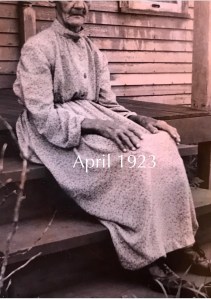
And even though his ma, Jennie, tries her best to quietly do what she can and not complain too much, Ida is about as strong-willed as they come, still speaking her mind at 86, and not the least bit interested in change, as one can tell by her wearing the same high-collared calico dresses she wore in her pioneering youth, with a face as sour as unsweetened lemonade and a personality to match.
If you think you’ve had it hard, Ida is there to tell you different.
On more than one occasion, Perry has hinted that he hoped I might consider being his wife, but I have no desire to trade all I do here for a chance to do more. The fact is it’s my dream to get as far away from here as I can while I still got some years ahead of me. I’m hoping that once Russell graduates and takes a wife, I can pack up and leave all this behind.
So each time I see that “wedlock” look in his eyes, I take Perry’s hand and gently place it over his mouth. Knowing each other as well as we do, he manages a sad grin, then begins to talk about the weather.
“Flies are gettin thick ’round the doors… rain must be comin’…”
It hurts my heart to no end to disappoint Perry, but the alternative would be lots more painful for the pair of us.
Thursday, June 29, 1922
Milked three cows. Churned and printed 17 1/2 lb butter, weeded in truck patch, sent 2 roosters and 3 loafing hens to market with Mamma, Russell and men hauled hay. Canned cherries. Killed chicken. Gathered eggs. Made bread and Sour Cream cake.
Clipping from the Telegraph Herald:
Married for 50 years, Mr. and Mrs. E. W. Dougherty, Upper Basin, did not forsake their daily routines for a celebration or family gathering when they observed their Golden Wedding Anniversary this week. “We enjoyed the day more by working,” Mr. Dougherty said. Married in Camden, New Jersey in 1878, the couple has resided just outside of Calvin for 30 years. “72 years young and this farm life makes us feel younger every day,” claimed Mr. Dougherty, with his wife standing quietly by his side.
Farming is the only life most of the people around here know. It’s deep set in their blood as it should be in mine since so many of my kin have spent their lives in the fields. As a matter a fact, I could do my daily chores with my eyes bound tight and an arm round my back it comes so natural, but I feel like this life is poisoning my blood.
Every time I hear the distant whistle of the Illinois Central as it heads over the Mississippi, I get a lump in my throat the size of a dumpling cause I know that beyond these rolling hills and pasture fences, there’s a great, big world that I don’t know scratch about – and that whistle is like a herder’s call telling me to follow the flock to distant fields.
Only when the whistle fades to silence, I’m still standing in the same damn place.
Sour Cream Cake
Whip 1 c sour cream. Whip two egg yolks and 1/2 c cold water separately. Mix together. Sift 2 c. flour, 1 1/4 c sugar, 1 tsp soda, 3 tsp baking powder and 1/2 tsp salt. Sift twice. Add dry ingredients to wet, then add a tsp vanilla. Beat 2 egg whites and fold into mixture. Pour into two well greased cake pans. Bake at 350 for 20 to 25 minutes. Cool and frost.
Friday, June 30, 1922
Washed, ironed and churned. Helped clean and clip around cows udders. Gathered eggs. Made cake and bread. Men cultivating and hoeing. Trying to dry grass but not a very good day. Several rains in the night. Began sewing Clara’s new bedroom curtains. Bought 200 lb sugar @ .30 = 60.00. Killed chicken.
We eat a lot of chicken around here. I’m not complaining cause some folk can’t even fill a plate with beans, but I’m always looking for new recipes and cut this one from the Farm Journal.
Fried Chicken
2 c sour cream
1 c milk
2 tbsp lemon juice
1 clove garlic, crushed
1/4 c parsley, chopped
1 broiler/fryer chicken, about 3 lb
1 c flour
2 tsp salt
1/4 tsp pepper
1//8 tsp paprika
1 c shortening
Combine 1/2 c of sour cream with milk, lemon juice, garlic and parsley and chicken and marinate for several hours. Drain chicken, brushing off excess marinade. Reserve marinade. Dredge chicken with flour seasoned with salt, pepper and paprika.
Melt shortening in large, heavy skillet and brown chicken on all sides. Cook covered 25 to 30 minutes, or until tender. Remove cover for last 10 to 15 minutes if crisp chicken is desired. Drain chicken on absorbent paper, arrange on platter and keep warm.
Drain off excess fat in skillet and stir in reserved marinade, along with remaining sour cream and heat thoroughly. Season to taste and serve with chicken.
Everyone appeared to like it cause nothing was left but the bones for broth.
I like to believe there’s always more to learn, even with something I’ve been doing since I could reach the kitchen table, like baking bread. So, I decided to try a bread recipe from Emma Coy, a new member of the Home Circle. A little fussy, but good.
Salt-Rising Bread
1/2 c cornmeal
1 tsp flour
1 tsp sugar
a pinch of soda
a pinch of salt
a pinch of ginger
Mix with equal parts milk and hot water. Put in a pint can at night. Must be kept warm over night. If light in the morning, heat one pt of milk, one pt of water. Also flour for sponge and the meal (set all in warm water). This should rise in 1 hour when the dough may be made by adding 1/4 c sugar, lard the size of an egg, 1 tsp salt, and warm flour to make a mediumly stiff dough. Grease top of loaf.
If first sponge is not light, stop there and try another time. Unless it hasn’t been kept warm enough by setting it in the warm water. If it doesn’t rise quickly, give it up. It won’t be good if it is too slow.
Saturday, July 1, 1922
Churned. Ironed. Worked in the garden. Baked bread. Gathered eggs. Men hauled hay. Made cake for Home Circle this evening at Frederick and Hazel Milton’s. Committee planning summer church picnic.
Hazel Milton had plenty of ideas of how things should be at the church picnic this summer.
But Hazel always does.
I know that since babes in arms we’ve been told to “Love thy neighbor”, but the Miltons make it real hard. They aren’t farmers. Frederick manages a bank across the river in Dubuque and Hazel manages, well… everybody.
They’re good friends of Gertie’s. But for the life of me, I don’t know why.
Hazel likes to think of herself as a modern woman with modern ideas and makes a habit of telling others how things nowadays should be. I don’t mind new ideas, just the opposite. But I do mind when they’re offered in a manner as sweet as a rose and just as thorny.
“Oh sweet darlin” she likes to call everybody she feels superior to (which is most everybody), “that’s a delightful idea, BUT let me tell you what I had in mind…” and soon any event she has a hand in becomes her attempt to bring high society to Southwestern Wisconsin.
She’s also taken a special interest in pitying me.
“Eleanor, darlin’, if you don’t think you have the right dress for the dance, I can see if my auntie has something you could borrow… Eleanor, my dear, ladies don’t say ain’t… Oh, Eleanor, how sweet of you to bring a cake. Why don’t you put it in the pantry and if we run low… Sweet thing, with all the things you do on the farm, how could you possibly find time to properly take care of yourself?… Dear Ellie, not everyone is meant to walk down the aisle.”
I hate that woman more than the devil.
And speaking of devils, her husband Frederick might seem like a quiet, reserved sort a man who’s usually seen in the background nodding his prideful approval while Hazel takes center stage, but be on your guard. Specially if you’re young and female. (Actually, you just gotta be female.) Frederick has hands like Catchweed, clinging to you in the most unexpected places and just as irritating.
This is the recipe for the cake still sitting in Hazel’s pantry.
Jam Cake
1/2 c butter, 1/2 c crisco, 2 c sugar, 3 c flour, 5 eggs, 1 c sweet milk, 1 tsp soda dissolved in hot water, 2 c blackberry jam, 2 additional c of flour in jam, cinnamon, cloves and nutmeg to taste. Cream butter and crisco, then add sugar and cream. Add egg yolks, one at a time, mixing after each addition. Add 3 c. flour alternately with milk. Work 2 c. flour into the jam, add spices and mix. Add this to first mixture and blend. Beat egg white and fold in. (five cups of flour are required – 3 in the first mixture and 2 in the jam) Bake in three layers. Filling: Beat one whole egg light, add 2 c sugar, 3/4 c milk, lump of butter size of an egg. Boil until thick, then add 1 c. chopped pecans, or other nut meats.
Sunday, July 2, 1922
Cold and rainy and I’m feelin’ poorly. Skipped church today. Was nice to have the house quiet. Read some.
Monday, July 3, 1922
Churned and did a big ironing. Gathered eggs. Helped clean and clip around cows udders. Russell made shade for the pigs and poultry and sowed sweet clover and alfalfa among the corn. Early pullets learning to roost. Picked new beets for dinner. Pickled 4 pints. Mamma shopping with Gertie today.
Four years back, Gertie was the first woman and youngest member to be elected to the Grant County Council. I can’t really tell you what she does but she’s a Big Bug in these parts. Seems to have a say in everything from education to transportation, taxes to bridges, public parks to public health, and from what folks tell me, she’s not one to fool with on any of these matters. Some even say she has her eyes on higher political offices.
Mamma is so proud of Gertie that tears well up in her eyes every time someone mentions her name. Of course, I’m proud of Gertie too, but she and I’ve always had a cantankerous relationship. Even though she’s only a few years older than me, she’s always bossed me around and pecked at me like a Mamma Hen.
“Why are we spending so much money on sugar,” she’ll remark when she goes over the farm accounts every time she visits. “Don’t be late in ordering coal again, Ellie… “Are you sure the incubators will arrive in time?”
She’s been out of this house for nearly three years, yet the handful of times a year she makes her way back to the farm, she’d make you believe it couldn’t run without her. Mamma makes her believe this too.
“Babe,” (that’s what Mamma calls her) “I don’t know how we’d ever manage without you,” I’ve heard her say dozens of times over the years. “You’ve always been wise beyond your years and every night in my prayers, I thank God that I have you.”
I’ve heard Mamma pray, and she does just that. Never once heard my name in her prayers.
I’ve never even been given so much as a thank you for the fact that I rise with the sun and work til the last light is switched off each night. I wouldn’t mind a little gratitude here and there, but I’ve come not to expect it.
There are times, though, when Gertie is on me about how poorly I manage the household that I’d like to stick her head deep into the rain barrel and watch the last bubble rise.
Pickled Beets with Horseradish
Chop finely 3 quarts of cooked beets, add three cups of grated horseradish, 3 tsp. salt, 1.5 tsp. paprika, put in sufficient vinegar to cover. Boil.
Thursday, July 6, 1922
Never a cage for the captured song
But I am the bird in the bars,
My heart imprisoned by steel and thong
My eyes on the distant stars.
~ old folk verse
Hot day. Not a cloud in the sky. Clara and I did a big washing. Hoed the sweet corn in the truck patch and pulled the suckers off. Got a new bottom put in the boiler, paid $2.00. Got a watermelon. Killed a chicken. Got string beans for supper. Perry’s mom underwent a surgical operation in Platteville to remove a tumor this week. Perry stopped by and told us she was getting along nicely. Russell and men cut five acres of wheat. Arthur here for supper.
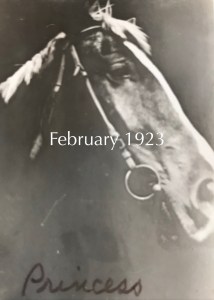
When the weather gets real warm and evenings bring no relief, and I’m feeling like a “bird in the bars”, I often wait for the house to be dark and still, bridle up my sweet dobbin, Princess, our old Shire, and steer a course for my secret spot just north of Potosi Point where along the bottom banks of the Mississippi, in the light of the moon, I shed my clothes and the chains of my life.
And I float.
I let the slow and steady current of the river take me down stream a ways and imagine floating just like this until all familiar sights along the shore and constellations in the sky have long passed.
And I sob.
I sob so loud the crickets go quiet.
Princess knows the routine and follows me as best she can along the river’s edge and when she can no longer see me, she snorts and whinnies and paces back and forth in a frenzied trot waiting for my return to the banks, and so, I return.
Cause that’s who I am.
Always worried about how my actions will affect others.
I wish I could shed this too.
Monday, July 10, 1922
Cloudy cool day. Clara and I picked a load of raspberries and blackberries in the morning. Men cut another 5 acres of wheat. Set out some celery. Hoeing some. Churned and printed butter. A man from the Buckeye Rubber Company here to sell stock in his company.
Clipping from the Farm Journal:
14 Questions to Ask a Stock Salesman
When a stock salesman come to sell you stock in some venture, see how much he knows his trade by asking the following:
What’s the company’s legal name; when and where was it incorporated, and what is its capitalization, authorized or issued?
Who are the men in control of the company and what is their experience and reputation?
Will your bank say that the house offering the security is reputable and conservative?
Is the nature of the business such as to insure a continuing demand for its product or services?
What provision is made for paying off this and other securities of the company?
What is the character of the physical property and what is its value?
How much margin did the company earn annually over all its depreciation and interest charges for each of the last 10 years?
What dividends has the company paid on its stock for each of the last 10 years?
What is the relation between the company’s current assets and liabilities, and does it have sufficient funds to carry on its business?
What is the purpose of this issue?
What commission is paid to salesmen and others for the sale of the issue?
What is the net cost of financing to the company?
Will banks accept the securities as collateral on loans?
Is the security listed; If so on what exchange?
Now if that fellow has an answer to all those questions, I’ll be darned if I’d understand them, seeing I don’t understand most of the questions. For once, I’m glad Gertrude and Mamma will be present, and in charge.
Raspberry WineOne gallon of bruised berries, 1 qrt of boiling water, 4 lb of sugar. Let stand 24 hours then strain and place in jugs to ferment. Bottle in October.
Blackberry Wine
4 quarts blackberries
1 and 1/3 c cold water
3 lb granulated sugar
Mix together and let stand for 1-2 days, skim well, set in cool place to ferment slowly for at least 6 days. Remove any froth, add teaspoonful of brandy and close tightly. After two days, draw off what sediment remains.
Friday, July 14, 1922
Cleaning house. Baked bread. Gathered eggs. Pickled pickles. Canned 12 quarts of string beans. Men hauling wheat. Home Demonstration Agent at Yaegers in evening.
Lucy Van Camp was the Home Demonstration Agent there tonight to teach us all about canning. Now I know these gals are supposed to be experts on their topics, but I don’t know a female on a farm around these parts that doesn’t know how to can just about any fruit, vegetable, or meat you put before her. However, I believe there’s a little something to gain from nearly everyone and it’s always nice to have a visit and a sit down with friends and neighbors.
Besides, I might just have had a thing or two to teach her.
All in all, It was a very pleasant gathering and I did get two new pickling recipes I’m gonna try.
Mountain Pickles – 3 gallons of small cucumbers. Keep well covered for ten days in brine strong enough to bear an egg – then wash in cold water and put in cold vinegar to remain ten days. Drain them from that and place in a jar sealed with the following spices – 1/2 gallon of vinegar, tea cup of allspice, 1/2 teacup of black pepper, tea cup of ginger, tea cup of black mustard, 3 large spoonfuls of cloves, a large handful of horseradish and onion and red pepper and 3 lb sugar pour hot over the fruit and fill the jar with cold vinegar. The spices must be pounded.
French Pickles
2 quarts green tomatoes, chopped
2 quarts cucumber, chopped
Leave in salt overnight, drain.
Add:
2 quarts cauliflower
2 q cabbage
2 q onion
2 q carrots (cooked until tender)
2-3 red or green peppers, chopped fine
Cook all in:
2.5 quarts vinegar
1/4 lb ground mustard
1/4 lb flour
3 lb brown sugar
Thursday, July 20, 1922
Milked two cows. Helped separate. Churned and printed 17 3/4 lb butter. Canned 12 pints string beans. Gathered eggs. Did the ironing. Pulled weeds out of truck patch. Made raspberry jam. Men hauling wheat. Lecture at the Grange Hall tonight: How to Care for the Sick and Household Remedies.
Saw Perry tonight at the lecture. Don’t know if I ever seen him so worn out. His eyes looked sunken and he could barely manage a smile, that is, until Theda Smith came in and sat next to him.
I’ve known Theda almost as long as Perry. She’s a darn decent woman – kind, generous, hard-working, comes from good folk, too, and I’ve always liked her…until that very moment. Now I know I haven’t any right to feel what I’m feeling. After all, I turned Perry down so many times that I was starting to feel embarrassed for him. But suddenly I was madder than a cat in water and downright peevish when Theda called me over to sit next to them.
In order to keep myself still and my attention elsewhere, I spent the entire lecture scribbling receipts and notes, paying no mind to Theda or Perry. Even after the lecture, when Theda was doing her very best to start a conversation with me, I quickly excused myself and skittered from the hall.
I found a dark spot around the corner of the building where I tried to calm my palpitations and slow my breath, and there, in the shadows, I watched the two of them wander down the road arm in arm. I looked down at the scribbles and scratches on the ledger in my hands and laughed through the tears, cause there are no remedies in there for jealousy or a broken heart.
Home Demonstration Lecture Notes:
Remedies that can be made at home.
Colds
1/2 oz yarrow
1/2 oz elder blossom
1/2 peppermint
1 tsp cayenne pepper
Simmer gently in an iron or enamel pot in two pints of water for twenty minutes keeping the lid on the pot. (If accompanied by fever, use cinnamon instead of cayenne.)
Take a large cupful and go to bed with a hot water bottle at the feet. Repeat every two hours if necessary. It is wise to fast during a cold, taking hot lemon and honey only. If food is taken it should be light and digestible, such as Slippery Elm Gruel.
Constipation
1 oz extract of Barberry
1 oz extract of dandelion
1 oz extract of Cascara
1/2 oz extract of licorice
1/2 oz tincture of Ginger
Coughs
1/2 ozhyssop
1/2 oz linseed
1/2 boneset
1/2 oz horehound
1/2 oz elder blossom
1/2 oz licorice
In an iron or enamel pot, place in two and a half pints of cold water and slowly bring to boil. Simmer gently for half an hour and strain.
Fever Tea – One part catnip leaf, 1 part elderberry flowers, 1 part spearmint leaf, honey to sweeten. Put herbs into a quart glass jar and pour boiling water over them. Cap and steep for 30 to 45 minutes. Strain out herbs. Add honey to taste. Recap remaining liquid.
Poultices:
Bread Poultice: pour a little boiling water into a bowl that has been scalded with boiling water, then break into it small pieces of white bread. Cover with a cloth and place in a hot oven. Drain off as much of the moisture as possible, spread over a piece of linen, cover with two layers of linen and apply to affected part. This poultice is greatly improved by making it with milk instead of water.
Linseed Poultice: scald a bowl with boiling water, then pour in sufficient fresh boiling water to make the poultice. Into this stir enough linseed to bring the mixture to a thick mass. With a knife dipped in boiling water, spread the mixture thickly over a piece of linen, cover with two layers of linen which have been warmed by the fire and apply to the affected part.
Mustard Poultice: bring one tablespoonful of mustard to a thin paste with cold water, spread over brown paper or linen, cover with two layers of linen and apply. When the poultice has been removed, use Vaseline to remove any stain
Slippery ElmPoultice:
2 parts powdered slippery elm
1 part Lobelia seed
1 part Ground Ginger
Mix thoroughly with hot water, apply directly to the part and cover with towel. This poultice is good for anything from stiff and swollen joints to chest complaints. If there is much hardness or swelling, add to the mixture one or two tsp of chloride of potassium.
Starch Poultice: Mix in a small saucepan one tablespoon each of starch and cold water and then stir in sufficient boiling water to bring the mixture to a thin, smooth paste. Allow to simmer gently for five minutes, stirring all the time, then spread over linen and apply to affected part.
Proud Flesh – pulverize loaf sugar very fine and apply to the part affected. This is a new and easy remedy and is said to remove it entirely without pain.
Thyme cough/cold/chest syrup
2 to 4 oz thyme leaves
1 quart water
1 cup of honey
Combine thyme and water over very low heat, simmering with the lid ajar. When liquid is reduced to 2 cups, strain the strong tea and add the honey, stirring until melted. Store in a glass jar in the ice box for up to 4 weeks. Use 1/2 to 1 tsp every couple of hours until cough goes away.
Sick Room DONT’S:
Sick people don’t like to be stared at. They are very sensitive. To look surprised at the change sickness has caused is annoying, and worse than that, makes invalids imagine their case is worse than it is.
Don’t stand at the back of the bed to make them turn their eyes around to see you. Always try to sit beside the person. They’ll feel more at rest than if you’re standing up beside them.
Don’t whisper and don’t talk in low voices.
Don’t follow the doctor or caller out into the next room. The invalid will be sure that you are talking about them.
Don’t wear garments that rustle or are made of rough clothing to come in contact with hands that are made tender by sickness and don’t wear creaking boots or thick, soiled boots.
Sunday, July 23, 1922
We intended to have our church picnic at Locust Grove today, so there was no planned service. But the picnic never happened cause a big storm came through. (The way Hazel Milton behaved when it was decided to cancel the picnic made me think that she believed the rain clouds were sent just to spite her.)We also heard a twister touched down nearby and more storms are on the way.
___________________
Mamma woke us up.
Clara, Russell, Mamma and I stepped out onto the porch and saw the flames in the distance, pretty sure they were coming from the Scrimm Farm.
As if Angus didn’t have troubles enough.
It was well past midnight, none of us were proper dressed, and the road was a mess of mud, but we quickly headed in the direction of the fire. By the time we got the mile and a half down the road, everyone who’d seen the flames from their own porches had come to lend a hand.
A long line of men, women and children were passing whatever vessel could hold water between the well and the burning barn, but all a their efforts appeared too little and too late. All we could do now was keep the house and any more outbuildings from catching fire.
As we redirected our efforts, I watched Mamma sitting on the house porch next to Angus Scrimm, trying her best to console the old man.
This would not be an easy task cause Angus had so little left. With a wife years dead, a son killed in The Great War, nothing but a handful of dairy cows, an old plow horse, and mounting debt, it seemed there was little left to salvage – even before the night’s calamity.
Angus told Mamma that lightning struck the barn while he and his hired hand, Wilfred, were finishing the evening’s milking. The cows were stunned by the shock and collapsed. Angus also received a shock and passed out. Two of the cows never rose again, but after getting Angus a safe distance away, Wilfred managed to get the remaining cows, the mare, and some of the equipment from the barn before the fire spread and headed toward a nearby silo and shed, where it managed to destroy the meager harvests stored there.
Angus sobbed that this’d be his end. He had no insurance and this was surely the final straw in his stack of troubles.
“Ain’t nothing left of nothin’,” he cried.
With new rains beginning, which helped smother the flames and any threat of spreading further, several neighbors offered Angus and Wilfred warm beds and a warm meal, but Angus refused, said he couldn’t leave – not now, and even though you could tell by the look on Wilfred’s face that he’d like nothing better than to take them up on their kind invitations, he remained the loyal hand and friend he’d been to Angus for many years and gave his “Thank you kindly, but I’m needed here,” to each offer made.
Nary a word was spoken on the way back home.
The rain began letting up just as our farm came into sight.
In all my days, I never seen a sorrier group – soaked, shivering, and completely done in.
A new day was peeking through the scattering clouds, but it was just about the saddest sunrise I ever seen.
Monday, July 24, 1922
Did a big load of laundry. Helped clean and clip around cows udders.Helped separate. Baked extra bread and pies to bring to Angus and Wilfred. Late this afternoon, Russell met Charles Hamm on the road to town. Charles owns the farm across from Scrimm’s. It appears that some time after all had left his farm and the ashes of the fire were still smoldering, Angus Scrimm loaded his shot gun and ended his troubles for good. Finished mending. Looked over my world atlas until I fell asleep.
___________________
When I was in the 6th grade, I gotta blue ribbon for a map of Wisconsin I’d made. For weeks over the summer, I’d worked real hard finding pictures to cut out from the Farm Journal, Farmer’s Wife and every magazine, catalogue and newspaper I could get my hands on (and permission to cut up). I searched for famous people, historical places and buildings, farm scenes, city scenes, nature and animals, which I then glued to every inch a the big piece of heavy cardboard Pa had brought home from Smith’s Feed Store. I spent hours cutting and pasting and practicing my penmanship for the titles and descriptions and drew and erased the shape a Wisconsin a dozen times so it wouldn’t just look like a lopsided rectangle.
Pa was the only one who seemed to notice the effort I was putting into it, so when one day the following fall, I returned from school with a blue ribbon pinned to my pinafore and a smile as wide as a draft horse’s hoof, he swooped me up in his arms and sat with me on the steps of the porch to hear all about my triumph.
“Well done, Ellie,” he beamed as he held me closer. “But I can’t say I’m a bit surprised. You worked real hard on that assignment and you made something to be real proud of.”
And he was right. I had worked hard. I was real proud. And even though no one else in the family had much to say about my blue ribbon prize, Pa would wink and smile at me every time he saw me pinning it to my pinafore before heading off to school – which I did for weeks – until one day, I couldn’t find it anywhere.
I was beside myself.
How could I have lost the one thing I was most proud of in the world?
I searched high and low – in pockets and drawers, neath beds and tables, rugs and baskets. I searched the dairy barn and the horse barn, the chicken coop and the corn crib – and finally had to give up when Mamma started to get angry at seeing me so upset.
The next day before going to school, I was throwing swill to the hogs, when I saw a flash of blue neath the trough. Without a second thought, I clambered over the fence, landing in a puddle of muck and fell to my knees. Reaching below the big, metal bin, now surrounded by hogs. I grabbed for the ribbon with joy, but my happiness quickly turned to sorrow when I saw that my special prize was mangled and mucky.
When I returned to the house in tears and Mamma saw the filthy state I was in, without an ounce of sympathy for my loss (but plenty to say about my behavior) she swatted me – hard – on my backside, stripped me down in the middle a the kitchen and stomped out to the wash basin on the porch, leaving me still holding the muddy ribbon, shivering and miserable.
Of course, Pa heard all about it from Mamma, but instead of being angry (“Your Ma is angry enough for the both of us,” he laughed.) Pa told me how really, truly sorry he was.
“I know how much that ribbon meant to you, Ellie, darlin’,” he said, ruffling my hair and lifting my chin. “Cause I know how hard you worked for it and I know better than anyone how much you earned it… and in the end, that’s what’s most important.”
“That’s the true prize, and that’s inside,” he said as he gently tapped his finger on my chest, now heaving with tears. “You’ll never – EVER – lose the blue ribbon that’s inside you… ya understand?”
I nodded, but I didn’t always understand (maybe I mean appreciate) the things Pa’d say until I grew much older.
However, the following week, when he came back from a trip to Dubuque with a package just for me, it was like receiving an award all over again. But this time, one that was much better than any ol’ ribbon. He’d bought me a big, brand new, leather-bound World Atlas.
I lifted the heavy volume from its wrapping, Mamma looked a little angry and Russell and Gertie more than a little jealous, but Pa and I ignored them all as we sat at the kitchen table and flipped through the maps and photographs of places and people and things from every corner of the world.
“When you work hard,” he whispered in my ear, “all the world can be yours.”
Thursday, July 27, 1922
Milked two cows. Helped separate. Tended the cream. Churned and printed 18 3/4 lb butter. Made Soap. Swept and dusted house. Altered Clara’s dress for recital in the evening. Sold 18 baskets of apples @ .85 = 15.30. Sold 2 baskets second apples @ .35 = 25.53, veal calf dressed @ 25.53, total 41.53.
Clara had a very fine recital along with Viola Peabody, her classmate and friend and – if you want the truth – someone Clara sees as her only true rival.
My sister has a fine singing voice. As a matter of fact, it’s as pretty as she is, gossamer and lilting. But Viola was blessed with a handsome face as well as a soprano voice that’s powerful, deliberate and disciplined, and even though Clara has taken her share of singing lessons, Viola’s parents have made sure that their daughter has had the best training available.
Now whether Viola has the same dreams or not (she seldom smiles at recitals and even from the back row you can see her tremble), Homer and Ada Peabody see their daughter destined for the most famous Opera stages in the world. As a matter of fact, by the time she was 5 years old, her parents already had her performing and playing her own piano accompaniment.
Accompanied by her mother, Viola went to study in Italy all last summer and she’s off to New York on a singing scholarship this fall. Cause they’re downright determined that Viola becomes a success, they control everything in that poor girl’s life, even making sure she sweeps away any outward signs of her rural beginnings.
They dress her in the latest fashions, send her to people who teach her how to talk different, watch over her diet and have a hand in every daily detail of her life. Now she seems so highfalutin’ that it’s hard to know what to say to her anymore – and this was the little gal who you couldn’t get outta the dairy barn when, as little girls, she played here with Clara.
Sad, but I don’t think Viola has much of a say in any of it and sometimes when I look at her, I feel like I’m looking at a unhappy hen dressed in swan’s feathers.
Funny though… as much as the Peabodys are set on Viola turning her nose up at us simple farm folk, they’re just as set on making sure everyone in the community is keeping up with her littlest and latest achievements.
“We wouldn’t normally allow Viola to perform at such a silly, little recital,” I heard Ada remark to Winnie Bush tonight, “but she needed to practice her new cantata before she studies with the finest voices in New York, and what better audience than one which would not know a great aria from a school anthem.”
At this, she laughed, waving her lacy handkerchief in front of Winnie’s face before walking away, confident Winnie would not have understood her insult.
She didn’t.
I did.
Ada Peabody is a snob.
And if you ask me, her daughter’s one of the most miserable creatures I ever laid eyes on.
Clara is too naive and jealous of all Viola’s attention to see what I see and pouted all the way back to the farm.
“What’s so wonderful about Viola’s voice?” she whined with her hands folded tightly across her chest and her new finger wave bob blowing across her pretty, frowning face.
“You sing just as good as her,” Mamma yelled from the back seat, “BETTER! But who would know it with all the bragging her folk do with anyone unlucky enough to be cornered by ’em. They won’t hear a word said about anyone else in the room.”
“I feel sorry for Viola,” I told my little sister. “She doesn’t seem very happy when she’s singing… not like you, Clara. When you sing, I can feel your joy. It fills my heart and I’ve heard lots of others say the same.”
Now that last bit was a bit of a fib, most folk who comment on Clara’s performances usually remark about her beauty rather than her talent, and like I said, she has a lovely voice, but her face is far more memorable.
But I knew that this was just the kinda thing that Clara wanted to hear.
She looked at me through her blonde waves. “Really?” she smiled without pressing me further.
I smiled back, then she turned her attention out the window and looking up at the stars, quietly began to sing her favorite new song, “Ramona, I hear those mission bells above. Ramona, they’re ringing out our song of love. I press you, caress you and bless the day you taught me to love…”
While from the back seat, I could hear Mamma grumbling something unkind about Ada Peabody.
Monday, July 31, 1922
Russell and I at dentist in Platteville. Got the following from the shops after:
Cedar mop. 2.00
Clara music roll. 2..50
Dairy book1. .75
Mamma stockings. 1.25
Clara gauze shirt.40
sponge.48
cedar polish.50
Arthur here in the evening. Sewing. Daughter born to Roger Feicht. Sold 30 lb butter last week @ .55 = 16.50. Killed a chicken. Cleaning house. Got a letter from Aunt Mona, Papa’s sister. She and her beau, Jack Skattaboe visiting next week. After hearing the news, Mamma headed straight to bed with a headache.
Tuesday, August 1, 1922
Nice day. Mamma at Gertie’s. Clara and I did a big washing. Helped clean and clip around cows udders. Churned and printed 12 lb butter. Gathered eggs. Killed chicken. Made red raspberry jam, canned 10 qt green tomato pickles. Russell hogging down wheat fields and doing the summer fallowing. Finished making hay. Thrashers beginning to move from farm to farm.
Green Tomato Pickles – To one gallon of green tomatoes, add one half gallon of fine chopped cabbage, one half pound of green peppers with the seed taken out, one quart of onions strained of the juice. Be sure to take the seed out of the pepper, cut the tomatoes up and sprinkle with salt the tomatoes, cabbage onion and peppers and let stand for 24 hours. Let them drain well then pour boiling water over them and let them drip through a bag all night and put out in the sun all day before cooking them. This is the measure of seasoning after they have dried. In making this pickle you must allow 4 gallons in the green state to have two when made. Add four tbsp full of ground mustard, 2 tbsp full of ginger, one of cinnamon, one of cloves, 2 of turmeric, 1 ounce of celery seed, 2 lb of sugar, 2 tbsp full of salt. Mix all well together, add half a gallon of good cider vinegar and boil slowly for twenty minutes.
Wednesday, August 2, 1922
Mamma piecing a top for a comfort. Doing odd jobs. Clara out at music lesson. Home Circle this evening at Tressie Reed’s. We’re serving buns with ground beef, jam cake, tapioca, sliced pineapple and whipped cream. Brought butter order and two berry pies to the Cook Farm.
When the door opened at the Cook house, I guess I shouldn’t have been surprised seeing Theda Smith there. I also shouldn’t a been surprised by how happy she was to see me. She nearly tugged my arm outta place when she dragged me into the sitting room, where Jennie and Ida were sitting and sewing.
“Look who’s come to visit,” she said a little too loudly and a little too cheerfully.
“Thought I’d bring your butter order and some pies,” I smiled at the two women who barely gave me a glance. “Such a lovely day and the walk did me some good.”
Jennie (Perry’s mom) looked up and grinned a bit before returning to her work. Ida (his grandma), still working the needle in her hand, grumbled something and began rocking faster in her chair.
Theda led me into the kitchen and offered me some coffee and the two of us sat at the kitchen table for a spell. Looking at her pretty face, strained and tired, all of my jealousy and hurt feelings disappeared, like smoke through a chimney.
“How ya doin’?” I asked, knowing full well the answer.
Theda smiled. “Oh, I’m just fine,” she lied. I could see how hard she was holding back the tears. “They sure do keep me busy, but I’m happy to be able to take some of the weight off a Perry’s shoulders… it means so much to him.”
And I could see that Perry meant the world to her.
“Funny,” Theda said looking at me with her big, hazel eyes, “while I was washing the dishes this morning, I dropped a spoon and saw it was pointed in the direction of your farm… then I just knew we’d see you today.”
Never seen a more grateful smile.
“Is there anything I can do?”
“It’s just real nice to have a visitor. Why don’t you join the women into the sitting room,” she said with what I can only describe as a look of desperation, “and I’ll slice up some of your lovely pie.”
I hadn’t really planned a long visit, but I also hadn’t expected to be so needed, and as I said before, I always liked Theda and now I couldn’t help but want to help her – and Perry – so I made my way in to where Jennie’s and Ida’s heads were still buried in their fancywork.
Searching for something to say, I finally blurted out: “Emma and Roger Feicht had a baby girl on Monday,” which caused both women to jump a little from their chairs and look up. “They say she’s a real beauty.”
Jennie smiled a little, but didn’t say a word.
“I hear she looks jes like a cat,” Ida growled. “That gal musta been scared by some ol’ tomcat while carrying… I knew a gal that had a boy that looked jes like a rat. They say one skittered over her bare feet and frightened the daylights outta her right before her time.”
Ida was known to have an old folk superstition for every occasion.
“Well, I don’t know about that,” I smiled, “but she’s doing fine and so is her mamma.”
“Hmpf,” was all Ida had to say about that.
“It must be nice to have Theda here to help you,” I said, trying to steer the talk in a different direction.
Jennie looked to Ida, but Ida was looking straight at me.
“Better she was a wife,” the old woman spat as Theda entered the room with pie and coffee.
“Look what Eleanor brought, fresh baked raspberry pie.”
Now I know Theda heard what Ida said, but she continued to serve the women like they were royalty, gently taking the pillowcases they were working on and putting them neatly aside, placing their best linen napkins in their laps and coffee and slices of pies on the best china, at their sides.
Jennie whispered a thank you, but Ida simply grabbed her plate and took a big bite.
“Never made a soggy crust in my life,” she frowned looking down at my pie, yet greedily taking another big bite.
“So delicious,” smiled Theda, “and so sweet of you to think of us, Eleanor.”
“Yes… thank you, Eleanor,” whispered Jennie.
Ida, who had already gobbled up her slice and was reaching for her coffee, didn’t say a word.
Though I hated to leave Theda on her own with them again, I ate that pie and drank that coffee as quick as I could, then made my excuses.
“So nice to see you both,” I lied. And before I’d even made my way from the room, both women were heads down, back at their needlework.
Theda walked with me out onto the porch.
“If there’s anything I can do,” I repeated.
“I’m alright,” she said. “I get my strength again every time Perry walks through that door.”
“I’m glad, Theda.”
Before I made it to the gate, Theda ran after me.
“Eleanor,” she said grabbing hold of my hand. “We was gonna do this together, but I know Perry won’t mind my taking this unexpected opportunity.”
She hesitated a bit and then said, “Perry and I are going to be wed by a Justice of the Peace the Friday next, and we were hoping you would be there with us. It’s just gonna be us, my sister, Elvira, and you. I know how much it would mean to Perry – to the both of us – if you were there.”
I guess you could say I was taken back a bit cause a moment or two passed before I was able to reply.
“Kind of like the best man, huh?” I finally chuckled, hoping she couldn’t detect the lump in my throat.
“You could say that,” she laughed, “but more like the best friend.”
I squeezed her hand and told her that of course I’d be there.
I was about half way to the main road when I turned and yelled back to Theda who was still standing on the porch, “Perry is a very lucky man. I’m so happy for the both of you!”
I meant every word.
Theda smiled and waved and watched me until I was out of sight.
Friday, August 4, 1922
Picked the first roasting ears. Helped clean and clip around cows udders. Milked three cows. Helped separate. Churned and printed 19 lb butter. Gathered eggs. Swept and cleaned. Started a new lawn dress for Clara. Got a new straw hat from Sears & Roebuck. Men plowing cover crops in orchard. Killed a chicken and baked cakes and bread for tonight’s supper and for Grange Picnic tomorrow in Canfield. George Adair, 57, died of typhoid fever yesterday. Arthur here for dinner.
_____________________
Keep on churnin’ ’til the butter comes
Keep on churnin’ ’til the butter comes
Keep on pumpin’ make the butter flow
Wipe off the paddle and churn some more.
Little boy blue come blow your horn
Cows in the meadow and the sheep’s in the corn
Take the sheep, leave ’em be
Bring the finest cow straight to me
Keep on churnin’ ’til the butter comes
Keep on churnin’ ’til the butter comes
Keep on pumpin’ make the butter flow
Wipe off the paddle and churn some more.
How now brown cow keep eatin’ your hay
Go in your shed and be sure you’re fed
Go in your shed be sure you’re fed
Pa needs butter for his shortnin’ bread
Keep on churnin’ ’til the butter comes
Keep on churnin’ ’til the butter comes
Keep on pumpin’ make the butter flow
Wipe off the paddle and churn some more.
~ churning song
Butter, Wisconsin is a small farming community which was settled in 1827, just a couple miles east of the Mississippi River. There’s not really a town to speak of, just a small Main Street with Smith’s Feed Store, Bush’s Grocers, the Post Office, and the Lutheran Church., along with a few criss-crossing streets surrounding it. But folks here are fiercely proud that we’re the biggest town between Platteville and Dubuque.
As you can probably guess, we got the unusual name of Butter cause of all the dairy farming done in the region and because of the reputation the farms in these parts have for making some of the best butter around.
Most of the farmers here will tell you this is cause of the rich black earth, abundant water and the lush green fields and pastureland of the Western Upland, but if you ask the farm women, they’ll say it’s the songs they sing and the love they offer up while churning and working the butter.
All the fancy words in the farm journals and dairy books will tell you that there is a very scientific way for making the best butter – an exact temperature for churning and for cooling, the exact amount a time to churn and how much you gotta wash and work the butter, what to wrap it in, where to store it, how to print it. They’d make you believe the average person couldn’t make a pat a butter without using their exact methods.
But the truth is, churning and working the butter comes just as natural to us as rising in the morning. Our mammas and grandmas taught us, and their mammas and grandmas taught them, as did their mammas and their grandmas.
Butter’s in our blood – thick and creamy, sweet and good; filled with song and tears and the special flavors of each farm.
Our arms might ache from churning, but our hearts rejoice in the making.
Sunday, August 6, 1922
No preaching today. Reverend Blue has terrible rheumatism. Cleaned and swept the house. Killed two chickens. Baked bread and berry pies for dinner. Made Chow Chow.
Aunt Mona and Jack arrived late this afternoon in a new machine, shiny and white, with a thin red stripe from the front to the back. I’ve never seen anything quite like it. Jack told me it’s called a Pierce-Arrow and when the two a them pulled up to the house, they looked completely mussed but happier than foxes in a hen house.
Mamma, who’d been sitting on the porch pretending not to be watching for their arrival, quietly slid into the house before they’d a chance to notice her.
Mamma has always taken issue with both Mona and Jack. For her, Jack is a little too slick for her liking. “His smile is too big,” Mamma likes to say, “his hands are too soft, and his shoes too shiny.”
Which really means she doesn’t like him cause he’s not a farmer.
But her issue with Mona goes much deeper and is mostly cause Mona left the family farm at sixteen and never looked back, leaving a big hole in Pa’s heart. Mona was his only sibling and the two a them had been very close, especially cause their Pa had been a hard drinker and abusive, not only to their Ma (who never lived to see her 38th birthday), but cause he was known to take a hard backhand to the two a them on a regular basis.
Because of this, they’d always been very protective of one another.
Eventually, Mona decided enough was enough. She tried to talk her younger brother into slipping away with her one night, but as was in his nature, Pa was convinced things’d get better and that the world outside the farm was a much scarier prospect, so he stayed, taking the whole of his pa’s anger from then on.
The next few years would be Pa’s most difficult and Mamma (who began going around with Pa when they were both 16) would be close witness to his father’s growing meanness – to each undeserved and shameless walloping given with the name “Mona” spat like a barb at the end of a whip.
However, by the time Pa turned 18, the drink had not only weakened the old man, but time had turned Pa into a strapping young man, tall and fit. The years had also strengthened his resolve to defend himself. The last time his pa raised his arm in anger was the last time he’d ever try.
“Pa grabbed the old coot by the forearm,” Mamma likes to recall with curious glee, “and forced him to his knees. He looked that miserable, old man right in the eyes and said quiet and peaceful-like, “Never again, you nasty, stinkin’ son of a bitch… never again.”
I’d never once heard Pa swear, so I always find this part of the story particularly fascinating and try to imagine those words coming outta him, but never quite get there.
It wasn’t long before the old man drunk himself into the grave, Mamma and Pa were married, and Pa took control of his life and the farm.
He begged Mona to return home, but by then she’d made a life for herself in Chicago, where she’d worked her way up from salesgirl to Department Manager at Marshall Field & Company. It was here she met, Jack Scattaboe, a well-dressed, successful, smooth-talking salesman, who had a penchant for fast cars, beautiful women and gambling.
However, once he met Mona, he likes to say, “I still look for newer, faster, fancier cars and higher stakes bets, but now I only need one beautiful woman.”
Something which never fails to make Mona smile and blush.
Much to Mamma’s great displeasure, I adore Aunt Mona and Jack.
I love everything thing about them: their style, their joy, their fearless display of affection, their rejection of what people expect of them (they’ve been together for years, but quickly castoff any suggestion of marriage or children), their undying sense of adventure (they’re always heading off to discover new places), and their willingness to let life take them wherever the wind might blow.
Whenever they visit the farm, it’s just like they float in at the forefront of a strong, cool, fresh breeze and I take them in with long, deep inhales.
As always, today they looked as if they’d walked right out of a catalogue. Jack wore a white linen suit, with a crisp, light blue shirt and colorful bow tie, his hair perfectly parted in the middle of his squared-jawed face, with shoes as shiny as a pond’s reflection at sunrise, and a smile as shiny as his shoes.
Aunt Mona wore a stylish cotton dress of Robin’s egg blue, with pink satin shoes and pearly silk stockings. Her dark, brown hair was done in a perfect bob and her lips painted in a perfect pink bow. And on the collar of her dress she’d pinned a delicate broach of gold and opals in the shape of a hummingbird in mid-flight.
From now on, I will not think of her without thinking of this broach cause they seemed perfect reflections of each other. As if they were made from the same butter mold.
Just like Jack and Mona.
It was a beautiful evening, so we laid out the long table neath the old Maple tree at the side of the house and Clara and I set out our best linen and dishes and pitchers bursting with sunflowers at either end.
Clara’s love of Mona and Jack equals mine, so she happily helped me prepare all day and together we served up a grand meal of roast chickens, fresh green beans, sliced tomatoes, chow chow, rolls and butter, with Clara’s Angel Food cake, served with ice cream and fresh blackberries for dessert. All the while, Mamma placed herself far enough from the activity so as not to be considered a part of it, but close enough so that we could hear her complain about all the commotion. “You’d think there was royalty comin’ with all this fuss,” she’d snort, pretending to be busy with her mending.
The only time the entire day that she managed a smile was when Gertie arrived just before dinner. Gertie, like Mamma, seems to have an aversion to Mona and Jack, but shows her disapproval with much greater confidence.
Yet Aunt Mona and Jack, despite the fact that Gertie and Mamma go outta their way to show their displeasure, seem to let it all slip off them like water through a gutter, focusing all their attention on me, Clara, and Russell.
After dinner, with Jack and Russell patting their bellies in great satisfaction, we spent the rest of the evening on the porch, enjoying the warm, summer winds and the stories of Mona and Jack’s most recent adventures through the deserts of the Southwest.
At one point, as Jack was telling us about climbing up the many ladders to the very top of the cliff dwellings at Bandelier National Monument in New Mexico, Aunt Mona jumped up from the steps where she’d been sitting with an, “OOOOPS, almost forgot!”, startling us all, and raced to the automobile, reaching into the back seat and pulling out a large box.
“Presents!” she sang.
The first items she reached for were two silk scarves which she presented to Gertie and Mamma. Each scarf had a different image of a piece of Pueblo Pottery, Aunt Mona explained, beautifully hand-painted in shades of black and orange and earth with triangles and stripes, flowers and birds.
Mamma and Gertie accepted them with as much graciousness as they’d allow themselves, placing the gifts in their laps with barely a glance. (Yet I noticed how each stroked the soft silk in their lap for the rest of the evening.)
Next, Mona reached into the box and pulled out a small, wooden figure with a large head topped with feathers. The head, painted blue and white, had a beak, big round, yellow eyes and wings in place of ears. The figure was draped in a skin of some kind and held a bow in one hand and branch in another. She said it’s called a Kachina and that there are many different kinds made, each of which has a different meaning to the Pueblo People.
“This particular one was made by a member of the Hopi Tribe,” she smiled as she handed it to Russell showing great respect for the object, “It is Mongwa, the Great Horned Owl. Mongwa symbolizes wisdom and intelligence and is thought to carry great benefits by helping keep fields free from rodents and your hunts filled with bounties.”
Russell gave the object an odd look as he slowly, but respectfully turned it in his long, slender, calloused hands.
“Thank you, Aunt Mona,” he smiled as he settled it in his hand which now lay along the armrest of the old chair he was sitting on, occasionally picking it up to give it a closer look.
Mona smiled and reached into the box again taking out a large object with many colorful threads woven around two sticks, and handed it to Clara.
“This is Ojo de Dios, or God’s Eye,” she explained. “which will watch over and protect those who pray to it (at this, everyone could hear a disapproving snort come from Mamma’s direction, but Mona just ignored it and continued) the four ends represent the earth, water, wind and fire, as well as the north, south, east and west.”
“The ancient people believe,” she continued as she focused her attention solely on Clara, “that this eye protects from evil, brings good fortune, and bestows the power to see and understand that which we normally can’t.”
Clara smiled and held the beautiful, colorful object up against the summer sky, then to her chest.
“Thank you, Aunt Mona.”
“You’re welcome, sweet girl,” replied Mona.
“And finally,” she smiled as she reached back into the box, “for Eleanor.”
She lifted out another woven object, but this one looked like a small rug.
“This is a serape made by a female member of the Navajo tribe,” she explained as she signaled for me to stand and wrapped the blanket around my shoulders, folding over the top end to create a collar.
I was surprised by its weight.
As if reading my mind, Aunt Mona smiled and explained: “It’s woven tightly to protect you from the rains on your travels. The pattern on this piece is known as the Spider Woman which represents female strength and creativity and is said to offer the secrets to finding your way in the world.”
“Thank you, Aunt Mona,” I smiled and then whispered under my breath as I wrapped the serape tighter around me, “Where would I be going?”
Aunt Mona leaned in for a hug and whispered in my ear, “We’re all going somewhere, Darlin’.”
I still had the serape wrapped around me as I watched Aunt Mona and Jack pull away from the farm later that evening, taking my breath with them.
Mustard Chow Chow:
1 peck small pickling cucumber
1/2 peck small pickling onions
2 head cauliflower, separated
1 qt green beans, sliced
3 lrg carrots, cut into small piece
1 lrg green pepper, cut fine
1 lrg red pepper, cut fine
Lay veggies in salt water overnight, drain. Boil 1/2 gallon of cider vinegar and 1/2 gallon of water, put in veggies and bring to boil. Drain and put in large crock, cover with the following:
1.5 c flour
1/2 lb mustard
2 c. turmeric
1 lb sugar
Dissolve with cold water to smooth paste and stir into boiling vinegar. Cook thoroughly and pour over veggies. Cool and jar.
Wednesday, August 9, 1922
All scattered round the old barn floor,
was shining corn like yellow ore.
And ‘round the crispy yellow shock
The sturdy men and maidens flock.
~anonymous
Finished lawn dress for Clara. Churned and printed 20 lb butter. Sold 101 sweet corn @ .20 = 20.10, two baskets apples @ .85 = 1.70, 5 baskets of peaches @ .60 = 3.00. Did a big wash. Canned 12 qt sweet corn. Gathered eggs. Announcement in the local paper of Perry and Theda’s engagement. Princess and Men hauling manure and oats. Made up a skimmed milk mash to help the poultry in their summer slump. Made corn fritters and deviled eggs for supper.
Corn Fritters
2 c. grated sweet corn
1 c. flour
1 tsp baking powder.
2 tsp salt
1/4 tsp paprika
1/2 c. chopped celery
2 egg yolks, beaten
Mix together ingredients. Fold in stiffened egg whites from two eggs. Dip by spoonful in hot fat, 1/2” deep in pan. Fry slowly.
Deviled Eggs
Cut hard-boiled eggs in half, lengthwise. Remove yolks and mix them in with dried beef, or ham minced very fine. Add salt, pepper, parsley, mustard, and salad dressing. Mayonnaise Dressing: 1 tbsp butter and 1 tbsp sugar creamed together, 1/2 c sweet milk, 1 egg, 1/2 c vinegar, pinch of mustard, salt and pepper. Cook in double boiler until thick.
To Can Corn
Blanch corn for 2 or 3 minutes in boiling water (this sets the milk), then cut from cob. Pack into jars one inch from the top (corn will swell in the cooking), add 2 tsp of a salt and sugar mixture (one part salt and two parts sugar). Cover with clear water, making sure water has gotten to the very bottom of the jar. Place rubber on top and partly seal. Place in hot water bath. 1 1/2 hours on the first day; 1 hour on the second and third days. Seal the jars after each bath. Turn over til cold.
Thursday, August 10, 1922
Baked bread. Pickled 20 qt blackberries. Killed two chickens. Churned. Pickled pickles and canned them. Made sauce. S. W. Yoder bought 10 lb butter @ .65 = 6.50. Russell over at Joe’s getting wood for winter.Ironed. Made pepper relish.
Pepper Relish
1 dz red peppers
1 dz green peppers
1 quart of onions
1 quart vinegar
3 tbsp salt
2 c sugar.
Put peppers and onions through coarse grinder. Pour boiling water over and let stand 10 minutes. Drain well and do it again. Add vinegar, salt and sugar. Boil for 15 minutes and seal. Makes about 5 pints.
Friday, August 11, 1922
Made a Lady Baltimore Cake this morning for after the wedding. Perry, Theda and Elvira came by at 2 pm and we drove to Platteville, to the home of Robert Stewart, Justice of the Peace.
Even though there were plenty of smiles during the ride to town, no body seemed much in the mood to talk. It was a beautiful day, lots of sun – not too hot – and the smell of flowers and Theda’s lilac powder swirled pleasantly around the car. Theda was holding a lovely bouquet of wildflowers Elvira had picked for her that morning and I noticed a similar, tinier spray of flowers poking out of Perry’s buttonhole.
I told Elvira how lovely they were and she grinned proudly.
“I’ve made these for us,” she said as she shyly handed me a small arrangement of pink and white snapdragons to pin to my dress.
“They’re lovely, Elvira, thank you,” I smiled, watching her lower her eyes and turn away at the compliment.
Elvira has always been a shy creature, with a loving but quiet nature. Every time I see her, I reckon I know just what a woodland fairy looks like – tiny and fragile, with pale, almost transparent skin, coppery, red curls and light green eyes which seem more catlike than human. Her voice is also soft and delicate. Frankly, I’m not sure I’ve ever heard her speak much above a whisper.
Yet behind this dainty appearance and manner, behind those mossy green eyes, I’ve always felt there’s a deep, ageless energy about Elvira, as if you asked her the questions of the universe, she’d give you all its answers, simple and straightforward.
When we arrived at the house in Platteville, the Justice of the Peace was the one who came to the door. He was a tall, skinny fella with pointy features, messy hair, and a wrinkled suit, but with a surprising voice – big and cushiony like a cloud – and a manner to match. He quickly herded us into the parlor with a “Busy day. Busy day!” where his wife sat perched behind a tiny organ and began to play “Love Divine, All Loves Excelling” as soon as the bride and groom entered the small, modest room.
“Love divine, all loves excelling,” she sang a little off key but with joy, “Joy of Heav’n to Earth come down, Fix in us thy humble dwelling, all they faithful mercies crown…”
She finished the first two verses, “… End of faith as its beginning, Set our hearts at liberty…” then set her hands in her lap and looked to her husband,who joined Perry and Theda’s hands together and began the short and sweet ceremony, as Elvira and I beared witness.
I noticed the timid glances the couple exchanged with one another, but also how they squeezed each other’s hands the whole time.
There was something so sweet and honest about it that I couldn’t help but cry.
I cried for their having found one another.
I cried for their happiness.
I cried for my loneliness.
I cried for my life.
I looked to Elvira, who wasn’t crying, but looking at me – into me – as if she understood my tears even more than I did, and quickly lowered my eyes and reached for my hankie to wipe away the truth.
The Justice of the Peace soon pronounced their union complete, the bride and groom kissed, and the organist finished the last two verses of the hymn “… Pray, and praise thee without ceasing, Glory in thy perfect love.” as they signed the marriage certificate and everyone shook hands and hugged.
I invited the newlyweds and Elvira back to the house for cake and coffee with Mamma and Clara, but soon sent them on their way with the rest of the cake to share back at their farm with Ida and Jennie, and to start the rest of their lives together.
As they pulled away as husband and wife, I prayed that their love would be able to withstand all the challenges ahead.
Ida, just by herself, was going to give ’em plenty.
Lady Baltimore Cake
1 c butter
2 c sugar
1 c milk
6 egg whites
3 1/2 c flour
3 tsp baking powder
1 t flavoring
Cream butter and sugar, then add flour and milk alternately, then fold in stiffly beaten egg whites. makes three layers.
filling:
1 1/2 c raisins
1 c nut meats
1/2 c figs
Make regular boiled frosting and when beaten about half way, add filling. Spread well between each layer, with plain frosting on top.
Monday, August 14, 1922
Helped clean and clip around cows udders. Churned and printed 20 3/4 lb butter. Sold 13 lb butter @ .60 = 7.80, 27 1/2 bushel baskets of peaches @ .85 = 22.95, 8 baskets of apples @ .85 = 6.80. Gathered eggs. Doing a big washing. Men plowing. Took in last load of oats. Mamma pickled some dry beans. Made punch for Grange meeting tonight. Mamma, Russell and I at Grange Hall. Welcomed new members: Mr and Mrs Mose Clay, Raymond Zimmerman, Mr. Crosson, and Harry Baird. A moment of silence was offered for George Brooke who died today, aged 73. He’d been a farmer round here for many years until retiring a few years back, leaving the running of the farm to the eldest of his seven sons, Leroy. Made chili sauce, 5 pies, and stewed pears.
Punch for 60: Two dozen oranges, 1 1/2 dz lemons, 1 large can pineapple, 4 bananas cut fine, juice of 1 qt jar cherries, 5 lb white sugar. Mix all well together and let stand for 6 hours before serving. When serving, add twice the amount of water or to suit taste and stir well.
Mamma’s Chili Sauce:
25 large ripe tomatoes
12 sour apples
6 medium onions
4 sweet green peppers
1 qt vinegar
1 c sugar
4 tbsp salt
Cut all ingredients fine. Cook 1 and 1/2 hours and seal.
Wednesday, August 16, 1922
Finished ironing. Made bread. Gathered eggs. Churned and printed 20 lb butter. Everyone helping to cut out and burn old raspberry cane. Sold 90 1/2 dz roasting ears @ .20 = 18.00, 20 baskets potatoes @ 1.10 = 22.00, 7 baskets of second potatoes @ .60 = 4.20, 2 baskets of apples @ .85 = 1.70. Stewed our first pumpkins for pies. Russell helped Charles Hamm thrash. Arthur here this evening. Brought big box of saltwater taffy for Mamma, who complained they’d tear her teeth from their gums as she chewed on her fifth piece.
I could never imagine Charles Hamm doing anything but farming, especially raising horses. Each time I see him, I’m reminded of an old Oak Tree: firmly rooted, strong limbed, teeming with life, generous, and wise.
And not because of his success (his farm being one of the best earners in the region and his horses being the most sought after), but cause a his nature and character.
Charles is a man of very few words, but when he speaks, you never want to miss a word of it.
I’ve never heard him talk ill of others (and plenty of folk give all of us reason) and I’ve never heard him complain about the challenges farming regularly brings. Instead, he confronts each difficulty as a puzzle needing solving, an opportunity to learn a valuable life lesson.
He’s also one of the finest horseman and teamsters I’ve ever witnessed. With his mild, pleasant voice, I’ve never once heard him lose his temper with them, or say a word to his team that he didn’t mean. He never asks them to do anything they can’t do and because of this, they do all they can for him.
Their mutual respect is a thing to behold.
Watching him work these mighty animals is being witness to prefect precision and harmony. And when, at the end of the day, you see him turn to each in their own special way, it’s downright magical.
And if the truth be told, I’d say that the most successful relationship this 42-year-old bachelor has had in his life is with his farm. Some might find that sad, but if you knew Charles, you’d know him to be one of the most content and pleasant people you’ve ever met and his farm to be one of the loveliest places you’ll ever see.
Cause Charles and his farm are one and the same.
As a matter of fact, when he returns from a rare visit to Milwaukee where his sister, Clarissa, lives, he’s known to invariably step out of his truck, squat to the ground, and rub his hands black with the earth.
“I’ve heard folks in the city say that farming life must be monotonous,”I once heard him comment to a fellow farmer. “‘Don’t things get awfully boring in the country?’ they smile as if they know something we don’t.”
“But in the city,” he smiled insightfully, “Don’t you catch the same streetcar every morning and dodge the same constant traffic of automobiles and omnibuses, baby buggies and milk wagons? And on the first of every month, don’t the same bills come due which have to be paid for by doing the same job, in the same office, or the same shop, or the same restaurant, over and over again?”
“While here on the farm,” he looked to his fellow farmer, who was nodding in agreement, “every season brings new employment. From the new life arising in the spring to the butchering of hogs each winter, from tending to a new foal arriving at dawn to scaring a fox from the hen house after dark.”
“In fact, I’ve a feeling every one of them city folk actually envies us,” he winked, “For we’ll always have the changing seasons and our changing land and it makes little difference whether it’s worth $50 an acre or $500 an acre. It will grow and bestow as much as ever, won’t it?”
And even when some years prove to be specially trying for the farmers – be it droughts or floods, pests or pestilence, Charles will smile and say, “My life suits me just fine.”
I wish I could feel more like Charles.
Tuesday, August 22, 1922
Cow fresh in 3rd stall in east stable. Canned 12 qt of hulled out beans. Sold 61 baskets of peaches @ .85 = 51.85, 1 basket of apples @ .85 = .85, 83 dz roasting ears @ .20 = 16.60, 3 baskets of second potatoes @.60 = 1.80, 15 baskets of good potatoes @1.10 = 16.50, 2 baskets of peaches @ 1.00 = 2.00, 4 heads of bursted cabbage .20. Picking dry beans galore.
Rode out to the river tonight and sat at its edge. It was a new moon, so it felt as if I could see every single star in the universe. While I sat on the bank, scanning the heavens for the next falling star (which there were plenty of), Princess grazed behind me but every so often came my way, giving me a big sniff and a firm, loving push with her muzzle, making me laugh each time.
It felt good to laugh.
It felt good to be alone.
Below the stars.
By the water.
In the quiet.
In the moment.
Saturday, August 26, 1922
Charles drove to Chicago to bring Mary Dinsmore back here for the dance and to introduce her to the family. Hulled out 4 qt lima beans. Made molasses cookies for the dance. Churned and printed 9 lb butter. Stewed pumpkin for pies. Sold the following: 30 baskets of potatoes @ 1.10 = 33.00, 10 baskets of second potatoes @ .60 = 6.00, 4 qt Lima Beans @ .47 = 1.88, 10 white peaches @ .85 = 8.50 baskets yellow peaches @ 1.35 = 4.05.Ironed Clara’s, Mamma’s and my dress for the dance tonight.
Saturday Night Dances at Grange Hall are always popular around these parts. It’s not only an opportunity to get away from the farm, catch up with friends, and kick up your heels, but in the midst of all the music and motion and laughter, children running around and fans fluttering, it’s easy to forget about your troubles – if only for a bit.
Young or old, well-to-do or not doing well, music doesn’t discriminate. Everyone finds their place at these dances, whether tapping toes on a bench along the wall, swinging your partner in the middle of the floor, finding a refreshing breeze outside, or a glass of punch and a little gossip inside.
These dances are also nights of firsts – first tastes of liquor (but you didn’t hear this from me), first cigarettes, first kisses, first heartbreaks.
Tonight, the Grange Hall, all decorated with yellow, green and blue crepe streamers, was packed to the rafters, despite the fact it was a terrible, hot night, near 92 degrees. At the far end of the hall, the band, Bernie Carson and the Platteville Pickers, sat on a raised platform. Bernie was at the upright piano, while the rest of the musicians following his lead, played the accordion, drums, trumpet, saxophone and fiddle.
As they pumped out one lively tune after another, the crowds came and went from the dance floor in waves. As is the custom, most everyone took at least one turn around the floor. Grannies were held and twirled by strapping sons and grandsons. Babies were twirled by proud mammas. Toddlers danced on their daddy’s toes. Teachers danced with students, girlfriends danced arm in arm, boys danced with their dogs, preachers danced with sinners, and sinners and pretty girls danced all night.
Clara danced nearly every dance with a different young man, and although Russell mostly danced with Mary, both were seen on the floor with different partners cause that’s what’s expected. I noticed that Mary’s city manner often looked a little out of place in the raucous crowd, but I had to admire her for trying to fit in for Russell’s sake – even though he seemed completely unaware of the effort.
Even Mamma and Gertie (who spent much of the evening circling the hall and shaking hands like a politician on the campaign trail) could be seen spinning around the floor. I was more than a little surprised when Mamma came off the dance floor, arm in arm with Arthur, daintily dabbing her forehead with a handkerchief and giggling like a school girl. When Arthur went to get some refreshments, I was sure she was gonna say something discouraging about him, but she simply sat down and looked around the hall with a grand smile.
Arthur might have his faults, but apparently, on the dance floor he can do no wrong.
It seems that just about everyone came tonight. Even Frederick and Hazel Milton were there. Most of the night, Hazel kept rearranging the decorations and refreshments table to her liking, while Frederick busied himself on the dance floor holding all the women a little too close and a little too long.
But I was most surprised to see that Perry and Theda had somehow managed to talk Ida and Jennie into coming out. Although neither of them could be persuaded to dance, I did notice Jennie manage a genuine smile as she watched the lively scene, tapping her toes and gingerly clapping along with the music.
Ida, on the other hand, wore a veil of scowl, refusing any refreshments or even polite conversation that was generously but begrudgingly offered by town folk wanting to give Theda and Perry a chance to enjoy the evening. The music, the young-ins, the lovers, the sinners, the crowds, the heat (made especially bad by her high-collared frock) – gave Ida all the fuel she needed to keep that grimace on her face the whole while.
Despite this, I watched the newlyweds take to the dance floor and quickly forgot about everything and everyone but themselves. Even when one song ended and before the other began, Perry and Theda continued to sway together as if the world was always filled with song. The shyness and awkwardness I witnessed at their wedding was gone.
So that’s what love looks like, I thought to myself.
Later that night, after the entire town had fallen into a hard and happy sleep, I bridled up Princess and headed to the river again.
Molasses Cookies
1/2 c. molasses
1/2 c. sugar
1/2 c. hot coffee
1/4 c. butter
1/4 tsp. cinnamon
1/4 tsp ginger
2 tsp baking powder
1/4 tsp baking soda
1/4 tsp salt
2 c. flour
Mix in order given and drop from spoon on cookie sheet and bake in hot oven for 10 minutes.
Sunday, August 27, 1922
I dragged myself to church today but found little reason for doing so, as our preacher, Reverend Blue, offered little but the usual fire and brimstone warnings when looking out over his parishioners who’d apparently had far too much fun for his liking the night before.
I couldn’t help but ask myself what reason should he have for denying these folk a little joy in their lives, other than he has none in his own.
More and more, I feel closer to God in tending the truck patch, or in stargazing by the river than watching this man “tend his flock.”
Monday, August 28, 1922
Russell convinced Mary to stay on for a few extra days giving us all a chance to see that this gal is not just a passing fancy. In fact, none of us would be very surprised if news of an engagement would be coming very soon.
Mary is a lovely girl and not just her looks which would please any man – her being a tall, brunette with dark brown eyes and curves in all the right places – but she has a way about her that makes everyone she comes in contact with feel a little special. She’s full of charm and grace and bright as the Northern Star, and from what Russell tells us, she was brought up in Chicago’s high society; her Pa being a wealthy meat packer and her Ma mentioned weekly in the Society Pages.
Which is what has me so worried.
Everything Russell has done and is aiming to do has to do with farming.
The closest we come to “High Society” is crowning the Agricultural Queen at the County Fair each year. And even a successful farmer like Charles Hamm won’t ever see the kind of money Mary’s Pa must see.
There are no fancy department stores or high rises here, no cotillions or yacht clubs, grand mansions or menus in French – all things that Russell spoke about with wonder after visits with Mary and her family.
It worries me. It worries me to no end that Russell will be swept up in the glamor and glitter of Mary’s life and turn his back on the farm, leaving me obliged to spend the rest of my life here.
But it also worries me that should an engagement happen, and they make Butter their home, Mary thinks love will be more than enough to make them happy when faced with all the troubles and hardships a life of farming brings.
“I’ve never seen prettier sunsets or heard prettier sounds than here on the farm,” I heard her say dreamily just yesterday. “I would take this life any old day over the traffic and trash and noises of Chicago… Life is so much simpler here…”
But life isn’t simple anywhere
Tuesday, August 29, 1922
Canned 12 qrt of hulled out beans. then did the washing. Gathered eggs. Helped clean and clip around cows udders. Helped Separate. Sold the following: 61 baskets peaches @ .85 = 51.85, 1 basket apples @ .85 = .85, 83 dz roasting ears @ .20 = 16.60, 3 baskets of second potatoes @ .60 = 1.180, 15 baskets good potatoes @ 1.10 = 16.50. Total = 87.60. Made peach dumplings.
Peach Dumplings:
2 c flour
4 tsp baking powder
1/3 tsp salt
2/3 c sugar
5 tbsp shortening
2/3 c milk
12 peach halves, chopped
1 tsp cinnamon
3 tbsp butter
Wednesday, August 30, 1922
Cow fresh in the third stall in east stable. Sold the following to the Girard People: 2 baskets peaches @ 1.00 = 2.00, tomatoes .45, 4 heads bursted cabbage .20. 84 dz roasting ears @ .20 = 16.80, 3 baskets of windfall apples @ .35 =1.05. Canned 10 qrt peaches. Churned 14 1/2 lb butter. Picked a lot of dry beans and tomatoes. Hung out the colored clothes. Made bread. Made Tomato Wine.
Tomato Wine – Take small, ripe tomatoes. Pick off stems. Put them into a tub, wash them clean and then strain through a linen bag. (One bushel will make five gallons of pure wine.) Add 2 1/2 to 3 lb of loaf sugar to each gallon, then put into a cask and ferment, and fix as you do raspberry wine. If two gallons of water be added to the five gallons of juice, it will make a very nice wine. Brown sugar may be used instead of loaf, but the wine is much more sparkling when loaf is used.
When Prohibition began a couple years back, most people around here claimed to be behind it 100 percent, but not long after, most folks I knew were mixing, fermenting and corking their harvests just as they had for generations prior. It’s just that now, they store them a little further into the corners and the dark of pantries and cellars and offer them up with the understanding that they’re purely for “medicinal” purposes. And who doesn’t need a little sweet tonic to better your health every now and then?
Thursday, August 31, 1922
She measured out the butter with a very solemn air;
The milk and sugar also; and she took the greatest care
To count the eggs correctly, and to add a little bit
of baking powder, which, you know, beginners oft omit.
Then she stirred it all together, and she baked it full an hour;
But she never quite forgave herself for leaving out the flour.
~ anonymous
Picking dry beans and shelling them. Hulled out 4 qt lima beans to sell. Churned and printed 9 1/2 lb butter. Stewed pumpkin. Sold the following: 30 baskets potatoes @ 1.10 = 33.00, 10 baskets second potatoes @ .60 = 6.00, 4 qrt lima beans @ .47 = 1.88, 10 white peaches @ .85 = 8.50, 77 dz roasting ears @ .20 = 15.40, 3 baskets yellow peaches @ 1.35 = 4.05. Total = 68.83. Mamma’s birthday. She is 53 today. Arthur here for dinner. Brought Mamma a beautiful vanity set with a mirror, brush, and clothing brush, decorated in petit point with a courting couple and pink rose design.
Mary wanted to do something special for Mamma’s birthday, so she asked if it’d be all right to use the kitchen to bake a cake for the celebration. We don’t usually make a fuss about such things, Mamma especially, but she seemed set on making a good impression, so I directed her toward the pantry.
She showed me the recipe she’d cut from one of her city magazines.
Sunshine Cake
7 eggs
1 c sugar
1 c flour
1 tsp cream of tartar
flavoring
Sift sugar and flour three times separately. Beat eggs whites until foaming, add cream of tartar and beat until stiff. Beat in sugar gradually. Beat the yolks and add to the whites. Add flavoring, then lightly fold in flour. Bake in moderate oven for 45 minutes.
Seemed simple enough, but from the get go, Mary seemed as uncomfortable in the kitchen as I would be at one a those Chicago Cotillions.
I didn’t want to look like I was there to pass judgment, so I did what comes natural… poured myself a coffee, brought in the cream that had been cooling since morning, and grabbed my churn.
Before beginning, I made sure the oven was coming up to temperature and Mary had everything she needed.
Then, sitting in the corner of the kitchen I began to churn, occasionally offering Mary (who was measuring the cake ingredients like a scientist in a laboratory) an encouraging smile. Holding back the urge to offer my two cents, I watched her soft, white hands shake with nerves, timidly looking my way with each step for some sign of approval. I silently smiled, again and again, then began to sing like I’d sung a thousand times before:
Keep on churnin’ ’til the butter comes
Keep on churnin’ ’til the butter comes
Keep on pumpin’ make the butter flow
Wipe that paddle and churn some more.
Mary smiled and stopped her measuring for a moment to watch and listen.
Little boy blue come blow your horn
Cows in the meadow and sheep’s in the corn
Take the sheep and leave ’em be
Bring the finest cow straight to me.
Keep on churnin’ ’til the butter comes
Keep on churnin’ ’til the butter comes
Keep on pumpin’ make the butter flow
Wipe that paddle and churn some more.
Eventually, I nodded for her to continue and she did so, a little more at ease, soon finding a slower, more relaxed pace in the rhythm of my churning and the song.
How now brown cow keep eatin’ your hay
Go to the shed and be sure you’re fed
Go to the shed and be sure you’re fed
Sister needs butter for her shortnin’ bread.
Keep on churnin’ ’til the butter comes
Keep on churnin’ ’til the butter comes
Keep on pumpin’ make the butter flow
Wipe that paddle and churn some more.
By the time she had gathered all the ingredients in a bowl, our city girl was mixing the batter to the rhythm of my churning and singing along as best she could remember.
I have to admit, as this was happening, I was growing to like Mary more and more. I admired her wanting to learn and experience our life instead of being just an onlooker. I loved that once she placed her cake in the oven and shut the door, she’d a look of utter pride and joy.
And all for the baking of a simple cake.
I knew that if she’s to become Russel’s wife, this would be the first of hundreds a cakes she’d be expected to bake and that the joy might soon wear thin. But for the moment, I watched her happy, floured face, as we sang another round of the churning verses
Keep on churnin’ ’til the butter comes
Keep on churnin’ ’til the butter comes
Keep on pumpin’ make the butter flow
Wipe that paddle and churn some more.
and I showed her how to make Mamma’s favorite caramel icing.
Caramel Icing: One cup of brown sugar, 1 cup of white sugar. Cover with water and let boil to a candy that will break in water, then add 2 tablespoons of sweet cream and one heaping teaspoon of butter. Beat until cool, then spread on cooled cake.
Friday, September 1, 1922
Churned. Baked bread. Gathered eggs and tomatoes. Made ketchup. Getting ready for the Fair. Mamma and Russell took apples and peaches to the fair ground.
Ketchup
Select good, ripe tomatoes, scald and put through a course sieve to remove skins and seeds. When cold, add to each gallon:
3 tbsp salt
2 tbsp ground mustard
1 tbsp black pepper
1/2 tbsp cayenne
1 tbsp allspice
1/2 tbsp cloves
1 pint cider vinegar
Simmer slowly for four hours until thick. Strain.
Saturday, September 2, 1922
Fine day. All at the fair.
Sunday, September 3,1922
All at the fair. Rained some about noon as we were on our way home. Made peach jam.
Peach Jam
1 1/2 dz peaches
2 lb red grapes
4 oranges (rind of 1 and 1/2)
3/4 c sugar
Cut grapes in half and remove seeds, add juice from oranges to grapes, remove peach skins with hot water and dice. Add peaches to other mixture. Cook slowly for 15 minutes, then add sugar and cook until thick.
Monday, September 4, 1922
Swept the upstairs. Churned and Finished ironing. Baked bread. Sold the following: 193 roasting ears @ .20 = 38.60. 43 baskets of white peaches @ .85 = 36.55. 35 baskets of yellow peaches @ 1.35 = 47.25. 5 baskets of apples @ .85 = 4.25. Total $126.65
Tuesday, September 5, 1922
Baked pies and cake. Cleaned up the house. Readied for the reception tonight for Reverend Blue and his wife. 78 were present. Served ice cream, cake, pickles, coffee, lemonade, and ham sandwiches.
As a man of God, I’d expect our preacher, Reverend Blue, to be a more loving fellow. But if the truth be told, trying to pry a smile or kind sentiment out of either him or his wife is kinda like trying to pry a meaty bone from a stray dog’s mouth.
Pert near impossible.
It’s as if, always expecting the worst from his fellow man, Reverend Blue is ever at the ready with a sermon for sinners.
And fire and sulfur for all of us.
Wednesday, September 6, 1922
Been preparing for Thrasher meals for days. Butchered and cleaned 15 chickens starting at 4 am this morning for the mid day meal. Harvey Calvin’s farm thrashed yesterday and at Coy’s farm three days back. Women picking Elberta peaches all day to get ready for canning, drying and market. Thrashers expected here all night.
There’s something uplifting about the slow, near solemn arrival of the Thrasher, a beast of a steel and iron steam contraption pulled to each farm by an equally lumbering and powerful team of draft horses.
As the dawn rises on thrashing day, so does the steam power that’s been building pressure for hours. And when the machine finally lunges forward, loud and labored, belching black smoke and hissing like a mad cat, the long, grueling day begins.
Clanking and clattering, the wheat and oats are pitched into its belly by the workers below, who spend hour after hour covered in sweat and straw and dust, dog-tired but working together from field to field, acre to acre, stoking and stacking, bailing and bringing water to keep the engine powered, as the piles of chaff and straw grow into small mountains (and big adventures for the children) and the wagons, loaded with grain groan as they move back and forth.
Whether it’s the men in the fields, the women in the kitchens, or the children hauling food and drink between the two, everyone does their part during thrashing time, working day and night, night and day, until the work’s done – like bees in the hive busily buzzing for the honey and the queen. In this case, the queen being cash.
Covered in sweat and flour and grease, we women prepare the meals with the same precision and dedication as the men in the fields and each time the dinner bell rings out, we delight in the rush to the water pumps, then to the tables, where the plates and platters piled high with our labors are emptied and replenished again and again until stomachs are filled and energies rekindled.
Then the men go back to work and so do we.
There is an immeasurable bounty during these long, difficult days that can’t be tallied in an accounts ledger.
And it makes me proud.
“Give fools their gold and knaves their power,” John Greenleaf Whittier wrote, “Let fortune’s bubbles rise and fall: Who sows a field, or trains a flower, Or plants a tree is more than all.”
Threshing Breakfast:
Peaches and Watermelons
Oat Meal Hermits
Cornmeal Griddle cakes, syrup and butter
coffee and milk
Threshing dinner:
Chow chow
15 fried chickens
20 lb riced potatoes
15 baked squash
jelly, rolls and butter
sweet pickled peaches
rice pudding
summer squash pies
butterscotch pies
assorted cakes
ice tea, coffee or milk
Oatmeal Hermits:
2 c oatmeal
1 c lard and butter mixed
1 heaping c sugar
2/3 c chopped raisins
2 eggs, well beaten
6 tbsp milk
1 tsp salt
1 tsp of soda dissolved in a little hot water
1 tsp cinnamon
1/2 tsp cloves
Melt the lard/butter and pour over oatmeal flakes. Let stand for a few minutes until they are all soaked, then add all other ingredients, followed by 2 cups of flour. Drop on tins with teaspoon and bake in moderate oven.
Cornmeal Griddle Cakes
Scald 4 cups of cornmeal with 4 cup of boiling water, beat until smooth. Thin with 4 pints of buttermilk, add 4 teaspoons of salt, 4 eggs (beaten light), 4 teaspoon of soda and enough flour to make a batter. Cook on hot, greased griddle.
Sweet Pickled Peaches
2 lb brown sugar
1 stick cinnamon
1 pint vinegar
Cook 20 minutes in preserving kettle. Thinly peel 1/2 peck (1/4 of a bushel, or 8 quarts) peaches and stick each peach with several cloves. Cover in syrup and cook until soft. Seal while hot.
Summer Squash Pie
1 egg white
2 1/2 c sliced summer squash
1/2 c sugar
1 tsp cinnamon
1/2 tsp salt
1/2 tsp ginger
1/2 tsp nutmeg
3 eggs, plus 1 yolk
1 c heavy cream
1/2 c milk
Cook summer squash in water until tender and drain. Put squash through a food mill, or mash. Should make about 1 1/2 c. Bake pie shell and brush inside with unbeaten egg white. Set aside to dry.
Stir together sugar and spices, add to the squash and mix well. Add 3 eggs, plus one egg yolk, cream and milk and stir until smooth. Pour mixture into pie shell and place on lowest rack of oven. Bake in hot oven for one hour, or until knife inserted in center comes out clean. Top with whipped cream.
Butterscotch Pie
1 c firmly packed brown sugar
5 tbsp flour
2 egg yolks
1 and 1/2 c milk
2 tsp lard
dash of salt
Mix brown sugar, flour and salt. Add milk and mix well. Beat egg yolks, add and cook mixture, stirring constantly until thick. Add lard, pour in shell. Use eggs whites to make a meringue and spread on top before baking.
Ma’s Molasses Cake
2/3 c sugar
1 egg
1 c molasses
1 c buttermilk
1 tsp baking soda
season to taste
Add flour to make a stiff batter and bake.
Mrs Gaskill’s Pound Cake
1 lb of butter
1 lb powdered sugar
1 lb flour
10 eggs
flavoring
a scant spoonful of baking powder
Cream butter and sugar and add beaten yolks and add half the flour and beat lightly until smooth. Add the remaining flour and fold in the egg whites which have been beaten until stiff. Line pans with grease paper
Yeast Rolls (makes 5 dz)
Scald 2 and 1/2 c milk. Dissolve 4 1/2 tsp yeast in 1/2 c warm water and let stand for 5 to 10 minutes. Meanwhile, put into a large bowl 1/2 c sugar, 6 tbsp shortening, 2 tsp salt. Pour scaled milk over ingredients in bowl and stir until shortening is melted. When lukewarm, blend in 1 c flour and beat until smooth, then stir in yeast mixture. Beat in 2 eggs, then add 5 to 6 c flour and work. Turn out onto lightly floured surface and let stand 10 to 15 minutes, knead and then form into rolls and let rise. Brush with butter. Bake in a hot oven 15-20 minutes.
Thursday, September 7, 1922
Sold 155 baskets of peaches @ 1.10 = 170.50, 32 baskets of apples @ .85 = 27.20. Thrashing gave 361 bushels of oats from 5 acres, 100 bushels of wheat from 10 acres. Took 16 baskets of white peaches, 4 baskets of Hale peaches, and 1 basket of Elberta peaches to Green market today. Helped clean and clip around cows udders. Bobtail fresh in 3rd stall. Russell heading back to school tomorrow for final semester.
Friday, September 8, 1922
Newspaper clipping from the Dubuque Daily’s Late edition:
Jacob Zimmerman of Platteville was instantly killed and Russell Hoffman and Earl Canfield were injured in the early hours of the morning when the Hoffman machine, driven by Mr. Zimmerman, overturned on the North Junction-Capetown Road. Jacob Zimmerman was caught beneath the machine and crushed to death. Mr. Hoffman and Mr. Calvin were injured when they were thrown from the machine.
The accident happened at 2 a.m. this morning. The party in the machine were returning from Dubuque when they skidded at the curve on North Junction-Capetown Road and plunged into the ditch, then righted and slid along the road for about 100 feet, turning over twice. Jacob Zimmerman was instantly killed. His body was taken to the morgue in Platteville. Russell Hoffman and Earl Calvin were taken to Platteville Hospital and are reported to have non-life threatening injuries.
When Gertrude and Mamma returned to the farm this afternoon, with a bruised and bandaged Russell cradled between them, I could feel the weight of his sorrow and instantly saw in his eyes that his physical injuries (a broken arm, 40 stitches on his right shoulder, and bruised and scraped from head to toes) were gonna heal far before his heart and mind.
Jacob and Russell had been best friends since they sat next to each other on the very first day of school. Since then, they were nearly inseparable. They played the same sports, worked on their machines side by side, helped on each other’s farms with tireless enthusiasm – they even enrolled in the same agricultural college with shared dreams of running the two best farms in the county.
It didn’t even surprise me that Jacob was the one behind the wheel because they always looked out for one another. And without needing to ask, I suspect that Russell had too much drink last night and would trust no one other than Jacob to get behind the wheel of his precious machine.
The three of them slowly made their way up to Russell’s bedroom and after getting him settled, Gertrude and Mamma were returning downstairs, when I heard Gertrude say that she would be contacting the college to tell them what’d happened and to arrange for Russell to continue his studies at home until he was well enough to return to classes.
Leave it to Gertie to forge ahead and not let a little thing like a best friend’s death get in the way of Russell’s – or should I say – Gertrude’s plans that Russell graduate next spring and return to the farm with a degree in hand.
There’d be little point in arguing with her plans. Even Russell will bend to her will ’cause Gertie has a way of… well… a way.
After Gertrude left and Mamma went to lie down and nurse her migraine, I quietly went up the stairs and peaked around Russell’s door.
“Hey, Ellie,” I heard my brother whisper from across the darkened room.
“Hey,” was the only word that would come out before I felt my throat tighten.
(Don’t be a damn fool, Eleanor, I said in my head. Be strong, for goodness sake.)
“Can I get you anything?”
“I could use a glass of water,” Russell replied.
Pouring a glassful from the pitcher on his dresser, I tip-toed to his bedside, which made Russell smile.
“Lord almighty, Ellie, you’re not at my deathbed,” he began to smile again before what he said hit him and he turned his head away, trying to hide the tears he desperately didn’t want me to see.
I set the water on the nightstand and sat at the edge of the bed at his side.
He kept his head turned away.
I put my hand over his bandaged arm resting atop his chest and there we sat, in silence, until he fell asleep.
Saturday, September 9, 1922
Milked five cows and helped separate. Did a tremendous washing today, ironed and churned and printed 17 1/2 lb butter. Clara pared peaches for drying, then went to her music lesson this afternoon. Gertrude went to Madison to pick up Russell’s assignments. Mamma sat with her fancywork by his bed all day. Mamma made me turn away lots of visitors wanting to see Russell, convinced it’d do him no good. She insisted he needed rest more than company. Sold the following: 7 baskets of peaches @ .85 = 5.95, 30 baskets of yellow peaches @ 1.10 = 33.00, 48 baskets of Nonpareil apples @ .85 = 40.80, 5 baskets of second apples @ .35 = 1.75, 40 roasting ears @ .25 = 10.00. Total 91.50
Sunday, September 10, 1922
Baked pies, bread. Killed two chickens. Gathered eggs. Finished ironing. Mary called today looking to talk to Russell and I had to be the one to tell her about the accident. She’s driving up this evening. Jacob’s funeral to take place on Wednesday. Sold the following: 2 baskets of white peaches @ .85 = 1.70, 37 baskets of yellow peaches @ .85 = 31.45. Total = 33.15. Filled the evaporator full with Clara’s peaches. Canned 24 qt of peaches and 4 qt pears and made 2 qt pear butter.
Monday, September 11, 1922
Raining all fore-noon. Canned 3 qt peach preserves, 2 qt canned pears. Churned. Mary arrived late last night. Today, she and Russell spent most of the morning on the porch with their heads together. Haven’t seen him talk so much since before the accident. Sold 65 ears of corn @.25, 6 baskets of pears @ 1.35, 1 pk Damson plums @ .60, 1 basket white peaches @ .60, 23 baskets yellow peaches @ 1.10. Total = 50.85. Second cow fresh in west stable. Made Heavenly jam.
Heavenly Jam –
10 lb dark grapes
1 lb seedless raisins
4 large sweet oranges
4 lbs sugar
Wash oranges and squeeze out. Remove the bitter white pulp and grind skins. Pulp the grapes, then put on stove and warm until seeds can be easily removed in a colander. Add oranges and orange skins and raisins to the grapes. Put in a large sauce pot, along with sugar. Let simmer over fire for. 20 minutes, or until a syrup has formed. This makes a gallon of jam that can be stored in a crock or jars.
Wednesday, September 13, 1922
If I can stop one heart from breaking,
I shall not live in vain;
If I can ease one life from aching,
Or cool one pain,
Or help one fainting robin
Unto his nest again,
I shall not live in vain.
~Emily Dickinson
Seems as if the whole town, and even several neighboring towns, turned up for Jacob’s funeral. There wasn’t even standing room in the church and the crowd overflowed into the churchyard and the street, despite the fact that the day brought nothing but endless gray clouds and a steady drizzle.
But the weather was very suitable for the mood among the mourners who stood unusually silent for the length of the service and the procession afterward which was a powerful testament to the character of Jacob Zimmerman.
You see, Jacob was an unusual sorta fella in that you wouldn’t be able to find a word said against him in a 50 mile radius – from neither school teachers or scoundrels. Jacob had a smile for everyone, a hand for those in need, a wisdom beyond his years, and a manner so gentle he could tame a wildcat to purr at his feet.
“Mud thrown is ground lost,” he liked to say with a smile that lit the dark.
Jacob wasn’t perfect, mind you. He drank too much, drove too fast, and you wouldn’t find him within a mile of a Sunday sermon, but none of that mattered to the folks who knew him. Even Rev. Blue wouldn’t dare comment about his not going to church cause he knew that a word said against Jacob was near sacrilege around these parts.
There are some people who live their lives spreading sorrow through selfishness and sin, and others – like Jacob – who walk through this world sowing the seeds of kindness and love.
I’m gonna miss that soul.
Don’t know how Russell is going to get along without him.
Will Mary help him leave behind such sorrow?
Thursday, September 14, 1922
Milked two cows and helped separate. Churned and printed 18 lb butter. Shelled 18 qt lima beans. Mamma and Clara (who’s been staying unusually close to home since Russell’s accident) picking peaches. Took off 16 qt grapes. Took off sweet corn to sell. Husks are tight and heavy this year. Harsh winter ahead. Sold the following: 51 ears corn @ .25 = 12.75, 31 baskets yellow peaches @ 1.10 = 34.10, 6 baskets grapes @ 1.10 = 6.60, 16 qt lima beans @ .37 = 59.37. Charles Hamm, with the help of Perry and a newly hired man, Silas Stewart, sowed 5 acres of wheat in our fields today and began cutting corn. Don’t know where we’d be without all the help.
Pa used to say, “A poor farmer can’t get along with good hired men, and a good farmer won’t get along with poor hired men, so the good hired man always has work on a good farmer’s farm.”
____________________
Was surprised to hear the rooster crowing to end all crowing this morning right outside the kitchen door and I couldn’t help but think of Cousin Ruth. She’d tell me that the unusual appearance of the rooster at the door was a sign.
“Put the kettle on, Ellie. company’s comin’!”, she’d have called out with a grand smile.
It’s been far too long since I last saw Cousin Ruth and she stayed strong in my thoughts for the rest a the day.
Ruth is the only daughter of Mamma’s elder sister, Myra. Mamma had six siblings – 2 boys and four girls: Minnie, Thom, Myra, Henry, Lydia and Gertrude, who my sister was named after. Mamma was the youngest of the Stahl children.
I never knew my grandparents, Max and Lotta. They both died well before I was born. But all told, they were two of the most serious, righteous, God-fearing Christians ever to settle in
Southwestern Wisconsin. Immigrants from Bavaria, their name Stahl, meaning steel, appears to have described them perfectly – cold and tough.
Max worked on the Mississippi, first with the Corps of Engineers while they were reshaping the river to make it more manageable, then on whatever barge needed men for hauling lumber, gravel, bricks, grain, fertilizer, flour – you name it.
It was hard work and finally took its toll on Max, who died at 45 while loading corn onto a barge. Heart attack, they say, helped along by years of smoking a pipe (which I’m told was ever dangling from his mouth) and drinking local stills dry. Pneumonia took Lotta just two years later, leaving the Stahl children to go their own ways.
Minnie and Lydia found work as housemaids in Milwaukee, both eventually marrying and starting families of their own. Mamma rarely mentions them and we’ve never met, so there’s not much more I know about them.
Thom followed in his father’s footsteps, finding work on the Mississippi, eventually working his way onto a steamship, even becoming a captain of one several years back. He pays a visit to the farm once a year and with his imposing figure and silent nature he manages to put a fire in me to do my best a little more each time.
They lost Henry to dreams of gold in Alaska. He died of typhoid in the Klondike mining town of Dawson, hapless and penniless.
Gertrude married a railroad man, left for the west and never looked back – or wrote back for that matter – and Myra died from peritonitis after giving birth to Ruth, leaving my poor cousin without much of a family to care for her. Her father, Jack, inconsolable after Myra’s death, found comfort at the card table and eventually disappeared, leaving Mamma to care for Ruth, who would be with us from the time she’d just barely begun to walk til she was 15 and walked straight into the arms of one of the most unambitious men in the county, Rueben Blosser.
“But he’s my precious Ruby,” I used to hear Ruth giggle every time someone wanted to steer her affections in a different direction.
They’ve been married for 16 years and have four children, ranging in age from 5 to 17. There are three boys – (18), Herman (16) and Emerson (14), and Adelaide (6), known to most as “Punkin” because of her incredibly round and rosy face. The boys take after their pa in looks – long and lean, with what would normally be considered handsome features if they weren’t so sharp. Punkin takes after her mamma, who’s round all round, with a face as sweet as pie and blue eyes as welcoming as an early spring sky.
What else can I say about these kin of mine?
Cousin Ruth is a marvel to me. She’s got a heart the size a the sun and a temper (though rarely seen) just as fiery. She’s got a wicked sense of humor and likes nothing better than having a good argument with the local pastor, but shows a deep reverence and understanding of nature.
“Ever see a hopeless hen?” I once heard her say to a notoriously idle neighbor bellyaching about their bad fortune. “You ever hear a one starving to death waiting for bugs to come to the topsoil, or caterwaul when the soil is dry and hard on their beak. Course not. She saves her strength for digging and cackles when she’s laid an egg.”
When she was only 15 and still living at our farm, she was out with a local farmer working to sell one of our dairy cows. The farmer asked how much milk the cow would yield a day and even though Cousin Ruth knew we kept precise records of all our herd, she replied instead, “I couldn’t really say… but she’s damn good-natured and’ll give you what she can.”
The flustered farmer looked at Cousin Ruth, then at the cow, then bought her without another word.
Ruth’s extravagant with her children, making sure their clothes are neat, ironed, and even fashionable, yet she wears the same, simple dress made from a brown worsted bolt of fabric she bought for a bargain years back. When the first dress had seen some years and more than a little wear, she simply covered it with an apron until she could find the time to make another dress from the same bolt and same pattern.
This frugality can also be seen in how she runs her household. If you open the icebox, you’ll regularly see a couple a beans, a bit of gristle, a piece of pie crust, or some such morsel saved on a plate for some future purpose, but when it comes to her oils and crystals, and other exotic items she uses as a healer but can’t make or find herself, she has stacks of catalogues and spends like a queen with an endless coffer.
As for her husband, Rueben? Some would say he’s as a big a fool as Thompson’s colt and as idle a man as God ever created, but I also know that he’s also hard not to love. He’s a good husband, in the sense that he’s always loving and gentle with Ruth, and even though he doesn’t care a lick for holding down anything more than an itinerant job for a day or two, a couple times a year, he tends to his home and his gardens daily, making sure there are no leaks in the roof and no empty plates at the table.
For these things, he has boundless energies.
He’s also a good pa – affectionate and patient – if not a little too much of both cause he coddles his offspring, even when a good cuffing might be deserved. Honestly, neither Ruth or Reuben have an ounce of discipline in ’em and that means the children (especially them boys) are what most folk around here politely refer to as “high-spirited” when what they really want to say is “hell-raisers”.
I recall one of my last visits to their homestead, about 15 miles north of here, near Pine Ridge. It was a beautiful autumn evening and Reuben, Ruth, Mamma, Clara and me were all sitting on the porch watching the boys rough-housing below when Samuel, all of a sudden, reaches for a large pistol from the back of his trousers and points it at Herman.
“Yer comin’ with me, Whistling Dan!”, we hear Samuel laugh, pretending to be the villain, Jim Silent, in the Tom Mix Western, “The Untamed,” which none a the boys could stop talking about all day.
“Not a chance, Jim Silent,” Herman growled, as he grabbed hold a Punkin and flung her over his shoulder. “And you try anythin’ funny and Katie here gets it,” he says with a sinister laugh, which made him shake, which then made Punkin squirm and giggle with delight. But Samuel moved forward, still pointing the pistol at Herman’s head.
Mamma, Clara and me were shocked and frightened by the scene before us, not sure if that pistol was loaded or not as Samuel flung it to and fro dramatically, ’cause the boys were always hunting for something to bring to the table and loaded guns were always at the ready.
(I recall a time when I looked out Ruth’s kitchen window and saw Punkin fearlessly holding a rifle by her side – taller than her by nearly double – while her brothers practiced their aim at some tin cans on a fence. She didn’t flinch once when shots rang out and handed over the long, heavy rifle to Herman like she was Annie Oakley herself.)
Mamma and Clara couldn’t take their eyes off the scene unfolding before them, but I was searching for someone to put a stop to this potential disaster and looked to Cousin Ruth, who was watching her children as if watching a bevy of angels floating before her.
Emerson appeared from behind a shrub, crawling across the ground toward Samuel. He gets just a few feet away, when Samuel turns, points the gun at his youngest brother, and “CLICK!” presses the trigger.
I closed my eyes, Clara screamed, and Mamma swooned and had to be led inside by Ruth to lay down for a spell.
Emerson “knocked” the pistol from Samuel’s hand, then the three boys, throwing Punkin into the very mix, began to wrestle each other to the ground, laughing and rolling in a tangled bunch until the only thing we could see was a cloud of dust.
Reuben, not having moved an inch from his rocker, didn’t utter a word.
And this was the boys on a quiet day.
When they got the hankerin’ to “raise some dust” in town, the local sheriff was alerted at the first sighting. I wouldn’t say the boys went to town looking for trouble… but trouble nearly always found ’em.
A brawl, a broken window, a flirtation with someone’s gal – there was always something that made the town sigh collectively when the back of them was seen heading home.
They ain’t bad boys… just a bit lawless.
“Git to the barn for feeding,” was all Ruth had to say when the when the scene was finally played out.
Clara and I watched in wonder as the boys shook off only a smidgen a the dust that now covered them from head to toe, laughing and pushing and shoving one another as they made their way to the barn where they would tend – and surprisingly tenderly – to two milking cows, an old mule, Hans, Ruth’s beloved Percheron, a couple a goats and half a dozen chicken.
Punkin, also a sight in her blue and white calico dress and white pinafore now almost as black as her stockings, shook her head as we watched another dust cloud disappear in the evening breeze. Her sweet round face, below short blonde hair (which looked as if Ruth put a bowl over the Punkin’s head and simply chopped round the bottom edge) was red and covered with grime, streaked by tears of laughter from being at the very center of her brothers’ rowdy wrestling match.
She looked near savage until she smiled and climbed into her mamma’s lap, where Ruth took a rag from her apron pocket and attempted to find her only daughter’s face.
‘I know yer in there somewhere,” Ruth laughed as Punkin squiggled and squirmed, but making little progress she lifted Adelaide from her lap, plopped her down beside her, and with a gentle pat on her behind, pointed to the wash basin in the corner.
Punkin did as she was told, but the effort was half-hearted as were the results, which hardly seemed to matter to her parents, as she skittered off the porch, dirty and dripping, and chased after the dog until the last of the sun disappeared and it was time for us to leave.
“Don’t be such a stranger,” I said and meant it as I hugged my cousin, knowing we’d likely not see each other again for some time. Between my chores at the farm and her life as a wife, mother, healer, and midwife, our visits were becoming less frequent.
__________
Tonight, as I lay in bed with these thoughts of Ruth mixed with a list of tomorrow’s chores in my head, I heard Mary leave Russell’s room and quietly tip-toe down the stairs and outside onto the front stoop just below my window. I peeked out from behind the sash and saw her set down on the top step where she slumped over and began to cry quietly into her hands.
I only knew its depths when I saw her body shake and heave. Who can know what words’ve passed between the two young lovers or what strain all this’ll have on them… on all of us.
Sorrow has seeped into everything here like a dark, dangerous mold.
And it’s choking us.
Friday, September 15, 1922
We forget the sunshine when we only notice the shadow.
~ anonymous proverb
I heard the kitchen door close as I was making my way downstairs to put the kettle on and start the day. Being just before sunrise, I was certain that I was the only one in the house awake, so my heart jumped a bit.
I was about to call out “Who’s there?” when from around the corner, Ruth’s face appeared.
“Mornin’ Sunshine!”, she smiled. “Kettle’s on, eggs gathered, and I’m about to fry up some sausages.”
I stumbled the rest of the way down the stairs and into the kitchen.
“Sit yourself down, Ellie,” Ruth demanded. “I got things in hand.”
I’m not used to people serving me, so I hesitated a bit.
Ruth simply cocked her head toward a chair.
“Ruthie,” I asked, pretty sure that with no phone at her house and newspaper available for miles, she hadn’t heard about the accident yet, “what are you doing here?”
“Had a feelin I was needed,” she said as she turned to the sausages frying in the skillet.
I immediately thought about the rooster crowing at the door yesterday.
She turned my way again with a raised eyebrow.
“You surprised to see me?” as if to say, the rooster told you I was coming, didn’t he?
“Guess I shouldn’t be,” I smiled as she handed me a cup of dark, steaming coffee that smelled – and tasted – like a little bit a heaven had been stirred into it.
“It’s good to see you,” I sighed, and then began not only to tell her about Russell’s accident, but about Mary, Perry and Theda, Angus Scrimm…
“And what about you?” Ruth asked as she prepared a tray for Russell and set the food out for the others we could now hear stirring in the rooms above.
I smiled and silently turned my attention to the sausage on my fork. I could feel Cousin Ruth’s eyes fix on me and dared not look up for fear of falling into a fit of tears.
Without a word, Ruth took the tray upstairs and while I picked at the eggs, I heard her greet Clara and Mamma in the hall where they hugged joyfully and chittered for a bit. (Ruth has a way of raising everyone’s spirits – even Mamma’s – and I realized right then and there that I was incredibly relieved that she was here.)
Clara and Mamma came into the kitchen as if floating on air, with big grins and hearty appetites and as the three of us sat at the kitchen table, silently smiling at each other, we could hear Ruth and Russell upstairs, laughing to shake the rafters.
Mary came down moments later, also toting a big smile, “Isn’t she marvelous?… I don’t believe I’ve ever met anyone quite like her.”
At this, the three of us began to laugh, good and loud.
Surprised by the change from our reserved manners and the collective sadness over the past couple a days, Mary backed herself to the corner of the kitchen and watched us as if witnessing a modern miracle.
And if all truth be told, it felt somethin just like it.
Having Ruth here lifted our spirits.
Filled our hearts.
Gave us hope.
“What in tarnation is going on down here?” laughed Cousin Ruth as she entered the kitchen with a tray of empty dishes (the first real meal Russell has eaten since the accident).
This made me laugh even harder, which set Clara and Mamma off again.
Ruth smiled, shrugged her shoulders, and looking to Mary winked, “I think I come just in time.”
Saturday, September 16, 1922
Ironed the kitchen curtains. Canning tomatoes. Canned 12 qt hulled beans. Churned and printed 12 lb butter. Gathered eggs. Helped clean and clip around cows udders. Helped separate. Made out our order for Sears. Charles Hamm showed up today with a 6-month old puppy for Russell. I know he’s been missing our dog, Jack, and I’m hoping the puppy will give him reason to move from his bed where he’s been spending far too much time in the dark. It’s a mutt if you ever saw one, snow white, except for his two black ears, his stubby black tail and a patch a brown that covers his left eye. Russell’s named him Pal. Made our first pumpkin pies.
Pumpkin Pie
Pie Crust – 3/4 tsp baking powder, 3 cups of flour, 1/2 pound of lard, 1/2 tsp salt, 9 tablespoons of water. Combine dry ingredients and rub in lard. Add water to make a soft dough.
Filling:
2 c pumpkin pulp
2 eggs beaten
1/2 c sugar
2 tbsp flour
1 tsp cinnamon
1/2 tsp ginger
1/4 tsp cloves
1/2 tsp salt
1 and 2/3 c of milk and cream mixed
Bake in hot oven for 15 minutes, then reduce heat and bake another 30 minutes.
Mary reluctantly returned to Chicago early this morning. I don’t think it was her idea, but I think it’s a good idea cause Russell needs times to heal – not only physically, but his heart and his mind are also suffering and no amount of hugging and kissing from Mary is gonna make that go away. Those wounds are just gonna need more time.
As I watched Mary drive away from the farm, I saw Ruthie step from her caravan with Punkin by her side rubbing the sleep outta her eyes. Cousin Ruth nearly always travels with her caravan, a bulky, awkward box on wheels pulled by her enormous, faithful Percheron, Hans, and with Punkin, who even at 6 years old has proved herself a valuable assistant to her ma; whether gathering herbs, distracting anxious family members hovering over the sick or those delivering a new life, or simply good company. I also think my cousin worries that being left with the boys and Reuben might be a little too much in the way of manly ways for Punkin to absorb.
The caravan is fitted with a bed, a stove, and the very basic but homey comforts and filled with every kinda concoction you can imagine for making medicines, tinctures, teas, poultices, etc.
Ruthie waved me in, then disappeared into her home on wheels, while Punkin smiled a sleepy smile at me and headed toward the dairy barn.
She’s a child of few words, our Punkin. She knows plenty. I’ve heard her talk circles around her brothers. But she seems to prefer watching folks from the shadows. Observing. Studying. Quietly coming to her own conclusions about life… and death… and everything in between – of which she’s seen more than her share in her travels with her mamma.
Punkin shoulda been starting school this year, but Ruth’s fighting it.
“She’s learnin’ more from me than any books is gonna teach her,” she argues.
And there’s no budging Cousin Ruth when her mind is set on something… Besides, the local authorities will corner her sooner or later and until then, Punkin will learn about the world at her mamma’s side. I’m sure she’s destined to be a healer like Cousin Ruth cause there’s just something about her that accepts all the pain, the joy, the sickness, the magic, the miracles, with an ease most grown-ups would be hard-pressed to find under lesser circumstances.
As many times as I’ve stepped into Ruthie’s clapboard caravan, I’m still a bit bewildered by its curious otherworldliness. My cousin hasn’t traveled much more beyond Wisconsin’s borders, yet entering into this dark, draped, fragrant and mysterious space is as if finding yourself in a strange, exotic country where dark-skinned strangers, layered in colorful, flowing robes, smell of spices and speak like warbling birds.
The small, traveling apothecary is Ruthie’s special world on wheels – not a speck of which is reflected in her farmhouse, except for the bundles of drying herbs always hanging from its rafters and crystals and tinctures ever crammed on sills and shelves.
It feels so enchanted and inviting that I usually find myself wanting to curl up on its cushiony bed in the corner, where I can watch the fragrant, magical dust float through the rays of the light seeping through the aged and warped clapboard until I fall into a deep sleep… and dream.
The thought of this made me let out a great yawn as soon as I stepped in, which made Cousin Ruth – who was sitting at a small table where she was scribbling on scraps of paper now forming a pile at her side – laugh.
“Have a lie down,” she grinned. “I won’t be but a few minutes.”
I happily did as she said, taking off my shoes and snuggling into the bed, filled with soft pillows and a sweet-smelling patchwork quilt that oozed love from every stitch. I knew I had a list of chores as long as my arm, but at that moment, I didn’t care if they ever got done and closed my eyes, listening to Ruth’s scribbling, the still distilling, and Hans chewing contentedly on some hay just outside the small window above my head.
The next thing I recall is Ruthie gently rubbing my arm to raise me from my slumber.
Hating to return to reality, I found myself heavy and tearful and unable to move. Sensing this, Cousin Ruth patted my arm, tucked the quilt around me and pulled a chair to the bedside.
Cupping my hands in hers and squeezing gently was all it took.
“If I stay here much longer, Ruthie, it’ll be the end of me,” was how I began.
Monday, September 18, 1922
4 piglets born to Poland-China Sow. Hard rain about 6 o’clock. The sky was as dark as the inside of a vinegar jug. Lightning struck the Fox Hollow Depot and burnt it down. Sold 51 baskets of good potatoes @ 1.00 = 51.00, 9 baskets of seconds @ .65 = 5.85, 2 baskets of peppers @ .50 = 1.00. Total = 57.85. Mamma making pear preserves, canning tomatoes. I made two boxes of lye into soap.
Russell came down and spent most of the day in the parlor at his schoolwork, with occasional breaks to play tug with Pal. You can see the bond they already have, but it comes as no surprise. Dogs have a remarkable sense of our emotions. They’re happy when we are, protective when they sense fear and danger, and downright tender and devoted when they sense sadness, and Russell is chockfull a sadness.
Even though he’s only a puppy, Pal senses Russell’s pain and won’t leave his side. Russell is well aware of his devotion and when his good arm isn’t scribbling notes, it’s petting Pal’s head who remains curled in his lap for as long as he’s allowed.
When Russell’s not working or playing with Pal, Cousin Ruth is mending; applying poultices to sore muscles and bruises, putting salve on his scrapes and cuts, making him exercise his idle muscles, as well as making Russell drink soothing teas and tinctures to help him sleep and most important… she’s listening.
Any one of us – Me, Mamma, Clara, Gertie (well, maybe not Gertie) – could do the same, but as the man a the house, Russell doesn’t want to show his fears and weaknesses. He doesn’t want Mamma coddling him and he doesn’t want his sisters pitying him. It’s more than likely why he sent Mary away.
But with Ruth it’s different. She’s not there to mollycoddle. She’s there to heal. She’s there to get the weak and ailing back on their feet as soon as they can manage. She’s as tender as a lamb when she needs to be, but tough as old leather when she has to be.
I’m sure that she was the one who got Russell out a his bed and into the parlor to work on his assignments and she’ll be the one to set my brother on the path away from the recent past.
Lye Soap:
Mix sodium hydroxide, lard and water together and heat til melted. Dissolve lye in boiling water then add cooled lye to melted fat. Pour into large pan and when cooled to solid, cut into squares and let cure for several weeks.
Clipping from The Farmer’s Wife:
Making Good Lard To make good lard that will keep well, the following suggestions should be observed:
All scraps of lean meat should be removed, as lean strips are almost sure to cling to the cooking vessel and get scorched, giving an unpleasant odor to the lard.
The fat should be cut into small blocks, or strips, from one to one-half inches square, as nearly equal in size as possible, so they will fry out in about the same time.
A clean vessel should be filled about three-fourths full of fat and a quart of water poured in. The small amount of water is used to prevent the fat from burning when the heat is first applied.
The kettle should be kept over a moderate fire until the crackling is brown and light enough to float. It is necessary to stir frequently, else the fat will burn.
When done, remove from fire, allow it to cool slightly, and then strain through a muslin cloth into a suitable vessel, a large earthen jar probably being the most suitable.
To whiten the product, and develop smoothness or “grain,” it should be stirred constantly while cooling.
When solidified cover the vessel carefully and place in a clean, cool, darkened place.
Leaf fat (found around the kidneys and loin) makes the highest-class lard. Fat taken from the back, the ham and the shoulders also yields good lard. Gut fat, on the other hand, makes a product that is strong-smelling and off-color. This fat should never be mixed with that obtained from other parts of the body.
Pear Preserves
3 qrt pear, sliced or chopped
3 c water or juice
4 1/2 c sugar
6 slices of lemon
Pare fruit. If hard, cook until tender. Make syrup of liquid and sugar, add fruit to partly cooled syrup and bring to gentle boil. Add lemon. Boil rapidly until clean and tender. Let stand in syrup to cool and plump. Pack fruit in sterilized jars and add reheated syrup to within 1/2 inch of top of jar. Seal immediately.
Tuesday, September 19, 1922
Washing today. Hard rain about noon. Clothes drying in the cellar. Silas came down to work, but couldn’t get much done. Helped clean and clip around cows udders. Churned and printed 7lb butter. Mamma got two teeth pulled and bought the following in town: granite dish pan @ .75, vegetable brush @ .25, quart cup @ .25, corks @ .05, 2 coat hangers @ .20, 3 glasses @ .10, envelopes @ .10 Total = 1.40. Picked apples and baked apple tarts.
Having heard that Cousin Ruth’s at the farm, each day’s brought a new handful of locals to the front door of the caravan. Even though her main focus is Russell, she’s hardly likely to turn away pained or paying customers.
So, one by one, folks make their way into Ruth’s traveling apothecary and leave with a tincture, a salve, a bag of tea, a bundle of herbs, etc., and more often than not a look of relief.
And before they leave, Punkin usually hands them a piece of paper with the ingredients of whatever Ruth has given them scribbled on it. “I ain’t always around when I’m needed,” she explains, smiling, as the receipt is put in their hands. “And you probably got these things at home.”
It’s not that Cousin Ruth can afford to turn away paying customers, but she always knows that so many of these folk can’t really afford to be paying anyone anything.
“A little knowledge don’t cost nobody nothin,” she likes to say.
Even with Ruth’s receipts tacked to a shelf in their kitchen pantry, most folk still make their way back to her caravan. Not cause they can’t be bothered to follow her instructions, or don’t have the ingredients, but cause the one ingredient they won’t ever find on their shelves is Ruth.
Today, she gave Noble Beardsley a poultice recipe for his carbuncles: Carrot Poultice: Shred carrots, cover with water and heat. Strain the carrots and spread on clean piece of linen. Once mixture has cooled so as not to burn skin, place over infected area and leave on until cooled.
Helen Callahan got an oil tincture for her aching muscles:
4 drops cedar wood
4 drops chamomile
4 drops lavender
3 drops lemongrass
1 tsp flaxseed oil
Martha Yoder left with a tea mixture for her boy’s fever:
One part catnip leaf
1 part elderberry flowers
1 part spearmint leaf
sweeten with honey and drink 3 times daily until the fever is gone.
Ruthie packed up dried raspberry leaves for a tea to help Winnie Bush with her morning sickness. And she gave Bertrand Hoffsteader a Calendula Oil for the wounds he got from a fall from his bicycle: To make the calendula oil you pack a jar filled with as many blossoms as you can pack in and then cover it with almond oil and let sit for 3 to 4 weeks, then strain with cheesecloth. Add to this 5 drops of lavender oil and enough beeswax to make a salve.
Ralph Stewart got a salve for his aching joints:
1/2 c flaxseed oil
1 to 2 tsp cayenne pepper
3-4 drops wintergreen oil
beeswax
Combine the first three ingredients over a low heat letting the cayenne to settle at the bottom. Pour this mixture (leaving cayenne at the bottom of the pan) to another pan and add beeswax until it has a thick texture. Rub onto aching joints but careful not to get near face or other sensitive parts.
and for Frank Leonhart’s melancholy, she handed him a special tea:
3 tbsp ground turmeric
1 tbsp saffron
2 tbsp ground cardamom
1/2 c rose petals
1/3 c chamomile
Steep together and sweeten with honey. Drink twice daily.
Just like the butter we churn here in Butter, the love that Ruthie puts into each batch of tea, each mixture of oils, each attentive and caring minute spent with those who come to her, is what makes all the difference.
You can feel it.
You can taste it.
You breathe it in as soon as you step inside the caravan.
Annie Ames’s Apple Tart:
Pie Crust: 1/2 c lard, 1 tsp salt, 4 tbsp cold water. Mix together and add 1 1/2 c flour.
Line pan with crust and sprinkle into it 2 tbsp flour. Fill with tart, thickly sliced apples, cover with sugar. Dot with heaps of butter and sprinkle with cinnamon, then nearly fill with cold water and bake.
Wednesday, September 20, 1922
As we were hanging out bed sheets this morning, Cousin Ruth turned my way and with a sad smile announced, “It’s time for us to go, Ellie.”
I clipped my side of the sheet and reached in the basket for another, handing her one end without a word.
“First thing tomorrow morning, we gotta head north for the autumn harvest,” she explained. “After these last few days, I’m running low and I gotta replenish before winter sets in.”
“Of course,” I smiled weakly. “I understand, Ruthie.”
After all, Russell was slowly but surely on the mend, and that was the main reason for her visit.
She put a piece of paper in my apron pocket.
“Just a few things to know about Russell’s care.” she smiled as she reached into her own apron pocket, taking out a handful of gemstones. “At night, put this Lapis Lazuli neath his pillow to help him understand his current journey and help him heal, and Red Jasper by his feet to give him courage to face his current pain and take action against it.I also put this citrine in his pajama pocket to help him think clearly. He’ll roll his eyes, but he’ll do it… for me.”
I wasn’t sure I understood, or believed any a this, but I knew that just like RusselI, I would do just as Ruth asked.
“Make sure Russell puts a little Nutmeg oil on his temple at night to help him think clearly and sleep better and that he drinks a little Lemon Balm Tea while he studies to help revive his thoughts, tired and strained as they are. I wrote down the receipts for some of the ointments I been using, but I’m leaving you with enough of everything he’ll need for a while.”
“Now as for you…” she smiled as she grabbed hold a my hand.
“I don’t need a thing,” I said squeezing her hand and raising it to my cheek. “I’m fine, Ruthie, and ever so grateful you came… we all are. I don’t know what we’d have done without you.”
“Twern’t nothin…” she said as she took both our hands and placed them on her heart. “I got something planned for you and me tonight,”
___________
After we knew everyone was asleep, Ruthie and I hopped on Hans and Princess and headed toward the river. It was a cool and quiet night; and the even though the familiar sounds of summer were still lingering, the air was cool and told of autumn.
We let the horses graze in the tall grass at the river bank and sat ourselves down on an old landing. Even though it was a cool night and the river was even colder, Cousin Ruth removed her boots and stockings and stuck her feet in the water, inviting me to do the same.
“Life should be like this ol’ river,” she said as she looked into the water and splashed with her feet. “always on the move, twisting and turning toward what’s ’round the next bend, full of life, full of strength, full of wonder.”
“It’s time you stop living your life in the shallows, Ellie,” she continued as she looked to the night sky.
“Easier said than done, Ruthie,” I argued. “I got responsibilities here. There’s so much on the farm that wouldn’t get done if I left.”
“It’d get done,” Ruth insisted.
“By who?” I laughed, “Clara? Mamma? Certainly not Gertrude!”
“It’d get done,” she repeated.
“And where exactly would I go?… And what on earth would I do?”
“You’ll go somewhere and do something,” was all my cousin had to offer.
“That’s not very helpful, Ruthie.”
“Well then…” she said as I felt her eyes on me, “where do ya wanna go and what do ya wanna do?”
I thought of the atlas and all the pages I’d dogeared over the years.
“I want to go everywhere and do anything other than what I’ve been doing for the past 28 years.”
“Well that’s a start,” Cousin Ruth laughed.
I laughed too, but felt heavy and unhappy.
Taking her feet out of the water and standing, Ruth motioned for me to do the same.
She grabbed into her apron pocket and took out a corked glass medicine bottle that looked to be filled with herbs and stones, and a rolled up piece of paper, tied with a bright yellow ribbon.
Placing the bottle in my hand, she squeezed both her hands around mine and it. I could feel the cold of the glass around my fingers. Then she turned to the river and held me close to her side.
“It’s time you sent the message,” she said firmly.
“Message?”
“Yep,” was all she had to say until she suddenly yelled out across the Mississippi, “We call to water, the wind, and the stars; to the fields, and the forests, and the lands afar! Convey my cousin! Carry her forth! Deliver her safely to her destiny. To her life!”
Then she silently motioned that it was my turn.
But I shook my head, no.
“Ellie,” urged Ruthie in her tough as leather tone, “You can’t do it, if you can’t say it.”
“It feels silly,” I insisted.
“What’s silly is you livin’ a life that you ain’t truly livin’,” she stated.
Cousin Ruth was right. I don’t know how, what and when, but something has to change, so I closed my eyes and repeated:
“I call to the water, the wind and the stars,” gaining more confidence with each word, “to the fields, the forests, and lands afar… Carry me forth. Deliver me safely to my destiny and to my life!”
Then she gestured that I should throw the bottle into the river, which I did with a grunt and with all my might.
We stood at the edge of the landing for a few minutes watching the bottle float away, then gathered our grazing friends and rode back to the farm without another word being spoken.
Thursday, September 21, 1922
Well before the sun had risen, Cousin Ruth and Punkin had departed. On my nightstand, Ruth left a small, yellow pouch and this note:
Safe Travel Oil Receipt:
Almond oil
Comfrey
Bladderwrack
Mint
Rub this oil on the soles of your shoes, on your suitcase and dab some on the traveling bag I made for you. In the bag you will find an herb mix of comfrey, bladderwrack, mint, ash leaves and feverfew, and a few gemstones to help you along the way.
There is a moonstone (new start), amazonite (female power), smoky quartz (energy and protection), amethyst (protection from negativity), agate (self-confidence), and malachite (to help realize your quest), as well as a hawk’s feather (for protection).
I’ve also included a compass so you’ll always know where you are and where you’re heading.
Love, Ruthie
Friday, September 22,1922
Did a tremendous big washing. Mamma paring peaches to dry. Ray, the hired hand, painting outbuildings and making some concrete walkways. Clara went to music lessons. Picked some Hickory nuts and made some cakes. Gathered eggs. Milked two cows and helped separate. Tended the cream. Making towels. Sold the following: 7 baskets peaches @ .85 = 5.95, 300 baskets yellow peaches @ 1.10 = 33.00, 48 baskets Non Parell apples@ .85 = 40.80, 5 baskets of 2nd apples @ .35 = 1.75, 40 dz roasting ears @ .25 = 10.00 Total 91.50. Jow Weikart, Jr. died last night, aged nearly 3 years.
Hickory Nut Cakes
2 c sugar
1 c sour cream
4 eggs
3 1/2 c flour
1 c hickory nut meats, chopped fine
1 tsp baking soda
1 tsp baking powder
pinch of salt
pinch of nutmeg
Bake in a hot oven for 30 minutes.
Clipping from the Farm Journal:
Mending a rubber boot – Any boy can mend a boot if he will go at it the right way. Procure at the drugstore and ounce or two of pure rubber gum. Cut this into small pieces and cork it tightly in a bottle with three times its bulk in benzine. For patches, use pieces cut from useless rubber boots. Wet the place to be mended with benzine and scrape it well, repeating several times. Treat the other side of the patch in a similar manner. Then apply a good coating of the dissolved rubber to both boot and patch, and let them dry until they do not feel sticky. Next apply the rubber again to both, and press them together by use of weights or clamps for several hours before using boot. Numerous articles can be mended in this way at small cost.
Saturday, September 23, 1922
Churned and printed 14 lb butter. Bakes pies and bread. Killed 2 chickens. Gathered eggs. Finished ironing. Arthur here for supper. Annie Ames and Helen Davis stopped buy and bought roasting ears, peaches, butter, apples and brought some herb beer that Russell is especially fond of – even gave me the receipt, which I have never known them to have parted with before.
HERB BEER
1 handful of buttercup or dandelion flowers
1 handful of white nettle
1 handful of hops
Put herbs in muslin and bring to boil in a gallon of water. Simmer for 3/4 an hour. Slice 2 or 3 lemons and add 1 and 1/2 lb of sugar to it. Pour herb water over this mixture and when lukewarm, put a teaspoon of yeast or a crust of bread on the top and leave until morning. Bottle, filling to brim for yeast to work over and cork the next day.
“I’m sure this will help him get back on his feet in no time,” Annie winked as she handed me the jug and Helen set the receipt gingerly on the kitchen table.
“Back on his feet in no time,” echoed Helen, as is her habit of repeating what Annie says.
Annie and Helen have been best friends since school days and have hardly been separated since. Both from small families who either died or moved away, these two ladies have depended on each other and shared a house together for over 30 years. In their early 50s and unmarried, townsfolk somewhat lovingly refer to them as the “Silly Spinster Sisters”, while others suspect there might be something more than “sisterly” that makes up their relationship.
Either way, they’re two of the sweetest people you’ll ever likely meet.
They make their way by running a boarding house they call “The Little Homestead”in nearby Green, where itinerant workers, traveling salesmen, lonely bachelors and lonelier widows, young teachers and old preachers come in search of good meals, comfy beds and friendly faces. And where, whether for a short while or the long run, they can feel like family thanks to the very good natures of both ladies.
“We hear Ruth was here healing,” Annie said as she sat down to the coffee and cake I set out for their visit.
“Here to heal,” Helen repeated as she took the chair next to Annie.
“We’re so sorry to have missed her,” Annie continued as she dunked a big slice of cake into her coffee.
“Soooo sorry to have missed her,” Helen said as she raised her coffee cup to her lips and frowned a bit.
“Last time we visited her,” Annie continued undisturbed, being well accustomed to Helen’s strange habit, “she gave us a syrup for my throat and I’ve completely run out.”
“Completely run out,” Helen said, shaking her head.
“We might have some in the cupboard,” I suggested. “I’ll take a look before you leave.”
“That would be just grand,” Annie smiled.
“Just grand,” Helen said as she nibbled on a piece of cake.
The ladies asked after Mamma and Gertrude and Clara, and of course, Russell.
“Such a cryin’ shame about the Zimmerman boy,” Annie sighed. “He was always a ray of sunshine.”
“Ray of sunshine.”
“I imagine Russell’s wounds run deeper than his flesh,” Annie said shaking her head and wiping her mouth.
“Deeper than the flesh,” Helen sighed.
The echoed conversation went on for some time as I watched Helen nearly shadow Annie in everything and even though their looks were quite different – Annie being tall and lanky, with dark hair, darker eyes and a voice like a Victrola spinning slow and Helen being small and fair and twittery – watching them one gets the sense that maybe once they were actually one person and at some point, simply split in two.
I nearly laughed out loud at the thought of it, but bit my lower lip instead.
“And how are things at The Little Homestead?” I asked, trying to redirect the strange vision in my head.
“Couldn’t be better,” Annie smiled. “All full up.”
“All full up.”
“And all paid up”
“Yep, all paid up,” Helen chirped gleefully.
“We’re even thinking of opening up dinners to the public on Saturday and Sunday nights,” Annie continued.
“Every Saturday and Sunday night,” said Helen.
“We got a garden full of vegetables, a pantry full of preserves, some fine broilers-“
“-very fine broilers.”
“Gonna set up more tables in the dining room, a few in the living room and while the weather holds, some on the porch. Plan to put an ad in the paper this week. A dollar a plate.
“Just a dollar a plate.”
I have to admit, it seemed like a lot of work, but the ladies seemed up the spout about it and I couldn’t help but think about what Ruth said about life being like a river “always on the move, twisting and turning toward what’s ’round the next bend, full of life, full of strength, full of wonder…”
I suddenly pictured Annie and Helen paddling a canoe through their living room.
After all, who’s to say that some folk’s adventures can’t happen right at home?
I have to admit that I felt a little worn out that after their visit, but it’s impossible not to love these two women, cause their hearts – like their conversations – are twice that of most folks.
Monday, September 25, 1922
Churned. Helped clean and clip around cows udders. Helped separate. Cleaned house. Gathered eggs. Gertrude came by at 4:30 and we all went (including Russell) to a weiner roast by the Loyal Sons and Daughters. Couldn’t help but notice how timid and delicate folk were being around Russell, as if he was a cracked china doll. I know Russell sensed this as well, but I admired the way he’d a smile for everyone, even though every time he got a gentle pat on the back from one a the men, he cringed and scrunched his shoulders a little – as if death just ran up and down his spine. We didn’t stay long. Pickled apples.
Pickled Apples – Take ripe, hard, sweet apples and peel. For every peck of apples take about 2 quarts of vinegar; 4 lb sugar, 1/2 oz. mace, 1/2 ounce cloves, 1/2 oz unground allspice; one teaspoonful of mustard seed, a few pepper grains and a little salt. Heat vinegar and sugar until it boils, skim well, put spices into a thin muslin bag and add to the vinegar, then put in the apple and stew until soft; then take out of the vinegar, boil down and pour it over the fruit.
Tuesday, September 26, 1922
Churned 11 lb butter. Clara and I did some washing. I scrubbed the cupboards and washed the windows up the stairs. Mamma not feeling well and stayed in bed most of the day. She’s been awful tired lately. Gathered up some cattails from the wetlands. Plan to stuff some pillows for Mamma with the fur. Baked oatmeal cookies.
Oatmeal Cookies
Three-fourths cup of shortening, one cup sugar, two eggs. Sift 2 cups of flour with 1 tsp each of soda and cinnamon, three times. Add 2 cups oatmeal, 2 cups chopped raisins, 1 cup chopped pecan or walnut meats, 1 cup cocoanut, 4 tbsp sour milk. Mix in order given, drop on buttered baking sheet and bake in medium oven.
Wednesday, September 27, 1922
Baked bread, churned and did ironing. Men picked apples and getting wheat ground ready. Russell, Clara and I went to Jeremiah Slagle’s after Ethel Stewart, then we all went to the school fair at Boyer, then to the Green Grange Fair. It was good to see Russell out and about again. He even seemed to enjoy himself, but got worn out pretty fast, so we didn’t stay long. Perry and Theda came home with us for a late supper. Perry’s mamma is back in the hospital and against her will, Ida is visiting family friends in Dubuque for a few days. Mama still in bed.
Clipping from The Farmer’s Wife:
Utilizing Bread Crusts
To Enquirer: Put into a saucepan some meat frying or butter. Have your bread crusts soaked in hot water and then put them into the hot grease you have ready in the saucepan. Season with salt, pepper and a little sage. Serve hot. Chopped and added to hash also makes the hash much better. H. R., Walworth County.
In reply to Enquirer will tell some of my ways of utilizing bread crusts. In the morning take about 1/2 a teacupful of dry bread crusts and cover them with cold water. At night when setting pancakes add the soaked crusts, being careful to mash them as fine as possible with a large spoon. They will help to raise the pancake batter besides making the cakes more tender. Ed’s wife, Grant County.
Thursday, September 28, 1922
Churned and printed 19 lb butter. Baked pies and bread. Stewed pears. Men cutting sweet corn and taking potato tops and grass off 5 acres for wheat. Ray Callahan and Silas Stewart helping.
Our family has known Ray’s our entire life. He’s been a familiar face on nearly every farm in the region, but Silas Stewart isn’t from around these parts. He was following the thrasher from job to job last year and caught the attention of Charles Hamm.
“You can never tell by the looks of a frog how far he will jump,” Charles once remarked when someone was questioning Silas’s abilities.
You see, Silas doesn’t fit into any particular category that folks around here are accustomed to: he’s got a mop of long, curly red hair and freckles that pert near cover his round, pale face. He’s small – couldn’t be much more than 5’3″– and heavyset, and waddles instead of walks. He has a temper (when triggered) as fiery as his hair, but is polite and gentle-natured enough to be a welcome sight at a Sunday Supper. He has a laugh that sends flocks of birds to the sky and a singing voice that would make the angels cry.
You wouldn’t guess it by looking at him, but he’s as strong as an ox and as nimble as a Tom cat on a picket fence. And the thing that people find most surprising about Silas – as well as troubling for most farm folk – is how much he likes to read.
There’s nary a time when he’s without a book. Even in the fields, you’ll see one stuffed into the back pocket of his worn out dungarees, or in the top pocket of his overcoat. These aren’t dime-store novels, either. Instead, you’ll see his nose buried in everything from Mark Twain to Socrates. And he doesn’t just read these books (some, over and over again), but he underlines sentences and writes notes that sometimes cover the well-worn pages.
I finally asked him why he did this one day when I was bringing the field hands some sandwiches. Sitting in the shade of an old Elm, he looked up and smiled at me for a considerable long time without saying a word – while I squirmed, uncomfortable and beginning to regret that I’d asked.
“Well, Miss Eleanor,” he said taking hold of the sandwich and giving thanks with a nod, “I figure that some things are worth thinking about again and again, and sometimes those thoughts give rise to even more things to think about…”
The look on my face must have urged him to explain.
“It’s an awful strange and wonderful world we live in, and sometimes it astounds me so much that I guess I’m looking for others to help me understand it better – for someone much smarter than me to put into words why we see the things we see, feel the things we feel… what connects us… what divides us… what drives us… It’s kinda hard to explain, but my notes – keep me clearheaded.”
I smiled down at Silas, then started to walk back toward the farmhouse, when he called out, “And what about you, Miss Eleanor? Do you like to read?”
I stopped and turned around – a little surprised by the question, cause if the truth be told, it’s not a question you hear around these parts cause the only reading material most folks around here are interested in are the crop reports, the obituary, the Farm Journal, Farmer’s Wife, the Sears & Roebuck catalogue, and the farmer’s almanac.
“When I find the time, I’m partial to poetry.”
Silas’s eyes grew wider.
“Poets like Frost, Whittier, Whitman, Thoreau,” I continued, though I was feeling slightly embarrassed and exposed. “but I’m particularly fond of Emily Dickinson.”
“Hope is the thing with feathers – that perches on the soul -” Silas began, with a grin from ear to ear, “And sings the tune without the words – And never stops – at all -“
“And sweetest – in the Gale – is heard,” I replied with a sense of great satisfaction, ” – And sore must be the storm – That could abash the little Bird That kept so many warm.”
And with that I left him to eat his meal and to rest in the shade of the old elm.
Friday, September 29, 1922
Started raining this morning and didn’t let up all day. Did big load of wash and hung to dry in the cellar. Mamma feeling much better today, so while she was doing some mending in the parlor, I cleaned and swept her room, the upstairs hall, and the staircase. Helped clean and clip around cows udders. Milked two cows. Churned and printed 11 lb butter.
Both Ray and Silas showed up to work on some barn repairs today, but the rain started coming down hard right after they arrived. Ray got in his truck and went home, but I didn’t see Silas anywhere until I headed into the dairy barn to get cream for churning and there he was, in a pile of hay by the stalls, head buried in a book.
He didn’t even know I had entered the barn until I intentionally clattered some milk pails.
This startled him and seemed to bring him back from some place far away.
“I hope you don’t mind my staying here for a spell, Miss Eleanor,” Silas said as he stood and brushed the hay from his dungarees. “I love my room at The Little Homestead, but I like the peace and quiet here even more.”
“You’re welcome, Silas,” I said as my attention was drawn to the small, worn leather bound book in his hand.
“Shakespeare’s sonnets,” he answered before I even had a chance to ask. “Have you ever read any?”
“No…” I laughed, which made him smile and tilt his head. “I’m not sure I’d understand a word of it.”
“Here,” he said as he held out the small book, walking toward me. “You won’t know until you try… and I can help… if you’d like.”
“I can’t take your book.”
“You’re not taking it,” he said with a loud chuckle, “you’re just borrowing it. Besides, I always have plenty of other things to read.”
And with this, like a carnival magician, he reached into pocket after pocket, pulling out book after book.
This made us both laugh.
I invited him into the kitchen for some coffee and pie and asked him to read some a the sonnets to me, and even though I hardly understood a word, I was touched by his passion for each.
“I think I might just stick to Dickinson,” I finally admitted.
“I understand,” he smiled, “Shakespeare isn’t for everyone, but maybe this would be of more interest to you.”
He reached back into one of the pockets where his personal library was hidden and handed me another small, leather bound book.
“Pride and Prejudice by Jane Austen” was embossed in gold on the cover.
“Thank you, Silas,” I said, gently placing the book in my apron pocket. “I’ll give it a try.”
As he sipped his coffee and accepted the offer of another slice of pie, I began to churn.
Long ago, I saw how the repetitive motion of churning mesmerizes folk. Makes them relax. And Silas was no different.
I even heard him sigh, good and loud, before leaning back in the chair with another cup of coffee in his hand.
“So where are your people from?”
“How far back you want me to go?” he replied with a mischievous grin.
“That’s entirely up to you.”
Silas was quiet for a few moments and the only sound in the kitchen was the butter churn.
It was a comfortable silence.
Unstrained and untroubled.
“Both my mother and father’s families came from Scotland… Dundee, a city on the coast of eastern Scotland… Maritime families – the lot of them… I think I got my itch to explore from them.”
“But I was born in Peabody, Massachusetts, a town a little north of Boston… ever been?”
“Never been past Milwaukee,” I said, feeling a bit embarrassed, and quickly turned my attention back to the churn.
“… Good people… good place… but there’s lotsa good people – and places – and I guess I’ve always had a yearning to see – and meet – as many as I can… know what I mean?”
Still looking down at the churn, I smiled a bit but I didn’t respond.
I just couldn’t.
The words got stuck in my throat like an old cookie. Not only did I know exactly what he meant, the truth of my not knowing much about the world beyond the county borders was lodged there, choking me.
So instead, I just kept churning, my eyes still lowered, and my smile now gone.
“… though I have to admit, I haven’t found a place yet that was good enough to plant roots in…”
“Sometimes roots can strangle the life right outta something,” I said as I lifted the lid of the churn and saw the pea-sized butter granules beginning to form.
“Any brothers or sisters?,” I asked hoping to steer the conversation in another direction.
“… Brother…”
“And is he back in Peabody, or is he a traveller, such as yourself?”
There was a stretch of silence before Silas responded.
“He’s dead.”
“I’m so sorry, Silas.”
Another stretch of silence followed.
The churn now seemed to take on the sound of a solemn, solo, funeral drum.
As the silence carried on, each pump of the churn, was beginning to sound to me as loud as the ridiculous Civil War cannon they blow off in the town square each Independence Day.
“Mind if I asked what happened?” I finally asked, breaking through the quiet.
Silas shrugged and after another speechless stretch, began: “Still hard to believe… sometimes it seems like it just happened… sometimes it seems like another lifetime…”
I didn’t say a word and simply continued to churn… and wait.
“It happened at the beginning of June about ten summers ago. A big storm had just come through, so Edgar – that was my brother’s name – Edgar, me, and John – a friend of ours – went out to see how fast Rock Creek was flowing…”
Silas started flipping through a book in his hand, as if the story lay on those pages.
“It was flowing all right – moving like a startled snake… Edgar kept jumping on rocks on the banks of the creek, laughing and daring us to jump in… I kept warning him that the rocks were slick and dangerous, but when you’re a 14 year old boy, no one can tell you much of anything…So Edgar just kept leaping along the edge of the creek…”
“We got closer and closer to one of the widest parts where the water bends and then – just past some rapids – gets fierce and straight… “
I could see the horrible memory returning in his eyes and was tempted to stop him, but felt as if he wanted – needed – to tell it.
“I can see him just ahead…” he continued with a sense of urgency. “Just before the bend, there’s a large, flat slab that he’s set his sights on… and a black puddle in its center that looked as if it could swallow him… I remember Edgar turning back toward John and me that last time and, with a huge grin, leaping toward it. As soon as his boot hit the rock it slid like a skate, and still laughing… Edgar slid into the water…”
Sadness was now filling Silas’s eyes.
“John and I ran to the other side of the bend and I jumped in, but the rapids were pushing me this way and that and I hit my head on a rock and was knocked unconscious. I don’t know how John managed, but he pulled me back onto land and then ran further down the creek, trying to catch sight of Edgar. But the water was moving so fast that my brother was already out of sight.”
“They found his lifeless body half a mile downstream 20 minutes later, stuck in the branches of a large tree that had fallen across the river in the storm.”
Silas wiped his eyes with his sleeve.
“I warned him… I warned him, but he wouldn’t listen,” he muttered and smiled painfully as he lowered his eyes back to the book in his lap, “…. dumb kid.”
“… it broke Mom in half… and my father stopped talking… I think they blamed me for not looking after him… I felt it every time they looked at me – when they looked at me – which was rare… after Edgar’s death we all become shadows of ourselves that silently appeared and disappeared each day… “
“Eventually, I couldn’t take it any longer. So one night, I just packed up my things and left… been on the move ever since.”
“Are you in touch with your parents?”
“I send them a letter here and there,” he replied. “I didn’t think it would be fair for them to think they had completely lost a second son… don’t write much… just let ’em know I’m alive.”
We smiled sadly at one another and as I made a move to remove the butter for washing and working, Silas got up from his chair.
“You don’t have to go, Silas.”
“That’s alright, Miss Eleanor,” Silas said. “The rain seems to have let up, so I think I’ll see what I can accomplish. With the ground soft, it might be a good day for me to set up fences for hogging down the corn.”
“Okay, Silas,” I smiled again as he headed for the door. “Silas… thank you for sharing your story with me. And please… just call me Eleanor.”
Silas nodded, made a little bow, and left the kitchen.
Saturday, September 30, 1922
Cold and cloudy today. Ray brought some breeding cockerels to the farm today, then he and Silas rat-proofed the corn crib and bins and worked on some leaks in the roof of the dairy barn. Mamma and I made aprons and did mending by the fire. Clara and Russell studied together in the parlor all morning, but there seemed to be more whispering than studying going on. Made bread. Killed two chickens. Arthur and Charles Hamm here for dinner. Mamma seemed tired and hardly had a word of complaint about Arthur.
Sunday, October 1, 1922
One day I was walking, I heard a complaining,
And saw an old woman the picture of gloom.
She gazed at the mud on her doorstep (’twas raining)
And this was her song as she wielded her broom.
Oh, life is a toil and love is a trouble,
Beauty will fade and riches will flee.
Pleasures they dwindle and prices they double,
And nothing is as I would wish it to be.
There’s too much of worriment goes to a bonnet,
There’s too much of ironing goes to a shirt.
There’s nothing that pays for the time you waste on it,
There’s nothing that last us but trouble and dirt.
Oh, life is a toil and love is a trouble,
Beauty will fade and riches will flee.
Pleasures they dwindle and prices they double,
And nothing is as I would wish it to be.
It’s sweeping at six and it’s dusting at seven,
It’s victuals at eight and it’s dishes at nine.
It’s potting and panning form ten to eleven,
We scarce break our fast till we plan how to dine.
Oh, life is a toil and love is a trouble,
Beauty will fade and riches will flee.
Pleasures they dwindle and prices they double,
And nothing is as I would wish it to be.
With grease and with grime from corner to center,
Forever at war and forever alert.
No rest for a day lest the enemy enter,
I spend my whole life in struggle with dirt.
Oh, life is a toil and love is a trouble,
Beauty will fade and riches will flee.
Pleasures they dwindle and prices they double,
And nothing is as I would wish it to be.
Last night in my dreams I was stationed forever
On a far distant isle in the midst of the sea.
My one chance of life was a ceaseless endeavor
To sweep off the waves as they swept over me.
Oh, life is a toil and love is a trouble,
Beauty will fade and riches will flee.
Pleasures they dwindle and prices they double,
And nothing is as I would wish it to be.
Alas! ‘Twas no dream; again I behold it
I see I am helpless my fate to avert
She lay down her broom, her apron she folded
She lay down and died and was buried in dirt.
~The Housewife’s Lament, Eliza Sproat Turner and my mood today
Didn’t do much of anything today. Didn’t go to church (Mamma left the house grumbling something about hell, arm in arm with Russell and Clara – one of whom looked confused and hurt, the other of whom nodded their understanding and approval… can you guess who was who?) Didn’t churn butter. Didn’t do laundry. Didn’t do washing. Didn’t do mending. Didn’t do baking.
Went to the river and watched it flow.
Gathered some nuts from Higgins forest on the way home.
Monday, October 2, 1922
Bottled Raspberry wine today. Canned 6 qt beets, 5 1/2 corn relish, 2 qt corn cob molasses. Baked bread. Killed 5 hogs, weighing 1,000 lb @ .14 = 140.00. Ray and Silas helping. Sold 4 baskets of Maiden Blush @ .85 = 3.40, 27 baskets of Catshead @ .60 = 16.20, 18 baskets of Non Parell @ .85 = 15.30, 7 baskets of peaches @ 1.10 = 7.70, 1 basket of Quinces 1.85, 1 basket peppers .85. Total 45.75. Made corn custard.
Corn Relish
18 ears of corn
11 large cucumbers
10 large onions
1 head cabbage
2 qrt ripe tomatoes
6 bunches celery
4 green peppers
4 red peppers
1 hot pepper
3 pints vinegar
2 tbsp salt
3 c sugar
1 tbsp mustard
1 tbsp turmeric
1 c flour, wet with water.
Cook corn on cob and cut off, put peppers, onions and cucumbers in weal salt water for a couple of hours. Cook carrots and beans separately, then mix together and cook until tender. Stir together, boil and seal hot.
Corn Cob Molasses – Take two dozen nice, clean corn cobs, put into a kettle and cook for a long time in water enough to cover them; strain and add sufficient sugar to make a syrup and boil as thick as you want molasses. You cannot tell it from maple syrup.
Corn Custard – Scrape the corn from the cob and mix it – not too thinly – with milk. Add two or three well beaten eggs with salt and pepper to taste. Bake one half hour.
Tuesday, October 3, 1922
Fine day. Churned 10 1/4 lb butter. Did the ironing. Sold 25 baskets of peaches @ .85 = 21.10 and one basket of peaches to Annie and Helen. Johnathan Schafer sold his farm for $23,300. Men dressing pastures with nitrogen. Made some pear honey.
Pear Honey
3 lb or 9 c ripe pears
1 c grated pineapple
grated rind and juice of 1 fresh lime
5 c sugar
Wash, pare and core the pears and slice before measuring. Chop fine. Combine pears and pineapple. Add the lime rind and juice. Add sugar and cook over low heat, stirring frequently. Cook for 20 minutes. Pour into sterilized jars and seal while hot.
Wednesday, October 4, 1922
After Apple-Picking.
by Robert Frost
My long two-pointed ladder’s sticking through a tree
Toward heaven still,
And there’s a barrel that I didn’t fill
Beside, and there may be two or three
Apples I didn’t pick upon some bough.
But I am done with apple-picking now.
Essence of winter sleep is on the night,
The scent of apples; I am drowsing off.
I cannot rub the strangeness from my sight
I got from looking through a pain of glass
I skimmed this morning from the drinking trough
And held against the world of hoary grass.
It melted and I let it fall and break.
But I was well
Upon my way to sleep before it fell,
And I could tell
What form my dreaming was about to take.
Magnified apples appear and disappear,
Stem end and blossom end,
And every fleck of russet showing clear.
My instep arch not only keeps the ache.
It keeps the pressure of a ladder-round.
I feel the ladder sway as the boughs bend.
And I keep hearing from the cellar bin
The rumbling sound of load on load of apples coming in…
Another fine, warm day. Filled several racks with peaches for drying. Mamma pickled 3 baskets of grapes to sell and got some ready for canning. Everyone but Mammas picking apples today. We picked nearly 100 bushels. Sold the following: 13 baskets of peaches @ .60 = 7.80, 3 baskets of grapes @ 1.10 = 3.30. Total 11.10.
Thursday, October 5,1922
Another fine day. I took off 4 baskets of white sweet corn for seed. Mamma, Russell and Clara picking apples. Good to see Russell helping and a little happier. Might also have a little to do with Mary coming tomorrow. Gathered eggs. Churned and printed 14 3/4 lb butter. Canned 6 qrt grapes. Hulled beans for dinner. Made a cake. In the afternoon, we washed 5 sheets and one bed spread, 1 pair of pillowslips and some thick clothes. Sold 20 lb butter @ .65 = 13.00.
Friday, October 6, 1922
Fine, warm day so we did more washing. Mary got here in the early afternoon and helped Russell, Clara and Mamma pick peaches and harvested potatoes. Even brought her own apron and work shoes – neither of which had seen a day’s work prior. Fed hogs and cows. Culled potatoes. Sold 35 baskets good potatoes @ .85 = 29.75, 5 baskets of seconds @ .35 = 1.75, and 11 baskets of yellow peaches @ .85 = 9.35. Total 40.85. Made grape juice.
Grape Juice – Wash grapes and put into kettle. Cook and strain, as for jelly. To every qt of juice add 1/4 lb sugar. Boil 4 minutes. Bottle and seal while hot.
Saturday, October 7, 1922
Russell’s birthday. He is 24 today. Made 4 pies. Cleaned the upper part of the wash house. Picked some dry beans. Us kids in Platteville this evening for some Vaudeville Entertainment by Washingtonville Talent. Admission 40 cents. Saw Perry and Theda there. Perry’s mamma is back home but in decline. They have a nurse coming in each night. They both looked tired, but happy to be out. Mamma made pear mincemeat.
PEAR MINCEMEAT
(10 pints)
20 pears (firm and cored)
1 orange (whole)
2 apples (cored)
1 lemon
1 lb raisins
3 lb of sugar
1/2 c vinegar
1 tsp cinnamon
1 tsp cloves
1 tsp allspice
Grind pears, orange, apples, lemon and raisins. Mix in spices. Put in pot and simmer for two hours. Put in sterilized jars and seal. When you want to put the mincemeat into a pie, add 1 tbsp of flour, some chopped nuts and a tbsp of butter.
Sunday, October 8, 1922
Mamma insisted everyone attend the early service today. Pastor Blue gave his usual “the world is full of evil” sermon. Forced myself to listen, but would’ve preferred to be in the orchard with a blanket and a book on what was another beautiful day. Russell and Mary took a long drive after church, then made the announcement during supper. They are engaged. Mamma was the only one not smiling at the happy news. Arthur was with us at dinner and tried his best to bring a smile to Mamma’s face, but with no luck. Mary and Russell need to talk to her parents, but they plan to marry early summer, after Russell has finished his final semester at college.
I found Russell on the porch swing long after the rest of the house had fallen asleep. I’d been tossing and turning for quite a spell and decided to come down to the kitchen for some lavender tea when I saw him.
I made two cups with a little pear honey in each and went out to join him.
“Hey.”
“Hey.”
“Trouble sleeping?”
“Lots on my mind… and you?”
“Always,” I smiled.
“I’m so happy for you and Mary, Russell.”
He continued to stare into the starry sky and smiled.
Neither of us said anything for a few minutes and simply sipped our tea. I only moved once to grab a coat from inside and then returned to his side.
“Russell?”
“Eleanor?” he replied mockingly.
I wasn’t sure how to ask, but I knew the answer would affect my life considerably.
“Do you and Mary plan to make a life for yourselves here… or in Chicago?”
Russell let out an enormous laugh, tilting his head back and slapping his knee.
“Can you picture me living – and working – in a big city?”
“Dunno know,” I replied quietly, “can you?”
Waiting for his reply, I listened to my brother breathe in the night air several times – long and deep – before putting his arm around my shoulders and squeezing. I was taken back by this – for Russell has never been one for such a thing – which made me fearful of what he was about to say.
“Ellie…” he began. “I’m a farmer.”
I let out my breath, sighing a bit.
“It’s in my blood. It’s what I have been working toward my whole life. Jacob… “
And here he paused for a moment.
“From the time we could run through the fields,” he began again with conviction, “Jacob and I dreamed and promised each other that we’d make our farms the best in the county – in the state – in the COUNTRY – and I don’t plan on letting him, or myself down.”
“But what about Mary?”
“What about Mary?”
“Won’t she miss Chicago and that fancy life a hers?”
“Mary and I have had long talks about that and she tells me she’s ready for a change – that life in the city no longer holds the key to her happiness… I do,” he said smiling proudly.
“It’s a hard life on a farm,” I insisted.
“It can be,” he agreed. “But it’s also the most rewarding I know and Mary knows how important it is to me… besides… you’ll be here to help her, right?”
He squeezed my shoulders.
No, my dear brother… no… was racing through my mind as I placed my head on his shoulder and sighed.
Monday, October 9, 1922
Russell and Mary drove to Chicago today to talk to Mary’s parents. Another lovely day, so did more washing. Mamma mending and Clara is working on a new dress, which Mamma thinks there is far too little of. “There’s not enough to flag a handcar,” she complained when Clara tried it on. I started making some aprons from old curtains. Picked peaches. Sold the following: 23 baskets of peaches @ .85 = 19.55, 7 baskets of Keiffer Pears @ 1.10 = 7.70. 2 baskets of Non Parell apples @ .85 = 1.70. 3 baskets of seconds @ .35 = 1.05. 1 basket of potatoes (seconds) @ .65 = .65. Total = 30.65.
Tuesday, October 10, 1922
Clara and I went to Dubuque today and bought the following:
Dress for Mamma. 16.75
Coat for Clara. 29.75
Hat for Clara 5.98
Shoesfor Me 9.98
Pocket book 3.95
Lace .59
Handkerchiefs .40
Petrol 1.44
Total 68.60
Wednesday, October 11, 1922
Clara and I picked up 49 baskets of sweet russets off the ground. Baked bread and did the ironing. Gathered eggs. Helped clip, milk and separate. Clara went to music lesson. Russell returned from Chicago and even though Mary’s mother and father expressed some concerns, they seem to like Russell enough to allow them to go ahead with the engagement. Russell seemed happy enough, but a little defeated.
Thursday, October 12, 1922
Mamma and I at the Schmidt Farm today to help them get ready for the thrashing. Made pies and cakes, then we all went to the school fair in the evening. Great crowd.
Friday, October 13, 1922
Sold the following:
31 baskets Gate Apples 18.60
12 baskets Keiffer pears 10.20
10 baskets peaches 8.50
85 lb chickens @ .28 23.80
Saturday, October 14, 1922
Mamma went to Platteville with Gertrude today and bought the following:
Overshoes 1.15
2 blankets 10.70
Kid Gloves 4.00
Stockings.79
Corset 2.75
Baked bread. Ironed. Arthur here for dinner. He was even more attentive to Mamma than usual, yet she seemed far more accepting of it. I might even go as far as saying grateful for it, but she hasn’t been very well lately and it scares all of us a bit. Made some quince preserves.
Preserved Quinces – Pare, quarter and take out core and hard parts. Boil in clear water until tender. Spread out to dry. Allow 1/2 lb of sugar and 1/3 cup of water to 1 lb of fruit. When syrup boils, put in fruit and set on the back of the stove, cook slowly for one hour or more if not too tender. The longer it cooks, the brighter the color. Put in jars.
Sunday, October 15, 1922
Went to church today. We had a guest speaker, E. G. Conrad. His sermon was about the Good Samaritan, reminding us all to look after one another. As I looked around the church, I couldn’t help but feel proud of our little community that tries to do just that. We’re certainly far from perfect, and not any of us is angels, but I knew that each and every one of the people there’d do what they could to help the other, even perhaps, the Miltons, who I noticed were sitting in their usual spot in the front row looking bored by the whole idea.
It’s a good place to call home.
So why am I so desperate to leave it behind?
Wednesday, October 18, 1922
Been rainy and cold every day this week and not much to write about. I read some. I swept the upstairs and canned some beets today, then washed and ironed the kitchen and pantry curtains, while Mamma sorted apples. Clara tinkered around most of the day, then went to her music lesson in the evening.
Thursday, October 20, 1922
Cloudy and cold today. I washed the kitchen windows and lamp globes and put up the curtains. Sold two calves. Put new linoleum down in the pantry and washed the woodwork. Churned and printed 8 1/2 lb butter. Trying all day to get the clothes dry. Hung the colored ones in the cellar and dried the rest near the stove. Ironed some. Stewed pumpkin and made fritters.
113 baskets of Johnathan, Northern Spies and Pippin apples @ .85 = 96.00
4 baskets of seconds @ .35 = 1.40
4 baskets of pears @ .60 = 2.40
2 calves weighed 275 lb @ 69.55
Total 169.35
Pumpkin Fritters Take four large spoonfuls of stewed pumpkin, two eggs, 1/2 pint of milk, one or two tbsp brown sugar. Thicken with flour until about the thickness of waffle batter, well beaten and light. Fry in two or three spoonfuls of lard for each fritter.
Friday, October 21, 1922
Perry’s mother, Jennie, died last night. Milked three cows and tended the cream. Churned and printed 19 lb butter. Sorted apples to sell. Finished ironing. Cut off our cabbage and put it in the cellar and fruit house and buried some. Put beets in the cellar. Made apple pudding and beet relish.
Sold the following:
90 baskets of Spies and Gates @ .85 = 76.50
14 baskets of Grimes Golden @ .65 = 8.40
30 baskets of seconds @ .35 = 10.50
Total = 95.40
Beet Relish:
1 quart cooked beets
1 quart raw cabbage
1 c grated horseradish
1 c sugar
1 tbsp salt
1/2 tsp pepper
enough vinegar to moisten
Apple Pudding – Pare and chop fine half a dozen or more, according to their size, of the best Johnathan, Gales and Pippin apples. Grease a pudding dish, cover the bottom and sides an inch thick grated bread and very small lumps of butter; then put a layer of apples with sugar and nutmeg and repeat the layers until the dish is heaped full. Before adding the last layer, which is bread and butter, pour over the whole a tea cupful of cold water. Put it in oven as soon as dinner is served and bake it for twenty or thirty minutes. It may be baked the day before it is wanted, then it must be heated throughly and turned into a shallow dish and sprinkled with powdered sugar.
Saturday, October 22, 1922
Made some sour crout and stuffed cabbage rolls. Went to Effie’s to help her get ready for Thrashers. Prepared 13.5 lb of beef. Stopped at the Cook Farm on the way to offer my condolences.
Theda answered the door when I called at the Cook Farm. She looked tired, but not as tired as Perry, who was sitting at the kitchen table in a state I’d never seen him before – wrinkled shirt, face unshaven, hair uncombed, feet bare and eyes swollen.
He looked up when I entered and, with the saddest smile I ever been witness to, offered me a seat.
“I was so sorry to hear the news of Jennie’s passing, Perry,” is all I – or anyone – can ever think of to say.
And I was truly sorry, but I also knew that Jennie’s last years had been filled with so much pain and to finally have an end to it must surely have been a blessing for her and her family, who daily had to witness her agony.
But nobody ever really wants to admit that.
For some strange reason we’ve all been taught that life on earth is so precious that even the suffering must endure for the sake of everyone.
Makes no sense to me.
On the farm, when an animal is sick and incurable, you don’t keep them alive because it’s the right thing to do, you put an end to the pain and the torment because THAT’S the right thing to do.
We should have the same respect for humans.
“She was such a sweet and lovely woman,” I said from the bottom of my heart. “I can’t tell you how many times her smile and hug was the very first thing to greet me when I visited your farm over the years.”
“‘Ellie,’ she would say, taking my hand and spinning me around, ‘how is it possible that you are even prettier than the last time I saw you? Mercy me, what a heartbreaker you’ve become!”
I was a little embarrassed by receiving such flattery, let alone repeating it, but Jennie Cook had always made me feel special and I just wanted Perry to know.
“Thank you for sharing that with me, Ellie,” Perry said, grabbing hold a my hand. “She had a way of making everyone feel special, didn’t she?”
“She certainly did.”
“I’d like to offer my sympathies to Ida, if she’s up to it,” I said, even though I dreaded it.
Perry rose from the table and led me into the parlor where Ida, dressed in a long, black Victorian dress of lace and velvet, was wrapping something small and dark around a wire.
I didn’t recognize it at first, but as soon as I sat by her side I could see she that she was wrapping hair (the color of Jennie’s) around the wire and I instantly knew what it was.
I’d only ever seen such a thing during a visit to a local museum, where they had a Victorian Hair Mourning Wreath on display, something they did during the 19th century to remember a departed loved one. I was amazed by the intricacy of the piece on display – how they were able to turn something like human hair into such elaborate, delicate and beautiful works of art, but also a little unsettled by it.
“Good Morning, Ida,” I began. “I wanted to stop by to offer my condolences…”
She continued wrapping, silently, and didn’t look up.
“Your daughter was a truly lovely soul and I feel fortunate to have known her…”
Still silent.
Still wrapping.
Refusing to acknowledge me made Perry lose what’s normally the patience of Job.
“Grandmother!” he shouted, making both Ida and I jump, and Theda drop something in the kitchen. “I have had just about enough of this.”
“It’s all right, Perry, I-“
“It certainly is NOT all right,” he continued, hovering over the old woman, who was now looking as frail and as close to remorseful as ever I seen her. “You’ve been behaving as if you’re jealous of the attention my deceased mother – your only daughter – has been receiving and downright rude to every single person who has walked through that door with love and loss in their hearts.”
“We’ve done everything we can to make your life here a good one, a comfortable one – EVERYTHING! But every day, you get more ornery, more uncharitable, more DAMN-“
“Perry,” I heard Theda call gently from the kitchen door where she stood with a broken plate in her trembling hands and tears in her tired eyes.
“No Theda,” he said without turning around, “it’s time she heard what I got to say.”
“It isn’t,” Theda insisted, gently but firmly.
“It’s time she heard what I gotta say,” he repeated, grumbling and gritting his teeth.
Perry clenched his fists and closed his eyes – tight – and I could hear him inhale and exhale, long and slow.
“Why don’t the two of you come on into the kitchen. I just made a fresh batch of coffee.”
And with that, we left Ida alone in the parlor, head lowered over her daughter’s hair which she was gently bending into the shape of a flower petal.
“I’m sorry, Theda… My apologies, Ellie,” Perry said as he sat back down at the kitchen table, looking sad and remorseful.
As Theda approached the table with a steaming kettle, she placed a tender hand on his shoulder at the exact time I placed a hand on his other. Finding her smile and then mine, Perry sat back, released his frown and his breath, and quietly sipped his coffee.
Quick Sour Crout
Combine:
1 head red cabbage, shredded
3/4 c water
1/2 c vinegar
1 sliced apple
1/2 c sugar
1 diced small onion
1/4 c melted butter
1/2 tsp salt
1/4 tsp pepper
Cover and cook slowly for 20 to 30 minutes.
Stuffed Cabbage Rolls
12 large cabbage leaves
2 tsp salt
1/2 tsp pepper
1 c cooked rice
1 small onion, chopped
1 egg
1/2 tsp thyme
2 tbsp oil
2 c tomato sauce
1 tbsp brown sugar
1/4 c water
1 tbsp vinegar
Cover cabbage leaves with boiling water and let stand for 5 minutes, or until limp, then drain. Combine next 7 ingredients. Place equal portion of mixture in leaves and fasten with string. Brown in hot oil in a large skillet. Combine tomato sauce, sugar, water and vinegar and pour over rolls. Simmer for 1 hour, occasionally basting.
Sunday, October 23, 1922
Reverend Blue and his wife are visiting family, so Clara and I (Mamma feeling a bit poorly and Russell pretending to study, but likely playing with Pal) decided to attend a Traveling Revival we heard was being held in a large tent outside the First Baptist Church in Kieler. Leroy Humphrey was name of the Evangelist and Clayton Harrisburg, the song leader and organist.
The two men conducting the Revival were a sight to behold when they stood before the gathering and welcomed people in. Leroy Humphrey, was a tiny fellow – perhaps 5’1″ standing on his tip-toes – with dark brown hair and eyes to match; while Clayton Harrisburg was a fair-haired giant of a man with spectacles, who stood a good 16″ taller than the preacher. Neither said a word as the people filed in and found their seats, they simply nodded and smiled at their new flock and held their bibles close to their hearts.
I was surprised by the large number of people attending – surely 300 or more – and even more surprised to see so many familiar faces. Appears as if Reverend Blue’s flock (of which there are only 60 or so – on a good day) might be straying.
The difference in the men’s sizes would be just some of the many surprises the event had in store for Clara and me, for when the preacher began to speak we were shocked that the little man had such a powerful voice, though twangy like a banjo and just as swift in its tempo. From his first words, he ran up and down the stage, waving his arms, twisting and turning and jumping about, asking individuals in the crowd (though not waiting for their reply) where they’d be spending eternity.
“A Christian has no business in the devil’s parlor,” he bellowed, waving his bible about, “eating the devil’s food, drinking the devil’s brew, speaking the devil’s language!”
His face was bright red all the way to his ears and his brow was glistening with sweat as he stomped from one side of the platform to the next.
“The devil won’t be lonesome without you,” he screamed, making a child in the back of the tent burst out in tears. “So just leave him be!”
“…Your friendship should be with Christ!” he squealed as he waved his bible overhead. “Accept him as your Savior and you’ll never feel lonely again! Can I hear an ‘AMEN?'”
The reserved farm folk replied with an “Amen” but not with the enthusiasm Mr. Humphrey was expecting.
“This is your greatest opportunity and praising him will bring you great joy. Let us show some enthusiasm for the Lord. Let us hear your love. AMEN!!”
“Amen!” several in the crowd repeated with a little more enthusiasm.
“I said, PRAISE HIM!… ” he demanded, staring wildly at the crowd before him. “AMEN!!!”
“AMEN!” replied a growing number.
Looking a little disappointed by the response, the Evangelist brought even more frantic energy to his sermon, so that by the time it was time for the first hymn, he appeared nearly done in as he slumped in a folding chair off to the side of the platform and nodded to the Goliath man hovering over a small travel organ, who began to play, “We’re Marching to Zion.”, followed by his solo: “Must Jesus Bear the Cross Alone.”
It took every ounce of strength in me to keep control over my shock and amusement when the great man began to sing, his alto voice being as delicate and gentle as a butterfly’s wing.
At the exact same time, Clara and I looked at each other with eyebrows raised and even though we both managed to hold back any sounds, our bodies were shaking with laughter, rattling the bench we were sitting on and those sharing it with us.
Disapproving glares surrounded us.
Mind you, I couldn’t carry a tune if I was tied up in a sack and Mr. Humphrey’s voice was like an angel’s, high and lilting and lovely. It’s just that hearing it coming from a man Jack might have found at the top a the beanstalk was downright illogical.
Really, the whole event so unfamiliar that it unsettled us. We could hardly help ourselves. Compared to the solemn, heavy sermons of Reverend Blue, the scene before us was almost like the Vaudeville Show we recently saw. Especially when the Evangelist called people to the stage to be “saved.”
Such “miracles” shrouded in such drama was something neither Clara and I had ever been witness to before – old men dropping their canes and doing a jig, young men searching for – and finding – forgiveness in the Evangelist’s touch, mothers thrusting the babes in their arms toward the strange, little man, and the preacher offering salvation for them all.
Our Sundays will certainly feel even more colorless and flat from now on, but I must admit I found some comfort in knowing that even though Reverend Blue’s will undoubtedly scold us, soberly and severely, our sins seem somehow smaller and more sincere and certainly more intimate than what we were witness to in the tent.
Everyone has a right to worship just as they wish, so I don’t wish to judge a single soul for wanting to find peace in their life and in their own way. Some seek it in prayer, some in hard work, some in public, others in private, and some in the simple petal of a flower. And even though I discovered I much prefer a Sunday lecture by Reverend Blue to Mr. Humphrey’s energetic Evangelism, I find that I’m leaning more and more toward quietly tending to my own garden.
As the line of people looking to be saved by the tiny preacher grew, I looked again to Clara who, without us exchanging a word, understood that it was time to leave these souls to their chosen salvation.
Monday, October 24, 1922
Churned and printed 18 lb butter. Tended cream. Helped clean and clip around cows udders. Ironed. Cleaning up the parlor getting the house ready for the Home Circle. Mamma and Russell took the butter to Platteville. Sold 14lb @ .65 = 9.10. We baked bread and some cakes. Finished ironing. Put clothes away. Swept the bedrooms, washed the windows and lamp globes in the sitting room. Killed two chickens. Silas and Ray husking corn today. Russell working on new chicken house and cleaning chimney.
Tuesday, October 25, 1922
Finished cleaning the house. Home Circle here in the p.m. Those present were: Mrs. Arner, Mrs. Jerry Kindig, Mrs. Coy, Lizzie Weikart , Mrs. Ed Bush, 2 Bush Kids, Theda and Elvira, Mrs. Knopp, Effie, Zula, Mrs. Lamb and Phyllis
We served Pressed Chicken with Potato Ice Box Rolls, Sour Cream Chocolate cake, whipped cream with banana and orange, and coffee. The afternoon was spent with fancywork and having a good social time.
Potato Ice Box Rolls
a cake compressed yeast
1 and 1/2 c lukewarm water
2/3 c shortening
2/3 c sugar
1 and 1/2 tsp salt
32 eggs
7 and 1/2 c flour
1 c mashed potatoes
Crumble yeast in 1/2 cup of warm water. Cream shortening, sugar and salt and blend in mashed potatoes. Add the beaten eggs and yeast mixture. Add half of the flour with the remaining cup of water and beat well. Mix in remaining flour with hands. Knead in bowl until dough is smooth and let rise in greased bowl in warm place until doubled in bulk. Punch down, cover and place in ice box over nite. Form into rolls and bake.
Pressed Chicken – Take a large chicken and boil until tender in very little water; when done, take the meat from the bones, remove the skin and chop and season, saving the juices. Press the meat a large bowl, add the juices and put on a weight. When cold, cut in slices and eat with rolls and cucumber pickle.
Sour Cream Chocolate Cake
1 c sugar
2 tbsp butter
1 egg
1/2 c sour cream
4 tbsp cocoa powder and enough cold water to make a thick paste
1 tsp soda in water
1 1/2 c flour
1 tsp vanilla
Makes a thin batter. Bake for 35 minutes
Sunday, October 29, 1922
There’s a saying around here, “A toad on a tussock” which couldn’t have been better to describe Reverend Blue’s sermon today – lifeless and unemotional, made even more obvious to Clara and I after last Sunday’s Revival. The preacher seemed even paler than usual. Eyes sunken. Voice weak. And what is normally an expression of severe sobriety, today, Mrs. Blue appeared almost emotional as she sat at the side of the church, not once taking her eyes off her husband. Giving me little time for my usual daydreaming, I found my attention completely focused on one, then the other.
Monday, October 30, 1922
Milked two cows and helped separate. Helped clean and clip around cows udders. Churned and printed 11 1/2 lb butter. Cut out and started sewing 3 underwaists and 2 aprons for myself. Gertie turned 33 today. Baked bread and made her a Jelly Roll cake (her favorite) and Kolachki for the gathering after Jennie Cook’s funeral this afternoon.
I was a little surprised to see so few people in attendance at Jennie’s funeral, but she’d been sick so long and hadn’t had much of a social life for years. And having Ida as her constant companion for most of those didn’t help much either. Still, she was such a sweet lady that it seemed a real shame folks didn’t come to at least honor the memory of that.
I sat with Mamma, Gertrude, Russell, Clara and Charles Hamm a couple a rows behind Perry, Ida, Theda and Elvira, and their parents, Tom and Mary Smith, and spent much of the short, quiet service staring at the back of their heads.
Most people don’t pay much mind to the back of someone’s head cause you’re always looking for some expression-some reaction in a face that helps you to know a person, to understand a mood – to detect a lie, or find the truth.
But from behind, I could clearly see that Perry was there to represent his family. His hair was recently cut and neatly slicked back and his suit was brand new, well-pressed and well-tailored – the dark grey coat sitting well on his shoulders. And it’s a sure bet that his appearance had everything to do with Theda. I also noticed when he turned his head to look at his new wife, that he’s started to gray at the temples, which made me feel instantly older. I could see that his collar was also new – and stiff – by him discreetly, but repeatedly, tugging at it, briefly revealing the red, irritated skin where the stiff, starched fabric was rubbing. Perry sat upright, his shoulders squared and tight – which though appearing strong and proud, was also a dead giveaway to his uneven, sorrowful breaths, which he was doing his best to keep controlled.
Between him and Theda sat Ida, still dressed in her black velvet and lace dress. Both Perry and Theda are tall (Perry stands just shy of 6′ and Theda is at least 5’8″), but with Ida hunched over between them and her eyes focused on her lap, they looked like giants.
Ida’s grey and white hair was pulled tightly back in its usual bun, but today she wore a small, lace veil over her head. I noticed that the veil and her high collar were so old and worn that the lace was full a holes and the black beadwork that had once beautifully embellished the intricate floral design, now dangled here and there by fragile threads. Not once during the entire service did Ida look to her grandson, his wife, the preacher, the mourners… The only time I actually saw her move was when Theda gently placed a hymnal in her hands, which she immediately placed on her lap, sitting silently from one hymn to the next.
Theda was the picture of a perfect wife. Not a single hair of her thick, brown waves stood out a place and was neatly pinned back to reveal her handsome, unadorned face. She also had a collar, but this one was cream-colored, soft, delicately crocheted, and fastened around her long, thin neck with a single, cameo button, giving a modest touch of elegance to her simple, dark blue dress. Every so often, I would watch her look over Ida’s tightly bound bun toward her husband and smile sweetly. The love she has for Perry made her glow. I could see it and I could feel its warmth despite the chill in the church.
Theda and Elvira, sat shoulder to shoulder, or should I say shoulder to cheek cause Elvira is quite a bit smaller than her sister. By their looks, it’d be hard for most people to be able to place them in the same family, but their bond is powerful and visible, especially from behind. During the first hymn, when everyone stood, Theda immediately put her arm around her sister’s tiny waist, sharing her hymnal with her. I watched as they gently swayed and squeezed each other throughout. At one point, a shaft of light came through the church window landing directly on the sisters and I marveled at how the light enveloped only them – as if it was sent straight from Heaven..
It made me a little jealous, cause even though I have great love for my sisters, we seldomly show any affection toward each other, and even less seldomly, confide in each other. But I could tell that these two sisters held no secrets, trusted each other with their innermost thoughts, and were great friends.
Clara does like to share the latest gossip and tell me about her daily activities when we lay in our beds at night, yet I can’t recall a time that she’s ever asked me about mine. But to be fair, I’ve never chosen to share much of what’s in my thoughts with Clara for fear she’d get too emotional, wouldn’t understand, or would somehow make it about her.
As for Gertrude… even when she was living at home and sharing our bedroom, she rarely lifted her head from the book she was reading and never joined in the conversation; and the thought of trying to share anything with Gertie now only conjures up disapproval and a stern lecture.
“Don’t be ridiculous,” I can hear her saying. “How on earth would you survive, Eleanor? You have very little education and no training in anything practical… besides… you’re needed here.”
I know they both love me, so I try not to hold it against either of them, but sometimes I do wish we were different kinda people.
After the hymns were over and everyone sat again, I turned my attention toward Theda and Elvira’s parents, Tom and Mary Smith. Although I have known them my entire life, I don’t really know much of anything about them, which made me want to take this opportunity to study them even more.
Tom Smith is an average-looking fellow of average height, with a soft, kindly profile and a round head fast losing what brown hair it once had. He’s a portly man, but not fat, even though his neck seems to have gotten lost somewhere between his head and shoulders. His shoulders slant at such an angle that it’s hard to believe a pair of suspenders could find anything to hang off of, but I know they’re there because Mr. Smith has a habit of keeping his jacket unbuttoned and hooking his thumbs around them when he speaks. I’ve seen him do it hundreds a times when he’s talking to and laughing with folk outside the feed store he owns just outside a Butter. There, for many years, he and his wife have done their best for the local farmers by keeping the quality high and the prices low on their feed, seeds, fertilizers, equipment and such. He might be average in looks, but he’s a truly good man and has earned great respect and loyalty in the community.
Elvira is the spitting image of her mother, Mrs. Smith, who also has curly, red hair, fair skin and bright green eyes. Today, she wore a green, wool suit, the color of moss, which instantly made me want to take a walk in the woods. Her hair was swept atop her head like a copper crown and I tried to picture how lovely it must look when she unpins it and lets it fall, like a cascade of autumn leaves; and how each time she does, Mr. Smith falls in love with her all over again.
And there is little doubt about the love – and respect – they have for each other. Anyone who’s spent any time with them – whether at church, in their home, or at their store – can see it in their every word and gesture.
(I wish I could say they same about by parents, but Mamma used to hen-peck Pa so much, I sometimes wonder whether he chose not to fight too hard when he got sick.)
Like her youngest daughter, there is a fairy-like quality about Mary Smith, something magical and mysterious. As with Elvira, she’s not one to say a lot, but I get the sense that she feels and understands much more than most folks. I even saw Ida soften her stony stare and pert near smile when Mrs. Smith took her hand after the service.
Now if that isn’t special… I don’t know what is.
Lizzie Weikart’s Kolachki
1 small cake of yeast
5 c flour
8 oz butter
8 oz oleo
3 egg yolks
1/2 p sour cream
Sift flour into a large bowl. Crumble cake of yeast over the flour. Cut in oleo and butter for pie crust, beat yolks into sour cream and add to flour mixture. Mix well. Refrigerate overnight. Divide into 4 pieces. Roll each out to about 1/4 inch thick and sprinkle with sugar. Cut with a 2 inch round cutter and place on ungreased cookie sheet. Indent with your thumb and fill with nuts or apricot jam. Let them stand for 15 minutes then bake in hot oven for 20 minutes, or till light brown.
Jelly Roll Cake – 3 eggs, 1 cup sugar, 4 tablespoons of water, 1 tsp of baking powder sifted with one cup of flour, flavor to taste and bake in a dripping pan. when done, spread with jelly on top and roll up.
Tuesday, October 31, 1922
Raining all night. Got the electric washer from Sears today! Sewing and mending socks… again. Mamma crocheting. Men dressed two calves for Mr. Neff. Russell brought more cement for the walks. Clara began a beaded portiere. Helped clean and clip around cows udders. Helped separate. Churned and printed 14 lb butter. Gathered eggs. Killed two chickens. Clara and I picked up apples off the ground. Sold the following: 45 baskets of Windfall Apples @ .37 = 16.65. Made a Chicken Spoonbread.
Chicken Spoonbread
3/4 c of cornmeal
2 tbsp flour
1 tsp salt
4 c chicken broth
1/2 stick oleo
4 eggs (separated)
3 c. cooked chicken
Combine the cornmeal, flour and salt in saucepan. Add broth and cook until thick. Blend in the beaten egg yolks and chicken. Fold in the stiffly beaten egg whites. Bake in a 6″ x 10″ greased pan for 40 minutes. Other ingredients such as sage and onions can also be added.
Wednesday, November 1, 1922
The wild November comes at last
Beneath a veil of rains
The night wind blows its foils aside
Her face is full of pain.
~Richard Henry Stoddard
Cleaning up house. Sewing and crocheting some. Clara made a cake. I baked bread. Russell fixing nests in the new chicken house. Shelled 2 baskets of beans. Canned 1 qt quinces. Everyone helping to husk corn. Russell and Mamma went to Walter Johnson’s farm sale, Mamma bought me a hand cranked Daisy butter churn that had hardly been used. I know that she meant it to help me, but what she doesn’t understand is that my churn and I have a strong bond and churning butter the way I do is what keeps me from crying.
Sold: 35 baskets of Spies @ 1.00 = 35.00, 31 baskets of Snow @ .62 = 19.22, 2 baskets of Northern Spies seconds @ .37= .74 Total 54.96.
Thursday, November 2, 1922
Churned and baked pies. Mulched strawberries. Men making cement walks. Russell installed heater in the poultry fountain. Sorting apples. Sold: 50 baskets of Spies @ 1.00 = 50.00, 36 baskets of Snow @.62 = 22.32, 5 baskets of seconds @ .37 = 1.85. Total = 74.17. We all went to the meeting at Grange Hall tonight. The first in a lecture series on innovations for everyday farm life. Made apple cider vinegar.
Apple Cider Vinegar – Pour gallons of boiling water over peck of dried apples. let it remain until it ferments which it will do in three or four days if kept in a tolerably warm room. Strain the water off and squeeze the apples to get all the juice. To one gallon of the water add 1/2 lb of sugar, 1/2 pint of molasses. keep in a jug or in a cask in a dry place.
Friday, November 3, 1922
Milked two cows and helped separate. Churned and printed 15 1/2 lb butter. Raking up the leaves by the yard. Mamma and I took up the canna and dahlia roots today. Washed the bedroom curtains. First freeze this fall. Froze all the flowers. Started an underwaist for Mamma. Made Potato Celery Soup. Today is Pa’s birthday. He woulda been 54 had he lived.
Everyday I wake and wander around the farm I can’t help but think of Pa cause there’s a little reminder of him everywhere I look – like the old planked walkway leading from the house to the garden shed where I still see a shadow of him walking in his best Sunday shirt and pants, but still wearing his shabby old shoes cause he insisted no others fit him right.
Pa was a tall, lean, handsome figure with a smile that made me want to run into his strong arms whenever he looked my way – though his eyes always had a touch of sadness in ’em. Set there, I imagine, by his difficult childhood.
This being the farm he grew up at, reminders had to be pert near everywhere for him as well. Mamma once admitted that it’s the very reason he turned the little shack of a house where he was born into the pig sty as soon as his father died and he took over the farm.
His pa never made much of the land, concentrating too much of his energy on the bottle, but when Pa took over, he worked as best he could to create a farm that could provide his growing family with all they needed.
The cows gave milk to his children and the chickens, the chickens gave manure to the fruit trees, the fruit trees fed the bees, so the bees could pollinate the trees, which helped feed the draft horses and pigs, which worked the land and fed growing appetites over harsh winters and late springs.
Over the years, he was able to buy adjoining lands, turning his pa’s meager, neglected 65 acres into 200 fertile fields where he worked day and night to grow corn, wheat, oats, alfalfa, hay and beans.
He also planted an orchard of apple, pear, peach and quince trees and was eventually able to buy more Poland-China and Berkshire Swine, scores of hens, and thanks to the success of Whistling Joe, his farm bull, increase his Jersey Cattle which now stands at 16.
“Whistling Joe is half the herd,” he’d smile and liked to say over and over.
Our farm lays between the railroad tracks and Bend’s Creek. The house, Horse and hay barns, dairy barn, pig sty, and other small outbuildings, were all built alongside the creek by Pa and a never-ending rotation of friends and farmhands.
With all these things, as well as the truck patch where he and Mamma planted blackberries, raspberries and grape vines, and where each season we raise tomatoes and cabbage, beans, beets and peppers, potatoes and pumpkins, etc., Pa made sure his family was provided with a steady income and a reliable source of food.
Something he knew nothing of when he was a child.
You’d think this’d be more than enough for most folk.
But Mamma ain’t most folk.
Pa might a had a sadness in him, but Mamma has a streak of discontent a mile long and nothing Pa did ever seemed quite enough. I’m not sayin’ that Mamma didn’t love Pa, she seemed to and was always very protective of him, often fussing over him, especially when it came to his health and his appetite.
“Charles Nathaniel Hoffman, you get those wet clothes off before you catch your death!” she would would say running toward him to help him out of his rain-soaked work clothes before the porch door had even closed behind him.
“You need to keep your strength up, Pa,” she’d remark as she served another heaping ladleful of soup or stew, or whatever was on the table. “Get some meat on those bones a yours.”
And Pa would always return such attentions with a smile (and maybe a subtle eye roll or two). But he learned early on not to argue with Mamma if he wanted to keep peace in the house, cause riling Mamma is akin to walking out a the eye of a tornado, right up into the fierce, swirling funnel.
You never know where you’re gonna land and in what condition.
Mamma did her best to be the good farm wife, as did her mother and her mother before her. She still helps out whenever needed and has never complained about a hard day’s work. And she’s never really had much to say when it comes to the farm and the fields. However, she was stubborn as a mule with Pa when it came to the four things: the children, the house, the finances, and what she saw as their social standing.
When it came to making decisions about any a these things, Mamma was the only one that made ’em.
Pa couldn’t a cared less about fashions and fancy lessons, such as music and dance, but Mamma insisted that her children should be able to stand proudly next to any a the so-called finest families around. I have to admit, I’ve always been more like Pa, but Russell, Clara and Gertrude took to these airs like ducks to water.
And in the house, nearly every single item – from the linoleum to the light fixtures – was chosen by Mamma and every penny that came in was under her strict control (just as it is now). Still is. Pa was even given a weekly allowance, and though he liked to joke about it, I could see the humiliation in his eyes each time his wife handed him cash and warned him not to be foolish with it.
As for how the Hoffman’s were viewed by the well-to-do of the community… Pa had one thing to say… “T’aint nothin’ but folderol.” The only people he gave a lick about being in good standing with were his fellow farmers.
Potato Celery Soup
1 bunch celery, about 1 1/2 lb
4 c water
2 tsp salt
3 medium size potatoes
2 c milk
3 tbsp butter
1 tsp salt
1/8 tsp pepper
Wash celery. Cut entire bunch crosswise into 1/4 inch slices. Combine celery, water and salt in a large saucepan or soup kettle. Cover and cook for about 8 minutes until celery is just tender. Drain, reserving cooking liquid. Meanwhile, peel and quarter potatoes, Cook potatoes covered in celery liquid until tender. Remove from heat. Mash potatoes well in the cooking liquid. Add celery, milk and butter, salt and pepper to taste. Heat to serving temperature, stirring occasionally.
Wednesday, November 8, 1922
Raining most of the day. The Home Circle met here in the afternoon. 20 in all. We served pineapple, whipped cream and bananas, with ham sandwiches, white cake and coffee.
Clipping from the Platteville Witness:
November 13. Mrs. M. Hoffman and daughters Clara and Eleanor were associate hostesses when they delightfully entertained the Home Circle Club last Wednesday afternoon from 1 until 5 o’clock. Seventeen members were present and Miss Eva Dinsomer, Mrs. Joe Yeager and Miss Mabel Knopp were invited guests. Pink and white flowers dominated in the home decorations. Music, fancy work and a social time was indulged in and an elegant tray luncheon was served.
Thursday, November 9, 1922
We got a letter from Uncle Thom today. He’ll be here for a visit next Wednesday. This means all hands on deck! Like his steamship, The Duchess, Uncle Thom expects the house to be shipshape and because everyone (from Mamma on down) has great affection for Uncle Thom, but also fears his disapproval, we’ll be spending the next few days making sure all the cobwebs have been swept, the rugs have been beaten, the bedsheets ironed, the stove has been blackened, the firewood neatly stacked, the dairy barn cleansed, the potholes filled, the apple baskets stacked, the cellar organized, the horses and cows, as well as each of us, trimmed and groomed, and the blackberry and raspberry wine in good supply.
You’d think the President was paying a visit.
Friday, November 10, 1922
Clara knotting a comfort and Mamma doing fancy work on pillow slips and sheets for Uncle Thom’s visit. Men fertilizing wheat and rye fields, plowing under corn stalks. Churned and printed 10 1/2 lb butter. Made 4 loaves of bread. Gathered eggs. Swept the upstairs. Washed the upstairs curtains and put up new shades. Polished the brass kettle and scrubbed the stovetop. Made some furniture cleaner with Mrs. Hooper’s recipe: one quart warm soap suds, one tbsp sweet oil, two tbsp turpentine, two tbsp cider vinegar. Cleaned the hearth tiles til they sparkled using salt and some lemon juice. Uncle Thom will certainly find no fault with those!
Saturday, November 11, 1922
Snowed 4 inches last night. Churned. Made bread. Made 5 pies. Swept the downstairs. Went to Hazel Dustman’s surprise party in the evening. She turned 25. Sold: 41 baskets of Spies @ 1.00 = 41.00, 20 baskets of wine saps @ 1.00 = 20.00, 5 baskets of seconds @ .52 = 2.60. Total 63.60.
Sunday, November 12, 1922
No sermon today. Reverend Blue is ill… again. Spent a quiet day by the stove crocheting with Mamma. Made some biscuits and Company Cabbage for supper.
Company Cabbage (Sweet and Creamed Cabbage)
2 tbsp butter
8 c finely shredded cabbage
1 onion, minced
1/4 c water
1/2 c sour cream
1 tbsp sugar
2 tbsp vinegar
1 tsp salt
1/4 tsp caraway
Heat butter in large skillet. Add cabbage, onion and water. Cover tightly and steam on low heat for 10 to 12 minutes. Blend sour cream, sugar, vinegar and salt and stir into cabbage. Heat thoroughly, but do not boil. Sprinkle with caraway seeds and serve.
Mamma’s Beaten Biscuit
1 heaping cup of flour
1 heaping tsp of salt
1 heaping tsp sugar
1 teacup of lard
1 level tsp baking powder
Sift all together and work in lard. Make into a stiff dough with cold water or milk and water. This will make about a dozen biscuits. Work the dough with the hands back and forth til soft and glossy and a piece will pull off with a snap. Roll tolerably thin, stick all over with fork, cut with a small cutter and bake.
Monday, November 13, 1922
The crisp, cold and clear weather made it a good day for butchering today. Ray and Silas helped. Killed four hogs. Three to sell to Neff’s Butcher Shop in Platteville and one for ourselves. Russell and Silas took the hogs to Mr. Neff in the afternoon. Washed up the grease and churned toward evening.
Tuesday, November 14, 1922
Today, Russell cut up our hog, trimming hams and shoulders, cutting off the thin part of the middlings for bacon. Since Pa’s passing, this has become his annual responsibility. Being awful young when this fell into his hands, Charles guided him through the first couple of seasons, but watching him now (even with his right arm just a week out of its cast), it’s as if Russell has been mastering the knife since he took to a fork.
It’s been good to see him doing more and more around the farm, and even though I can see that the sorrow still shadows him, he’s beginning to find the light again, thanks to Pal and Mary, both of whom have given him good reason to look for it. (He even admitted to me that he’s anxious to get back to school after the new year, so he can finish up, get his degree, and get back to the farm and with his new life with Mary.)
We sorted the cuts and joints (putting aside the head, heart, feet and liver for the Brunswick Stew we plan to make for Uncle Thom’s arrival), then rubbed everything using salt and granulated sugar. Depending on how the cool weather holds out, we’ll salt rub everything again in 3 days. Then we’ll smoke it for 3 days with green hickory, sack it and hang it. We’ll leave it a day for each lb – 14 days for a 14 lb ham, and such, then we’ll clean the meats off, rub em with molasses and black pepper, then cover the cuts in canvas and hang up for three weeks.
Deviled Pigs Feet: Boil pigs feet until tender in water to which has been added two bay leaves, a pinch of thyme, a pinch of marjoram, one small carrot, one onion and two cloves. Let them cool in the water. With small knife loosen the bone so it can be easily removed from the foot. Stuff the feet with:
1 c bread crumbs
1 egg yolk
1 tsp parsley
1 tbsp mustard
1/2 tbsp chili sauce
1 pinch of cayenne
Rub with melted butter and brown.
Brunswick Stew:
1 pigs head, feet, liver and heart
2 qrt of peeled and diced tomatoes
4 qrt of peeled and diced potatoes
1 qrt of finely cut okra
18 ears of finely cut corn
2 large onions, cut fine
6 garlic buttons tied in a cheesecloth
1 tbsp dried mustard
Juice of one lemon
half a lemon, put in whole with seeds removed
1 bottle Worcestershire sauce
1 medium bottle chili sauce
1 pint bottle of catsup
one half pound of butter
Salt and black and red pepper to taste.
Sweet peppers, both red and green, may be used if desired.
Throughly clean pigs head and feet. From the head, remove the teeth and gums, upper and lower. Place head, feet, liver and heart in boiling water. A wash pot of heavy iron is what should be used for cooking. Cook slowly until meat falls from bone and will come to pieces. Remove from the liquor all bones and any tough part pull to pieces and mash or chop until fine. From the liquor remove the scum and replace the meat. If there’s not much liquor, add hot water. Add vegetables and season. Cook slowly and for several hours. If too thick, add hot water. If thin, add light bread crumbs, one large loaf. There should be enough liquor to cover the meat and vegetables while cooking. The stew must be thick enough to eat with a fork when served. If breadcrumbs are needed add near the end of cooking.
When ready to serve, add half a pound of butter. Stir almost constantly during the cooking. If it should stick or scorch, change the vessel as any scorch with ruin the entire stew. Fresh vegetables are always preferable but canned can be used. Cut fine and fry the okra in a little grease before adding. This prevents them from being slick.
Sausage: Have one pound of fat meat for each two pounds of lean. To each 3 lb of meat use 1 tbsp salt, 1 tbsp black ground pepper, 1 tbsp good country sage. Sprinkle seasoning over meat before grinding which will distribute it nicely, but hand working it after grinding will also make the sausage light. Pack sausage in crocks and a skim of melted lard poured on the top.
Wednesday, November 15, 1922
Everyone’s helping get the farm ready for Uncle Thom’s arrival this afternoon, and for the gathering for tonight’s supper. In addition to Russell, Clara, Gertrude, Mamma and myself, Cousin Ruth, Rueben, Samuel, Herman, Emerson and Punkin’ are expected to arrive by mid-day with the caravan. Charles, Arthur, Perry, Theda and Ida have also accepted our invitation. There being 17 of us in all, things’ll be tight, but moving some of the parlor and dining room furniture around and setting up two tables, we should be able to manage.
I don’t really know what it is about Uncle Thom’s annual visit that makes us go to all this trouble other than there is something about the man that demands it. That’s not to say that he’s ever asked for such things. Honestly, I’m guessing he’d prefer it all to be a little quieter, but being the only living kin that Mamma has any sorta relationship with (other than Ruth), I think she’s the main reason we go to all the fuss.
Yet there’s also something about Uncle Thom that you feel the need to celebrate.
Maybe it’s his appearance – as he stands at least 6’4″ and fills a doorway with his broad build, his neatly trimmed salt and pepper beard, and thick, wavy, silvery gray hair – which is always well groomed, but a little longer than most farmers around here care for (though not a one would ever tell him so). He can’t help but make an imposing impression with his distinguished appearance, always in a “uniform” of his own choice: black pants, a dark blue dress shirt and a dark blue jacket; all of which are perfectly fitted, pressed and spotless.
I also believe it has a lot to do with his commanding yet calm presence.
I don’t believe I’ve EVER heard Uncle Thom raise his voice.
That’s not to say he has nothing to say. He’s a bold figure – a born captain – who likes things done his way. And even though I’ve never actually seen him in action on his steamship, I’ve watched him closely over the years during his visits as he paces along the boardwalks between the farmhouse, barn and outbuildings (just as I imagine he does on the deck of his ship), hands folded behind his back, watching the men at work, quietly, but sternly, redirecting a project he thinks could be done better.
And even though he appears to almost lose his balance when he steps to the soil from the wooden planks (which he has a sailor’s kinship with), he loses no respect from the men because it’s something he’s earned and worked very hard for his whole life, without sacrificing an ounce of kindness or mutual respect.
You can see it – and feel it – in nearly everyone he encounters.
Uncle Thom is a serious man. Not sure if I ever seen him laugh – which is probably why we all fear him a little. But if you look into his steel Stahl eyes, you’ll find his gentleness immeasurable.
That’s another reason why I think we go to all the trouble.
And that’s also why Mamma, Gertrude, Russell, Clara and I were all out on the porch to greet him, as we always do, at precisely 12:59 because, as punctual as ever, at 1 o’clock, we saw his machine turn toward the farm.
What happened next, however, was something we never expected.
He pulled in front of the house and climbed from the machine, but instead of stepping forward to greet us with a hearty handshake for Russell and a gentle pat on the shoulder for each of the women, he headed toward the other side of the car and opened the door.
Out stepped a neat, pretty and very petite woman with a basket full of gifts and a nervous smile full of sweetness. Gently taking the basket from her hands and holding his arm out for hers, the bear of a man and the pixie-sized lady walked our way.
“Minerva, Russell, Gertrude, Clara, Eleanor, I’d like you to meet May… my wife.”
And then came something even more surprising… Uncle Thom laughed.
“Surprise!” he said with an enormous smile as he looked down a considerable way to his new bride who was giggling and blushing.
Thursday, November 16, 1922
Yesterday, Cousin Ruth and her clan arrived a short time after Uncle Thom and May and settled the caravan in next to the dairy barn. It was decided that the two older boys would bunk with Russell, while Ruth, Rueben, Emerson and Punkin’ would sleep in the caravan. Soon after, the rest of the party arrived.
I was relieved to see that both Perry and Theda were looking more rested and at peace and, as always, I welcomed Charles’ good-nature and even Arthur’s undemanding presence to the gathering.As for Ida… still in her tattered, old mourning clothes… she is and will always be the fice that God made her – cantankerous and snippy – and predictable, but easy to ignore on a day filled with such a churnful of love.
The reminder of the day was spent catching up and settling in for heaps of Brunswick Stew, Raspberry and Blackberry wine and parlor games. (I was pleasantly surprised to see Ida have a second helping of the stew and a third of the wine, and although she refused to participate in the games, I caught her grinning a time or two.) I’d also never seen Uncle Thom quite so lively, nearly matching the energy that Ruth’s offspring generally bring to a gathering. It’s clear he’s downright smitten with May and from the beginning of their visit, it’s also clear who’s in charge.
I think that man would fight a Grizzly for her, if she asked. Yet I also get the feeling, she’d never ask. Instead, May seems to have encouraged Uncle Thom to hand over the helm of his personal life to her and it seems to suit him just fine. Even his appearance seems lighter, giving up his dark, somber “uniform” of blues and blacks, for – at least – a light blue shirt. Yet she hasn’t touched a hair on his silvery head, which I noticed when I watched her run her tiny fingers through it during a private moment together in the kitchen when the two of them had volunteered to start the clean up (another great surprise) after dinner.
The physical difference between these newlyweds is a sight to be seen. There has to be well over a 14 inches difference in their heights and where Uncle Thom is dark and burly, May is colorful, light (blonde) and slight. But they don’t seem to care a lick. Uncle Thom bends toward her like a swan bows its neck, with grace and ease, and she reaches for him on her tiptoes as if she were actually lifting off the ground like a butterfly from a flower – and butterfly would be a fine way to describe May, who is both fragile but bold. She not only has a delicate beauty but a beautiful purpose.
Everyone around me seems to be finding their someone (even Mamma has softened up to Arthur’s attentions), and though this might have turned my mood a bit blinky recently, on this special night, it filled my heart with joy. Truthfully, I can’t recall a time when everyone had such a happy time – no complaints, no backhanded comments, or icy stares – just a warmth that outshone the flames of the fire and the stars in the clear winter sky.
After everyone had left or gone to bed, Cousin Ruth and I sat at the kitchen table, picking at some pumpkin pie and sipping on cold coffee. We both knew that this was how the evening would end because this was our unspoken ritual that began many years and many pies ago.
With the house hushed, the final dishes washed, and the stove embers dying, we sat back, slowed our breaths, and savored the silence.
“So…”, I began after we finished all but the last bite of pie, “… I’m still here.”
“Course you are, Ellie,” Ruth said sweetly, reaching for my hand. “It only means it’s not yet time for you to leave.”
“Don’t know if I’ll ever be able to go, Ruthie,” I said as I felt the sadness rising. “I look around and I see everything – and everyone – around me changing… oh, some’s more noticeable than others, but it’s happening… except it’s not happening to me…”
“But it is, Ellie,” Ruthie said as she squeezed my hand. “Otherwise, you wouldn’t be feelin’ the way you’re feelin’.”
“Don’t know what I’m feelin’… It’s not as simple as sorrowful, or tired, or lonely… it’s… it’s…oh, I don’t know…”
“Restless?” Ruth grinned.
“Restless,” I repeated.
“All I can tell you, dear, sweet cousin, is pay attention to the signs life’s about ta offer you. They might not be clear, at first, but that’s cause they ain’t quite clear enough ta see yet. I can’t tell you what they’ll be or how they’ll look, or when they’ll come. But I can tell you, you’ll know em. You’ll feel em. You’ll taste em –and that first one will be just as delicious as that first bite of a peach in July. After that… the signs’ll get easier to see – to understand – and’ll soon guide you to wherever it is yer destined to go.”
“Promise?”
“Promise,” she said, as we smiled at each other and shared the last bite of pie.
Friday, November 17, 1922
Milked two cows. Helped clean and clip around cows udders. Helped separate. Gathered eggs. Churned and printed 11 1/2 lb butter. Baked bread. Sold 50 baskets Baldwins @ 1.00 = 50.00, 20 baskets of Winesaps @ 1.00 = 20.00, sold 8 baskets of Jonathans @ 1.00 = 8.00, 5 baskets of Spies @ 1.00 = 5.00, 17 baskets of seconds @ .52 = 8.84 Total 91.84. May made cookies.
I believe I’ve gotten to know people better in the kitchen than anywhere else I can think of cause there’s something about a kitchen that puts people at ease. Maybe it’s the smell of coffee brewing or bread baking. Maybe it’s the familiar sound of dishes clinking in the sink or the feel of the well worn wood of a tabletop. Could even be the sight of an apron hanging on a hook, a shelf stacked with preserves, or the motion of a churn churning, which I had just set to doing.
Whatever the reasons, I’ve always felt that people generally feel more inclined to be themselves in a kitchen, so it came as no surprise that May began to open up about herself as she made a batch of cookies.
May Doyle Stahl was born in Cork, Ireland in 1874 and immigrated to the United States with her family in 1894 when she was 20. At 48, her Irish accent has been mostly dulled by years of trying to fit into her new American life in Chicago, where her family ended up settling.
She has three brothers: Timothy, Frank and Sean – two of whom work for the North Western Railway and one for the Union Stock Yards and all three still live on Chicago’s southwest side in a neighborhood called Canaryville. Both her mother and father died several years ago; and all the brothers are married and have a total of twelve children between em!
May spent most of her life in the service of a wealthy railroad family and never married (that’s to say before Uncle Thom). She ran the family’s grand households both in Chicago and Lake Geneva, Wisconsin, where the family spent each summer.
“Actually,” she smiled grandly, “it was during one of these summers that I first met your Uncle. I was on a riverboat excursion with the children.”
May’s expression went dream-like as she sat and set the bowl of dough on the table, looking so hard into my eyes it made me blush.
“When your uncle appeared on deck to greet all the passengers,” she said with a happy sigh, “I thought he was the handsomest man I had ever laid eyes on. I was staring so long and so hard that the children started to giggle and whisper to one another, which caused the other passengers to notice and start their own round of giggles and whispers.”
“But I simply couldn’t help myself,” she said as she picked up the bowl and lazily stirred the dough. “I think I even embarrassed your uncle.”
Well, from that point on, May told me, the two could be seen at each other’s side for the remainder of the trip and before they disembarked, she handed him her card and just days later, received the first of many letters from Uncle Thom. Being miles apart and busy at their jobs, they wouldn’t meet again for several years, but grew to love one another more and more with each visit from the postman.
During these years, the children had grown into young adults and were soon off to college, jobs, or married; the wife had died and the husband now spent very little time in either home, so it became very clear to May that it was time for a change.
“So I gathered up my savings and, thanks to a generous stipend from my former employer,” she smiled, “I bought a little Bed & Breakfast in Lake Geneva – I call it The Clover – which I’ve been running for about two years now.”
“It just seemed like a natural fit for me,” she continued. “I’ve always loved taking care of people and I think I have a real talent for it.”
And there wasn’t a trace of embarrassment in her words, nor any doubt in hearing them. Even in my short time with her, I not only saw how much she lovingly cares for Uncle Thom, but how genuinely warm and loving she’s been with everyone.
Uncle Thom came in just as May had begun to drop the cookie dough onto the trays, grabbing some of the raw dough and popping it into his mouth.
“Stop that, Captain,” she giggled as she swatted up at his shoulder.
“Captain” is her pet name for him and I must say, I’ve never heard it said so sweetly.
“I was just telling Ellie – is it all right if I call you “Ellie”?” she asked before continuing.
“Of course,” I replied.
“I was just telling Ellie about The Clover,” she said as she put the cookie trays in the oven, “and was about to tell her what a wonderful addition you’ll be!”
I stopped churning and looked at Uncle Thom with raised eyebrows.
“I was gonna tell everyone at supper,” Thom said, looking to his new wife as sternly as he could muster, which was hardly at all. “But I guess the cat’s outta the bag now… I’ve retired from The Duchess. I’m gonna work for May at the Bed & Breakfast.”
“Oh Captain,” May laughed. “You’re certainly NOT working for me. We’re in this together and I can’t tell you how grateful I am to have your Uncle helping me. There is so much he’ll be able to do that I never could, especially when it comes to keeping everything in tiptop condition, as well as being there to charm the guests when I’m busy in the kitchen, AND to add even more icing on the cake, we’ve purchased a sweet little yacht that your Uncle will be able to take guests out on for tours around the lake!”
“It all sounds wonderful,” I said as I looked to Uncle Thom who had grabbed some coffee from the stove and sat at the table next to May, where he gently placed his arm around her small waist and squeezed. “I guess I’m just surprised that you’re leaving The Duchess… it’s all I’ve ever known you to do.”
“The days of the steamships on the Mississippi are over, Ellie,” Uncle Thom said with a sigh. “The fact is that The Duchess is one of the last of its kind still working on the River, and besides, it wasn’t going to be the life I wanted for my wife.”
He gently squeezed May again, as she looked down and brushed his hair back with her delicate fingers.
“I’d live any life, as long as I had you by my side,” she smiled.
This intimate moment made me blush, so I hurriedly made the excuse of having to work the butter, quietly making my way to do just that on the table in the workroom of the dairy barn.
Uncle Thom told the rest of the family of his plans over coffee and cookies that evening and even though everyone was as surprised as I was, there wasn’t a soul who didn’t earnestly congratulate him and wish him well.
After all, everything has an end… and a beginning.
May’s Snow Gingers
1/3 c butter
1/2 c brown sugar
2/3 c molasses
1 egg
beat well, then add:
2 1/4 c flour
1 tsp soda
1 1/2 tsp cinnamon
1 1/2 tsp ground ginger
1 tsp salt
Chill for one hour then roll 1/8 to 1/4 inch thick on floured cloth. Cut cookies with bottom of tumbler dipped in cold water, then sprinkled with sugar. Bake for 10 to 15 minutes.
Saturday, November 18, 1922
Very warm and rainy today. Mamma, Uncle Thom and May went with Russell to pick Mary up at the train station in Platteville. Churned 18 1/2 lb butter. Baked pies with Ruth and Punkin’, while Rueben and the boys headed to Platteville to get supplies. Clara at her music lesson, then onto a picture show with her latest beau, Percy – at least I think that’s his name, but it don’t matter much cause he’ll fall away like the rest of Clara’s suitors. Sold 50 baskets of Spies, 21 baskets of Winesap, 29 baskets of Baldwins and 8 baskets of seconds. Total = 103.80. Tonight, several of us went to see the play “The Spinsters Convention” at Grange Hall. It was a comedy about unmarried women who belong to the “Young Ladies’ Single Blessedness Debating Society” and the “Remodeloscope” a machine that makes spinsters young and beautiful. While most of the audience found the play funny, it gave me a terrible headache from rolling my eyes so much.
Sunday, November 19, 1922
Ruth and her clan headed back home at dawn. I decided not to go to church with everyone this morning. I’ve gotten used to Mamma’s disapproving lectures. Honestly, I almost welcome them now, cause it just makes me more determined to make my own choices. And thankfully, no one else had a word to say about it. Instead, I bundled up, bridled Princess and rode slowly up and down the quiet, rolling hills and along the river. There’s a strong sense of calm when I’m riding, when I’m gently swaying in rhythm with Princess’ slow, steady gait and watching our breaths disappear into the clear, cold sky. Views of the farmland and the Mighty Mississippi appear and disappear like gentle waves and it always makes me feel as if everything is all right, or at least will be.
By the time I returned, I was cold, tired, and hungry, but very, very pleased to see that the kitchen was bustling with supper preparations. Mary was making buttermilk biscuits (which she later confessed to me that she had been practicing all week), Clara was making her special Angel Food Cake, and May was making some stewed rabbit, with a pair that Uncle Thom and Russell went hunting for after church. Everyone was in high spirits (especially after Uncle Thom insisted to Mamma that a bit of raspberry wine would warm her bones and was good for the soul – even on a Sunday).
When I saw how happily their lives could go on without me, a strange feeling came over me and I realized that I witnessing my first sign.
And even though the first bite was a bit tart, as Cousin Ruth had suggested, the second bite was delicious.
Buttermilk Biscuits
2 oz baking powder
3 lb 4 oz sifted flour
3/4 oz salt
10 oz shortening
2 1/2 lbs buttermilk
Sift baking powder, flour and salt together. Cut in shortening. Add buttermilk all at once. Mix. Turn on floured surface and knead until smooth. Cut to about 1 inch thick and bake.
May’s Stewed Rabbit
A pair of rabbits
2 onions
1 shank of ham
1 tbsp flour
1 tbsp butter
1 clove garlic, chopped fine
1 herb bouquet
1 glass of cordial
1 c water
1 can of mushrooms
Wash rabbits well and cut into pieces. Rub well with salt and pepper. Chop onions fine and put in saucepan with butter and let brown slightly. Add rabbits and let brown slightly. Add tbsp flour and let brown slightly. Add finely chopped ham, garlic and herbs and let brown, then add cordial. Let cook for 10 minutes, stirring constantly and add one cup of boiling water. Stir well, season and let boil for 30 minutes.
Monday, November 20, 1922
Milked three cows and helped separate. Gathered eggs. Helped sort apples and husk corn. Sold 100 baskets of Baldwins, 40 baskets of Spies, 2 baskets of Gates @ 1.00 and 16 baskets of seconds at .47 1/2. Total 149.60. Churned and printed 13 1/2 lb butter. May and Uncle Thom left after breakfast.
“I’m so sorry to be pulling Thomas away so soon,” May said as she hugged everyone down the line, “But there’s much to do at The Clover before the holiday season and between our honeymoon and this lovely visit, we’ve been away far too long.”
And as sad as we were to see Uncle Thom and his new wife leave, we also knew that he had a new life to begin and couldn’t have been happier to see him get it started.
May invited everyone to come and visit whenever we liked and then pulled me aside briefly before getting into the machine.
“Ellie,” she began, “I know Clara has ambitions – oh golly, I didn’t mean to say that YOUhadn’t any ambitions-“
But she did.
“What I mean to say is that Clara has her mind on other things and is on her way to teacher’s college next fall and I’ve seen all you do, day in and day out, without such thoughts, and -oh, I’ve put my foot right in it, haven’t I?”
“It’s all right, May,” I smiled, putting a hand on her tiny shoulder, “I’m no stranger to my life.”
“Well, I guess that’s just my point,” she said as she was clawing her way out of the tiny hole she’d dug. “I know how much you’re needed here on the farm, but if you ever feel like a change of scenery, I could always use another hand at The Clover.”
“There’s always so much to do!” she continued a little too rushed and a little too enthusiastically, “especially during the high seasons. And… you’d finally have time for a PROPER social life-“
The way she said “proper” was as if the word had been shot out of that damn Civil War cannon straight at my chest, knocking the wind right outta me. I no longer heard a word of what May was saying (as she fell back into that hole – now dug a little deeper), and used all the strength I could muster to steady myself.
For it’d suddenly became clear to me that May’d been to roused action by that silly spinster play we saw at the Grange Hall last night and I pictured her and Uncle Thom sitting in bed later on discussing “poor, lonely, unambitious Eleanor’s life” and what could be done about it. I felt my face flush and my fists clench, but closed my eyes, pulled air back into my chest, and waited for May’s words to become clear again.
“… dances and socials and concerts from May til October and interesting guests from all over, and… and…”
“That’s a very sweet offer, May,” I said as I heard my voice gasp a little from the new intake of breath. “I’ll sure give it some thought.”
Then I walked away without another word, leaving May to wave and timidly call out: “Okay, then… Goodbye, Ellie dear,” to my back.
Now I know that she was just trying to help and genuinely meant the offer as a compliment, and if things were different with me, I mighta considered it. After all, once Russell and Mary are wed, I’m sure that Mary will slowly but surely be able to handle the household with Mamma, and the farm is doing well enough that Russell will be able to hire more help for the farm chores – even the churning. So really, I’ll just be in the way of them starting their new life.
I’ve spent many a sleepless night thinking about just this.
But the idea of changing places rather than purpose – even as charming as the town of Lake Geneva is (having been there once during the summer with Clara and the Peabody’s) – and knowing I was there not only because I was a work horse, but even worse, because they pitied me… made my heart sink much deeper than any hole May might have dug.
Tuesday, November 21, 1922
Mary took the train home early this morning. Washed today. Took up the cannas, dahlia and gladiola roots. Baked bread. Helped clean and clip around cows udders. Helped milk and separate. Churned and printed 17 1/2 lb butter. Sold 29 baskets of Gate Apple to Will Feicht @ .85 = 24.65, sold 2 lb butter @ .65 and one doz eggs @ .75 to Mrs. Bennett, 21 lb butter to G. L. Bush @ .65 = 13.65, 2 lb butter @ .65 and one doz eggs @ .75 to Jeannie and John Zimmerman. Total 42.40. Made lard.
I hadn’t seen Mrs. Zimmerman since the funeral. Not many people had. Rumor has it that the moment the funeral ended and Jacob’s casket was lowered into the ground, she immediately took to her room and has rarely left it– or spoken – since, and when I saw her it was clear that the rumors were true.
Once a robust women of high spirits and easy laughter – the type of person that could enter a cold room and change its temperature with her warmth and kindness – I near didn’t recognize when she stepped onto our back porch. If the truth be told, I probably wouldn’t have if her husband John hadn’t been standing by her side.
Never fat, but plump and curvaceous, and downright pretty, her overcoat now hung around her like a half-filled sack a flour, and her once round and rosy cheeks were sunken and her skin pale, as if she’d closed the curtains of that room in her mourning and hadn’t eaten or seen the light of day for near three months. And where she once had a voice so robust you could hear it over a rowdy crowd, she practically whispered her greetings to me.
I honestly don’t think she came out today cause she wanted to. I get the feeling that she came here today cause her husband pleaded with her. I could see it in the way he had his hands gently wrapped around her elbow, guiding her up the steps and giving a little squeeze that prompted her to speak. I was sure that if he let go, she’d collapse like a tower of flour.
“It’s so good to see you,” I smiled.
Mr. Zimmerman gave a gentle squeeze.
“… you too, darlin’,” she whispered with a half-smile. “… How’s your Mamma?…”
“Right as rain!” I said too cheerfully.
“… and the girls?…” she continued, though I’m sure she didn’t really listen to my clumsy answer, “Oh, you know… busy as bees.”
“… and… and…” her voice trembled and became so hushed I could barely hear her, “… and Russell?”
I didn’t know what to say and desperately looked to Mr. Zimmerman for some direction. Silent and teary-eyed, he smiled weakly and nodded for me to answer the best I could.
“Slowly on the mend,” was all I could think of to say.
“That’s good ta hear,” Mr. Zimmerman answered for the two of them. “Real good… “
Then a mournful silence fell over the three of us. I felt like we all wanted to say so much more but couldn’t find the words, or the courage to begin, and the weight of it was growing heavy on all of us, until Mr. Zimmerman said with a strained smile, “Well Eleanor, we came for some a yer top-quality eggs and the best butter in all a Butter!”
I blushed at the compliment and knew that such flattery was undeserved, cause Jeannie Zimmerman raised some of the finest hens around and churned butter so rich and creamy, you’d swear she has a magic churn. Whether she’d done little of either since the accident, or Mr. Zimmerman simply needed an excuse to get her out of that room, I wouldn’t care to guess.
I was just happy to help in some little way.
I sent them off with their butter and eggs and some a May’s Snow Gingers and after I watched them pull away, I stood there, on the very edge of the porch steps, silent and still (my feet unable to find any mind to move).
As I finally shook myself back from the gloom and turned toward the house, from the corner a my eye I noticed Russell and Pal coming outta the dairy barn. Pal usually announces everyone’s comings and goings, so I thought it odd when I didn’t hear him bark at the Zimmerman’s arrival. But now I can see that Russell had made himself scarce. He obviously wasn’t ready to face the parents of his best friend… not yet… cause those terrible wounds he has inside his head and his heart are gonna take a lot more mending.
Thursday, November 23, 1922
Along with Mr and Mrs Smith and Elvira, our entire family was invited to Perry and Theda’s for Thanksgiving. Had a roast goose. We brought a couple a pies, but Theda insisted on doing all the rest of the cooking and it was wonderful.She and Perry also announced that Theda was expecting in the spring. This happy news even had Ida celebrating. She was not only helping with things in the kitchen, but was finally out a her tattered mourning clothes and in one a her regular, high-collared Prairie dresses – old but clean, bright and well ironed. Before the meal began, with everyone seated at the table, Elvira read a poem by Edgar Guest. She was nervous at first, and I could hardly hear her tiny whisper-of-a-voice, but as she read on, she became stronger and more confident, while I became weaker… and far less because even as her eyes glanced to everyone at the table, I felt them pierce through me. This wasn’t the first time in recent months that her gaze felt as if she knew every thought inside my head and they puzzled her.
The Stick-Together Families
by Edgar Guest
The stick-together families are happier by far
Than the brothers and the sisters who take separate highways are.
The gladdest people living are the wholesome folks who make
A circle at the fireside that no power but death can break.
And the finest of conventions ever held beneath the sun
Are the little family gatherings when the busy day is done.
There are rich folk, there are poor folk, who imagine they are wise,
And they’re very quick to shatter all the little family ties.
Each goes searching after pleasure in his own selected way,
Each with strangers likes to wander, and with strangers likes to play.
But it’s bitterness they harvest, and it’s empty joy they find,
For the children that are wisest are the stick-together kind.
There are some who seem to fancy that for gladness they must roam,
That for smiles that are the brightest they must wander far from home.
That the strange friend is the true friend, and they travel far astray
they waste their lives in striving for a joy that’s far away,
But the gladdest sort of people, when the busy day is done,
Are the brothers and the sisters who together share their fun.
It’s the stick-together family that wins the joys of earth,
That hears the sweetest music and that finds the finest mirth;
It’s the old home roof that shelters all the charm that life can give;
There you find the gladdest play-ground, there the happiest spot to live.
And, O weary, wandering brother, if contentment you would win,
Come you back unto the fireside and be comrade with your kin.
Theda’s Receipt for Goose and Dressing
Goose should be 1 to 1 and 1/2 years old, chest bone will yield easily to pressure, pinions are very tender and legs are smooth and yellow and free from feathers. Cook 25 minutes for every pound.For the dressing: 1 c mashed potatoes, 4 apples, peeled and cored, 4 onions,
1/2 tsp sage, 1/2 tsp thyme and salt and pepper
Place apples, onions and herbs in saucepan and add enough water to cover. Let cook together until soft. Mash well and put through sieve. Add mashed potatoes and mix well. Stuff body and tress goose. Put into roasting pan, rub with tbsp lard, then pour 1/2 c boiling water over bird. Baste goose often – every 10 minutes or so. A new, green goose is always best for roasting. Must be covered from beginning.
Monday, November 27, 1922
The beaver coat and navy blue dress Gertrude ordered for Mamma arrived today and she seemed very pleased with both. I laughed when I saw her on the porch, wearing the coat and knotting a comfort. I called Gertie to let her know how nice they were, but she insisted on coming this evening to see for herself and requested I make fried chicken, so I killed two chickens (and must admit, thought of Gertie with the first one), and made some winter succotash along with roasted potatoes. Churned and printed 13 1/4 lb butter.
Pan Fried Chicken Coat chicken evenly by shaking in a bag of 1/2 cups flour, 2 teaspoons salt, 2 tsp paprika, and 1/2 tsp pepper. Heat 1/2 c fat or oil in skillet. Brown chicken and reduce heat. Add 2 tbsp water. Cover pan tightly and cook slowly until tender 25 to 30 minutes.Remove cover last 8 to 10 minutes to re-crisp surface.
Winter Succotash
1 1/2 c whole kernel corn
2 c green lima beans
2 tbsp butter
1/2 c light cream
salt anf pepper to taste.
Combine ingredients and heat
Wednesday, November 29, 1922
Snowed all day. Did some wash and hung most of the clothes in the house. Baked bread. Mamma made apple sauce then went with Russell to a horticultural meeting at Grange Hall this evening. Clara at home renovating her pink worsted dress. Felt fidgety in the house, so I went out to the dairy barn to clean and organize my churning things.
I’ve had my butter paddle for a very long time. Pa carved it himself out of Maple from an old tree that came down in a storm. I remember that even though he’d carved and sanded it smooth and curved just right, my small hands had a hard time holding onto it, being only 5 or 6 at the time.
“You’ll grow into it soon enough, Ellie,” he’d say when he saw how I was having difficulty, “and it will grow into yours.”
For a long time, I didn’t really understand what he meant by this, but as time went on, years passed, I grew, and used it over and over again to work pound after pound after pound of butter, kneading and pressing and shaping, this paddle my pa carved just for me became soft and shiny and worn to fit my hand like a kid glove.
Now when I hold it, no matter if it’s the coldest day in winter, I feel its warmth. I feel its comfort. It’s as familiar to me as my own hand and when I turn it over, I can still see the letters E-L-E-A-N-O-R-‘-S that Pa scratched into it at the arch of the handle. And when I run my fingers over them, I feel him right there with me.
Thursday, November 30, 1922
Cold and cloudy today. Made four boxes of lye into soap. Fried down a shoulder. Made some sour crout. Fixed my blue Copenhagen skirt over. Mamma worked on a rag rug. Sold 70 baskets of apples @ 1.00. Churned 15 1/4 lb butter.
While Mamma was napping and everyone else was outta the house, I decided to take a good, long look at myself in the mirror. This might not sound like anything, but it’s not something I normally do. Not like Clara, who spends more time admiring her reflection than she does studying and doing chores, but who can blame her… she’s something to be admired. I, on the other hand, barely glance at myself in the morning – and usually just to check that I’ve brushed my hair.
But lately, I’ve felt as if time – and my youth – are slipping away and recent comments and concerns about my life have made me want to understand more of what they see when they look at me.
“So, what do they see?” I heard myself asking aloud.
Well, there’s little denying that it’s the face of a 27-near 28 year old woman, a little fuller than in my youth, even though I was born with a round face to begin with – and certainly harder. A fine, fresh complexion and a busy farm life is like asking a lily to bloom in the desert. My light brown hair is not styled in the latest bobbed fashion cause if I tried, my thick, heavy waves would make me look more like a circus clown than a “catch”, so I keep it shoulder length and often tie it back out of the way.
I can’t really complain about my lips or my eyes. My eyes are grey/blue and nearly the same size, and my lips have a pleasant enough shape, especially when I smile, which I’m constantly being told I don’t do enough. When I smile, a dimple also appears on my left cheek. My nose suits my face – not too long, not too round, not too big… not too anything, really. I stand about 5’5″ and even if I’m not as slight as I was in my early 20s, I fill a dress well enough. And it might not sound fashionable, but I’m strong and I’m healthy.
I don’t care much about fashions, but I do try to find simple colors and patterns that suit me and raise and lower hems alongside Clara.
All together, some might call me handsome. (Pa liked to say “bonnie”.)
And even though I don’t like it when others say it, I am a hard worker and proud of it. I left high school and never thought of going to college (as it was never suggested), but I like to read and I’ve taught myself plenty. I’m a good cook, a good housekeeper, a good farm manager (when Russell is away and Gertie isn’t hovering), as competent with a horse and a dairy cow as I am with a needle and hoe, and by golly, I make some of the finest butter you’ll ever taste.
But as I looked closer, I could see a sadness in my eyes that I hadn’t noticed before. Now I know that I’ve been down lately, but I never knew how much it’d settled in. Even the small lines beginning to appear around my eyes and mouth turn downward. It was then I saw Pa’s face staring back at me.
I tried to smile at myself in the mirror, but it looked unnatural and uncomfortable.
“When did that happen?” I asked aloud again, looking around to make sure no one was listening.
But I think I know the answer. I think that I’ve been sad since Pa died. Cause he always had a way of making me smile, making me feel special; while Mamma has always fawned over Gertie for her brains and her gumption, Clara for her beauty and her sweetness, and Russel for… well… for being Russell.
But when Pa died, I simply became the one who everyone expected so much of, while not expecting anything from.
“Don’t bother yourself, Ellie can do it.” should be stitched and hung above the fireplace.
Saturday, December 2, 1922
Snowed most of the day. Helped clean and clip around cows udders. Helped milk and separate. Churned 16 1/2 lb butter. Swept the downstairs. Husked three shocks of corn which winds up the corn for this year. Fixed the hem in Mamma’s new dress. Clara making a pin cushion. Killed a chicken. Making doughnuts.
Doughnuts in Rhyme:
One cup sugar, one cup milk
Two eggs beaten, fine as silk
Salt and nutmeg, lemon will do
Of baking powder, teaspoons two
Lightly stir the flour in;
roll on pie board, not too thin
Cut in diamond, twists or rings
Drop with care the doughy things
Into fat that swiftly swells
Evenly the spongy cells
Watch with care the time for turning
Fry them brown, just short of burning
Roll in sugar and serve when cool.
This is a never failing rule.
Monday, December 4, 1922
Went to the Farmers’ Institute in Greenford with Russell today. Heard Prof. Erf speak about feeding dairy cows for milk production; Raising Small Fruits and Vegetables was presented by W. G Cope, and Pleasure and Profit in Improved Farm Seeds by Mr. Stone. Cooked up a rabbit Russell brought home this evening.
Fried Rabbit
1 1/4 c oil, or fat
2 1/2 to 3 1/2 lb rabbit, cut up
salt and pepper
1 egg, lightly beaten
1 c. cream
1 c. water
1/2 c flour
Heat oil or fat in skillet. Wash meat in cold water and pat dry. Sprinkle with salt and pepper. Combine egg, cream, water, salt and pepper. Dip meat in batter and then in flour. Put meat in pan and brown on both side. Reduce heat and cook until tender, 15 to 20 minutes.
Tuesday, December 5, 1922
Butchering day today. Killed four big hogs. Sold 103 baskets of apples @ 1.00.
Wednesday, December 6, 1922
Finished frying out lard and stuffing sausages, washing up grease, and frying down sausage. Canned 16 qt sausage cold pack method.
Thursday, December 7, 1922
Canned 24 qt tenderloin and side meat cold pack method. 7 crocks of meat fried in the oven and a roaster of ribs. Sold 57 baskets of Baldwins, 20 baskets of Grimes @ 1.00 = 77.00 and 5 baskets of seconds @ .47 = 2.35.Effie Bernard has sold her farm for $21,000.
Friday, December 8, 1922
Cloudy this morning. Canned 15 qt of ribs and hearts. Churned and Printed 15 1/4 lb butter. Gathered eggs. Fried down 1 gal of side meat. Russell and Silas took 39 bushels of wheat to the mill. Second cow in west stable fresh. When the sun came out and the temperatures warmed in the afternoon, we turned most of the herd out for some exercise and sunlight. Took this time to give the stalls a good clean and install the new heaters for the dairy barn. Pa used to say, “Every shiver of a cold cow shakes a cent off the milk check.”
____________________
Fritz is the laziest barn cat I ever laid eyes on.
He can’t even be bothered to get outta the way of a broom and instead just stares at you with those big, green eyes as you approach, as if to say, “Let’s just see who can wait out who.”
I’m ashamed to admit it, but I usually sweep around him and return to the spot cause sooner or later, I know he’ll be perched on his favorite spot, on top of the horse pads hanging near Princess’s stall.
And there he’ll sit and watch the world go by.
I realized just how lazy Fritz was when today, as I opened a grain bin to feed Princess, I startled a mouse there to get his own breakfast. He jumped from the bin and scattered across the ground, right below Fritz, perched in his usual place on top a the blankets. But instead of doing what any decent barn cat would do, Fritz chose to watch the mouse’s speedy retreat with little interest.
Honestly, I don’t believe I’ve ever seen him chase after anything. He just saunters from place to place, from the barn to the porch, the fields to the orchards, the truck patch to the blankets, slowly looking this way and that as if life was just one, long Sunday amble.
The only time I ever seen his long, sleek orange and white form pick up any speed is when there’s a bit of scraps from butchering offered up in his bowl.
But there’s really not much to be done about it cause “A cat’s a cat and that’s that.” and he must be doing some kinda proper mouse killing cause every now and then I find the remnants of a kill.
I wonder what it’s like to be Fritz?
Saturday, December 9, 1922
Did a big washing. Papered the pantry. Men putting new posts in for a fence around the truck patch. Clipped udders and flanks of dairy cows. Churned. Baking Bread. Sold 50 baskets of York Imperial, 40 baskets of Grimes and 6 baskets of Seconds. Went to see a play, “All a Mistake” at the Dublin Grange in the evening. It was fine and far more entertaining than the Spinsters play. At least this time, I didn’t leave with a headache. Son born to Ralph and Tessa Hawkins. Weight 7 1/4 lb.
Sunday, December 10, 1922
Very small crowd at church today. 14 in all. Reverend Blue preached. Still doesn’t seem to have his health back. Sermon was short and more uninspired than usual, so when at the end he announced that he was resigning, not a face in the small crowd looked surprised.
Monday, December 11, 1922
Did Mamma’s and Clara’s ironing. Milked two cows and helped separate. Churned and printed 20 lb butter. Gathered eggs. Princess and men hauling manure much of the day. Made a light percale apron for myself.
Tuesday, December 12, 1922
Snowed all day. Sewing most of the day. Got a load of baskets. Mr. Perkins, the basketmaker, stayed for dinner. Served Duchess Soup, Potato Bread and Granger Pudding.
Duchess Soup:
Cook in double boiler:
1 qrt milk
1 sliced onion
1 carrot
1 stalk of celery
1 blade of mace,
2 black peppercorns
Cook 1 tbsp butter and 1 tbsp flour without burning. Stir in milk, thicken and. strain. Add 3 tbsp, grated cheese, stir for 3 minutes, then pour over the well-beaten yolks of to eggs. Cook 20 minutes.
Potato Bread – Dissolve one yeast cake in 2 c lukewarm water. Add enough flour to make a soft sponge and let stand about 1/2 hr. Dissolve 1 c sugar, 1 c shortening, 1/2 to 1 c mashed potatoes in 2 c potato water. Add 2 tsp salt, 2 beaten eggs, then add sponge mixture. Let raise about 1/2 an hour. Add flour as needed to form a good bread dough. Makes about four loaves and some rolls.
Granger Pudding
1/2 c molasses, 1/2 c sugar, 1 c sour milk, 1/2 c butter, 1/2 c sifted flour, 1 tsp soda, 1 c raisins, 1 c currants, a little citron, cinnamon and nutmeg. Steam 3 hours.
Wednesday, December 12, 1922
Sun shining. Cold but fine day. Sold 87 baskets of Baldwins, 13 of York Imperial and 6 Seconds. Total 102.85. Washed out the lard and sausage crocks. Cleaned up the wash house. Mamma crocheting lace for bedroom curtains. Clara making a new yoke. Churned 19 1/2 lb butter. Our new Hoover from Sears arrived today. Took the Hoover to the Kitchen, Parlor and two rooms upstairs. Russell out most of the day with the Farm Bureau man.
Thursday, December 14, 1922
We all went to Dubuque today and bought the following:
2 yd toweling @ .25 = .50
8 yd toweling for Gertrude @ .45 = 3.60
2 little towels @ .40 = .80
Russell:
2 Shirts 5.10
2 Ties 1.30
handkerchiefs 2.24
Clara percale dress 2.75
Good shirts for Ray and Silas3.00
Mamma stockings .20
Cushion top 1.15
Kid gloves for Clara 1.85
Silk Handkerchief .39
Photo album
Saturday, December 16, 1922
Sold 20 lb butter @ .60 = 12.00, sold 1 lb butter to Mrs. Carr = .60, sold 14 lb butter to D. M. Charlton = 8.40. Total 21.00. Mr and Mrs. Hailey here for corn. Started making candy for Christmas.
Divinity
3 1/2 c extra fine granulated sugar
1 c light corn syrup
1-3 tsp salt
2-3 c water
3 egg whites, stiffly beaten
1 tsp vanilla extract
Combine sugar, syrup, salt and water. Place over low heat and stir constantly until the sugar dissolves. Boil without stirring to the hard ball stage. keep crystals from forming on the side by wiping with a damp cloth when necessary. Pour the hot syrup over the egg whites in a slow steady stream, beating constantly. Continue beating until the candy holds its shape when dropped from a spoon. Add the vanilla extract and mix. Drop spoonfuls onto a greased surface. Makes about 60 pieces.
Lemon Drops
One cup of powdered sugar and enough lemon juice stirred in to dissolve sugar. Cook until brittle when dropped in cold water, without stirring. Drop small bits from a spoon onto buttered plate to cool and harden. Wrap in waxed paper when hard.
Helensburgh Toffee
Put into an iron or enameled pan 2 lb loaf sugar, the contents of a tin of condensed milk, 4 oz salted butter, and a teacupful of water. Stir continuously over fire for 45 minutes. Add a tsp of vanilla and stir off of fire for one minute. Pour into a buttered tin and when cool, cut into little squares. If desired, the toffee may be dotted with halved walnuts immediately after it has been poured out.
Grandma’s Bon Bons
Cut candied citron or orange peel into strips an inch long and then as small dice. String them apart on a fine wire skewer or knitting needle and dip them in boiling barely sugar made as follows – clarify and boil sugar to the fourth degree or crackling height and when nearly boiled enough, add lemon grate. Have a baking slab or large flat dish rubbed with oil so they don’t stick and lay them out to dry. Pack them in paper bags.
Sunday, December 17, 1922
Mamma returned from church today with news of Reverend Blue’s passing. He died from complications of pneumonia, following a stroke he had weeks ago, but didn’t reveal to anyone. Mamma said that neighboring minister, A.P. Hartman, gave a eulogy-of-sorts for Reverend Blue. A new search will be underway soon for his replacement. I was sorry to hear the news, but not very surprised. Though only 39 years old, Reverend Blue was never very strong and never very youthful.
Wednesday, December 20, 1922
Sun shining. Fine Day. Hung sheets out on the line to dry. Churned and printed 15 lb butter. Gathered eggs. Baked 3 Raisin Cream Pies. Took the Hoover to the upstairs and although it does a fine job picking up dirt on rugs, it’s a lot heavier than a broom!
Raisin Cream Pie
Filling
2 1/4 c brown sugar
6 eggs, separated
3 tbsp melted butter
4 1/2 c moist raisins
1 1/2 c cream
6 tbsp vinegar
1 1/2 tsp salt
1 1/2 tsp cinnamon
1 tsp nutmeg
2 tsp vanilla
Pie Crust
6 cups of flour,
1 and 1/2 tsp sugar
1 and 1/2 tsp salt
1 lb of lard
Blend well and add one cup of cold water
Combine sugar, egg yolks and butter, add raisins cream, vinegar, salt, cinnamon and nutmeg. Fold into stiffly beaten egg whites. Add vanilla and pour into pie pans. Top with lattice crust. Bake in moderate oven for 30 minutes.
Friday, December 22, 1922
Helped clean and clip around cows udders. Helped milk and separate. Churned 16 1/4 lb butter. Baked bread. Finished ironing and mending Russell’s clothes. Washed the ceiling in the pantry and washed off part of the kitchen woodwork. Got a load of coal. Clara had her music lesson and then spent the remainder of the day laying around. Mamma at Dr. Leinbach’s this morning. Sold 105 lb chickens @ .20 = 21.00. Russell turned up with pheasants for supper.
Roast Pheasant:
1 pheasant
1/4 lb bacon, sliced
2 oz. butter
flour (for thickening)
salt and pepper
Dressing:
1 c celery, cut fine
1 1/2 c bread crumbs
1 onion, cut fine
1/2 c butter
1 tbsp sage
1/2 c grated carrot
salt and pepper
Boil the celery and use the water to moisten the bread crumbs. Mix together all the ingredients. Carefully cut all the shot from the bird. Wash with soda in water. Rinse several times and dry with clean cloth. Fill the bird with dressing. Skewer legs and wings to the body. Lard the bird’s breast with slices of bacon. Season well with salt and pepper. Roast the pheasant in an uncovered pan until almost tender. Keep temperature high for the first 20 minutes, then reduce, basting frequently with melted butter and water. Make a gravy of the drippings. Thicken with flour browned in butter.
Sunday, December 24, 1922
No church service today. Celebrating Christmas this evening with the family. Russell going to Chicago to be with Mary and her family tomorrow and then back to Madison to begin his last term. We had oysters for dinner.
Mamma got a dress from Gertrude, silk handkerchiefs from Russell and a photograph of him and Mary, a scarf from Clara, and a book of poems from me. Russell got a necktie and stick pin from Gertrude, socks from Clara, a shaving set and a union suit from Mamma and a wool scarf from me. Clara got stockings from Gertrude, a new dress from Mamma, handkerchiefs from Russell, sheet music from me, and boxes upon boxes of candy from her admirers. Gertrude gave me a scarf and hat, Russell gave me handkerchiefs, Mamma gave me $5.00 and Clara gave me something I hadn’t expected… a new journal, which she had covered herself with gingham cloth, which she’d beautifully embroidered with my name surrounded by sunflowers, dahlias, roses and on the back… Princess.
When Clara came into our room with a box of candy, I was admiring the very special gift she gave me and thinking about all the work she secretly put into it – my name, my favorite flowers, and especially Princess’s head on the back, which looked exactly like her. I was also thinking about how nice it’ll be to write on fresh pages rather than an old school journal, half-filled with scribbles and history notes.
“You like it?” she said beaming.
“It’s wonderful, Clara,” I said hugging it to my chest. “And such a surprise… I didn’t think anyone really noticed that I kept a journal.”
“I noticed,” she smiled as she offered me a chocolate.
“I know it’s silly,” I said feeling a little embarrassed.
“It is NOT silly,” Clara insisted with more force in her voice than I’m used to. “I think it’s wonderful. I like to see you… well… it’s nice to see you…”
She didn’t finish her sentence but smiled at me and shrugged.
“See me what?”
“Out with it, Clara,” I insisted, but also feared a bit.
Clara took another chocolate out of the box and nibbled at it as if the longer she took, the more likely I was to forget my question, but when she looked up from the box, I was still there, eyebrows raised and eyes pleading.
“It’s just nice to see you do something other than chores,” she mumbled quickly.
I didn’t know how to respond. At first, I was pretty angry. Maybe I wouldn’t have so many chores to do if you helped out more, was my first thought, but I stopped myself cause I know that Clara – like the cat – is Clara and “that is that”, and as frustrated as I get at times at her avoiding chores, I also know that I love her dearly and love everything about my little sister that I’m not. It really isn’t a matter of laziness in Clara. After all, it takes a lot of energy to be her. To always be beautiful and sweet, social and admired; to have such big dreams in such a small community.
“Please don’t be angry,” I heard her say, pulling me from my thoughts.
I climbed out of bed with the journal still in my hand and sat next to her on the bed, wrapping my arm around her slight waist and squeezing gently.
“How could I possibly be angry, Clara,” I replied as she laid her head on my shoulder and sighed. “This is the finest gift I’ve ever gotten… thank you.”
And then the two of us climbed into the bed we’ve shared our whole lives and finished the box of chocolates, giggling and gossiping until well past midnight.
With the room as dark as a crow’s eye, the candy box empty, and neither of us able to sleep, Clara finally got up the nerve to ask me what she’d wanted to for a long time.
“Ellie?” she whispered, “You awake?”
“Yep.”
“Can I ask you a question?”
“Yep.”
Then there was a long pause.
“What do you write about on all those pages?”
“Just stuff,” I answered, not sure how much I really wanted to tell.
“What kinda stuff?”
“Oh, I dunno, Clara – stuff. Like what I did during the day, receipts, what I sold, what the weather was, how much butter I churned – you know, that kinda stuff.”
“Do you write about other things?”
“Like what?” I asked, even though I knew exactly what she meant.
“Like… people…”
“Sometimes.”
“Do you write about me?”
“Sometimes.”
There was another long pause.
“Will you let me read it someday?”
“Maybe,” I answered, even though I probably wouldn’t. “But I don’t think you’d find it very interesting, Clara. I’m not very good at putting things into words.”
“Now let’s get some sleep,” I said faking a yawn, while I began figuring where I could hide the journal from curious eyes.
Monday, December 25, 1922
Russell left for Chicago early this morning with his suitcase packed with new clothes, a stack of books tied with Christmas ribbons, a basketful of candies and cookies for Mary and her kin, and a smile from ear to ear. It was so good to see it and I was so glad he was going to see Mary, but even more so, that he seemed eager to be getting back to his studies. Baked bread. Gathered eggs. Churned 16 lb butter. Clara raising the hem of her new dress. Gertrude here today. Staying for a couple of nights. Will take Mamma to see the doctor on Wednesday. Made tripe oysters for supper.
Tripe Oysters
Cover honey comb tripe with boiling water. Simmer gently for 10 minutes, then drain. Sprinkle with salt and pepper and cool. Put in ice box and chill. Once chilled, cut in small pieces the shape of an oyster. Dip into bread crumbs, then a beaten egg, then again in crumbs. Fry in deep fat until golden brown. Drain on brown paper.
Tuesday, December 26, 1922
Baked a cake. Churned and printed. Worked on some percale aprons for myself. Made sauce. Took the Hoover to the parlor and bedrooms.Arthur stopped over in the afternoon with his Christmas present for Mamma.
It’s not unusual around these parts for an undertaker to also be a furniture maker. Arthur had a store front for many years where he sold chairs and tables and such, right next door to his funeral parlor where he sold his clients their final piece of furniture. However, as his undertaking business grew, Arthur decided to close the furniture shop. Yet, he still likes to turn his hand to something other than caskets and here and there, he’ll put an item he’s made up for sale in the closed store window.
Still, it was a complete surprise when he came through our front door with a rocking chair he’d made specially for Mamma.
It’s truly a thing of beauty, carved and turned from oak and upholstered with a peacock blue (being Mamma’s favorite color) velvet fabric generously stuffed on the back and the seat.
The arms are free of any fancy design but shaped in such a way that the graceful curves immediately invite the sitter to rest their arms. The rockers are also plain yet also lovingly carved and curved to sway like a baby in its mother’s arms.
The stretchers and the rail, on the other hand, are so splendidly carved that they brought me near to tears when I took a closer look and rubbed my hands across them. With the remarkable hands of a master woodworker, Arthur carved each stretcher to look like an apple tree branch, heavy with sweet, juicy harvests; while he carved the oval-shaped railing above with apple tree blossoms (another a Mamma’s favorite things). Extraordinary in their detail, each blossom and bud looks fragile and dainty, yet touching the oak on which they were carved, you sense they’ll be blooming far longer than any of us will be living.
We’d all admired Arthur’s furniture making skills in the past and even have a few of his chairs in our dining room and a side table in the parlor, but we’d never seen anything like this from him before. Even Gertie was moved. And Mamma… well, I don’t think I’ve ever seen her at a loss for words, specially when it came to Arthur. But with Arthur standing a few feet in front of her with his hat in his hands, looking almost embarrassed by the offering, she silently sat in the rocker with the carved apple blossoms floating above her head like a halo and slowly began to rock, back and forth, back and forth.
She closed her eyes for a spell, just rocking back and forth, back and forth, and then with a happy grin, opened them, and looking straight into his eyes said, “I wouldn’t trade this rocker for a queen’s crown… Thank you, Arthur.”
Arthur’s whole face lit up and his posture straightened.
Before placing his hat on his head, he bowed to Mamma, tipped his hat to Clara, Gertie and me, and quietly departed, shaking his head, but smiling below his large, white mustache as he declined our invitation to stay for supper.
Wednesday, December 27, 1922
Did washing today. Fine day for drying. Churned and printed 21 1/2 lb butter. Gathered eggs. Killed a chicken. Sorted apples for a while. Went out with Princess for a short ride. When Mamma and Gertrude returned from the doctor, Mamma went to lie down. Gertie told us the Doctor Leinbach said Mamma’s heart and kidneys were bad. Went to The Farmers Institute in the evening. Music by Lenore Cordella. Victrola music presented by Zora Hendricks. Clara also presented two songs.
Thursday, December 28, 1922
Ironed in the morning. Baked Bread. Got a quarter of beef from Davis. Weight 130 lb, $20.80. Pickled 30 pounds. Mamma sat in her rocker and did some mending this morning and then she and I went to the Home Circle at Otella Bushes. Clara went to take her music lesson. Light Jersey Cow fresh in the east stable.
Pickled Beef – Salt for a few and let it drip, then make a brine that will hold an egg. Cover the meat entirely and put a weight on it. Every month, draw of the brine and boil and skin and if it does not hold an egg add more salt until it does. add salt as you boil, rub with saltpeter and put a little in the brine.
Friday, December 29, 1922
Churned 16 lb butter. Made Grandma’s cookies. Fried up sausages and stewed pumpkin. Mamma mending. Annie Ames and Helen Davis came by for eggs, milk, butter and apples – and to visit Mamma. Before going in to say hey, they confessed to me that they saw her leaving the doctor’s office, arm in arm with Gertrude, looking a bit gloomy, and they came to see how she was faring.
Being old school chums, Mamma has always had a special place in her heart for Annie and Helen, and even though some of the well-to-do folk in town (for whom Mamma often goes out of her way to please) raise their eyebrows and whisper about the pair, Mamma has always defended them as being two a the sweetest people she’s ever had the pleasure of knowing.
Cause they are.
“We saw your Mamma in town the other day,” Annie began after handing me the money for their goods.
“Saw her in town,” Helen repeated.
“She and Gertie were comin’ outta the Doc’s office,” Annie continued.
“Arm in arm they was, comin’ outta the Doc’s office,” Helen added.
“Everything okay?” Annie asked with a tilt of her head.
This time, Helen said nothing but tilted her head just like Annie.
I didn’t know how much Mamma wanted to share with anyone and felt it best to leave it up to her, so I replied with a smile, “Oh, just a regular check-up. She’s in the parlor mending some stockings. I’m sure she’d love to see you.”
Without hesitation, the two ladies headed towards the parlor. Helen step for step behind Annie. I followed.
“Look who’s here, Mamma!” I called out from behind, giving her fair warning of her visitors.
Mamma looked up from her mending, but continued to rock in what had quickly become her very favorite place to sit.
“Hello, Minnie!” Annie said with a small wave. “Hope we’re not disturbing you.”
“Don’t want to disturb you.”
“We haven’t seen you for ages.”
“Ages.”
“So we thought we’d come in and say ‘Hey’.”
“Hey!”
“Hello, Annie. Hello, Helen,” Mamma smiled, putting her mending aside as she stopped rocking and started to get up to greet them.
“Have a seat, have a seat, Minnie,” Annie laughed. “No need to be formal with us.”
“No need, indeed,” said Helen.
Mamma looked slightly grateful and motioned for her old school friends to have a seat.
“My, oh my,” Annie sighed. “Arthur told us he’d been working on a special present for you, but we’d no idea how very special it was!”
“My, oh my, Very special, indeed,” sighed Helen.
Mamma instinctively rubbed her hands along the arms of the rocker and grinned.
“By golly, if that isn’t the prettiest rocker I ever laid eyes on,” Annie remarked. “You look jes like a queen on her throne.”
“Queen on her throne,” came the echo.
“I was so surprised,” Mamma replied, “I didn’t know Arthur had such special talents.”
“He does for special people,” Annie stated matter-a-factly.
“Special people.”
Mamma blushed and quickly changed the subject. “So, ladies, how are things at The Little Homestead?”
At the very same time, Annie and Helen clapped their hands together against their chests and grinned from ear to ear. I couldn’t help but picture them as a pair of wind-up clapping monkeys (like the ones I once saw in a store window in Dubuque) and had to stop myself from laughing aloud.
“It’s the Bee’s Knees,” Annie replied. “There’s not a room to let and our Saturday and Sunday suppers are full up every weekend.”
“Every weekend,” giggled Helen.
“How wonderful!” Mamma said, clapping her own hands together and reaching them toward her old friends. “But I’m not in the least bit surprised. I don’t know two people who work harder or deserve it more.”
Annie and Helen smiled at Mamma and then looked at each other with a great sense of pride and such love that it made my stomach pang a bit.
“Well, we owe a lot of the suppers’ success to the wonderful ingredients we get from your farm,” said Annie as she looked my way. “Especially, Ellie’s delightful butter.”
“Simply delightful,” Helen echoed.
“And how are you, Minnie?” Annie asked without bringing up anything about the doctor’s visit.
Mamma smiled and took a little longer than usual to respond, but finally replied, “… Right as rain… “
Annie didn’t press any further and Helen simply wouldn’t. Instead, they reminisced a bit, retold some old school days memories, then with a warm, long hug from each lady, said their good-byes.
After seeing them to the door with their full baskets, I returned to the parlor to see if there was anything Mamma needed.
I found her with eyes closed and her head back against the peacock blue velvet, surrounded by those beautiful apple blossoms, rocking with a steady, strong motion…crying, and quietly backed out of the room.
Grandma’s Cookies
2 c sugar, brown and white
3/4 c shortening and salt
3/4 c sour milk
2 eggs
1 tsp soda
2 tsp baking powder
2 c. flour
Saturday, December 30, 1922
Fried up a ham that caught on fire after it’d fallen down in the coal house while we were smoking it. Churned 15 3/4 lb butter. Made Cornmeal Hoecake. Made a Jam cake to take to Grange Hall for the installation of new officers tomorrow night. Cold today. Mamma spent the day writing letters. Silas and Ray went after a new batch of coal and sawdust from the mill. They’ll be delivering 200 cakes for the ice house today. Sold 1 lb butter to Alice Roller, 1 lb to Mrs. Bennett, 17 lb to G. L. Bush, 2 lb to Mrs. Dougherty, 15 lb to Oscar Yoder. Total 19.80.
Cornmeal Hoecake
2 c sifted meal
1/2 tsp salt
cold water to mix
Mix well with water until sufficient to handle. Let stand a few minutes. See if more water is needed to spread. Grease a heavy griddle, pour mixture in griddle and pat down into a round cake, about 1/2 inch thick. Reduce fire and let brown, then turn and brown other side. Cook all together about 30 minutes. Serve hot with butter.
Jam Cake
5 eggs
2 c sugar
1 c butter
1 c sour milk
2 tsp baking soda, dissolved in warm water
1 tsp cloves
1 tsp cinnamon
1 tsp allspice
3 1/2 c. flour
2 c jam
Sunday, December 31, 1922
Last day of 1922. Baked bread. Church still looking to replace Reverend Blue. Mrs. Blue has already packed up the house and hopped a train back to her people in Kansas. Too cold to do much of anything, so I sat by the fire and looked over my atlas.
This journal was made by Clara Huffman and belongs to Eleanor Huffman, Huffman Farm, Route 2, Butter, Wisconsin
Monday, January 1, 1923
Clipping from the Platteville Journal:
Greeting!
Howdy, New Year! Step right in
Lively now and close the door.
Night is nigh as black as sin;
Listen to the blizzard roar!
Don’t be bashful! Have a seat!
Here’s the chair we saved for you.
Hickory knots are mostly heat.
Have a mug of cider, too!
Howdy, New Year! Toast your toes!
Try these nuts and sugar cakes.
Hark! Across the drifting snows
What a sudden clangor breaks!
Listen to the brazen bells;
Hear them clamorously ring,
Till the meadows hills and dells
Echo your glad welcoming.
Howdy, New Year! You bring rue?
Winter always leads to May!
Shucks! What if pain takes its due?
Joy will come some other day!
Laughter follows blinding tears!
Darkness brings the dawning’s light,
Flouting cruel doubts and fears.
Living’s sweet with dreams to-night!
~ Edgar Daniel Kramer
For First-Footing, we took our baskets full of blackberry wine and Friendship Cake to Charles Hamm’s, then to Annie and Helen’s, and last to Theda, Perry and Ida’s home.
Friendship Cake (30 day cake)
Use covered gallon container or larger. NEVER REFRIGERATE.
Day 1 –Add to yeast mixture: 2 1/2 c sugar, 1 qrt of sliced peaches, cut into smaller pieces. Stir every day.
Day 10 – Add 2 1/2 c sugar and a 20 oz can of chunk pineapple with the juice
Day 20 – Add 2 1/2 c sugar and 1 qt of pears and juice, and a 1 pt of Cherries and juice.
Stir every day.
Day 30 – Drain the fruit and save the juice. Let it stand overnight. Divide fruit into thirds (approximately 2 c each).
Now you will bake three large bundt cakes.
Recipe for sponge cake:
5 eggs
2 c sugar
3/4 c hot water
3 c flour
2 tsp baking powder
Add to this:
1 small box of vanilla no-cook pudding
2/3 c oil
1/3 c starter juice
4 eggs, with 2 c of fruit mix and 1 c chopped nuts mixed in
Blend ingredients together for 2 minutes at medium speed. Batter will be very thick and have to be spooned into greased bundt pan. Bake for 50 to 70 minutes. Let set in pan for 2 to 3 minutes before removing. Divide remainder of “starter” juice into 1 1/2 c each in tight containers and give to friends as soon as possible.
Tuesday, January 2, 1923
Baked bread and made a Bob Andy pie. Cleaned up the kitchen cupboard and the south cupboard in the pantry. Washed the lamp globes and sitting room windows. Cleaned the cellar way and scrubbed the cellar steps. Mamma scoured the silver ware.
___________________
Pal has been miserable since Russell left. He just sits by the porch door whining and looking gloomy until a machine pulls into the farm and he springs up, leaping up and down – his back legs nearly clearing the height of the door handle – then someone (usually me) lets him out. He darts toward the new arrivals, but is quickly disappointed when he discovers they aren’t Russell. I felt so bad for him today that as soon as I finished with the cellar steps, I coaxed him with a stick to come on a walk with me.
At first, he was unsure and kept turning his head back toward the house, but eventually, the open fields and the toss of the stick got his full attention.
There’s quite a bit of snow on the ground, about 8 inches in most places, and with the recent cold snap, the top layer is brittle and snaps when Pal and I tread across it. I started out by trying to make a clear path for him to follow, but Pal insisted on racing ahead, across the pristine fields, his pitch, black ears, rising and falling from the sparkling white, his short,muscular body springing forward over the snow, as if flying above it rather than plowing through it.
Seeing the joy only a dog can express, I realized how much I’d missed our dog Jack and how nice it was to have Pal as a companion as we stomped our way across the fields, toward the creek.
Still trickling, Pal lapped up the clear, cold water and I tossed the stick to the other side. He leapt after it, easily clearing the creek and with the stick still in his mouth, looked at me with that silly brown patch over his left eye, his ears tilted, and his stubby black tail and snow white hind quarters wagging wildly. So I followed him down the creek to an old tree that had fallen across it and there I sat while Pal ran and sniffed at everything.
There is magic to the sounds of winter.
The wind rattling bare branches.
Snow crunching beneath your feet.
A crow’s wings flapping overhead, swift and liquid.
Even the whistle of the train and the gurgle of the creek in the crisp, cold air sound sharper.
Stronger.
Hypnotic.
I felt at peace wandering the boundaries of the farm with Pal today. More than I had in quite a spell.
When we got back home, Pal followed me to the parlor where he and I settled ourselves in, closed our eyes, and together, napped by the fire.
Bob Andy Pie
1/2 c sugar
2 eggs
1 1/2 c milk
2 tbsp butter
2 tbsp flour
1/4 tsp salt
1/3 tsp nutmeg
1/4 tsp cinnamon
1/2 tsp. vanilla.
Mix dry ingredients thoroughly. Separate eggs. Beat egg yolks, add milk , melted butter and spices. Add this mixture to the dry, stirring until smooth. Add stiffened egg whites. Pour into crust. Bake til pie is set and whites rise to the top.
Wednesday, January 3, 1923
Mixed the following feeds today:
200 lb ground corn and oats 2.60
150 lb middlings 2.62
90 lb bran 1.40
50 lb meat scrap 2.00
total 8.60
Chickens laying about 80 eggs a day. Rainy day today. Read a bit. Cleaning up the house getting ready for the Home Circle party in the evening. Served beef sandwiches, fruit salad, celery, cake and coffee.
Thursday, January 4, 1923
Cleaning up some. Did some crocheting. Princess and Silas hauling manure from the west hog pen. Sold 60 baskets of Baldwins @ 1.00 = 60.00, 20 baskets of Grimes @ 1.00 = 20.00, 8 baskets of seconds @ 47 1/2 =47,5 3.80. Total 83.80. Mr. John Coy died this p.m. Harry Grindle bought John Delf’s farm for $20,000. Took a walk with Pal. Took Princess out for some exercise.
Friday, January 5, 1923
Helped clean and clip around cows udders. Milked two cows. Helped separate. Churned and printed 14 1/2 lb butter. Baked bread and stewed pumpkin for pies. Clara tatting a collar. Sorted some apples. Washed some. Sun came out. Fine day for drying. Walked with Pal. When I got back home, I sat down to the Platteville Journal and was shocked to see a picture of Samuel, Cousin Ruth’s eldest son, in the paper with the headline “Grant County Officials See Early End to Probe in Fight Death of Rockville Man”
Reading the article, my hands were shaking and my eyes kept going back to the photograph of Samuel who looked tired and frightened.
Clipping from the Platteville Witness:
Investigation into the death of Norman White, a 22-year old Rockville man early last Sunday, north of Platteville, was nearing a conclusion Thursday. White died of injuries suffered in a fist fight with Samuel Blosser, 18, of Pine Ridge. The altercation took place about 5 miles north of Platteville, near Union, some time between midnight and 2 a.m. on Sunday at a property which had been operating an illegal still.
The fist fight, which resulted in White’s death was the outgrowth of a dispute over the attentions Blosser was paying a young lady White had accompanied to the illegal gathering.
Samuel’s brother, Herman, 16, Donald Reynolds, 24 and Jack Little 28, both of Platteville were witnesses to the altercation. Following the fight, Blosser left the party with his brother and found a ride home with another person from the gathering; while White returned to Rockville by car with Little.
White died shortly after Little took him into his home. A doctor was summoned by Grant County authorities and all four men were questioned Monday morning by County Attorney, Gerald Cannon and Sheriff C. W. Thornberry.
Blosser admitted in a signed statement to fighting with White before he was informed of his death. In the statement Blosser insisted he was simply defending himself against White’s sudden attack. All four witnesses to the fight confirmed Blosser’s statement.
After a thorough investigation and questioning of the witnesses, Grant County authorities released Blosser to his parents, Mr. and Mrs. Reuben Blosser, Pine Ridge, Thursday evening. Blosser will be expected to appear before the Grant County courts to face the possibility of serving time at a Reformatory Institution.
As soon as I finished reading, I’d decided I’d ask Charles if he’d drive me to Pine Ridge tomorrow.
Saturday, January 6, 1923
Clara and Mamma wanted to come with us to Cousin Ruth’s, but I felt it might be best not to overwhelm them and after a considerable amount of “insisting”, they finally agreed.
When Charles and I arrived at the cabin, we could see smoke rising from the chimney but no other signs of life about – which, no matter what time of year, was unusual for the Blosser Homestead.
It took a minute for the door to open after knocking, but when it did, I was shocked to see Ruby looking so pale and tired – done in, really.
“Hello, Ruby,” I said, forcing a smile, “we’re sorry to drop in on you so unexpectedly, but Charles and I wanted to come and see how everyone’s doing.”
He didn’t reply, but waved us in.
The whole family was there, sitting around the fire, looking more quiet and sober than I’ve ever seen.
Punkin was sitting in Ruthie’s lap and they were slowly rocking. When they saw us, Punkin crawled from her mamma’s lap and went straight to Charles. Looking up at him with her rosy, round face, she stretched out her arms toward him and with a smile, he swooped her up and tousled her already tousled hair.
Ruthie reached for a nearby chair and pulled it toward her, then patted the seat, inviting me to take it; while Ruby grabbed another for Charles who waved it away, content to be standing with Punkin in his arms for a while longer.
The boys were all sitting cross-legged by the fire, playing cards. Even though the day was grey and dark and the only light in the room was from the fire (which his back was to), I could see the bruises on Samuel’s face and was surprised he could see any a the cards in his hand cause his left eye was swollen shut and his right eye wasn’t in much better shape.
Herman and Emerson looked up at me and grinned, but Sherman didn’t.
Wouldn’t.
Or couldn’t.
Even with his face bruised and swollen and almost unrecognizable, I could see that he was terribly troubled.
Ashamed.
Grieving for something lost.
Not only for the young man, but for the boy.
Even his body, which once stood straight with bravado and mischief, was slumped and looked much smaller than I remembered.
“You boys should be gettin’ on with your chores,” Cousin Ruth said, breaking the silence; and without another word, all three gently placed their cards in a pile, got up, got their overcoats, and walked out the front door.
“Adelaide,” Ruthie continued, “how ‘bout you go and help?”
I was surprised to hear Ruth call her daughter by her given name, but Punkin didn’t flinch and after Charles set her down, she did just as her mamma asked, and suddenly it was just us grown-ups.
“I’m guessing you two are here because you read about what happened in the newspaper?” Ruth said with a gravity I wasn’t accustomed to.
“We just wanted to see if there was anything we could do,” I admitted.
“Can you give that young man’s life back to him?” she said sharply. “Can you give my boy back his innocence?”
“I’m so sorry, Ruthie. I-“
“I got no tonic, or tea, or tincture in my caravan for fixing this,” she said as her eyes began to fill.
Ruby came over and kneeling next to his wife, wiped away the tears.
“We shoulda been stricter with those boys,” she cried. “We shoulda known that nothing but trouble would come from givin’ ‘em so much freedom.”
“I blame myself,” Rueben said as he slumped next to Ruth. “While you was out keeping our heads above water, I was playing silly games and pretending to be one a them.”
Ruth put her hand on her husband’s lowered head.
Charles pulled up a chair and sat near the three of us.
“There’s little use in throwing blame into such troubled waters,” he said in a way that was both kind and tough. “Those boys of yours are good and decent boys and I’d be proud to stand up in their defense against anyone who bad-mouthed them – including their parents!”
This brought a slight smile to both Ruth and Ruby.
“Sometimes boys have to learn their way in this world in the worst of ways,” he continued. “In terrible wars, in back-breaking work, with broken hearts and sometimes… with clenched fists…”
Ruth and Ruby’s timid smiles vanished like snowflakes on a flame.
“What happened was the very worst of ways,” admitted Charles. “but he was, after all, defending himself. And that poor boy will have to live with the memories of that dark night for the rest of his life, so it’s only fair we guide him with patience, understanding and love toward a well-lit life where something like that can never happen again.”
Charles Hamm, I thought to myself as I looked at him and smiled, you’re such a good man.
“Look…” he said as he reached out for Cousin Ruth’s hand, “I know lots of people – lots of good people who want what’s best for the boy and we all know it’s not reform school. Maybe I can convince the authorities that working on my farm might be Samuel’s straightest and strongest path to redemption.”
Both Ruthie and Reuben gasped and sprang from their places, and together hugged Charles so hard that all three nearly fell over with its force.
Which made everyone laugh. It was then I felt that everything would be alright.
Monday, January 8, 1923
Churned 21 1/4 lb butter. Did ironing. Ray and Silas trimming trees. Mamma sewing some carpet rags for a rug for Gertrude. Sold 70 baskets of Baldwins and Grimes @ 1.00 = 70.00 and 6 baskets of Seconds at .45 = 2.70. Total 72.70.
Clipping from Platteville Journal:
Platteville
Jan. 4 – Twin girls were born to Mr. and Mrs. George Hively last week, Wednesday. His sister, Miss Myrtle of this place, is assisting with the housework.
The daughters of Ulysses S. Welkart sent their father a Christmas present. On opening same, he found it to be a cootie game with which he is hugely amusing himself.
Mrs. C. F. Bush ate Christmas dinner in Clarksville. A 24 lb turkey was part of the dinner.
Mrs. P. A. Demuth of Milwaukee spent a day last week here with her brother, Charles T Hamm.
Gertrude Huffman was voted in as the first woman to be elected as the Grant County Council’s County Manager. We congratulate her and expect her to continue doing a fine job for the people of this county.
Miss Edith Roller is spending the week at home assisting her mother who is nursing a sore hand.
A most enjoyable social event was the party on New Year’s Eve given by Mr. and Mrs. Frederick Milton at their home. The home was tastefully decorated with the season’s colors. 25 friends and neighbors were delightfully entertained. Music and Progressive Pedro were the favored diversions. Five tables were in play. Mort Kindrig won the most games. An excellent lunch was served. The guests departed at a later hour wishing all a happy new year.
Miss Viola Peabody is preparing for her trip to Chicago and her premiere performance at the end of February as the youngest Prima Donna to appear with the Chicago Civic Opera. Mrs. Ada Peabody is reserving theater tickets and a train car for those interested in attending the performance.
Tuesday, January. 9, 1923
I am 28 years old today. Clara made me an Angel Food Cake, then went to her music lesson. Mamma and I pierced worsted quilt patches and got it pieced and sewed together. It’ll be a warm and welcome quilt for my bed. Got shingles for the roof delivered. Churned and printed. Old pig had 13 pigs. Rode out with Princess this p.m.
Wednesday, January 10, 1923
Baked bread. Gathered eggs. Swept the upstairs. Mamma is spending the night at Gertrude’s. Took a walk with Pal. Got a package from Russell with a note saying he’s back in Madison and classes have begun. He sent shirts and socks needing mending. Jesse Clay has sold his place west of town. Jeremiah Slagle has bought Angus Scrimm’s place. He plans to tear down the remains of the barn and the house and use the land for crops and an orchard. Made Mince Meat.
Mince Meat
This recipe was handed down in the Huffman family for many generations.
2 lb beef, cook until tender and chop fine, 2 lb currants, 1 lb citron, shredded, 2 lb beef suet, chopped fine, 1 lb candied lemon peel, chopped fine, 4 lb apples, peel and chop fine, 2 lb sultana raisins, 2 lb sugar, 2 nutmegs, grated, 2 tsp cloves, 4 tsp cinnamon, 2 tsp mace, 1 tsp salt, 2 lemons, juice and rind, 2 oranges, juice and rind.
I always add the juice from pickled peaches and omit the cloves. Any wine or fig syrup may be added. I do not use as much suet. Mix all ingredients well and pack in a stone jar. Cover and keep cool.
Thursday, January 11, 1923
Did our washing today. Fine day for drying. Made 3 bed sheets. Sold 105 baskets of Baldwins, 29 baskets of Grimes and 32 of Seconds. Sold 20 lb butter and 7 1/2 dz eggs to G L. Bush, 12 lb butter and 5 dz eggs to Alice Roller, 7 lb butter to Mrs. Bennett. Total 18.73 Went with Theda and Perry to a big Grange Meeting tonight.Son born to Edward Bush.
Friday, January 12, 1923
Snowing. Milked three cows. Helped separate. Churned and printed 21 lb butter. Clara working on a library scarf. Finished Russell’s mending. Gathered eggs. Killed a chicken. Walked with Pal. Son born to Lloyd Spellman. Arthur and Charles here for dinner. Made dill bread and Chicken Brunswick Stew.
Dill Bread: Dissolve 2 1/4 tsp of dry yeast in 1/4 c warm water. When yeast begins to froth, add 1 c. of lukewarm cottage cheese, 2 tbsp sugar, 1 tbsp minced onion, 1/4 tsp soda, 1 tbsp butter, 1 tbsp dill weed, 1 tbsp dill seed, 1 tsp salt and 1 egg. Beat well. Add 2 1/4 to 2 1/2 c flour to make a stiff dough. Cover and let rise until doubled in size. Punch down and shape into loaves. Cover with a towel and let rise again until doubled in bulk. Bake at 350 F for 40 minutes. Brush with butter and sprinkle with salt after removing from pans.
Chicken Brunswick Stew
1 chicken
1 qrt corn
1 qrt tomatoes
1 pint okra
1 pint butter beans
2 onions
salt and pepper to taste.
Boil chicken until meat leaves the bones. Pull meat from bones and cut into large cubes; return to the water in which it was cooked. Add vegetables (cut fine) and cook down until a thick mixture. Cook slowly and stir to prevent scorching. Bread crumbs may be added to thicken.
Saturday, January 13, 1923
Churned 16 1/4 lb butter. Big Durham cow in east stable fresh. Hemmed our table cloth. Made towels. Swept the bedrooms. Walked with Pal. Made Oatmeal Bread. Got our order from Sears and Roebuck:
6 yd mercerized Damask
10 yd toweling
11 yd sheeting
6 pr ladies stockings
3 pr mens socks
Helen Davis’s Oatmeal Bread
1 1/2 c boiling water
1 c quick oats
2 tsp salt
1 tbsp shortening
1/4 c molasses
1/4 c brown sugar
2 yeast cakes
5 c flour
Add oats to boiling water and let cool. Add salt.Add shortening, molasses and brown sugar to oats. Dissolve 2 yeast cakes in 3 cups warm water. Let stand for 5 minutes then add to mixture. Add flour to mixture. Mix well and let rise. Punch down and let rise again. Makes 3 loaves. Bake for 1 hour.
Sunday, January 14,1923
Installed the new minister today. His name is Paul Calvin and he comes from Springfield, Illinois. I was curious and went with Mamma and Clara for the first time in a long time. Mr. Calvin is a pleasant-looking fella and well-spoken, probably in his early 40s, with lots more energy than Reverend Blue ever possessed. He gave a fine sermon and at the end of the service introduced the congregation to his pretty wife and three children. It’ll certainly be a nice change for everyone and I might visit again in the future. Yet I can’t help but feel outta sorts when I step through the church doors now, and still prefer to spend Sundays in the serenity and sanctity of nature.
On the way home, a fog had set in and it was near impossible to see the road before us. Any other day, I’d practically know the way home with my eyes closed. But today, in the thick mist, I felt as if I was in another place altogether, helped by the fact that both Mamma and Clara were unusually quiet. I was approaching the curve on North Junction-Capetown Road where Russell and Jacob’s accident occurred and felt a panic rise in me.
Even though I had driven that curve hundreds a times, for the life of me, I couldn’t remember whether it curved left or right. Everything felt dangerous and unfamiliar, so I turned the machine off to the side of the road and came to a sudden stop.
Mamma and Clara were thrown forward in their seats.
Nobody got hurt, but they were startled and staring at me.
I apologized, closed my eyes, took a deep breath and told myself to stop being so silly. I looked to Mamma and apologized again, but just as I was getting ready to turn back onto the road, a doe appeared right in front of the machine. Her big, brown eyes were wide and alert, staring at me, but she didn’t move.
“Watch her, Ellie,”came into my head. “Watch what direction she goes. Where she goes, so’ll you.”
I don’t know why those thoughts set into my head, but they were strong and clear.
“Watch her. Watch what direction she goes.”
Paying no attention to the fact that a deer was standing in our way – almost as if she couldn’t see it – Mamma was growing impatient. “What’s gotten into you, Eleanor? Let’s get a move on. If we stay here any longer, I’ll catch my death.”
At this, the deer darted away.
And as she disappeared into the fog, my mind and sense of direction became clear again.
We headed home.
The doe was heading west.
Monday, January 15, 1923
Gertrude took Mamma to the doctor today. Churned and washed. Started sewing some carpet rags. Took 20 lb butter and 6 dz eggs to town today. Clara went to young people’s meeting at Grange Hall. Baked bread and lemon pie. Walked with Pal.
Lemon Custard Pie
for pastry: 1.5 c flour, 2 heaping tbsp lard, 1/2 tsp salt. Add cold water and mix with knife. Bake in moderate oven and let crust cool. For filling: 1 c sugar, 2 lemons, grated rind and juice, 3 eggs, separated, 2 tbsp cornstarch (thinned with water), 1 c boiling water. Cook until thick. For meringue: beat whites with 2 tbsp sugar , 1/2 tsp baking powder, 1/2 tsp butter.
Brown in oven.
Wednesday, January 17, 1923
Helped clean and clip around cows udders. Milked three cows. Helped separate. Churned 13 1/4 lb butter. Gathered eggs. Swept downstairs. Ironed. Exercised Princess. Sewing and cutting rags for rug. Clara and Mamma attended a Mother-Daughter Banquet at the school tonight. Clara made Angel Food Cake and they served creole chicken, mashed potatoes, creamed peas, pickles and coffee. Clara sang , “Mother o’ Mine”. Mamma said she had a good time, but she was tired and went to bed as soon as they returned.
Thursday, January 18, 1923
Clara practiced her music and took her lesson in the afternoon. Churned and baked. Took butter and eggs to town with Mamma, then did some shopping. Bought the following:
chair for telephone 2.50
7 yd gingham 1.00
5 yd muslin .95
1 towel .75
1 mixing bowl 1.00
1 deep dish .79
1 butter dish .59
wash basin .45
1 night gown. 1.75
1 night gown 2.00
1/2 dz bananas
1/2 dz oranges .43
art corners .10
Russell shirt/collar 2.35
Perry shoes 7.00
Total 21.66
Friday, January 19, 1923
Cloudy day. Made two aprons (one gingham, one percale) – one for me and one for Mamma, and a pair of pillowslips for the parlor. Working on a corset cover. Churned and printed 22 1/4 lb butter. Mamma mending stockings for Gertie. Sold 99 baskets of Spies, 94 baskets of Baldwins, 18 baskets of Seconds. Total 141.85. Jesse Clay sold his place west of town for $7,000.00. Daughter born to James and Margaret McEwen. Sent Russell a basket of apples. Took a walk with Pal. Went to see a quartet tonight with Clara.
Saturday, January 20, 1923
Rainy bad day. Began at 10 o’clock and didn’t let up all day. Sewed. Churned. Baked. Read. Started perennials for the garden. Put them in a box in the kitchen window. Eager to see them sprout. Used a little rice water to wash Mamma’s lace curtains. Cleaned up real nice.
Sunday, January 21, 1923
It snowed all night and the roads are real bad, so no one went to church. On days like this, when the snowflakes are big and feathery and floating gently down, I’m always reminded of my Grandma who, on days like these, used to say, “The old woman’s plucking her geese.” Clara worked on a table scarf. Mamma cut out some worsted quilt patches. I’m crocheting an edge on a pair of pillowslips for Mamma. Baked bread. Walked with Pal. Made a Molasses pie and a walnut cake.
Mix ingredients, first blending the flour in a little bit of milk. Cook in a double boiler, stirring constantly until thick. Pour into a baked pie crust and cool.
Walnut Cake
1/2 c butter, 2 c brown sugar, 5egg yolks, 1 c sour milk, 1 tsp soda, 1 tsp cinnamon, 1/2 tsp salt, 3/4 tsp cloves, 2 1/2 c flour, 1 lb walnuts, 1 lb raisins.Mix butter and brown sugar, add yolks and sour milk. In a separate bowl, mix soda, cinnamon, salt, cloves and flour. Add dry ingredients to wet and fold in walnuts and raisins. Bake in moderate oven for 30 to 40 minutes.
Thursday, January 25, 1923
Clipping from The Farmer’s Wife:
The Conjurer
I’ve heard at times of mystic keys,
and magic carpets, too;
I’ve read of potent talismans,
Of charms, I’ve seen a few;
But when I tire of blizzards and
Of winter’s graying fog,
I use that little conjurer,
The spring seed catalog.
The world may be locked in the grip
Of winter’s chilling blast;
The sleet and snow may drift and blow
And skies be overcast;
But I can step right into May
And never slip a cog,
By sitting down and opening
The spring seed catalog.
How could our winter-wearied hearts
Survive these days so dour
Without this sure-fire conjurer
And its mysterious power
To rescue us from ennui and
Despondency’s dire bog?
Magician of magicians is
The spring seed catalog!
~ Lucy Sims-Thompson
One below zero today. Churned. Swept the upstairs. Ordered chicks and seeds. Canned 12 qt. pumpkin. Perry, Theda, Clara and I went to Platteville to see the play, “Bringing Up Father”. Theda is starting to show and she looks more beautiful than I ever seen her. Perry was beaming.
Friday, January 26, 1923
Temperatures better today. Ray and Silas hauling manure. She’s been doing a fine job for a mare her age. Mamma spent nearly all day sewing carpet rags. Baked. Churned. Ironed some. Clara fixing the hem of her crepe dress. Took Princess out to a clearing in the orchard for some exercise.
There is little I like better than the sound of Princess’s massive hooves digging into the layers of snow (or dirt, or grass), as she slowly lunges forward and around at my quiet commands.
As usual, she’s slow to start, but once her old bones begin to warm, I can see in her eyes and ears her focus turning to me. All it takes is a tilt of my head, a lift of my arms, and Princess is moving faster or slower, changing directions or stopping, just as I ask.
Our communication is strong, silent, steady.
Our bond is one of mutual respect and understanding.
As a matter of fact, I’ve a better relationship with Princess than I do with anyone because we know each other so well – our moods, our strengths, our weaknesses.
We never ask too much of the other, and in return, give generously.
I can’t imagine my life without Princess, but at 18 years old and years spent working the fields, the reality grows stronger every day.
Saturday, January 27, 1923
Sun shining. Fine day. Spent much of the day cleaning. Silas and Ray here hauling fodder, baskets and cleaning stables. Churned and printed 16 1/4 lb butter. Killed chicken. Gathered eggs. Sold 37 lb butter to Mrs. Roller, G.L. Bush, Mrs. Bennett and Annie Ames. Total 16.65. Sold 10 dz eggs to the same. Total 7.34.
Mixed up a mash for the chickens. Will start feeding in February:
100 lb of corn ground beef
100 lb oats
100 lb middlings
100 lb bran
100 lb tankage
Monday, January 29, 1923
Churned 21 3/4 lb butter. Put new oil cloth in cupboard. Ordered bees for spring. Helped sack the meat. Silas and Ray scouring dairy gutters and trimming apple and other fruit trees. Clara at her music lesson. Mamma and I at Knopp’s Home Circle this p.m. Made bread and Blackberry Jam Cake for Home Circle.
Blackberry Jam Cake
1 c blackberry jam, 1 c white sugar, 1/2 c butter, 1/2 c sour cream, 1 tsp soda, 2 1/2 c sifted flour, whites of 4 eggs beaten stiffly, 1 tsp cinnamon, 1 tsp nutmeg. Bake in two pans. Put together with white icing and sprinkle thickly with raisins.
White Icing
Boil one c sugar with 4 tbsp water until syrup forms a soft ball when dropped in cold water. Let cool for a few minutes and poor slowly into a stiffly beaten egg white, stirring constantly. Add 1 tsp vanilla and beat until creamy.
Tuesday, January 30, 1923
Clara and I went to the library in Platteville today.
I hadn’t been there in a while, but with winter dragging on, I thought it’d be nice to get my head stuck into something other than the pantry cupboards.
I found “The Mysterious Affair at Styles” by Agatha Christie, “The Age of Innocence” by Edith Wharton and “The Short Stories” by F. Scott Fitzgerald.
While Clara was still browsing the romance novels and giggling with some girlfriends she’d met in the same aisle, I went to check out and was surprised to see that the stern, old, bespectacled face of Mrs. Franklin, a constant and imposing figure at the front desk since my childhood, was no where to be seen. Sitting there, instead, was another familiar face, my old school classmate, Lawrence Warner.
It’d been years since I’d seen Lawrence (he’s never gone by Larry) and I couldn’t help but wonder if I looked as old as he did. He still had a thick head of wavy blond hair, swept back from his high forehead as he always had, and, as was his nature, he was dressed very neatly and stylishly in a grey and brown 3-piece tweed suit. His light blue dress shirt was also perfectly pressed, above which he wore a crisp white collar with a striped blue tie.
But his face seemed disheveled – pale and blotchy – with sunken eyes, dark and shadowed. At first glance, I thought I’d mistaken him for someone else, especially because he didn’t look up when I approached the desk, but simply grabbed the books I’d set down and asked for my borrower’s card. Only after he saw my name on the card did he raise his eyes, then I knew in an instant it was Lawrence.
“Eleanor?” he asked with a tilt of his head. “Eleanor Huffman?”
“Hello, Lawrence,” I smiled. “It’s been a long time.”
Lawrence smiled weakly, but without saying a word, returned to his task.
“I didn’t know you were back in Platteville,” I said. “I thought I’d heard you were living in Chicago…”
Nothing.
“Weren’t you studying there?”
“I was,” he mumbled as he finished stamping the books, handed back my card, and anxiously looked for someone in line behind me.
But there wasn’t a soul in sight.
When he pushed the books across the large desk, I couldn’t help but notice how stained his fingers were from smoking.
I don’t know why I felt the urge to press him further, but I couldn’t help myself. Maybe it’s because Lawrence was the first boy I kissed, or should I say, the first boy to kiss me. I’ll never forget how surprised I was when he appeared out of a crowded corner at a Grange Hall Social when we were 12 or so. He stepped right up to me and without as much as a word, kissed me right on the lips, then quickly disappeared back to the pack of snickering boys in the corner.
In addition to being shocked and embarrassed, I remember thinking about how wet and fleshy his lips felt and wondered why anyone would want to do that. He never tried it again and he never followed it up with anything more than a occasional conversation we might have in a group of classmates. However, Lawrence and I went to school together all the way through high school, so his presence was familiar and comfortable.
Or at least it had been.
“I’d love to catch up with you,” I said (cause that’s what you’re supposed to say), as I gathered the books.
Then Lawrence – once again – did something that took me by surprise.
“I’m almost finished with my shift in a few minutes. How ‘bout we take a walk in the park?”
Clara decided to stay in town and get a ride home with her friends later, so I agreed to meet Lawrence on the library steps in 15 minutes.
It was a fine day – cold, but the sun was shining and the park was filled with folk wanting to enjoy some fresh air. We started our stroll in silence. I looked to Lawrence every so often and saw an expression that appeared deep in thought.
He didn’t look my way once.
Desperate to break the silence, I finally said, “So… tell me all about Chicago.”
“Not much to tell,” was all he had to say.
“Weren’t you at the University of Chicago?”
“I was.”
“And when did you graduate?”
“…I didn’t.”
“I see… can I ask why?”
I watched Lawrence’s face grow even darker at this question.
“I’m so sorry, Lawrence,” I said, as I gently touched his shoulder and he immediately shrugged it off. “I don’t mean to pry. I guess I’m always a little jealous of people who actually manage to leave here and curious about what life’s like elsewhere.”
“It’s the same everywhere,” he grumbled.
Another few minutes passed in silence, then Lawrence decided to speak up – and didn’t stop for the next 20 minutes.
To begin with, he explained, going to Chicago was his father’s idea. His father, Lawrence Sr., and his father before him, were big wigs in these parts. They owned a zinc mine, a newspaper, a hardware, a grocers, and a lot of land from town to the river. Lawrence Sr. was also Platteville’s mayor for many years and although he tried but failed to become a state representative, he still held a lot of power and influence in the area and was generally liked by most. I can only guess that living in these long shadows has been tough going.
“My father had dreams of my becoming a world class intellectual,” Lawrence snorted. “But the minute I got to the university, I knew I was surrounded by a bunch of phonies. They could certainly talk a tailwind, but I never saw any one of them do anything but that… talk. And it sure is easy to spout grand ideas and even grander plans, when you’re backed by wealth and position… it was absolutely incestuous…”
(The pot calling the kettle black instantly came to mind.)
“… and they looked at me as if I was from Podunk!” he said as his face reddened with outrage.
Lawrence being so offended was no surprise to me. He’d always acted as if he was superior— not only because of his family’s wealth and place in local society, but because he was sure his thoughts, his intelligence, his place in this world, was simply out of reach for us common folk. So I can only imagine what a shock it must’ve been coming face to face with his equals– or even worse, his betters.
I’d always admired Lawrence’s confidence – even though I found his arrogance a bit much to be around for too long. However, hearing him now– as I watched him nervously light the same cigarette over and over again, puffing on it for a moment, then putting it out, only to light it again in a few minutes, puff on it a bit, then put it out again – I thought that maybe his university/big city experience might’ve actually deflated his highly inflated ego.
But he talked on and on with barely a pause (unless it was to light his cigarette) as if the whole world desired – needed – deserved to hear what he had to say and it soon became clear that even if his ego had been damaged, it was still in good working order.
I also quickly realized that Lawrence didn’t care one iota who he was talking to. I was just someone he could talk AT. He barely looked at me and couldn’t be bothered finding out what I’ve been doing for the past decade. Even without much to tell, it would’ve been nice to be asked.
He did ask after my brother (said he’d read about the accident), but even then I could tell he wasn’t really listening to my answer.
So I politely listened, occasionally slipping in a question just to hear a voice other than his, such as how long he’d been working at the library. He told me that he’d started when he began taking classes at the Wisconsin Mining Trade School a few years back, but that he’s only there one day a week and he’d no intention of staying there, or at the trade school.
“I’m back in Platteville because my family insisted on my coming home,” he moaned as if he’d just arrived, lighting the cigarette again – now a dingy stub that hardly seemed worth the bother.
It wasn’t as if he couldn’t afford to buy more, I thought, as I found myself staring at my fidgety, nervous, joyless, old classmate.
He caught me doing so and tried to laugh it off.
“My father wants me to quit these things,” he smiled revealing teeth as stained as his fingers, then flicking the burning stub into the snow, remarked “I just started out of boredom… “
“Well, your classes must be interesting,” I said trying to find something else to talk about. “And meeting all those new people.”
“Hmpf,” he snorted. “They’re even worse than those high-hats in Chicago… I don’t have a thing in common with any of them and I don’t care a fig about mining.”
Apparently, enrolling at the trade school (which focuses its courses on the mining industry – zinc being big business here) was another push by his father to give his son some direction, some purpose. But all it seems to have done is allow Lawrence to nurture his feeling of superiority over what he sees as a bunch of narrow-minded, working-class “rubes”.
I began to feel the weight of his unhappiness and felt it’d be a long time before he’d run out of things to complain about. I was also having a hard time pretending to be interested in anything more he had to say. After all, I thought as he continued to find the terrible in everything, Lawrence has been given nothing but opportunities in his life and he treats each a them as if they’re there for one reason only… to make him suffer.
As we were starting around the park again, I exaggerated a shiver that went unnoticed. I rubbed my hands together and warming them with my breath and made sure Lawrence saw me look up at the clock above the entrance of the bank. But he remained unaware of anything but his own thoughts. It was when he was lighting a new cigarette that I finally found the right moment to make my excuses.
“I’m sorry to break up our visit, Lawrence,” I said, even though the last half an hour had been more like a one-sided rant, “but I have a few errands to do before the shops close.”
I prayed that he wouldn’t offer to accompany me.
He didn’t.
“It’s been lovely catching up,” I lied.
“Mhm,” he replied with a sad smile. Then taking a long drag from his cigarette and tipping his hat, my old classmate turned his back and walked away without another word.
Watching his sad, slumped form shuffle away made me feel so bad that I nearly called him back.
But I didn’t.
As I drove to the farm, my mind was reeling.
I found it remarkable that someone as privileged as Lawrence – someone so seemingly cocksure of himself – has found nothing but excuses for not doing anything with his life. I’m not saying that his life is nothing, but he makes nothing of it. I’m not saying that his life in Chicago wasn’t difficult, or that life in Platteville is ideal, but life is difficult anywhere – and for everyone.
Yet if we spend our days doing nothing but complaining about it, instead of doing something to change it… we have no one to blame but ourselves for our unhappiness, right?
I know that change is scary. It frightens me to no end. But aren’t things staying the same even scarier?
What really stuck in my head, however, was when Lawrence said that life was the same everywhere.
Was it really the same everywhere… or was HE the same everywhere?
Wednesday, January 31, 1923
Baked pies and cleaned up the house. Helped clean and clip around cows udders. Milked 4 cows and helped separate. Churned and printed 12 1/2 lb butter. Men boating logs up to Dallas Mill. Mamma made two sheets for Gertrude. I’m feeling poorly and went to bed early.
Friday, February 2, 1923
Was in bed all day yesterday. Pretty weak today, but got up late morning and spent much of the day doing mending. Clara took the Hoover to the downstairs and baked some bread that turned out pretty good. Mamma killed a chicken and made a stew with drop dumplings. She also churned 4 lb of butter, something I hadn’t seen her do in a very long time. Watching her do both made me feel better. But she was exhausted at the end of the day and retired early.
Mamma’s Drop Dumplings
2 c flour
4 tsp baking powder
1 tsp salt
Sift together to dough, using milk to soften dough if necessary. With a fork and spoon, drop dough as large as a walnut into stew, etc. Let boil rapidly for 10 minutes. Take care not to uncover pot until dumplings are to be removed. Keeping the pot covered will keep the dumplings light and fluffy.
Saturday, February 3, 1923
Feeling much better today. Churned 21 1/2 lb butter. Swept up the garret and scrubbed the steps. Went with Clara, Theda, Elvira and Perry to see “The Bride and Groom” at the Grange Hall in Dover.
Sunday, February 4, 1923
Arthur took Mamma and Clara to church and stayed for supper. Charles joined us. I didn’t go to church but instead took a walk with Pal and then rode Princess to the river. Made Grandma’s Indian Pudding and took out some venison from the ice house from a deer Charles and Russel killed in the fall and roasted it.
Grandma’s Indian Pudding:
One quart of milk in dish to scald
Wet one cup of cornmeal in cold milk, and stir in scalded milk
add touch of salt
When cooked take off stove and pour into pudding basin.
Add:
1 c sugar
4 eggs
Butter size of an egg
1 tsp soda, dissolved.
Spice to taste and bake thoroughly. Serve with hard sauce made with butter, sugar and vanilla.
Monday, February 5, 1923
Ground covered with deep snow when I woke this morning. Cleaned the wash house, the separator and the floor. Tractor man was here today. Mamma and I finished the aprons we’re taking to the Home Circle at Elizabeth Yaeger’s. Brought apples and doughnuts.
Tuesday, February 6, 1923
Mrs. Peabody was here today to ask why we hadn’t put our names down for the train car she reserved for Viola’s debut with the Chicago Civic Opera on the 23rd and insisted we do so then and there.
We had been avoiding making the commitment for many reasons, most important of which is that Mamma hasn’t been well and the journey to Chicago might put more strain on her than necessary; which’ll not be helped by the fact that this’ll also be three days of Ada Peabody (when 3 minutes often feels like too much). I can only hope that she’ll be so wrapped up in Viola’s voice and hair and make-up and costume, as well as her other (more important) guests, that she’ll hardly bother with us.
And even though Clara is pea green with envy, she and Viola have been friends and singing side by side since they were little, so she – WE – feel obliged to cheer her on; even though I’m frightened to death for the poor girl. The way Ada and Homer are building up the event with newspaper features, elaborate parties, a train car full of grand expectations and a theater full of reporters, impresarios (which I had to look up in the dictionary after hearing Ada bragging about her guest list), and opera lovers who’ve heard some of the greatest voices of the time, what chance does Viola have to truly impress any of them?
The Peabodys are paying for the train, but this is still going to be an expensive trip because we’ll be expected to reserve 3 nights at a hotel in Chicago for Clara, Mamma and myself, as well as one for Russell. He’ll be joining us there.
Mary and her parents, who we’ll be meeting for the first time, will also be attending. After Ada and Homer hounded anyone who knew anything to find out more about Mary’s background and her well-to-do parents, they insisted on Russell extending the invitation and it’s pert near impossible to say no to Ada.
We’ve also had to order new dresses, shoes, coats, etc., for the event. Clara has plenty that would do and so does Mamma, but Russell insisted that we must look our absolute best, and knowing how nervous he must be about us meeting Mary’s parents, I didn’t want to argue with him. (I’m pretty nervous myself.)
We’ll be leaving for Chicago on the morning of Thursday, February 22 with a train full of the Peabody’s friends and family.
Lately, I’ve found myself praying for Viola… and for Russell.
Wednesday, February 7, 1923
Snowing some. Baked bread and ironed. Went to the dentist in the afternoon and got a tooth filled and one drilled out for a crown, or some such thing. The crown will be $8.00. The silver filling was $1.00. Canned 14 qt meat for us and 10 qt for Charles. Mamma and Clara helped.
Thursday, February 8, 1923
Made 5 pies, canned 6 qt of beef for us and 6 for Arthur, and made some broth. Cleaned up the house. Walked with Pal. All at the musical at the Grange Hall tonight. It was the Oceanic Ladies Quintet. It was fine. Made yeast.
Yeast – Boil three large potatoes in 3 pints of water. Tie a large handful of hops in a small muslin bags and boil with potatoes. When thoroughly cooked, drain water on enough flour to make a thin batter. Set on the stove long enough to scald the flour (this makes the yeast keep longer). Remove it from the fire and when cool enough, add the potatoes, mashed, also 1/2 c. sugar, 1/2 tbs ginger, 2 tbsp salt and a teacup of yeast. Let it stand in a warm place until it has thoroughly risen. The put it in a large pan, add one pint of flour – enough to stiffen so it will crumble up. Spread out on dry cloth in a warm place and dry quickly in the shade. One teacup will make light loaves of bread. Yeast will keep five or six months.
Friday, February 9, 1923
Swept up the house. Churned and printed 17 1/4 lb butter. Gathered eggs. Men hauling manure, cleaning the stables, unloading ashes in orchard. Went to Dubuque to shop for new outfits with Mamma and Clara. Made an Apple Custard pie and Applesauce cake. Took a walk with Pal. Arthur here for supper.
Apple Custard Pie
Make a very smooth applesauce. To each cupful add 2 eggs, beaten light and 1/2 c fresh milk. Pour into crust and bake til knife comes clean from center..
Applesauce Cake
1 c unsweetened applesauce
1 c raisins
1/2 shortening
1 1/2 c flour
2 tsp baking powder
1/2 tsp baking soda
1/2 tsp salt
1 tsp cinnamon
1/2 tsp allspice
1/2 tsp nutmeg
1 c sugar
1 egg
Mix egg, sugar and shortening, add applesauce. Mix dry ingredients, add to wet mixture. Bake in moderate oven for one hour.
Saturday, February 9, 1923
Thermometer 5 above zero. Did the ironing. Mamma mending. Churned 20 1/2 lb butter. Killed chicken. Gathered eggs. There was a 4H program today at the Grange Hall in Dover. Well attended. They served beef sandwiches, baked beans, potato salad, pickles, doughnuts and coffee or cocoa. I made potato doughnuts.
Potato Doughnuts:
1 c mashed potatoes, hot, 2 tbsp shortening, 1 c sugar, 2 eggs, heaping tsp baking powder
saltspoon of salt, saltspoon of nutmeg. Cream potato, shortening, sugar and eggs together, add cup and a half of sweet milk and enough flour (with baking soda sifted in) to stiffen. Fry in hot lard.
Tuesday, February 13, 1923
Temperature better today. Made bread and pumpkin and apple pies. Cleaned up the house. Took butter and eggs to Platteville. Roads turning very muddy. Thought I’d get stuck a time or two. Gertrude here to take Mamma to the doctor’s. Men trimming trees in orchard.
Sold 203 baskets of apples. Total 141.80. Made reservations for trip to Chicago at the Congress Hotel on Michigan Avenue. Two rooms will be $2.50 each per night. $15.00 total. Mamma’s, Clara’s and my new outfits; including new coats for Clara and I (49.50), stockings (6.25), hats (14.50), dresses (47.98), shoes (17.85), overshoes (3.45). Total = 91.55. And that doesn’t include meals.
Wednesday, February 14, 1923
Did a tremendous big washing. Gathered eggs. Men still working in the orchard. Mamma mending. Clara at her music lesson in p.m. Churned and printed 14 1/4 lb butter. Walked with Pal. Exercised Princess in orchard.
Clipping from the Platteville Witness:
Mrs. E. G. Calvin has a white Wyandotte hen that last week laid three 8 x 10 inch eggs. Each one contained another whole egg, shell and all, besides the yolk and white in the big egg. Mrs. Will Barnes says she found an egg like the above while she lived in Michigan. Mrs. A. W. Bush had a hen last year that laid two eggs a day. At least there were two identical eggs in the nest every day and she found the hen on the nest the greater part of the day. When she killed the hen she found two separate egg ducts and egg clutches.
Thursday, February 15, 1923
Cleaned the bedrooms. Washed the linoleums. Made mince pies and bread. Gathered eggs. Mamma and Clara at dentist today. Both had two teeth filled. Thawing some. Daughter born to Bill Kopp.
Clipping from the Platteville Witness:
Eli M. Slagle died this morning at his home in this township where he spent his entire life of 69 years. He had been in poor health for some time, suffering from kidney and heart trouble which caused his death. He was son of the late Jonas Slagle, a grant township pioneer, one of the most progressive farmers in the county and a man highly respected in the community. He is survived by his widow, two sons and daughter. Jeremiah and Otto and Miss Grace Slagle at home.
Friday, February 16, 1923
Churned 17 lb butter. Helped milk and separate. Did the ironing. Took the Hoover to the parlor. Mamma doing fancywork. Took a long walk with Pal. Read some. Clara had a terrible sore throat, so I made her a gargle. Gargle for sore throats: Blackberry root and a good handful of raspberry leaves and same of strawberry leaves. Add 1 qrt of water and boil for 1/2 to 3/4 hours, then strain and add 1 cup of white sugar and boil to a reasonable thickness.
Sunday, February 18, 1923
The Horseback Ride
~Grace Greenwood (Sara Jane Clarke Lippincott, 1823-1904)
WHEN troubled in spirit, when weary of life,
When I faint ‘neath its burdens, and shrink from its strife,
When its fruits, turned to ashes, are mocking my taste,
And its fairest scene seems but a desolate waste,
Then come ye not near me, my sad heart to cheer,
With friendship’s soft accents, or sympathy’s tear.
No pity I ask, and no counsel I need,
But bring me, O, bring me, my gallant young steed,
With his high archèd neck, and his nostril spread wide,
His eye full of fire, and his step full of pride!
As I spring to his back, as I seize the strong rein,
The strength to my spirit returneth again!
The bonds are all broken that fettered my mind,
And my cares borne away on the wings of the wind;
My pride lifts its head, for a season bowed down,
And the queen in my nature now puts on her crown! …
I chose not to do much of anything today.
Arthur took Mamma and Clara to church. I think Mamma is far too tired to make a fuss about my absence anymore and even though I think Clara only attends to visit with her friends, she’s a fine companion and people always fawning over Clara’s beauty is a source of constant pride for Mamma.
Before they got back from church, I saddled up Princess, called for Pal (who now happily runs alongside us) and headed toward Charles Hamm’s farm. Knowing that he’s notoriously not a church-goer and being a sunny, mild day, I guessed he’d be working some a his horses.
As soon as we left the boundaries of the farm, I could see that with things having warmed up and thawed over the last couple a days, the roads were in poor condition and machines were unable to go very far without getting stuck. Staying on the roadsides and fallow fields, we passed one machine after another, either abandoned, being pulled from the muck by a team of horses, or pushed from behind by men splattered with mud and looking miserable.
I tried not to appear too amused when Princess, Pal and I passed, but I have to admit, I was delighted to be on four hooves rather than four wheels and with a smile and a nod, trotted past everyone with a happy greeting and a bit of a smug grin.
We took it slow, stopping every once in a while to admire the beautiful rolling terrain of our unique region where they say the glaciers never reached to scar and reshape. Even the stark, grey, sharpness of winter couldn’t diminish its gentle sweep. Yet I have to admit that looking out over the empty fields and endless, sullen sky my mind went to spring and life renewing, and made me eager to see everything change.
As we approached Hamm farm I could see Charles up ahead, at the side of his massive, red, gabled barn, sitting bareback on one his of fine Percheron, with five others (including two of his Shires) lined up next to and behind him.
It was a lovely sight to see.
Even though much of the heavy field work is slowly being replaced by the tractor, most farmers around here are still reluctant to be rid of their trusty draft teams. After all… they aren’t likely to get stuck in the mud, or break down with a load of supplies, as we saw today. So why on earth would you rid yourself of such dependable power? It’s the very reason why Charles’ horses are highly sought after by farmers and breeders from all over the midwest. In the right hands, they’ll give you their all.
If Pa were alive today, I’m sure the horse stalls would be filled, but a couple years back, Gertrude, Mamma and Russell decided it was time to move our farm into the 20th century and were determined not to replace Billy and Daisy, two of our team, when they died within a year of one another. Instead, Russell bought a John Deere Waterloo Boy, a loud, smelly contraption that has proven tough and dependable in the fields, but not so much with the many other heavy jobs on the farm. So, I was very happy to hear him talking to Charles early last summer about acquiring a new team once he’d graduated this spring and was home to work with them.
It was also Russell’s intention to replace Princess and Patience, who were getting older and less capable of doing some of the more demanding work of a farm horse and were considered an unnecessary expenses. So at the beginning of June, last summer, Patience ended up being sold to a preacher and his wife in Galena, who needed a calm, dependable horse to pull their carriage. Then Russell began searching for a new home for Princess.
I’ve never begged for anything in my life, but I had to do just that before Russell (and Gertie, who has to involve herself in things she oughtn’t) agreed to let me keep Princess.
“Her upkeep will be coming out of your allowance,” was the last thing Gertie had to say on the matter.
As we got nearer to Charles and the team, I was quickly reminded of why his talents and his horses and so well admired. Watching him work with nearly 5 tons of muscle and might was like watching a wonderful dance.
Synchronized.
Harmonized.
Efficient.
Powerful.
Peaceful.
Measured.
Magic.
Princess seemed as delighted as I was to see these horses at work. Even Pal (despite his overcurious puppy nature), appeared to respect what was happening and after sniffing around the barn, the hen house, and some cats, returned to Princess’s side, where he satquietly atop a pile of snow and closed his eyes.
After a few minutes, Charles waved at us across the large paddock where he was working the team and was about to jump off his horse, when I called to him to continue what he was doing – that we were just passing. And I was happy to see that he did just that.
We watched a little while longer, then calling Pal and turning Princess around, we slowly headed back toward the farm, taking the longest way possible home.
Clipping from the Farm Journal:
Horse Population
In the past two years a census figures tells us that the number of horses on the farms of the United States has fallen from 19,766,000 to 17, 589,000.
For years, people have said the the automobile and the truck have made no difference in the horse population.
What they failed to appreciate was the fact that horses in this country are kept till they die of old age or meet with accidents. We do not send them to the meat packers, as they do in Europe.
Since 1920, horses have been dying rapidly of old age and many of them have not been replaced. Horses have been cheap because people have not had use for all of them. The effects of the automotive vehicles are now coming to light.
The next five years will likely see further great reduction in the number of horses — even below 15,000,000. This will result in a shortage, especially of heavy workers. Many farmers who might prefer horses will be forced into motor farming.
As the census figures demonstrate, this will mean much higher prices for good horses and a boom in power farming.
Once the number of horses drops below farm needs, and that time seems to draw nearer and nearer, it will be at least five years before a start can be made to correct the shortage.
In the meantime motor farming may achieve such a vogue that the horse will never come back to his old place in agriculture.
Monday, February 19, 1923
Silas and Ray will be tending to things at the farm while we’re in Chicago, so Clara and I spent much of the day working on cleaning up the bunk house attached to the horse barn that hasn’t been used in years. We stuffed new straw mattresses, put piles of quilts on each of the rope beds and stacked a big load of firewood next to the potbelly stove. They’ll have to bring in water from the dairy barn and cook on the top of the potbelly, but I’ve stocked the shelves with loads of preserves, pickles and canned meats, pots, plates, cups and anything else they’ll need to keep them well fed and comfortable for a few days. Pal will also be “bunking” with them, so I’ve put an old rag rug near the stove for him.
Did the ironing. Churned 10 lb butter. Gathered eggs. Baked bread and mince meat pies. Clara’s already started packing. I can’t say that I’m quite as excited, but I have to admit that getting away from the farm will be a much needed break. And I’m looking forward to seeing Chicago! I’m also hoping to see Aunt Mona and Jack.
Tuesday, February 20, 1923
Got a load of coal today. Sold 2 lb butter to Mrs. Bennett, 1 lb to Mrs. Roller, 18 lb to G. L. Bush, 16 lb to Annie and Helen, plus 21 dozen eggs. Total = 23.99. Clara had her music lesson in the afternoon. Spoke to Aunt Mona. We plan to meet for breakfast at the Walnut Room in Marshall Field & Company on Saturday.
Thursday, February 22, 1923
The roads have been so muddy that last night we decided to have Ray hook Princess up to our old carriage to take us to the station. Avoiding the main road where big divots have been made by all the machines meant going much further out of our way, taking mostly section roads to the station, so we left at sunrise. Although she was a bit slow to start, Princess was excited to be put to work and Ray had a hard time easing her trot so as not to exhaust her before we got to the station.
The look on Mrs. Peabody’s face when we pulled up in horse and carriage was worth all the expenses of this trip. Mamma and Clara were embarrassed and blushing, but I greeted everyone with a grand smile, gave Princess a big kiss on her nose, a pat on her sweaty neck, and took the luggage from Ray, waving away the porter. I’d decided as soon as I saw Ada Peabody’s jaw drop that If I was going to make this trip worthwhile, I was gonna do so on MY terms.
The train car that the Peabodys had reserved was filled with many familiar faces and an equal amount of strangers. Everyone seemed excited about being there. That is, until Ada and Homer placed themselves “center stage” and didn’t let up for almost the entire 5 hour journey. (Viola is already in Chicago rehearsing and I’m guessing Ada was there originally, but was sent packing when she tried to direct the production herself.)
Homer began by telling us all about the telegraph he had set up backstage at the Auditorium Theatre with which he plans to send his own personal dispatches about the evening and his daughter’s performance to newspapers in both Chicago, Milwaukee and Dubuque. Someone who I’d never seen before made the grave mistake of asking how he was able to do this and with a grin from ear to ear, Mr. Peabody spent the next forty minutes giving us a detailed lecture on the technologies of the wireless telegraphy, or radiotelegraphy.
After the first five minutes, I saw people beginning to lose interest, fidgeting in their seats, whispering to one another, reaching for a book, their fancywork – a newspaper, but Mr. Peabody didn’t seem to notice a thing. It was Mrs. Peabody who eventually interrupted the lecture (even she couldn’t pretend to care anymore), offering everyone a slice of cake and coffee she’d had prepared for the occasion.
Just as we were beginning to enjoy the quiet and the clickety-clack of the train as it rattled forward, Ada asked for everyone’s attention, as she was about to present the entire life story of her one and only Viola. She brought everything from baby pictures, first drawings (“Viola showed great artistic talent from the time she was two years old!” she crowed.) to piano and singing ribbons and contest trophies, (“My little angel has been playing her piano own accompaniment since she was 4 1/2.”) as well as (much to everyone’s surprise) recordings of Viola singing, which Homer played on a portable Victrola, undeterred by the constant skipping caused by the train bumping along the rails.
And just when we thought we’d seen – and heard it all, Mrs. and Mr. Peabody passed around four different stereoscopes which they filled and refilled with images of Viola and Ada and the various sites they visited during their time in New York, Rome, Milan and Genoa.
I had to wonder if Viola knew anything about this. My guess would be absolutely not.
Poor Viola.
By the time we reached Chicago Central Station, there wasn’t a happy face (except the remarkably unaware Ada and Homer) in the train car.
The Peabodys had hired two autobuses to take their “guests” to the Congress Hotel on Michigan Avenue, where they’d suggested everyone should stay mainly cause the hotel had an underground passageway to the Auditorium Theater where Viola would be performing. The ride there was as quiet as a graveyard. At the hotel, everyone silently shuffled out, registered, and went quickly to their rooms.
As we rode the elevator up, I could still hear Ada Peabody in the lobby talking excitedly.
Friday, February 23, 1923
Viola’s debut wasn’t until Saturday night, so we had two days to explore Chicago. Of course, Ada Peabody had presented everyone with a precisely planned itinerary, but we made it a point of being out well before she wanted everyone to meet at the hotel restaurant at 9 a.m. for a short lecture on the history of the opera by a member of the Chicago Civic Opera. I’m hoping she won’t press us into lying about why we weren’t in attendance.
It was a cold day, only reaching the mid-20s and the wind was whipping off the lake, but that didn’t stop Clara and I from wanting to see everything we could. Mamma was tired and preferred to remain back at the hotel, but Russell and Mary met us at Henrici’s Restaurant on Randolph Street where we ordered some of their famous Viennese pastries and coffee which they served with a pitcher of whipped cream! The restaurant was bustling and the sounds and smells, the white table cloths and bright lights, the pink ceilings and checked floors, made me dizzy with excitement.
And the feeling didn’t let up as we walked out of the restaurant and onto the busy streets. I’d never seem so many machines going in so many directions, coming within inches of electric streetcars and double decked autobuses, people and policemen, horses and carriages. There were flashing marquees and giant billboards everywhere you looked, with tall buildings and elevated trains over our heads and people in constant motion below. I was so caught up in the chaos that Russell had to pull me from harm’s way on more than one occasion.
“Eleanor Eugenia Huffman!” he shouted, sounding a great deal like Mamma. “You gotta pay better attention, or you’ll get yourself killed!”
Now Russell NEVER uses my full name, so I knew just how serious he was and I was embarrassed, acting like such a silly schoolgirl. I just didn’t realize how different this experience was going to be.
Mary took my arm and squeezing gently, said “It is rather astounding, isn’t it?… So much to see! So much to see! Let’s be off!”
And with that she led me down Randolph Street, with Russell and Clara, arm in arm and right behind.
Our first stop was the Art Institute of Chicago where we were greeted by two enormous lion sculptures at the steps of the building. Mary told me they’d been sculpted for the 1893 World’s Fair, The Columbian Exposition, which I’d read about. Once inside, we saw wonderful exhibits of ancient books from the Orient, etchings and lithographs by American artists, sculptures, drawings and paintings by French artists such as Auguste Rodin and Henri Matisse and so much more. I’ve never seen such a grand display and wish I’d much more time, but there was so much Mary wanted us to see.
After the Art Institute, we braved the icy winds and wandered around Grant Park with the lake to the east and skyscrapers lining Michigan Avenue and the railroad tracks (which we passed over on a grand walkway leading to the park) to the west. I can only imagine how really beautiful all of the gardens are in the summer.
Mary pointed out the Auditorium where Viola will be performing tomorrow night and next to it the Fine Arts Building, the Chicago Club, the Stratford Hotel and the Railway Exchange. She knows so much about the city. It’s like a part of her and I can’t stop thinking about how different her life will be in tiny, quiet Butter.
This city is in constant motion and constantly changing and offers endless possibilities for things to do and places to visit; while Butter offers… farming. That’s not to say that the natural beauty surrounding us isn’t wonderful. It is. And towns such as Platteville and Dubuque at least try to keep up with the modern world. But things move very slowly there, like molasses in Winter.
Everything is just so grand here – the stylish people, the beautiful buildings, the great lake, the grand avenues. You can’t help but feel electrified by all of it. Living just seems to take on a different sense of purpose.
Wandering down the busy streets, where snow is black and lights replace stars, I’ve been trying to imagine what it’d be like to live here. How’d I cope with the noise and the traffic, the garbage and the crowds? After all, visiting the museums and theaters is nice, but you have to pay for that. You have to work for that, as well as your rent and food and all the rest which comes from just the other side of our porch door back home.
Maybe that’s why Mary seems anxious to leave this life behind – not that her parents don’t have the means to give her anything she wants. Yet I get the feeling that she’d prefer not to take it. I’m just not sure how far her romantic notion of being a farmer’s wife – even with a good man such as Russell – is just that, “romantic”.
But I see the way she looks at my brother, so maybe…
By the time we finished exploring everything within 10 blocks of the hotel and laughing til we cried while trying a popular Chinese dish called Chop Suey at a “Chop Suey House” in the Loop, we were all exhausted and needed a rest before the dinner at Mr. and Mrs. Dinsmore’s home this evening. Mary left us at the hotel entrance, but before getting into a taxi, she and Russell had a private little chat. He looked worried. Were WE what was worrying him? Did he think we were going to embarrass him? I know we aren’t exactly High Society, but we aren’t exactly bumpkins, either – at least I don’t think we are.
Mary, on the other hand, was all smiles and giggles, as she grabbed his hands, put them to her lips and kissed them, then pressed them against her heart.
More than anything in this world, I hope the evening goes well.
______________
It’s well past midnight, but I couldn’t sleep, so I thought I’d write about the evening.
Dressed in our finest, Russell, Mamma, Clara and I found ourselves at the entrance of the Dinsmore’s elegant home on Lake Shore Drive at precisely 8 o’clock which seems to have started things off on an awkward note, cause we not only surprised the maid who opened the door for us, but the Dinsmores, who’d apparently expected an 8 o’clock invitation to mean 8:30, or 9:00, and weren’t ready to receive us. However, within a few minutes, Mary joined us in the “grand salon”, looking a little flushed but happy.
She made excuses for her parents and said they’d be joining us shortly, then offered us a glass of champagne. (I guess Prohibition doesn’t concern the well-to-do, either.) Mamma hesitated, but Russell handed her a glass, which she pretended to sip; while Clara and I were eager to try not knowing when we might have another chance.
It was surprising and glorious and even though we’ve been known to make a fine blackberry wine (for medicinal purposes, as I’ve explained), I found champagne to be of a different world altogether and after a glass, felt as light and bubbly as it was.
That is, until Mary’s parents, Richard and Evelyn Dinsmore, entered the room. It was as if a King and Queen had just walked through the door and my stomach went topsy-turvy. Mr. Dinsmore was as handsome as a film star, with square shoulders and a square chin. He looked as if he could ride a horse like Tom Mix, but also dance the tango like Rudolph Valentino. He wore a dark suit with an emerald green silk tie and black shoes so shiny and so dark I felt they might just have been pulled from a night sky with a new moon.
Mrs. Dinsmore was tall and slender and the most elegant woman I’d ever seen. She was wearing a lavender and pink dress beaded with waves of pearls and sequins and metallic silver threads which caught the light and seemed to dance and swirl around her. Her dark brown hair was bobbed and she wore a silver beaded headband that also sparkled as she moved forward to greet us.
I was so mesmerized and was actually having difficulty remembering my name, as I watched her greet Mamma, then Russell, then approach me. Thank goodness Mary stepped in to introduce me and Clara, who was equally tongue-tied. She smiled and gently grabbing my hand said, “It’s so lovely to finally meet you. Mary has such high praise for you and your sister.” And with this, she reached for Clara’s hand. Then Clara did something that changed everything… she curtsied, long and low.
I can only guess it was something she saw at the cinema and thought it was somehow fitting.
For a moment, Mrs. Dinsmore didn’t know what to do. No one did. Then she gave out a tremendously hearty laugh that broke the awkward silence. As Clara rose from the curtsey, she was met with a warm hug, instantly melting her embarrassment and giving the rest of my family permission to breathe again.
The evening was a real pleasure and despite their wealth and social position in Chicago, both a Mary’s parents came from very humble beginnings. Richard Dinsmore didn’t inherit his very successful meat packing company. He was born in the tenements of Chicago and worked his way up from one of the worst jobs at the packinghouse – the “gut shoveler”.At 12 years old, he explained, his job was to shovel up intestines, organs and waste from the killing floor and haul them to the rendering floor.
Mr. Dinsmore didn’t have much to say about it, but Russell did, having read Upton Sinclair’s The Jungle. Working 10 to 12 hour days for 10 cents a day, he explained how foul smelling, dangerous and unsanitary conditions were for this and many other jobs, such as bone picker and gut scraper. Russell started going into detail about some of the things he learned, but Mr. Dinsmore gently steered the conversation forward by explaining that through hard work and sound decisions, he eventually bought a small packing company and turned it into a national fixture in the industry – and one which, he boasted – follows some of the finest safety standards in the country.
“I couldn’t have done any of it without my Evelyn,” he said as he sat at the head of the long table, lit by enormous candelabras, where we’d been dining on course after course after course of delicious dishes.
“Oh Richard, how you do exaggerate,” she smiled.
“Not a bit,” he responded firmly. “Your frugal farm girl ways kept me on the straight and narrow, scrimping and saving every penny, making, baking and mending and doing without for so many years.”
We were all astonished to learn that Mary’s mom grew up on a hog farm in southern Illinois. Even though it’s a long time since she last found herself there (her brothers still works the same family farm), she spoke of her childhood with such love and respect that not one of us didn’t sit a little taller and feel a little prouder.
I now understand why Mary yearns for this life. It’s in her blood and she couldn’t be more proud of her parents and where they came from.
By the end of the night, I felt my concerns about Russell and Mary beginning to lessen.
Mrs. Dinsmore did pull me aside before we left and confided that she’d also been having doubts about Mary becoming a farmer’s wife. “After all,” she whispered, “she’s never really known what hard work is.”
“I know their love is strong,” she said with a sad smile, “but I wonder whether it’s strong enough.”
Looking into her eyes, I saw that she was holding back tears.
“At least I know that you’ll be there to help her along the way… and for that, I am truly grateful.”
It was then my turn to hold back the tears.
I’m beginning to see everything as signs, but they’re sending very mixed signals.
Saturday, February 24,1923
We’ve managed to steer clear of Mr. and Mrs. Peabody since our arrival, but Mamma has enjoyed going with them for the scheduled activities, so I think that helps. We’ll be joining everyone in the hotel lobby this evening before the performance and have arranged to meet up with Mary and her parents at the Auditorium Theatre at 8 o’clock for Viola’s Chicago Civic Opera debut: “Rising Stars: a night of operatic delight featuring promising young voices with the brightest of futures.”
Until then, Clara and I planned to enjoy our last full day in the city as the train back to Dubuque departs tomorrow morning. Not only were we excited to be seeing Aunt Mona (Jack is out of town) but equally excited to be wandering out on our own. It’s hard to believe how early – and how late – life keeps moving here in Chicago. By the time we left the hotel today – at about 8 a.m., the city was already in a mad shuffle. Even on our way home last night (well past midnight), the streets were still lively and noisy.
After 10 p.m., the streets of Platteville (Butter hardly has a main street) are so quiet you can hear an earthworm snore.
Because we’d time, we followed Michigan Avenue to the Chicago River, and stood beside the Michigan Avenue Bridge. Like the streets, the river was very lively with tug boats and barges, ferries and more, but frankly was filthy and smelly and a reminder of what beauty we are surrounded by back home.
As we stood looking down the crowded river, it was becoming clear to me that I might not be well suited to city life, that as exciting as it is to visit and explore, it was beginning to feel just like the changing of the Chicago River’s direction, unnatural; and all that I first found thrilling about the city was now making me feel uneasy and even more restless than I’ve been feeling back home. I’m sure that if I lived here, I’d soon be wearing the starless nights and dirty waters, the constant motion and the endless noise like a dark, heavy, ill-fitting overcoat.
_______________
We followed the river to State Street and soon saw the famous clock outside Marshall Field & Company. From the moment we stepped through the doors, Clara and I were flabbergasted. We’d never seen or experienced anything like it. We’d entered a exotic world of finely dressed men and women, standing behind shiny glass countertops filled with shiny silver objects and hand-painted porcelains, luxurious furs and intricate lace handkerchiefs, shoes of silk and satin, cabinets overflowing with the most fashionable of suits and ties, dresses and hats, and trinkets and treasures the likes of which we’d never seen, or even imagined.
Looking up into the colorful vaulted ceiling at its very center, was as if we were visiting a great cathedral rather than a store, but I guess, in a sense, it’s a place where shoppers come to worship. It was difficult to imagine not finding anything you might need here, but we only had time enough to skitter through a few floors before meeting Aunt Mona at the restaurant.
The Walnut Room is located in a grand atrium on the seventh floor of the department store, but to call it a “room” seemed to me like calling the Mississippi River a creek. It was enormous and decorated with dark, walnut panelling and crystal chandeliers and enough tables to serve hundreds of Saturday shoppers, who were already filling most of them.
Aunt Mona was already seated when we arrived and, as if they knew exactly who to expect, we were led to the table before we even had a chance to give our names, or tell them who we’d be meeting there. As always, Aunt Mona looked elegant and radiant in a fashionable dress of dark blue silk with matching shoes. Her hair was perfect. Her lips were perfect. Her jewelry was perfect – simple, but glorious, and included the hummingbird broach that I so admired. In fact, I can’t watch a hummingbird now without thinking of my aunt, which – being two of my most favorite things in the world – is wonderful and comforting.
Aunt Mona’s position as the Head of Fashion & Apparel, meant she was taking time away from her duties to visit with us. Yet there wasn’t a moment that she made us feel she was supposed to be anywhere but there with Clara and me.
She asked if it would be alright to order for us and how could we argue, so she ordered the North Shore Codfish Cakes and the restaurant’s famous dish, Mrs. Hering’s Chicken Pot Pie.
“Aren’t you having anything?” I asked.
“Heaven’s no. I had my breakfast hours ago,” she replied with a smile and a tip of her tea cup, “ But I’m enjoying this lovely tea…”
After the waitress hurried away to place our order, Aunt Mona told us the story behind Mrs. Hering’s Chicken Pot Pie and the Walnut Room.It seems that a salesgirl years back didn’t want to lose a big sale when the woman she’d been working with became hungry and was about to leave.She explained that as a female at the turn of the century, there was no suitable place for a lady to dine downtown. The salesgirl, Mrs. Hering, wanted to keep the lady shopping, so she offered to share her lunch and it was such a great experience that word spread. The department store recognized this as an opportunity to keep women in the store all day, and opened The Walnut Room soon after. In no time, it became “THE” place for women to relax, have tea, dine and most importantly, be seen.
“But enough about that,” she said with a wave of her hand. “Tell me all about your Chicago adventure.”
Suddenly Clara came to life, sharing nearly every little detail, while Aunt Mona kindly clung to every word with unfaltering enthusiasm. As much as I’ve enjoyed so much about this trip, it became very clear to me that Clara was over the moon in love with Chicago. She could find fault with none of the things I found unpleasant and unsettling and talked dreamy-eyed about how wonderful it’d be to live there.
“Well, why not?” Aunt Mona remarked as the waitress returned with a beautiful tea service.
Clara and I must’ve looked confused. Aunt Mona laughed and said, “Why not come to Chicago? I could help you get positions right here in the store.”
We were both stunned.
“Goodness, girls,” she continued, “you wouldn’t be the first people I’ve helped… and I didn’t love them as I love you.”
“But, but, but,” Clara stuttered.
“But what, child?”
“I’m going to teachers college in the fall,” she whispered as if saying it louder would commit her to it.
“Oh, yes, that’s right,”said Aunt Mona, as she sipped her tea. “I’d forgotten you wanted to be a teacher.”
“But I don’t want to be a teacher!” Clara practically screamed as she moved to the edge of her seat and leaned toward Aunt Mona, nearly knocking over the tea pot. “It was Mamma’s idea that I go.”
“Well, I’m sure she thinks you’d make a fine teacher… as I’m sure you will.”
Clara didn’t know what to say, but I saw a look in her eyes that I can’t recall ever having seenthere before. Aunt Mona saw it too and not wanting to upset her further, said “It’s an excellent path, Clara. A fine living for you and what fun it will be to be off to school, where you’ll meet new people and make new friends. I envy you, really!”
But Clara wasn’t listening. I could see that her mind was working out what to do. How to tell Mamma that she didn’t want to become a teacher.
It would not go over well.
“You’ve been awfully quiet,” Aunt Mona said as she grabbed my hand across the table. “What do you make of all this?”
“I think Clara should do what makes her happy.”
“I meant what do YOU make of Chicago and taking a job here,” she said with a squeeze of my hand.
I didn’t know what to say. The very last thing I wanted to do was insult Aunt Mona by telling how I really felt about city life, so I simply said that it was a lovely offer, but that I was needed on the farm.
“At least until Russell returns and he and Mary have a chance to settle in after they’ve married.”
I said all of this without looking at Aunt Mona and I know that she noticed, but didn’t press the issue with either of us. We simply enjoyed our time – and the delicious meal together until Aunt Mona looked at her wristwatch.
“My oh my, is that the time? I must be getting back to work, girls. But before I do… follow me.”
She waved away our concern about not paying the bill for our lunch and hurried off in the direction of Women’s Fashion & Apparel. She finally stopped at a long glass display cabinet filled with a wondrous selection of accessories: gloves, handkerchiefs, fans, scarfs, and purses.
“I’d like you both to choose a purse for your special evening tonight,” she grinned, as she directed her hand all the way down the shiny glass cabinet, then called for a salesgirl.
Our jaws dropped.
I told Aunt Mona that we couldn’t possibly accept such a generous offer, but Clara was already scanning the cabinet, clapping and giggling. She wouldn’t take no for an answer and gave me an long, firm hug.
“You’re my girls,” she whispered in my ear. “I’d do anything for you.”
She called Clara over for a goodbye embrace and before she released her from it, a salesgirl was at her side, holding a pad and pencil, looking frantic.
“Well, that’s my cue,” she laughed, as she winked at Clara and I and turned to the girl behind the purse display.
“Give the ladies what they want,” she stated with a nod, and with a wave and a kiss blown to each of us, was off.
Clara had the salesgirl taking nearly every other purse from the cabinet so she could have a closer look and although the lady kept a smile on her face, it wasn’t hard to see that she was already imagining how long it was going to take to set things right after a decision had finally been made. In the end, and after much discussion with the salesgirl, me, and mostly herself, Clara finally chose a small, oval clutch with cloud shapes made of tiny, silver beads embroidered across its top and gold sequins, like tiny raindrops falling down the champagne-colored chiffon pouch. Inside was a small pocket with a small mirror backed by the same chiffon and gold sequins, and a label that read, “Hand made in Belgium. The clutch twinkled every time Clara held it up to the lamp on top of the display cabinet – which she must have done a hundred times.
“Isn’t it divine?” she sighed, and without bothering to ask its price, handed it to the still smiling salesgirl.
I was also having a hard time deciding, but did so from a distance, mostly using my eyes to wander up and down the display case. I was reminded of the time Pa took us to a sweet shop in Dubuque when I was seven or eight. He told us to choose whatever we liked. Gertrude and Russell didn’t hesitate and each got a bag filled with two or three of their favorites, but having to make the choice unsettled me and I ran from the shop in tears.
A few minutes later, Pa came out of the shop and, sitting down on the stoop next to me, handed me my own bag of sweets.
“Sometimes,” he said as he grabbed a piece of licorice for himself, “life hands you a lot of difficult choices, My Bonnie, and sometimes, you’ll find yourself afraid that if you choose one thing over another… you’ll miss out on something better. Jes’ remember, Ellie, life will be full of choices and chances. Trust your gut. Trust yourself. And whether bitter or sweet, rejoice in the choosing.”
“How much is that green velvet clutch with the silver ribbon clasp?” I asked the sales girl pointing to the purse my eyes’d been going back to again and again.
“Lovely, isn’t it?” she said as she took it from the cabinet and looked at the price tag. “That would be $5.”
“All right,” I smiled. “I’ll take it.”
Clara and I spent all morning wandering around the store and much of the afternoon strolling up Clark Street until we found ourselves at Lincoln Park Zoo. I wish I could say that I enjoyed the experience, but there was something very sad about seeing all those beautiful animals caged in small enclosures, being gawked at, teased, unappreciated. I know I should’ve felt grateful being given the opportunity to see animals I could never dream of seeing otherwise, but they seemed simply miserable; just like how I’d feel if I was no longer allowed to do the things that came naturally to me.
By the time we got back to the hotel, both Clara and I were exhausted and grateful to have some time to rest before having to get ready for Viola’s big night.
Sunday, February 25, 1923
We’re on the train heading back home. I just couldn’t write anything last night. Not only because I was so tired, but because I needed time before putting what happened into words.
The evening began with such a level of joy and excitement that it was hard not to feel the tingle of it from your head to your toes. As the Peabodys’ friends and family walked through “Peacock Alley”, the marble-lined tunnel that led from the hotel to the Auditorium Theatre, everyone looked splendid, smiling and sparkling and eager, and the tunnel echoed with laughter and chatter.
Everything felt even more special once inside the theater, with its beautiful paintings and mosaics and gold ornamentations and the bright lights that spanned the arches and gave everything a golden glimmer. Mrs. Peabody was anxious to make sure everyone was finding their seats which wrapped around the stage in a horse-shoe shape and, as if she had designed it herself, reminded everyone that the theater has the finest acoustics in the world.
Mamma sat between Clara and myself and Russell was on my right, seated next to Mary, then Mrs and Mr. Dinsmore. While we waited for everyone to settle in, I looked at the evening’s program: The Chicago Civic Opera presents“Rising Stars: a night of operatic delight featuring promising young voices with the brightest of futures.”
There would be six young singers – three tenors and three sopranos – each presenting two pieces. I don’t know anything about operas, but I read down the program and saw Viola’s name as the last performer of the evening. She would be singing: “O mio babbino caro” from the opera Gianni Schicchi by Giacomo Puccini, and “Un bel dì vedremo” from the opera Madama Butterfly, also by Puccini.
Nearly every seat in the theater was filled when the lights dimmed and the music began. Each young singer that came to the stage was wonderful and very talented and I was beginning to get very excited about seeing Viola come on stage. After all, I’d seen her sing so many times and knew that she could at least do as well as all the others.
Finally, it was her chance to shine. The stage lights came up on Viola, who was dressed in a long brown velvet gown, that dropped gracefully off her shoulders, which I noticed almost immediately were trembling. Her blonde hair (which Ada refused to allow Viola to bob when she asked) was swept up on top of her head and adorned with a tiara which glittered, almost to the point of being distracting, when she moved her head and the lights from above hit it at a certain angle.
But I wish I could say that was the biggest worry during her performance. It was clear from the first note that Viola was uncomfortable and uneasy and as elegantly done up as she was, she looked tired, as if she hadn’t slept in days. Her voice cracked within the first few notes. I noticed her grimace briefly when this happened, but was so proud of her when she pulled herself together and continued on the best she could. The songs she sang were truly beautiful and there were certainly moments when her strong voice and her unmistakable talent, shone through. For most listeners back home, she would’ve raised a genuinely warm round of applause at the end of her performance, but here in a theater full of city folk who have heard some of the finest voices in the world, when her last note rang out over the audience, the applause that followed was halfhearted and short-lived.
My heart sank.
Afterward, at the reception back at the hotel, everyone put on their biggest smiles and showered the Peabodys with compliments and praise. And even though Ada and Homer seemed once again blissfully unaware of their surroundings, I could sense that Viola wanted nothing more than to run as far away as she could – and that was before the evening papers arrived with the critiques of the evening’s performances.
On the whole, they weren’t high praise for any of the young singers that evening, but they were particularly harsh when it came to Viola, using hateful words such as “unsophisticated”, “unpalatable”, “unattractive”, and as if these weren’t mean enough, one critic wrote that Viola’s voice was “a tragedy of operatic proportions.”
Homer attempted to brush all of it off, reading the dispatches he’d sent out, but it was too late. The damage’d been done, the guests were uncomfortable, and the evening came to a quick and miserable end.
And this morning, the mood hadn’t changed much. As everyone boarded the train back to Dubuque, half-smiles were exchanged and hardly a word was spoken. The Peabodys had decided to remain in Chicago for a few days, while the rest of us travelled back north in silence.
Even Clara, who’s always seen Viola as her rival, looked as if it was she that’d been on stage last night. She stared out the window of the train the entire trip, only looking my way once with the saddest smile I’ve ever seen on her lips.
———————
Mary and Russell met us at the station this morning. They’d been up early and out shopping for something special to remind us of our visit. Being one of the happiest moments of the trip, Mary handed us a basket filled with all the special ingredients (that we certainly won’t find back home) needed to make Chop Suey, and the following receipt:
Chop Suey
1 1/2 lb pork shoulder or chicken, cut into 1/2 inch cubes
1 tbsp fat or shortening
2 c celery, sliced diagonally
1 large onion, sliced
1 c mushrooms, sliced (fresh or canned)
1 c water chestnuts, sliced
1/2 c bamboo shoots
2-3 c bean sprouts, added at the end
1 c. hot water or chicken broth
3 tbsp soy sauce
1 tbsp bead molasses
2 tbsp corn starch mixed with 3 tbsp cold water
salt and pepper to taste
Serve with steamed white rice and crispy chow mein noodles on top.
Heat lard in a large heavy skillet over high heat. Sear the meat until browned on the outside. Add hot water or broth, soy sauce and bead molasses. Cover and simmer for about 25 to 30 minutes until meat is tender. Add celery and onion and cover and cook another 10 minutes. Stir in mushrooms and water chestnuts. Cook 10 more minutes. Mix the corn starch and cold water and stir into pan to thicken. Cook five minutes more. Just before serving, toss in the bean sprouts and bamboo shoots. They only need a minute or two to stay crisp. Serve over steamed rice with chow mein noodles and extra soy if desired
Monday, February 26, 1923
Ray and Silas took good care of everything while we were away. Silas asked if he could stay on in the bunkhouse and after talking to Mamma, we both thought it might be a good idea to have an extra hand around full time. I’ll talk to Russell about it, but I’m sure he’ll agree. Silas is a good worker, quiet and trustworthy and as long as he’s decided to stay around a little longer, we could use the help. Churned and printed 14 lb butter. Washed some clothes. Went for a long walk with Pal. Mamma crocheting and Clara sewing most of the day. Clara’s been very quiet since our return. Is she thinking about Viola… Aunt Mona’s offer… or both?
Arthur stopped by to ask about our trip to Chicago. Mamma made no mention of Viola’s performance other than to say how proud we were of her. She invited Arthur to stay for dinner but Hattie Bowers died last night and he had to get the body ready for the service tomorrow. She was 68 and had been ailing for quite some time. I’ll always fondly remember Hattie for her extraordinary gardens. Like most folks around here, Hattie had a seasonal truck patch with the usual vegetables and fruits which produced a fine harvest each year, but it was her flower gardens that were her greatest accomplishment – not even the well-to-do ladies in the area (who have much greater resources) could compete.
Hattie had a special gift that made her roses and dahlias, sunflowers and asters, violets and iris, daffodils and daisies – pert near every shape and color and fragrance you could think of – grow bigger and bloom longer than anyone’s. Every inch of ground in between her modest little cottage and the picket fence that surrounded it, hummed, as did Hattie, with life and love.
“If only I coulda been as good a mother as I am a gardener,” she’d joke, even though the truth of her life was nothing to laugh at. Hattie Bowers was the mother of one son, Jake. After her husband died in a mining accident when the boy was just 3 years old, Hattie tried her best to bring him up on her own. Unfortunately, Jake was a troubled boy from the beginning, often having tantrums until he got what he wanted and Hattie (always exhausted from trying to earn a decent living and no family support nearby), always gave in.
Jake started stealing toys and bikes by the time he was seven years old and skipping school more often than he attended. He finally left it all together by the 5th grade. When confronted with his truancy, Jake told the authorities that his mother beat him and even went as far as stabbing himself with his own knife and leaving it in until his mother pulled it out, leaving her fingerprints on the weapon. After a brief investigation into the matter, it wasn’t long before everyone who knew Hattie and knew Jake, also knew that his story was yet another in a series of sinister lies.
After this incident, Jake was in and out of reformatories where about the only thing he seemed to learn from his time there was how to steal.
By the time he was 14 years old, everyone in the county knew Jake and nearly everyone feared him. If we saw his pasty face and slumping, skeleton-like figure coming down the road, we’d do anything we could to steer clear, never quite sure what he was capable of and never – EVER – interested in finding out. I only remember being close to him on one occasion, when he’d come around a corner and surprised Russell and myself. Even though he was inches shorter than me, Russell instinctively put himself between me and Jake, which seemed to amuse him. He went nose to nose with my brother and then looked around him, straight at me.
I saw the devil in his eyes that day and felt his fowl breath on my face.
He saw me cringe and with a vile, crooked smile, shouted “BOO!”, then knocking his shoulder against Russell’s, he turned and sauntered away, laughing until he was out of earshot.
There was simply something not right about that boy, and everyone knew it. So it wasn’t a surprise when we read about him in the newspaper a couple years back. Apparently, he’d broken into a house in Galena, the home of a widow, Sadie Crawford, who owned a beauty salon in town. According to the article, when he broke in, no one was home, but he’d found the widow’s .38 revolver (which, ironically, she was said to have bought for her protection) and waited there, drinking what liquor was in the house, until Mrs. Crawford returned with her 21 year old assistant, Maggie Daugherty.
Jake demanded they hand over any money they had and as they were doing just as he asked, he hit Miss Daugherty over the head with the pistol, knocking her unconscious. He then told Mrs. Crawford to tie her up, but she refused and seeing that he was drunk, thought she might be able to wrestle the gun from his hand. (When I read this I kept thinking about how brave, but how stupid she was. If only she had known Jake Bowers as we did.) There was a brief struggle, but Jake quickly knocked Mrs. Crawford to the ground. When she tried to get up, he shot her twice, killing her instantly.
He raped the now conscious Miss Daugherty and then, before leaving the scene, did something rather odd, he dressed the young woman’s head wound. He cleaned and put a bandage on the wound of the woman he’d just assaulted and raped.
Jake eventually made his way to the train station in Dubuque and bought a ticket for Kansas City, where he was apprehended a week later after being pulled in for vagrancy and a break in. Miss Daugherty and his fingerprints positively identified him.
He pleaded guilty at the trial and it was reported that during his testimony he showed neither emotion or remorse. One of the three judges presiding over the trial commented his was one of “the most cruel and brutal crimes” he’d ever heard. They gave him the death sentence. The article concluded by reporting that after being sentenced, Jake Bowers returned to his cell, and with absolutely no show of emotion, smoked a pipe and read a magazine. He was executed on July 13, 1921.
Knowing that Jake Bowers was one of the nastiest fellows you could ever encounter, it seems so hard to understand how he came to be this way, cause Hattie Bowers and the gardens she created and nurtured were like a beautiful, peaceful, joyous little pieces of heaven on earth.
Thursday, March 1, 1923
Helped clean and clip around cows udders. Milked three cows. Helped separate. Churned and printed 16 1/2 lb butter. Baking bread. Swept the cellar and the upstairs. Took 17 lb butter and 6 dz eggs to Platteville. Sold 7 doz for hatching @ .40 = $2.80. Clara and I went to Grange Hall in Dover tonight for County-wide High School Story Contest. Very pleasant evening.
Friday, March 2, 1923
Baked pies and did a fair sized washing. Read a bit. Gertrude came and took Mamma to a meeting at the bank. Started snowing in the afternoon and lasted all night. Made Chop Suey for supper and even though Mamma doesn’t like to eat things she’s never heard of before, she actually enjoyed it.
Saturday, March 3, 1923
Sun is out and snow is melting fast. Did some ironing and mending. Made two boxes of lye into soap. Put new oil cloth in the cupboards. Churned 21 3/4 lb butter. Killed a chicken. Walked with Pal. Daughter born to Lloyd and Beatrice Spellman. Spoke to Russell. His graduation commencement will be Saturday, May 5. We all went to a Social tonight at Grange Hall put on by the Loyal Sons and Daughters to raise money for choir books.
Tuesday, March 6, 1923
Helped Silas scrub dairy barn floors today. Ray trimming apple trees and hauling fodder with Princess. Made bread. Read some. Sold 115 baskets of apples @ .85 = 97.75. Willis Rutzel brought a sow and 5 pigs down which we bought from him. They look to be in fine condition. Picked up clover seed and bran from Smith Feed. Sold 24 lb butter to G. L. Bush @ .50 = 12.00, 1 lb to Mrs. Bennett = .50, 19 lb to Annie and Helen @ .45 = 8.55. Total = 21.05.
Wednesday, March 7, 1923
Milked four cows and helped separate. Cleaned coop. Churned and printed 23 lb butter. Men hauling manure. Working on a house dress. Clara went to her music lesson this afternoon, but before she left, I heard her gripe about it. Something has changed in her since our trip to Chicago. Took a long walk with Pal.
Thursday, March 8, 1923
The First Dandelion.
by Walt Whitman
Simple and fresh and fair
winter’s close
emerging,
As if no artifice of fashion, business,
politics, had ever
been,
Forth from its sunny nook of shelter’d
grass — innocent,
golden, calm as the
dawn,
The spring’s first dandelion shows its
trustful face.
Had our first harvest of Dandelion Greens! Silas and Ray pruning grape vines and cutting old cane from berry bushes. Set up the new incubators and cleaned farrowing house. Mamma preparing cold frame for early seeding. Took Mamma to see a musicale at Grange Hall by the MacDonald Crowder Co. A fine evening.
Dandelion Greens
1 qrt greens
1 ham shank
1 tbsp butter
salt and pepper
Cut off course roots, wash well and steep in salted water for about 5 hours to remove the bitterness. Boil shank for two hours and add dandelions. Cook gently for 45 minutes. Drain, chop fine and season with butter. Mince ham from shank and mix with green.
Dandelion Wine:
Gather two quarts of dandelion flowers. Slice 4 lemons. Over these pour 4 quarts of hot water – not boiling – and set away for three days. Then put on the stove and boil for 20 minutes. Strain and add 3 pounds of sugar. Put in a jar and tie a cloth over. Set in a cool, dark place to ferment. When you hear it working, pour off and bottle.
Friday, March 9, 1923
It’s Clara’s 19th birthday today. I made a spiced pork shoulder for supper and a chocolate cake with chocolate icing. Churned 9 lb butter. Sold 17 lb butter and 10 dz eggs = 11.65.
Chocolate Cake: 1/4 ccocoa, 3/4 c flour, 1/2 c butter , 1/2 c sugar, 2 eggs, 1 tsp baking powder, 1 tsp vanilla. Cream butter and sugar, add beaten eggs, then add other ingredients, plus milk., Mix well. Bake in moderate oven for 30 minutes. Chocolate Icing: 1/4 c butter, 1/2 c sugar, 1 tsp vanilla, 2 tsp cocoa. Cream butter and sugar, add vanilla and cocoa
Spiced Pork Shoulder
3 lb pork shoulder, meat cubed
1 tbsp drippings
2 medium onions, thinly sliced
2 green peppers, cut in chunks
1 garlic clove, minced
1 c whole tomatoes
2 tsp vinegar
2 tsp salt
1//2 tsp marjoram
1/8 tsp pepper
2 tbsp flour
1/4 c water
Brown pork cubes on all sides in hot pot. Remove from pan and brown onions, green peppers and garlic. Drain off excess fat, return meat and add tomatoes, salt, vinegar, marjoram and pepper. Cover and cook over low heat for one hour or until pork is tender. Thicken by blending flour and water and adding to sauce.
Saturday, March 10, 1923
Very muddy. Had a big washing day today. Men hauling last of the fodder. Mamma with Gertie. Clara and I went to Home Circle in the afternoon at the Knopp’s. They served buns with ground beef, tapioca, sliced pineapple, jam cake and whipped cream. It was pouring down rain when we left and had to leave our machine on the main road and walk the rest of the way home.
Sunday, March 11, 1923
March is the Month of Expectation.
The things we do not know —
The Persons of prognostication
Are coming now —
We try to show becoming firmness —
But pompous Joy
Betrays us as his first Betrothal
Betrays a Boy.
~ Emily Dickinson
The roads being very muddy, the machine’s still stuck at the roadside, and with Mamma having stayed all night with Gertrude, Clara didn’t go to church today. Rode out with Princess and Pal in the morning. Heard the first Spring Peepers hollering away. Clara and I baked bread and pies and worked on some new spring dresses in the afternoon.
__________________
“Ellie?”
“Yes, Clara?”
“I’ve been thinking a lot about what Aunt Mona said.”
Watching Clara over the past two weeks, I was pretty sure she’d been thinking of nothing but.
I put down my sewing and gave her my complete attention.
“I… I…” she stuttered before taking a long, deep breath. “I don’t want to be a teacher! The only reason I ever agreed to it was cause I didn’t know what I wanted to do. Mamma just swooped in and made the decision for me. She never even asked me what I thought about the idea. She just told me what I was going to do and the next thing I knew, Gertie had registered me to start in the fall.”
“There’s always a need for good teachers, Clara,” I remarked with half a smile.
“But that’s just it,” she said as she got up and started pacing around the parlor. “I wouldn’t be a good teacher! You know me, Ellie… I don’t like to study and I don’t like school. I’m terrible at mathematics. I don’t give a fig about science or geography. Never have and never will. I’m not even that keen on reading, unless it’s a fashion or a movie magazine. So just what kinda teacher do you think I’d make?”
I laughed, but as soon as I saw the tortured look on her face, I stopped and said, “Okay, Clara, so you don’t want to be a teacher. Believe me, I understand how Mamma likes to have things her way, but if you don’t want to go to college then you better have a pretty good idea of what it is you do want to do… do you?” (But I already knew her answer.)
“I want to go to Chicago and work with Aunt Mona at Marshall Field & Company… and I want you to go with me.”
Now I didn’t expect that last part.
“Oh Clara, you know I can’t do that. Who would take care of things here?”
“Russell’ll soon be home and like you said yourself, once he and Mary are wed, she can take over.”
She saw the look on my face and knew very well that neither Mary or Mamma are prepared for that to happen, at least not for some time.
“I gotta be honest with you Clara, I don’t see myself living in a big city like Chicago.”
“But there’s so much more there than silly ol’ Platteville, or dreary ol’ Dubuque,” she said as she fell to her knees in front of me, grabbed my hands and squeezed. “So many interesting people and places and opportunities, it makes my head spin just thinking about it.”
“Me too,” I laughed, “but for a very different reason. It’s just not for me, darlin’.”
“But don’t you want to do something with your li-“ Clara began to say, “I mean… wouldn’t you like to experience something different, live somewhere different… be someone different?”
I want all of those things, but not in the same way Clara does.
“I know you write about things like that in your diary,” she remarked, surprising me and making me wonder whether she had found my hidden journals and read them.
“No, Ellie, I didn’t read them, if that’s what you’re wondering,” she said as if reading my mind. “But I’ve watched you when you write in them. I see that far away look in your eyes, like you’re imagining what your life could be, what it should be… well, I might not be good at putting my thoughts on paper, but that’s exactly how I feel… There has to be something more than spending our lives here.”
How could I possibly argue with her? Everything she said is exactly what I’ve been brooding about. But for some reason, I didn’t feel I could share this with her. Maybe cause I think she’ll end up using it against me with Mamma and the last thing I want to do is overwhelm her with the idea of both of us wanting to leave.
“Mamma’s gonna have an absolute conniption when you tell her,” I said, smiling and shaking my head. “Especially about you going to Chicago and working with Aunt Mona.”
“That’s why I was hoping you’d tell her for me,” Clara replied as she squeezed my hands again and raised them to her flushed cheeks.
Monday, March 12, 1923
Sunny day. Gentle wind. Snow almost gone. Just patches of ice left. Churned 17 1/4 lb butter. Gathered eggs. Killed a rooster. Mamma started embroidering some pillow cases, but didn’t feel well and went to bed early. Did a load of ironing. Washed downstairs windows. Was going to go with Clara to Grange Hall tonight to see the High School play, “Family Affairs” but decided to stay home with Mamma. Henry Borden took Clara instead.
Tuesday, March 13, 1923
Helped clean and clip around cows udders. Milked two cows. Helped separate. Churned and printed nearly 18 lb butter. Sold 3 dz eggs to Mrs. Gilder. Theda invited me around for tea and I arrived just in time for the delivery of their new nursery furniture from Sears. Theda is in her 7th month and I was surprised that for a slim figure, that baby was bulging outta her like a watermelon! She and Perry were in great spirits and even Ida was eager to see the nursery set up, even though she claimed that in her day, they didn’t need all this fancy furniture, just a dresser drawer and a warm blanket. Made Hermit cookies to take to the Cook’s.
Hermits
1/2 c shortening
1 1/2 c brown sugar
2 eggs
2 1/4 c flour
1 tsp soda
1 tsp cinnamon
1 c seeded raisins, chopped
1 c currants
1/2 c chopped nuts
1 c dates, cut fine
1/4 c milk
1/2 tsp salt
Cream shortening and sugar, add well beaten eggs. Sift flour with soda, cinnamon and salt. Mix this with the fruit and nuts and then add to shortening and sugar mix. Then add milk, a tablespoon at a time until batter is just thick enough to drop from end of spoon. Drop onto greased cookie sheet and bake in hot oven for 10 to 12 minutes.
Wednesday, March 14, 1923
Made pies and bread. Culled the flock. Windy morning. Silas and Ray hauling a load of coal. Making some new towels. Clara cut out a new percale skirt. Mamma feeling a little better today, but I told Clara this was not a good time to talk to her about Chicago. She’s eager and has already written to Aunt Mona, but I told her to be patient. There’ll be a right time to approach Mamma, but this wasn’t it. Churned and printed 11 1/2 lb butter. Sold 17 lb butter @ .35 = 5.95 and 7 dz eggs @ .22 = 3.52. Total 7.49.
Clipping from the Platteville Journal:
“Work has kept me well. I love work,” said J B Carell , 96 years old next Thursday. A retired lawyer, the energetic nonagenarian is busy now on two jobs, his large vegetable garden which he dug and planted himself, and the voluminous history of Grant County.
“Don’t be afraid of work,” he said. “It will help keep you happy and well. Too many people retire and have nothing to interest them. They go to pieces and die too young. I’ve got a lot of things planned out to do and expect to be around for quite some time.”
Friday, March 16, 1923
Light snow this morning. Did a load of washing. Baked bread. Made scrapple for supper. Took Pal out for a walk. Began crocheting for some pillow cases. Silas and Ray fixing ladders, building a new brooder house, and took the manure spreader to the blacksmith for repairs. This afternoon, Mamma and I went to the sale at Lawrence Coy’s farm. We bought a gasoline engine for cutting wood. Sad to see the family selling the farm, but they just couldn’t make a go of it. Clara told Mamma today that she didn’t want to take music lessons anymore. Clara and I were both surprised when all Mamma had to say was, “Suit yourself.”
Scrapple:
Six pounds pork (side preferred, if not too fatty)
2 lb beef
Boil together until meat is tender and then chop fine.
Thicken the liquor in which the meat was cooked with equal parts corn meal and buckwheat flour, cook until raw taste is gone; season with salt and pepper to taste, add the chopped meat stirring thoroughly, turn into pans to cool as you would boiled mush. Fry in hot pan, slices can have a little flour sprinkled on them. If not sufficiently greasy, add lard for frying.
Saturday, March 17, 1923
Alfalfa or sweet clover
Sowed in well-limed soil,
Will help the farmer gather
A profit from his toil.
~ old farm proverb
Milked three cows and helped separate. Churned 13 lb butter. Silas took Princess to haul fertilizer and lime from the station. He’s become quite capable handling her since he moved into the bunkhouse and she seems to respond to him very well. Roads real muddy but they somehow managed. He and Ray finished the brooding house and Ray plowed the back fields. Swept up the house. Got dandelions for supper. Set the incubators out this morning. Started working on some new aprons for Mamma and me. Canned 4 qt sour crout. Read a bit.
Sunday, March 18, 1923
Gentle Spring! in sunshine clad,
Well dost thou thy power display!
For Winter maketh the light heart sad,
And thou, thou makest the sad heart gay,
He sees thee and calls to his gloomy train,
The sleet, and the snow, and the wind, and the rain;
And they shrink away, and they flee in fear,
When thy merry step draws near.
Winter giveth the fields and the trees, so old,
Their beards of icicles and snow;
And the rain, it raineth so fast and cold,
We must cower over the embers low;
And, snugly housed from the wind and weather,
Mope like birds that are changing feather.
But the storm retires, and the sky grows clear,
When thy merry step draws near.
Winter maketh the sun in the gloomy sky
Wrap him round with a mantle of cloud;
But, Heaven be praised, thy step is nigh;
Thou tearest away the mournful shroud,
And the earth looks bright and the winter surly,
Who has toiled for nought both late and early,
Is banished afar by the new-born year,
When thy merry steps draw near.
~ Charles D’Orleans, 15th c. French, poet translated by Henry Wadsworth Longfellow
Cold morning. Only 18 degrees. Blossoms about ready to come out. Got five setting hens. Churned 14 1/4 lb butter. Made a Never Fail cake and bread. Took an early morning walk with Pal through the orchard.
Pal and I sat on the small ridge overlooking the barns and the house on our way back from the orchard. Even though it still felt like winter, there was something about the early leaves appearing on the branches of the trees set against the purple-pink clouds, the rising sun, and the brightening blue sky that made me feel warm inside.
Comfortable.
Grateful.
For the moment.
For the sun on the rise.
And the melting snow.
For Pal at my side
and a fire in the hearth.
For our white house
with its green shutters.
For our red barn
with its white trim.
And all the living things within.
For the life I’ve been given
and the choices I face.
For the love of a family
and love for my friends.
For the now
and the what will be.
For who I am
and what makes me,
me.
Never Fail Cake
2 eggs
1 c sugar
1 tsp vanilla
1 1/2 c flour
1 tsp baking powder
1/4 tsp salt
1 tbsp butter
1 tsp vanilla
Beat eggs until thick, then add sugar and vanilla, a little at a time. Sift the flour separately, then resift with other dry ingredients. Add to egg mixture. Heat the milk, butter and vanilla to a boiling point, while still hot, add all at once to the egg mixture and beat until smooth. Bake in greased 8″ pan 30 minutes. Cool and add powdered sugar icing, which you make with about 1 cup of powdered sugar, about one tablespoon of butter and 2 tbsp of milk which have been heated and melted together, then poured into powdered sugar and mix thoroughly.
Tuesday, March 20, 1923
Saw the first Robin today. After an early morning rain, the white and pink blossoms are beginning to appear everywhere. Spring is here and all I want to do is dig my hands into the dirt and smell the soil and the new green of everything, but it’s still early days, so I churned, baked and did some washing. Mamma piecing some quilt blocks. Clara working on her spring dress. I’ve noticed that she hasn’t been away from the house as much as usual. She’s not accepting as many invitations to socials or even the cinema. There’s a change in her and even though we all must, with Clara, it makes me a bit sad. She looks at Mamma as if she’s about to burst, but has held her tongue about her plans so far. I think she’s waiting to hear more from Aunt Mona.
Thursday, March 22, 1923
Churned and printed 16 1/2 lb butter. Ray plowing the oats ground today and Silas working on a ditch around the chicken house. Mamma and I cleaning up some in the truck patch and yard. Clara made a Charlotte Russe cake for the first time! and I baked bread. Washed curtains for the upstairs. Mamma, Clara and I shelled yellow bantam corn and picked out seed beans then went to a comforter tying at Dorothy Baird’s. It was a very pleasant afternoon. Mamma seemed to enjoy visiting with everyone, but she was worn out when we got home and was in bed by 6 o’clock.
Charlotte Russe Cake
1 c powdered sugar
3 eggs, yolks and whites beaten separately
3 tbsp cream
1 c sifted flour
2 tsp baking powder, mixed with flour
Bake in three layers, then take one pint of cream (from which the 3 tbsp have been taken out) and add one heaping tbsp of powdered sugar and 1 tsp of vanilla and beat until stiff. When ready to serve, put this between the layers of cake and on top.
Friday, March 23, 1923
Evening red and morning grey
Speeds the traveller on his way
Evening grey and morning red
Brings down showers on his head.
~ weather proverb
Churned 15 lb butter. Baked pies. Sowed lettuce in the truck patch. Cleaned the bedrooms. Ironed curtains and rehung them. Swept and cleaned the downstairs. Ray started plowing in the afternoon but a hard rain came in. Mamma killed a chicken. Arthur here for dinner.
Saturday, March 24, 1923
I washed out the racks in the incubators and filled them. Ray finished sowing the oats by the road. Plowed the garden in the afternoon and planted two rows of potatoes, two of onions and some peas, spinach and cabbage seed. Washed oil cloth in the pantry. Made dish towels out of an old blanket. Mamma went with Gertie to Dubuque and bought:
Stockings for Clara .59
Underskirt for Mamma. 1.69
3 pr stockings for me .59
1/2 dz tumblers .30
candy. .15
cutters. .30
skirt hangers .20
total 3.82
Sold 18 lb butter to G. L. Bush @ .50 = 9.00, 9 lb butter to Annie and Helen @ .45 = 4.05, 2 lb to Filo McEwan @ .45 = .90, 2 lb to Mrs. Schafer @ .45 = .90. Total 14.85. Sold 13 dz eggs @ .23 = 2.99.
Sunday, March 25, 1923
Rainy bad day. Read some. Mamma and Clara went to church with Arthur. I stayed home and spent much of the day reading and doing fancywork. Made Chicken Pot Pie for Supper. (Mrs. Hering’s Chicken Pot Pie was delicious, but Grandma’s is better.)
Grandma’s Chicken Pie – select fowl weighing about 4 lb. Cut and place in kettle and cover with cold water. Add 3 tsp salt, 1/4 tsp pepper and 2 onions cuts fine. Cook the fowl until tender, then remove from liquor, reserving the liquor. Pare 3 large potatoes and cut in small chunks. Cook them in the reserve chicken broth until they are almost tender. Meanwhile, prepare a biscuit dough as follows: Sift together 4 c flour 8 tsp baking powder, and 1 tsp salt. Cut in 4 tbsp fat and when well mixed, gradually add 1/2 c milk, or sufficient to make the dough easily handled. Line the bottom of a greased baking dish with about 2/3 the dough and bake in hot oven degrees for 15 to 20 minutes, or until the dough is done. Fill the crust with the chicken removed from the bones and cut in pieces, the potatoes and 1 c of the chicken broth. Sprinkle paprika over the top and cover with the remaining dough, making several cuts in the surface to allow steam to escape. Return to the oven and bake until the top is nicely browned. Make a gravy by thickening the remaining broth with flour, using 2 tbsp flour for every pint of broth and serve over pie.
Monday, March 26, 1923
A House Wren somehow got into the house today and it took nearly an hour to get her on her way. All the while I was trying to steer her to the open kitchen door, I couldn’t help but think of what Cousin Ruth would be saying about all of this if she was here. “This’s a bad omen, Ellie. Death is surely on the way to this family.” I tried to laugh it off as yet another one of those silly superstitions locals like to believe, but something inside was tugging at me, telling me to take heed.
Tuesday, March 27, 1923
Another rainy day. Did the ironing. I read some. Churned and printed 13 1/4 lb butter. Gathered eggs. Egg production is on the increase. Mamma embroidering some pillowcases. Could not get the machine very far down our road, so I had to turn around and wasn’t able to deliver butter and eggs to Platteville. Met the postman on the road. He gave me a letter from Ella Canfield. We own a small farm outside a Platteville and Ella and her family (her husband Jonah and their six kids – 2 boys and 4 girls) are our tenants. They are decent folk, not well educated, but with good intentions, more heart than know-how, and more troubles than they can handle. Gertrude usually takes care of the rent, but the letter was addressed to Mamma. She asked me to read it to her while she was working on the pillowcases. Barely legible (Mrs. Canfield being barely literate) and scribbled in pencil on the inside of a couple of seed packets, it read:
Dear Mrs. Huffman
i got your letter. i will hafto ask you for more time. we cannot pay you this spring but we will pay you next summer. I will help the men when the boys and all girls go to work. in the summer I will see that you get your pay. i know you was good to us and i can’t forget that, but we cant pay no body this spring. takes all we make to live pay the bills and gass and groceries. we owe Mr Reed yet and we will not beat him we owe him for a good many years and still owe him yet and expect to pay him a sum next summer as we can. it aint my fault that this aint paid as i would pay every body if i had the money now. i always did thank you for all that you gave me and if you will give us time it will be paid cause I will see after this bill. now dont worry when I say I will pay you i will. I know it has been a year since we paid you but we will pay every body next summer. i will help if I am able to work. i have some money standing out and will try and get it but not now til summer. Well hope this will help you feeling any dowt and if we can spair any money this spring I will bring it up to you . your truly Ella
When I finished reading the letter, I asked Mamma if I should give it to Gertie. I expected her to answer with her usual, unemotional, yes, but instead she asked me to hand her the letter, which she looked over for quite some time and then placing it in her sewing basket, she gently said, “Life just isn’t fair to some folk… I’ll talk to Gertrude.” and continued her sewing.
Wednesday, March 28, 1923
Saw my first Dragonfly today. Pa used to call them the “Devil’s Darning Needle” but I find them far more heavenly than that. Picked more Dandelion greens for supper. Sunny day with a good breeze, so I hung the quilts and blankets out to freshen. Men getting ready to whitewash the dairy barn and hen house. Made the whitewash this afternoon.
Pa’s recipe for Whitewash
Five parts cream of lime, half part, some good disinfectant, one part kerosene, six and a half parts water. Cream of lime is made by slacking fresh stone lime with boiling water and thinning to the consistency of cream. Add a pound of lard to every five pails and a cup of salt to help make it stick well.
Thursday, March 29, 1923
Moved around the furniture and swept and washed all the floors downstairs. Mamma ordered wallpaper for her bedroom and it arrived today. It’s bunches of beautiful pink roses. Clara and I plan to put it up this weekend. Churned 12 lb butter. Gathered eggs. Baked bread and a couple a pies. Made Sour Crout and Dumplings for supper.
Sour Crout with Dumplings:
Place enough spareribs, cut into nice pieces, into your covered roaster, over this put sour crout, cover and put into medium oven for about 1 1/2 hours. For dumplings: take one pint flour, 1 egg, 1 heaping teaspoon of baking powder and one of salt, and enough milk to make soft dough. Put spoonfuls of this over sour crout and spare ribs and return to oven tightly covered, for an additional half an hour.
Friday, March 30, 1923
The new cooling tank for the milk arrived. Big storm passed through here last night. Heard a tornado touched down near Dodgeville. Ripped the roofs off a couple a barns, but nobody was hurt. Should have a mess of chicks from the incubators by the end of next week. Milked 4 cows and helped separate. Churned and printed 14 1/4 lb butter. Baked bread. Killed a chicken. Made fried chicken for supper. Swept the upstairs and got Mamma’s room ready for papering first thing tomorrow. She’ll sleep in Russell’s bedroom tonight.
Clipping from the Platteville Witness:
School Essay: Hens is funny animals. They don’t have no nose, nor no ears, nor no teeth. They swallow their vittle whole and then chew it in their crops inside of them. The outside a the hen is generally put in pillows and feather dusters. The insides filled with marbles and shirt buttons and such. A hen is very much smaller than most, but they’ll dig up more tomato plants than anything that ain’t a hen. Hens is very useful to lay eggs for plum puddings. Hens has got wings and can fly if they get scared enough. I cut off a hen’s head with a hatchet and it got frightened and died from the scare.
Saturday, March 31, 1923
Took most of the day to paper Mamma’s bedroom, but it turned out fine and looks just like a rose garden. We didn’t let Mamma see until we finished and put everything back in its place. Clara even went as far as to blindfold Mamma and lead her to the bedroom. The sun was just setting, casting a gentle light into the room when Clara removed the blindfold. Mamma slowly looked around the room, as if seeing it for the first time. Then reaching out for Clara’s and my hands, she led us to the bed and sat between us.
“Thank you, girls,” she said, “a person could die happy in this room.” Then she shooed us away and laid down til I called her for supper.
Sunday, April 1, 1923
Decided to go to church with Clara and Mamma today. The new preacher began the sermon with what we know as the Farmer’s Creed : “If then the plough supports the nation, And men of rank in every station. Let kings to farmers make a bow. And both pay homage to the plow.” Very fitting for the season and I admire the fact that he didn’t just throw bible verses at us, but spoke to our way of life. He’ll do fine for the community. Mamma was so happy I went today and I enjoyed myself, but I would still prefer a Sunday morning spent in God’s finest place of worship, nature. Arthur here for supper.
Tuesday, April 3, 1923
Fine day. The cherry, pear and plum trees are in bloom and the apple trees will soon follow. Washed bed sheets and hung them out to dry in the gentle breeze. Churned out on the porch today. When the sheets had dried, I found myself standing between the two lines as the linens fluttered around me. I grabbed one and breathed it in. It was warm and smelled of spring and had the faint aroma of smoke from a bonfire burning in one of the nearby fields. I wished I could capture the scent in a bottle and take it with me wherever I go; and when I was feeling down, or sorry for myself, worthless or hopeless, I could uncork it and inhale and know that life is good.
Wednesday, April 4,1923
Clipping from the Platteville Witness:
Johnny Taylor of Butter, Wisconsin, age 69, died last week. A 40-year resident of Butter, Taylor was a local builder and handyman. He is survived by his wife, Lucy, his son, Michealand his daughter, Elizabeth. He was preceded in death by two sons, Elias and Carl, Jr.. No wake or services are planned. He will be interred at the Butter Public Cemetery on Saturday.
If you asked anyone within a 20 mile radius what they thought about Johnny Taylor, my guess’d be that all the answers’d be about the same, “Johnny is not a nice man.” And even though his family wouldn’t say it out loud, they didn’t like him either. Johnny’s reputation was not only that he was mean-spirited, but lazier than a cat with a full belly. For decades, he’d sit outside the feed store with the old men in town, leaning back in his chair and not doing much of anything but belittling people, especially his family, and whining about the world in general;
while Lucy took on every job she could to put food on the table and keep a roof over their heads. He called himself a builder and a handyman, but Johnny spent little time doing either.
After Lucy suffered apoplexy about 2 years back, she went to live with her daughter in Platteville and rarely visited him. And when they did, it was usually brief, ending in a fight because Johnny wanted Lucy back home. Not because of any great love for her, but because he wanted his wife to take care of him, as she always had.
Now Lucy’s illness’d left her paralyzed on one half of her body, so she’d a hard time walking and speaking, let alone taking care of herself, but that didn’t matter to Johnny. He insisted it was her duty to be there to cook for him, wash his clothes, make the bed, sweep the floors, give him money, and if she wasn’t gonna do it, then Elizabeth should. This didn’t go over well with his daughter, who was not only taking care of her mother, but was raising three children, had her own demanding spouse, and a job cleaning houses.
As for his son, Michael, he’d returned to Butter from a job up North about 8 months ago and had been living with his father for a time, but things quickly went from bad to unbearable. Johnny complained about his son being there from the very start, despite the fact that Michael had been preparing meals and doing washing – none of which went without criticism from his father. The final time Michael spoke to Johnny was a couple months back, when he returned from a part-time job at the feed store to discover that his father had killed his dog. Johnny’d kicked him to death because the dog’s barking had annoyed him.
After that, Michael moved out and no one in his family came to visit anymore. Even when he was fortunate enough to have a neighbor, or one of his very few friends show up, they were met with nothing but complaints about his failing health and grumbles of discontent about any nice turn someone might’ve done for him, such as preparing him a meal, or washing his blankets, bringing him a fresh caught fish, or just stopping by to say hello.
None of it was ever good enough because none of it was how Johnny thought things should be and in his small, sad, mean, lonely world, he thought that should’ve been reason enough.
Because of this, his reputation was so widespread that the mention of his name to anyone who knew him would summon only an eye roll and a look of all-out distaste.
From what I hear, Johnny came from a long line of mean men, but I only knew of his father. Johnny liked to show people an old photo that he carried in his shirt pocket (full of money his wife’d earned) of a man he was strangely proud of and liked to brag about, not once considering that some folk might find the photograph offensive. The image was of his father at a Ku Klux Klan rally. You can see torches and white-capped figures in the background and right dead center of the photo is his father, Carl, Sr., with his hood in his hand and cruelty set in his expression. Having had the displeasure of seeing it for myself, I can tell you that he was one of the nastiest looking men I’ve ever laid eyes on. Not just because of his KKK doings, but because his face was downright vicious. His dark eyes (which’d stared straight into the camera that night) and sharp features were like looking at death and hate and evil all wrapped up in one man.
Seeing it that first time chilled me to the bone. I couldn’t get his face out of my mind for days and can still picture it – picture HIM, looking as hateful as fire is hot.
So it’s little wonder how someone who might know nothing but mean from a parent has nothing but mean to pass on. Even Lucy, his wife, had a reputation for being hard and cold, but how else would she have ended up with such a man? And even though one would expect the same from their children, I did know Carl, Jr. before he died of a heart attack at 37, and he was a nice enough fellow, not very bright, incredibly lazy, and a bit of a blackjack, but tolerable to most folk. Even Elizabeth, although not the friendliest of people, is quiet and unassuming, and like her mother, works hard for her family. The one who seems to have best broken the cycle is Michael. Though I don’t know him well, he has the reputation of being a gentle, kind fellow, soft-spoken and high-minded, who often goes out of his way to help someone in need. Maybe it was the years away that helped teach him that there are better ways to be.
I don’t think Johnny ever gave it a thought that he should be anyone but who he was. Even when he ended up with no one but himself at the end of the day and the end of his life, he never seemed to question why this was. Instead, he liked to tell anyone who’d listen (which was practically no one anymore) that he’d been unjustly abandoned. He was truly confounded that no one wanted anything to do with him, never once considering it was because he was selfish, thankless and unkind. And for that, I feel truly sorry for Johnny.
It’s said pert near a month passed before a neighbor, who tended to avoid all contact with Johnny, eventually noticed that she hadn’t seen him on his daily shuffle to check his endlessly empty mailbox, and called the County Sheriff.
I can’t think of anyone in these parts who’ll be mourned less.
Thursday, April 5, 1923
Fine day. Did the ironing. Baked Bread. Helped clean and clip around cows udders. Milked 4 cows and helped separate. Churned and printed 14 1/2 lb butter. Men hauling stone to the road at the end of the woods. Mamma mending. Put winter clothes away and went for a walk with Pal. Ray had Princess out plowing a small field today. She did fine. Martha Powell, 27, died of Peritonitis on Monday.
Clipping from the Platteville Journal:
Sad indeed was the news received Monday morning of the death of Mrs. Martha Powell, wife of Norman A. Powell. After an illness of several weeks her spirit took its flight back to God who gave it. Monday morning at 4 o’clock. All that medical skill and kind hands could do to save her life and alleviate her suffering was done, but God thought it best to call her away. She peacefully fell asleep with those about her who with loving hearts and gentle hands had so tenderly cared for her during her illness. We will miss her pleasant smile and kind greeting. But a few fleeting days and we shall greet her over there where farewells and tears are unknown. She was a devoted wife and mother. The family have the sympathy of the entire community in their sad bereavement. She sweetly sleeps and the wind will sing their requiem mass, and the stars keep their vigil by night, where on the resurrection morn, she will greet her loved ones again.
Just when her life was brightest.
Just when her years were best.
She was called from this world of sorrow.
To a home of eternal rest.
Mrs. Powell leaves to mourn her loss her husband, one newborn daughter, Miss Mary, and three sons, Herschel, George and Warren. She is also survived by her mother, Mrs. Lyman Lamb, one sister, Mrs. Effie Gilbert, and one brother, Ira Schnurenburger, all of Salem.
Friday, April 6, 1923
Cleaned the parlor and the farm office. Fine day. Strong breeze. Hung more blankets out to freshen. Lew Metsker and a photographer from Salem here in the afternoon to take a picture of our silo. John Hively and Myrtle Harmon married. Clara received a letter from Aunt Mona, who wrote that she’d have job and help her find a good ladies boarding house where she could live when she was ready. Clara is a bundle a nerves about talking to Mamma, but I told her that it’d be alright. Even if Mamma got mad, it wouldn’t last cause she just wants what’s best for her.
Saturday, April 7, 1923
Churned 19 1/4 lb butter. Baked bread and a couple a pies. Cut potatoes and planted an acre of them. Washed downstairs curtains. Killed a chicken. Mamma and Gertrude went to the doctor’s. Tractor demonstration at D. M. Charlton’s this afternoon. Ray sowing 6 acres of oats. Mamma got a letter from Uncle Thom today. He’s coming for an overnight visit next week. He’s hoping to convince Mamma to go to Lake Geneva and stay with him and May for a while. Mamma doesn’t like leaving the farm, especially in the spring, but we think it would be good for her.
Monday, April 9, 1923
Churned and printed 16 1/4 lb butter. Began to hoe potatoes in the truck patch. Did a big washing. Sold 15 lb butter to G. L. Bush @ .45 = 6.75, 21 lb butter to Annie and Helen @ .40 = 8.40. Total 15. 15. Sold 14 dz eggs @ .23 = 3.22. Went to Platteville in the afternoon and bought the following:
Shoes for Mamma 6.75
Stockings 1.00
White skirt for Clara 4.98
whisk broom .45
iron holder .25
meat platter .35
varnish brush .35
1 dz tomato plants .25
Tuesday, April 10, 1923
Damp, cold day. The men here from Salem putting spouting on the house. Churned 15 lb butter. Baked bread. Washed the colored clothes. Read some. Men planting more peach and apple trees in the orchard and spreading manure. Took the chicks out of the incubators this morning. We counted 345 a them. Got more dandelion greens. Sold 1 lb butter to Mrs. Bennett, 20lb to Mrs. Kindig, 2lb Filo McEwan, 1 lb to Mrs. Smith, 1 lb to Mrs. Bradley, 10 lb to Mrs. Bush. Sold 14 dz eggs @ .23 = 3.22. Went to a lecture at the Grange Hall tonight. The subject was “Women’s role in Agriculture and Politics.” Gertrude was the speaker and she did a fine job. I’d never heard her lecture (at least not in public) before and I have to say that she made me – and all the women attending – very proud. Even though I sometimes think Gertie is a know-it-all, she certainly knows a good deal about a great deal.
Wednesday, April 11, 1923
Clear, cool day. Mamma woke up poorly, so we had the Dr. Leinbach down to see her. He said her trouble was her heart. He said she should go to bed for 10 days, eat less meat, less salt and more rice. She’s also to take Digitalis, an opium-based preparation and he would be here regularly to inject her with a mercurial diuretic (Had to look that up. Wished I hadn’t). Uncle Thom arrived midday. Baked bread. Churned 18 lb butter. Did the ironing. Killed a chicken. Arthur here for dinner. Made Mamma some a her favorite soup.
We all had known that Mamma hadn’t been so well recently, but figured she was strong enough to overcome pert near anything. Every time she and Gertie came back from the doctor’s, she’d brush away any worries, or discussions with a wave of her hand and a remark, such as “Never knew a doctor who was worth his weight in corn.”, or “The best medicine I know is my face in the sun and my hands in the soil.”
But now it seems that it isn’t as simple as that and by the look on the doctor’s face as he left today, it’s actually far more serious than that.
As Uncle Thom arrived, he met the doctor on his way out and after a brief conversation, he came in, handed me a beautiful red rose plant from May, then went right up to Mamma’s room, where he and his sister talked for a long while.
When Uncle Thom finally came down, I was on the porch churning. He joined me but we didn’t say a word to each other for quite a spell.
“How about some of that fine Blackberry wine,” he finally said, smiling at me with raised eyebrows.
I returned the smile – and the raised eyebrows – and went to the kitchen for a bottle and two glasses.
We were both having a hard time coming up with something to say cause we both now knew what was going on, but couldn’t find the words to talk about it.
So we just sat… drank our Blackberry wine… and watched the sun sink behind the horse barn.
Mamma’sTomato Soup
Put two pints of tomatoes in a saucepan, add 2 tbsp sugar, one small onion, chopped fine, and a tsp of salt. Simmer until the tomatoes are soft, then add a tsp of bicarbonate of soda. Let them come to a boil, them remove from fire and press through coarse sieve to remove seeds.
In a separate pan, cook 2 tbsp butter with 2 tbsp flour. When this has turned into a bubbling, creamy paste, pour in a quart of sweet milk and stir until mixture looks velvety. Do not bring too boil. Add salt and pepper and a liberal dash of paprika. Combine the milk and tomato mixtures and serve.
Thursday, April 12, 1923
Cold, damp morning. Mamma in bed. Gertie here. Clara made a Charlotte Russe Cake. Baked bread. Gertie called Russell to tell him about Mamma and he started making plans to return home, but when Mamma heard this, she got angry and said that he needn’t take anymore time off from his studies, especially during his exams. She wasn’t planning on going anywhere yet, she barked. “Tell him to get that diploma, and then he can come back.” Russell was preparing to argue, but Gertie assured him that she would let him know if things got real bad. Did some washing. Dr. here in the afternoon. Mamma is some better today. Nobody seems to have much of an appetite, so instead of a big meal, I made Welsh Rarebit for folks to pick on when their peckish. Arthur here to visit Mamma.
Welsh Rarebit
1 tbsp butter
1 tbsp corn starch
1/2 c. thin cream
1/2 mild cheese
1/4 tsp. salt
1/4 tsp mustard
cayenne pepper
Melt butter, add corn starch, stir until well mixed, then add cream gradually and cook two minutes. Add cheese and stir until melted. Add seasonings and serve on toasted bread.
Friday, April 13, 1923
There is another sky,
Ever serene and fair,
And there is another sunshine,
Though it be darkness there;
Never mind faded forests, Austin,*
Never mind silent fields —
Here is a little forest,
Whose leaf is ever green;
Here is a brighter garden,
Where not a frost has been;
In its unfading flowers
I hear the bright bee hum;
Prithee, my brother,
Into my garden come!
~ Emily Dickinson
I asked Mrs. Franklin, the Head Librarian at Platteville Public Library, who “Austin” referred to and she told me it was Emily’s older brother.
Killed a chicken. Helped clean and clip around cows udders. Milked three cows and helped separate. Churned 17 1/2 lb butter. Took a walk with Pal. Uncle Thom has decided to stay on for a while longer. He offered to take eggs and butter to Platteville this afternoon. Apple trees in full bloom. Men sowed 5 acres of oats today. Poured down this evening.
Saturday, April 14, 1923
Made bread and pies. Doctor here in the afternoon. Swept the upstairs. Picked Daffodils for Mamma’s room. Washed four blankets and one quilt. Tended to the chicks. Churned and printed 7 lb butter. Gathered eggs. Ruth Henry and Fred Carpenter married today. Arthur here for a visit. Clara washed the woodwork downstairs. I can barely raise a smile in her.
As we lay in our beds last night, I heard Clara crying.
She was trying to keep it hidden in her pillow, but her body was trembling and the soft sobs were unmistakable.
“Do you want to talk?”
With her head still buried in the pillow, Clara cried, “Noooooo.”
A moment or two passed.
“I’m a terrible person, Ellie,” came a muffled moan.
“Now what makes you say that?”
“I know Mamma isn’t doing well.”
“No… she isn’t.”
“And I know this isn’t a time to be thinking of myself.”
“Maybe not.”
“But Ellie, I can’t help it!” and with this she removed her face from the pillow and sprang upright. “Ever since we got back from Chicago, I’ve been miserable. I can’t think about anything but getting outta here. I don’t want to see my friends, I don’t want to be seen with any of the silly boys that live here. I don’t want to sing, or go to socials, or go to church – even if that means I go with the devil!”
I laughed.
“It’s not funny, Eleanor!”
“You’re right, I’m sorry, Clara. It’s just that I don’t think the devil is at your doorstep just yet.”
“Oh, I know that,” she grunted. “But the fact is, I want a new life for myself in Chicago, and I want it to begin as soon as possible… that’s why… I told Aunt Mona I’d be heading her way by the end of the month.”
“Oh, Clara, you didn’t!”
“I did,” she said. “And she’s already lined up a job at Marshall Field and a place for me to live.”
“And when were you planning to tell Mamma?”
“I’d hoped WE could’ve told her today, but with the doctor’s visits and all…”
“I don’t know what to say, Clara, other than your timing couldn’t possibly be worse.”
At this, Clara fell back into her pillow and sobbed with no attempt – or reason – to hide it anymore.
Sunday, April 15, 1923
Fine spring day. No one attended church today. Against Dr. Leinbach’s instructions and our pleas, Mamma got up and joined us on the porch for a bit. She even got Clara to sing her the hymn, “In the Garden” and eventually convinced Uncle Thom, Gertrude and myself to sing the refrain.
I come to the garden alone,
While the dew is still on the roses,
And the voice I hear falling on my ear
The Son of God discloses.
And He walks with me, and He talks with me,
And He tells me I am His own;
And the joy we share as we tarry there,
None other has ever known.
He speaks, and the sound of His voice
Is so sweet the birds hush their singing,
And the melody that He gave to me
Within my heart is ringing.
And He walks with me, and He talks with me,
And He tells me I am His own;
And the joy we share as we tarry there,
None other has ever known.
I’d stay in the garden with Him,
Though the night around me be falling,
But He bids me go; through the voice of woe
His voice to me is calling.
And He walks with me, and He talks with me,
And He tells me I am His own;
And the joy we share as we tarry there,
None other has ever known.
By the time we’d finished, there wasn’t a dry eye on the porch.
Monday, April 16, 1923
Rained all morning. Cleaned up the house. Read some. Uncle Thom cooked supper tonight. He made Fish Chowder and wrote down the recipe for me:
3 pounds of white fish, cut into pieces
3-4 potatoes, sliced
1 small onion, sliced
1/3 lb salt pork, cut into slices
1/2 lb crackers
1 qrt milk
1 generous tbsp butter
2 heaping tsp of flour
Fry the pork in a deep kettle until browned. Put over this a layer of fish, then a layer of potatoes that have been dredged with flour, pepper and salt. The add a little onion. Repeat this until all the ingredients have been used. Then pour hot water over it, but not quite enough to cover. Heat the milk in another pan and when the potatoes are tender, add the milk butter, and crackers, which have soaked in warm milk for a few minutes. Bring to boil and then reduce heat and serve.
Tuesday, April 17, 1923
Raining in morning. Very windy. Gertrude returned home. Clara and I washed and did some fancywork in the afternoon. Uncle Thom went to the river to see some old friends. Made some Buttermilk rolls and Stewed Tripe (a favorite of Uncle Thom’s) for supper. Made Mamma a consomme, which she barely touched. Arthur here, but visit was brief.
Buttermilk Rolls
1 c lukewarm buttermilk
1/3 c sugar
1/2 tsp soda
1/4 c shortening
1 tsp salt
2 eggs
1 yeast cake in 1/4 c lukewarm water
4 to 4 1/4 sifted flour
Mix buttermilk, sugar shortening and eggs. Mix soda, salt and flour separate. Mix with yeast dissolved in water and 1/2 a the flour, and mix, then add the rest a the flour. Roll out to 10 x 16. Spread with soft butter over 1/2 width. Fold over and cut into 1/2 inch strips. Roll in melted butter, dip in sugar and twist. Raise for 3/4 hr. Bake on greased sheet pan in hot oven for 10 to 12 minutes.
Stewed Tripe
2 lb prepared tripe, 1 tbsp butter, 1 tbsp flour, 1 bunch of parsley, 2 Bay leaves, 1 clove garlic
1/2 pt milk. Let tripe boil at least 5 hours before preparing. Cut tripe into thin strips. Put butter in saucepan along with finely sliced onion, parsley and bay leaf, minced and brown. Add tbsp flour. Stir well and add pint of milk. Stir constantly til it comes to a boil, season to taste. Then add well-seasoned tripe. Let cook over modest flame for about five minutes.
Wednesday, April 18, 1923
Churned 18 1/4 lb butter. Gathered eggs. Did the ironing. Sacked the meat. Men putting sulphate of amonia under the fruit trees this morning, then hauling manure and ashes in the afternoon. Talked Clara into going to a play with her friends tonight at Grange Hall, “Over the Hill to the Poorhouse” about a mother whose children abandon her and as she’s about to be sent to the poorhouse, the one child who nobody had any faith in, saves the day. Probably not the best subject for her current state of mind, but she needed to get outta the house.
Thursday, April 19, 1923
Washed the kitchen linoleum and killed a rooster. Doctor here to see Mamma midday. Mrs. Zimmerman was here to visit Mamma in the afternoon. She still looks worn out, but was a little quicker to smile and she and Mamma talked for quite some time. While she was up visiting, I took a walk around the farm with Pal and Uncle Thom. Peach trees are in full bloom. The air was sweet and promising.
Uncle Thom’s expression was grim and full of purpose when he began.
“You know your Mamma’s not in a good way.”
I nodded.
“She’s been talking to me about what she wants when she passes.”
I suspected they’d been making plans.
“Of course, she wants to be buried next to your Pa in the church cemetery, and a funeral service… but she has no interest in a wake of any sort. She’d prefer just the family gather for a supper. She wants you to set up a table in the orchard. She’d like Clara to make her Angel Food Cake and she wants you to fry up some chicken, make some biscuits and bring plenty of Chow Chow to the table,” he smiled, “and she wants me to make sure there’s plenty of Blackberry and Raspberry wine being poured.”
“For medicinal purposes!” we both said at the same time, grinning at each other.
“And if anyone wants to say a few words, sing a hymn, recite a poem, she’d be mighty pleased.”
“I gotta get back to The Clover for a bit,” he said, “but I’ll be back as fast as you can say ‘Jack Rabbit’, okay?”
I nodded and picked up a stick to throw for Pal.
“You okay?” he called to me as I grabbed the branch Pal had returned with and tugged gently.
I nodded as my tears joined the apple blossoms below my feet and Pal happily trotted away with the victory stick in his mouth.
Friday, April 20, 1923
Uncle Thom left early this morning. Began to snow midday. Made Russian Apples and Dried Lima Bean Cutlets. Cleaned the cupboards. Churned 19 lb butter. Helen and Annie here for a short visit with Mamma in the afternoon. They brought Mamma a lavender plant. Arthur here.
Dried Lima Bean Cutlets
1/2 lb dried lima beans
1/2 c dried bread crumbs
1 tsp salt
1 tsp pepper
1 egg, beaten
milk to moisten, about 1/3 c
more dried bread crumbs
2 tbsp parsley
Soak beans overnight, drain, add 1/4 tsp baking soda and water to cover. Boil until beans are soft. Drain and mash beans. Add 1/2 c crumbs, seasoning, parsley, half of the beaten egg. Add milk and moisten more if necessary. Form into cutlets. Roll first in bread crumbs, then in the rest of the beaten egg which has been diluted with 2 tbsp cold water, then roll in crumbs again. Fry in fat or saute as desired.
Russian Apples
Pare and core 4 large, tart apples and fill the centers with mincemeat. Place in a baking pan and sprinkle generously with sugar. Pour a little boiling water into the pan and bake in hot oven for 1/2 hour, basting often. Serve with cream, flavored with lemon and nutmeg.
Saturday, April 21, 1923
Cold this morning. Ice 1/4” thick in water tank. Baked bread. Helped clean and clip around cows udders. Churned and printed butter. Gathered eggs. Did some cleaning and mending. Doctor here in the afternoon. These days, Mamma has a hard time just sitting up in bed. Started reading “Pride and Prejudice” to her. She likes it far more than I expected she would. So do I.
Tuesday, April 24, 1923
Theda and Perry stopped over in the afternoon and stayed for supper. Theda brought a beautifully crocheted pillow which she’d made for Mamma’s bed. Mamma sat up for the first time in a while when Theda went in to visit. She got such joy outta touching Theda’s belly and feeling the baby kick. It was the happiest I’ve seen her in weeks.
“That’s surely gonna be a bonny girl, like all the females in your family,” she smiled as she and Theda placed their hands together on her belly.
“What makes you think it’s a girl?” Theda smiled, hoping Mamma was right.
“Cause the way she’s kickin’ in there. She’s saying, let me out! It’s time I show the world how beautiful I’m gonna make it.”
This made Theda smile from ear to ear. She then squeezed her hand and rubbed her belly, and said, “Now it’s time for me to get MY beauty sleep.”
Wednesday, April 25, 1923
One for the blackbird.
One for the crow.
One for the cutworm.
Two to grow.
~ old farm proverb
Past few days have been sunny and warm, but today is cloudy and foggy. Clara planted sweet peas in the truck patch. I planted the gladiolas and canna roots. Men sowed more oats. I churned 20 1/2 lb butter and did some washing. Arthur visited in the afternoon. Gertrude here for the night. Clara and I went with Jennie Carlton and Elvira Cook to the Grange Hall tonight to see the play, “Uncle Josh”. It was a fine evening.
Thursday, April 26, 1923
Baked bread. Killed a chicken. Took up the rugs for a beating and an airing and swept the downstairs. Sold 13 lb butter to G. L. Bush, 2 lb to Myron Roller, 10lb to Helen and Annie, 3 lb to Rena Getz. Total 9.80. Sold 22 1/2 dz eggs. Total 5.17. Read more of “Pride and Prejudice” to Mamma.
Russell finished his exams and came home for the weekend. His commencement is in a week and a half, but obviously Mamma won’t be able to attend. Russell told Mamma that he wasn’t going to go either, but she insisted he receive his diploma in person.
“You’re the first person in the family to earn a college degree and you are going to be there to receive it – to honor the family, your father, your ancestors. You hear me?”
“Besides,” she continued. “You’ll have your sisters there with you and Mrs. Zimmerman has agreed to stay with me that day… It’s kind our way of honoring both you and Jacob.”
And that was all that was said on the matter.
Gertie, Clara and I will drive up to Madison for the ceremony on the 5th. Mary and her parents will also be attending, and then we’ll all come back here for a small celebration.
Friday, April 27, 1923
Clara and I helped set out 500 strawberry plants in the new ground. Picked first batch of asparagus. Churned 10 lb butter. Gathered eggs. Baked bread. Sold 5 lb butter to Jennie Carlton, 3 lb to Sarah Calvin, 1 lb to Mrs. Bennett, 1 lb to Mary Cook, 1 lb to Russell H. Killed a rooster. Doctor here in the evening. We invited him for dinner, but he had other patients to see.
Saturday, April 28, 1923
Mary turned 23 today, so Russell drove to Chicago for the weekend. The new minister, Paul Calvin, and his wife, Sarah, came to visit Mamma this morning. She insisted we help her dress and help her down to her rocking chair in the parlor. I made Ice Box Cookies and served them with coffee. Before leaving, Mr. Calvin turned to Clara and I and said, “See you ladies in church tomorrow?”
Ice Box Cookies and Filling
1 c brown sugar, 1 c white sugar, 1 c shortening, 3 eggs, 1 tsp soda, 1 tsp baking powder, 4 c flour, salt, 1tsp vanilla. Filling: 1 lb dates, 1 c sugar, 1 c water. Boil 2 to 3 minutes until thick and then cool completely. Take half the dough at a time and roll out like a pie crust. Spread with 1/2 filling, roll like a jelly roll and put in ice box until firm. Cut 1/4 inch thick and bak on greased cookie sheet. Bake for 15 to 20 minutes.
Sunday, April 29, 1923
Mamma pretty miserable today. Clara and I didn’t go to church, but stayed near her. Did some fancywork, read, and walked with Pal. Arthur here to visit, but Mamma turned him away.
Monday, April 30, 1923
There is a morn by men unseen —
Whose maids upon remoter green
Keep their Seraphic May —
And all day long, with dance and game,
And gambol I may never name —
Employ their holiday.
Here to light measure, move the feet
Which walk no more the village street —
Nor by the wood are found —
Here are the birds that sought the sun
When last year’s distaff idle hung
And summer’s brows were bound.
Ne’er saw I such a wondrous scene —
Ne’er such a ring on such a green —
Nor so serene array —
As if the stars some summer night
Should swing their cups of Chrysolite —
And revel til the day —
Like thee to dance — like thee to sing —
People upon the mystic green —
I ask, each new May morn.
I wait they far, fantastic bells —
Announcing me in other dells —
Unto the different dawn.
~ Emily Dickinson
I felt this was a proper poem for a fine spring day. (notes to self: Seraphic means resembling an angel; chrysolite means peridot, a yellow green gem)
Tuesday, May 1, 1923
Fine day. Churned 18 lb butter. Helped clean and clip around cows udders. Milked 3 cows and helped separate. Gathered eggs. Cleaning up. Washed bed linens. Picked asparagus from truck patch. Russell back from Chicago. Russell took eggs and butter to Platteville. Killed chicken. Gathered eggs. Doctor here in the evening. Last time he was here, he said he would bring Dr. Heck, but he didn’t. Emma Feicht died of dropsy, age 48. Read more of “Pride and Prejudice” to Mamma.
Wednesday, May 2, 1923
Another fine day. Did the ironing. Churned 10 lb butter. Uncle Thom called to check on Mamma. Doctor here before noon. Mamma didn’t sit up all day. Hasn’t eaten. Spoke to Cousin Ruth. She’s up north foraging, but will be here by mid-week next week.
Thursday, May 3, 1923
Russell washed the machine. Bought 2 lb veal shoulder from Jennie Stewart for Sour Cream Veal Fricassee. This is one a Mamma’s favorites and I’m hoping I can get her to eat a few bites. Picked first rhubarb from the truck patch. Made rhubarb bread and rhubarb pie. Arthur visited this afternoon. Doctor here at 5 o’clock. Read more of “Pride and Prejudice” to Mamma. This seems to calm her down after the doctor’s visits.
Rhubarb Bread
1 1/2 c sugar, 1 tsp salt, 1 1/2 c rhubarb, 1 tsp vanilla, 1 c sour milk, 1 tsp soda, 2 eggs, 2/3 c shortening, 2 1/2 c flour, 1 tsp cinnamon. Mix in order given. Pour into greased bread pans. Bake for 50 minutes. Makes two loaves.
Rhubarb Pie
Hot Water Pie Crust
1 c lard
1 tsp salt
1/2 boiling water
3 c flour (sifted, then measured)
Stir the lard, salt and boiling water together until it forms a creamy mass and is well blended. Then stir in the flour until a solid lump of dough. Chill.
Filling:
3 diced stalks of rhubarb
1 c strawberries
6 tbsp flour
1 1/2 c. sugar
Mix rhubarb and berries, flour and sugar. Let stand for 15 minutes, then fill the pie shell. Dot with butter. Place strips of dough over the top in lattice design. Bake for 10 minutes in hot oven, then reduce and bake til golden, about 40 minutes.
Sour Cream Veal Fricassee
2 lb veal shoulder, 2 tbsp flour, 2 tbsp lard, 2 large onions, 1/2 pint sour cream, salt, pepper and paprika. Cut veal into 1 inch cubes, as you would for stew. Slice onions and brown in the lard. Remove onions from pan. Dredge veal in flour, salt, pepper and paprika and brown in lard. Add onions back to pan and cover. Let cook slowly for about an hour. Add sour cream and let cook until thickened. Season to taste.
Friday, May 4, 1923
Churned 17 1/4 lb butter, Baked bread. Put our sweet potatoes to sprout. Put clean straw in hens nests. Russell went back to Madison to pack and get ready for tomorrow’s commencement. Men planting trees in orchard and spreading lime in the pastures. Doctor here midday. Sold 20 lb butter to G. L. Bush, 4 lb to Helen and Annie, 1 lb to Mrs. Bennett, 3 lb to Jennie Carlton and 1 lb to Sarah Calvin. Total = 12.95. Sold 26 dz eggs @ .24 = 6.24. Read more of “Pride and Prejudice” to Mamma. Saw a swarm of bees in the orchard today.
Bee! I’m expecting you!
Was saying Yesterday
To Somebody you know
That you were due —
The Frogs got Home last Week —
Are settled, and at work —
Birds, mostly back —
The Clover warm and thick —
You’ll get my Letter by
The seventeenth; Reply
Or better, be with me —
Yours, Fly.
~ Emily Dickinson
Saturday, May 5, 1923
Gertrude, Clara and I left for Madison early this morning, right after Mrs. Zimmerman arrived with a bunch of wildflowers and a thermos of her special herbal tea. The ride there was very quiet. Mamma had a pretty awful night last night and none of us’d slept well. But we were determined to make this a special day for Russell, so we put on our best dresses and best faces and cheered louder than anyone in the crowd when they called out his name. Even Mr. and Mrs. Dinsmore and Mary, joined in our ballyhoo. Russell was one of 110 graduates receiving their diplomas today and I kept thinking about how proud Pa would’ve been.
We all returned to the farm in high spirits and the very first thing Russell did was go up to Mamma’s room to show her his diploma. A few minutes later, we were surprised to see that Russell was helping Mamma down the stairs, with Mrs. Zimmerman close behind. She was in her finest Sunday dress and it was clear that Mrs. Zimmerman had spent the afternoon giving Mamma a finger wave and getting her ready for the celebration.
She looked frail but elegant and happy to see all the faces awaiting her arrival on the front porch. When I saw her making her way down the stairs, I went and fetched her rocking chairand after settling her in with her favorite quilt tucked around her, everyone greeted her with hugs and kisses and congratulations. Arthur and Charles Hamm had just arrived, and Mr. Zimmerman soon followed. As did Perry, Theda and Ida. Even Ray and Silas showed up for a few minutes to shake hands with Russell and say hello to Mamma.
It was a perfect Spring evening. A loud chorus of Spring Peepers made the air feel electric and everyone was focusing solely on the happy occasion that brought us all together, even though I know that in all of our minds, we knew the next time we gathered would be very different.
But we cast aside our sorrow for a few hours. We ate til our bellies were bursting. We drank bottles of champagne brought by the Dinsmores and Raspberry cordial Mamma and I had made together last year, and we laughed, and told stories – mostly about the rascal Russell was as a boy – and felt the glory that is spring and new beginnings.
Sunday, May 6, 1923
Very quiet day. Yesterday’s celebration wore Mamma out and she hasn’t lifted her head from the pillow. The Dinsmores, who had stayed in Dubuque last night, stopped by briefly to say good-bye, then we all went quietly about our business with hardly a word spoken to each other all day. As we lay in bed that night, Clara told me that she’d spoken to Aunt Mona and told her Chicago would have to wait for a spell.
Monday, May 7, 1923
Word seems to have spread about Mamma and she has a constant flow of visitors. Although it tuckers her out to no end, she refuses to turn anyone away. Harvey and Beatrice Weikart stopped in this morning, followed by Mr. and Mrs. Beardsley and John Basinger. Planted the dahlias that the Weikarts brought. Cleaned up the house. Churned and printed 7 lb butter. Got the bees we ordered to strengthen the colony. Doctor here in the evening. Scolded us for allowing so many visitors in, then Mamma scolded him for scolding us.
Tuesday, May 8, 1923
Churned 15 lb butter. Swept the porches. Clara is varnishing the farm office’s desk chair. Washed some. Sold 2 lb butter to Joseph Yaeger, 1 lb to William Bennett, 27 lb to Will Feicht, 1 lb to Mary Cook, 3 lb to Sarah Calvin, 1 lb to Nelly Hoff, plus 14 dz eggs. Days total 28.24. Arthur visited this morning. Dr. here in the afternoon. Read more of “Pride and Prejudice” to Mamma.
Clipping from the Platteville Journal:
Percy Beardsley, 20, son ofMr. and Mrs. E. N. Beardsley, died Sunday, noon, at the home of his parents near Butter, after an illness of three weeks, with typhoid fever, being bed fast only ten days. Deceased was born February 12, 1903 in the house where he died and always lived. He was a fine, young man, having hosts of friends who sincerely mourn his untimely death. He graduated from Platteville High School, class of 1922, was an active member of the Christian Church and Grange, being president of the Young People’s Grange Society at the time of his death. Besides his parents, he is survived by three brothers and two sisters. Daniel of Hudson, Mrs. Ruby Yoder of Salem, Almus, Donald and Hazel at home. Funeral services conducted by Rev. P. H. Calvin of the Butter Christian Church Monday afternoon at 2 o’clock and very largely attended.
I found Clara sitting under a peach tree in the orchard. A movie magazine was opened on her lap, but her attention was on Pal who was lying beside her with his head in her hands.
“Hey.”
“Hey.”
“Beautiful day.”
“Is it?”
“Isn’t it?” I laughed.
Clara raised her head to me and I saw that she’d been crying.
“There’s nothing but death here, Ellie,” she stated matter-a-factly. “There’s nothing beautiful about death.”
I sat down under the tree next to her and leaning my head against the trunk, silently watched the blossoms float to the ground.
“I was sorry to hear about Percy,” I finally said. “I know that the two of you were quite fond of each other.”
“Were we?” was her odd reply.
Neither of us spoke for a few minutes.
“… I think that death is just the end of one thing and the beginning of another…” I finally said as I reached out to pet Pal, “and I think that’s beautiful.”
“I think you read too much poetry,” she smiled.
“Maybe… but if you look around, you can see that death can also be splendid – take that big Oak that got blown down years back and fell across the creek. Sure, it was sad not to see it’s great, stretching branches from the ridge anymore, or be able to hide in its shade in August, but eventually, as nature started to retake it, the moss started to grow across its trunk offering a comfortable seat where we could dip our toes in the water, the wildlife started to travel safely across, hunt from it, and a sapling that had sprouted below, now out of its shadow, finally had a chance to grow – maybe someday as large as the tree it came from… and I think that’s beautiful, don’t you?”
“I love you, Ellie,” was all my beautiful sister had to say before putting her head on my shoulder, where she napped until the sun began to dip and chill the sweet orchard air.
Thursday, May 10, 1923
Did some ironing. Mamma pretty miserable today. Made 4 pies. Scrubbed the front porch down. Dr. here in the afternoon. Russell and Clara went to Platteville. Mamma didn’t want all of us to go, so I stayed behind. Clara bought Mamma a house dress. Paid 4.50. Finished reading “Pride and Prejudice” to Mamma. She said, she’d never enjoyed a story more.
Friday, May 11, 1923
Cousin Ruth and Punkin’ arrived with the caravan late last night. Harvested last of asparagus. Planted tomatoes, watermelons, pumpkins and squash in truck patch. Thinned young carrots. Churned 16 lb. butter. Clara and I started getting the house shutters ready for painting. Mr. and Mrs. Bennett and the Dallas family were here to visit Mamma this afternoon. Russell put screens on doors and windows. Got 6 lb of fish @ .15 = .90. Made Uncle Thom’s fish stew. Turned out fine. Arthur here for a short visit. Brought Mamma a bunch of wildflowers. Doctor here in the evening. Paid his bill of $25.00. (Cousin Ruth snorted her disapproval from the kitchen, but both Dr. Leinbach and I pretended not to hear her.)
“He ain’t doin’ nothin’ for your Mamma but pumping her full a poison,” she grumbled after the Doctor was out the door and I’d come into the kitchen.
“Now Ruthie,” I sighed, “you know he’s doing his best and doing what he knows best.”
“Ain’t good enough,” she grunted. “I’ve been preparing my own remedies and they don’t involve sticking her with needles and filling her with poisons.”
She reached into her apron pockets.
“I got Bugbane Root and Juniper Berry extracts and a special tea from dandelion roots, spearmint and tansy,” she explained, placing two small glass bottles and a full muslin bag on the tray she was setting up for Mamma.
Even though I’ve always had a great admiration and even greater faith in Cousin Ruth’s healing talents, I knew that neither she or Dr. Leinbach were going to cure Mamma. Her fate was already cast. But I also knew that whatever either could do to relieve her pain and make her end easier, I would not stand in the way of. In all honesty, I am not very fond of this doctor. He’s hard and cold. I’d much prefer he go away and leave her in the care of Ruthie, who she adores. But Gertie would never allow it.
Saturday, May 12, 1923
Russell took Punkin’ and Pal fishing. Ruthie spent the day caring for Mamma, keeping her company. Mamma sat up for quite a while chatting with her this morning. I think Ruth’s visit’s been the best medicine she’s received in weeks. Churned 18 1/2 lb butter. Clara planted gladiolas in front of the porch. I planted some cabbage seed and washed the kitchen and pantry windows inside and out. Mrs. Knopp was here to visit Mamma this afternoon.
Sunday, May 13, 1923
Dr. here in the morning. Mrs. Zimmerman here for a visit with Mamma, so Clara, Ruthie, Punkin’ and I went down to the creek with a picnic and spent the afternoon splashing in the water and making dandelion crowns and necklaces. I felt like a little girl again.
As Ruthie and Clara wandered up the creek, Punkin and I, proudly wearing our dandelion finery, sat on the fallen oak as if it was our throne and the trees and the creek, the sky and. the clouds, and all the life buzzing and skittering about, our special kingdom.
Dangling above the cool, clear water, we quietly watched the water bugs skate along the top of the creek for a few minutes.Then I took a long, deep breath, exaggerating my exhale into a long, dreamy sigh.
I turned to see if Punkin had noticed. She had, and smiling, did the same.
We both giggled.
Then out of nowhere, Punkin turned to me and said, “Aunt Minnie isn’t getting better.”
I knew Punkin had seen enough sickness and death in the travels with her mom that there was little point in not being honest about what was happening.
“Nope.”
“Death will come for us all,” she stated remarkably matter-a-factly for a 6 (nearly 7, she’s quick to point out) year old.
“Yep.”
“I hope she welcomes it in.”
I looked at her with a tilt of my head.
“I seen lots a people fight it,” she explained. “Slap at it, claw at it, scream at it to be gone… but they shouldn’t, cause they don’t really know it.”
I had to think a bit about what Punkin had just said.
“And do you know it? Do you know Death, Adelaide?”
“Well.. I seen it,” she said staring into my eyes with great solemnity, “… lots a times.”
I guessed she had.
Haven’t we all?
I didn’t know how much further I wanted to press her, but then she spoke up.
“Death is beautiful, ” she said with a strange and quiet smile, “… gentle…loving… kind… especially when you welcome it in.”
“And if you don’t?” I asked, fascinated to hear Punkin’s answer.
“Then Death has to SNATCH what it came for,” she replied in a way that startled me, as her little hand snagged something from the air.
We both stayed quiet for a minute or so, while I made circles in the water with my toes.
“I can see it in their eyes.”
“See what, darlin’?”
“Which way they choose,” she answered with a look more serious and more sad than any 6 (nearly 7) year old should have.
“I hope Aunt Minnie welcomes Death in.”
“So do I, Punkin, “ I said as I put my arm around her tiny shoulder and drew her close to me. “So do I.”
And that was the last we spoke about it.
Monday, May 14, 1923
Rainy by spells. Men hauling manure. Dr. here in the morning. Did some washing. I read some. Gertie and Arthur here for dinner. Made 4 pies. Made bread. Sold 15 lb butter to G. L. Bush, 2 lb to Sarah Calvin, 10 lb to Anne and Helen, 3 lb to Samuel Blessing, 2 lb to Mrs. Bennett, 1 lb to Emily Stahl. Total 14.85. Sold 12 dz eggs @ .24 = 2.88.
Tuesday, May 15, 1923
Could hang our washing out to dry today. Ironed some that we were able to dry yesterday. Swept the cellars. Russell planted sweet corn. Clara faced her blue percale dress. Ruthie and I mended some, then put up some birdhouses. Churned and printed 15 lb butter. Gathered eggs. Ruthie and Punkin’ made Dingle Babbles (mainly cause saying “Dingle Babbles” makes Punkin laugh). I baked a ham and made corn pudding. We had this with ramps and wood sorrel we found by the creek. Hard rain in the evening.
Baked Ham
Cover a medium size ham with cold water, to each qrt of water add 1/2 c. vinegar and 1/4 c molasses, then add one sliced onion and 2 dz cloves. Bring water to boil, then lower fire and simmer the ham until tender, allowing about 1/2 hour to each pound. Remove the skin and cover the soft fat with layer of brown sugar. Place in a medium oven for 1/2 hour and baste occasionally.
Corn Pudding
3 c corn, 1 tsp salt, 1/2 tsp pepper, 2 eggs, 2 c milk, 2 tbsp butter. Place corn in a mixing bowl. Stir in salt and pepper and slightly beaten eggs, milk and melted butter. When mixed, pour into a greased baking dish and bake in a slow oven til firm.
Dingle Babbles
2 c sugar
1 c butter
3 eggs, well beaten
1 c milk
2 tsp cream of tartar
1 tsp soda
Just enough flour so you can handle it.
Mix together ingredients and roll out on floured surface. Spread with cinnamon. Roll up and cut off 1/2”in thickness. Dip in sugar and bake.
Wednesday, May 16, 1923
Lodged
by Robert Frost
The rain to the wind said,
‘You push and I’ll pelt.’
They so smote* the garden bed
That the flowers actually knelt,
And lay lodged – though not dead.
I know how the flowers felt.
(* smite/smote – to strike sharply or heavily, to attack or afflict suddenly and injuriously. I’m sure I’ve heard Reverend Blue use this term on many occasions, but I was never quite sure what it meant.)
Raining all day. Did the ironing. Churned 17 3/4 lb butter. Did some mending. It’s been five weeks since Mamma took to her bed and after the doctor’s visit this morning, she seems especially nervous.
__________________
Cousin Ruthie came down to the kitchen looking downcast, with a tray full of things Mamma wouldn’t eat or drink.
She set the tray down and began to search her pockets for something. It wasn’t there, so she started looking all around the kitchen but to no avail. Then I saw her do something that I could only watch Cousin Ruth do and believe it might be helpful: she spat in the palm of her left hand, slapped the spittle with the first two fingers of her right hand and watched where it flew, which in this case was toward the kitchen door.
“Of course! I must’ve left it in the caravan,” she exclaimed as she hurried out the door.
“Your Mamma’d like to see you,” she added as the porch door slammed behind her.
“Oh and Ellie,” she called back before she reached the end of the porch, “she’d like you to bring your butter churn – full.”
“My butter churn?” I repeated to make sure I’d heard correctly.
Ruthie simply shrugged her shoulders, looking just as bewildered, and darted toward her wagon.
I fetched my churn from the porch, took some a the day’s milk from the creamery and went upstairs. Knocking gently on Mamma’s door, I was half-hoping she’d fallen asleep. It’s been hard to watch her face grow thinner and her once powerful presence fade.
“Come in, Ellie,” she said softly.
“Ruthie said you wanted to talk to me?”
“I wanted to talk to you. I wanted to see you.”
“Of course, Mamma,” I said as I set the butter churn down outside the door.”
“No, child, bring that in.”
I did as she asked.
She motioned for me to sit next to her. “There’s been lots of things I’ve never said to you, Ellie, a lot a things that I shoulda and didn’t. Maybe cause I saw how much closer you were to your Pa and maybe that made me a little jealous and a little mean… I’m sorry.”
Mamma’s breath had become labored and she had to close her eyes and rest for a few minutes, but first, she grabbed for my hand and squeezed. I gently squeezed back and focused my eyes on the rose wallpaper while she found her breath again.
“I’m so proud of you, Eleanor,” she continued when she was able, “I’m proud of what a good woman you are, and how strong and capable you’ve proven yourself to be – not only in tending this farm, but this family… I know I’ve always had lots to say about Gertrude cause she’s done lots to talk about and lots to be proud of, but she’s not of our world. She’s never really been connected to this farm, this way of life, not like you and me have. Clara neither.”
She had to rest again, so I sat quietly and closed my eyes, imagining that I was now in that garden of wallpaper roses.
“It’s not an easy life that you and I got,” she continued, “but it’s a good one, a worthy one – one to be proud of… I know it hasn’t always been easy, especially with such a bossy family always telling you what to do and expecting so much, but you’ve done it and I’ve never heard you complain once about it, even though we’ve given you every reason to… Thank you, Sweet Eleanor… Thank you.”
She closed her eyes once more and we sat quietly again. My head was full of all she’d just said to me and I wanted to cry, good and loud, but I held it in and felt its ache pounding in my chest and my throat and my eyes.
I felt her squeeze my hand again and turned her way.
“One of my very favorite sounds in the world,” she began, “- one that brings me more peace and joy than any hymn on Sunday is you at your churn… it’s a special thing – Ellie – your churning – your butter…Being stuck up here, I haven’t heard you for weeks and I miss it terribly… and it’s been even longer since I heard you sing… would you do that for me? Would you churn and sing for me?”
“Of course, Mamma,” I told her and fetched my churn and the container of milk, still cool to the touch, and pulling up a chair next to her, I began.
Keep on churnin’ ’til the butter comes
Keep on churnin’ ’til the butter comes
Keep on pumpin’ make the butter flow
Wipe off the paddle and churn some more.
How now brown cow keep eatin’ your hay
Go in your shed and be sure you’re fed
Go in your shed be sure you’re fed
Mamma needs butter for her shortnin’ bread…
Mamma smiled and closed her eyes and hummed along until, by and by, her humming became short, rattled breathes.
I continued to churn and sing, and watching Mamma sleep, I cried.
Friday, May 18, 1923
I returned “Pride and Prejudice” to Silas today and told him how much me and Mamma enjoyed reading it. When he heard this, he smiled bigger than I ever seen him smile before. He reminded me that he’d lots more books for us to borrow and I thanked him. As I looked over his shoulder into the bunkhouse, it felt as if he’d settled in nicely, with piles of books stacked neatly by an old rocker we’d given him, a bunch of wildflowers in a pitcher on the table, his few pieces of clothing neatly hung on the wall hooks. He’d even bought a small gas cooker, where a coffee kettle was gurgling.
“I hope you don’t mind that I moved a few things around,” he said, “and brought a few things in.”
“Of course not, Silas,” I smiled. “This is your home for as long as you like. You’ve been a great help around here and we’re glad to have you.”
“Thank you, Miss Eleanor.”
I raised an eyebrow.
“Eleanor,” he laughed.
I’d been wondering for a while and finally asked, “Are you thinking of staying around a while?”
“As long as I’m needed,” he replied.
“That could be a long while, Silas. Russell has big plans and he’s gonna need all the help he can get.”
Silas looked straight into my eyes and said with no uncertainty, “Well, Mis- Well, Eleanor, that’ll suit me just fine.”
That was just the answer I was hoping for.
Saturday, May 19, 1923
Damp day. Made 4 pies and bread. Dr. Leinbach here in the morning. Punkin’ and I got dandelions for dinner. Killed a chicken. Clara working on a jumper. Cousin Ruthie is finally welcoming folks looking for her help to call on her in the caravan. Bertha and Max Heinrich here to visit with Mamma. Arthur also paid a visit this afternoon. He brought Mamma a footstool he’d been working on. It was a beautiful match to the rocker he made her, upholstered with the same peacock blue velvet and each side carved with apple blossom branches. “Thought she might like it when she’s doing her mending,” he remarked innocently. For a man whose job revolves solely around death, he seems reluctant to consider Mamma’s.
Clipping from the Farm Journal:
The dandelion isn’t the only weed eaten by people who know what’s good to eat. Take wild chicory, the plague of the farmer. It makes one of the finest salads served – piquant, tender and wholesome. Charlock, or wild mustard, is another bane of the farmer. He doesn’t know that as a pot herb it can give a delightful flavor. The dockweeds – how annoying the whole family are! Yet the broad leaf variety and the curly leaf are used all over Europe as table vegetables. There’s pokeweed, commonest of them all. In France, it is cultivated. It takes the place of sage, thyme, parsley and bay leaves as a flavoring for soup. Everybody in America hates a nettle and can’t see what use it is. In Scotland, Poland and Germany, young nettle leaves are used as greens. The Germans boil them with other vegetables to give them a piquant flavor. Purslane is another weed that can be treated the same way. Most people think Milkweed poisonous. It is a medicinal vegetable, with a delightful flavor of its own. The young leaves, when they are just in the right condition, are a cross between spinach and asparagus, and in a salad are delicious. Sorrel, fetticus and chevril are looked on as field pests by 99 out of 100 farmers. The hundredth one picks the choicest leaves from these weeds and sends them to market, where they find a ready sale for salads, to be eaten with game and for flavoring herbs – for herbs they are, and not weeds. — The Industrial Journal
I showed Russell this clipping, but he said we already have enough things to harvest, but he is thinking about the weeds and he’s talking to a local breeder about investing in a half dozen ewes. He says the fleece will pay for their keep and their ability to graze on many different plants in the fields and pastures makes them the best weed killers on earth. And who am I to argue with the new college graduate? It does my heart good to see him so full of energy and enthusiasm.
Sunday, May 20, 1923
Worked in the herb garden with Ruthie and Punkin’ Thanks to Ruthie bringing a load of plants with her, this year, we’ll be able to harvest the following:
Dr. down at about 11:30. Gertrude and Clara in Dubuque this morning. Clara got some teeth filled, then they went shopping. They bought me a lovely blue chiffon dress with a georgette waist. It was a wonderful surprise. The Calvins were here to visit Mamma in the afternoon. Mr. Calvin has stopped asking us about attending services – at least for now. Theda had her baby yesterday! She’s doing fine and so is their little girl, Jennie.
Wednesday, May 23, 1923
Washed bed linens. Clara made an Angel Food Cake. Mamma has been bed ridden for 6 weeks. Doctor here after dinner. Changed her kidney and heart tablets. Mamma very nervous. I churned and she slept. Cousin Ruth made her Sweet Cream Biscuits. I fried up two chickens. Ruthie and Punkin got some Garlic Mustard for dinner.
Ruthie’s Sweet Cream Biscuits
Four cups flour
1 cup cream
1 cup milk
2 tsp cream of tartar
1 tsp soda
1 tsp salt
Thursday, May 24, 1923
Clara, Ruthie, Punkin” and I called on Theda this morning. Jennie is just about the prettiest baby I ever laid eyes on. She has a tassel a red hair, porcelain skin, and a quiet temperament. Theda and Perry both looked tired, but incredibly happy and I never seem Ida with so much energy. She was running around the kitchen with such purpose and liveliness that I near didn’t recognize her; and when I asked her how she was doing, she replied in her usual gruff manner (yet with a twinkle in her eyes), “I don’t know how that girl can find anything in this kitchen!”I left her to it, laughing in the knowledge that by the time Theda was on her feet again, Ida’ll have rearranged everything from the ice box to the pantry to her liking.
When we got home, I cleaned up the bedrooms. Cleaned the wash house. Clara swept downstairs. Doctor here in the late afternoon. Rain came in this evening. Mamma had a restless night. She called for Pa.
Friday, May 25, 1923
Rainy this morning. Ironed some. Read some. Clara trying to finish her jumper, but she’s easily distracted and out of sorts. I planted 2 dz cabbage and some lima beans. Got some ramps and sorrel. Arthur and Mrs. Zimmerman both visited this afternoon. Sold 13 lb butter to G. L Bush @ .45 = 5.85, 3 lb to Jenny Charlton = 1.35, 9 lb @ ..40 to Annie and Helen = 3.60, 3 lb to Sarah Calvin = 1.35, 2 lb to Mrs. Bennett = .90, 1 lb to Mary = .45, 1 lb. to Grange = .45. Total = 13.95. Sold 27 dz eggs @ .24 = 6..48
Saturday, May 26, 1923
Churned 17 1/4 lb butter. Baked bread. Cleaned the parlor and farm office. Ruthie pickled some eggs. Made Cream Cakes. Made Baking Powder.
Cream Cakes
1 c boiling water
1/2 c butter
1 c bread flour (measured after sifting)
2 eggs
1/4 tsp baking powder
pinch of salt
1/4 tsp confectioners sugar
1/4 tsp cornstarch.
Let butter and water come to a boil, add one cup of flour all at once, remove from fire and stir until smooth. Let cool until lukewarm, then add eggs, one at a time, beat well and add the rest of the ingredients. Beat until smooth. Drop by spoonfuls on a large tin pan and bake in a hot oven for 25 minutes without opening the door.
Baking Powder
1 lb cream of tartar
1/2 lb bicarbonate of soda
1/2 lb cornstarch
Use flour sifter and sift through. makes 2 lb.
Monday, May 28, 1923
Decoration Day. Mamma very restless all night. Clara and I worked in the garden some. Russell and Silas planted lima beans in the north corn field. Mr. and Mrs. Calvin here to visit Mamma in the afternoon. Churned 16 1/2 lb butter. Made 4 pies. Gertrude here all day. Will be spending the night. Spoke to Uncle Thom. He’ll be coming next week. Doctor here in the evening.
Tuesday, May 28, 1923
Fine day. Did a big washing. Russell took eggs and butter to Platteville. Arthur and Charles Hamm here for a visit. Russell went to an Alumni Banquet tonight. Mary expected here for the weekend. Dr. here in the afternoon. Sold 12 lb butter to G. L. Bush, 2 lb to Jennie C., 10 lb to Annie and Helen, 3 lb to S. Calvin, 2 lb to Hazel Dustman. Total = 13.05. Sold 19 dz eggs @ .24 = 4.56. Total = 17.61.
Wednesday, May 29, 1923
The visitors kept rolling in for Mamma today and she refused to turn any of them away. Mrs. Bennett, Alice Roller, Filo McEwen, Lizzie Weikart and Joe and Effie Virgil all stopped by. Didn’t get much done around the house, but it was nice to see so many folk filling the house. It should’ve felt sad because of why they were here, but it actually made me – made all of us feel grateful for our community, our friends. With all the plants people are bringing, the garden is going to be bursting this summer.
Thursday, May 30 , 1923
Did a very big washing and a lot of ironing today. Churned 12 lb butter. Killed a chicken. Gathered eggs. Made cookies and four pies. Doctor Leinbach here midday. Men cultivating and hoeing corn. Clara finished her jumper. She did a fine job and it suits her well. Aunt Mona called today to check on Mamma. She and Clara spoke for some time. Whatever Aunt Mona said seemed to put Clara in a better frame of mind.
Friday, June 1, 1923
Ray and Silas sowing buckwheat. Put the herd out to pasture. Cleaned up the laying house and gathered eggs. Russell picked Mary up at the station about noon. When the two a them stepped into the kitchen, I could feel their love fill the room. After Russell settled Mary into the spare room, he had chores to tend to, so she went to spend some time with Mamma, then helped me bake bread. Later, we planted beans in the truck patch. It was such a fine day that we decided to have a picnic supper in the front yard, so Ruthie and Punkin’ made an herbal sweet tea and a potato salad, Clara made Charlotte Russe cake, and Mary and I made pickled cucumber and egg sandwiches, and chicken on rolls. We hoped Mamma might have the energy to join us, but she was feeling too poorly.
Saturday, June 2, 1923
Churned 21 lb butter.Worked in truck patch. Got 20 qrt strawberries from the Carr’s. Canned 4 qrt and made strawberry jelly. Men mowing the orchard. Baked Bread. Washed some. Dr. Leinbach and Dr. Welch here to see Mamma. Gave her new heart capsules. Mary and Russell went off in the machine late this afternoon and didn’t return until very late.
Sunday, June 3, 1923.
Mamma miserable today. Began to give her 10 drops of new heart medicine. Cousin Ruth was right behind me with her own tinctures.
___________________
We were all out on the porch enjoying the sunny day when Russell and Mary came out, hand in hand.
With a smile as wide as the Cheshire Cat’s, Russell announced that he and Mary got themselves married last night. In fact they went to the same Justice of the Peace in Platteville that Perry and Theda had gone to. Everyone was very surprised, but very happy for them.
When I asked Mary if her parents were going to be upset that they couldn’t throw a big wedding, she explained that her father had pulled her aside recently and said that if she and Russell chose to elope, he’d give them the money for what the wedding would cost; and with Russell wanting to make many improvements at the farm, they talked about it and decided to take him up on his offer.
“Besides,” Mary smiled, “we can have a big celebration right here on this farm this summer.”
“Have you told Mamma the news?” Clara asked.
“We did… just a few minutes ago,” Russell smiled sadly. “She’s very happy for us.”
I jumped from the porch swing (nearly sending Poor Punkin’ flying), hugged them both and told them how happy I was for them; while inside I was thinking how everything seemed to be aligning and that gave rise to a pang in my guts.
Everyone else did the same and we spent the remainder of the morning laughing and talking and making plans for the party this summer.
In the afternoon, everyone took a walk toward the river, but I stayed home with Mamma and churned her to sleep, cause “Mamma needs my churnin’ to rest her head.”
Monday, June 4, 1923
Clipping from the Platteville Witness:
Mrs. P. A. Hartman was in Salem Saturday. R. B. Charlton is beautifying his residence with a new porch and a new coat of paint. Mrs. Minerva Huffman, who has been ill for some time, is not gaining as fast as her friends hoped she would.
Washed some pillow cases, sheets, nightgowns for Mamma and 4 blankets. Now that Mary is sharing a bed with her new husband, I got the spare room ready for Uncle Thom’s arrival. Clara and Mary cleaned up the wash house. Russell hoeing corn. Sold 11 lb butter to G. L. Bush, 2 lb to Jennie C., 3 lb to Mrs. Bennett, 2 lb to Mabel Kindig, 2 lb to Sarah Calvin @ .45 = 9.00 and 18 dz eggs @ .25 = 4.50. Uncle Thom arrived before dinner. Dr. Leinbach came after dinner. He wants me to start giving Mamma 15 drops of heart medicine. Cousin Ruth heard him and grunted something about “Snake oil.”
Tuesday, June 5, 1923
After Uncle Thom spent much of the morning up with Mamma, he, Russell and Punkin’ went to Little Platte River to fish for some Brook Trout , while Cousin Ruth tagged along to forage for herbs and greens by the riverside. Everyone came home with baskets full. Clara and I picked berries, planted some a the flowers people brought in the garden, but stayed near the house cause Mamma is worse today. The doctor came about midday and told us that she has kidney poisoning. He started giving her higher doses of magnesia. Mrs. Bush and Otella stopped by briefly with a bouquet of roses. So did Arthur, who looked as if he hadn’t slept in weeks. But Mamma was in no condition for a visit from anyone. Baked bread and fried up some potatoes to go with the trout, which Uncle Thom cooked over a fire in the front yard.
Wednesday, June 6, 1923
Mamma had a bad night and was out of her head. Everyone is going about their business today, but in slow motion, quiet yet anxious. A fog moved in in the afternoon, which only heightened the feeling that we were all stuck in some kinda limbo, waiting to see what the day – and the doctor would have in store for us. I canned some strawberries, made some juice and churned a little, but nothing seemed to turn out very good, so I decided it was best just to take care of Mamma and take a walk to clear my head. Arthur came by this evening and left miserable. Mamma hardly knew him.
Thursday, June 7, 1923
Mamma was delirious today. It was the worst I’d ever seen her. I baked bread, churned and washed some. Gathered eggs. Rain came in by 9 o’clock. Uncle Thom helped Russell with some repairs in the barn. Mary, Clara and Punkin’ played games in the parlor.
Doctor came in the evening and before he left, suggested it was time to bring in a nurse. When Cousin Ruth heard this she marched straight up to Dr. Leinbach and with her head lowered and her neck stretched forward like a goose ready to charge, she said, “I’M here to take care of my aunt. We have no need of a stranger… and we have no more need of YOU!”
The color suddenly left Dr. Leinbach’s face. He stepped back and I stepped between them, thanking him for coming and escorting him to the door which he appeared mighty grateful for.
“I was only trying to help,” he said to me as he put on his hat and stepped out onto the porch. “It’s all I’ve ever been trying to do.”
“We know that,” I smiled, “and we thank you for it.”
“I’ll be back tomorrow… that is, if your cousin let’s me through the door.”
“We’ll see you tomorrow, Dr. Leinbach,” I smiled, picturing Cousin Ruth chasing the doctor away, honking and howling at his heels.
He tipped his hat and got in his machine and I returned to the house and to Ruth, who was standing in the doorway, hands on her hips and a storm in her eyes, watching his departure.
Friday, June 8, 1923
Very hot today. Took down the parlor and kitchen curtains and did a big wash. Ironed some. Scrubbed the porches. Took care of Mamma while Ruthie slept. She had been up all night with her. Mamma very low today, but she insisted on seeing all that came to visit her – and there were many: John Basinger and Dill, Mamie Harlan, Mr. and Mrs. Stewart, Russell and Ethel, Netta Pearl, John Feicht and Oscar Smith. Dr. Leinbach here in the evening.
Saturday, June 9, 1923
Mamma died at 15 til 10. She was very bad in the end and hardly knew any of us. Dr. Leinbach arrived just as she died. Ruthie, Clara, Russell, Uncle Thom and I were at her side. Arthur came later and insisted on taking care of Mamma for the funeral. Theda and Perry came in the afternoon, as did Charles. Another hot day. As we were all sitting on the porch, trying to catch some breezes after the sun set, we saw a machine make its way down the drive. Aunt Mona and Uncle Jack came up from Chicago.
All gathered together in the silence of sadness, there suddenly came a voice so sweet and surprising, we all turned our heads at once.
“Amazing grace! How sweet the sound,” Arthur sang out with strength and sorrow, “That saved a wretch like me! I once was lost, but now am found; Was blind, but now I see. ’Twas grace that taught my heart to fear, and grace my fears relieved; how precious did that grace appear, the hour I first believed!”
As natural as life and as natural as death, we all joined in.
Amazing grace! How sweet the sound, we sang.
“That saved a wretch like me!
I once was lost, but now am found;
Was blind, but now I see.”
Through many dangers, toils and snares,
We have already come;
‘Tis grace has brought me safe thus far,
And grace will lead me home
Amazing grace! How sweet the sound
That saved a wretch like me!
I once was lost, but now am found;
Was blind, but now I see.
When we’ve been there ten thousand years,
Bright shining as the sun,
We’ve no less days to sing God’s praise
Than when we first begun.
Sunday, June 10, 1923
Gertrude and I went to Fletcher’s this morning to pick out casket. It cost $225.00, but Arthur kept insisting on giving it to us for free. Gertrude wouldn’t allow it, so we finally settled on $150.00, but Arthur wasn’t happy. People in to visit today were: Mrs. Bradley, Mr. and Mrs. Coburn, Emma Coy, Mr. and Mrs. Calvin, Nosh Knopp, Florence Cook, Anne and Helen, Effie, Joe, Virgil Tessie and Foster Reed, Forrest and Anna Sell, Otella Bush, Mrs. Bowers, Lily D., mr. and Mrs. Carr, Mr. and Mrs. S. W. Yoder, Walter H. and his wife, D. M. Charlton and family, Theda, Perry and Ida, Mary and Ethel Russell, the Lambs. Arthur brought the casket over this evening. I helped him dress Mamma and put her in the casket. Mr. and Mrs. Dinsmore arrive late last night. They’ll be staying in Platteville. Sold 9 lb butter to G. L. Bush, 3 lb. to Arlene D., 4 lb to Jacob G., 1 lb to Mary. Total 5.60.
Monday, June 11, 1923
Mamma’s funeral today. She would’ve been 54 yrs old this August. Alice Roller, Mrs. Bradley, Mrs. Bowers and Mrs. Bennett came over to help with housework. Ruby and the boys arrived this morning. Lots of people in and out of the house today.
The service began at 10:30 and was well attended. Could not near all get in the church. Russell, Charles, Reuben, Samuel, Herman and Perry were the pall bearers. Singers were Mrs. Coburn, Viola Peabody, Noble Beardsley and Dell Roller. Songs were: Beautiful Isle of Somewhere, Does Jesus Care, and When at Last We Say Goodbye.
We did just as Mamma asked and had a grand picnic supper in the orchard. Clara made her Angel Food Cake, Mary also baked her Sunshine Cake,Mrs. Bradley and the other ladies brought pies and rolls, cookies and relish, and working together, we fried up 10 chickens, a ham, and pork ribs. Aunt Mona brought pastries from Marshal Field, Ruthie and Punkin’ made dozens of biscuits and Gertrude brought up lots of Chow Chow from the cellar; while Uncle Thom fetched the last bottles of the blackberry and raspberry wines, which seemed fitting.
It was a perfect Spring afternoon and evening – warm and sweet-smelling with the last of the blossoms falling from the trees like an angel’s final tears; a lovely way to celebrate Mamma’s life – just the way she would’ve wanted it with plenty of food, friends, music and laughter, and as sad as the reason for occasion, I felt a lightness knowing that Mamma’s pain had ended and my new life was about to begin.
Tuesday, June 12, 1923
When I woke this morning, I was surprised to see that Clara was not in her bed. I can’t recall a time in our whole lives that she was up before me and sensed that something more was about to shift.
I made my way down to the kitchen and found her, at the table, sipping coffee with one hand and nervously tapping the fingers of the other against the table top, and there, set next to her feet, I saw it… a suitcase.
Clara turned my way and smiled uneasily.
“Mornin’”
“Mornin’” I replied as I fetched a cup, poured myself some coffee, and sat at the table. I took a sip and scrunched my face. It was near black as coal, thick as gravy, and bitter.
Clara laughed. “Sorry, Ellie. I tried…”
“I know you did, darlin’. Thank you.”
“I’m leaving today, Ellie,” she blurted out.
“So I see.”
“I’m going back to Chicago with Aunt Mona and Jack.”
I set the coffee cup down and reached across the table for her trembling hands. “So I gathered.”
“Aunt Mona’s still got that job for me and the boarding house still has a room available.”
“I see.”
“Please don’t be angry,” she cried. “I just gotta take this chance… I can’t stay here in Butter all my life… I just wasn’t cut out to be a farmer’s wife.”
“I know, Clara. I understand better than you think.”
“Do you?” she smiled.
I smiled back.
“Of course you do,” she replied. I looked into Clara’s eyes and saw that she’d a deeper understanding of me than I’d ever given her credit for. The past few months, she’s changed but until this moment, I’d hardly noticed how big the change was.
“Am I the first one you’ve told?”
She nodded.
“And am I gonna be the one to tell everyone?”
She smiled, squeezed my hand, and nodded again.
Just then, we heard a machine pull up to the house and hurried footsteps up the walkway. Clara jumped from her seat, grabbed her suitcase, and made it to the front door before Aunt Mona had even reached the top of the porch steps.
“Let’s go, child!” Aunt Mona called out. “Jack has an appointment this afternoon that he can’t miss… Good Morning, Eleanor!”
“Good Morning, Aunt Mona,” I called from the hallway.
“Isn’t this exciting?” she called back to me as she grabbed Clara’s suitcase and danced toward the car.
“We’ll call when we get her settled in,” she said as she threw Clara’s suitcase in the backseat and waved.
But then she stopped, turned around and ran back to me, with Jack impatiently calling out, “Mona, honey! We gotta go!”
She waved away his concerns and wrapped me in a strong, warm embrace. She smelled of Jasmine and I could feel her beautiful hummingbird broach against my shoulder.
“There’s always space for another passenger,” she said.
“Thank you, Auntie,” I answered, as I squeezed a little harder. “But there are a few things I gotta do here before I begin any adventures… take care of Clara… there’s so much about the world she still doesn’t understand.”
Aunt Mona released from our hug, patted my behind, and hurried to the car, blowing a kiss as she settled in and Jack started to drive away.
I blew a kiss back and waved to Clara, who looked so tiny in the back seat of that big machine.
She was crying.
She was smiling.
Then, she was gone.
Wednesday, June 13, 1923
Clipping from the Platteville Journal:
Mrs. Minerva Stahl Huffman passed away at her home in Butter, Saturday last. She was the daughter of Max and Lotta Stahl and was 53 years of age. She was preceded in death by her husband Charles N. Huffman, a brother Henry, and a daughter, Alice, who died when only a few hours in this world. The couple were married in Butter in 1889 and lived their entire lives there. To this union were born Gertrude, Eleanor, Russell and Clara and Alice. She leaves three sisters and one brother. She was a devoted wife and mother, her home being known far and wide for its hospitality. Funeral Services were held Monday in the Christian Church in Butter with Rev. Calvin officiating.
In Loving Remembrance of Sister Minerva
One sweet flower has drooped and faded,
One dear sister’s voice has fled;
One fair brow the grave has shaded,
One dear sister now is dead.
But we’ll feel no thought of sadness,
For our sister is happy now;
She has knelt in soul-felt gladness,
Where the happy angels bow.
She has gone to heaven before us,
But she turns and waves her hand,
Pointing to the glories o’er us
In that holier, happier land.
Lord, may angels watch above us,
Keep us from all error free,
May they guide and guard and love us,
Til like her we come to Thee.
~ Mrs. J. D. Feicht
Note of thanks:
We wish to extend our thanks to our friends and neighbors for their kind assistance during the sickness and after the death of our dear mother; also for the beautiful floral offerings. Her garden will be rich with your generosity and her memories.
Cousin Ruth, Ruby and the children returned home to Pine Ridge today. Ruby and the boys were already to the road in their machine, when Ruth called to me from the driver’s bench at the front of the caravan. Both Punkin’ up there with her and Hans hitched below, looked anxious to get going. “Ellie,” she said sternly, “I want to hear from you – often as you can. I wanna hear all about your travels, ya hear me?” And before I had a chance to reply, she winked and called for Hans to get a move on. Any reply I might have offered was drowned out by the clattering of the caravan and their motion forward. I knew she had done this on purpose. It was her way of saying that she didn’t want to hear any excuses. I waved as they drove off and as if she had eyes in the back a her head, Cousin Ruth raised her arm and waved back without turning her head. Punkin’, on the other hand, rose from the bench, turned, and waved heartily with both hands.
Silas, Mary and I picked nearly three bushels of berries and then Mary and I canned 12 qt. Russell sold 1 bushel to Mr. Stewart. Mary is proving herself to be a fast learner and hangs on my every word. Showed her around the farm office this afternoon. Churned 16 lb. butter.
Monday, June 18, 1923
Did a tremendous big washing. Washed six blankets and two quilts. While Russell and Mary picked two bushels of sour cherries and crated them, I moved the newlyweds into Mamma’s room as a surprise. Did some ironing. Picked the first of the new peas and beets. Made a strawberry shortcake. Gertrude came for dinner and together we wrote letters to friends and family about Mamma’s death.
Thursday, June 21, 1923
Mary milked her first cows today. Never seen such fear then such joy wrapped up in one person. She got swatted in the face with a tail of one, and had another kick the milk pail,soaking her through and through, but she took it all in stride. In fact, she did just fine (though the cows might’ve had something altogether different to say about the experience.) Picked 1 bushel, 4 qrt strawberries. Sold 2 bushels cherries @ 3.70 = 7.40, one bushel strawberries @ 3.70. Total = 11.10. Churned 13 lb butter. Gathered eggs and cleaned hen house with Mary. Made Cherry wine.
Cherry Wine – to one gallon juice, take 2 qrt water, 3 c sugar. Put into a crock and let stand in kitchen for 3 to 4 weeks to ferment. Skim three times a week. When through fermenting, strain into bottles. Cover bottles with writing paper which has had holes pricked in it. Put bottles in the cellar and let stand for another 6 weeks, then cork.
Friday, June 22, 1923
Silas knocked on the kitchen door and I called for him to come in. I was at the stove stirring strawberries for some jam.
“Would you like som-“ I began, but he interrupted me.
“It’s Princess, Miss Eleanor,” he frowned. “She’s not in a good way.”
I dropped the spoon and ran out to the barn and there in her enclosure she lay, breathing heavily.
She raised her head when she heard my voice, but it quickly fell to the ground again with a thud.
“I’ve been trying to get her to stand,” Silas explained sorrowfully, “thinking she might be colicky, but I haven’t been able to budge her and thought you might persuade her up.”
I sat down in between her four strong legs that had plowed thousands of acres and walked thousands of miles and leaned against her belly to listen. If I heard nothing, then Silas was right, she was likely colicky. I felt the warmth of her belly against my cheek and forehead, as my head raised and lowered with her troubled breaths. Instead of hearing silence, I heard gurgles and movement and sounds that were telling me that it wasn’t colic.
I laid across her belly for a few minutes, talking to her. Smelling her sweetness. Thinking of the many years we’d been the best of friends. Knowing that this was likely the final moments of her long, lovely, loved life.
Silas and I did try to get her on her feet and she did make an effortto do as I was pleading her to do, but I soon saw that it was too much to ask and stopped trying.
I lay back down against her belly and rubbed her neck, humming and assuring her that I was there.
I don’t know how long had passed – maybe minutes, maybe hours, certainly a lifetime, and I was just about to ask Silas to fetch Russell and the rifle, when I heard a strange buzzing overhead. It sounded like an enormous insect, buzzing and sputtering and coming ever closer. And as the noise grew louder, the object in the sky finally came into sight.
It was an aeroplane.
I’d seen images of these flying machines in the newspapers and in newsreels at the cinema, and I’d heard that there were flyers, “barnstormers” I believe they’re called, who were offering demonstrations and chances to go up in that crazy contraption at some of the local farms recently, but I’d never actually seen one in person and it felt queer to be seeing it at this very moment.
But there it was, flying low to the ground and heading right toward us.
Then the strangest thing happened.
Just as the machine was passing over our farm and passing over where I lay with Princess, we both turned our heads toward the sky and the contraption, then my sweet dobbin turned her head for one final look at me, shuddered, and took her last breath.
And as quickly as the aeroplane passed overhead, Princess passed from this world.
Monday, June 25, 1923
Corn Bread Rhyme
Two cups of Indian, 1 cup of wheat,
One cup of sour milk,
One cup of sweet,
One good egg that well you beat,
One-half cup of molasses too,
One-half cup of sugar add thereto,
With one spoon of butter new,
Salt and soda, each a spoon,
Mix up quickly and bake it soon.
Had the hay bailers in for dinner tonight. Mary and I had worked all day getting ready to feed a half dozen hungry men. We made Roast Beef and Gravy, mashed potatoes, cornbread, baked beans, beet salad and cherry pies.
I’m truly proud of how hard Mary’s been working and I know Russell is too. I saw how he looked at her as she served another platter of roast beef to the men. He looked as if he might just eat her up for dessert instead of the pie.
She’s started her own journal and is writing down pert near everything I tell her – receipts, routines, chores, old proverbs, as well as her own new ideas.
She’s been working so hard she nearly falls asleep at the dinner table each night. Yet she’s up by the time I reach the kitchen each morn. Her hands are blistered and her arms are burned, but her smile is genuine and her heart is full.
She’s gonna make a good farmer’s wife.
The last thing I need to teach her is churning.
Thursday, June 27, 1923
Men began cutting wheat. Mary and I canned 4 qrt cherries. Hulled peas for dinner. Sold 10 lb butter to G. L. Bush, 4 lb to Jennie Charlton, 3 lb to Sarah Calvin, 7 lb to Annie and Helen @ .40 = 9.60, plus 15 dz eggs @ .26 = 3.90. I swept the downstairs. Mary swept the upstairs. Churned 21 lb butter.
Charles was here for dinner. He and Russell were making the final arrangements for the new draft team to arrive from Charles’s farm tomorrow. Russell, Charles and Samuel (who is now living at and working on Charles’s farm) are going to bring them over together so Russell can get used to his new, young team of four Clydesdales, Charles can be there to help him “wet his feet,” and Samuel can share in the experience.
After dinner, Russell and Mary decided that Charles and I should take a walk while they cleaned up. I sensed there was a bug under the chips – that they were up to something, but hoped it wasn’t what I suspected it might be.
It was.
As we wandered along the edge of the creek, Charles had grown quieter and quieter. He clearly had something on his mind and was anxious to speak it out. He motioned for me to sit at the end of the old oak that lay across the water. I hesitated because I felt I knew what he was about to say and thought if I just kept moving, he wouldn’t have a chance to say it.
“Eleanor,” he began with his hands behind his back, pacing back and forth in front of me.
“Yes, Charles.”
“Eleanor,” he said again, but this time, his voiced cracked a bit from his nerves, “I’m not a man of many words.”
I smiled but said nothing.
“And when I got something important to say, I like to just come right out and say it.”
“Yes, Charles,” I said. “I‘ve known you long enough to know exactly that about you.”
“Well,” he continued with a little more ease and a little more excitement. “That’s exactly my point… we’ve known each other a long time and I think you’re just about the finest woman in these parts.”
“JUST about,” I teased.
Charles laughed a little and shook his head. “I’m sorry, Eleanor. I’m actually much better communicating with horses then I am with women.”
“I’ve also known you long enough to know THAT about you,” I teased a bit more.
“Oh hell!” he said as he put his hands in his pockets and stood right in front of me. “I’m trying to ask you to be my wife.”
“Damn” was the first word that came to mind. The last thing I wanted to do was to hurt him.
I took my time looking for the right words, then I asked “Do you love me, Charles?”
He took longer than he ought before replying, “Of course.”
I made him look me in the eyes.
“Maybe that’s true,” I said, “but are you in love with me?”
“What’s the difference?”
“Well, let’s see if this helps… I love you too, Charles-“
His eyes lit up and his smile grew wide. I motioned for him to sit next to me.
“I love you, BUT,” I continued as I watched the joy drain from his face, “but I’m not in love with you. I think you’re an extraordinary man, Charles T. Hamm. You work hard, you have a big heart, you’re as kind to animals as you are to people, you’re generous, you’re smart and you deserve a woman whose heart beats faster each time you enter the room.”
“And yours doesn’t?”
“My heart beats steady,” I smiled sadly. “but my smile always grows wider when I see you cause you’re such a dear friend to me and I’m so grateful for our friendship.”
We sat quietly as the hum of the crickets grew louder and the twinkle of fireflies began to freckle the world around us.
“Maybe you just need time,” Charles said.
“Maybe,” I admitted. “But right now what I need most in my life is not to settle down, but to stir things up.”
“What does that mean, Ellie?”
“It means that I need to see more of what life has to offer beyond Butter, somewhere west of the Mississippi, east of the Appalachians, north of the border – I don’t know where, exactly – just somewhere that isn’t here.”
Even with the darkness now blanketing us, I could see the hurt expression on his face.
“I love Butter,” I said to Charles, searching for his hand in the dark. “Truly I do! But if I stay here, if I never take the chance to see what’s out there… I’ll grow to hate it here… Do you understand?”
He didn’t.
“I haven’t been many places, mind you,” said my sad friend, “but I know that is my favorite place in all the world. My farm, my horses, my fields, my friends are… well… are… well, I couldn’t live without any of them, that’s all… they’re part of me.”
“I know they are, Charles. And to be honest, I’m not sure that all of this isn’t the most important part of me either. But I can’t know that until I try to live without them for a while.”
“And when do you plan on finding this out?” he asked, sounding a bit angry.
“Soon,” I answered.
And with that, he rose from the trunk and we slowly made our way back to the house in silence. I could feel Charles’s disappointment beside me, but as we walked I made him hold my hand and every so often, I teasingly bumped him with my shoulder, knocking his large frame a little off kilter, eventually making him smile and release his frown.
He’d be fine.
We’d be fine.
Monday, July 2, 1923
When I found Mary at the kitchen table this morning, she looked miserable. On the table beside her were two books: “The Principles of Modern Dairy Practice from a Bacteriological Point of View” by Gosta Grotenfelt and “A Handbook for Farmers and Dairymen” by F. W. Woll, Professor of Agricultural Chemistry, University of Wisconsin, Chemist to Wisconsin Agricultural Experiment Station.
She’s obviously borrowed them from Russell in the hopes of understanding more about the workings of the farm, but I’ve read through those books – or at least looked them over – and I understand why she was looking so defeated.
I’m sure each author has good intentions – to advance the business of farming – but as soon as I started reading them I realized there was something missing. For these men, the key to a successful farm comes from formulas and charts, dos and don’ts, long lists and complicated rules, but there were two things they left out.
Heart. And instinct.
And without these, a farm is simply a factory.
And that’s exactly what I told Mary.
I snatched the books off the table and put them on the desk in the farm office, then returning to the kitchen, I clapped my hands and said, “Let’s churn!”
We went out to the dairy barn and fetched two churns, two working boards and two wood paddles, and while pouring hot water from the kettle into each churn I explained how doing this kills what might be growing in the wood and closes its pores so that the cream or butter won’t stick to the sides.
“Remember,” I said, “the churn is really a living thing, or at least made from a living thing and that means it needs to have a regular cleansing bath the same as the rest of us.”
“Though, sadly, not everyone adheres to the same rule,” I winked, waving my hands past my nose.
Mary laughed.
After the churns had cooled, which I explained was important if you don’t want soft, greasy butter, we fetched the cream which’d been cooling in the creamery since milking early this morning.
It was a grand day – hot and sunny, but with a nice breeze, so we set up in the shade of the back porch.
And we began…
“Keep on churnin’ ’til the butter comes,” I sang out. “Keep on churnin’ ’til the butter comes… you remember the words?”
“Keep on pumpin’ make the butter flow,” Mary recited quietly,” Wipe off the paddle and churn some more.”
“That’s right,” I smiled. “But this time put some LOVE in it.”
Mary laughed.
“Keep on churnin’ ’til the butter comes,” we then sang together and out loud enough for the men in the fields to hear, “Keep on churnin’ ’til the butter comes. Keep on pumpin’ make the butter flow. Wipe off the paddle and churn some more.
Little boy blue come blow your horn.
Cows in the meadow and the sheep’s in the corn.
Take the sheep, leave ’em be.
Bring the finest cow straight to me.”
I showed Mary that when the granules were about the size of peas or corn, it was time to stop churning. This could take 15 minutes, or up to 30 minutes, but shouldn’t take any longer.
Then it’s time to wash. This, I explained, removes all the buttermilk. Whatever amount of cream you’re churning, I explained, should be about the amount of water used to wash.
“Make sure that water is about the same temperature as the milk, and as clean and fresh as possible,” I explained. “Otherwise the butter’s gonna smell and taste like whatever the water tastes and smells like.
“After washing (which is really like straining),” I said as I watched Mary write down my every word with such a serious expression, “put the granules on your working board, which you want to wet with cold water so the butter doesn’t stick.”
Then I stopped.
“Mary, darlin’” I said as she looked up from her journal. “Use your eyes and your heart and it’ll all come naturally a lot sooner than studying those words.”
“But, I-“ she began.”
“You know,” I interrupted. “Making butter is a lot like living… you gotta work at it everyday. You gotta keep it fresh and free from undesirables. You gotta use your muscles, but you also need a soft touch, and you gotta know when to separate what you need from what you want.”
Mary started to write this down, but shaking my head, I gently took the journal from her lap and set it aside.
“You gotta learn how to smooth it out ,” I explained as I started working the granules on the board, “and know when to add a little salt,” which I also did.
And in the end, you gotta shape it and package it in a way that best reflects you.”
“… does any a this make sense?” I laughed.
“Not really,” Mary admitted.
“It will… eventually…” I assured her using the same words Pa used when he was trying to explain things to me.
“Now let’s finish this up. We got other chores to do.”
Wednesday, July 4, 1923
Thought it would be fitting to make for today’s celebration.
Revolutionary War Pie
1 lb currants
1/2 lb seeded raisins
1/4 cup of vinegar
1 tsp lemon juice
1 tsp ground allspice
2 tsp butter
1 tsp ground cinnamon
1/2 tsp of ground cloves
1 c of cold water
1 tbsp flour
2 c brown sugar
Wash and dry the fruit and mix thoroughly with the other ingredients. Cook until thick. Put pie crust in a tin and spread butter on top before putting on top crust. This quantity makes three pies.
We finished our chores early so we could all attend Butter’s Independence Day Picnic at Grange Hall. We couldn’t have asked for a lovelier day.
As we drove past farm field after farm field, the bounties that would burst forth soon were everywhere.
The grounds surrounding Grange Hall were packed with people and dogs, horses and carriages and machines, picnics and pickers playing happy ditties. It seemed as if all the faces I’ve known my entire life were there today, buzzing about, sharing pies and ciders, songs and stories.
I even sensed the presence of those no longer with us. Happy spirits hovering over the celebration. I could near see them – feel them – floating next to loved ones, sharing in the joy of community and summer, food and friendships.
I sat on the quilt Mamma had made for me many years ago, spread our picnic out, and watched the scene.
There, on the other side of the lawn, were the Miltons. Frederick was half-listening to his wife’s directions on where to set up the table and chairs; while keeping his eyes in constant motion, following all the pretty, young women in their sheer, clinging summer dresses, bare-legged and blossoming. Hazel, as was her way, was setting out a picnic fit for royalty with her finest china filled with piles of roast beef and sausages, rolls and loaves, fancy salads and fancier sweets; making sure everyone within the sound of her voice was well aware of the time and expense of preparing such a feast. Normally, this scene would have raised my hairs, but today I just sat back and laughed and found the whole thing funny and fascinating, like a staged farce, acted out to perfection.
Right next to the Miltons, I noticed the Peabodys, whom I hadn’t seen since Chicago. By the looks of it, Homer and Ada seemed to have gotten over the incident and were staging another grand performance, setting up an easel, canvases, paints, brushes, and positioning poor Viola, who was dressed in a clean and well ironed smock, with a purple beret, slanted on her newly bobbed hair, in front of all the artist’s gear, as her parents showed off her most recent paintings of kittens, bowls of fruit, and flowers in vases. She looked uncomfortable, but I must admit, not as miserable as I’d seen in the past and when I had a chance to take a closer look at her paintings (when Homer and Ada were out of sight), I thought they were really very good. I told Viola that I really liked her work and smiling as grandly as I’ve ever seen her smile, she replied, “I do too!”
It was also the first time I had seen Arthur since Mamma’s funeral. He came and sat with us for a little while and shared some of our picnic.
“I miss dinners at your house,” he smiled sadly. “I miss your Mamma.”
“Me too, Arthur,” I replied quietly. “And Arthur… you know that you’re always welcome at our home. You’ve been a good friend to the family and we’d be truly sad if you stopped coming to visit and share a meal with us.”
This made Arthur very happy and even though I’ve extended an invitation I likely wouldn’t be around to fulfill, I’m sure that Russell and Mary will welcome him as if the invitation had been their own. I know I used to complain about Arthur being “dull as ditch water”, but ever since Mamma’s illness and his gift of the rocking chair and stool, I’ve come to see Arthur as a man of quiet depth, deep love, and remarkable talents.
After Arthur moved on, I wandered around the grounds and stopped for a moment to chat with Paul and Sarah Calvin while tossing balls with their children and was happy to have the opportunity to also with Mrs. Zimmerman and thank her for all of her help during Mamma’s final days. She’d been a true friend and I hope that each day, she heals a little more, finds peace a little closer, and lives life a little easier knowing that she’s a loving person and loved by so many.
I was surprised to see Lawrence Warner among the picnickers and even though he looked about as outta place as a Spring Peeper in a snowstorm, I saw that he’d found some friendships, and by the looks of it, with folks made of similar threads: sour-faced smokers, all dressed up in a close-knit circle of whispers and what I can only gather by the expressions on their pale, privileged faces, were there to offer nothing to the occasion but snide remarks. I waved as I passed, but chose not to stop. Lawrence chose not to see me, though as I passed, the circle of murmurers laughed.
As I was making my way back to our picnic, I thought I saw Silas in the shade of an umbrella, kissing a young woman, who was giggling and squirming. She saw that I was staring a bit longer than I should cause I wasn’t sure if the young man was, in fact, Silas. She tapped her fellow on the shoulder and pointed toward me, and although he wasn’t too thrilled about having to stop what he was doing, he turned.
“Miss Eleanor!” he said a bit startled, as he sprang from the ground.
“I’m never gonna get you to just call me, Eleanor, am I?” I laughed.
Silas smiled shyly and that was his answer.
“This is Betty,” he said, as he reached down for the hand of the girl beneath the umbrella and helped her up. “Betty, this is Miss Eleanor Huffman.”
“Pleased to meet you,” she said as she wrapped her arm around Silas.
“I’ll be back at the farm in time for the evening chores,” he said as if he was expecting me to scold him for being at the celebration.
“Enjoy yourself, Silas,” I replied. “I plan on heading back soon, so I can take care of things.”
“Oh no, Miss Eleanor,I couldn’t let you do that.”
“Silas,” I insisted, “you take so little time off and it’s such a glorious day. I think you should enjoy as much of it as you can with Betty. I can handle things back at the farm.”
“Are you sure?”
“Never been more,” I said. “You two have a grand day. It was lovely to meet you, Betty.”
“Likewise,” she smiled.
“Thank you, Miss Eleanor,” Silas called as I walked away.
I stopped and turned around.
“Thank you, Silas, for all you do on the farm. It will set my heart at ease.”
By the look on his face, Silas didn’t quite know what to make of the last thing I said, but Betty soon got his attention back and the moment, and his wondering, passed.
When I got back to our picnic spot, I saw that Charles, Theda and Perry had joined Russell and Mary. Theda had spread a blanket out next to ours and in the center of it lay little Jennie in a beautiful pink bonnet, cooing and squiggling and looking like just about the happiest baby I’ve ever seen.
It was unusual to see Charles stretched out next to her, playing peek-a-boo, but there he was, keeping her attention and making her coo again and again.
I couldn’t help but look a little astonished. I’d never seen Charles around a baby that didn’t have four legs before. He saw me staring and smiled sadly, but quickly returned his attention back to Jennie.
I noticed Ida wasn’t with them and asked if she was alright and Perry explained that an event like this would be too much for the the old gal.
“Far too many things to set her off,” he laughed. “Got to admire that she knew we’d enjoy ourselves more if she stayed home.”
“She really has been such a help,” Theda interjected. “I honestly don’t know how I’d have gotten by without her these past couple a weeks.”
Annie and Helen were talking with the Bush family a few blankets over and waved. After a few minutes, they came over and greeted everyone, but soon focused all their attention on the baby.
“Isn’t she just the most precious thing you ever seen?” Annie exclaimed, clapping her hands together.
“Just the most precious thing,” followed Helen.
“I could just eat her up,” she sang.
“Eat her up like a pumpkin pie,” Helen added, pressing her hands against her heart.
“Those cheeks are jes like apples!”
“Jes like sweet, juicy apples!”
“And we’re glad to see you looking so well, Theda!” Annie remarked, grabbing for Theda’s hand.
“So very well,” said Helen, grabbing for the other.
It was quite a sight and I swore those two women were going to lift Theda off the ground and swing her between them like a child, but they soon let go and Theda looked relieved as she rubbed her arms.
We chatted for some time about how things were at The Little Homestead, the weather (ever a topic of conversation in farm country), babies and bonnets, and then, of course, the ladies offered up a little bit of local gossip in whispers, looking this way and that, both before and after.
They also asked if anyone wanted to buy a raffle ticket.
“The prize is one of our best turkeys and all the money goes to the little darlings of the Wisconsin State School for Dependent and Neglected Children.”
“All for those little darlings,” repeated Helen who looked ready to burst into tears.
This made everyone buy an extra ticket.
Before continuing their rounds, Annie turned my way and said, “We’ll be by tomorrow for some a your wonderful butter, Ellie.”
I smiled up at them, then quickly turned my attention to the baby, holding my arms out toward Little Jennie who was now in her mother’s arms and Theda handed her my way.
She was as precious as Annie and Helen said and smelled of sweet wheat and spring rains. Holding her in my arms made my heart beat a little faster. I know that I want a baby – someday. But having her in my arms, I had to wonder whether someday might prove too far away. I looked at Charles, again, who’d been carefully watching us, and Pa’s words came back into my head.
“Sometimes life hands you a lot of difficult choices, My Bonnie, and sometimes, you’ll find yourself afraid that if you choose one thing over another… you’ll miss out on something better. Jes’ remember, Ellie, life will be full of choices and chances. Trust your gut. Trust yourself. And whether bitter or sweet, rejoice in the choosing.”
Thursday, July 5, 1923
I tossed and turned much of night knowing of the day ahead, so at about 4 o’clock, I finally climbed from bed, dressed, and headed out for a walk. Hearing me stir, Pal was at my side by the time I reached the porch door.
Before heading out toward the orchard, the fields and the creek, I wandered into each farm building. The hens were roosting and quiet, not quite ready to begin their day and I automatically grabbed a basket and gathered a few eggs. Such silly creatures, I thought. Such silly lives. Roosting and laying, pecking and scratching, and all to end up on someone’s dinner plate. Yet how could you not love their beautiful plumage and often bold character. I know that my two hands took the lives of many of these creatures over the years, but I’ve always been very grateful for all they’ve given.
The horse barn felt different without Princess, but was full of new life, new promise, new energy. The team of young Clydesdale have settled in and each in their own stall stood beside their shiny new brass nameplates: Bess, Daisy, Hansy and Bill, and stuck their enormous heads out the top of the doors to greet me. I lay my face against each of their warm, velvety noses and I breathed them in, stroking their powerful necks whose harnessed power could do the work of 40 men.
They’ll do fine, I thought. They’re young and full of energy and eager – just like Russell and Mary who’ll make this farm a place that Pa would be absolutely over the moon about.
I made my way through the dairy barn, and walked into the enclosure where all my gals were huddled together and quiet, but ready for the day’s milking that’ll soon commence. I patted them on their bony hind quarters and rubbed their ears and whispered “thank you” in each.
Retrieving my churn, I sat on a bench near the milking stations. As I held it in my lap, I tried to calculate how many pounds a butter I’d churned over the years, but soon found the idea overwhelming and pointless. I’m proud of each pound I’ve churned and that is the sum total of it.
I hope I taught Mary well and that she’ll feel the same pride, but I also know that machines’ll soon replace the hand churn, just as tractors’ll soon replace the draft horses, and Mary and Russell will embrace the changes, as they must.
Pal, who’d been waiting patiently for me to come out of the dairy barn, wagged his tail madly and charged ahead as soon as I turned toward the orchards.
I could see that the sun was just beginning to bring color to the sky as we walked among the trees that would bear their sweet, abundant harvests just months from now.
Robert Frost will always remind me, “Stem end and blossom end, And every fleck of russet showing clear.”
At the creek, I sat on the old Oak log where much time has always been well spent; where different seasons and different reasons have made this spot so special.
And while Pal splashed, I cried.
Not tears of sorrow, but of gratitude, of days gone by and strange days ahead, for those I love and those I’ll learn to love – each tear releasing me and reminding me that life must flow forward.
My body felt tired, but my mind was impatient, so I called for Pal.
Back at the house, I could hear that Russell and Mary were just beginning to stir.
I’d taken too long on my walk.
Quickly and quietly I let Pal into the kitchen and grabbed my suitcase (which I’d packed the night before and set behind the pantry door). I removed the letter I’d written from my pocket, set it on the kitchen table, took one last look around, and walked away.
_________
It was about 7:30 when I got to the station in Platteville; still early enough that there were not yet many folk around, which made me feel better knowing that I probably wouldn’t meet anyone I knew and have to explain my suitcase.
I sat on a bench overlooking the tracks for a few minutes. My heart was racing and I felt tears on the rise again. To steady my nerves, I took long, deep breaths until I felt calmer, more in control. I heard a train approaching from the south and my heart began to pound again, but as it approached the station, I saw that it was a freight train, which barely slowed as it passed the station, and continued on its journey with a loud toot of its horn.
The Station Master had noticed me when I arrived and had been keeping an eye on me ever since. I knew that if I sat on that bench much longer, his concern was going to turn into a call to the local sheriff’s about a loiterer, so I rose from the bench and went up to the ticket counter.
I took out my atlas, opened it to a page I’d dogeared, slid it toward him and asked, “How do I get here?”
The Station Master seemed relieved and with a quizzical smile he asked, “What can I do for you, young lady?”
The sun was melting into the skyline when Consiglia decided she needed some air.
Though hot and stifling – almost as suffocating out of doors as in – she needed to move, or surely she’d go mad.
Each day had been growing hotter.
And hotter.
One could feel the trapped heat rising from the narrow streets.
Even the patches of shade, which usually offered instant relief, had succumb to the relentless sun.
It was as if the small town where she was born, the tiny, tired home where most of her family had lived and died, and the familiar streets she had rarely left, were smoldering.
Seething.
And each day the temperatures rose, his tolerance for her grew shorter.
And meaner.
Meaner even than she had gotten used to after thirty years at his side.
Under his foot.
In his control.
At least, she convinced herself yet again, he had never hit her.
The absurdity of this thing she repeatedly told herself to be grateful for, made her shake her head and grimace, as she slipped out the door and onto the ancient cobblestone street.
Not even nightfall was offering much relief from the heat and although this was the height of the tourist season, and a time of year when life was usually buzzing joyously around the main piazza, this night was unusually quiet, with only a scattering of people at the piazza’s two cafes.
For this, Consiglia truly was grateful.
She didn’t want to see anyone she knew – she had known her entire life.
Even the thought of a moment’s eye contact with a stranger made her panic (being certain it would cause her to burst into tears out of sheer jealousy that they were from anywhere but there), so she slid along the dark walls of attached homes and darted down the nearest street.
The same excuse pounded against her thoughts again and again: At least he has never hit me.
So mocking and repetitious were the words, she put her hands to her ears to try to block out her own thundering thoughts, finally screaming, “ENOUGH!”, then scanning the road for someone who might have heard.
No one heard.
But oh, his brutality, she nearly laughed aloud, is generously dished out by other means.
Bitter, cruel words inflicting wounds much deeper than any cut to the flesh.
Each slicing to the soul.
To the self.
Leaving scars that never heal and a human being now halved, and half believing.
The all too familiar neighborhoods of the small town soon gave way to old stone walls and burgeoning farm fields where the meager winds, unfettered by buildings and asphalt, were liberated, and the air felt a little fresher.
Freer.
As she longed to feel.
She picked up her pace as dark thoughts and nasty words became the only inhabitants around her.
Consiglia had no direction in mind, but it didn’t matter in the least, as long as it was further away from him – from the yelling and the belittling and the normalcy it had all become; as chronic as cooking three meals a day, hanging out the laundry, sweeping the stairs… hiding the hurt.
She finally stopped below of wall of Jasmine in full bloom and took a long, deep breath. The overwhelming sweetness of its fragrance made her happily dizzy, so she sat beneath its thick, trailing vines, at the side of the dark, desolate road and wept, like she had never wept before.
Her body convulsed.
Her throat released a moaning so low, loud and guttural that it frightened her. But there would be no stopping it until, like the cries of a dying animal, all its life had been released.
This would take some time.
When, at last, the moans had subsided to quiet whimpers, she lay down with her head in the dirt and dead leaves, closed her swollen, stinging eyes and rested there until her breath returned to normal and her mind turned to tomorrow.
She knew she could stand no more like today… or yesterday, last month, or last year…
Consiglia had had enough.
Slowly, she picked herself up, brushed the petals and dirt from her hair and her clothing and in that moment, felt as if she was brushing away all that had been and all that she had allowed her life to become.
She began walking again, taking the first, slow steps in the direction of town and then stopped… and taking a long, slow breath, turned in the opposite direction.
Having no idea of what she would do, or where she was going, she smiled and picked up her pace knowing only that there would be no going back.
with little but woe though Death tries to coax, he refuses to go rejecting the notion of beginnings and ends exhausting the family,
ne’er making amends
Death asks the old man, what’s there to fear but the old man screams, away from here! my body’s broken,
my mind’s disarranged yet from this life
I seek no change
but Death is as patient
as the old man is stubborn kept busy that day
holding hands with a newborn Death’s ever present
in this tiny town another procession
slowly marches along
Sitting beside the old man
in the shade Death points bony fingers
to the slow, sad parade everyone’s life
must come to an end even yours,
my dear, old, obstinate friend
i’m no friend of yours,
cries the frightened, old man swatting away
Death’s ice cold hand with a pain-filled shriek
he lifts from his seat i wish no more
that you and i meet
i’m afraid that can’t be, Death whispers with laughter i have work across town, but i’ll return soon after don’t rush, says the old man, for i’m in no hurry and grabbing his canes, shuffles off in a scurry
I’ve always found those most reluctant to go Death comments to no one, for no one can know, are those who live life
for none but themselves with thoughts now of heaven,
but destined for hell
Death’s measured footsteps move slowly away the old man’s denial
Holy Mary, full of grace, the Lord is with Thee. Blessed art thou among women, and blessed is the fruit of thy womb, Jesus. Holy Mary, Mother of God, pray for us sinners, now and in the hour of our death. Amen. ~ Ave Maria prayer
As dependable as the midday church bells chiming, the radio goes on in the kitchen across the way.
The program begins with a clarinet solo of Franz Schubert’s famous song (originally titled, “Ellens Gesang III, or Ellen’s Third Song”), but now most commonly known as “Ave Maria”.
The clarinet is slow, steady, and rather sad; and after a few refrains, is joined by a quiet chorus of female voices – also slow, steady and rather sad – who bring us to the beginning of the program.
I can only assume the soft-spoken moderator – or holy host – is a nun (or at least sounds like what I can only hope a nun sounds like).
Blessed art thou among women.
And even though my Italian is not at a level of complete comprehension, I am able to understand that the gist of the daily docket is an advise format, sort of like the Catholics’ “Dear Abby”.
Folks from all over Italy write in for counsel on their personal and familial problems and she guides them with sisterly advise (mostly rosaries and prayers) to finding peace and resolve.
Pray for us sinners.
Everything about the radio program is done in an almost hushed tone and even though I don’t understand much of it – nor subscribe to any of it – the sounds soothe me as I sit near the window, reading or writing.
Until, like clockwork, the family next door gathers around the radio and kitchen table for their midday meal. From what I can construct from the voices (and whom I have seen coming and going), the clan consists of a husband, wife, brother, and hard-of-hearing, aged mother.
As the meal begins, the programme, as well as the food, seems to garner their attentions and keeps conversations to a minimum; while the radio host doles out a series of rather benign pieces of advise to her listeners and correspondents, such as “Listen to your brother.”
Blessed art though among women?
Inevitably, however, as the meal ends and plates are cleared and clatter in the sink, dialogues begin.
At first, they are usually brief exchanges, punctuated by occasional laughter or exaggerated superlatives (as Italians are apt to offer), yet what starts as innocuous and inoffensive soon – and inescapably (or so it appears) – escalates into something altogether ungodly.
The Lord is with Thee?
Already strong voices are now raised to such pitches as to shake dust from old crevices, and reverberate off the closely constructed neighborhood walls, blasting through the serene, midday pausa, like firecrackers in a church.
Heated.
Mean.
Unloving exchanges.
Usually ending in several, “Va fancullo!”, and a slamming door.
Such hurtful words being discharged daily to supposed loved ones.
Full of grace.
At first, I found their noontime routine shocking – probably more because of the sheer volume and close proximity (not having neighbors so near at hand for decades) – than the occurrence, itself.
Soon after, I found its precise regularity rather comical, especially due to its simultaneousness with the programme of peaceful prayer they are so committed to tuning into everyday.
Now and in our hour of death.
Nowadays, I still find it darkly amusing, but also incredibly disturbing that their terrible treatment of one other has become such a hardwired part of their lives that they are numb to its effect on each other, as well as all those living near them who have involuntarily become part of it.
So habitual have these brief but bitter battles become that almost as regularly, the brother (usually the nastiest, as well as the door slammer) returns to the fold a short time later, whistling a happy tune.
Even I have more or less numbed to it.
Pray for us sinners?
Can calmly set my inner clock to it.
Even knowing such exchanges have to cut deep.
And never have time to heal when each day they are reopened.
Re-spoken.
Reheard.
Just as repeatedly as the prayers on the radio.
Listened to no longer.
Now and in our hour of death.
And so tomorrow, at noon, the church bells will chime once more.
She looked in the mirror and noticed a large pustule on the right side of her nose.
It hadn’t been there when she climbed into bed the night before, nor had there been the usual signs of its arrival.
Redness.
Irritation.
Swelling.
Nothing to warn her something was going to pop up.
But there it was, larger than a marble – and just as shiny – begging her to mess with it.
Relieve her face of its unsightly appearance.
Leaning into the bathroom mirror, she placed both index fingers on either side of the mass and with determination… squeezed.
Hard.
What issued forth did so with unexpected ease, but more surprising was the enormous amount of pus – if one could call it that – which oozed forth.
A pastry bag filled with mashed potatoes was the image she couldn’t shake, as an hellacious amount of creamy, white, semisolid goo continued to issue forth until she felt faint by the sight and sheer volume of it, and had to stagger out of the bathroom to steady herself by sitting on the edge of her bed.
“What the fuck was that?!”, she cried aloud.
For the first time in her life, she felt near hysterics.
“Calm yourself, woman. There is a simple explanation for what you saw – or think you saw.”
Closing her eyes, she lay back on the bed, hoping the last of the pus had erupted and that she would return to the mirror after a few deep, cleansing breaths, to find a small, raw, unsightly crevass – and nothing more – where the strange pustule had been.
“Just your average, everyday zit,” she laughed unconvincingly.
Steadying her breath, she opened her eyes and watched the ceiling fan above her spinning.
Normal.
She turned her head right to see her nightstand, piled high with books, and the alarm clock, which read 7:17 a.m.
Normal.
Turning her head left, toward the bathroom door, which was wide open, she could see a portion of the mirror where she couldn’t be sure whether she had just experienced the creepiest moment of her life, or quite possibly stood half-asleep, having not completely stirred herself awake from an outrageous nightmare.
Everything there appeared normal, so slowly raising herself, she sat up and was just about to stand when she looked down.
What she was seeing just wasn’t possible.
Her body shook violently, as she grabbed for her glasses on the nightstand, which only brought the grotesque site clearer into focus.
Her feet resembled nothing of the sort, but instead were clumps of earth with winding roots, tubers and stems – what she could only describe as a potato plant where her feet should have been.
She reached out, but stopped.
Instead, she attempted to wiggle her toes hoping the action would – as when your foot falls asleep – create a tingling sensation and wake her from this strange scene.
She watched the soil shift a bit as she set her entire being to the task, but she felt no tingle and her toes and feet remained indiscernible.
Shocked to silence, she stumbled to the bathroom, and sitting at the edge of the tub, began clawing at the clumps of dirt and tubers and leaves, but to no avail.
In fact, each time she did seemed to stimulate further growth.
An inner voice shrieked, “For god’s sake, then don’t use water!”
Grabbing a pair of hair scissors from the bathroom drawer, she looked down.
She was desperate to start cutting at the roots and runners.
To stab through the clumps of dirt.
To find her feet.
But the fear of cutting off her toes stopped her cold.
With the scissors still clenched in her right hand, she looked to her face just visible above the sink in the lower part of the mirror and, raising her left hand, she SLAPPED her left cheek as hard as she could.
“WAKE THE FUCK UP, ANNE! THIS ISN’T REALLY HAPPENING!”
But the sting on her cheek, and the red welt now rising on the side of her face, were telling an entirely different reality.
Sheer panic dug the scissors into the roots and soil below, but the more she stabbed and cut, the more the plant grew and wound further up her legs.
She dropped the scissors and feverishly began pulling at the expanding, sinuous roots, stolons and stems with her hands, now feeling their movement under her skin, climbing up her torso like a hundred, small snakes.
She pulled and pulled and pulled at the never ending plant, like a magician pulling the infinite handkerchief from his pocket – the sudden image of which sent her into frenetic bursts of laughter and tears.
“Somebody… help me,” she whimpered, still pulling at the potato plant now winding its way in and out and up her body as if this was now made of nothing but soft, accommodating earth in which to propagate.
By the time she reached the front door, it had wound around her neck, choking her pleas for help as she stumbled outside and into the front yard.
The dirt and the potatoes, the tangled roots and leafy stems, had become too much weight to bear and with a final gasp of “Why?”, which filled her mouth with earth, forward she fell with a heavy, earthen thump onto a patch of ground she had recently readied for a small vegetable garden
She didn’t know how much time had passed after her collapse – for time meant nothing now – before she heard footsteps through the dark and silence that entombed her.
Though muffled and distant at first, the voices were familiar, being those of her two best friends who had come by to borrow a picnic table for the barbecue they had all planned for that evening.
She struggled to move.
To speak.
To scream.
But as she did, she felt the roots wrap tighter.
Not getting a response to their knocking, her friends turned to leave, but not before spotting the enormous, fecund plant growing out of the garden patch, bearing so many potatoes they were bursting from the ground.
They looked to each other and smiled.
“She won’t mind if we take a few for the barbecue,” she heard one say.
“Of course not,” answered the other. “After all, she’ll be there to enjoy them.”
“Besides…” one of best friends continued, as she yanked at the large tubers erupting from the soil, “look how many there are!”
“Did you hear that?” she asked, holding a triumphant clump of potatoes clinging to a tangle of roots and dirt.
“Hear what?” the other replied.
“I swore I heard a scream,” she said uneasily.
“I didn’t hear a thing,” said the other as she turned and walked away. “I bet Anne will be really pleased that her potatoes will be a main part of dinner tonight.”
“I hope so,” said the potato-laden friend, who rose from the garden patch, but not before hearing a low, smothered whimper rising from the soil.
“It must be the heat,” she laughed to herself, leaving a trail of dirt, and a flicker of doubt, behind her.
Born in a storm in early spring a troubled sign for the trouble life would bring mother and father too young to understand life there and beyond their native heartland but it would reach them teach them with lessons far spreading soon shedding the ties and tearing their lives in half
one to the corps to build bridges and roads one, with two girls, to the far western coast. unaided mind troubled before long, problems doubled and life on the streets was soon home a mom and two girls all alone while families turned their steely eyes on this sad little trio struggling to survive.
scenes etched in a young mind forever and who could really blame her.
too much time had passed a year in an orphanage was next then her father’s family finally came to take the girls back home again leaving their mom to fend for herself all taken foresaken to stumble alone ever shaken.
as each day passed her beauty grew though young and naive this she knew and would brandish it like a weapon even when it turned on her stirring nasty men with their nasty intentions.
her beauty without would inspire within a will to escape the land of her kin so she left. at sixteen years she packed a bag boarded a train refashioned her name and set sights on the Windy City where she could pretend to be someone else where the pain and the who of the young girl’s past might get lost in the crowds of the city. little did she know it would haunt her to and fro for the scars were deep and gritty.
yet she molded herself into someone else aloof, high-minded, and driven. her beauty soon led to some success with misgivings deliberately hidden behind high fashion clothes fancy new cars and a smile that was ever beguiling while the child within fists always clenched was always always fighting.
ever frightened to lose all she gained for loss and fear were well ingrained she never felt true satisfaction. yet her beauty grew more mesmerizing and her heart was ever trying and her mind was ever reeling ever learning ever seeing the world in such a special way making people love her though she kept them distant day after day after day after day.
in a life that was filled with choices there were so many dark, disturbed voices which often spoke louder than others. trust was a stranger she questioned all angles and often found solace in shallow rewards in monied, depthless people whom she deemed her equals but those people were simply cowards hiding in their golden towers holding their lives above all eager to see others fall and she fell.
fell for a dreamer. fell for a schemer. fell for the trappings – broken promises in shiny wrappings. for a man she could never truly trust. for a man who put her love below lust. and the more that was taken the stronger her obsession with things that looked good on the surface but offered no healing no purpose.
five children she saw as her greatest success she preened them and nurtured the way she thought best but the nest was so fragile built of gossamer twigs perched on flimsy branches rocked by changing winds. protecting illusions with stubborn pretention and guarding the nest with utter resentment she hid behind conceit doing what she deemed was right high walls built on fiction with ever-present friction and behind them we thrived at least for a time for troubled beauty was our teacher often hard to truly reach her the less I understood the more I tried. there, though not always present our beautiful, troubled guide ignoring the unquiet ghosts shunning the unresolved pain always running from her beginnings
Staring at the corner of his small, shaded, shared room which smells of disinfectant, death and old wool, all that’s left of Jake’s life stands on the shelf before him: dusty, unframed photos (faded images of lost faces, youth and health) on a teetering pile of once comforting books, earmarked and yellowed, barely held together by their cracked and broken bindings.
Lifting them from their place would reveal a thick outline of their long neglect.
The books are now just painful reminders of his last stroke and the words are un-consoling strangers among the unclear images that come, and mostly go, of what’s come and all but gone in Jake’s long, lonely life of merely living long.
Yet there’s something on that meager shelf the old man will treasure forever.
It came to him one summer from his only uncle, Joe, a large, quiet man with the strength of a bull, who worked his whole life in the northern logging camps bringing down trees and building other men’s wealth.
Their meeting was brief (but the moment still strong) in a desperate childhood filled with hunger and want.
He’d come down from the highland forests the summer Jake turned six.
The air was stifling – thick – as was Joe’s large frame filling the door of the derelict cabin where the boy and his mom scratched out their living mending shirts, washing laundry, running errands.
Whatever work to be found up and down the great, green mountain.
The unexpected visit surprised Jake’s mom, who hadn’t seen her brother since they were young; sent off as soon as they could earn a living on their own.
She embraced the waist of the burly, bearded man, who returned the hug with one, massive, tree-trunk-of-an-arm, then turning to his only nephew with a wide, toothy grin, Joe revealed his hidden arm where two objects lay in his giant, calloused palm.
With fingers big as branches, using bits of paper, bark and wire, the woodsman had turned simple scraps he’d found around the camp into a logging train, with a smokestack engine coupled to a car fully loaded with tiny, timbered logs tied up with string.
“Ain’t much.”
But it was absolutely everything.
Sitting at the large, well-worn work table together, Jake’s uncle and mother searched for words to close the gap of so many years; while the boy rested his chin against his sinewy, tanned arms crossed atop the hard-scrubbed pine.
Staring eye-level at the train.
Hesitant to touch it for fear it would, like a fidgety spirit, fade away.
Or worse – break in his young, but hardened hands.
Just studying it – knowing it was his – was more than enough for the boy.
The brief visit would be the first and last time he would see his Uncle Joe, whose large, lumberjack’s frame had barely left the shadow of the shack before the grind of what would be Jake’s life had begun again.
Having that train in his sight each day – the one made just for him a lifetime away – made even the strangest places left behind and those ahead, endurable.
The highland winds howl through the valley, rattling the windows of our house on the hill, shaking and bending the world at their will, as the Midwestern in me braces for a storm.
Intense and unforgiving. Possibly spinning. I feel my body – tense and taut – preparing for the worst with each swollen gust. But this is just spring in the southwest.
Pacing through the house, anxious to move, or for everything to stop, the dogs and I head out for our walk. Prepared for a fight against the wind’s tough talk.
Outside I find more bark than bite the winds are strong, but warmed by the high desert’s light Layers are shed as we head to where the pronghorn graze and the sweeping winds blow songs across the tall grass.
Downwind of us and warned, the herd has up and gone, prompting me to turn against the unrelenting gusts and start the journey home again.
Past fuzzy Cholla and Prickly Pear lurking in the grass, nipping at the paws of distracted dogs drunk with newly moistened worlds in their noses. Noses lifting and twirling with the breezes.
But oh the smells, rebirthed by frugal spring rains; appearing and disappearing, for the cloudless air is always shifting, enlivening everything, including my spirits, with its transient sweetness.
Wandering up the hill toward home into the dark of the grey-green pines, a Great Horned Owl lifts off a nearby branch. One grand flap of her powerful wings, and then, a silent shadow moving up the hill to a low limbed Juniper, heavy with slate blue berries.
I follow quietly, passing the fallen remains of a pine long dead, which looks like an old skeleton without a head. Hidden in the shadows of the boughs, the owl waits. Only taking flight again when she is in my sight.
It’s then I start to wonder, who’s taking more delight in this hide and seek game in the wind and the woods.
I can feel her watching us move up the hill. And in the still, our eyes finally meet, albeit brief, before she spreads her broad, stealth wings and disappears above the trees and tailings of an old pit mine.
We hear a raucous raven at the top of the tree where I hoped the Great Horned Owl would be. But the owl is already on the go, into the blow, and out of sight. Though I very much doubt we’re out of hers.
Unleashing the dogs as home comes in view Nellie’s off in a flash on her reptile pursuit. Zigging and zagging, but never succeeding. (I think she’s just teasing.)
I shout her name, but it’s squandered in the gusts. so I lose myself in the wind’s white-noise and pressing my self against its hilltop strength, find my peace and place in it again.
I saw a girl in a red velvet hat with feathers to one side. Meeting her eyes, I smiled. She grinned, but shyly turned her gaze. So I studied her young silhouette and thought of long past days. Of ladies in fabulous hats and fitted suits, with cigarettes and smart comebacks for men in Fedoras, white shirts and ties who secretly longed for the sassy, young ladies in red, velvet hats with feathers to one side.
The tuk-tuk spins around the corner of the centuries-old church, just missing a mother standing in the middle of the busy road, trying to get her miserable-looking teenagers to stand within spitting distance of each other, their father, and the stain-glassed building they walked three tension-laced miles to see.
Maria doesn’t flinch.
Her long, brown hair sails behind her as the little, red tuk-tuk jerks momentarily left, then hugs the turn and hums up the narrow street to a shady spot below a gnarly, old tree growing through a courtyard wall.
Daily spirited by the desire to pay off the money she borrowed to buy the three-wheeler she’d been driving for someone else long enough, Maria is out looking for fares each morning as soon as the day’s first voices rise to her third floor window from the narrow streets, cramped with crumbling, pastel-colored buildings.
And in a couple of hours, eager tourists.
“Such a hard worker,” the old ladies on the streets call to her each morning from different stoops and stories, where they hang their gossip and their laundry, and look to the cloudy skies with defiance.
“Such a lovely girl,” they laugh and shout down the narrow streets, good and loud, so Maria (already around the block) can still hear, “but too much putt-puttering and not any kissing!”
Setting off a chain reaction of neighboring howls coming from behind damp sheets and dangling undergarments.
Even the young men from the neighborhood stop what they were doing to watch her pass, as she doggedly criss-crosses the city in her shiny, red tuk-tuk.
And if they catch her eye and she smiles their way…
But Maria just sees her city.
And curious faces – of all shapes and sizes – in her tuk-tuk’s rear view mirror, swaying and smiling at each twist and turn, as she putt-putters up and down the city’s rolling hills; laying bare the love of her birthplace, with its pocked and weathered walls and bustling river banks.
The city’s recent reawakening fills Maria with such joy that she wears her smile like her old, lace-up sneakers – daily and for the same reason – from the moment she uncovers her bright red partner, until the deep dark of a new day drags weary sightseers indoors to rest their blistered feet, and Maria up the stairs.
Each exhausted, but eager for the morning.
Quieting in the wake of the high season, the young guide with the easy smile, decides to linger longer than usual in the shade of the churchyard tree and the stillness of the dead end.
Taking a rag from below her seat, she circles her tuk-tuk.
Inspecting.
Polishing.
Proud of it – and herself.
But the tuk-tuk already sparkles in the filtered light of the autumn tree. So, she puts the rag beneath her seat and reaches into a striped, canvas bag next to it, lifting out an oval box with thick metal molding, pointed and curved, and crownlike.
Sitting with her feet on the dashboard and the box on her knees, Maria carefully examines it – the cold of its molding and warmth of its wood; its tiny lock, with its tiny key hanging from a string tied to the handle.
Which, as she’d promised on the day she received it, still hadn’t been used in the lock.
Nuno, the young man Maria knew from the bodega around the corner from where she parked the tuk-tuk, surprised her with it one day, coming out from behind the wide, low wooden counter.
She had never seen the dark-haired, dark-eyed, somber young man anywhere but behind the cash register, and he hadn’t spoken a word to her in two years, just a smile-less nod each day he handed her change.
His dark eyes looking straight into hers, but his face still and unrevealing, he walked straight at her with what looked like a small treasure chest in his hands.
The box she now held in her hands.
He thrust the it toward Maria with great urgency, causing her to stumble back and nearly topple a tower of tourist magnets. With barely a moment to right herself, Nuno was unapologetically upon her, with the box still clutched in his outstretched arms.
“I made this for you,” his words tumbled out.
Maria had just found her balance, when his words made her knees give way.
Bracing herself, she searched for something to say.
“That’s very sweet, Nuno, but I couldn’t take such a treasure from you.”
As she said it, the young clerk’s face dropped, as did his arms holding the handmade gift.
Maria lunged forward to save it from hitting the old, stone floor – catching the box by its thick, wire handle, finally leaning against the well-worn counter, finding her only comfort in its steadfast timbers.
“I’m so sorry, Nuno,” she smiled as she held the box up and began to admire its strength, warmth, uniqueness. “It is a lovely box, but why would you make me such a thing?”
“The gift is not the box,” he said, surprising Maria again. “The gift is inside.”
Maria turned the handsome, oval box.
If it held something inside, she said smiling and embarrassed as she gently shook it near her ear, it felt rather light.
“You’re teasing me,” she giggled, feeling her cheeks turned red.
“I promise,” Nuno insisted with such gravity that Maria’s heart jumped, “I am doing no such thing.”
Setting the gift on the counter, Maria reached for the key and slipped it into the tiny lock, but before she turned it, she found Nuno’s hand gently, but firmly, on top of hers.
“Please promise me you won’t open it… not yet.”
Maria removed her hands from his and looking into the eyes of the serious, young shopkeeper (even though the promise and its many unanswered questions made her uneasy), she accepted the gift.
Picking the box back up, she briefly hugged it to her chest with the promise, and thanked him.
“You’ll let me know when it’s time?” she smiled, as she turned toward the stain-glassed shop door, glowing red and blue in the waning sun.
“You’ll know,” replied Nuno, meeting her eyes for a moment, then disappearing to the back of the shop, behind the large wall of warped shelves, thick with as many layers of paint as the generations who piled them high with boxes of goods not paid for with promises.
Lost in thoughts of this very recent event, Maria didn’t notice the elderly American couple until they were at her side, holding hands and umbrellas, with tired feet and hopeful smiles below ever darkening skies.
Putting Nuno’s gift into its bag and grabbing her plastic-coated maps, the tuk-tuk is soon trailing behind the city tram, rattling along well-trodden tracks, passing wondrous, worn buildings covered in ceramics, still bold and bright and remarkable.
Uneasy thoughts of Nuno and his gift are replaced with the familiar smells and sights of her beloved city, its bustling centers filled with buses and tour guides and taxis, and tourists wanting to see it all in two and a half days.
Its ancient walls built upon ancient layers, held upright and together by scaffolding, hope and netting.
Like the graffiti cast over the city.
Powerful and profoundly beautiful.
Angry, ugly and rueful.
Telltale scars of its 20th century life.
Yet her city survives.
Battered, but proud.
Heart beating strong.
Maria senses it around every corner, in the stacks of salted cod on the shelves and fresh meats hanging from the windows; in the terraced, cobbled steps heavy with the scent of citrus trees; where residents sip dark amber wine and listen for the Fado singers to begin.
She hears it in the sounds of children laughing and screaming from the school’s rooftop garden and sees it in the dark, narrow shops piled high with dusty, unwanted goods; where crumpled, old shopkeepers (long past keeping shop), hover at the entrance, searching more for conversation than customers.
Parked in front of one of these old stores, Maria waits while the American couple explores the ruins of a Roman arena. Her thoughts again wander back to the box, to Nuno, and her promise – all of which had begun to weigh on her.
People in the neighborhood had even taken notice.
“She hasn’t smiled since she got that box from Nuno,” they’d whisper down the alleys as she slowly puttered past, wearing a distracted look like a pair of sunglasses.
“What has he done to our happy girl,” they’d moan like the start of a sad folk song. “He must let her see what’s in the box before it drives her mad.”
And that’s just how Maria was beginning to feel.
Each time she lifted it from its canvas bag to examine it and question it – which she did again and again and again – the box felt heavier.
And the heavier it got, the more compelled she was to carry it with her.
Before long, Maria could be seen toting the burden down the long, narrow stairs and alleys, straining and frowning, but keeping her promise of keeping it locked, until one day the box became almost too heavy for even her faithful, old, three-wheeled friend to carry up and down the hills of her treasured city.
She could take it no longer, and leaving the onerous box and the American couple in the tuk-tuk, she stomps toward Nuno’s shop, practicing aloud all of the questions that had been troubling her nights and her days.
Nuno sees her enter the shop out of the corner of his eye as he helps a young boy count his change to buy the very last pastry of the day. Only when the boy is out the door with a mouthful of custard and the tart half-eaten, does the young storeowner look toward Maria and nod.
“You must come and take your gift back,” she says loudly and abruptly.
The young man stands frozen and silent behind the counter.
“Please, Nuno,” she begs with tears already falling from her tired eyes, “It does not belong to me.”
The young man stares at her until she begins to question her decision.
Without a word, Nuno walks out of the store, passing so close to Maria she can smell his disappointment.
But not looking at her.
Maria follows him out onto the cobbled street, jogging to keep up with his long, determined strides.
Approaching the shiny, red tuk-tuk, riding even lower with the weight of its mysterious gift, Nuno searches for the familiar canvas bag and reaches inside, hesitating far too long before lifting the box out.
His head sunk low.
“Inside is my everything,” he groans and shakes, as he strains to lift his cumbersome gift.
Maria wants to reach out, but she can already feel the lightness the further away Nuno and the locked box get.
It’s days before she can drive past Nuno’s shop and is shocked to see the shudders on its windows and a sale sign hanging from the stained glass door.
Maria brings the tuk-tuk to a sudden stop in front of the shop and jumps out, looking both ways for nosy neighbors before peaking through a small pane of clear glass on the door.
Everything is gone.
The once, well-tended floors are now littered with newspaper and the shelves are barren and beaten. Maria’s eyes quickly find the only thing that remains – the box – sitting in the middle of the low, wooden counter at the back of the shop.
Maria’s insides twinge.
The box is closed, but the lock has been opened and is still latched, though its tiny key is no where to be seen.
She leans her head heavily against the door and sighs.
Reaching for the handle, but stops herself as soon as her fingers touch the cold brass.Stuffing her hands in the pockets of her jeans, Maria turns away from the shop with a sad smile, climbs into her shiny, red tuk-tuk, and put-putters away.
I try to find a new way to wander across the rolling hills of scrub and pine and stretches of grass each time the dogs and I go walking
So every day, I get to see familiar things in a different sort of way.
Sometimes this leads to new treasures like old, sun-bleached bones for my growing bone collection,
a newly dug den with earth so freshly excavated it’s still moist and brown;
an ancient juniper at the top of a ridge, rounded like a giant, perfect mushroom cap, where generations of cattle resting and rubbing in its shade, helped make its flat-bottomed, fairytale shape.
But mostly, it’s not knowing where the dogs and I are going,
except out
to explore this small patch of hilly land near home
where Mingus Mountain rises behind Chino Valley to the east, Table Top Mesa and Granite Mountain command the views to the south,
and scattered homes along long, dirt roads in the near distance remind us we’re never alone.
As does the jackrabbit springing from shrub to shrub, with its skyscraper ears that quickly disappear,
and a flock of quails lifting noisily from an impenetrable cluster of Apache Plume, in near perpetual bloom, at the side of the wash.
Which, like my path, is always changing.
Crumbling.
Reshaping.
Exposing tunnels dug below the surface
(that look like sunken eyes, sunk deep in deep, dark sockets);
and hardened roots of Pinyon pines clutching eroding walls,
refusing to fall,
to succumb to the changes.
Green clinging on so few branches.
Yet clinging.
And fruiting
and feeding the creatures who live in the washes and brushes and hollowed out trees;
in the boulders and burrows and fields, where me and the dogs keep wandering, because every day it keeps changing.
Each bloom.
Each moon.
Each orbital click.
While the dogs keep on sniffing and sniffing and sniffing, and finding their own unique way, which these days is through a grassy stretch of fleeting monsoon green that tickles my knees and their noses.
Past Prickly Pears with their thorny pads, crowned with green, pink and purple fruit, growing darker and bigger and bolder and sweeter.
Across the grass where the air is fair and the land is electric with tiny, winged voices that buzz here and there.
Humming strange, chatty words in my ear.
While modest patches of yellow, white, orange and purple wildflowers barely boast that they’re there.
When the central highland winds howl through the valley and rattle the windows of our house on the hill, shaking and bending the juniper and pinion trees I see beyond the shuddering panes, my body and mind still brace for the only thing that comes of such blustery warnings to the Midwestern me.
The menacing advance of a fearsome storm.
Intense and unforgiving.
I feel my body – tense and taut – bracing for the worst with each swollen
Pacing through the house.
Anxious for it to stop.
Or me to move.
So my dogs and I head out for our walk, prepared for a fight against tempests and cold and I’m ever surprised to find the winds far more kind than I imagined.
Mellowed by the sun’s abiding strength.
Layers are shed at the start of our walk and the warm, constant breezes now push me, Frank and Nellie to the chapparal below, where I know the sweeping winds will blow much gentler music across the tall grass. And at my back, urge me forward toward to the far fence line where the pronghorn often graze.
But downwind today, well warned of our arrival, they’re likely to have scattered; prompting me to turn against the wind and start a circuitous loop back home.
Toward the scrub oak and junipers.
Shelter and shade.
And the shadowy scent of Mountain Lilac blossoming profusely in the wake of generous winter rains.
The gentle fragrance of this rugged bush, appears and disappears with the shifting winds, lifting my spirits with each sweet return, as I wander up and down the hills with my two, most joyful companions.
The world in their noses turned into the breezes.
Close to home, I see a Great Horned Owl take to the air just a few feet ahead.
I hear one, grand flap of his wings. And then nothing.
A familiar shadow among the neighborhood trees, I track his flight and see him perch again in a pine, up the hill and up ahead, and I follow with glee.
Silently.
Deliberately.
From tree to tree.
Hidden among the dark, green boughs of an old, domed Juniper, heavy with pollen, the owl waits. But just as we near, off he goes, higher up the hill and closer to home, past the scattered remains of a long dead tree which lay like a skeleton, gray and sunbleached, exactly where it fell.
Pursuing him again to yet another tree, it’s as if the owl is hunting me. For, there, in a clearing of branches, the great hunter sits.
Quietly watching us move up the hill.
Allowing me the perfect view of this very perfect predator.
Staring still, my eyes meet his, until he decides we’ve come close enough.
And that is that.
He spreads his wings and disappears, without a sound, among the pinion near the old pit mine.
I try to reconnect at a fourth tree ahead, but instead, meet a noisy grackle balanced at the top of the tree where I hoped the Great Horned Owl would be. But he has already continued on his way, up the hill, over a fenceline, and out of my sight.
Certain we’re not out of his, I scan the trees on the hill in vain.
Unleashing the dogs, Nellie’s off in a dash in her fruitless pursuit of chasing small reptile.
Zigging and zagging, but never succeeding.
I think she’s just teasing.
My call for her cuts through the wind and the white-noised silence.
Unsettling me.
Until the music of the wild winds in the scrub oaks and the pines, in the final footsteps home, help me find my peace and place again.
There once sat a giant water jug in the corner of the plaza of a tiny, wind-beaten, anywhere town.
The brown and green mottled jar, well over two meters in height, had been there for as long as anyone could remember;
and no matter the day, time, year, or generation, the jug was always filled with water, ever fresh and cool within its thick, clay walls.
A clean, wooden sipping ladle, soft to hold and handle, tied to a braided rope of gem-colored ribbons, always hung about the shiny brass spigot found one-third the way up the vessel, at a height for all to reach.
Below this, sat a large stone trough which caught each precious drop, and where all the town – all the people, all the creatures – came to sit and sip.
No one ever dared lay claim to be the one who filled the giant jar, for all knew that to keep it thus, meant miles of travel and toting water to and from the nearest well.
“Such a blessing, indeed,” they would remark to each other as they drew from the tap, “to have such a friend – or friends – as these!”
Now and then, curious folk tried to lift the jug to see if its source was, perhaps, not a person, but a spring, or pipe.
But the jug wouldn’t budge.
And, once more, attentions would turn elsewhere – away from the shiny, earthen jar that watered their gardens and helped make their broth; that cleansed and nourished them.
Its mysterious origin would fever the imaginations of the town’s newcomers, but soon they, too, would – without much thought- take from its bounty as one takes a breath.
The years passed.
The town got bigger.
And the jug continued to give… as best it could.
No one noticed when the braided silk ribbon holding the ladle frayed and finally fell, splitting the old, weatherbeaten wood scoop in two.
The faded, unravelling rope blew away with the winds and the ladle pieces were soon buried in the dirt kicked up by another, and another, and another at the spigot.
So it should come as no surprise that no one noticed the first crack -a hairline near the top, by the lid (now missing its knob), or the second, at its base in the back.
And how could anyone have known without ever lifting the high, heavy lid – long devoid of its handle – that the jug was now only able to half-way fill?
More years passed and more people came to settle near and depend upon the water jug in the corner of the old plaza, not paying much mind that the spigot was getting harder to turn, and the water came in troubled spurts.
Because came it did.
So, on they went with their lives, while the cracks in the vessel grew long, and dark, and moist.
One afternoon, an elder from the town (a sweet and gentle fellow with a crooked grin and wicked humor), sat upon the old stone trough, scratching a scraggly, stray dog behind its ears, filling his modest kettle, when he felt a drop on his head.
He looked hopefully to the sky, but saw not a cloud, when down came another.
Wiping the tear-sized drip from his eye, he stood atop the trough for a closer look and there he discovered the crack, now beginning to seep.
His old heart raced, as he began a thorough examination of the giant earthen jug, soon discovering (much to his surprise) not only dangerous weaknesses everywhere; but its sad state of overall neglect.
“What has happened to thee, Old Friend?” sighed the elder as he grabbed his kettle and turned toward home, laden with dark thoughts of how the town would fare without it.
Early the next morning, as the sky began to brag, the old man was already at the water jug with his bucket, trowel, and cement. After mixing a small batch, he began the patchwork at the bottom and worked his way up.
At first, no one in the town took much notice, but the old man didn’t mind. He was enjoying the work. He felt useful, helpful – important for the first time in years.
But his work came to a halt as he struggled for to reach some of the biggest cracks at the top of the great jug.
“May I?” a tall lady with bright blue hair finally asked, setting down her cats, and picking up the trowel.
Hearing their laughter and seeing the unlikely duo at work, before long, other folk began to gather at the water jug in the corner of the old town plaza, bringing brushes and brass polish, flower pots and benches – even a new knob for its lid.
It was when the lid was lifted for repair by two of the town’s strongest, that the water was discovered to be a scant distance from dropping below the spigot. instantly turning the spontaneous, happy gathering into a very different moment.
Folks began pointing fingers at each other for taking more than their share.
Everyone finding blame everywhere but home.
All the while, the elder, who sat carving on the giant, bent trunk of an enormous Cottonwood tree, remained silent…
until he wasn’t anymore.
“It seems to me,” he said a little louder each time,
until by the forth, fed up, he filled his old lungs and croaked
“IT SEEMS TO ME!…”
Someone in the crowd finally noticed and a slow hush came over the townsfolk.
“It seems to me,” repeated the elder, as he very slowly and deliberately closed his knife, took up the newly carved ladle, shoved it in his pocket, and shuffled toward the jar, “that each and every one of us has benefitted from what this precious jug has given.”
Nary a sole could disagree, but what could they do? What control had they over its mysterious bounty?
“Each of us has to give,” said the old man sternly, “for this vessel needs filling.
Give what you can, if only a drop.
Give what you must, for the cracking to stop.
Give what you will for the water to rise.
For the jug to replenish.
For the jar to provide.”
But the townsfolk felt they had done quite enough with the mending and flowers, and paint, and stuff, so off they went, back to their shops and their homes and their lives, having convinced themselves that the jug would continue to supply their needs.
The next morning, the town’s Postmaster went to the jar to soak her stamp sponge and turned the handle of the spigot to find not a single…
droplet…
dropped.
She turned the handle harder.
Still nothing.
She got down on her hands and knees and crouching under the old, brass faucet, stuck her long, thin finger up the pipe with the hopes of dislodging the obvious offender.
The scene couldn’t help but attract attention from the folks going about their business in the plaza, and in just a few minutes a small crowd was once again gathered at the giant water jug.
The Postmaster rose with what dignity she could and without bothering to wipe the dirt from her hands or knees, said to the many familiar faces before her, “It has nothing left to give.”
The crowd refused to believe her and grabbing the nearest ladder, the two strongest, once again climbed to its top, removed its lid, and looked within.
There was water.
The crowd collectively exhaled.
“But only at the very bottom of the jug!” heralded the powerful duo from above.
Panic began simmering.
The greedy began plotting.
And the air became electrified with fear.
Now the elder, who had been calmly watching the scene from the very same spot as the day before, shuffled toward the center of the crowd, which quieted quickly.
“Give what you can, if only a drop,”
he repeated from the day before.
“Give what you must, for the cracking to stop.
Give what you will, for the water to rise.
For the jug to replenish.
For the jar to provide.”
“Go to your homes and go to your hearts,” he said looking into each and every set of eyes that would meet his gaze.
“Fill your cups, your buckets, your glasses, your tubs. For it’s time to give back to this watering jug.”
The crowd hesitated at first.
Scratching their heads.
Milling about.
Kicking at the dirt and the dust, causing a small group nearby to begin coughing. Seeing his mother having more and more trouble breathing, a young man ran to the jug. And with no thought but of that very moment, cupped his hand and turned the spigot.
The mother continued to cough and crowd moved toward the jar with a great thirst.
But, as the Postmaster had stated previously, the water jug had nothing left to give.
Coughing gave way to sighs amid silence.
“Give what you can,” whispered the elder as he wandered through the crowd, placing his hands gently upon the shoulders of his friends, neighbors and kin, “if only a drop.
Give what you must, for the cracking to stop.
Give what you will, for the water to rise.
For the jug to replenish.
For the jar to provide.”
And with that the crowd scattered about, then slowly filtering back – some with only thimblefuls – others with great, overflowing basins and bowls; while still others disappeared from the town completely.
One by one, each offering was poured into the old, patched jug, eventually filling it to its brim.
With the heavy lid placed back on top, the remaining townsfolk watched silently as the elder pulled from his pocket the beautiful new ladle he had carved. Stepping to the shiny, brass spigot, the old man’s crooked fingers turned the handle with ease and he filled the large, wooden scoop with water.
Turning to the crowd with a grand and crooked grin, he took a refreshing gulp, then passed it to the person closest him.
And on it went.
As the ladle, soft to handle and hold, was passed to young and old, rich and poor, newcomers and natives, it continued to fill with cool, clear water for the next and the next and the next until all in the town had sipped from it and then, without a word, quietly returned to their homes.
Now one would have thought the story ended here.
That the townspeople had learned their lesson and the water jug would be tended to from then on.
But folks, like the elder, passed away, or moved on, and newcomers settled in around the great, brown and green mottled water jug in the corner of the old plaza, having never heard the cautionary tale.
And those who were there, as most tend to do, forgot.
The following short story was inspired by the hauntingly beautiful winter scene pictured. I found this small, 4 x 6, unsigned, pen and ink on paper at a barn sale in Wisconsin many years ago. It remains one of my very favorite pieces.
Katie keeps the meager fire burning in the small cottage at the edge of the woods, watching her mother twist and turn. Hearing her quietly moan.
Looking around the cabin, she’s desperate for something to do – some way to be useful. But all’s been done in the last two days since the contractions began. So all there is to do is be there when her mother calls, and wait.
Motionless at the kitchen window, she watches the rising sun slowly define the intricate silhouettes of the barren trees behind the barn.
What will the new light bring?
But she’s exhausted and the light is dim. Wiping away the frost and the fog with the apron she’s been wringing in her small hands, Katie watches her father through the kitchen window as he prepares the wagon to fetch the midwife from town. Hitching the horses in the pale light of the lantern, she marvels at his ease and compassion. Patting each of theirs rumps and their necks, and rubbing their broad, long noses, he gently rouses his team to their unexpected task.
Clouds of breath rise from their nostrils and disappear into the cold and still of the mid-winter’s morning as he moves swiftly around the massive beasts, laying the harness as he has hunderds of times before. With bridles slung over each shoulder, he warms both metal bits beneath his thick coat before putting it in their mouths; and for his daily thoughtfulness, each horse lowers his high, heavy head toward him when he holds out their bridle.
Katie smiles.
Until another moan comes from behind and she’s at the side of the bed before the contraction ends and her mom can see again. Gently wiping her brow with the apron, she squeezes tight when her mother grabs hold of her hand and clutches it to her chest.
Smiling again when her mother turns toward her.
Opening her eyes to her daughter, no pain can blur the struggle she sees in her young heart and old hands. She wants to hold her, to hug her tight and tell her everything will be well, but another bolt of pain seizes her thoughts and intents, and she releases her daughter’s hand, clutching the bedsheets instead.
Twice the dawn has come and gone and still the little one is all turned around and stubborn to leave. But I’m stubborn too, she repeats as she squeezes. And the midwife will be here soon.
Pacing the room, Katie hears a horse whinny and looks through the glass and the ice to see the foggy figure of her father climb to his seat, lift his collar against the cold, and call to his team. Running out the door to the edge of the yard, she watches her father disappear into the expanding light.
The horses’ hooves and wagon wheels crush the thin, icy layer that’s formed on top of yesterday’s heavy, wet snowfall, and the sounds of the departing wagon cut through the silence, the winter and the morning, like a tear in the universe.
His universe.
His happy home.
“Click-click,” he urges his horses, while urging himself to peace; to steady his breathing and steady their pace.
All will be fine. She’s a strong woman. Far stronger than me.
“And what would she say of this mood beyond hope?” he calls to his team, resting his eyes on the road up ahead, as the dim and grey of the dawning, winter day becomes brighter and whiter with the strengthening light.
Barely able to see over the dashboard of the ample sedan, toes stretching to reach the pedals, Nonnie is an Italian force on four wheels navigating the gridlock of suburban Chicago.
Her style is unique – driving with more emotion than convention,
more conversation than paying attention – usually resulting in last-minute lane changes and unpredictable turns, and me sliding (pre-seatbelt laws) from one side of the Cadillac’s bountiful back seat to the other.
When the story she’s spinning is a doozy and Nonnie gets roused – which it usually is, and she usually does – up goes her pitch and its volume, and down goes her tiny, bunion-ed foot on the gas pedal, causing the great, lumbering beast of a car (and all its passengers) to lurch forward.
To compensate for accelerating while accentuating, Nonnie then braces herself against the massive steering wheel and brakes, tossing her progeny back against the pristine upholstery.
Repeating this action with each grand inflection.
It’s how she got the family nickname, Whiplash Willie.
It’s why – when I see her begin an earful of a tale to whomever called “Dibs on the front seat!” first – I know what’s coming…
We all do.
Buckling up, I pray my grandmother’s story is short.
At the corner of Sheridan Road and Sheridan Place, right across from East Elementary and Lake Bluff Junior High School sits Artesian Park, two blocks of village green where every Fourth of July the grassy field turns to festival and carnival and fun and every winter, the sunken baseball diamond is flooded to make an ice-skating rink.
As soon as the temperature dips and the rink freezes solid, villagers swarm to the park, packing the small patch of ice with skaters of all ages, sizes and skills; with races of speed and games of Crack-the-Whip, hockey sticks slapping and half-hearted “Hamill Camels” spinning.
Huge smiles crowding pink cheeks.
The park’s field house is also opened, where a giant crackling fire in a giant stone hearth, hot drinks, long rubber mats and long, wooden benches, welcome skaters looking for secure footing and a temporary reprieve from the nippy wonders of winter.
Such happiness in hot cocoa and crackling fires.
In being a part of village life, instead of apart from it.
Layered, bundled, skated and packed into the station wagon, anxious to get to the rink and our friends, we watch Dad re-shovel the shoveled path by the garage.
When Mom finally steps through the back door, all heads swivel toward the flash of candy apple red which has newly invaded the icy, grey scenery.
There stands Mom in an outfit the likes of which Lake Bluff villagers have never – nor will likely ever see again – a red and white checkered snow suit, with its belted jacket and matching knickers (Yes, that’s right, I said knickers.), red cable knit stockings, white knit gloves, and a matching, white knit, helmet-shaped cap with ear flaps and a large, snowball-sized pom-pom on top.
It’s something to be seen… and near impossible to miss.
She’s something to be seen.
But that’s usually Mom: statuesque, blonde, beautiful, incomparable.
Ever the model.
Not afraid to be individual, and always, always fashionable.
Even when that fashion might be questionable…
… at least from the viewpoint of her five, young impressionables.
But Mom is glowing.
Excited for the family outing.
Eager to put her weatherproof, yet fashion savvy snow suit to the test.
But Mom is GLOWING.
Like a giant, checkered barber pole.
And everyone from Dad (whose briefly raised eyebrows are a dead giveaway) to Mark (who strains his tiny, bundled body to turn and stare wide-eyed at the walking tablecloth) are stunned silent by the new outfit that speaks volumes.
As Dad winds the wagon toward town, whispers around the rear seats are exchanged. It’s agreed that the best course of action is evasive – a rapid, rear door exit will surely guarantee reaching the rink quickly and losing ourselves in the nameless, motherless crowd in moments.
As luck would have it, a parking space – one actually big enough to accommodate our Grand Safari station wagon – opens up right in front and above the bustling rink. There’s no more delaying the inevitable fashion statement that’s about to be thrust upon the unsuspecting citizens of Lake Bluff.
As soon as Dad docks the wagon and shifts into park, Jim and Chris leap from the center seat and never look back.
In the very rear of the wagon, however, Mia and I are at the mercy of Dad who needs to open our escape hatch from the outside (a major miscalculation on our part), and who is leisurely lacing his own skates; while Mom struggles to wriggle a wiggly four-year-old into a pair of hand-me-down, oversized skates.
Dad finally releases us, and leaving Mia to fend for herself, I make fast, teetering tracks to the ice, losing myself in a swarm of bladed, unbounded activity.
From the anonymity of the crowd below I watch, – mortified – as Mom’s checkered ensemble appears around the rear of our wagon, moving very, very slowly over ice and snow toward the rink.
Giving everyone within a three mile radius ample time to take it all in.
Radiating red against the endless, ashen clouds.
Unembarrassed.
Unaffected.
Unbelievable.
Forcing me deeper into the throng of villagers, into the sea of somber, Midwestern winter gear. Commonsensical clothes in practical colors blending together like the dark waters of a deep, churning lake.
Unsteadying me.
Disorienting me.
Drowning me in denim and down; in unfamiliar faces and forms, swirling and twirling and lawless.
I feel panic rise and tears swell and wish everyone would just… STOP!
Until a beautiful beacon appears.
A sudden flash of something dazzlingly bright shining through the drab-colored chaos.
The most wonderful sight I’ve ever seen.
Giving instant comfort.
Guiding me home.
To the arms of Mom.
To the warmth of her hug.
Wrapped tight in all her red and white checkered glory.
The Straight-away is the longest lineal stretch of road in Shoreacres, where speed bumps do little to dissuade teenage boys in first cars from pressing down on gas pedals.
At the end of this tempting strip of asphalt, with the sun rising at my back, throwing orange and pink and unreasonable beauty into the gloomy school day scene, is the bus stop.
It is here, from autumn to early summer, I watch for the giant, yellow monster to come into view as it makes the turn at the top of the Straight-Away.
Praying often that I missed it, or it won’t appear, and Mom has to drive me to school.
Offering a morning’s reprieve from school bus bullies.
And a chance to gobble up freshly made donuts from the truck stop along the way.
Much of my early views of Florida are seen above a sea of car upholstery, through rolled up windows, where the only things visible are the tops of Palm trees and passing trucks, condos and clouds, and Nonnie and Papa’s heads hovering over a wide expanse of leather stretched across the latest Cadillac’s cavernous front seat.
Here, conversations are muffled, and occasionally in broken Italian, so young ears can’t possibly understand; and elevator music versions of Rock ’n Roll songs play softly; where Papa’s cautious, half-mile-to-execute lane changes regularly cause the turn signal to remain blinking.
It must be an audio-visual black hole (I think to myself), oblivious as he is to both the flashing green light and the constant clicking for miles on end.
The sound of it lulls me into a stupor, until Nonnie finally notices the signal of perpetual motion and snaps at Papa to turn it off.
A few miles pass and all is peaceful, until the car begins to fill with a terrible smell.
I turn to my cousin, John, who’s holding the backseat’s cigarette lighter, with an indecipherable look on his face, as the smell of flaming follicles slowly wafts through the well-sealed compartment.
“What’s burning?!” Nonnie shrieks, “Something’s burning! Jimmy, something’s on fire!”
Papa pitches the lumbering Caddy to an empty parking lot at the side of the road, unrolls the windows, and orders everyone out of the car.
John’s dubious deed is soon discovered.
Papa gives his grandson “the eye”; while Nonnie stands there mumbling and grumbling and shaking her head.
After one last inspection to ensure nothing else has been set on fire and throwing John one, last incredulous look, Papa orders everyone back in the car before signaling his return to the road, where, for the final miles to the restaurant, I lose myself in the smell of burnt hair and the click of the sedan’s left blinker.