Holy Mary, full of grace, the Lord is with Thee.
Blessed art thou among women,
and blessed is the fruit of thy womb, Jesus.
Holy Mary, Mother of God, pray for us sinners,
now and in the hour of our death.
Amen.
~ Ave Maria prayer
As dependable as the midday church bells chiming, the radio goes on in the kitchen across the way.
The program begins with a clarinet solo of Franz Schubert’s famous song (originally titled, “Ellens Gesang III, or Ellen’s Third Song”), but now most commonly known as “Ave Maria”.
The clarinet is slow, steady, and rather sad; and after a few refrains, is joined by a quiet chorus of female voices – also slow, steady and rather sad – who bring us to the beginning of the program.
I can only assume the soft-spoken moderator – or holy host – is a nun (or at least sounds like what I can only hope a nun sounds like).
Blessed art thou among women.
And even though my Italian is not at a level of complete comprehension, I am able to understand that the gist of the daily docket is an advise format, sort of like the Catholics’ “Dear Abby”.
Folks from all over Italy write in for counsel on their personal and familial problems and she guides them with sisterly advise (mostly rosaries and prayers) to finding peace and resolve.
Pray for us sinners.
Everything about the radio program is done in an almost hushed tone and even though I don’t understand much of it – nor subscribe to any of it – the sounds soothe me as I sit near the window, reading or writing.
Until, like clockwork, the family next door gathers around the radio and kitchen table for their midday meal. From what I can construct from the voices (and whom I have seen coming and going), the clan consists of a husband, wife, brother, and hard-of-hearing, aged mother.
As the meal begins, the programme, as well as the food, seems to garner their attentions and keeps conversations to a minimum; while the radio host doles out a series of rather benign pieces of advise to her listeners and correspondents, such as “Listen to your brother.”
Blessed art though among women?
Inevitably, however, as the meal ends and plates are cleared and clatter in the sink, dialogues begin.
At first, they are usually brief exchanges, punctuated by occasional laughter or exaggerated superlatives (as Italians are apt to offer), yet what starts as innocuous and inoffensive soon – and inescapably (or so it appears) – escalates into something altogether ungodly.
The Lord is with Thee?
Already strong voices are now raised to such pitches as to shake dust from old crevices, and reverberate off the closely constructed neighborhood walls, blasting through the serene, midday pausa, like firecrackers in a church.
Heated.
Mean.
Unloving exchanges.
Usually ending in several, “Va fancullo!”, and a slamming door.
Such hurtful words being discharged daily to supposed loved ones.
Full of grace.
At first, I found their noontime routine shocking – probably more because of the sheer volume and close proximity (not having neighbors so near at hand for decades) – than the occurrence, itself.
Soon after, I found its precise regularity rather comical, especially due to its simultaneousness with the programme of peaceful prayer they are so committed to tuning into everyday.
Now and in our hour of death.
Nowadays, I still find it darkly amusing, but also incredibly disturbing that their terrible treatment of one other has become such a hardwired part of their lives that they are numb to its effect on each other, as well as all those living near them who have involuntarily become part of it.
So habitual have these brief but bitter battles become that almost as regularly, the brother (usually the nastiest, as well as the door slammer) returns to the fold a short time later, whistling a happy tune.
Even I have more or less numbed to it.
Pray for us sinners?
Can calmly set my inner clock to it.
Even knowing such exchanges have to cut deep.
And never have time to heal when each day they are reopened.
Re-spoken.
Reheard.
Just as repeatedly as the prayers on the radio.
Listened to no longer.
Now and in our hour of death.
And so tomorrow, at noon, the church bells will chime once more.
The radio will be turned on.
And the family will gather round the table.
To repeat the ritual.
Amen.

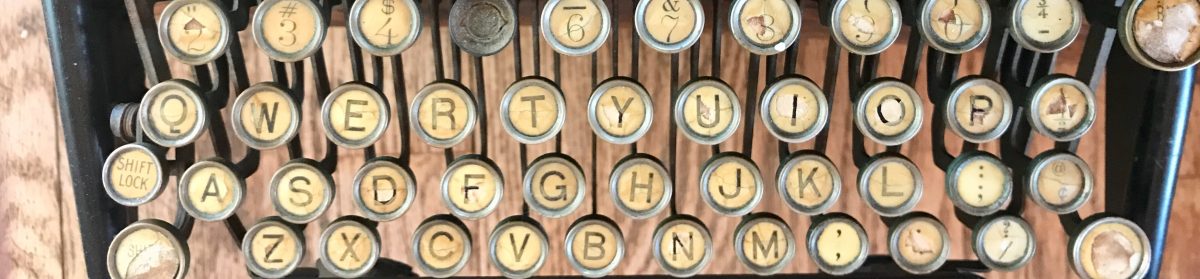
 Dog-eared Stories by anne celano frohna